Federal Government not lacking direction – APC replies David Mark, ADC

The Abia State Chapter of the All Progressives Congress, APC, has condemned the statement attributed to the former Senate President, David Mark, and other leaders of the African Democratic Congress, ADC, during the launch of Abia ADC’s membership mobilisation, registration, and revalidation exercise in Umuahia.

The ADC National Chairman, who was represented at the registration event on Saturday by ADC National Welfare Secretary, Nkem Ukandu, said that the APC-led Federal Government lacks direction, adding that the government has abandoned Nigerians amid economic hardship.

Reacting to the opposition party’s statement, the Abia APC Caucus accused the ex-Senate President and the ADC of attempting to mislead Nigerians with rhetorical political rallies.

“We strongly reject the misleading narrative that the APC-led Federal Government lacks direction and has abandoned Nigerians to hardship.

“Nigeria is navigating complex reforms under the bold leadership of President Bola Ahmed Tinubu. These necessary reforms are aimed at stabilising the economy, strengthening the naira, boosting local production, and creating long-term sustainability,” the APC Caucus said.

The Abia APC further stated that individuals who have occupied the highest levels of leadership for decades in the country should not attempt to distance themselves from structural issues that accumulated over time.

On allegations that it was plotting against a free and fair election process in the country, the Abia APC Caucus said the party is committed to free, fair, and credible elections, not the manipulation of outcomes.

“Our party believes in competition based on ideas and performance, not unfounded allegations. Institutions responsible for elections and public finance operate independently within the bounds of the Constitution, and sweeping accusations of manipulation only weaken public confidence without evidence,” it said.

2027: INEC calls for ‘simple language’ version of Electoral Act

The Independent National Electoral Commission, INEC, has called on the Nigerian government to demystify the recently amended Electoral Act for easy comprehension by the electorate.

INEC Chairman, Professor Joash Amupitan, explained that what Nigeria needs is a simple legislation on the Electoral Act, written in a simplified language, that will be easy for every Nigerian to understand.

Prof Amupitan made the call at a citizens’ town hall meeting organized by the Civil Society Network on Election Integrity and the Electoral Act, held in Abuja, on Sunday.

The INEC Chairman’s call comes amid the controversy surrounding the real-time transmission of election results, which he said must be clarified, considering that Nigeria is a highly diverse society, especially in its political and electoral landscapes.

He said, “We have gone through the Electoral Act, from the beginning to the end, and we have looked at some of the contentious areas, especially in a country that is highly diverse.

“What Nigeria needs is actually what I call simple legislation, a simple language legislation, whereby it will be possible for every Nigerian to understand and appreciate the provisions of every section.

“Talking about the transmission of the result, when INEC came in, we thought that transmission should be mandated. But let us be sincere about this, the only problem we had is how to define what we call real time.

“For instance, the FCT area council election that just took place, in Kuje, results came out on time in five area councils, but the result from Kabi ward did not come until the following day, Sunday. We could not reach our officers; they were not accessible by phone.

“I don’t see the issue of transmission as a problem; the problem is the adequacy of the network we have.
“You expect that in a place like FCT, you should be able to transmit your results without any encumbrance.
“But we had a situation where it was impossible for us to have a real-time transmission of results because of coverage.”

Minna water scarcity: Be patient with us – Gov Bago begs Niger residents

Niger State Governor Mohammed Umar Bago has appealed to residents, particularly those in Minna metropolis, to remain patient amid the ongoing water shortage, assuring that his administration is working to address the situation.

The governor made the appeal while briefing journalists at the Government House in Minna on critical issues affecting residents, including water scarcity, electricity supply, and insecurity in parts of the state.

Bago attributed the water challenges to decades of neglected infrastructure, noting that many pipelines, some over 30 to 40 years old, are broken.

He also cited ongoing construction works and the growing population in the state capital as factors putting pressure on the existing water system, adding that the government has commenced steps toward a holistic overhaul of the water infrastructure to provide a lasting solution.

According to him, “Efforts are underway to desilt the Tagwai Dam, replace old pipelines, and revamp the distribution network in Minna, while expanding reservoirs and water articulation systems to ensure improved access to potable water.

“In the interim, we are deploying water tankers to distribute water to affected communities. We are also collaborating with development partners to drill boreholes in areas where residents need potable drinking water.”

On electricity supply, he urged citizens to consider alternative power sources, noting that the state government has already migrated critical public institutions, such as hospitals, schools, and the Government House, from the national grid to ensure uninterrupted services.

Bago disclosed that the state is working closely with the Federal Government to tackle insecurity and restore normalcy in troubled communities.

The governor further lamented that over 300,000 persons have been displaced by insecurity and flooding across 10 local government areas.

He then appreciated members of the press for their support and encouraged them to continue reporting government activities professionally and objectively.

Edo migration agency secures conviction of 35 traffickers, rescued 393 victims in 2025

The Edo State Migration Agency, EDMA, said it secured the conviction of 35 traffickers in 2025 in the state.

DAILY POST reports that the Director-General of the agency, Mr Lucky Agazuma, disclosed this while speaking with newsmen shortly after a stakeholders’ dialogue on migration and reintegration in Benin City.

The stakeholders’ dialogue, involving non-governmental organizations, civil society organizations, and religious leaders, was organized by International Returns and Reintegration Assistance (IRARA).

Agazuma also disclosed that the agency rescued over 393 trafficked victims in the state within the period.

“We secured the conviction of 35 traffickers and also rescued 393 trafficked victims within the period,” he said.

He added that among the rescued victims, 365 were female, 20 were children, while eight were male.

He attributed one of the major challenges for rescued victims to family rejection, noting that many families expect the victims to return with affluence, but when that does not happen, they are often rejected.

He noted that the administration of Governor Monday Okpebholo has a zero-tolerance policy for human trafficking and is doing everything possible to curb it in the state.

Agazuma, however, called on communities to promote safe migration rather than irregular migration, where victims are subjected to inhuman treatment.

One officer killed as military repels ISWAP assault in Borno

Troops of the Joint Task Force North East Operation HADIN KAI have repelled coordinated attacks by Boko Haram/ISWAP fighters on Forward Operating Bases in Mayanti, Gajigana and Gajiram communities of Borno State.

The attacks, which occurred between late February 28 and the early hours of March 1, 2026, targeted military positions under Sector II of Operation HADIN KAI.

In a statement on Sunday, the Media Information Officer, Lt. Col. Sani Uba, said troops foiled the assaults and inflicted casualties on the attackers.

According to the statement, Forward Operating Base, FOB, Mayanti in Bama Local Government Area came under heavy attack by a large number of insurgents.

Troops reportedly held their ground despite intense gunfire, while reinforcements navigated ambushes and improvised explosive devices, IEDs, to repel the attackers.

Military sources said five insurgents were killed during the encounter, while weapons including PKT guns, RPG-7 tubes, AK-47 rifles, FN rifles, RPG bombs and ammunition were recovered. An officer was, however, killed during the fighting.

Similarly, at about 1:15 a.m. on March 1, insurgents attacked FOB Gajiram using heavy weapons and drones but were repelled with the support of air assets.

Three bodies were recovered along the withdrawal route, alongside rifles, anti-tank bombs, mortar bombs, an armed drone and other equipment. One wounded soldier was airlifted for medical treatment.

Troops also engaged insurgents at Kayawa village, forcing them to retreat and abandon motorcycles and bicycles.

In separate ambush operations around Bulturam Corner and Dadingel in Gujba Local Government Area, two insurgents were reportedly killed and weapons recovered.

The military said all affected locations remain under its control, while operations continue across the theatre.

Motorists, passengers stranded as FAAN enforces cashless toll at Lagos airport

Traffic movement around the tollgate leading to the Murtala Muhammed Airport was severely disrupted on Sunday after the Federal Airports Authority of Nigeria, FAAN, began enforcing a new cashless payment system for vehicles entering the airport.

The development triggered prolonged gridlock, leaving hundreds of motorists and air passengers stranded, while traffic flow to and from both the domestic and international terminals was heavily affected.

Confirming the policy shift, FAAN’s Director of Public Affairs and Consumer Protection, Henry Agbebire, explained that the cashless initiative was introduced to block revenue leakages within the system.

The congestion forced some air travellers to abandon their vehicles and resort to motorcycles in a desperate bid to catch their flights. Commercial motorcyclists, despite existing restrictions, took advantage of the situation, reportedly hiking fares by as much as 200 per cent.

Several motorists were observed spending close to 20 minutes at the tollgate for trips that would normally take less than a minute, further compounding frustration at the access point, which serves as a major route into the airport complex.

Some drivers were also seen engaging toll officials in heated exchanges over failed electronic transfers and delays in payment confirmation.

Many accused FAAN of causing avoidable confusion, arguing that the agency did not adequately sensitise the public before rolling out the policy.

One of the affected motorists, Adebayo Awojobi, lamented the situation, saying he had been stuck in traffic for nearly an hour. He expressed concern over how much worse the situation could become on a weekday, adding that officials on ground appeared unprepared for the volume of users.

However, Agbebire dismissed claims of inadequate public awareness, maintaining that the enforcement aligns with the Federal Government’s broader push towards a cashless economy. He said the system is designed to curb extortion, enhance transparency and boost FAAN’s revenue profile.

The spokesman attributed the chaos partly to users who, according to him, delayed compliance until the last minute. He added that FAAN had sufficient access cards available for motorists.

“The card itself is issued free of charge, but once it is loaded with N2,000 or N1,000, a maintenance fee of N500 is deducted,” Agbebire explained.

Mecure Industries sees profit surge 177% to N6.46bn

Mecure Industries PlcMecure Industries Plc delivered a sharp rebound in profitability for the year ended 31 December 2025, with profit after tax rising 177 per cent to N6.46 bn compared to N2.33 bn, according to its audited financial statements.

Revenue for the pharmaceutical manufacturer grew to N77.69bn in 2025, up from N46.03bn in 2024, representing a 69 per cent increase year-on-year. The growth in turnover was supported by improved sales performance across its product lines during the period.

The company recorded strong revenue growth across all product categories in 2025 compared with 2024, underscoring broad-based expansion in its portfolio. Revenue from the acute segment rose significantly to N42.57bn in 2025, up from N25.22bn in 2024, remaining the largest contributor to total turnover. The OTC category also delivered robust growth, increasing to N17.31bn from N10.26bn in the prior year.

Sales from supplements climbed to N8.70bn, compared with N5.15bn in 2024, while revenue generated from chronic products grew to N5.35bn from N3.17b

The Narcotics segment recorded N2.52bn in revenue, up from N1.49bn a year earlier. Promotional sales likewise increased to N1.24bn compared with N736.85m in 2024.

On the balance sheet, total assets rose to N81.96bn as of 31 December 2025, up from N54.84bn in 2024.

The Directors recommend a dividend payout of 20 per cent of Earnings Per Share, amounting to N0.32 per share, in respect of the financial performance for the year ended 31 December 2025, subject to the approval of the shareholders (2024: N0.15 per share).

The audited results point to a year of stronger operational execution and margin expansion for Mecure Industries, with revenue growth and cost discipline combining to deliver a marked improvement in profitability and shareholder returns.

Bears dominate as NGX market value drops N1.40tn

Nigerian Exchange LimitedThe Nigerian Exchange Limited experienced a bearish turn in the final week of February, with key market indicators closing in the red amidst a significant drop in trading turnover.

According to the weekly market data, the NGX All-Share Index depreciated 1.11 per cent, closing the week at 192,826.78 points, while Market Capitalisation shed approximately 1.12 per cent to settle at N123.763tn.

Investor activity cooled significantly compared to the previous week. A total turnover of 5.494 billion shares worth N196.709bn was traded in 370,233 deals, a notable contrast to the 7.662 billion shares valued at N252.566bn that exchanged hands the prior week.

The Financial Services Industry maintained its dominance, leading the activity chart with 3.241 billion shares valued at N82.775 bn. This sector alone contributed 58.99 per cent to the total equity turnover volume. The Oil and Gas Industry followed in a distant second, while the Services Industry took the third spot.

Trading in the top three equities, Japaul Gold and Ventures Plc, Fortis Global Insurance Plc, and Zenith Bank Plc, accounted for 1.576 billion shares worth N33.46 bn, representing 28.68 per cent of the total turnover volume.

During the week, 32 equities appreciated less than 71 equities did in the previous week. Sixty-nine equities depreciated, higher than 41 equities in the previous week, while 47 equities remained unchanged, higher than the 36 recorded in the previous week.

Despite the general market dip, Fortis Global Insurance Plc emerged as the top gainer, with its share price leaping 56.67 per cent to close at N0.94. Other significant gainers included Okomu Oil Palm Plc (+20.92 per cent) and Infinity Trust Mortgage Bank Plc (+20.63 per cent). On the losing side, Associated Bus Company Plc led the decliners, shedding 25.00 per cent of its value.

A major highlight of the week was the regulatory intervention by the Exchange. Effective Monday, 23 February 2026, the NGX announced the suspension of trading in the shares of Zichis Agro-Allied Industries Plc. The move was made pursuant to Rule 7.0 of the Rulebook of the Exchange, which empowers the NGX to halt trading in the interest of the investing public.

In announcing the suspension of Zichis Agro-Allied, the NGX RegCo stated, “Trading License Holders and the investing public are hereby notified that pursuant to the provisions of Rule 7.0, Rules on Suspension of Trading in Listed Securities, Rulebook of The Exchange (Issuers’ Rules), which states that notwithstanding any of the foregoing provisions, The Exchange may, in accordance with any of its rules, place the trading of any security on suspension.” It may also do so if it is of the view that such suspension will be in the interest of the investing public and in accordance with the SEC rules. The shares of Zichis Agro-Allied Industries Plc (Zichis or the company) have been suspended from trading on the facilities of Nigerian Exchange Limited, effective today, Monday, 23 February 2026.

“The suspension of trading in Zichi’s shares shall be lifted upon the conclusion of an investigation into the trading activities of the company’s shares.”

Customs report record growth in advance rulings

Nigeria Customs ServiceThe Nigeria Customs Service has announced that its Advance Ruling Account grew from 60 in December 2024 to 173 in December 2025, adding that the initiative accounted for 2.9 per cent of total revenue from goods valued at N240.8bn in 2025.

The National Public Relations Officer of the service, Abdullahi Maiwada, a Deputy Controller of Customs, announced this in a statement on Sunday. According to the statement, Maiwada presented the figures while delivering a paper at the 17th Session of the Capacity Building Committee of the World Customs Organisation held at its headquarters in Brussels last week.

The paper was titled, “Communicating the Results of Capacity-Building Initiatives More Effectively: Nigeria Customs Service Experience and Lessons Learned.”

In his address to delegates from member administrations, Maiwada explained that the NCS, under the leadership of the Comptroller General of Customs, Adewale Adeniyi, who also serves as the Chairperson of the WCO Council, has deliberately transitioned from routine activity reporting to evidence-based storytelling that clearly demonstrates reform outcomes and measurable impact

On the Advance Ruling programme, Maiwada disclosed that, “83 Advance Rulings were issued in 2025, while registered accounts grew from 60 in December 2024 to 173 in December 2025, reflecting a 188.3 per cent increase in stakeholder participation. The initiative accounted for 2.9 per cent of total revenue from goods valued at N240.8bn in 2025, reinforcing the role of structured communication in promoting predictability and voluntary compliance.”

According to him, the service’s reform communication framework is structured around three core pillars: institutional capacity building, human resource development, and stakeholder capacity engagement, ensuring that reforms are not only implemented but clearly understood and trusted.

Using the Time Release Study as a case study, Maiwada highlighted how the service adopted transparent data presentation tools, including infographics, to demonstrate that a significant proportion of cargo clearance delays were attributable to systemic idle time rather than inspection procedures.

“This approach shifted the narrative from defensive explanations to performance benchmarking, strengthening shared accountability across the trade ecosystem,” he said.

Highlighting progress under the Authorised Economic Operator Programme, he revealed that about 120 companies have received full AEO certification. “Additionally, 3,270 officers were trained nationwide as AEO champions to sustain implementation and deepen stakeholder engagement,” Maiwada stressed.

He referenced the deployment of the indigenous Unified Customs Management System, called B’Odogwu, as a milestone in digital transformation, supported by continuous sensitisation and user engagement.

The NCS’s image maker further highlighted the Customs Integrity Perception Survey as a data-driven tool for strengthening accountability and public trust, noting that integrity management within the service is now measurable and continuously assessed.

Maiwada further encouraged WCO member administrations to integrate communication units at the design stage of reform initiatives, humanise institutional processes, sustain engagement beyond single events, and strengthen peer learning across Customs administrations.

The Advance Ruling initiative is a trade facilitation mechanism introduced by the NCS. It allows importers, exporters, customs brokers, and other qualified operators to request a written, binding decision from Customs on key aspects of a goods transaction before the goods are imported or exported. These decisions cover issues such as tariff classification, valuation, origin, and certain duty exemptions — giving traders clarity and certainty on customs treatment in advance.

Crude-backed loans gulped N8.36tn of 2025 revenue

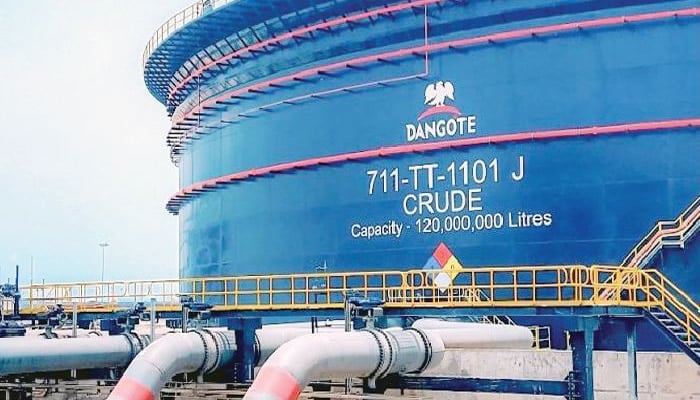
About 14.66 per cent of Nigeria’s crude oil production in 2025 was likely committed to servicing crude-backed loan facilities, based on estimates derived from disclosures in the Nigerian National Petroleum Company Limited’s 2024 financial statements and official production data.

An analysis by The PUNCH shows that four major crude-secured arrangements — Project Gazelle, Project Yield, Project Leopard, and Eagle Export Funding — are backed by a combined 213,000 barrels of crude oil per day.

If this allocation remained unchanged throughout 2025, the total volume committed to debt servicing would amount to 77.75 million barrels for the year, calculated by multiplying 213,000 barrels per day by 365 days.

Data from the Nigerian Upstream Petroleum Regulatory Commission indicate that Nigeria produced 530.41 million barrels of crude oil between January and December 2025.

The 77.75 million barrels tied to crude-for-loan arrangements therefore represent 14.66 per cent of total annual production. Using the 2025 average Bonny Light price of $72.08 per barrel, the 77.75 million barrels translate to about $5.60bn.

Converted at the official exchange rate of N1,492 to the dollar, the crude potentially deployed to service the loans is valued at approximately N8.36tn. This implies that out of the estimated gross crude oil earnings for 2025, a sizeable portion of output by volume was effectively earmarked for debt servicing before revenues could fully accrue to government coffers.

The obligations span multiple forward-sale and project-financing arrangements expected to be serviced through substantial crude oil and gas deliveries. These commitments have become a central pillar of NNPC’s funding framework following years of fiscal strain, volatile production, and declining upstream investment.

Several of the facilities were used to refinance legacy debts, fund refinery rehabilitation, support cash flow, and meet government revenue obligations.

One of the major exposures is linked to the Eagle Export Funding arrangement. Although the 2024 financial statement notes that “at least 1.8 million barrels” must be delivered per cycle, earlier reporting by The PUNCH indicates that the facility comprises three separate loan tranches.

The first, a $935m loan secured in 2020 and backed by 30,000 barrels per day, was fully repaid by September 2023. A second tranche of $635m was also cleared within the same period. The only outstanding portion is the Project Eagle Export Funding Subsequent 2 Debt, a $900m facility obtained in 2023 and secured against 21,000 barrels per day.

Repayment was scheduled to commence in June 2024, with final maturity expected in 2028. As of December 2024, the outstanding balance stood at N1.1tn, making Eagle one of the company’s significant forward-sale exposures.

“The company had capital commitments of N1.1tn as at the year ended 31 December 2024 (31 December 2023: N1.2tn). This relates to the forward sale agreement with Eagle Export Funding Limited for the delivery of Crude Oil.

“Under the contract, Eagle Export Funding Limited will make an upfront payment to NEPL for crude in a Forward Sale Agreement. The payment received is required to be settled with the delivery of crude oil volumes, i.e., NEPL sells crude to Eagle Export Funding Limited based on a delivery schedule.

“Based on the agreement, at least 1,800,000 barrels of Crude oil must be nominated and scheduled by NEPL (and delivered at the relevant delivery terminal to Eagle Export Limited in every delivery period commencing on 28 August 2020,” the NNPC financial statement read.

Another significant obligation arises from the incremental gas-supply financing arrangement with Nigeria LNG Limited. Under the agreement, NLNG provided upfront funding of N772bn for gas supplies to be delivered over time.

By the end of 2024, gas worth N535bn had been drawn and N312bn recovered by NLNG, leaving N460bn yet to be supplied. A financing charge of N12bn also accrued during the period, bringing the total outstanding balance to N472bn.

The refinery rehabilitation programme accounts for some of the largest crude-secured debt commitments. Project Yield, the financing structure backing the Port Harcourt Refinery upgrade, had an outstanding drawdown of N1.4tn at the close of 2024.

The agreement requires NNPC to deliver refined-product-equivalent volumes of 67,000 barrels per day, with repayment scheduled to begin in June 2025 after a two-and-a-half-year moratorium.

“This is a 7-year N1.5tn PxF loan obtained in October 2022 for general corporate purposes with the ultimate use being the execution of the EPC Contract between PHRC and Tecnimont for the rehabilitation of Port Harcourt Refinery.

“It is secured with a forward sale of refined product equivalent of 67kbpd of crude oil. As of 31 December 2024, the amount drawn is N1.4tn with principal repayment to commence in June 2025 after a moratorium period of two years and 6 months. Therefore, loan commitment as of 31 December 2024 is N1.4tn,” the financial statement read.

Similarly, Project Leopard, another crude-backed forward-sale facility, carried an outstanding balance of N1.3tn. The five-year financing agreement commits the company to deliver 35,000 barrels of crude oil per day, with repayments expected to begin in mid-2025 after a six-month moratorium.

The largest exposure relates to Project Gazelle, a substantial crude-for-cash arrangement used to finance advance tax and royalty payments on Production Sharing Contract assets.

NNPC had drawn N4.9tn out of the total N5.1tn facility by December 2024. Crude valued at N991bn had been delivered, leaving an outstanding N3.8tn. The agreement requires sustained deliveries of 90,000 barrels per day until the liability is fully extinguished.

Taken together, the company’s major crude-for-loan facilities — Eagle Export Funding (21,000 bpd), Project Yield (67,000 bpd), Project Leopard (35,000 bpd) and Project Gazelle (90,000 bpd) — represent a combined commitment of 213,000 barrels per day, in addition to separate gas-delivery obligations under the NLNG arrangement.

Although the N8.36tn estimate reflects the gross market value of crude tied to loan servicing, actual fiscal receipts depend on pricing formulas, lifting schedules, repayment structures and other contractual terms.

The PUNCH earlier reported that Nigeria earned an average of N55.5tn from crude oil sales in 2025, compared to N50.88tn in 2024. NUPRC data show that Nigeria produced 530.41 million barrels of crude oil between January and December 2025, with output fluctuating during the year amid outages, operational disruptions and gradual recovery in some fields.

Industry analysts noted that the revenue figure represents gross earnings and does not account for production costs, joint venture cash calls, production-sharing contract cost recovery, oil theft, domestic supply obligations, or deferred liftings.

Nonetheless, the analysis highlights the scale of crude inflows generated during the year and underscores the importance of output stability and price performance to Nigeria’s oil-dependent economy.