Court sentences Orient Petroleum MD, Nwawka, others to 14 years for N25 billion fraud

Justice O. M. Anyachebelu of the Anambra State High Court has convicted and sentenced Nnaemeka Nwawka, Managing Director of Orient Petroleum Resources Plc, alongside Jude Anniekwe Cyril and Sage Nebefeife Foundation, to 14 years’ imprisonment each for fraud involving about N25 billion.

The court found them guilty of stealing, conversion, and gratification after a lengthy trial that lasted a decade.

The defendants were convicted on a ten-count charge relating to financial crimes. Part of the charge stated: “that you, Nnaemeka Cyril, and the registered trustees of Sage Nebefeife Foundation, fraudulently converted to your personal use the aggregate sum of N29,620,733.”

Another count accused them of converting “the aggregate sum of N29,620,733” in similar transactions within Anambra State between 2012 and 2013.

They had pleaded not guilty when the charges were read, prompting the Economic and Financial Crimes Commission (EFCC), through its counsel, to proceed with full prosecution.

During the trial, the commission presented four witnesses and several documents, detailing how contracts were allegedly awarded to associates’ companies, with funds later traced to the foundation linked to Nwawka for personal use.

In his ruling, the judge held that the prosecution proved its case beyond reasonable doubt and ordered Nwawka and his foundation to refund N140.9 million to Orient Petroleum Resources Plc.

The court concluded that the evidence showed a pattern of diversion of company funds through questionable contract awards and financial transfers.

The case followed a petition by investor Cletus Ibeto, who alleged that he invested N25 billion in the company but suspected that large sums were diverted through “suspicious and bogus contracts” awarded to linked firms.

TotalEnergies hands OLO Trust to Aradel

TotalEnergies Marketing Nigeria PlcThe Nigerian Upstream Petroleum Regulatory Commission has presided over the formal handover of the OLO Oilfield Host Community Development Trust from TotalEnergies to Aradel Holdings, in what officials described as a major milestone in the implementation of the Petroleum Industry Act and the protection of host community interests during operator transitions.

The ceremony, held at the commission’s headquarters in Abuja, brought together senior officials of the regulator, executives of both companies, and representatives of the OLO host communities to formally complete the transfer of settlor responsibilities under the trust.

A statement issued by the NUPRC Head, Media and Strategic Communication, Eniola Akinkuotu, on Friday said the move is expected to ensure continuity in community development programmes despite the change in operator of the Olo/Olo West marginal field.

The OLO Host Community Development Trust was established in line with the provisions of the Petroleum Industry Act, which mandates operators to contribute three per cent of their previous year’s operating expenditure to support sustainable development in host communities.

Between 2023 and 2025, the trust has enabled the completion of more than 100 projects covering water supply, electricity, road construction, education, and healthcare. About 40 additional projects are currently ongoing, with over 25,000 residents across the host communities said to have benefited directly from the interventions.

TotalEnergies previously operated the Olo/Olo West marginal field within the former OML 58 in the Eastern Niger Delta before its acquisition by Aradel Holdings, making the transfer of responsibilities under the trust a statutory and operational requirement.

The oil major confirmed that all obligations up to the date of transfer had been fully met and that there were no outstanding liabilities. Aradel has now formally assumed full responsibility following the Commission’s regulatory consent.

Speaking at the ceremony, the Commission Chief Executive of the NUPRC, Oritsemeyiwa Eyesan, who was represented by the Executive Commissioner, Health, Safety, Environment and Community, Capt John Tonlagha, said the transition demonstrates the effectiveness of the PIA framework in safeguarding host community interests.

He said the trust’s structure and governance have been preserved, ensuring that ongoing projects will continue without disruption.

“The Olo Oilfield Host Community Development Trust remains intact. Its governance structure has been preserved, and its statutory funding obligations are transitioning seamlessly to the new settlor, exactly as envisioned by the Petroleum Industry Act,” Tonlagha said.

He added, “The commission will continue to provide firm and consistent oversight to ensure full compliance with the provisions of the Act for the benefit of both the host communities and the industry. This is a critical component of building trust and stability in Nigeria’s upstream sector.”

In his remarks, the General Manager, Community Affairs, Projects and Development at TotalEnergies, Dornu Kogam, urged the new operator to sustain the transparent and inclusive engagement model that had guided the implementation of projects.

“We encourage Aradel Holdings to maintain the same transparent, community-centred approach. The success recorded so far is the result of sustained dialogue, mutual respect, and shared development goals,” he said.

Responding, the Community Affairs Manager of Aradel Holdings, Blessyn Okpowo, assured stakeholders of the company’s commitment to fulfilling its obligations and sustaining the development momentum.

“We want to assure the host communities and the Commission that, in line with the Petroleum Industry Act, we will honour all commitments and duties required of the settlor. We also intend to work very smoothly and continue the engagement model established by TotalEnergies,” he said.

The Chairman of the Board of Trustees of the OLO Host Community Development Trust, Wale Godwin, commended the progress recorded so far, noting that 118 projects had already been delivered out of 160 planned.

He also praised the regulator’s oversight role, particularly its approval of the Community Development Plan before the commencement of projects.

“We appreciate the commission for ensuring proper regulatory guidance and approval processes. This has strengthened transparency and confidence among stakeholders and ensured that projects are aligned with the real needs of the communities,” he said.

The host community framework under the Petroleum Industry Act is widely regarded as one of the most significant reforms in Nigeria’s oil and gas sector. It was introduced to address longstanding grievances in oil-producing communities over environmental degradation, poverty, and perceived neglect despite decades of resource extraction.

Under the law, operators are required to set up Host Community Development Trusts and contribute three per cent of their annual operating expenditure to fund sustainable development initiatives.

This model is designed to reduce conflicts, curb pipeline vandalism, and promote stability in the Niger Delta by ensuring that communities derive measurable benefits from oil operations.

The successful transition of the OLO trust signals growing confidence in the new regulatory regime and highlights the importance of continuity and accountability in community development amid asset divestments and acquisitions across Nigeria’s upstream sector.

MTN invests N1tn on fibre rollout, network upgrade

New-mtn-logoMTN Nigeria said it invested N1tn in 2025 to expand fibre infrastructure, roll out additional base stations and strengthen network capacity nationwide, as the country’s biggest telco returned to profitability after a choking financial year marked by foreign exchange pressures and negative equity.

The capital expenditure, more than double the prior year’s spending, formed part of a broader recovery that saw the company post a profit after tax of N1.1tn for the year ended December 31, 2025. The rebound followed a difficult 2024 in which MTN suspended dividend payments and grappled with balance sheet strain.

Chief Executive Officer Dr Karl Toriola described 2025 as a defining year for the company, linking the improved earnings position to renewed long-term infrastructure investment.

“During the year, we invested N1tn in network expansion and modernisation, more than double the prior year’s capital expenditure. This investment translates to additional base stations, deeper fibre rollout, expanded capacity and improved network resilience across the country because sustaining critical digital infrastructure requires disciplined capital allocation and a deliberate long-term approach,” the executive said.

The telcos’ total subscriber base increased to 87.3 million, up 7.9 per cent, while active data subscribers rose to 53.2 million. Data traffic grew by 34 per cent during the year. These figures reflect sustained demand for digital services across the country and underscore the need for continued investment in network capacity and resilience.

“We are mindful that in a period of economic pressure, expectations from customers are heightened. When Nigerians purchase data or rely on our network for work, education, financial services or daily communication, they expect reliability, fairness and continuous improvement. That expectation is both legitimate and central to our responsibility, Toriola noted.

MTN’s service revenue rose 55.1 per cent to N5.2tn in 2025, while earnings before interest, tax, depreciation and amortisation more than doubled to N2.7tn. Earnings per share improved to N53.07 from a negative N19.05 a year earlier, reflecting the sharp turnaround in operational performance.

Chief Financial Officer Modupe Kadiri said the company’s financial recovery was built on deliberate balance sheet repair, disciplined capital allocation and reduced foreign exchange exposure.

“A year ago, MTN Nigeria was in negative equity. Today, we are declaring a N20 total dividend for the 2025 financial year,” Kadiri stated.

The board approved a final dividend of N15 per share, subject to shareholder approval at the annual general meeting, bringing the total dividend for the year to N20 per share, including an interim dividend of N5 already paid in the fourth quarter.

According to its report, MTN generated N1.2tn in free cash flow during the year and rebuilt shareholders’ equity to N548.7bn, with retained earnings standing at N400.4bn at year-end, signalling restored financial stability after the previous year’s market volatility.

Toriola said profitability would continue to underpin infrastructure expansion, noting that profit enables sustained reinvestment in network quality and broader coverage rather than serving as an end in itself.

“Profit, in our context, is not an end in itself. It is the mechanism that enables continued investment in network quality, broader coverage and enhanced customer experience. As Nigeria’s digital ecosystem continues to expand across fintech, small businesses, education and public services, resilient and future-ready telecommunications infrastructure remains foundational to national development,” he added.

Industries lose 15% energy to weak maintenance – MAN

The Manufacturers Association of Nigeria has found that maintenance lapses account for between 10 and 15 per cent of energy waste in factories, while most facilities lack sub-metering systems needed to track consumption.

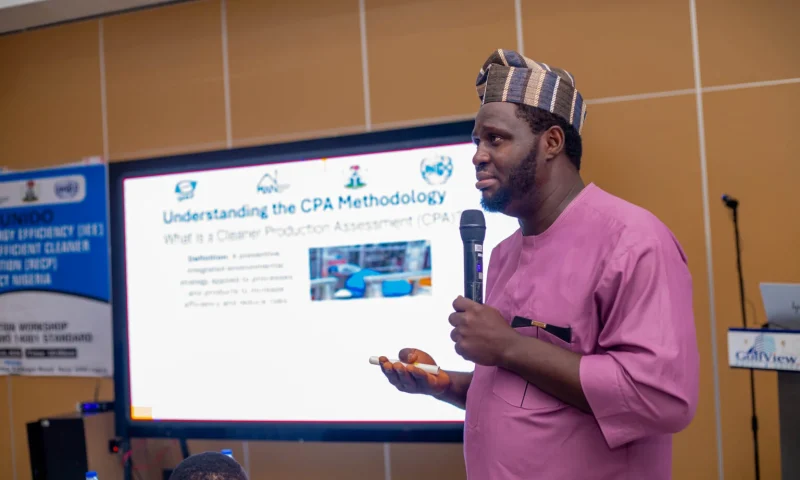
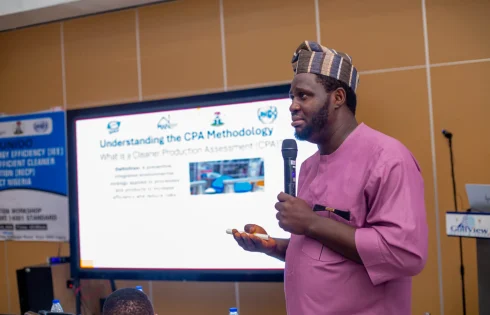
The findings emerged from a Cleaner Production Assessment conducted in 42 industries across four geopolitical zones and presented at the National Stakeholders’ Sensitisation Workshop on ISO 50001 and 14001 standards in Lagos on Tuesday.

The assessment, carried out under the GEF-UNIDO Industrial Energy Efficiency and Resource Efficiency Cleaner Production Project, covered sectors including food and beverages, basic metals, wood and wood products, textiles and leather, and petrochemicals.

Presenting the technical findings, IEE and RECP National Expert Obafemi Adejumo said the study exposed a wide gap between current practices and global best standards. He noted that the study uncovered significant industrial energy efficiency gaps across the country.

“What I have noticed is that there is a big gap between where we should be and where we are at the moment. Not all parts of the industry are doing well with energy efficiency. Some industries are already doing well, but a lot of other industries have not really plugged into it”, Adejumo said.

The CPA identified compressed air systems as a major source of electricity waste, accounting for about 25 per cent of losses, largely due to leaks and improper use. In some plants, optimising the system enabled operators to shut down one compressor entirely.

Steam systems accounted for 30 per cent of losses, while lighting contributed 18 per cent. The assessment also found significant thermal losses from poor insulation and flue gases in boilers and furnaces, inefficient motor systems running at partial loads, and a lack of Variable Speed Drives.

The report highlighted that most facilities lack sub-metering, making it difficult to manage energy use effectively.

“Data gaps are a serious issue. Most facilities lack sub-metering, making it difficult to manage what isn’t measured,” the assessment noted.

The study also found that idle equipment in textile and leather factories and a weak maintenance culture contributed to avoidable losses of up to 15 per cent.

The assessment revealed that grid unreliability in Kano and Anambra amplified energy losses, while thermal inefficiencies were more pronounced in the basic metal and petrochemical sectors.

However, it recorded successes in the food and beverage sector, where a Lagos-based plant reduced compressed air leaks by 20 per cent after optimisation.

Overall, the CPA estimated that industries could achieve between 20 and 25 per cent energy reduction, translating to about 500 megawatt-hours of savings per plant annually, if integrated industrial energy-efficiency measures were implemented.

The association urged manufacturers to adopt ISO 50001 and ISO 14001 standards to institutionalise energy management and cleaner production.

National Project Coordinator, GEF-UNIDO IEE/RECP Project, Jacob Oladipo, said ISO 50001 focuses on energy efficiency, while ISO 14001 addresses resource efficiency and cleaner production.

“Today, we are looking at feedback from the exercise conducted under this project, mainly the exposure of the project components to ISO standards 50001 and 14001. The 50001 has to do with energy efficiency, while the 14001 has to do with resource efficiency and cleaner production,” Oladipo said.

He said the CPA exposed poor water management practices across industries, stating, “We discovered that industries extract their water from boreholes and attach no importance to the usage of water. They use fresh water and discard it without knowing the volume used per day. If you are producing and you don’t know the volume of water you are using, how will you know the volume of water that you are wasting?”

He added that recycling water reduces overall consumption and improves resource efficiency. “One of the cardinal principles of resource efficiency is that you produce with less waste. If you recycle your water, it reduces the amount of water you use at the end of the day because water is not going out into the drain,” he said.

Adejumo stressed that awareness and top management commitment remain critical to closing the efficiency gap.

“One thing that will be needful is that the top management in the industry needs to be equipped with the right knowledge of this concept. If the top management doesn’t buy into it, the ordinary facility manager will not be able to do it”, Adejumo said.

He explained that the campaign’s core message rests on cost savings and competitiveness. “If you can reduce energy consumption, then your cost of production will be reduced. When you save energy costs in your facility, you boost the sustainability of your organisation and make it competitive,” Adejumo said.

He warned that inefficiencies also increase carbon emissions, stating, “If you burn more fuel because of inefficiencies, then you have more emissions into the atmosphere. We must work on that on a national scale.”

Meanwhile, the Chief Executive Officer of Spectra Industries Ltd, Duro Kuteyi, said the initiative exposed hidden financial leakages in factories.

“The IEE and RECP initiative is an innovative system that shows industrialists where they are losing money, and now they can prevent it,” Kuteyi said.

He said factories could recover waste heat from generators and commercialise waste streams. “Even in the use of a generator, the heat coming from the generator can be converted to do other things in the factory. From the waste generated, we had already put energy into that waste, so it should not be trashed. The waste should be commercialised to compensate for part of the energy used”, Kuteyi said.

He urged industrial leaders to personally undergo ISO training. “It is better for the industrialist himself to understand this so that he can pass it down. Everybody stands to benefit if he wants to”, he said.

In his welcome address, the Director-General of MAN, Segun Ajayi-Kadir, represented by National Technical Coordinator Dr Oluwasegun Osidipe, described the project as a defining moment for the sector.

“The implementation of the GEF-UNIDO Industrial Energy Efficiency, Resource Efficiency and Cleaner Production Project marks a defining moment in our collective journey towards sustainability,” Ajayi-Kadir said.

He asserted that manufacturers must champion sustainable practices to enhance competitiveness and resilience, stating, “As we embrace the principles of energy efficiency, we will not only be reducing our carbon footprint but also saving on energy costs. In return, the efficiency, competitiveness and resilience of operations will be enhanced to meet the increasing demand of our global marketplace.”

He urged policymakers to create an enabling environment that supports energy management systems and cleaner production, adding that Nigeria can safeguard its environment and foster sustained economic growth by optimising resource use and investing in energy-efficient technologies.


Lagos announces total closure of Lekki–Ajah Expressway for rehabilitation

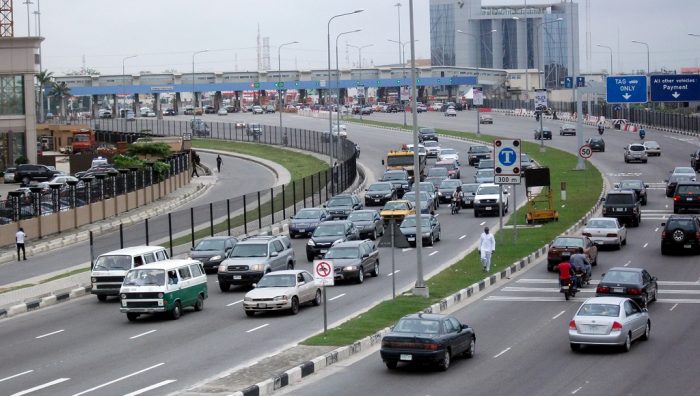
Lagos State Government has announced a full closure of the Epe-bound carriageway of the Lekki–Ajah Expressway, stretching from Admiralty Way Junction to Jubilee Bridge in Ajah, to allow for extensive rehabilitation works along the corridor.
The development was confirmed in a statement released on Thursday by the state Ministry of Transportation and signed by the Commissioner for Transportation, Oluwaseun Osiyemi.

According to the statement, the total closure is intended to enable uninterrupted construction activities across key intersections along the route. During the period, traffic flow will be temporarily redirected to the Lagos-bound carriageway under a structured lane-sharing arrangement.

The government explained that between 5:00 a.m. and 10:00 a.m., two lanes will be allocated to Lagos-bound traffic while one lane will accommodate vehicles heading toward Epe. Conversely, from 3:00 p.m. to 3:00 a.m., two lanes will be dedicated to Epe-bound traffic, with one lane reserved for Lagos-bound movement.

Motorists were advised to consider the Lagos–Calabar Coastal Road as an alternative route where practicable.

To ensure smooth traffic operations, the government said officers of the Lagos State Traffic Management Authority, LASTMA, and other traffic personnel will be strategically positioned along the corridor, while tow trucks will remain on standby to promptly handle vehicle breakdowns and emergencies.

The statement also noted that night-time operations will involve partial closures and restricted movement at several intersections, including Admiralty Way, Maruwa, Freedom Way, Chisco, Jakande, Igbo-Efon, Chevron, Lekki Conservation Toll Plaza to VGC, and the VGC to Jubilee Bridge axis.

It added that all intersections along the route will be completely shut for up to eight hours at night during asphalt-laying activities to ensure safety and construction quality.

Rehabilitation works on the Epe-bound carriageway will be executed in phases, covering sections from Admiralty Way Junction through Maruwa, Freedom Way, Chisco, Jakande, Igbo-Efon, Chevron, Lekki Conservation Toll Plaza, VGC U-Turn, and terminating at Jubilee Bridge in Ajah. Similar phased repairs are also planned for sections of the Lagos-bound carriageway.

The government explained that the new traffic arrangement follows the successful completion of the Chevron-to-Admiralty segment on the Lagos-bound side and is aimed at sustaining progress on the Epe-bound axis.

Residents and road users were urged to cooperate with traffic officials, comply with diversion signs, and plan their movements accordingly, with assurances that regular updates would be provided as work progresses.

Seplat posts 144% revenue growth to $2.73bn

The revenue of Seplat Energy Plc for the 2025 financial year surged 144.2 per cent to $2.73bn (N4.14tn) compared to $1.12bn (N1.65tn) in 2024, reflecting what the company called a full year of contribution from its offshore assets.
This was disclosed in its audited results for the year ended 31 December 2025, filed with the Nigerian Exchange Limited on Thursday.

The PUNCH reports that Seplat Energy Plc is an independent energy company listed on the Nigerian Exchange and the London Stock Exchange.

In the year under review, cash generated from operations stood at $1.17bn, up 276 per cent. Cash capex was $266.8bn. At the end of the year, the balance sheet remained robust, with net debt of $673.3m, down 25 per cent year-on-year from $897.8m. In returns to shareholders, the declared dividend for the fourth quarter was 8.3 cents per share, up 11 per cent quarter-on-quarter and 20 per cent YoY, consisting of 5.0c and 3.3c as special dividends. The total dividend declared for 2025 stood at 25.0c per share, equivalent to $150m and a 52 per cent increase on 2024.

On the operational front, the group production averaged 131,506 boepd (barrels of Oil Equivalent Per Day), up 148 per cent from 2024 (52,947 boepd), reflecting the first full year of offshore consolidation and within revised guidance. Onshore delivered 14 per cent production growth YoY, supported by the completion of the Sapele Gas Plant and new well inventory. The ANOH gas plant achieved its first gas in January 2026; production is stable at 50-70 MMscfd, with ~60 kbbl of condensate currently in storage. The group recorded only one Lost Time Injury on its operated assets in 2025 and has been at 11.4 million hours without LTI since September (2024: 11.0 million hours).

On the results, Seplat Energy Chief Executive Officer Roger Brown said, “In 2025, we clearly illustrated our ability to operate at scale. We benefited from the successful execution of several key offshore activities that kick-started life for Seplat as an offshore operator, while at the same time delivering onshore production performance that was the strongest in recent memory.

“At our CMD in September, we laid out our long-term ambition to ‘Build an African Energy Champion’, with a clear roadmap to grow working interest production to 200 kboepd by 2030. In 2025, we delivered the IGE replacement project offshore and the Sapele gas plant onshore. In recent weeks we were delighted to achieve first gas at the ANOH Gas Plant and are on track to double joint venture gas volumes at Oso-BRT to 240 MMscfd in 2H2026. Drilling will be a decisive factor in meeting our long-term growth ambitions, and I am pleased to announce that the first jack-up drilling rig is contracted, in-country and set to arrive at Oso in 3Q to commence a multi-year, multi-well drilling campaign.

“Finally, the cash generative nature of our asset base is clearly evident in our results, and by raising dividends by over 50 per cent to 25 cents per share alongside continued strengthening of our balance sheet and delivery of our work programmes, we are already well positioned to deliver on our planned $1bn cumulative return of capital to shareholders by 2030. Furthermore, the strength of the enlarged group has resulted in a notable lowering of our cost of debt, providing additional scope for long-term value creation.”

MTN Nigeria posts N5.2tn revenue, boosts economy

MTN-new-logo-e1663465256894MTN Nigeria has reaffirmed its position as a critical driver of the non-oil economy, posting a service revenue of N5.2tn in its 2025 audited financial results.
Beyond the impressive top-line growth, the company emphasised that its financial success is deeply intertwined with national development, standing firmly as one of the country’s largest corporate taxpayers and ensuring its profitability supports the Federal Government’s infrastructure and social welfare programmes.

The 2025 financial year, according to a statement from the firm, was described as a remarkable period of recovery and resilience for the company.

The Chief Executive Officer, Dr Karl Toriola, noted that 2025 marked a significant turning point with a return to profitability and a resilient balance sheet, which ultimately supported “accelerated network investment to enhance quality of service and user experience.”

To back up its commitment, MTN revealed that it invested a N1tn in capital expenditure in 2025 for network expansion. This massive CAPEX deployment serves as physical proof of its economic patriotism, ensuring that billions in retained earnings are poured directly back into building base stations, laying fibre optics, and creating thousands of local jobs.

Furthermore, the company’s leadership highlighted that its ability to aggressively fund its CAPEX obligations while navigating economic storms is an indicator that government policies are working.

MTN commended the government for its progressive policies, noting that its primary focus remains on keeping millions of Nigerians connected. This capital-intensive stability serves as an example that companies can indeed return to profitability, survive, and build critical infrastructure in Nigeria.

Consequently, MTN is leveraging its position as the most valuable company on the Nigerian Exchange to encourage local wealth creation.

With millions of direct and indirect Nigerian investors, the company has actively encouraged young Nigerians to bet on the country’s digital future by buying its shares, promising that robust CAPEX strategies will continue to deliver attractive long-term shareholder returns.

Transcorp reports N136bn PAT, up 44%

Indigenous conglomerate Transnational Corporation Plc has reported a 44 per cent rise in its Profit After Tax to N135.9bn compared to N94.1bn in the corresponding period of the previous year.
This was indicated in its audited full-year 2025 results filed with the Nigerian Exchange Limited on Thursday.

The PUNCH reports that Transcorp has investments in the power, hospitality and energy sectors of the economy.

In the period under review, the conglomerate also crossed the N1tn in total assets milestone for the first time in the group’s history. Revenue increased 33 per cent to N544bn compared to N408bn in FY 2024. Profit Before Tax rose 31 per cent to N179.5bn from N136.7bn in 2024. A closer look at the figures indicated that its power subsidiaries’ revenue grew 38 per cent to N483.97bn, driven by enhanced generation capacity and improved gas supply. In the hospitality sector, Transcorp Hotels Plc’s revenue increased 38 per cent to N97.04bn, supported by strong demand across rooms, conferencing, food & beverage, and premium guest experiences.

For the group, shareholders’ funds increased 47 per cent to N353.4bn as total borrowings reduced 15 per cent to N75.5bn, with a gearing ratio of 13 per cent.

In a statement accompanying the audited results released on the NGX, the chairman of Transcorp, Tony Elumelu, said, “Our 2025 results are not just strong; they are decisive. They reflect the power of a deliberately diversified portfolio, disciplined execution, and our unwavering belief in Nigeria’s long-term potential. In power, hospitality and energy, we are building platforms that deliver both commercial returns and social impact. In power, our integrated energy strategy is translating directly into measurable capacity growth and improved reliability.

“Transcorp Power increased available capacity to 625 MW, while TransAfam Power tripled peak generation capacity to 270 MW. These are not incremental gains; they are structural contributions to Nigeria’s energy security and industrial competitiveness. In hospitality, we continue to set the standard for excellence. The Transcorp Centre, Abuja, is redefining Nigeria’s capacity to host global events at scale and positioning our Group to capture significant future growth. We remain focused on one outcome: sustainable, long-term value creation. For our shareholders. For our partners. And for Nigeria’s economic transformation.”

The President/Group Chief Executive Officer, Dr Owen Omogiafo, added, “Transcorp Group’s FY2025 performance reflects disciplined strategy execution and operational excellence across our portfolio. Crossing the N1tn total assets milestone is a defining achievement, a validation of the strength of our platform and the confidence of our investors. With 47 per cent growth in shareholders’ Funds and sustained profitability, we have closed the year with strong momentum.

“Guided by our purpose to ‘improve lives and transform Africa’, we continue to optimise our businesses to deliver superior stakeholder value. We provide investors with structured access to the Nigerian growth story and remain firmly committed to delivering sustainable returns while advancing broader economic development.”

Kano suspends doctor for allegedly working under influence of alcohol

The Kano State Hospitals Management Board has suspended a medical doctor (name withheld) attached to one of its secondary health facilities for allegedly reporting to work under the influence of alcohol and engaging in unprofessional misconduct.
The incident, which occurred at a government-owned hospital in the state, was reported to the Board’s management, prompting an immediate preliminary review. The initial assessment reportedly indicated misconduct, leading to disciplinary action.

Executive Secretary of the Board, Dr. Mansur Mudi Nagoda, approved the issuance of a formal query to the doctor and directed his suspension pending the outcome of a detailed investigation.

In a statement issued by the board’s Public Relations Officer, Samira Sulaiman, the management described the alleged misconduct as unacceptable and contrary to the ethical standards expected of medical practitioners.

The statement stressed that healthcare workers are entrusted with the responsibility of protecting patients’ lives and must maintain professionalism, discipline, and sound judgment while on duty.

Dr. Nagoda reaffirmed the Kano State Government’s commitment to strengthening accountability and professionalism in the health sector, noting that any action capable of undermining public confidence would be met with appropriate sanctions.

The board assured the public that investigations are ongoing and that necessary measures would be taken in line with civil service rules and medical ethics.

TotalEnergies to inaugurate 5MW solar plant at OML 58

TotalEnergies Marketing Nigeria PlcThe Managing Director of TotalEnergies EP Nigeria Limited, Mathieu Bouyer, has announced plans to inaugurate a five-megawatt solar power plant at OML 58 to supply electricity to the Ubeta Gas Project, in a move that underscores the company’s push to cut emissions while expanding Nigeria’s energy output.

Bouyer disclosed this during a panel session titled ‘Capitalising on Africa’s Global Upstream Momentum’ at the 2026 NIES in Abuja, where industry leaders assessed investment flows and emerging opportunities across Africa’s oil and gas sector.

He described the solar project as a critical component of the Ubeta Gas development and said it would help position the field as one of the world’s first near-net-zero gas developments.

The five-megawatt plant is expected to provide a dedicated power supply to OML 58 operations, reducing reliance on conventional energy sources and lowering the carbon intensity of production.

“Our strategy is about growing energy as a whole,” Mr Bouyer said, noting that Nigeria remains a key market within TotalEnergies’ global portfolio and continues to compete with other countries for upstream investment capital.

Bouyer also reaffirmed the company’s commitment to expanding Nigeria’s energy supply while reducing operational emissions. According to him, TotalEnergies’ strategy in Nigeria is built on two core pillars: increasing oil and gas production and scaling up electricity generation through integrated power solutions, in line with the company’s global ambition of delivering more energy with fewer emissions.

He explained that the company’s immediate focus is on maximising value from its existing portfolio of onshore gas and offshore oil and gas assets. Central to this plan is the recently sanctioned Ubeta Gas project, designed to deliver up to 300 million cubic feet of gas per day to the domestic market.

In addition to Ubeta, Bouyer said several other projects are currently under evaluation as the company seeks to strengthen its upstream footprint in Nigeria amid stiff global competition for capital.

On sustainability, Bouyer disclosed that TotalEnergies eliminated routine gas flaring across all its Nigerian operations in 2023, describing it as a major milestone in its emissions reduction drive. He added that the company has intensified methane monitoring by deploying advanced detection systems, including its proprietary AUSEA technology, which enables real-time emissions tracking and swift intervention.

He further revealed that 2,500 Permanent Eission Monitoring Systems have been installed across the company’s production sites in Nigeria to support transparent and measurable emissions control.

Industry observers at the summit noted that the integration of solar power into upstream operations reflects a broader shift among international oil companies operating in Nigeria to align hydrocarbon production with energy transition goals, especially as financiers increasingly demand lower-carbon projects.

Bouyer also underscored the importance of collaboration with indigenous operators in accelerating project delivery and unlocking value for the Nigerian economy. He cited long-standing joint ventures with AMNI, Conoil, and Sapetro, referencing flagship projects such as the Egina FPSO and Akpo Condensate as examples of successful partnerships between international and local players.

He disclosed ongoing work with Conoil to appraise deep offshore resources, alongside planned exploration drilling with Sapetro.

“When we work with local partners, it enables us to move faster and create value not just for ourselves, but for the country,” Bouyer said.

Beyond the plenary session, Bouyer and members of his management team interacted with students from three schools who visited the TotalEnergies exhibition booth at the summit, reinforcing the company’s focus on knowledge transfer, skills development, and nurturing the next generation of energy professionals.