TUC demands subsidy to cushion rising fuel prices

The Trade Union Congress of Nigeria has called on the Federal Government to deploy excess crude oil revenue to subsidise local refineries as a way of cushioning the impact of rising fuel prices on Nigerians.

President of the Congress, Festus Osifo, who made the call during a press briefing in Abuja on Thursday, warned that the price of Premium Motor Spirit, popularly called Petrol, could climb to as high as N2,000 per litre if urgent measures were not taken.

Osifo said the persistent increase in the pump price of petrol, driven by global crude oil price volatility and exchange rate challenges, had worsened the economic hardship faced by Nigerian workers.

The TUC leader attributed the surge partly to international developments, including tensions involving the United States, Israel and Iran, which have affected global oil supply dynamics.

Osifo also linked the rising cost of petrol to the depreciation of the naira, warning that the continued weakening of the currency was compounding inflationary pressures and reducing the real value of workers’ earnings.

To address the situation, the TUC president proposed that the government should utilise excess revenue generated when crude oil prices exceeded the budget benchmark to support local refining.

He explained that with the 2024 budget benchmarked at $64.85 per barrel, any price above that threshold results in additional revenue shared by the three tiers of government, adding that at least 60 per cent of such excess funds should be channelled into subsidising crude supplied to domestic refineries, including the Dangote Refinery and other modular refineries.

He also urged authorities to take deliberate steps to stabilise the currency, noting that exchange rate stability would significantly reduce the cost of imported energy and other goods.

The TUC said it would formally communicate its proposals to the Federal Government, including the Presidency, with a view to ensuring the prompt implementation of measures to ease the hardship facing Nigerians.

He said, “Today, the cost of petrol is heading towards N2,000 per litre, depending on the part of the country that you are in. It has deeply affected the purchasing power of the salaries that we earn as Nigerian workers.

“Let the government take that excess fund that was never budgeted for, take at least 60 per cent of it, and use it to subsidise the crude being supplied to Dangote Refinery.

“The same should be done for Dangote Refinery and all modular refineries, where crude is supplied to them at that subsidised rate.

“Take the difference from the excess crude revenue, take about 60 per cent of it, and use it to subsidise the price at which crude is supplied to the refinery.

“When you subsidise crude, it cannot be abused because you are subsidising production directly. When that is done, we are going to see an immediate reduction in the price of petroleum products.”

Polaris Bank, CBN partner to promote financial literacy

Polaris BankPolaris Bank has announced its partnership with the Central Bank of Nigeria for the 2026 Global Money Week under the theme ‘Smart Money Talks’. The initiative, which runs from 7 April to 30 April 2026, aims to bridge the financial literacy gap by providing secondary school students with the tools to navigate an increasingly complex digital economy.

“Building a financially smart future starts with equipping young people with the right knowledge today. As conversations around money become more complex in a fast-evolving digital world, our participation in Global Money Week reflects our commitment to empowering the next generation with practical skills that shape long-term economic wellbeing,” stated the bank’s leadership during the launch.

The 2026 campaign, according to a statement on Thursday, builds on the success of the previous year, where Polaris Bank directly impacted 3,372 students across 35 secondary schools in 36 states.

This year, the bank is expanding its reach in coordination with the CBN’s Financial Literacy Secretariat to conduct sessions in schools across all states where it maintains a branch presence. These sessions provide students and young adults with useful insights into key areas such as saving, budgeting, the responsible use of financial products, digital financial services, and entrepreneurship.

“At the Central Bank, we believe that early education is critical to helping young people distinguish between impulse and intention. By taking these conversations into schools, we are supporting a national mandate to develop a generation that is more financially aware and capable of making smart choices,” noted a representative from the CBN Financial Literacy Secretariat.

In an era where technology and peer influence heavily dictate spending habits, Polaris Bank is positioning financial literacy as a vital life skill rather than a luxury. The bank believes that early education is critical to helping young people distinguish between trend and truth, or convenience and responsibility.

“For Polaris Bank, this goes beyond a statutory obligation,” the bank added. “It is about fostering a culture where young people are confident in money matters, helping them grow into financially active adults who can contribute meaningfully to the Nigerian economy.”

The programme aligns with broader national goals of human capital development and financial inclusion as key drivers of growth. As Global Money Week activities continue through the end of April, Polaris Bank remains committed to initiatives that create meaningful impact, strengthen communities, and empower individuals through knowledge-driven engagement.

Guinea Insurance projects N1.85bn profit

Guinea-Insurance-PlcGuinea Insurance Plc has signalled a period of robust financial growth and strategic strengthening as it forecasts a profit after tax of N1.85bn for the second quarter ending 30 June 2026.
In a comprehensive regulatory filing submitted to the Nigerian Exchange on Tuesday, the insurer detailed an ambitious financial roadmap characterised by aggressive revenue targets and a massive capital injection intended to solidify its market position.

The company’s forecast income statement projects insurance revenue to hit N4.41bn by the end of the quarter. This performance is expected to be bolstered by a strong insurance service result of N2.27bn, demonstrating the firm’s ability to effectively manage its core underwriting risks and reinsurance contracts.

Beyond its core operations, the report highlights a diversified income stream with net investment income projected at N1.14bn. This is expected to be driven primarily by investment income and fair value gains on financial assets, reflecting a strategic allocation of capital within the current economic landscape.

Perhaps the most significant highlight in the filing is the N7.5bn new capital injection listed under financing activities. This influx of capital is set to dramatically transform the company’s balance sheet, pushing its cash and cash equivalents to a projected N7.44bn by mid-year, up from N2.98bn at the start of January.

The board of directors, led by Chairman Temitope Borishade and Managing Director Ademola Abidogun, noted in the filing that “these projections reflect a company exceeding expectations with a clear path toward sustainable profitability and a fortified capital base that ensures we remain a dominant player in the industry.”

On the operational side, Guinea Insurance’s cash flow estimates indicate a high level of activity, with premium collections expected to reach N4.9bn. The company has also budgeted N1.13bn for gross claims payments, emphasising its commitment to meeting policyholder obligations promptly.

The report further detailed that “the proposed capital injection of N7.5bn is a testament to investor confidence and a strategic pivot toward high-yield financial assets”, including a planned N2.5bn investment in Treasury bills.

With earnings per share projected at 0.10 kobo, Guinea Insurance is positioning itself as an increasingly attractive prospect for shareholders. The company concluded its submission to the exchange by stating that it is “entering the second half of the year with a liquid, well-capitalised balance sheet designed to withstand macroeconomic pressures while delivering consistent value to stakeholders”

Banking stocks drive 0.28% NGX growth

Nigerian Exchange Limited

The Nigerian equities market closed on a positive note during Thursday’s trading session as a late-session rally in the banking sector pushed the market capitalisation up by N370bn. The All-Share Index grew by 0.28 per cent, gaining 576.27 points to settle at 203,161.81 points, while the total market value of listed equities rose to N130.774tn.

This upturn was primarily driven by price appreciation in medium and large-cap stocks, most notably Nestle Nigeria, Aradel Holdings, Nigerian Exchange Group, Zenith Bank, and Lafarge Africa.

Despite the gains in the headline index, market breadth remained perfectly balanced with 30 advancers matched by 30 decliners. Trans-Nationwide Express emerged as the top performer of the day with a 9.94 per cent price surge to close at N3.43 per share, followed closely by International Energy Insurance, which gained 9.84 per cent to close at N3.46.

Guinea Insurance, Regency Alliance Insurance, and Wapic Insurance also featured prominently on the gainers’ list with respective appreciations of 9.52 per cent, 9.18 per cent, and 9.09 per cent.

On the flip side, LivingTrust Mortgage Bank led the laggards after shedding 10 per cent to close at N4.32 per share. Other significant decliners included R.T. Briscoe, which dropped by 9.94 per cent, and Tantalizers, which fell 9.55 per cent.

Livestock Feeds and VFD Group rounded out the losers’ chart with depreciations of 9.40 per cent and 8.85 per cent, respectively. Trading activity saw a noticeable pullback as total volume decreased by 35.17 per cent to 652.863 million units, valued at N39.820bn and exchanged in 51,101 deals.

The banking sector continued to dominate the activity chart, led by Access Holdings with a turnover of 121.702 million shares valued at N3.165bn. Guaranty Trust Holding Company followed with 62.274 million shares worth N8.096bn, while Chams Holding Company, Zenith Bank, and United Bank for Africa also recorded high transaction volumes.

Providing a forecast for the next session, analysts at Cowry Assets Management Limited noted that the market is expected to face mild headwinds on Friday as end-of-week profit-taking activities begin to weigh on investor sentiment.

IPAC reacts to death of Zamfara NRM Chairman, Alhaji Moriki

The Inter-Party Advisory Council, IPAC, says it is deeply saddened by the sudden demise of its Zamfara State chapter Chairman who doubles as the Chairman National Rescue Movement, NRM, Isah Ahmad Moriki.

Moriki passed away on Monday, 6th April 2026.

INEC described his passing as a great loss not only to his immediate family and loved ones but also to the entire political community in Zamfara State and Nigeria at large.

IPAC, in a statement signed by Egbeola Wale Martins, the National Publicity Secretary, said that Moriki was a committed democrat and a dedicated leader who worked tirelessly for the growth of multi-party democracy and political inclusiveness in Zamfara State.

The umbrella body of all registered political parties in Nigeria commiserated with his family, friends, the National Rescue Movement and the Zamfara State chapter of IPAC over this painful and irreparable loss.

“We pray that Almighty Allah grants his soul eternal rest and gives all those he left behind the strength and fortitude to bear the loss,” the statement added.

“May Allah accept his soul and grant him Aljannatul Firdaus.”

Guinea Insurance projects N1.85bn profit

Guinea InsuranceGuinea Insurance Plc has signalled a period of robust financial growth and strategic strengthening as it forecasts a profit after tax of N1.85bn for the second quarter ending 30 June 2026.
In a comprehensive regulatory filing submitted to the Nigerian Exchange on Tuesday, the insurer detailed an ambitious financial roadmap characterised by aggressive revenue targets and a massive capital injection intended to solidify its market position.

The company’s forecast income statement projects insurance revenue to hit N4.41bn by the end of the quarter. This performance is expected to be bolstered by a strong insurance service result of N2.27bn, demonstrating the firm’s ability to effectively manage its core underwriting risks and reinsurance contracts.

Beyond its core operations, the report highlights a diversified income stream with net investment income projected at N1.14b

This is expected to be driven primarily by investment income and fair value gains on financial assets, reflecting a strategic allocation of capital within the current economic landscape.

Perhaps the most significant highlight in the filing is the N7.5bn new capital injection listed under financing activities. This influx of capital is set to dramatically transform the company’s balance sheet, pushing its cash and cash equivalents to a projected N7.44bn by mid-year, up from N2.98bn at the start of January.

The board of directors, led by Chairman Temitope Borishade and Managing Director Ademola Abidogun, noted in the filing that “these projections reflect a company exceeding expectations with a clear path toward sustainable profitability and a fortified capital base that ensures we remain a dominant player in the industry.”

On the operational side, Guinea Insurance’s cash flow estimates indicate a high level of activity, with premium collections expected to reach N4.9bn. The company has also budgeted N1.13bn for gross claims payments, emphasising its commitment to meeting policyholder obligations promptly.

The report further detailed that “the proposed capital injection of N7.5bn is a testament to investor confidence and a strategic pivot toward high-yield financial assets”, including a planned N2.5bn investment in Treasury Bills.

With earnings per share projected at 0.10 kobo, Guinea Insurance is positioning itself as an increasingly attractive prospect for shareholders. The company concluded its submission to the exchange by stating that it is “entering the second half of the year with a liquid, well-capitalised balance sheet designed to withstand macroeconomic pressures while delivering consistent value to stakeholders”.

NGX rally drives Nigeria’s frontier market re-entry

NGX-750×375International index provider FTSE Russell has officially restored Nigeria’s status to ‘Frontier Market’, a significant upgrade that reflects the sweeping infrastructure improvements and liquidity gains within the Nigerian Exchange.
The decision, according to the NGX on Wednesday, marks the end of a period of market uncertainty and signals a renewed vote of confidence from the global investment community in Nigeria’s capital market reforms.

The upgrade follows a rigorous monitoring period where Nigeria demonstrated improved consistency in foreign exchange accessibility and market transparency. Analysts suggest that the ‘Frontier’ label will trigger a fresh wave of capital inflows from passive funds that track FTSE indices.

“This restoration is more than just a title; it is a landmark for investors who have been waiting for the right signals to return to the Nigerian market with full confidence,” said a market analyst at a leading Lagos investment firm.

Central to FTSE Russell’s decision was the modernisation of the NGX’s market infrastructure. The exchange has recently implemented advanced trading technologies and streamlined settlement processes, making it easier for international institutional investors to enter and exit positions.

Similarly, a senior executive at the Nigerian Exchange said, “The gains we are seeing today are the direct result of deliberate investments in our trading systems and a commitment to global best practices in market oversight.”

The reclassification is also being viewed as a validation of the Central Bank of Nigeria’s recent efforts to stabilise the Naira and harmonise the exchange rate windows. By reducing the “bottlenecks” that previously trapped foreign capital, Nigeria has met the stringent criteria required by global index providers.

An official from the Ministry of Finance also noted, “This move by FTSE Russell recognises the resilience of our financial systems and the success of policy reforms aimed at making Nigeria a competitive destination for global capital.”

As Nigeria rejoins the Frontier Market fold, market participants expect increased trading volumes and a more diverse investor base, potentially setting the stage for a prolonged bullish run on the Lagos floor throughout 2026.

Lagos, FCMB unveil $500m human capital governance programme

FCMBThe landscape of public service delivery in Lagos State is undergoing a systemic transformation as the state government, in collaboration with the World Bank and First City Monument Bank, scales the Human Capital Opportunities for Prosperity and Equity–Governance programme.
According to a statement on Wednesday, the $500m initiative represents a departure from traditional government spending, shifting the focus from ‘input-based’ budgets to a ‘results-based’ financing model. Under this framework, funding is only released upon the verification of specific, tangible improvements in basic education and primary healthcare.

Speaking at a public presentation detailing the state’s implementation progress, Governor Babajide Sanwo-Olu emphasised that the project is designed to ensure every naira spent translates into a better life for the average resident.

“For us in Lagos, this is about people. It is about ensuring that a child has access to the right learning materials, that a mother receives quality care at a primary health centre, and that public resources are managed transparently for all to see,” Sanwo-Olu said.

The governor noted that early gains are already visible in the state’s ability to track student learning outcomes and healthcare delivery efficiency more accurately than in previous years.

The HOPE-GOV programme, which is backed by the Federal Government and spans all 36 states, addresses the ‘invisible’ back-end of governance, specifically procurement and institutional accountability. By fixing these systems, the project ensures that healthcare supplies reach clinics and educational tools reach classrooms without the typical bottlenecks of bureaucracy.

Similarly, a Senior Procurement Specialist at the World Bank, Akin Onimole, was quoted in the statement as saying, “Lagos has shown a strong commitment to strengthening its procurement and institutional frameworks. These efforts help translate reform into practical outcomes.”

A key component of the project’s success is the involvement of FCMB, which manages the critical fund flows that keep the initiative moving. The bank’s leadership views the partnership as a blueprint for how financial institutions can drive social equity.

The Managing Director/CEO of FCMB, Yemisi Edun, said, “We are working with our partners to open up more opportunities for children and communities. By supporting education and primary healthcare, we are contributing to a system where more people can participate and progress.”

Since its inception in 2025, HOPE-GOV has aimed to build a sustainable bridge between government capacity and private sector efficiency. While the full impact of these systemic changes will take years to mature, officials say the current trajectory points towards a more accountable and resilient public sector.

For the residents of Lagos, the investment is less about the staggering figure and more about the ‘quiet shift’ happening in their local clinics and schools, where performance is finally becoming the standard, rather than the exception.

INEC insists voters’ revalidation exercise remains suspended

The Independent National Electoral Commission, INEC, Resident Electoral Commissioner for Osun State, Dr Mutiu Agboke, has reiterated that the revalidation exercise remains suspended in the state.
Agboke made this known on Tuesday during the continuation of stakeholders’ engagement meetings held across local government council areas in Osun State, disclosing that the directive for the suspension was issued by the national headquarters of the Commission, stressing that the decision remains binding.

Addressing stakeholders in Ife North, Ife Central, Ife East, Atakunmosa West, Ilesa East and Ilesa West, he emphasised that national development requires collective responsibility from all citizens.

He said the primary objective of the meeting was to foster dialogue, build trust, and gather firsthand information on challenges that could affect the smooth conduct of the election.

Key issues raised included voter apathy, logistical constraints, and the need for adequate security.

“The coming election involves everyone. Candidates of political parties must accept that God decides who wins and loses,” he said.

The REC appealed to transport unions, members of the National Youth Service Corps, NYSC, and security agencies to discharge their duties responsibly during the electoral process.

He warned corps members against engaging in electoral malpractice, alleging that some had previously been involved in misconduct.

“We still find corps members mutilating ballot results and conniving with politicians to sabotage the poll. Such corps members will be arrested, prosecuted and jailed.

“Be careful. Give yourself brain. Pay attention during training and make sure you do the right thing. Where we see unnecessary mutilation or cancellations, such persons responsible will be prosecuted,” he said.

He also cautioned transport unions against alleged conspiracy, noting that all transporters would be required to sign undertakings ahead of the election.

“If issues arise from any transporter, INEC will interpret it as sabotage and such transporter will be prosecuted. Don’t give room for any politician to use you to sabotage the electoral process. Transport workers engaged as ad hoc staff would not be eligible to vote on election day,” be stated.

The REC urged security agencies, led by the Nigeria Police, to ensure adequate protection of collation centres.

“I want security agencies led by the police to secure the collation centres with arms so as to forestall disruption and violence,” he added.

He maintained that the outcome of the election would ultimately be determined by the votes of the people of Osun State.

Meanwhile, representatives of political parties highlighted challenges including failure to capture voters in remote areas, inadequate access to the Continuous Voter Registration process, poor security in rural communities and network issues.

Some stakeholders also called on INEC to consider towns such as Asipa and Akinlalu for delineation to enhance effective voter registration.

Electoral officers and Divisional Police Officers across the local governments assured INEC of their readiness to ensure a peaceful process, pledging to address identified flashpoints and strengthen security arrangements ahead of the election.

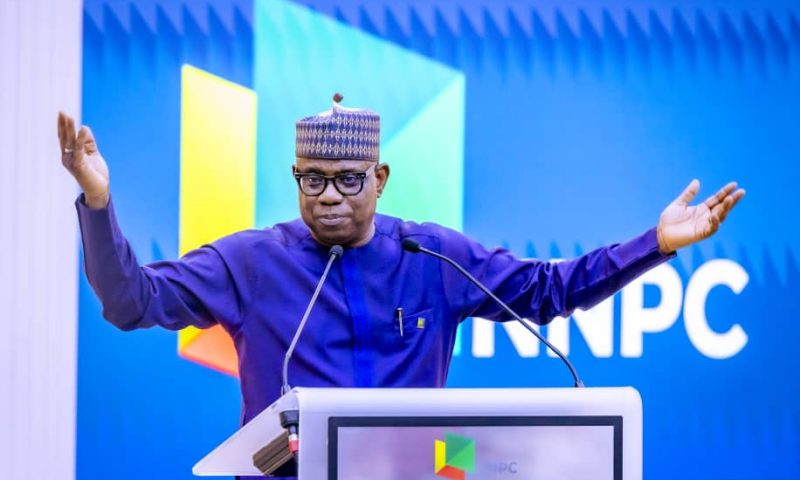
NNPC doubles Dangote crude supply to 10 cargoes

GCEO NNPC Ltd, Mr Bashir Bayo Ojulari addresses the staff of the company during his inaugural town hall meeting held at the NNPC Towers, on Thursday. CREDIT: NNPCLOperators in Nigeria’s downstream oil sector have projected potential price relief as the Dangote Petroleum Refinery confirmed that crude oil deliveries from the Nigerian National Petroleum Company Limited doubled in March, boosting prospects for improved fuel availability.

The operators, however, noted that the price relief would be guaranteed if the government reduced the price of crude supplied to the Dangote refinery, and they commended the increase in oil volumes supplied to the $20bn Lekki-based plant by NNPC last month.

Nigeria’s push to stabilise domestic fuel supply received a boost as the Dangote Petroleum Refinery disclosed that crude oil deliveries from NNPC doubled in March, amid global supply disruptions triggered by tensions in the Middle East.

Africa’s richest man and President of the Dangote Group, Aliko Dangote, revealed in a report by Bloomberg on Tuesday that the refinery received 10 cargoes of crude oil from the state-owned oil firm in March, compared to an average of about five cargoes monthly since late 2024.

Dangote said the shipments included six cargoes paid for in naira and four in dollars, under the crude supply arrangement between the refinery and the NNPC.

“Nigeria doubled crude supply to Dangote Refinery in March as Africa’s top oil producer moved to shore up fuel availability after the Iran war disrupted Middle East shipments. Last month, they gave us six cargoes with payments in naira and four cargoes with payments in dollars,” he stated.

The development comes as Nigeria moves to shore up local fuel production following disruptions in global oil supply chains caused by the recent US-Israel attack on Iran, which has affected crude flows from the Middle East.

The increase in crude allocation signals a strategic shift by the Federal Government to prioritise domestic refining capacity and reduce exposure to volatile international markets, a move industry operators say could support gradual price moderation if sustained.

Last week, reports indicated that NNPC had increased crude oil supply to the Dangote refinery, allocating seven cargoes for May loading to boost domestic fuel production.

Two trader sources had told Reuters that the latest allocation marked an increase from the five cargoes the refinery had been receiving in previous months. However, officials of the petroleum refinery later said they were unaware of claims that seven crude cargoes had been allocated to the plant for May.

Meanwhile, despite the latest improvement, Dangote noted that the refinery is still operating below its full capacity, as it requires about 19 cargoes of crude monthly to run optimally.

“The supply has improved, but it is not yet at the level we need. We still have to import crude from the United States and other African countries to meet our requirements,” he said.

The refinery, widely regarded as Africa’s largest, has increasingly relied on imports to bridge the shortfall, raising concerns about cost pressures in the downstream sector. Dangote warned that limited access to locally produced crude, particularly from international oil companies operating in Nigeria, is driving up operational costs.

According to him, many of the oil firms prefer to sell crude to international traders rather than supply directly to the refinery, forcing the plant to buy back Nigerian crude at higher prices.

“Some of the international oil companies would rather sell to traders. So, we end up buying our own crude at a premium. The higher we pay, the higher the cost of petroleum products will be, because we have to pass on the cost,” he explained.

The refinery’s growing role in regional energy supply has also come into sharper focus, as several African countries increasingly depend on its output amid global uncertainties.

Dangote disclosed that the refinery exported about 17 cargoes of petroleum products to other African nations in March alone, underscoring its emergence as a key supplier on the continent. “Many African countries now rely on us for their petroleum products, especially with the disruptions in the Middle East,” he said.

Beyond fuels, the refinery is also ramping up production of polypropylene, a key industrial material used in plastic manufacturing and automotive components, which Dangote described as being in short supply globally. “The demand for polypropylene is very high, and it is currently scarce because of what is happening in the Middle East,” he added.

The crude-for-naira deal between the NNPC and the Dangote refinery, signed in October 2024, was designed to enhance local refining, conserve foreign exchange, and stabilise fuel prices in Nigeria. However, implementation has faced challenges, including inconsistent crude supply and competition from international traders.

The refinery, with a capacity of 650,000 barrels per day, is expected to significantly reduce Nigeria’s dependence on imported refined petroleum products, which have historically strained the country’s foreign reserves.

Recent geopolitical tensions in the Middle East have further highlighted the importance of domestic refining, as disruptions in global supply chains continue to affect fuel availability and pricing worldwide.

While increased crude allocation to the Dangote refinery is a step in the right direction, sustained supply and improved cooperation with oil producers will be critical to achieving full operational capacity and long-term energy security.

Commenting, the Chief Executive Officer of Petroleumprice.ng, Jeremiah Olatide, said the delivery of 10 crude cargoes in March signals improved supply to local refineries, but warned that Nigerians may not feel the benefit through lower pump prices without government intervention.

Olatide said, “The 10 crude cargoes supply recorded in March is a good development because it indicates more crude supply and, by extension, more fuel availability. But without Federal Government intervention through crude subsidy to the Dangote refinery and other local refineries, Nigerians will continue to experience availability but unaffordability, as petrol and diesel prices are poised to hit N1,500 per litre and N2,000 per litre at the pump.”

He further explained that the pricing structure of crude supplied locally remains tied to international benchmarks, limiting the possibility of immediate price relief for consumers. “The six cargoes paid for in naira are still priced using international benchmarks, so Nigerians should not expect any drop in pump prices. What the Federal Government should do now is introduce crude subsidy,” he said.

Olatide warned of looming pressure in the downstream market, noting that diesel prices had already crossed a critical threshold at the depot level. “As I speak, diesel prices at the depot have just crossed N2,000 per litre, so there is a crisis ahead,” he added.