ASUU-AFUSTA chapter threatens strike in Kebbi

The Academic Staff Union of Abdullahi Fodio University of Science and Technology, Aliero (ASUU-AFUSTA), has issued a fresh set of demands to the Kebbi State Government, warning of a possible strike action if urgent steps are not taken to address their longstanding grievances.

The union’s chairman, Dr. Musa Isah Fakai, made the position known in a statement. He expressed the union’s growing frustration over what he described as persistent neglect of staff welfare and unresolved labour issues at the institution.

Fakai said the demands were part of ongoing efforts by the union to draw attention to what he termed “labour-unfriendly” conditions at the university, noting that similar concerns had been raised repeatedly through press briefings, official statements and other engagements without meaningful response from relevant authorities.

According to him, despite continuous advocacy, key stakeholders including the Ministry for Higher Education, the university management and the Governing Council have failed to adequately address the challenges confronting academic staff.

“The problems remain numerous, and the situation remains critically unaddressed by the relevant stakeholders,” he said, adding that the union had expected better responsiveness from the state government.

Among the demands listed by the union are the non-implementation of the approved remuneration package for university lecturers, non-payment of Earned Academic Allowances (EAA) dating back to 2014, and the backlog of unpaid promotion arrears. The union also decried the failure to implement annual salary increments for its members.

Fakai warned that failure by the government to meet these demands could lead to industrial action, stressing that the union would not hesitate to take necessary steps to protect the welfare of its members.

Seplat shares hits N10,000 as Heirs Energies investment drives rally

Seplat Energy PlcSeplat Energy Plc has become the first company in the 65-year history of the Nigerian Exchange to close above N10,000 per share, following a rally linked to a strategic investment by Tony Elumelu’s Heirs Energies.

Seplat closed trading on April 14, 2026, at N10,450 per share, representing an 80 per cent gain since January and adding approximately N2.9tn in market capitalisation within four months, according to a statement on Wednesday.

The rally traces to a transaction in December 2025, when Heirs Energies acquired a 20.07 per cent stake in Seplat Energy for about $500m, becoming the company’s largest shareholder. Elumelu subsequently joined Seplat’s Board as a Non-Executive Director in January 2026.

The $500m investment is now valued at over $800m, representing a $300m paper gain in under 120 days. Market analysts have described the surge as the “Elumelu effect,” citing the investor’s track record in transforming companies such as United Bank for Africa and Transcorp.

Since Heirs Energies became the largest shareholder, Seplat’s share price has gained more than N4,600, making it the most valuable indigenous energy stock on the continent.

The rally has also been supported by Nigeria’s recent reclassification by FTSE Russell from “Unclassified” to Frontier Market status, effective September 2026. Analysts project the upgrade could drive between $840m and over $1bn in foreign portfolio inflows into Nigerian equities, with Seplat positioned as a major beneficiary.

The company’s strong 2025 financial performance has further underpinned the share price growth. Revenue rose by 144 per cent to $2.73bn, while profit before tax increased by 86.7 per cent to $497.8m. Adjusted EBITDA climbed 137 per cent to $1.28bn, and total dividend increased by 52 per cent to 25.0 cents per share.

Seplat’s production averaged 131,506 barrels of oil equivalent per day in 2025, up 148 per cent, reflecting the first full-year consolidation of offshore assets following its acquisition of Mobil Producing Nigeria Unlimited.

The company has issued a 2026 production guidance of 135–155 kboepd and plans to drill 17 new wells.

Following the record close, the NGX All-Share Index rose to an all-time high of 205,831.38 points, while the Oil & Gas Index gained 4.36 per cent, led by Seplat.

CardinalStone Research described Seplat as “the undisputed heavyweight driver of the session,” while Meristem Securities reinstated a Buy rating on the stock.

FCMB leverages culture to deepen markets, support SMEs

FCMBFirst City Monument Bank is positioning culture as an economic engine, leveraging platforms such as the Ibadan Cultural Festival to support small businesses, deepen inclusion, and connect local enterprises to broader markets.

As a lead partner in the festival organised by the Central Council of Ibadan Indigenes, the bank said in a statement on Wednesday that cultural gatherings are fast becoming viable commercial ecosystems, bringing together thousands of vendors, creatives, and service providers to drive economic activity.

Speaking at a press conference in Ibadan, FCMB’s Divisional Head of Corporate Affairs, Diran Olojo, said the bank’s approach is to enable participation, support business growth, and capture transaction flows within these ecosystems.

“We see culture as a functioning marketplace. Events like this concentrate demand, talent, and enterprise in one place.

Our role is to help businesses plug into that, through access to finance, visibility, and the systems that support transactions and growth,” he said.

He noted that the festival stimulates activity across hospitality, retail, transport, and the creative sector, while also attracting diaspora engagement that strengthens remittance flows and local investment.

The Ibadan Cultural Festival, also known as Okebadan, attracts residents, indigenes and visitors, driving a surge in commercial activity across the city.

President-General of the CCII, Ajeniyi Ajewole, said the festival has become both a cultural and economic platform.

“It drives tourism, supports local businesses, and creates an opportunity for Ibadan indigenes in the diaspora to return, reconnect, and contribute to the city’s growth,” he said. He added that FCMB’s involvement reflects growing private sector interest in culture-led development.

Chairman of the Planning Committee, Gbolagade Akere, said the 2026 edition is structured to strengthen Ibadan’s profile as a tourism and investment destination, with activities that combine cultural expression and economic engagement.

Dangote, Trump named in TIME 100 Most Influential People

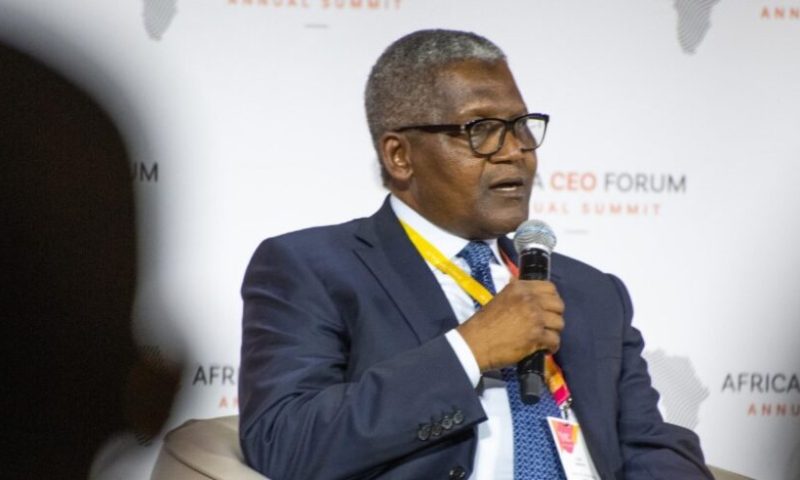
Aliko DangoteGlobal business and political influence took centre stage as Nigerian industrialist Aliko Dangote and United States President Donald Trump have been named among TIME’s 100 Most Influential People for 2026, underscoring their continued impact on global markets, policy, and leadership discourse.

The list, released on April 15, recognises individuals shaping global discourse across business, politics, technology, and culture. Dangote and Trump were alongside prominent figures such as Xi Jinping, Benjamin Netanyahu, Mark Carney, and Pope Leo XIV, as well as business and technology leaders, including Sundar Pichai and Neal Mohan.

US President Donald Trump… (Photo by Brendan SMIALOWSKI / AFP)

Dangote, who featured in the Titans category, is the only Nigerian on the 2026 list, though not the only African. Other Africans recognised include Netumbo Nandi-Ndaitwah, Precious Matsoso, Anok Yai, Mamadou Amadou Ly, and Zabib Musa Loro, reflecting broader African representation across leadership, health, culture, education, and peacebuilding.

This marks Dangote’s second appearance on the TIME100 list, having first been honoured in 2014 for his impact on business and philanthropy. His return more than a decade later shows the consistency and scale of his global influence.

As founder of Africa’s largest indigenous industrial conglomerate, Dangote has driven investments across cement manufacturing, sugar refining, fertiliser production, agriculture, and infrastructure, with a recent expansion into energy. These investments have significantly reduced reliance on imports while creating jobs and strengthening local production capacity across the continent.

In its citation, TIME highlighted Dangote’s long-term vision of building globally competitive industries using African resources, pointing to his large-scale investments in manufacturing and energy infrastructure as central to Africa’s economic transformation.

Other notable figures in the Titans category include Reid Wiseman, Commander of the Artemis II mission; Sundar Pichai; Neal Mohan; Michael and Susan Dell, founders of the Michael & Susan Dell Foundation; and Ralph Lauren, founder of the Ralph Lauren Corporation.

In the Pioneer category, individuals recognised for breakthroughs in science and social advocacy include Kiran Musunuru and Rebecca Ahrens-Nicklas for advances in genetic therapy, as well as Aaron Williams for contributions to heart transplant readiness.

The list also features influential figures in global entertainment and culture, such as Ranbir Kapoor, Dakota Johnson, and Kate Hudson, recognised for their impact in film and broader cultural influence.

Beyond his business achievements, Dangote is widely regarded for his philanthropic leadership through the Aliko Dangote Foundation, one of Africa’s largest private foundations, which supports initiatives in healthcare, nutrition, education, disaster relief, and economic empowerment.

The 2026 recognition also comes as the Dangote Group advances its long-term growth strategy, Vision 2030, aimed at transforming the conglomerate from a $30bn regional player into a $100bn global enterprise. The roadmap is structured in phases, with the first phase spanning 2025 to 2028, focused on scaling existing businesses in cement, fertiliser, and energy, while optimising assets for global competitiveness.

The second phase, covering 2028 to 2030, is expected to drive expansion into new sectors and international markets, including planned investments in steel manufacturing, power generation, and deep-sea ports to address critical industrial gaps across Africa.

The latest TIME recognition reflects growing global acknowledgement of African leadership and enterprise, with Dangote standing out for industrial scale, while other African honourees highlight influence across governance, public health, education, culture, and peacebuilding.

Police call for stronger community cooperation on Security in Jigawa

The Jigawa State Police Command has urged residents to play a more active role in keeping their communities safe by reporting suspicious activities and sharing useful information with security agencies.

The Commissioner of Police, Haruna Alaba Yahaya, made the appeal on Tuesday during a stakeholders’ meeting held at the Command Headquarters in Dutse.

He assured the public that information provided to the police would be handled confidentially.

He said the fight against crime cannot be left to security agencies alone, noting that community members often see and know things that can help prevent attacks, theft, and other criminal acts before they occur.

According to him, the Command is focusing on proactive policing, intelligence gathering, and respect for human rights as part of efforts to improve safety across the state.

Stakeholders, however, pledged their support for closer cooperation with the police.

The Police Command said it would continue to engage residents and key groups across Jigawa as part of efforts to build trust and strengthen security statewide.

Fuel imports surge 97% despite improved local supply

The importation of Premium Motor Spirit, also known as petrol, by oil marketers increased sharply in March 2026, surging by about 96.7 per cent compared to February, according to the latest data from the Nigerian Midstream and Downstream Petroleum Regulatory Authority.

Latest data from the regulator’s March 2026 fact sheet obtained by our correspondent on Tuesday showed that petrol import volumes climbed from 3.0 million litres per day in February to 5.9 million litres per day in March, reflecting renewed reliance on foreign supply amid shifting domestic dynamics.

The report read, “Petrol import volumes rose significantly in March from 3.0 million litres per day in February to 5.9 million litres per day in March.”

At the same time, the NMDPRA said local supply is gradually improving. This growth is being driven by domestic refiners, including the Dangote Petroleum Refinery, which is quickly becoming a major player in the market.

It said domestic petrol supply rose significantly from 30.5 million litres per day to 34.2 million litres per day, underscoring growing contributions from local refining capacity.

Overall, total daily petrol supply increased marginally from 39.5 million litres to 40.1 million litres during the period under review.

An analysis of the figures indicates that while imports nearly doubled within the month, domestic supply still accounted for the bulk of the market, reinforcing the increasing role of local refiners, particularly the Dangote refinery, as a stabilising force in Nigeria’s downstream sector.

The refinery operated at an average capacity utilisation of 93.62 per cent in March 2026.

Data on the refinery’s performance showed that it produced 48.2 million litres per day of Premium Motor Spirit (petrol) during the period, out of which 34.2 million litres per day was supplied to the domestic market.

This indicates that Dangote alone accounted for about 72.3 per cent of Nigeria’s total petrol consumption, estimated at 47.3 million litres per day in March, reinforcing its position as the single largest supplier of fuel in the country.

In the diesel segment, the refinery produced 16.5 million litres per day of Automotive Gas Oil, with 2.2 million litres per day distributed locally, while the rest was either exported or held for other uses.

The data also revealed a notable decline in petrol consumption, which dropped from 56.9 million litres per day in February to 47.3 million litres per day in March, suggesting weaker demand due to the high pricing of petroleum products during the period.

Recall that the Dangote refinery increased its petrol price at least five times to N1,275 per litre in March.

Similarly, petrol stock sufficiency fell sharply from 30.7 days to 21.2 days, indicating tighter inventory levels despite increased imports.

The report also indicates growing concerns that the current days of petrol sufficiency may decline due to the limited number of import licences issued to marketers, raising fears of potential supply constraints.

Stakeholders warn that Nigeria could face fuel shortages if stock levels are not improved and supply buffers are not strengthened in the coming weeks.

This combination of rising imports, increasing domestic supply, and falling stock cover highlights ongoing adjustments in Nigeria’s fuel supply chain.

The development comes against the backdrop of policy shifts by the NMDPRA regarding petrol import licences.

Earlier, the regulator had restricted the issuance of new import licences in a bid to prioritise locally refined products and support investments in domestic refining, particularly following the commencement of operations at the Dangote refinery.

However, the authority later reinstated the issuance of import licences to oil marketers, citing the need to prevent supply disruptions and ensure energy security during the transition phase.

Further breakdown of the fact sheet showed that diesel (AGO) supply declined significantly from 24.4 million litres per day in February to 10.3 million litres per day in March, while LPG supply remained stable at 4.7 kilotonnes per day, with domestic contribution increasing.

Domestic gas supply also rose slightly from 4.771 billion standard cubic feet per day to 4.888 bscf/d, reflecting steady growth in the gas segment.

Commenting, oil marketers have called for liberalisation of the downstream sector, where other players with licences will be allowed to import more PMS, or petrol, into the country. National President of the Petroleum Products Retail Outlets Owners Association of Nigeria, Billy Gillis-Harry, made his stance known while appearing as a guest on Channels Television’s The Morning Brief on Tuesday.

According to him, healthy competition in the downstream sector will further protect the country from petrol price shocks following the ongoing crisis in the Middle East, which has affected the importation of petrol into the country.

The crisis in the Middle East has seen petrol rise above N1,200 per litre locally. He argued that market liberalisation will create healthy competition among players and eventually lead to product affordability.

He said, “We do not want to recommend a total dependence on getting petroleum products from foreign countries. Importation should not be a permanent thing.

“Our position is that since we have a local refinery, such as the Dangote Refinery, which has helped advance the economy, there is still clearly a need to bring in additional product sources. This will help liberalise the market and ensure that it is competitive.

“The fact that we are depending on the Dangote Refinery today is a great pointer to where we can go. While we think that refining will increase in the country, temporarily, we should also allow imports to come in because that will help us to be able to compete favourably”.

Gillis-Harry faulted the recent position of the World Bank, which advised Nigeria to further deepen fuel importation.

In its April 2026 Nigeria Development Update, the World Bank dished out a clear set of policy actions centred on removing supply-side constraints, warning that without decisive intervention, inflationary pressures could intensify despite recent moderation.

The report identified restricted competition in the downstream petroleum sector and trade barriers on critical imports as key drivers of cost escalation across the economy. It recommended reinstating petrol import licences to reintroduce competition in the PMS market, where pricing pressures have intensified following the suspension of import permits earlier in the year.

According to the report, the absence of competitive supply has contributed to a situation where domestic petrol prices have risen above import parity levels.

As of March 2026, PMS prices stood at about N1,275 per litre locally, compared to an estimated import parity price of around N1,122 per litre, implying a cost differential of roughly 12 per cent.

“I do not accept everything that the World Bank advises. We have enough intellectuals in this country. We have very great financial minds and economists who can give Nigeria the direction we can drive. Not that we are an island, but most of these advices are tinted, in my own opinion,” the PETROAN Chair said.

Gillis-Harry faulted popular claims that the country risks falling prey to substandard imported products.

“This is not correct, although I won’t say that imported is better than locally refined products.

“Rather, I will say that imported products will go through the necessary check processes of the regulator to ensure that the quality is better. So, there will be no time that substandard products will be allowed into the system.

“Yes, there were times we suffered those kinds of challenges, but they are not permanent. I believe that NMDPRA has always risen to the occasion to make sure that those products are taken out of circulation or repaired immediately to meet up to the standard.

“PETROAN members do import. We also have receptacles for that huge quantity of refined products. For us, buying from Dangote is good, but having some alternatives is also helpful.

“Our members cut across all the stakeholders, whether major depot marketers or others. So, we import when the opportunity comes for those who have been given licences. And they won’t import substandard products. They must import what will be acceptable,” he noted.

He emphasised the importance of a liberalised downstream sector, adding that product affordability is key.

“We don’t want to depend on importation. We also want to support the local refinery, which is the Dangote Refinery. But while we are doing that, to ensure we don’t have difficulty in supplies, liberalisation will do a lot of good for us.

“If you have five suppliers, there will be competition and products will be affordable. Affordability is a good thing for Nigerians. Importation should not stop us from mounting pressure on NNPC to make our local refineries roar back to life. And we should also encourage more refiners like BUA and Azika so we can have multiple sources of products.

“We celebrate Dangote Refinery. We are so proud of Dangote Refinery. We are comfortable with him, but while we are comfortable with him, we should also think about the future. Liberalisation will be the focus to guarantee affordability,” he said.

Meanwhile, the regulator highlighted progress in refining projects, noting that the Waltersmith Refinery’s second train has commenced the introduction of hydrocarbons, signalling incremental expansion of Nigeria’s refining capacity.

The combined impact of the Dangote refinery’s operations and modular refinery expansions could significantly reduce Nigeria’s long-term dependence on imported fuel.

The March data reinforces the complexity of Nigeria’s downstream transition, where increased domestic refining capacity is beginning to reshape supply patterns, even as imports remain a critical buffer to ensure nationwide fuel availability.


Ecobank Group posts 29% rise in operating profit

Ecobank Transnational IncorporatedEcobank Transnational Incorporated, the parent company of the Ecobank Group, has released its audited financial results for the full year ended 31 December 2025, showing a remarkably strong performance across all key balance sheet and income metrics.
In a regulatory filing signed on Tuesday by the Group Chief Executive Officer, Jeremy Awori, and the Group Executive Director/CFO, Ayo Adepoju, the pan-African lender reported that its operating profit before impairment charges jumped by 29 per cent to reach $1.265bn. In local currency terms, this reflected a 31 per cent increase to N1.927tn.

The Group’s top-line growth remained robust throughout the period, with gross earnings by 14 per cent to $3.207bn (N4.883 tn). Revenue followed a similar upward trajectory, growing 17 per cent to $2.449bn, supported by the bank’s diversified pan-African footprint and digital expansion strategies.

Bottom-line performance was equally impressive. The Group’s profit before tax rose 21 per cent to $800.9m (N1.220tn), while profit after tax grew 20 per cent to settle at $594.1m (N904.7bn)

Ecobank’s balance sheet witnessed significant scaling during the 2025 financial year. Total assets expanded 23 per cent to hit $34.5bn, a figure that translates to N49.659tn in Naira terms. This growth was underpinned by a surge in customer confidence, as deposits from customers grew 24 per cent to $25.3bn. The bank also increased its support to the real sector, with loans and advances to customers rising 19 per cent to reach $11.8bn.

One of the most notable highlights of the report was the massive leap in shareholder wealth. Total equity surged 60 per cent to reach $2.9bn (N4.123tn), reflecting a significantly strengthened capital position and retained earnings.

The results underscore the bank’s resilience in a complex macroeconomic environment. By maintaining a sharp focus on operating efficiency, the management team, led by Awori and Adepoju, has successfully translated revenue growth into higher operating margins.

The 2025 audited report indicates that the Group is successfully navigating currency fluctuations and inflationary pressures across its various markets while maintaining a solid trajectory for sustainable growth and value creation for its shareholders.

Seplat, Stanbic, Lafarge fuel N883bn market rally

The Nigerian Exchange maintained its upward trajectory as the overall market capitalisation crossed the N132tn threshold, bolstered by significant gains in 40 listed stocks. At the close of the trading session on Tuesday, the market capitalisation rose by N883bn to settle at N132.492tn, while the All-Share Index advanced by 1,372.52 points, or 0.67 per cent, to end at 205,831.38 points.

This bullish performance was primarily driven by price appreciation in large and medium capitalised stocks, most notably Seplat Energy, Nigerian Exchange Group, Stanbic IBTC Holdings, Lafarge Africa, and MeCure Industries.

Investor sentiment remained firmly positive as market breadth finished with 40 gainers against 21 decliners. Ecobank Transnational Incorporated and Stanbic IBTC Holdings emerged as the primary drivers of the rally, with both stocks gaining 10 per cent to close at N4.60 and N161.70, respectively.

The Nigerian Exchange Group followed closely with a 9.97 per cent appreciation to close at N168.75 per share, while Cornerstone Insurance and MeCure Industries saw their share prices rise 9.94 per cent and 9.92 per cent, respectively.

Conversely, the losers’ chart was led by Fortis Global Insurance, which shed 8.20 per cent to close at N1.12, followed by McNichols Consolidated and Academy Press, which declined 8.17 per cent and 6.96 per cent.

Liquidity in the market saw a significant boost as the total volume traded appreciated by 21.13 per cent to 569.309 million units, valued at N32.250bn across 45,777 deals. Access Holdings dominated activity by volume with 67.530 million shares worth N1.746bn, while Zenith Bank led in terms of value with 39.741 million shares exchanged for N4.50bn.

Other highly traded equities included VFD Group, Guaranty Trust Holding Company, and Lasaco Assurance. Regarding the market outlook, analysts at Futureview Group indicated that the market is expected to sustain its positive bias in the near term as investors continue to position themselves in fundamentally sound stocks, though they cautioned that intermittent profit-taking could potentially temper the upside.

NDLEA, NDE partner to rehabilitate drug addicts in Abia

The Commander of the National Drug Law Enforcement Agency, NDLEA, Abia State Command, CN Chilee Chigbu says the Command operates one of the largest and most effective rehabilitation centres in Nigeria, where rehabilitation of individuals affected by drug abuse is handled.
The Commander, who stated this during her visit to the State Coordinator of National Directorate of Employment, NDE, Mrs Nwachukwu Tessy, emphasized the need for sustained support in the recovery process of rehabilitated drug addicts.

She stressed that rehabilitation alone is not enough without proper reintegration into society and appealed to the NDE to introduce skill acquisition programmes for individuals currently undergoing treatment at the NDLEA rehabilitation centre.

According to CN Chilee, equipping the rehabilitated drug users with practical skills will help them cope better during and after their recovery from addiction.

He further urged the NDE to consider providing employment opportunities for rehabilitated individuals, noting that gainful engagement is key to preventing relapse and ensuring they remain productive members of society.

In her response, the State Coordinator of the NDE, Abia State, assured the NDLEA of the agency’s readiness to collaborate effectively.

She stated that the NDE has professional trainers spread across the State who are well-equipped to support skill acquisition programmes covering over eighty different vocational skills.

Nigeria crude output misses OPEC quota eighth straight month

OPECNigeria’s average daily crude production is still below the 1.5-million-barrel quota set for the country by the Organisation of the Petroleum Exporting Countries.

According to the OPEC Monthly Oil Market Report released in April, Nigeria’s crude production in March was 1.38 mbpd. While there was a 69,000 bpd increase from the 1.31 mbpd recorded in February, the figure is still 117,000 bpd below the OPEC quota.

The figures for February indicate a month-on-month decline of 146,000 barrels per day, widening the country’s shortfall from its OPEC production allocation. This is the eighth consecutive month the country has failed to meet the OPEC quota since July 2025.

It could be recalled that although Nigeria recorded a marginal improvement in January, when production rose from 1.422 mbpd in December 2025 to 1.459 mbpd, the rebound was short-lived as output fell significantly in February.

Earlier data from the Nigerian Upstream Petroleum Regulatory Commission had also shown that crude oil production weakened at the end of 2025. Production declined from 1.436 mbpd in November 2025 to 1.422 mbpd in December, before recovering slightly in January.

In 2025, Nigeria’s crude oil production fell below its OPEC quota in nine months of the year, meeting or slightly exceeding the target only in January, June, and July. Nigeria opened 2025 strongly, producing 1.54 mbpd in January, about 38,700 barrels per day above its OPEC allocation.

However, production slipped below the quota in February at 1.47 mbpd and weakened further in March to 1.40 mbpd, marking one of the widest shortfalls during the year.

Although output recovered modestly in April (1.49 mbpd) and May (1.45 mbpd), Nigeria remained below its OPEC ceiling until June, when production edged up to 1.51 mbpd, slightly exceeding the quota.

The country sustained the momentum in July with 1.51 mbpd before falling below the benchmark again in subsequent months.

Our correspondent reports that the figures recorded in the first quarter of 2026 are below the government’s budget benchmark.

Recently, the Chief Executive Officer of the Nigerian Upstream Petroleum Regulatory Commission said oil production (crude and condensate) reached 1.8 mbpd in March.

However, an official of the commission told The PUNCH that the recovery started in mid-March after all assets on turnaround maintenance resumed operations. The official expressed optimism that crude production would meet the OPEC quota in April.

The PUNCH reports that Nigeria’s inability to meet its OPEC production quota is not only affecting its oil export earnings but also adversely impacting domestic refineries that are starved of feedstock for their operations.

Recall that The PUNCH exclusively reported on March 9, 2026, that the Federal Government, through the Nigerian National Petroleum Company Limited, had begun moves to secure crude oil supply for the Dangote Petroleum Refinery through third-party international traders in a bid to sustain domestic refining operations.

“Leveraging our global crude trading network, we are sourcing third-party crude for the refinery at prices that are competitive with prevailing international market rates,” a senior official at NNPC, who spoke in confidence due to the lack of authorisation to speak on the matter, had told The PUNCH.

The report showed that several heavyweight OPEC producers implemented sharp cuts. Saudi Arabia’s output plunged by 2.35 mbpd to 7.76 mbpd, while Iraq slashed production by 2.23 mbpd to 1.9 mbpd.

The United Arab Emirates and Kuwait also posted steep declines of 1.48 mbpd and 1.380 mbpd, respectively.

Venezuela increased production by 75,000 bpd to 1.1 mbpd, Congo added 16,000 bpd to reach 307,000 bpd, and Libya gained 15,000 bpd to 1.3 mbpd. Algeria recorded a marginal drop of 2,000 bpd.

The report noted that totals for the entire OPEC group were not available due to independent rounding and incomplete data for some members. It also clarified that Saudi Arabia’s supply to the market in March stood at 7.76 mbpd, while its actual production was 6.97 mbpd. Nothing was recorded for Gabon and the crisis-ridden Iran.