Dangiwa sends message to Tinubu, FEC members after exit as Housing Minister

The Nigeria Police Force has announced the initiation of the Force Disciplinary Committee, FDC, to assess outstanding disciplinary issues involving one hundred and sixty-seven senior police officers concerning alleged violations of professional conduct and other related offenses.

As stated by DCP Anthony Okon Placid, the Force Public Relations Officer, this initiative, currently taking place at the Force Headquarters in Abuja, is part of ongoing efforts to enhance internal accountability, enforce discipline, and maintain professional standards throughout the Nigeria Police Force.

The Force Disciplinary Committee serves as a crucial internal mechanism tasked with reviewing and adjudicating cases involving senior officers holding the rank of Assistant Superintendent of Police and above.

This process guarantees a comprehensive, transparent, and equitable evaluation of all cases in accordance with existing laws and regulations, leading to suitable recommendations for the Police Service Commission.

The Inspector-General of Police, IGP Olatunji Rilwan Disu, has reiterated the Nigeria Police Force’s dedication to discipline, integrity, and professionalism, asserting that no officer found guilty of misconduct will be protected from due process.

The IGP highlighted that the current disciplinary actions are part of broader institutional reforms designed to fortify internal control mechanisms, encourage ethical behavior, and boost public trust in the Force.

The Nigeria Police Force reaffirmed its commitment to maintaining the highest standards of accountability and service, ensuring that all officers act in accordance with the core values of the profession.

NNPC April crude supplies to Dangote cross 1bn barrels

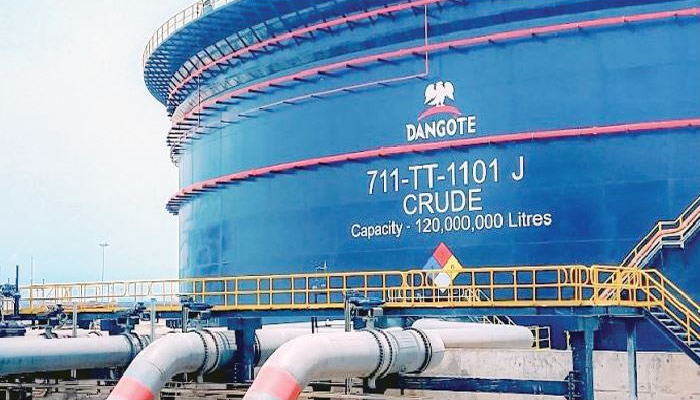
DANGOTE REFINERYCrude oil supply from the Nigerian National Petroleum Company Limited’s trading arm surged in April 2026, with shipment records indicating that more than 1.03 million metric tonnes, equivalent to about 6.8 million barrels or over 1.08 billion litres, were delivered to the Dangote Oil and Gas Company Limited within the month.

An analysis of tanker vessel movements obtained by The PUNCH on Tuesday shows that the deliveries were executed through eight crude cargoes handled by NNPC Trading, reinforcing the state oil firm’s role as a major feedstock supplier to the 650,000 barrels-per-day Dangote refinery.

The shipments, sourced from key Nigerian crude streams including Anyala, Bonga, Odudu, Forcados, Qua Iboe, and Utapate, were routed through the refinery’s Single Point Mooring systems, SPM-C1 and SPM-C2.

The document shows that out of the eight cargoes, five have been fully discharged, while three others are still awaiting berthing or completion, indicating a steady pipeline of crude inflows into the refinery.

This development comes amid the refinery’s continued complaints of supply inadequacies, with a total requirement of 19 cargoes monthly, and a recent report that the country imported 55.39 million barrels in January and February 2026.

A breakdown of the deliveries showed that Sonangol Kalandula initiated the supply chain, delivering 123,000 metric tonnes of crude from Anyala. The vessel arrived on April 5, berthed on April 8, and sailed on April 9.

This was followed by Advantage Spring, which supplied 128,190 metric tonnes from Bonga, arriving on April 11 and completing discharge by April 13.

Similarly, a vessel code-named Barbarosa delivered 125,000 metric tonnes from Odudu, while Sonangol Njinga Mban transported 129,089 metric tonnes from Bonga.

Another completed shipment, handled by Nordic Tellus, brought in 139,066 metric tonnes from Forcados, completing discharge on April 17.

However, three additional cargoes remain in progress. Advantage Sun, carrying 142,327 metric tonnes from Bonga, has arrived but is yet to berth. Also pending are Advantage Spring from Utapate with 120,189 metric tonnes, and Sonangol Kalandula from Qua Iboe with 126,471 metric tonnes.

In total, the NNPC Trading cargoes account for 1,033,332 metric tonnes of crude, underscoring what industry analysts describe as a “strong and sustained supply commitment” to the Dangote refinery.

Further findings show that, beyond crude deliveries, the Dangote refinery also received multiple shipments of refined products and blending components from international markets during the period.

Among them, Seaways Lonsdale delivered 37,400 metric tonnes of blendstock gasoline from Immingham, United Kingdom, handled by Vitol, between April 18 and 19.

Another vessel, Augenstern, supplied 37,125 metric tonnes of Premium Motor Spirit from Lavera, France, discharging between April 8 and 9.

From Norway, Emma Grace brought in 37,496 metric tonnes of PMS from Mongstad, while LVM Aaron delivered 36,323 metric tonnes from Lome, Togo.

Similarly, Egret discharged 35,498 metric tonnes of naphtha from Rotterdam between April 16 and 18, providing critical feedstock for gasoline blending.

A pending shipment, Mont Blanc I, carrying 36,877 metric tonnes of blendstock gasoline from Antwerp, Belgium, is yet to berth, while Aesop is expected to deliver 130,000 metric tonnes of residue catalytic oil from Singapore later in April.

In addition to NNPC Trading volumes, other crude cargoes from international and domestic traders also supported refinery operations.

Notably, Yasa Hercules delivered 273,287 metric tonnes of crude from Corpus Christi, United States, while Front Orkla brought in 264,889 metric tonnes from Ingleside, US.

A major cargo, Navig8 Passion, supplied 496,330 metric tonnes of crude from Cameroon, highlighting regional supply integration.

Domestic contributions included Harmonic, which delivered nearly 993,240 barrels from Ugo Ocha, and Aura M, which supplied 1 million barrels from Escravos, alongside an additional 651,331 barrels of cargo from Anyala.

Operational data indicate that most vessels berthed within one to two days of arrival and departed shortly after discharge, suggesting improved efficiency at the refinery’s offshore terminals.

The Dangote refinery, located in Lekki, Lagos, is Africa’s largest single-train refinery, with a nameplate capacity of 650,000 barrels per day.

The facility is expected to significantly reduce Nigeria’s dependence on imported petroleum products by refining domestic crude and supplying petrol, diesel, aviation fuel, and other derivatives to the local market.

NNPC Limited, through its trading arm, has remained a central player in supplying crude to the refinery under evolving commercial arrangements, amid ongoing reforms in Nigeria’s downstream oil sector.

Earlier this month, Africa’s richest man and President of the Dangote Group, Aliko Dangote, revealed in a report by Bloomberg that the refinery received 10 cargoes of crude oil from the state-owned oil firm in March, compared to an average of about five cargoes monthly since late 2024.

Dangote said the shipments included six cargoes paid for in naira and four in dollars, under the crude supply arrangement between the refinery and the NNPC.


UACN lists N54.03bn bond on NGX

uac-logoUAC of Nigeria Plc has listed its N54.03bn Series 1 bond on Nigerian Exchange Limited, underscoring the Exchange’s growing profile as a multi-asset platform and providing the company with access to long-term capital.

The seven-year senior unsecured instrument, admitted to trading on 17 April 2026, carries a fixed coupon of 17.35 per cent and was issued under UACN’s N150bn multi-instrument programme.

Priced at par with 54.03 million units at N1,000 each, the bond will mature on 15 December 2032. Similarly, investors will receive semi-annual coupon payments on 15 June and 15 December throughout the tenor. The offer closed in December 2025.

The structure features a four-year moratorium on principal repayment, after which amortisation will commence, with an option for early redemption at the issuer’s discretion.

Commenting on the listing, Vice Chairman of Highcap Securities Ltd, David Adonri, said, “What stands out is the continued ability of issuers like UAC of Nigeria Plc to access long-term funding.

This reflects both the depth of the domestic debt market and the growing relevance of NGX as a credible platform for capital raising across asset classes.”

The transaction was jointly arranged by Stanbic IBTC Capital Limited, Chapel Hill Denham Advisory Limited, Quantum Zenith Capital & Investments Limited, and FCMB Capital Markets Limited, with Chapel Hill Denham Securities Limited acting as stockbroker. Stanbic IBTC Trustees Limited served as trustee, while Africa Prudential Plc was appointed registrar.

This listing highlights NGX’s continued evolution beyond equities, strengthening its fixed income segment and further reflecting its profile as a more diversified, multi-asset marketplace.

NUPRC warns skills gap threatens oil sector growth

Oritsemeyiwa Eyesan 1Nigeria’s oil and gas industry may be heading toward a critical turning point, not due to declining reserves or asset divestments, but because of a growing shortage of skilled professionals needed to sustain the sector’s future growth.

This warning came from the Chief Executive of the Nigerian Upstream Petroleum Regulatory Commission, Oritsemeyewa Eyesan, who urged indigenous operators to urgently invest in human capital development or risk undermining the industry’s long-term viability.

She charged the Independent Petroleum Producers Group to uphold industry standards, strengthen human capital development, and promote good corporate governance.

This was disclosed in a statement issued on Tuesday by the Head of Media and Corporate Communications, Eniola Akinkuotu.

Speaking during a courtesy visit by the Independent Petroleum Producers Group, led by its Chairman, Adegbite Falade, at the Commission’s headquarters in Abuja, Eyesan said the growing dominance of local firms following the exit of international oil companies had placed greater responsibility on indigenous players.

She warned that without deliberate investment in skills and capacity, the industry could face a crisis that would affect not just individual companies but Nigeria’s global standing.

Eyesan added that the implications of weak capacity go beyond company performance, stressing that global investors assess Nigeria as a whole.

“One area I think we need to spotlight is human capital development. As the industry grows, there is a tendency toward default, and if we allow that to fester, it will hurt all of us.

“Because we are in a global market, the financiers are rating Nigeria; they are not rating companies, and if we do not bring our human capacity to par, then we will be creating a big problem for ourselves,” she said.

With divestments by international oil companies reshaping Nigeria’s upstream landscape, Eyesan described the IPPG as a “significant force” that must now uphold the highest industry standards.

She challenged the group to enforce discipline among its members and emulate the operational standards historically associated with multinational operators.

“As a pressure group, you should hold yourselves to a standard. I think that is one of the things the IOCs have done very well,” she said.

The NUPRC boss also stressed strict compliance with the Petroleum Industry Act 2021, noting that strong corporate governance and regulatory alignment are essential to sustaining investor confidence.

Reaffirming the Commission’s role as a business enabler, Eyesan assured operators of continued regulatory support in line with the economic agenda of President Bola Tinubu.

She also disclosed that the Commission had fully transitioned to a paperless system as part of broader reforms to improve efficiency and transparency.

“When I took over, we realised we needed to transform, and we set up a transformation team. We are happy to announce that on Friday, April 18, 2026, we went paperless, and everybody collaborated to make it happen,” she said.

Responding, Falade commended the NUPRC leadership, noting that the industry had begun to witness positive changes since Eyesan assumed office in December 2025.

“You have not been here for long, but the signs are very clear as to your dynamic leadership. We will not stop emphasising that because we do not take it for granted,” he said.

He also called for sustained engagement between the regulator and indigenous producers, pledging the group’s commitment to national development.

“You can always count on and trust that the Nigerian agenda is at the heart of our mandate,” Falade added.

Nigeria’s oil and gas sector is undergoing a major transition, driven by the divestment of international oil companies and the increasing role of indigenous operators. While this shift has been hailed as a step toward local content development, industry experts warn that it has also exposed a widening skills gap.

For decades, multinational firms provided technical expertise, training, and global best practices. Their gradual exit has left indigenous companies with the challenge of filling that void, often without sufficient technical manpower.

The shortage of skilled professionals, from engineers and geoscientists to project managers, could slow production growth, weaken operational efficiency, and ultimately affect Nigeria’s competitiveness in the global energy market.

FRSC returns N1.12m recovered from fatal crash to deceased’s family

The Federal Road Safety Corps (FRSC) has handed over the sum of N1,120,000 recovered from a fatal road crash to the family of a deceased motorist, in what it described as part of its commitment to integrity, transparency and professionalism.
In a statement by the FRSC, the crash occurred on April 11, 2026, at Idu Village along the Gegu–Abaji route and involved a Toyota Corolla with registration number GWP418CV and a Volkswagen Golf with registration number RBC220DG.

The driver of the Volkswagen Golf, Mallam Aliyu Mohammed Bala, sustained serious injuries in the crash and was later confirmed dead at the hospital despite efforts to save his life.

During the rescue operation carried out by the FRSC Zebra Team, the sum of N1,120,000, along with other personal valuables was carefully recovered from the scene and properly documented in line with standard operational procedures.

At a solemn event held at the Command on April 20, 2026, the Corps formally handed over the recovered money to the family of the deceased.

The elder brother of the late driver, Mr. Bala Yakubu, received the money on behalf of the family in the presence of witnesses, including N. Yusuf and Aminu Mahmud Maku.

The handover was conducted by the Ag. Unit Commander, Chief Route Commander RC Ojonugwa E. Ejah, alongside other senior officers of the Command.

The Corps Marshal, Shehu Mohammed, while describing the gesture as a reflection of the Corps’ ethical standards, said it reinforces accountability within the agency.

He also extended condolences to the bereaved family, noting that the entire management and staff of the Corps sympathised with them and prayed for the peaceful repose of the deceased.

Wema Bank meets N264.7bn capital threshold, retains licence

Wema BankWema Bank has officially secured its future in the top tier of the nation’s financial sector, announcing on Monday that it has not only met but significantly surpassed the Central Bank of Nigeria’s new recapitalisation requirements, comfortably retaining its National Banking Licence.


The bank disclosed a Total Qualifying Capital of N264.7bn, a figure that towers over the N200bn minimum threshold mandated by the regulator for national banks. Perhaps most impressive is the speed of execution; Wema Bank finalised the process in April 2026, a full six months ahead of the CBN’s stipulated deadline.

The capital boost was driven by a two-pronged strategic fundraise. The bank successfully executed an N150bn Rights Issue between April and May 2025, which saw massive participation from existing shareholders. This was followed by an additional N50bn special placement later in 2025, solidifying a balance sheet capable of weathering global economic shocks.

Commenting on the development, the Managing Director/Chief Executive Officer of Wema Bank, Moruf Oseni, said, “The successful completion of our recapitalisation exercise is a defining moment for Wema Ban

It is a strong validation of our strategy, our performance, and the enduring confidence our shareholders and stakeholders have in our vision.”

The journey to this milestone began in March 2024, when the Central Bank of Nigeria, under Governor Olayemi Cardoso, announced a sweeping recapitalisation programme. The policy was designed to fortify the Nigerian banking industry against currency volatility and inflation while positioning banks to support the federal government’s goal of achieving a $1tn economy.

For national banks like Wema, the bar was raised from N25bn to N200bn. Wema Bank’s success is particularly noteworthy given its history; after operating as a regional player for years, it only regained its national banking licence in 2015. This latest achievement cements its status as a permanent heavyweight in the national landscape.

“We have not only met the CBN’s requirements; we have exceeded them, reinforcing our position as a national bank with the scale, strength, and stability to compete and lead,” Oseni added.

With the capital exercise concluded, Wema Bank is pivoting toward a new phase of aggressive market expansion. The beefed-up balance sheet is expected to translate into increased lending capacity for Small and Medium Enterprises, enhanced digital infrastructure, and a more robust corporate banking suite.

By utilising its digital-first approach through ALAT, the bank intends to bridge the gap between traditional banking stability and fintech-driven agility.

“This milestone strengthens our ability to compete at scale, deepen our market presence, and deliver more value to our customers across Nigeria through improved access to credit, enhanced digital banking experiences, and innovative financial solutions,” Oseni added.

Looking ahead, the bank aims to leverage its strengthened position to act as a primary catalyst for Nigeria’s broader economic growth.

“This is not just about retaining our licence; it is about building a bigger, stronger, and more impactful Wema Bank,” the MD/CEO noted.

Established in 1945, Wema Bank is Nigeria’s longest-standing indigenous commercial bank. It has evolved from a traditional retail bank into a technology leader, launching ALAT in 2017. Following its successful recapitalisation, the bank continues to operate with a National Licence, serving millions of Nigerians across the country.

Nigeria buys 61.7m barrels US crude amid bulk exports

crude oilNigeria imported about 61.7 million barrels of crude oil from the United States between January 2024 and January 2026, underscoring the country’s growing rel iance on foreign feedstock to support domestic refining despite being a major oil producer.
This is despite the fact that Nigeria exported over 300 million barrels of crude in the first 10 months of 2025 and 55.39 million barrels in January and February 2026.

Data obtained from the US Energy Information Administration showed that crude exports from the United States to Nigeria surged during the period, marking a sharp reversal from nearly a decade of negligible crude trade flows between both countries.

Before 2024, American crude shipments to Nigeria were virtually non-existent. The only notable supply recorded within the period was in March 2016, when exports averaged just 19,000 barrels per day, translating to about 0.589 million barrels for the entire year.

However, the trade pattern changed significantly in 2024, coinciding with the commencement of operations at the Dangote refinery, which industry observers said has emerged as the primary buyer of US crude to supplement domestic supply constraints.

The EIA reports its data in thousands of barrels per day, meaning the daily figures must be multiplied by the number of days in each month to derive the total monthly volume.

For 2024, data available for January to June indicated that Nigeria imported a total of 15.701 million barrels from the United States within six months. In January, imports averaged 125,000 barrels per day, translating to 3.87 million barrels. February recorded 110,000 barrels per day or 3.19 million barrels, while March fell to 51,000 barrels per day, amounting to 1.58 million barrels.

Imports rose again in April to 67,000 barrels per day, representing 2.01 million barrels, before dropping to 35,000 barrels per day in May, equivalent to 1.08 million barrels. June recorded the highest inflow for the year at 132,000 barrels per day, which translated to 3.96 million barrels.

The volume increased further in 2025, which accounted for the largest share of the two-year imports. Between February and December 2025, Nigeria imported 41.06 million barrels of US crude.

According to the EIA, the year started with 111,000 barrels per day in February and climbed steadily in the following months.

Imports peaked in June 2025 at 305,000 barrels per day, the highest monthly rate in the dataset, delivering about 9.15 million barrels within 30 days. Another strong inflow was recorded in August at 201,000 barrels per day, equivalent to 6.23 million barrels.

However, the supply slowed sharply towards the end of the year. Imports dropped to 12,000 barrels per day in November, translating to just 0.36 million barrels, before slightly rising to 23,000 barrels per day or 0.71 million barrels in December.

For 2026, data available for January showed that Nigeria imported 159,000 barrels per day, amounting to 4.93 million barrels.

A breakdown of the figures showed that the combined total for 2024, 2025 and January 2026 stood at 61.685 million barrels, which rounds up to 61.7 million barrels.

The development highlights a paradox in Nigeria’s oil sector, where the country exports large volumes of crude oil but still struggles to supply enough feedstock to domestic refineries.

For decades, Nigeria relied heavily on importing refined petroleum products such as petrol and diesel due to limited refining capacity. The commissioning of the Dangote refinery in 2024 shifted the pattern, with the country now importing crude oil for local processing instead of finished fuels.

Aliko Dangote once said the imports from the United States were largely driven by the need to bridge the gap between domestic crude supply and the refinery’s operational requirements.

The Dangote facility, one of the world’s largest single-train refineries, requires substantial daily feedstock to run at optimal capacity, needing over 19 million barrels monthly.

Sources told our correspondent that the Dangote refinery imports crude from Ghana and other African countries even as the country sells crude to other countries.

Data from the Central Bank of Nigeria showed that Nigeria exported an estimated 306.7 million barrels of crude oil between January and October 2025, despite concerns over feedstock shortages faced by domestic refineries.

The figures indicated that while the country produced about 443.5 million barrels during the 10-month period, averaging roughly 1.45 million barrels per day, a significant portion of the output was shipped overseas.

Cumulatively, exports between January and October represented about 69 per cent of total production, leaving roughly 137 million barrels for domestic use.

Similarly, Nigeria exported 55.39 million barrels of crude oil in the first two months of 2026 even as the Dangote refinery continues to struggle with inadequate domestic feedstock supply.

According to CBN data, the country shipped out 31.31 million barrels in January and 24.08 million barrels in February.

In January, crude production averaged 1.46 million barrels per day with exports at 1.01 mbpd. In February, production fell to 1.31 mbpd while exports averaged 0.86 mbpd. Total crude production for the two months stood at 81.94 million barrels, meaning that 26.55 million barrels were left behind for local refineries in the first two months of 2026.

On several occasions, the Dangote refinery complained of low crude supply despite the naira-for-crude arrangement, forcing it to source feedstock from the United States and other countries, including Ghana.

Also, the Crude Oil Refiners Association of Nigeria lamented that some modular refineries under its umbrella shut down intermittently due to inadequate crude supply.

CBN tightens grip as interbank deficit hits N4.1tn

Central Bank of Nigeria, Olayemi CardosoIn a strategic move to curb rising food and fuel prices, the Central Bank of Nigeria has tightened its grip on the financial system, pushing the interbank deficit to N4.1tn. By vacuuming out excess liquidity through high-yield government bills, the CBN is betting that a short-term drought in the banking system is a necessary sacrifice to stabilise the naira and prevent inflation from spiralling out of control after its recent jump to 15.4 per cent.


According to the latest Afrinvest Weekly Market and Economic Analysis, the interbank system remains under immense pressure as the apex regulator prioritises the containment of resurgent inflation and exchange rate volatility.

The report reveals that system liquidity conditions, representing the volume of discretionary cash available for banks to lend to one another, remain deep in negative territory. While the average system deficit narrowed by 18.7 per cent to settle at N4.1tn, down from N5.0tn the previous week, the figures signal a deliberate drought orchestrated by the regulator to mop up excess money supply.

Mop-up operations

Analysts at Afrinvest noted that this persistent shortfall is not accidental but a core feature of the current fiscal defence strategy. “The persistent system liquidity shortfall reflects sustained monetary tightening by the CBN, driven by a combination of OMO-induced sterilisation and limited offsetting inflows,” the report stated.

To anchor inflation expectations and prevent excess naira from chasing limited foreign exchange, the CBN utilised Open Market Operations. By offering N600bn in high-yield OMO bills, the CBN effectively mopped up cash from the banking system, locking it away to prevent it from driving up general price levels.

Despite the cash scarcity, investor appetite remains voracious. The 140-day and seven-day bills saw massive oversubscriptions, with bid-to-cover ratios of 8.6x and 4.3x, respectively. “Investor demand was robust, underscoring continued appetite for high-yield government securities despite prevailing liquidity constraints,” the analysis added.

Liquidity divide, stability

A striking takeaway from the analysis is the growing liquidity segmentation within the Nigerian banking sector. This phenomenon occurs when a few large, cash-rich banks hold massive surpluses while smaller institutions struggle with deficits.

Instead of lending to their struggling peers in the interbank market, often due to heightened risk concerns, these surplus institutions are choosing to park their money back with the CBN.

The report highlighted that Standing Deposit Facility placements averaged N4.1tn, noting that “these placements highlight continued liquidity segmentation as surplus institutions maintained significant deposits at the CBN despite the broader system deficit.”

Surprisingly, despite the liquidity crunch, interbank funding rates remained stable. The Open Repo rate held steady at 22.0 per cent, while the Overnight rate moderated slightly to 22.3 per cent.

Analysts suggest this indicates that the market has fully priced in the CBN’s hawkish stance, meaning banks have already adjusted their operations to a high-interest-rate environment.

Inflationary pressures

Looking ahead, the forecast remains consistent as the tight grip is not expected to loosen soon. Experts expect “liquidity conditions to remain constrained in the near term, and funding rates are likely to remain elevated but stable”, anchored by the prevailing monetary policy.

This aggressive tightening comes at a pivotal moment for the national economy. After eleven months of cooling prices, Nigeria’s headline inflation rebounded to 15.4 per cent in March 2026. This spike was largely driven by a global energy shock that pushed crude oil prices above $100/bbl, leading to higher domestic fuel and logistics costs.

By keeping the interbank system thirsty for cash, the CBN aims to support the naira and control the Consumer Price Index. While the squeeze on liquidity raises the cost of funds for banks, the apex bank appears convinced that a short-term sting in interest rates is a necessary price to pay to avoid the long-term pain of runaway inflation.

Niger CAN chairman laments insecurity, says nobody safe in Nigeria

The Chairman of the Christian Association of Nigeria (CAN), Niger State Chapter, Most Reverend Bulus Dauwa Yohanna, has expressed concern over the worsening security situation in the country, warning that Nigeria is fast becoming unsafe for citizens.
Speaking during a CAN council meeting held at the State Secretariat in Minna, the cleric, who is also the Catholic Bishop of Kontagora Diocese, said the nation has “nosedived into a state of fear” due to persistent insecurity challenges, economic hardship, and what he described as unfulfilled promises by leaders.

He further lamented the growing level of insecurity, citing reports of foreign nationals issuing travel advisories warning their citizens against visiting some states and even Abuja, the nation’s capital, over fears of possible attacks.

“Who is safe, and where in Nigeria can one boast of safety? If Nigerian military generals and senior security officers can be killed, then who cannot be killed?” he asked.

Bishop Yohanna also listed cases of kidnappings, abductions, killings, destruction of houses, and the burning of markets and farmlands, alleging that such incidents have continued to destabilise communities across the country.

He noted concerns over circulating reports and security alerts on social media and alleged internal security communications warning of possible attacks on Abuja and other states, including Niger State.

Referencing a leaked memo reportedly attributed to the Nigeria Customs Service on planned attacks on government facilities and military bases, he urged Nigerians to remain vigilant and prayerful.

“With or without certainty, the situation calls for vigilance, security awareness, and prayers for divine intervention. I believe that one day, good will triumph over evil,” he said.

The cleric called on President Bola Tinubu and Niger State Governor, Umar Bago, to urgently strengthen security measures, warning that “there is no smoke without fire”.

He further cautioned that Nigeria’s situation would not improve unless citizens collectively change their ways, stressing that failure to do the right thing would continue to affect all sectors of national life.

Petrol price drop in doubt after Hormuz disruption

The decision by Iran to reclose the Strait of Hormuz has dampened hopes that fuel prices would crash in Nigeria.

The Strait of Hormuz was opened on Friday following a ceasefire deal between Iran and the United States. But barely 24 hours later, Iran reclosed the strait, calling the decision a response to a continued blockade of its ports by the United States.

The Iranian military on Saturday said control of the strategic waterway, through which 20 per cent of globally traded oil transits, had “returned to its previous state”, with reports saying Iranian gunboats fired at a merchant vessel as it attempted to cross.

Fuel marketers had earlier projected that petrol prices could drop from the current N1,250 to about N900 when the strait was opened on Friday.

The spokesman of the Petroleum Products Retail Outlet Owners Association of Nigeria, Joseph Obele, said on Friday that the prices of crude oil had crashed following the reopening of the strait.

Obele recalled that petrol was around N800 before February 28, when the crisis started, expressing optimism that a sharp reduction should be expected if the development had been sustained.

“With the reopening of the Strait of Hormuz, Nigerians should expect a very significant reduction in petrol prices. Petrol will fall below N1,000 by next week, probably to N900 per litre. Don’t forget that the product was N800+ before the Middle East crisis. Now that the war is over, we should be expecting a return to that price regime,” he said on Friday.

But on Sunday, Obele told our correspondent that the reclosure of the Hormuz had dashed hopes of a price drop projection. Obele said the status quo would remain at the moment, pending when both Iran and the US agree on a lasting ceasefire.

President Donald Trump said Sunday that Iran had violated the ceasefire agreement with the US by attacking ships in the Strait of Hormuz, and he repeated threats to attack Iranian energy infrastructure unless it accepts a deal to end the war.

Our correspondent observed, however, that there has not been a major oil price surge since Saturday when the strait was reclosed by Iran. According to oilprice.com, Brent traded at $90 per barrel on Sunday, up from $88 before the Hormuz Strait reclosure. Recall that Brent was $95 as of Friday morning.

Meanwhile, US President Donald Trump said Sunday that Iran had violated the ceasefire agreement with the US by attacking ships in the Strait of Hormuz, as he repeated threats to attack Iranian energy infrastructure unless it accepts a deal to end the war.

“Iran decided to fire bullets yesterday in the Strait of Hormuz — a total violation of our ceasefire agreement!” he posted on Truth Social. “That wasn’t nice, was it?”

“We’re offering a very fair and reasonable deal, and I hope they take it because, if they don’t, the United States is going to knock out every single power plant and every single bridge in Iran,” he continued. “No more Mr Nice Guy!” he said.

Trump disclosed that negotiators would arrive on Monday evening in Islamabad, Pakistan, which last weekend hosted direct talks between the two sides, with the current two-week ceasefire set to end on Wednesday.