T+1 Settlement Cycle Takes Off June 1- SEC


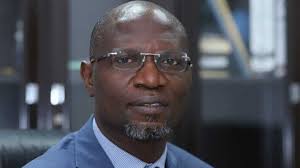
The Lagos State Government has appointed Dr Saliu Olugbenga Oseni as the new Medical Director of General Hospital, Gbagada, as part of ongoing efforts to strengthen healthcare delivery across public health institutions in the state.
A statement by the Lagos state government said the management and staff of the hospital officially welcomed Dr. Oseni following the retirement of the immediate past Medical Director, Dr. Babafemi Olusegun.
Before his new appointment, Dr. Oseni served at General Hospital, Isolo, where he was recognised for his professionalism, administrative competence, and dedication to quality healthcare service delivery.
His appointment to General Hospital, Gbagada, according to the hospital management, forms part of the Lagos State Government’s broader plan to sustain excellence and improve healthcare services across state-owned medical facilities.
Welcoming the new Medical Director, the hospital management expressed confidence in his ability to build on the achievements of his predecessor, Dr. Babafemi Olusegun, whose tenure was described as impactful and professionally driven.
The management noted that Dr. Oseni possesses the experience and leadership capacity needed to further advance the hospital’s vision of providing efficient, accessible, and patient-centred healthcare services to residents.
“The new MD is well-positioned to build on the achievements of his predecessor while advancing the hospital’s vision of delivering efficient, accessible, and patient-centred healthcare services,” the statement said.
Staff and stakeholders of the hospital pledged their support and cooperation to the new Medical Director, assuring members of the public of the institution’s continued commitment to quality healthcare services under the new leadership.
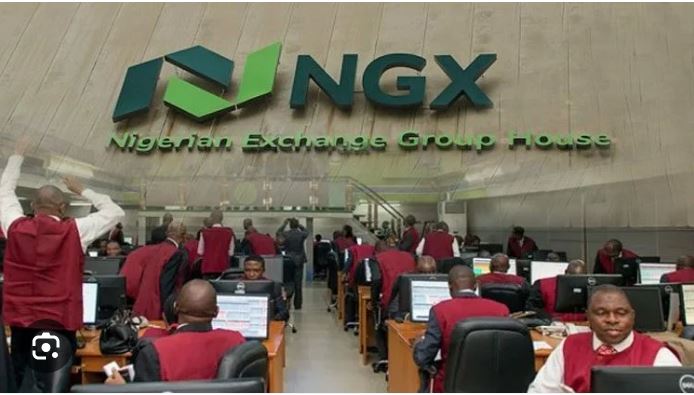
The Nigerian equities market opened the week on a marginally bearish note on Monday, as mild profit-taking activity dragged key performance indicators lower on the Nigerian Exchange Limited.
At the close of trading, the market capitalisation of listed equities declined slightly by N81bn or 0.05 per cent to close at N160.362tn, down from the N160.443tn recorded in the previous session.
Similarly, the benchmark All-Share Index eased by 126.09 points to close at 250,204.83 points from 250,330.92 points, reflecting a broadly cautious trading session.
Market breadth closed negative, with 33 gainers against 36 decliners, indicating a slight tilt towards selling pressure across listed equities as investors locked in profits from recent rallies.
On the local bourse, energy firm Oando Plc led the top gainers, advancing 10.00 per cent to close at N51.70 per share, up from N47.00 in the previous session. Educational publisher UPL Plc followed closely with a 10.00 per cent gain, closing at N5.50 from N5.00.
Deap Capital Management & Trust Plc appreciated 9.96 per cent to close at N5.96, while pharmaceutical manufacturer May & Baker Nigeria Plc rose 9.94 per cent to settle at N52.00. Hospitality counter Transcorp Hotels Plc completed the top five gainers’ list with a 9.92 per cent growth, closing at N7.76.
Conversely, NCR Nigeria Plc topped the laggards’ chart, shedding 9.99 per cent to close at N161.20 per share from its previous close of N179.10. Zichis Agro Allied Industries Plc also declined 9.99 per cent to settle at N26.49, while international marketing firm IMG Plc dropped 9.93 per cent to close at N38.10.
Sovereign Trust Insurance Plc lost 9.93 per cent to close at N2.65, and media firm Daar Communications Plc shed 9.78 per cent of its value to close the day at N2.03.
Meanwhile, high-capitalisation blue-chip stocks, including MTN Nigeria Communications Plc, Dangote Cement Plc, Julius Berger Nigeria Plc, Guinness Nigeria Plc, and Cadbury Nigeria Plc, closed flat for the session. The stall reflected a cautious stance among institutional investors holding positions in heavyweight counters.
Overall, trading activity maintained a balanced but slightly negative tone, as market participants continued to engage in selective positioning amid profit-taking in recent gainers and strategic rotation into defensive consumer and industrial plays.
Reviewing previous market drivers, the Head of Research at GTI, Abiodun Ogunniyi, noted that sector-specific momentum had largely anchored market volumes.
“Last week, robust activity in Finance, ICT, and Services drove market turnover, with FBN Holdings, UBA, and Chams as the top three traded equities,” Ogunniyi said.
Looking ahead to trading expectations for the rest of the week, the research head pointed towards emerging bargain-hunting opportunities on specific tickers despite the initial downswing.
Ogunniyi added, “This week, we expect selective interest in The Initiates PLC, ZICHIS, and ARADEL following recent profit-taking pressures, alongside a potential rerating of Meyer. Overall sentiment should remain cautiously positive as investors continue to track selective names for early-week positioning.”
Market analysts added that overall investor sentiment remains stable, with market participants expected to closely monitor upcoming corporate quarterly earnings releases and macroeconomic signals for clearer directional cues in subsequent sessions.
Sterling Financial Holdings Company Plc has sustained its aggressive growth trajectory, with its total assets crossing the historic N4tn threshold for the first time in the first quarter ended 31 March 2026.
According to the group’s latest financial statements, total assets hit N4.07tn in Q1 2026, building on the N3.91tn closed at the end of the 2025 financial year.
The holding company also published its audited full-year 2025 results, revealing an 89.2 per cent surge in profit before tax to N86.8bn, up from the previous year.
Profit after tax for FY2025 similarly grew 74.8 per cent to close at N76.3bn, driven by a historic 44.4 per cent rise in gross earnings to N486.8bn.
The strong performance trickled directly into Q1 2026, where gross earnings rose 41.6 per cent year-on-year to N134.8bn, while profit before tax climbed 52.8 per cent to N27.9bn.
Additionally, the successful completion of the group’s recapitalisation programme pushed shareholders’ funds up to N542.5bn during the quarter.
Commenting on the milestone and the underlying drivers of the group’s performance, the Group Managing Director of Sterling Financial Holdings Company Plc, Yemi Odubiyi, said, “Our FY2025 and Q1 2026 results reflect continued growth across the Group’s core businesses, supported by disciplined execution, improved operating efficiency, and a strengthened capital position.
“The successful completion of our recapitalisation programme positions the Group for the next phase of growth across our commercial banking, non-interest banking, and wealth-management businesses.”
Looking toward the remaining quarters of the year, he added, “We remain focused on sustaining growth, strengthening our balance sheet and delivering long-term value across our diversified platform.”
The growth period highlights a critical phase in the holding company’s evolution, as the synchronised expansion of Sterling Bank Limited, The Alternative Bank Limited, and SterlingFI Wealth Management positions the group to effectively capture market share across multiple financial segments under a unified corporate framework.
The Nigerian Exchange Group Plc has intensified its investor education drive through a digital engagement initiative aimed at improving financial literacy and deepening retail participation in the Nigerian capital market.
The group recently hosted an X Space session themed ‘Follow the Fundamentals: A Beginner’s Guide to the Stock Market’, which reached over 5,000 users. The audience was largely composed of young Nigerians, first-time investors, and retail market participants seeking to better understand investment opportunities.
The session featured social media investment influencer Omiete Inko-Tariah, alongside representatives from Nigerian Exchange Limited and NGX Regulation Limited. It demystified key concepts around market operations, investor protection, and safe participation.
Beyond education, the event served as an open forum where retail investors engaged directly with market stakeholders on issues of confidence, transparency, and accessibility.
Speaking on the initiative, the Head, Group Communications and Partnerships at NGX Group, Clifford Akpolo, said, “Deepening retail participation is critical to building a more resilient, inclusive, and sustainable capital market.
“At NGX Group, we believe financial literacy is not just an educational responsibility; it is a strategic imperative for strengthening investor confidence, improving market accessibility, and expanding long-term wealth creation opportunities for Nigerians. Through digital platforms like this, we are leveraging innovation to connect with the next generation of investors and democratise access to market knowledge.”
The initiative forms part of NGX Group’s broader sustainability agenda under its Community pillar, which focuses on advancing financial literacy, inclusion, and economic empowerment through education-driven and stakeholder-focused programmes.
Following the success of this edition, NGX Group plans to sustain similar engagements as part of its ongoing commitment to strengthening investor confidence, deepening retail participation, and building a more resilient and inclusive investment ecosystem.

Last week, the Federal Government of Nigeria announced the exemption of admission seekers into Colleges of Education and Agriculture from taking the Unified Tertiary Matriculation Examination, UTME.
the decision has been generating diverse reactions from stakeholders in the education sector.
Minister of Education, Dr Tunji Alausa, had announced the decision at the annual policy meeting on tertiary admissions, following extensive consultations with key education stakeholders across the country and relevant agencies in the sector.
Alausa stressed that all eligible candidates must still register with JAMB for proper documentation, screening, verification, and admission processing through Central Admissions Processing System (CAPS) in line with existing national regulations set by regulatory authorities in Nigeria.
He further explained that the exemption also covers National Diploma programmes in non-technology agricultural and agriculture-related courses. According to the minister, the move is aimed at expanding access, inclusion and strengthening integrity of admissions processes across tertiary institutions in Nigeria’s education sector.
“This approach strikes a necessary balance between widening access and preserving the integrity of our admission system. It will not only ease the pressure associated with UTME but also encourage greater participation in teacher education and agricultural programmes, both of which are critical to national development.
“Any institution found to have conducted admissions outside the CAPS will be held accountable, and appropriate sanctions shall be applied without hesitation. Heads of institutions, whether in the public or private sector, must recognise that such violations could result in severe consequences, including the suspension of operating licences or other regulatory actions, where applicable,” the Minister noted
However, although some Nigerians applauded the new policy, there are other stakeholders who have expressed some reservations about it.
Those opposed to the policy are of the view that it amounts to lowering the education standard in Nigeria.
National President of the Colleges of Education Academic Staff Union, COEASU, Dr. Lawan Bazza, clearly agrees with the position that the new policy would lower the education standard, instead of raising the bar.
Bazza, while faulting the policy, noted that the association was not consulted before it was announced.
At a news conference in Abuja recently, he stressed that major reforms affecting teacher education should involve critical stakeholders.
He noted that while efforts to increase enrolment into Colleges of Education were commendable, policy decisions must not undermine the quality of teacher training or the future of Nigeria’s education system.
“We have stated that we were not consulted in the discussions that led to the development of this policy or shift.
“What we are saying is that anytime the government has a policy on ground and is muting the idea, it must engage critical stakeholders and have a discussion, so that we understand the reason the policies are being pronounced.
“That is why we always call for a bottom-top approach, not a top-bottom approach,” he stated.
He emphasised that teacher education remained central to national development and warned that lowering admission standards without proper consultation could have long-term implications for the quality of teachers produced in the country.
On the outcome of the union’s National Executive Council (NEC) meeting held between May 6 and 9 at the Delta State College of Education, Warri, he reaffirmed support for the ongoing reforms aimed at strengthening Colleges of Education, including implementation of the Federal Colleges of Education Act 2023, which retains the Nigeria Certificate in Education (NCE) as the minimum teaching qualification.
He said the union equally endorsed a five-year training structure for student teachers as well as announced the successful conclusion of a long-awaited renegotiation agreement with the Federal Government.
He said the proposed five-year duration under the dual mandate arrangement would ensure all-round professional development for student teachers through stronger grounding in pedagogy and subject content.
The Nigeria Union of Teachers (NUT) has also kicked against the policy.
NUT’s position was made known through its President, Titus Amba.
Speaking at the 21st Century Teachers Workshop organized in collaboration with the Teachers’ Registration Council of Nigeria (TRCN) in Abuja, weekend, Amba argued that if not properly implemented, the policy could weaken the quality of teachers’ training and undermine professionalism in the teaching profession.
Like his counterpart at COEASU, he also lamented that the union was not adequately consulted before the announcement of the policy. He advised that critical stakeholders should be carried along in reforms affecting teacher education.
He said: “When you announce that you’ve given a waiver to students going to Colleges of Education, it gives the man walking on the street a different thinking of the seriousness that is attached to producing credible teachers.
“We felt a bit worried because policies affecting institutions that produce teachers for future generations must be carefully considered.”
He further contended that removing the UTME requirement might send wrong signals about the seriousness attached to producing qualified teachers.
“Teaching should not be treated as a profession open to anyone without rigorous training and proper screening processes.
“Today, we are in a situation where people who have graduated from the university without any idea of the teaching profession go out there because of lack of jobs.
“They go there and pick teaching jobs. Teaching jobs shouldn’t be seen like that. Teaching jobs should go beyond that.
“When admission into Colleges of Education is granted without standard entry evaluation, the public may begin to question the credibility of teachers being produced,” he said.
The NUT president, who described himself as a product of the traditional teacher-training system, recalled that earlier teacher education emphasised structured progression, including intensive teaching practice before certification.
He decried the disappearance of teachers’ training colleges at the secondary level, which previously prepared candidates before proceeding to higher teacher education.
According to him, the absence of foundational teacher training has contributed to a situation where individuals without pedagogical background enter the profession merely as a temporary employment option.
“Teaching should not be seen as a stop-gap job. Like medicine, law or journalism, it requires proper training and commitment,” Amba said.
He added that strengthening admission standards and improving teachers’ welfare would make the profession more attractive to talented youths.
He also called on the government to prioritise investment in teacher education, infrastructure and digital capacity.
He noted that many students in rural areas still lack access to computers and internet facilities required for modern learning and examinations.
He reaffirmed the union’s support for digital assessment systems but urged the government to bridge the infrastructure gaps to avoid excluding students from disadvantaged communities.
The NUT president appealed to government and stakeholders to adopt deliberate policies that would elevate teachers’ status and restore public confidence in the profession.
However, the Executive Secretary, National Commission for Colleges of Education (NCCE), Dr Angela Ajala, has a different view about the new policy.
She has assured Nigerians that there was no need to entertain fears or create confusion about the recent reforms in the education sector, including the new policy.
According to her, the Dual Mandate is a new direction for Colleges of Education in Nigeria, which simply means that accredited Colleges of Education would now have a clearer, stronger and more coordinated pathway to run teacher education in such a way that allows students to earn the NCE and progress into a degree pathway under an approved structure.
“Under the new continuous five-year NCE-Degree model, students are expected to complete the three-year NCE programme and then proceed to an additional two-year degree programme as eligible candidates.
“This preserves the NCE as the professional foundation for teacher education while creating a smoother route for those who want to advance into degree certification,” she stated.
She insisted that the reform is not a demotion of Colleges of Education but a repositioning.
“It is not the death of the NCE but the strengthening of it. It is not lowering standards, it is creating access, structure and progression,” she added.
She revealed the benefits of the new policy for the country’s education sector to include more attractive Colleges of Education, better-prepared student-teachers, deeper grounding in pedagogy and subject content and a stronger pipeline of qualified teachers for basic education.
Also, an educationist, Dele Olaniyi said the five-year NCE-degree structure was capable of supporting all-round professional development for student-teachers through stronger grounding in content and pedagogy.
“At a time when teacher education needs renewal, the Dual Mandate sends a clear message and that is that teaching must no longer be treated as a fallback profession; it must become a properly structured, respected and future-ready pathway,” he added.
He also said exempting NCE candidates from the UTME was a wrong move because according to him, “The future of Nigeria’s classrooms depends on the quality of teachers we prepare Today.”
He said the move would present NCE graduates as inferior and people that did not go through the rigorous UTME, which has become a symbol of seriousness for undergraduate students.
Also commenting on the development, the presidential candidate of Social Democratic Party, SDP, for the coming 2027 election, Prince Adewole Adebayo, has also criticised the policy change, describing it as a deliberate lowering of standards.
“These are not reforms; they are deformations. The lowest-quality people are in government, and they want standards to fall because an educated population asks questions and challenges bad governance,” he said.
He warned that failure to properly educate young Nigerians would worsen unemployment, insecurity and social instability.
“You will turn scientists into taxi drivers. You destroy civilization and insecurity grows because the people who should become innovators are abandoned,” he submitted.

The Nigerian Aviation Handling Company Plc has recorded a profit before tax of N24.28bn for the 2025 financial year, while signalling interest in the Federal Government’s planned concession of major airport terminals across the country.

The company disclosed this at its 45th Annual General Meeting held in Lagos over the weekend, where shareholders urged management to leverage its strong financial position and operational capacity to bid for airport ownership and management under the Federal Government’s privatisation programme.
The Federal Government is currently pursuing the concession of five major international airport terminals through a Public-Private Partnership arrangement supervised by the Bureau of Public Enterprises and the Ministry of Aviation and Aerospace Development. The initiative, according to shareholders, is aimed at improving infrastructure, efficiency, and service delivery in the aviation sector.
Speaking at the AGM, President of the Association for the Advancement of Rights of Nigerian Shareholders, Farouk Umar, said NAHCO has attained the financial and operational strength required to compete for airport concessions within and outside Nigeria.
Umar commended the company’s market performance, noting that shareholders have continued to enjoy strong returns on investment.
He said, “NAHCO has now reached a level that they can even provide the same services in other African countries. When I was on board, I tried to take the business to the Morocco Airport, but we did not get there.
“Secondly, the government is trying to privatise the airport. I call on NAHCO to bid because they have the capability and financial position to win the bid.”
“They have done very well. Last year, the share price was N80; today, it is over N200, and that is more than 250 per cent. They are giving bonuses of one for seven, which is very commendable. And they have now won the business of Fly Gabon, Saudi Arabia, and Qatar. This will increase revenue and bring more profit to shareholders,” he stated.
Financial results presented at the meeting showed that the company’s total revenue rose by 22.93 per cent from N53.54bn in 2024 to N65.82bn in 2025. Profit before tax increased by 29.83 per cent from N18.70bn to N24.28bn, while profit after tax grew by 36.02 per cent from N12.87bn to N17.5bn. Earnings per share also rose from N6.60 in 2024 to N8.99 in 2025.
Chairman of NAHCO Group, Seinde Fadeni, attributed the strong performance to operational excellence and disciplined cost management despite prevailing economic challenges.
“We know it should delight you as owners of the company that in 2025, NAHCO recorded impressive growth across key performance indicators, combining a strong push for market share with disciplined cost management,” Fadeni said.
He disclosed that the board had recommended a dividend payment of N6.25 per share alongside a bonus issue of one share for every seven shares held for the 2025 financial year.
“In the few years that the present board has overseen the affairs of the company, our business has experienced significant growth. We are committed to accelerating this growth by sustaining leadership in existing markets and exploring new opportunities,” he added.
Fadeni, however, noted that rising fuel prices and inflation remain major operational concerns, stressing that “Fuel price is affecting our books. The commodity market is not smiling at us at all, but we are managing the situation.”
Group Managing Director and Chief Executive Officer of NAHCO, Olumuyiwa Olumekun, said the company has continued to expand despite economic headwinds, maintaining its leadership position in aviation services.
“Our stock performance was stellar, with a 188 per cent year-to-year gain and a market cap exceeding N200bn. We unveiled a five-year strategic diversification plan to push revenue beyond N300bn, focusing on new ventures and collaborations,” Olumekun said.
He further disclosed that the company has acquired more than 271 new ground support equipment units over the last three years as part of efforts to modernise operations and improve efficiency.
With the July 31 deadline firmly in place, several insurance companies are intensifying efforts to raise fresh capital through rights issues, private placements, mergers, and acquisitions in a bid to avoid regulatory sanctions and possible licence withdrawal, reports JIDE AJIA

Across Lagos, Abuja, and other commercial centres, anxiety is rising within the Nigerian insurance industry as operators confront one of the sector’s most defining transitions in decades. Inside corporate boardrooms, executives are spending long hours reviewing financial records, holding discussions with potential investors, and considering merger opportunities as they battle to comply with new regulatory capital requirements.
The urgency follows the implementation of the Nigeria Insurance Industry Reform Act 2025, which introduced a fresh recapitalisation framework aimed at strengthening the financial capacity of insurance operators. While the reforms are expected to create a stronger and globally competitive industry, they have also placed enormous pressure on operators, particularly medium-sized and smaller firms with weak capital buffers.
Industry estimates suggest insurers collectively need about N132.5bn to meet the new minimum capital thresholds before the deadline expires. With regulators insisting that the timeline will not be adjusted, the scramble for fresh capital has intensified, turning recapitalisation into a struggle for survival.
“The July 31 deadline is sacrosanct,” the Commissioner for Insurance, Olusegun Omosehin, recently declared during a high-level industry engagement.
He stressed that the deadline is no longer an administrative decision that can easily be adjusted but a statutory requirement embedded within the NIIRA 2025 framework.
“Any attempt to change the deadline would require a fresh legislative process and presidential assent. We believe the deadline is doable, and we are moving forward with full implementation,” he said.
Under the new framework, life insurance firms are expected to maintain a minimum paid-up capital of N10bn, general insurance companies must meet N15bn, while reinsurers are required to maintain N35bn. For many operators, especially those with fragile balance sheets, this means raising billions of naira in fresh capital in an economy characterised by high interest rates and weak investor sentiment.
The challenge has been worsened by Nigeria’s difficult macroeconomic environment. Persistent inflation, elevated borrowing costs, and cautious investor appetite have made fundraising increasingly difficult. Access to investment capital has tightened significantly, forcing insurers to compete aggressively for limited market attention.
At the same time, confidence within the market is beginning to tilt in favour of stronger operators. Insurance brokers and large corporate clients are becoming more selective about the firms with which they place risks, preferring companies that have already demonstrated financial strength and readiness for the new regime.
Industry stakeholders say this trend is widening the divide between well-capitalised insurers and weaker operators struggling to survive. Larger firms with stronger balance sheets and established brands are attracting more business, while smaller companies face the risk of losing market share amid growing uncertainty over their future.
“Trust is the currency of insurance,” a veteran insurance broker in Lagos noted. “If an underwriter cannot prove they will be here after July 2026, we cannot, in good conscience, place our clients’ risks with them. We are already seeing business redistribute itself toward the large-cap players who have demonstrated resilience. The brokers are looking for stability, not just certificates.”
As a result, the recapitalisation exercise is gradually reshaping competition within the industry. Operators perceived to be financially stable are consolidating their market positions, while weaker firms face mounting pressure from both regulators and customers.
Several insurers have already approached the capital market to raise fresh funds. Companies such as Sovereign Trust Insurance, International Energy Insurance, and Guinea Insurance are pursuing rights issues and private placements to bridge their funding gaps.
Some firms are also considering mergers and acquisitions as a quicker and more practical route to compliance. Analysts believe consolidation may become unavoidable for operators unable to independently secure the required funds before the deadline.
Despite these efforts, investor appetite for insurance stocks remains relatively weak compared to sectors such as banking and telecommunications. Historically, many insurance firms have struggled with poor profitability, low dividend yields, and inconsistent corporate performance, factors that continue to affect investor confidence.
Nevertheless, regulators insist the recapitalisation exercise is not intended to cripple the industry but rather to reposition it for sustainable growth. The National Insurance Commission has repeatedly stated that its objective is to create a leaner but stronger insurance market capable of supporting Nigeria’s long-term economic ambitions.
Regulatory officials have also signalled their willingness to support struggling operators through restructuring arrangements, mergers, and acquisitions to ensure policyholders remain protected during the transition process.
“We have made it clear that no insurance company will be allowed to fail in a way that hurts the public,” a Deputy Commissioner for Insurance stated during a recent industry forum. “We are engaging weaker firms and supporting them through restructuring, mergers, or acquisitions to ensure continuity. The goal is a stronger industry capable of underwriting complex risks and driving national development. If you cannot stand alone, you must find a partner.”
The broader objective of the reform, according to regulators, is to create a more resilient insurance sector capable of underwriting large and sophisticated risks within Nigeria’s economy. Operators unable to independently meet the new thresholds are expected to seek strategic alliances through mergers or acquisitions.
Among industry insiders, particular attention has focused on a group unofficially referred to as the “Motionless 12”, firms believed to have made little meaningful progress toward recapitalisation. These operators are considered to face the highest regulatory risk if they fail to secure fresh funding or conclude merger arrangements before the deadline.
For such companies, the coming months are expected to be decisive. Failure to comply could result in licence suspension or outright revocation, potentially ending decades of participation within the Nigerian insurance market.
The recapitalisation drive is also closely linked to Nigeria’s broader economic aspirations. Policymakers believe a stronger insurance industry is necessary to support the Federal Government’s ambition of building a $1tn economy by 2030.
Large-scale investments in infrastructure, aviation, oil and gas, and manufacturing require strong insurance backing to effectively manage risk. However, Nigeria’s insurance sector has historically lacked the financial capacity to independently underwrite major projects, forcing substantial portions of risk to be transferred abroad.
Insurance penetration in Nigeria currently remains below one per cent, one of the lowest rates globally. Industry experts argue that weak capitalisation, poor public confidence, and a fragmented market structure have contributed significantly to the sector’s underperformance over the years.
The Nigeria Insurance Industry Reform Act 2025 seeks to reverse this trend by introducing stronger capital standards alongside a risk-based capital framework designed to improve operational discipline and financial stability.
“The scale of our economic ambition requires insurers that can sign off on billion-dollar risks without running to foreign reinsurers for every kobo,” an investment banker familiar with ongoing recapitalisation deals observed. “The N132.5bn gap is the price we must pay for local capacity. If we don’t pay it now, we will keep losing billions in premium flights to London and Dubai.”
Still, the journey toward the 31 July 2026 deadline remains challenging. The prevailing economic environment continues to create significant obstacles for firms seeking new investments. High borrowing costs and inflationary pressures have weakened investor appetite, making fundraising exercises more difficult than many operators initially anticipated.
Analysts say investors are increasingly focusing on companies with strong governance structures, transparent operations, and clear growth prospects. This trend has naturally favoured larger insurers such as AIICO Insurance, AXA Mansard Insurance, and Leadway Assurance, which are widely viewed as financially stable.
Consequently, smaller operators are coming under growing pressure as capital increasingly gravitates toward stronger firms. Industry observers describe the situation as one where stronger players continue to strengthen further while weaker operators struggle to attract meaningful investor support.
“The era of having over 50 players with thin capital bases is ending,” an industry consultant observed. “We expect to see a market of about 25 to 30 well-capitalised giants after the dust settles. This recapitalisation is the great cull that will ultimately professionalise the Nigerian insurance landscape. It is painful, yes, but it is a necessary surgery for a sector that has been under-performing for decades.”
For now, activities within insurance company boardrooms remain intense as operators continue their aggressive search for fresh capital. Discussions surrounding mergers, acquisitions, rights issues, and private placements are expected to accelerate further as the deadline approaches.
The message from regulators remains clear: there will be no extension, and operators unable to meet the requirements must either secure fresh capital or seek strategic partners.
As 31 July 2026 draws closer, the Nigerian insurance industry stands on the brink of a major transformation. By the time the deadline expires, the sector is expected to emerge leaner, more consolidated, and significantly different from its current structure.
For many insurers, the coming months will determine whether they evolve into stronger institutions capable of competing in a modern financial system or disappear as casualties of one of the most ambitious regulatory reforms ever introduced into Nigeria’s insurance industry.
First Bank of Nigeria Limited has launched its Naira Visa Debit Card, in partnership with Visa to extend accessible, reliable electronic payment capabilities to a broader segment of the Nigerian population.

The card is targeted at everyday consumers who require a dependable payment instrument for routine domestic and international transactions. Accepted across POS terminals, ATMs, and online platforms through Visa’s payments network, the Naira Visa Debit Card is designed to reduce friction for customers transitioning from cash to electronic payments across retail, utilities, and digital commerce.
The launch aligns with Nigeria’s ongoing drive toward a cashless economy, a policy direction that has gained significant momentum following successive Central Bank of Nigeria directives encouraging the adoption of electronic payment channels. The card is intended to serve customers across the country’s diverse economic segments.
Speaking on the launch, Chuma Ezirim, Group Executive, eBusiness & Retail Products, FirstBank, said: “Everyday transactions should be simple, secure, and rewarding. The Naira Visa Debit Card is designed to make life easier for our customers, whether they are paying for groceries, settling utility bills, or shopping online. By extending reliable electronic payment access across Nigeria, we are helping more people transition confidently from cash to digital payments, supporting the nation’s cashless policy and empowering communities with greater financial inclusion.”
Commenting on the strategic importance of the partnership, Andrew Uaboi, Vice President and Cluster Head, West Africa, Visa, noted: “A strong payments ecosystem is one that works for everyone. The Naira Visa Debit Card extends reliable electronic payment access to everyday Nigerian consumers, and this in addition to the cards in our portfolio continues to demonstrate what a truly comprehensive card portfolio looks like for the Nigerian market. Visa is proud to power this offering with FirstBank.”
The launch of the Naira Visa Debit Card broadens Visa card portfolio at FirstBank that already includes products spanning credit cards and High-end premium lifestyle spending cards. The addition completes its offering across customer segments, ensuring that cardholders at every income level have access to a product suited to their needs.
The Naira Visa Debit Card is available to all eligible FirstBank account holders through any of the bank’s branches nationwide.
Kwara State Police Command, on Friday, officially inaugurated the Violent Crime Response Unit (VCRU).
The event held at the police officers’ mess in Ilorin marked the grand finale of the two-day capacity-building programme organized for officers of the newly established Unit, in line with the operational mandate of the Inspector-General of Police, Olatunji Disu, to strengthen intelligence-led response to violent crimes and deepen community-oriented policing.
The State Police Commissioner, Ojo Adekimi, formally constituted members of the Civilian Oversight Board and officially inaugurated the VCRU operational team, with its base at A Division, Ilorin.
In his speech, the Commissioner stated that the unit is mandated to tackle armed robbery, kidnapping, and other violent crimes through intelligence-driven operations, while ensuring protection of lives and property, strict compliance with the law and human rights standards, community trust, and public accountability in all its operations.
The programme featured security awareness lectures including “Public Safety and Security of the State” delivered by AIG Ishola Babatunde Baba-Ita (Rtd) and “Trust, Cooperation and Active Participation of Stakeholders in Securing Our Communities” delivered by SP Barrister A.M. Iwalaiye (Rtd).
Goodwill messages were delivered by key stakeholders, including the Senior Special Adviser to the Kwara State Governor on Security, Alhaji Aliyu Muyideen, traditional rulers, youth representatives, market leaders, transport union representatives, and special vigilante groups.
The interactive session also provided an avenue for questions, complaints, and suggestions geared towards strengthening police-community partnership and enhancing public safety across the state.
The state police command urged all residents to continue supporting security agencies through timely and credible information sharing, according to a statement by the spokesperson, SP Adetoun Ejire-Adeyemi.