Senate recalls members from recess over rising insecurity

Senate recalls members from recess over rising insecurityThe Senate has suspended its ongoing legislative recess and summoned lawmakers for an emergency plenary session to address pressing national issues, particularly the rising insecurity across the country.


In a notice dated June 15 and signed by the Clerk of the Senate, Emmanuel Odo, senators were directed to reconvene at the National Assembly Complex in  Abuja on Tuesday, June 23, at 11:00 a.m.

The notice, issued on the directive of Senate President Godswill Akpabio, stated that the emergency sitting was necessitated by matters of urgent national importance requiring immediate legislative attention.

“The purpose of this emergency sitting is to enable the Senate to consider matters of urgent national importance, particularly issues relating to national security and other critical concerns that require immediate legislative attention,” the notice read.

The Senate also apologised for any inconvenience the development might cause and urged all lawmakers to make the necessary arrangements to attend.

The decision marks a significant shift from the National Assembly’s earlier schedule.

Last week, both chambers of the federal legislature adjourned plenary and proceeded on recess, with lawmakers expected to resume legislative activities on July 7, 2026.

The break was intended to allow members to observe the Democracy Day holiday and undertake constituency engagements across their respective districts.

The emergency recall comes amid growing concerns over insecurity and renewed calls for stronger measures to tackle terrorism, banditry and kidnapping.

Only four days ago, President Bola Tinubu declared that no mercy would be shown to terrorists and their sponsors.

In his Democracy Day address, the President issued a stern warning to bandits, kidnappers and those financing terror activities, urging them to surrender or face the full weight of the law.

Tinubu revealed that more than 13,000 terrorists had been neutralised within the past year and claimed that terror-related deaths had dropped by 81 per cent since 2015.

He, however, acknowledged that the continued captivity of schoolchildren abducted in Oyo and Borno states remained a painful reminder of the country’s security challenges.

The emergency sitting is also expected to come against the backdrop of ongoing legislative efforts to reform Nigeria’s security architecture.

Last week, the National Assembly advanced proposals for the creation of state police as both the Senate and the House of Representatives moved to amend the 1999 Constitution to permit decentralised policing.

The proposed legislation seeks to transfer policing from the Exclusive Legislative List to the Concurrent Legislative List, thereby allowing states to establish and control their own police formations.

To achieve this, the bill proposes amendments to Sections 197, 214 and 215 of the Constitution, among others.

The Senate has already passed the measure for second reading, signalling lawmakers’ determination to find lasting solutions to the country’s persistent security crisis.

The June 23 emergency session is expected to provide an opportunity for senators to deliberate on the nation’s security challenges and consider further legislative interventions.

Telcos under pressure to resolve fibre broadband bottlenecks

TelecomTelecommunications operators and regulators are under growing pressure to address bottlenecks slowing Nigeria’s fibre broadband rollout as industry stakeholders prepare for a high-level policy forum in Lagos.


The Association of Telecommunications Companies of Nigeria said the issues surrounding fibre-to-the-home deployment have become critical to Nigeria’s digital transformation agenda, warning that current challenges are limiting broadband expansion and digital inclusion.

This comes as the President of ATCON, Tony Emoekpere, confirmed that the Executive Vice Chairman and Chief Executive Officer of the Nigerian Communications Commission, Dr Aminu Maida, will deliver the keynote address at the upcoming Critical Conversation Forum on FTTH scheduled for 30 June 2026, in Lagos.

The forum is expected to bring together telecommunications companies, infrastructure providers, investors, policymakers, and state governments to address structural challenges affecting fibre deployment across the country.

ATCON said the confirmation of the NCC boss has heightened expectations for the event themed “Fibre to the Home in Nigeria: Addressing Challenges, Strengthening Standards, and Ensuring Sustainable Deployment.”

According to the association, fibre broadband infrastructure is increasingly central to Nigeria’s economic growth, but operators continue to face multiple constraints that have slowed investment and rollout.

These include multiple taxation, high right-of-way charges, regulatory bottlenecks, infrastructure vandalism, inconsistent state policies, high capital expenditure requirements, and limited access to financing for broadband projects.

Others are weak coordination among stakeholders, quality assurance concerns, and sustainability challenges affecting long-term network maintenance.

ATCON argued that fibre broadband deployment requires a distinct regulatory approach, different from mobile telecommunications, due to its fixed infrastructure nature, higher capital intensity, and long-term investment cycle.

“The fibre broadband ecosystem is fundamentally different from mobile telecommunications and requires tailored regulatory frameworks that reflect its unique operational realities,” the association said in a statement.

It added that existing policies developed during the mobile telecom era may not adequately address the complexities of FTTH and fibre-to-the-premises networks.

The association said the forum will focus on practical solutions, including regulatory reforms, infrastructure protection, technical standards, sustainable financing models, infrastructure sharing, consumer protection, and improved collaboration among stakeholders.

It noted that improving fibre broadband penetration is essential to supporting Nigeria’s digital economy ambitions, including job creation, digital inclusion, e-commerce growth, and improved access to education and healthcare services.

ATCON said the engagement is expected to produce actionable recommendations to accelerate broadband deployment and strengthen investor confidence in Nigeria’s telecom infrastructure sector.

The forum is also expected to explore ways to deepen state government participation in broadband expansion and address long-standing operational barriers affecting network rollout.

ATCON expressed optimism that the participation of the NCC leadership would help drive consensus on reforms needed to accelerate fibre infrastructure development nationwide.

Petrol may drop to N1,200 amid price cuts

Petrol may drop to N1,200 amid price cutsMarketers of petroleum products say petrol prices may drop to about N1,200 per litre as the Dangote Petroleum Refinery leads efforts to reduce ex-depot rates.
As crude prices continue to fall following a peace deal signed between the United States and Iran, the Dangote Petroleum Refinery has slashed its petrol gantry price by N75 per litre, from N1,250 to N1,175.

This has prompted other depot owners to lower their prices to about N1,180, according to Petroleumprice.ng.

However, filling stations have yet to adjust pump prices, as many still sell petrol at around N1,280, as observed on Tuesday. Marketers attribute this to the need to sell off old stock to avoid losses.

In a circular to fuel marketers on Monday, the Dangote refinery said the price adjustment followed the de-escalation of tensions in the Middle East, which had impacted energy prices over the past three months.

“Following the de-escalation of tensions in the Middle East, which has impacted energy prices, we wish to inform you that we have reviewed our premium motor spirit gantry/coastal price,” the circular stated.

It added that the new gantry price is now N1,175, while the coastal price per metric tonne has been reduced from N1,595,790 to N1,495,215. The refinery said the new rates took effect from midnight on Tuesday.

“Kindly note that all outstanding unloaded gantry volumes will be repriced at the new rate effective 12:00 AM, June 16, 2026,” the circular noted, adding, “We sincerely appreciate your continued patronage and assure you of our unwavering commitment to reliable product supply and excellent service delivery.”

The latest reduction comes amid easing tensions in the global oil market following reports of ongoing negotiations between the United States and Iran over the reopening of the Strait of Hormuz.

Oil prices, which had surged to about $120 per barrel at the peak of the crisis, fell below $80 per barrel as of Tuesday after US President Donald Trump announced a peace deal.

Speaking in an interview, the National Publicity Secretary of the Independent Petroleum Marketers Association of Nigeria, Chinedu Ukadike, said petrol could sell for between N1,200 and N1,250 in Lagos, while prices may be around N1,300 in other locations.

According to Ukadike, marketers have not yet reduced pump prices because many still hold old stock, urging Nigerians to exercise patience. He said consumers often expect immediate price adjustments, noting that such moves would result in losses for marketers still holding expensive inventory.

“This announcement is enabling people who have old stocks to clear out their stocks, not only clearing out their stocks but also enabling them to prepare to take the fresh stocks,” he said.

Ukadike added that loading activities usually slow down whenever the Dangote refinery announces new prices, allowing marketers time to clear old stock.

“Once the Dangote refinery announces a new price, there is a serious pause in loading. And it will enable people who just bought new products to see how they can clear the old stocks within the window of a day or two. Then when the new stocks start coming into the market, the process of supply and price will set in. Definitely, by tomorrow and Friday, people will start adjusting to the new price,” he said.

“The price is not static, and it depends on where you are. But I know that products will start selling between N1,200 and N1,250 in Lagos and more in other far-away locations,” he added.

However, the spokesman of the Petroleum Products Retail Outlet Owners Association of Nigeria, Joseph Obele, expressed concern that imported petroleum products appear cheaper than locally refined fuel, calling on the Nigerian Midstream and Downstream Petroleum Regulatory Authority to issue more licences for fuel imports.

Like Obele, Nigerians on social media have complained that the N75 reduction does not reflect the recent decline in crude oil prices.

Crude oil, the main feedstock for fuel production, had risen sharply following the outbreak of hostilities between the United States and Iran on February 28. During the three-month conflict, prices climbed above $100 per barrel and at some points exceeded $120 per barrel, pushing fuel prices higher.

In Nigeria, petrol prices rose from about N830 per litre to around N1,300 per litre during the period, while diesel and aviation fuel also recorded significant increases.

With crude prices now declining, the latest adjustment by Dangote Refinery is expected to bring further relief to domestic fuel prices. Oil prices continued their downward trend on Monday following the signing of a ceasefire agreement between the United States and Iran and the reopening of the Strait of Hormuz.

According to Oilprice.com, Brent crude, the global benchmark, dropped from $87 on Sunday to $78 per barrel on Tuesday. The United States and Iran said they reached an agreement on Sunday to end the conflict, a development that further pushed oil prices lower.

The PUNCH reported that petrol could fall to as low as N900 per litre in the coming days if the peace deal holds and crude prices continue to decline. A Dangote Petroleum Refinery official also noted that while prices could drop further, the refinery is still processing “expensive crude” already in its tanks.

Airtel boosts digital skills with N50m scholarships

Airtel boosts digital skills with N50m scholarshipsThe Airtel Africa Foundation, through Airtel Nigeria, has disbursed a total of N50m in first-year funding to 100 Nigerian students under its Airtel Africa Tech Fellowship Programme, strengthening its push to expand digital skills and education access in the country.
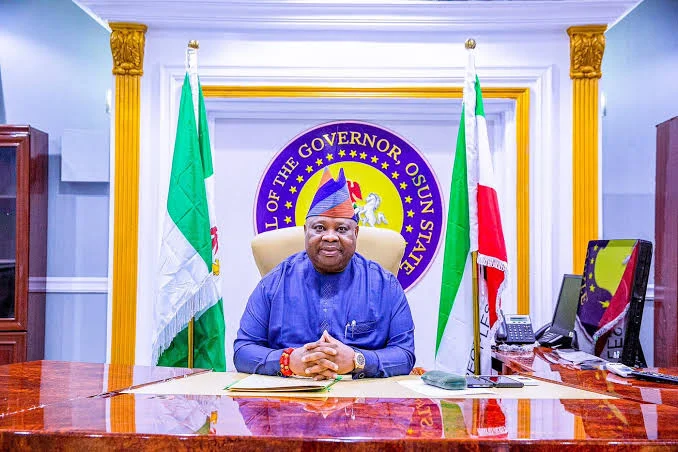
The initiative targets high-performing but financially disadvantaged 100-level students in public universities studying technology-related courses. It covers tuition, accommodation, monthly stipends, and essential learning tools, including laptop computers.

According to the Foundation, each of the 100 beneficiaries received an average of N500,000, with the total disbursement completed as of  29 May 2026. It added that funding will continue throughout the duration of the students’ four-to-five-year academic programmes.

The beneficiaries referred to as Airtel Fellows were selected through an independent process from accredited public universities across Nigeria.

They are studying disciplines including Computer Science, Information Technology, Data Science, Software Engineering, Cybersecurity, and Artificial Intelligence.

Participating institutions in the first cohort include the University of Lagos, University of Nigeria, Nsukka, Ahmadu Bello University, University of Benin, Obafemi Awolowo University, University of Ilorin, and Tai Solarin University of Education.

Chairman of Airtel Africa Foundation, Dr Segun Ogunsanya, said the programme is aimed at building a pipeline of skilled innovators who will contribute to Africa’s growing digital economy.

“We are not just funding education; we are building a pipeline of skilled innovators who will contribute meaningfully to Africa’s digital economy. The transparency of this process and the full delivery of our commitment to these 100 scholars are matters of great pride for the Foundation,” Ogunsanya said.

He added that the initiative reflects Airtel’s commitment to long-term human capital development and inclusive growth.

Also speaking, Chief Executive Officer of Airtel Nigeria, Dinesh Balsingh, said the programme demonstrates the company’s dedication to youth empowerment through education and digital inclusion.

“At Airtel Nigeria, we believe that the future of our country lies in the hands of our youth. This N50m disbursement is proof that when we say we are committed to empowering young Nigerians, we mean it fully and transparently,” Balsingh said.

The Airtel Africa Tech Fellowship forms part of the Foundation’s broader F.E.E.D agenda, which focuses on Financial Inclusion, Education, Environmental protection, and Digital Inclusion.

Beyond financial support, the programme also provides mentorship, exposure, and skills development aimed at preparing beneficiaries for careers in an increasingly digital global economy.

Osun declares Wednesday public holiday for Islamic new year

Osun State Government has announced that Wednesday will be observed as a public holiday in the state to commemorate Hijira 1448AH.
The was contained in a statement signed by the Commissioner for Home Affairs, Rasheed Aderibigbe, obtained in Osogbo on Tuesday.

Aderibigbe explained that the celebration marks the beginning of Islamic New Year.

“Osun State Government is pleased to announce that Wednesday 17th June, 2026 will be observed as a Public Holiday to commemorate Hijira 1448AH

“This celebration marks the beginning of Islamic New Year.

“Consequently, on behalf of Osun State Government, I extend warm
greetings to our Muslim Brothers and Sisters as we celebrate Hijira 1448AH.

“May this occasion bring peace, prosperity and unity to our great State,” the statement read partly.

The government also encouraged residents to shun rancour and joyfully participate in the festivities and celebrations promoting unity and togetherness.

The statement further read, “However, residents are encouraged to shun rancor and disharmony and joyfully participate in festivities and celebrations promoting unity and togetherness.”

The Islamic year 1448 AH begins on Tuesday, June 16, 2026, following the sighting of the Muharram crescent moon.

This lunar year spans from June 16, 2026, to approximately June 5, 2027 on the Gregorian calendar.

FAAN probes alleged gold smuggling by staff

FAANThe Federal Airports Authority of Nigeria said it has commenced an official investigation into the circumstances surrounding the allegation of gold smuggling involving its staff members.

FAAN staff in the Aviation Security section, Ali Baffa, was arrested by operatives of the Economic and Financial Crimes Commission for allegedly attempting to smuggle gold worth N4.4bn out of the country in connivance with two other persons at the Mallam Aminu Kano International Airport, Kano.

The EFCC’s Head of Media and Publicity, Dele Oyewale, announced the suspects’ arrest in a statement issued on Thursday, the same day the suspects were arrested.

Earlier, when contacted on Sunday, FAAN publicist Henry Agbebire said the authority was yet to be clear on the circumstances surrounding the development, adding that its position would be officially made on Monday.

Agbebire confirmed that the embattled security operative had been issued a query, while the outcome of its findings would inform its official position. “We have no position yet until tomorrow. Though he has been given a query, but the way it is, by tomorrow that is when DAS will get the clearer picture. You know they said it happened around the car park, the bureau de change car park, and, in all, he is still a suspect.

“Tomorrow, by the time they check with the EFCC, it will be clear if he will be charged, but temporarily it is just a query that has been issued. But a firmer and stronger position will be presented tomorrow.”

When asked on Monday for the management decision, Agbebire said FAAN is yet to decide on the matter, adding that a full-scale investigation has been launched into the matter. He said, “Well, what I can say now is that we are yet to decide on the matter; investigations have been allowed to go on; that is what we have on the matter as at now.”

The anti-graft agency accused Baffa of allegedly concealing 22.2 kilogrammes of unprocessed gold bars in his trousers to evade security checks and facilitate their illegal export.

According to the EFCC, Baffa and two other suspects, Aushabu Nasidi and Mukhtar Muhammad Dan Zaria, were intercepted during a surveillance operation by the Land and Property Fraud Section of the EFCC’s Kano Zonal Directorate.

The statement reads, “Preliminary investigations revealed that Ali Baffa allegedly concealed 22.2 kilogrammes of unprocessed gold bars estimated at over N4,400,000,000 in his trousers, with the intent to bypass security checks and hand over the precious minerals to overseas-bound passengers for illegal export out of Nigeria.”

Further investigations led to the arrest of Nasidi, whom the commission accused of supplying the gold bars to Baffa. The EFCC said one of Baffa’s alleged accomplices, Nasidi, was found with several foreign currencies, including 3,000 Saudi riyals, 40,000 Turkish lira, 199.75 Kuwaiti dinars, 20,700 Philippine pesos, 80 Australian dollars, 310 Chinese renminbi, 4,000 Algerian dinars, 40 Hong Kong dollars, 26,000 Hungarian forints and 1,000 Sudanese dinars.

The investigation later led to the arrest of Mr Dan Zaria, who allegedly supplied the gold bars to Nasidi. During interrogation, Dan Zaria allegedly told investigators that he had smuggled about 40.2 kilogrammes of gold between 1 and 11 June using the same method, according to the EFCC.

Cooking gas: Marketers plan massive imports after 140% price surge

GasAs the prices of Liquefied Petroleum Gas (cooking gas) rise by about 140 per cent in many locations across the country, marketers of the commodity are perfecting plans to massively import the product to make it more affordable and available.


Findings showed that cooking gas prices jumped from an average of N1,000 per kilogramme in January and February this year to as high as N2,400 a few days ago. Industry sources told our correspondent that the regulator is issuing licences for the importation of cooking gas.

This is also because local producers of LPG have been unable to meet domestic demands for gas, according to operators. For example, the sources stated that there is a decline in LPG supply from the Dangote Petroleum Refinery due to internal utilisation, not because the refinery exports, as is being speculated.

“The recent decline in LPG supply from the Dangote refinery, which has created a crisis in the domestic market, isn’t because of exports but is due to their internal utilisation for enhancing petroleum production capacity,” a source familiar with the development, who spoke in confidence due to the lack of authorisation to speak on the matter, stated.

The source further explained that this had to do with the refinery’s recent ramp-up to 700,000 barrels per day amid higher global fuel demand. Consequently, marketers were allowed to bring in enough LPG to end the current scarcity and crash the prices, which have risen from less than N1,000 earlier in the year to about N2,400 per kilogramme.

An official in the Nigerian Midstream and Downstream Petroleum Regulatory Authority, who also spoke in confidence, said, “The regulator is collaborating with the Nigerian National Petroleum Company Limited and other key stakeholders to further boost LPG availability in the local market.”

Speaking in an interview with our correspondent on Sunday, Louis Ibah, who is the spokesman for the Minister of State for Petroleum Resources (Gas), Ekperikpe Ekpo, said marketers have committed to importing larger volumes of LPG.

“Marketers are stepping up their efforts and have committed to importing larger volumes of LPG, ensuring that supply meets demand in the weeks ahead for domestic consumers,” Ibah said.

Ibah assured Nigerians that the gas minister is addressing all issues concerning LPG availability. According to him, the minister has mandated the NMDPRA to work with stakeholders to resolve supply challenges and ensure uninterrupted gas availability for domestic use.

He added that the Dangote refinery had been urged to prioritise the supply of LPG to the local market. “Nigerians should rest assured that the Minister of State Petroleum Resources (Gas), Dr Ekperikpe Ekpo, is actively addressing all issues affecting the production, distribution and supply of LPG in the country.

“The minister has mandated the NMDPRA to work with stakeholders to resolve supply challenges and ensure uninterrupted availability of gas for domestic use. And there is good news as the management of the Dangote refinery has been urged to prioritise and allocate more LPG volumes for the domestic market.

“Marketers are also stepping up their efforts and have committed to importing larger volumes of LPG, ensuring that supply meets demand soon,” he said.

Speaking in an interview with our correspondent, the National President of the Nigerian Association of Liquefied Petroleum Gas Marketers, Edu Inyang, confirmed the development to our correspondent.

According to him, the depot owners are planning to ship in cooking gas to end the current scarcity in the country. He said the depot owners confirmed to him that they were planning to import LPG.

“The depot owners have confirmed to us that they are planning to import enough LPG,” he said in a chat with our correspondent on Monday.

Ibah, the gas minister’s aide, had earlier dismissed the claim that local gas producers were shipping out the product, saying the Federal Government’s restriction on LPG exports remains in place and is being enforced by the NMDPRA.

“The ban on exports of LPG announced by the Minister of State for Petroleum Resources (Gas), Dr Ekperikpe Ekpo, is still in place to stabilise prices and is strictly enforced by the NMDPRA,” Ibah told The PUNCH.

He emphasised that none of the local producers is allowed to export cooking gas, saying all resources are focused on making the product available for Nigerians. “It’s important to note that none of our producers are currently exporting the LPG meant for cooking in Nigeria, so all resources are focused on meeting our local needs,” he said.

The government’s position comes as concerns mount over soaring cooking gas prices and supply shortages across several parts of the country. Retailers and consumers have reported difficulties accessing supplies, while prices have continued to rise.

Aside from the rising cost of cooking gas, Nigerians said the product is also not available at retail outlets, forcing many to resort to charcoal and firewood for cooking.

Ibah told our correspondent on Monday that normalcy was returning as far as cooking gas supply is concerned. But retailers countered his claim, stating that they have yet to witness the normalcy, as the commodity was still scarce as of yesterday.

The persistent increase in LPG prices is occurring despite data from the Nigerian Midstream and Downstream Petroleum Regulatory Authority indicating that local production from refineries and gas processing plants accounted for the bulk of Nigeria’s LPG supply between April 2025 and April 2026, significantly reducing dependence on imports.

However, the increased domestic production has yet to translate into lower prices for consumers, with cooking gas now selling at N2,400 per kilogramme in several locations.

The Nigerian Association of Liquefied Petroleum Gas Marketers had earlier warned of the scarcity and worsening hardship arising from erratic supply and rising costs.

The association said marketers were paying between N25.2m and N26.2m for 20 metric tonnes of LPG, saying, “We feel that if the situation is not immediately checked, the citizens may rise against the owners of gas filling stations,” the marketers had warned.

W’Bank ranks Apapa, Tin Can ports among top performers

World BankNigeria’s Tin Can Island Port and Lagos Port Complex in Apapa have been ranked among the world’s top 20 most improved container ports over the past five years, according to the World Bank’s Container Port Performance Index 2025.
The World Bank, in the sixth edition of the CPPI, listed Tin Can Island Port Complex and Apapa Port Complex among the top 20 ports globally that recorded the most significant improvements in performance between 2020 and 2025.

The CPPI evaluates container port performance using indicators such as vessel turnaround time and operational efficiency based on global benchmarks. The report was compiled by the World Bank and S&P Global Market Intelligence.

According to the report, Tin Can Island Port ranked 10th globally among ports with the greatest improvement over the five-year period, while Lagos Port ranked 12th.

The Container Port Performance Index provides a data-driven assessment of global port efficiency by focusing on vessel time in port.

It enables comparisons across ports and over time, helping to identify improvements and operational challenges.

The latest ranking comes as Nigeria continues to record trade surpluses. The National Bureau of Statistics reported a trade surplus of N7.54tn in the first quarter of 2026.

Data from the report showed that Tin Can Island Port improved its CPPI score by 42 points, moving from -68 in 2020 to -26 in 2025. Lagos Port also recorded a 35-point improvement, rising from -61 in 2020 to -26 in 2025.

The performance placed Nigeria among a select group of countries that recorded significant progress in vessel turnaround times, port efficiency and cargo-handling operations during the review period.

Nigeria ranked ahead of several major ports in the global improvement rankings, including France’s Marseille Port, which placed 11th with a 39-point improvement; Türkiye’s Iskenderun Port, which ranked 13th with a 34-point increase; and India’s Jawaharlal Nehru Port, which placed 14th with a 32-point gain.

Peru’s Paita Port ranked 15th with 32 points, while China’s Keelung and Fuzhou ports occupied 16th and 17th positions respectively, each recording 27 points.

Responding to the report, the Managing Director of the Nigerian Ports Authority, Dr Abubakar Dantsoho, said, “With the investor-friendliness of President Bola Tinubu providing the gravitas needed for increased investment to implement our port infrastructure and equipment modernisation drive coupled with the unflinching support from the Minister of Marine & Blue Economy, Adegboyega Oyetola, we have all it takes to advance the fortunes of trade and boost the national economy

Okpebholo condemns Edo kidnapping, orders police prob

Edo State Governor, Monday OkpebholoEdo State Governor, Monday Okpebholo, has condemned the kidnapping that reportedly took place on Sunday at the Vegetable Market along Airport Road, Benin City, describing it as unacceptable and a direct attack on innocent residents.
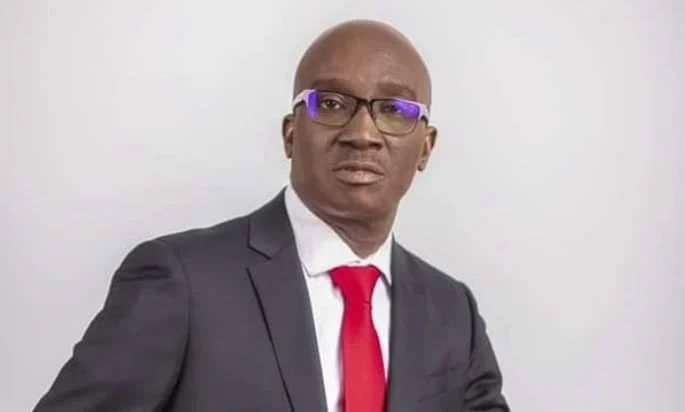
In a statement released on Monday by his media aide, Patrick Ebojele, the governor also directed the Edo State Commissioner of Police to immediately commence a swift and coordinated investigation into the incident with a view at securing the safe rescue of the victims and arresting those responsible for the attack.

The governor warned that the state government would not tolerate any act that threatens public safety and security or disturbs the peace of the state.

He stated, “I strongly condemn this act of kidnapping and I call on the Commissioner of Police to immediately open investigation into the matter.

“As a government, we will not tolerate any act that threatens public safety and security or disturbs the peace of the state.”

Okpebholo urges residents of Benin City and across Edo state to remain alert and report any suspicious movements to the nearest Police station stressing that timely information will support ongoing police operations.

He reaffirmed that the government would not relent until those responsible were apprehended and made to face the full weight of the law.

‘Over 70% of eligible NNPC staff seek exit’

NNPCThe Nigerian National Petroleum Company Limited has commenced an early retirement scheme that is already attracting significant interest from employees, with officials confirming that more than 70 per cent of eligible staff have indicated willingness to participate in the voluntary exit arrangement.

The initiative, structured under the Accelerated Exit Scheme and the Voluntary Exit Scheme, is being positioned by the company as a strategic and non-coercive reform designed to align its workforce with long-term transformation goals, improve efficiency and create space for younger professionals.

The AES targets employees with up to one year left before retirement in 2026, while the VES covers staff due for statutory retirement in 2027, as well as SS1-grade employees with about two to five years remaining before retirement between 2028 and 2030.

Officials of the national oil company, who spoke with The PUNCH on condition of anonymity on Sunday because they were not authorised to speak publicly on the retirement scheme, insisted that the initiative is entirely voluntary and designed to benefit both employees and the organisation.

They said no employee was being compelled to leave the organisation. One of the officials disclosed that more than 70 per cent of workers eligible for the scheme had already indicated interest in taking advantage of the programme.

The clarification comes amid concerns in some quarters over the rationale behind the initiative and speculation that some categories of staff may be under pressure to exit the company.

The PUNCH reports that last month, an internal communication from the Group Chief Executive Officer, Bashir Ojulari, to staff explained that the restructuring is part of a broader organisational recalibration currently underway at the national oil company.

“Over the past year, we began an important recalibration of our organisation as part of our broader transformation,” Ojulari said. “As we build momentum on this journey, it is essential that our workforce continues to evolve in line with the future we are building.”

He further clarified that the AES targets employees due for retirement by 2026, while the VES covers staff scheduled for statutory retirement in 2027, as well as employees on grade level SS1 expected to retire between 2028 and 2030.

“These programmes form part of our deliberate efforts to responsibly manage workforce transitions while creating the right conditions for organisational renewal and long-term sustainability,” he noted.

However, a senior NNPC official familiar with the scheme explained that participation is entirely optional, stressing that no employee is being compelled to leave the organisation. The source maintained that the scheme was neither targeted at specific individuals nor unprecedented within the organisation.

According to the official, the programme was introduced for two reasons: to provide workers approaching retirement with an opportunity to leave the system earlier under more favourable terms while creating room for fresh talent to join the company.

“I am sure you know what the scheme is about. There are staff of the NNPC who are due to retire in five years or three years. There are also people retiring by the end of this year. The company opened a scheme for them to take early retirement, and this happens everywhere,” the official said.

“It is voluntary. If a worker decides to leave early, there is a package he or she gets. If the person decides to leave now, there is a package for it. Nobody is being forced to leave.”

Another source explained that the initiative was conceived as a win-win arrangement, offering financial incentives to employees while supporting the company’s workforce renewal strategy.

“The real reason why it was rolled out is for the benefit of the individual and also for the benefit of the organisation,” the official stated

“For the individual who decides to leave early, there is a more enhanced package instead of waiting to retire when the person clocks 60 years, which is the official retirement age, or years of service, whichever comes first. So, if somebody feels that they want to move on and do something else with their lives, they can take advantage of the package and leave on better terms.”

The official stressed that employees eligible for the programme retained the right to decline the offer without any consequences. “Some who are due to retire at the end of this year or in two years can say that they are not interested. People are not being forced to leave. It is voluntary,” the source emphasised.

The NNPC official also linked the programme to the company’s broader efforts to rejuvenate its workforce and ensure continuity through strategic recruitment. According to the source, the company recruited more than 1,000 employees last year, and the retirement initiative would further create opportunities for young professionals to grow within the organisation.

“For the organisation, it opens up space to bring in younger people to take up roles. Recall that last year, the company employed over 1,000 persons who are now in the system,” the official said. “So, it helps people who want to take early retirement to do so and take up something different with their lives.”

Providing insight into the level of acceptance of the initiative among eligible staff, the source said initial indications suggested that the programme had recorded significant success.

“As of today, among those who qualify for this scheme and those within that space, what we have seen is that more than 70 per cent of persons who are eligible have indicated interest in taking early retirement,” the official disclosed.

“So, if you have 70 per cent who have indicated interest, as I speak to you, it means many people just want to go and do something different with their lives. If we were having 15 per cent or less, you can say people do not want to leave. But the scheme is currently a success.”

The source dismissed suggestions that the programme was targeted at specific individuals or designed to compel employees to vacate their positions. “It is not about individuals being targeted. It is not about individuals at all, but a scheme. It is also not the first time it is happening in NNPC. Some organisations do it every three years,” the official said.

“If you do not want to go, it is fine. This scheme has been rolled out for people to take advantage of. It is mutually beneficial to the business and individuals.”

The official added that beyond opening the door for younger employees, the programme would also enable the company to bring in specialised skills where necessary. “For the organisation, it just opens up space to bring in younger people and, in other cases, experienced hires, but in most cases, younger people, and ventilate the system in a positive manner,” the source added.

NNPC, which transitioned into a limited liability company under the Petroleum Industry Act, has in recent years pursued various reforms aimed at improving operational efficiency and positioning the national oil company to compete effectively with its international counterparts.

The company has also embarked on workforce optimisation initiatives alongside efforts to strengthen capacity, attract new talent and improve productivity as it navigates the evolving dynamics of the global energy industry.

The latest voluntary retirement programme appears to align with that broader transformation agenda, with management insisting that participation remains a matter of personal choice rather than institutional compulsion.