
Airtel cuts diesel use by 9.1m litres amid green transition

Airtel cuts diesel use by 9.1m litres amid green transitionAirtel Africa Plc reduced its diesel consumption by 9.1 million litres during its 2025/2026 financial year as the telecommunications company increased its use of lower-carbon energy sources and expanded efforts to reduce the environmental impact of its operations.

Diesel retail prices in Nigeria averaged between N1,409 and N1,450 per litre in December 2025, according to available market data. At those prices, the telecom operator’s reduction in diesel usage translates to an estimated value of about N12.8bn to N13.2bn.

The company said the reduction was achieved partly through the conversion of 390 infrastructure sites to on-grid power during the year, improving energy efficiency and lowering emissions across its network.

Airtel Africa Chief Executive Officer, Sunil Taldar, disclosed the figures during a media roundtable in Lusaka, Zambia, where he presented the company’s sustainability scorecard and progress towards building what he described as a more sustainable and connected Africa.

The telecom operator, which provides mobile and financial services across 14 African countries, said responsible growth remains central to its strategy as it expands connectivity and digital services across the continent.

“Our focus is on creating long-term value by balancing business growth with environmental responsibility, digital inclusion and socio-economic development,” Taldar said.

Beyond reducing diesel consumption, Airtel Africa said it recycled 94 per cent of the waste generated during the year as part of efforts to promote a circular economy and improve resource efficiency.

The company’s network now covers 81.9 per cent of the population across its markets, enabling greater access to digital services, education and economic opportunities, according to the sustainability report.

Airtel Africa also reported growth in its mobile money business, with Airtel Money serving 54.1 million customers through a network of 2.4 million agents.

The company said women account for 44.1 per cent of Airtel Money customers, highlighting the platform’s role in expanding access to financial services among underserved groups.

Through the Airtel Africa Foundation, the company invested $6.2m in programmes focused on financial inclusion, education, environmental sustainability and digital inclusion.

The foundation’s partnership with UNICEF has connected 3,296 schools to free internet access, reaching more than two million learners and 38,868 teachers, Airtel Africa said.

It added that 64 zero-rated digital learning platforms provided free educational content access to more than 11 million learners, while over 30,000 young people received digital skills training during the year.

The company also awarded more than 250 undergraduate STEM scholarships through its Airtel Africa Tech Fellowship programme, aimed at developing future technology talent on the continent.

Airtel Africa said the sustainability initiatives form part of its broader strategy to reduce operational emissions while supporting economic participation through connectivity and digital financial services.

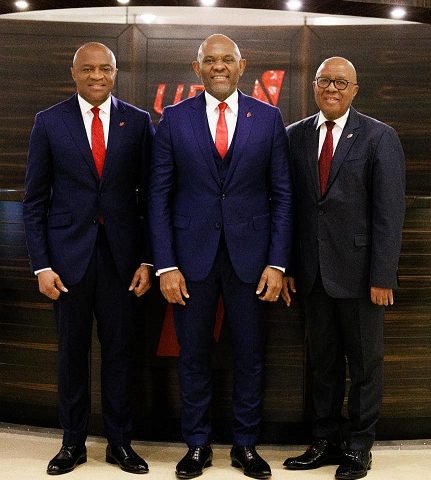
UBA Group Chairman, Elumelu Retires August 21 As Emmanuel Nnorom Takes Over

United Bank for Africa(UBA) Plc says that Group Chairman of the bank, Mr. Tony Elumelu will retire from the Board of Directors of UBA on August 21, 2026.
Elumelu’s retirement is coming on the heels of the completion of the 12-year tenure limit prescribed for Non-Executive Directors of Banks by the Central Bank of Nigeria(CBN)

At its meeting held on July 6, 2026, the Board accepted Elumelu’s retirement and elected Mr. Emmanuel Nnorom, a Non-Executive Director of the Bank, as his successor, with effect from August 21, 2026.

The Board places on record its profound appreciation to Elumelu for his visionary leadership and exceptional contribution to the strategic vision and institutional strength of the UBA Group.

Elumelu’s tenure has been a defining chapter in the Group’s history. Under his stewardship, UBA was transformed into a Pan African institution, operating in 20 African countries and 4 global financial centres and serving over 50 million customers.

Nnorom is a chartered accountant with over ,40 years’ experience in banking, finance and audit.

He brings to the role extensive leadership experience and deep institutional knowledge of UBA.

Speaking on his retirement, Elumelu, said, “Serving United Bank for Africa has been one of the great privileges of my career. UBA has established a unique competitive position, across Africa and globally, and I leave the Board with great confidence in UBA’s future. Emmanuel Nnorom is a leader of integrity, experience and sound judgement, and I am confident that the Bank will continue to thrive under his leadership.”

Nnorom, on his appointment, said,
“I am honoured by the trust the Board has placed in me and deeply conscious of the legacy I inherit. I look forward to working with my colleagues on the Board, Management and our staff across all our markets to sustain UBA’s momentum and continue delivering long-term value to our shareholders, customers and stakeholders.”

United Bank for Africa Plc is Africa’s Global Bank.

It operates across 20 African countries and in the United Kingdom, the United States of America, France and the United Arab Emirates, UBA provides retail, commercial and institutional banking services, leading financial inclusion and implementing cutting edge technology.

UBA is one of the largest employers in the financial sector on the African continent, with 25,000 employees group wide and serving over 50 million customers globally.

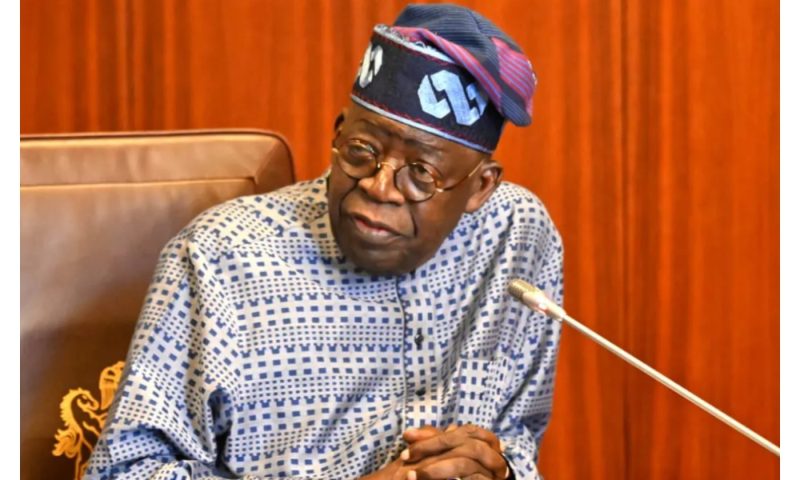
President Tinubu vows to modernise Nigerian Army as security threats intensify

President Bola Tinubu has reiterated his administration’s resolve to reposition and strengthen the Nigerian Army as the country grapples with growing security challenges.
The President made the declaration at the closing ceremony of the 163rd Nigerian Army Day Celebration, held on Monday at the Yakubu Gowon Stadium in Port Harcourt, Rivers State.

Represented by Vice President Kashim Shettima, Tinubu said his administration would modernise the Nigerian Army by deploying emerging technologies and strengthening operational capabilities across all theatres of operation to improve military planning, combat readiness and the nation’s response to evolving security threats.

“My administration is firmly committed to countering contemporary threats through the adoption of emerging technologies and the building of capacity across all battle spaces, thereby improving operational planning and combat readiness,” he stated.

He noted that ongoing investment in research and development within the Armed Forces, alongside efforts to advance technology and strengthen homegrown innovation, continues to gain traction.

Central to this drive, he said, is the revitalisation of the Defence Industries Corporation of Nigeria, DICON, with the forum’s partnership expected to inject fresh momentum into local defence manufacturing, create skilled jobs and strengthen Nigeria’s capacity to support counter-terrorism operations through indigenous production.

Tinubu also welcomed the establishment of the African Land Forces Forum, describing it as a platform for strengthening security cooperation across Africa.

“This administration is committed to modernising our Army to enhance its capacity to meet contemporary security challenges,” Tinubu said, adding that his government shares the aspirations of the forum’s organisers to elevate Nigeria’s standing in defence diplomacy and enhance the Army’s combat readiness through shared expertise.

The President commended Nigerian troops for their sacrifices in safeguarding the nation’s territorial integrity and pledged that the Federal Government would continue to support the families of personnel who lost their lives in the line of duty.

“To the officers and men of the Nigerian Army, you carry a trust that few are asked to bear, and you carry it with an honour that steadies the whole nation.

“Serve the people with the same devotion you bring to defending them, for the uniform commands respect only when it protects the weak and upholds the dignity of every citizen,” he said.

Also speaking, Rivers State Governor Siminalayi Fubara commended the Nigerian Army for its notable strides in technological advancement and manpower development.

He reaffirmed his administration’s continued support for the institution and called for improved welfare for soldiers, saying better conditions of service would enhance their effectiveness in carrying out their duties.

In his welcome remarks, the Chief of Army Staff, Lieutenant General Waidi Shaibu, said this year’s celebration comes at a critical period, with more than 80 per cent of Nigerian soldiers currently engaged in operations against insurgency and other security threats across the country.

He observed that the Army has continually evolved alongside the nation over the decades, adapting to emerging realities and assuming greater responsibilities in defence of the country.

Shaibu said the Army is aware of the infiltration of jihadist groups from neighbouring countries and assured Nigerians that troops remain fully prepared to confront and defeat the threat.

He described the Army as an institution anchored on selfless service, unwavering loyalty, honour, courage and sacrifice, stressing its unwavering commitment to defending Nigeria’s sovereignty, preserving its territorial integrity and protecting the lives and aspirations of its citizens.

Describing the anniversary as a renewal of the Army’s dedication to national service, he said, “This celebration is also a reaffirmation of our commitment to protecting the nation and serving the people, regardless of the challenges of any era.”

He added that the Army is closely monitoring the deteriorating security situation across the Sahel region.

“We have already noticed the footprints of foreign jihadists across our borders. However, I would like to assure us all that the Nigerian Army is alert and equal to the task.

“Like our forebears who successfully dealt with the challenges of their generations during the two World Wars, the Nigerian Civil War and the ECOMOG missions, the Nigerian Army of today will certainly prevail in confronting the security challenges of our generation,” Shaibu said.

This year’s Nigerian Army Day Celebration was held under the theme, “Protecting the People and Serving the Nation: A Way Forward for the Nigerian Army.”

The event featured demonstrations of the Army’s land and aerial combat capabilities, alongside parades by its various corps and departments.

Dignitaries in attendance included the Minister of Defence, the Chief of Defence Staff, the Chief of the Naval Staff, the Chief of the Air Staff, former President Olusegun Obasanjo, former Head of State Yakubu Gowon, retired service chiefs and Army chiefs from several African countries, among other dignitaries.

Marketers push N800/l petrol, seek import licences

Independent petroleum marketers on Monday pushed for the restoration of importation rights and projected that the pump price of Premium Motor Spirit, popularly called petrol, could fall below N800 per litre as the Federal Government intensified efforts to force down the cost of petrol.
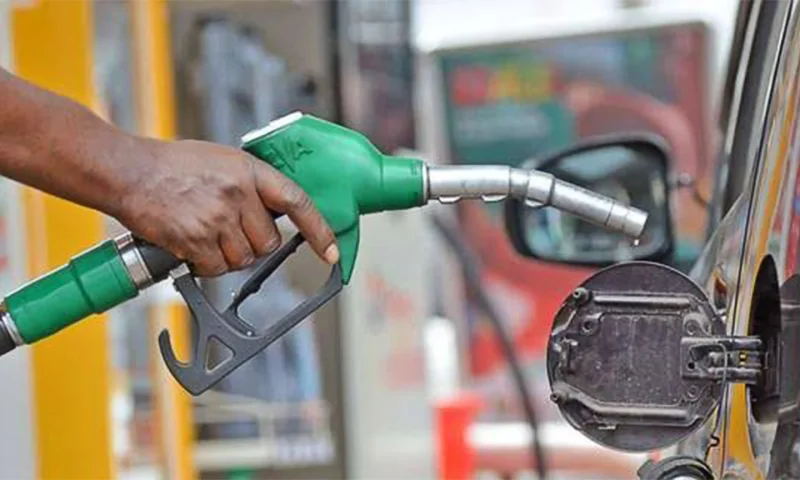
The development came as the Federal Government met with major operators in the downstream petroleum sector, including representatives of the Dangote Petroleum Refinery, over what it described as the disconnect between falling global crude oil prices and the relatively high pump prices of petrol in the domestic market.

The stakeholders’ meeting on cost-reflective pricing of PMS, held at the headquarters of the Nigerian Midstream and Downstream Petroleum Regulatory Authority in Abuja, brought together the Federal Competition and Consumer Protection Commission, the Independent Petroleum Marketers Association of Nigeria, the Major Energy Marketers Association of Nigeria, the Depot and Petroleum Products Retailers Association of Nigeria, the Depot and Petroleum Products Marketers Association of Nigeria, the Nigerian Association of Road Transport Owners, and other major operators in the sector.

Also in attendance were chief executives and representatives of TotalEnergies, Eterna Plc, Matrix Energy Group, officials of the NMDPRA, and delegates from the Dangote refinery.

The PUNCH reports that petrol prices have remained a major source of hardship for households and businesses in Nigeria, with pump prices surging following the spike in global crude oil prices triggered by tensions in the Middle East, particularly between Iran and the United States.

Although crude prices have moderated after diplomatic efforts eased the tensions, the reduction has yet to be fully reflected in domestic petrol prices, prompting the Federal Government to convene a stakeholders’ meeting aimed at driving a fair reduction in pump prices.

The National President of the Independent Petroleum Marketers Association of Nigeria, Abubakar Maigandi, urged the government to permit independent marketers to import petroleum products directly, saying greater competition would ultimately reduce prices.

Maigandi also called for support for local refineries, particularly the Dangote Petroleum Refinery, while stressing the need to allow marketers to import products whenever necessary.

“Our major concern is that if products are to be distributed, let IPMAN buy products directly from the Dangote refinery and then, if we request importation, let IPMAN import by themselves. What we are trying to encourage is our local refinery. Let the government allow the local refinery to function properly and assist those who intend to refine products too,” he said.

The IPMAN president assured Nigerians that independent marketers were prepared to slash petrol prices significantly and projected that pump prices could fall below N800 per litre under the right market conditions.

“The price of the product is coming down bit by bit. Even when the price was increased, it was not increased at the same time. Likewise, now, as the price is coming down, we too are bringing the price down. If you check prices all over the country, you will see that independent petroleum marketers are reducing their prices gradually. Presently, we have reduced by N125 per litre nationwide,” he stated.

Miagandi added, “At any time when there is a reduction in price, we are ready to reduce the price to even below N800 per litre, not even N900. It depends on the way we buy the product from the private depot owners and the Dangote refinery.

“I thank God that the Dangote refinery has accepted independent petroleum marketers to start purchasing products directly. It is a plus, and very soon the populace will see the change in terms of price.”

The renewed push for importation comes amid an intense pricing battle in the downstream sector following the commencement of large-scale production at the Dangote refinery and the deregulation of the petrol market

Speaking to journalists after a closed-door session with the stakeholders, the Minister of State for Petroleum Resources (Oil), Senator Heineken Lokpobiri, said the government remained concerned that current petrol prices were not reflective of prevailing crude oil prices in the international market.

According to him, the government had engaged marketers in frank discussions aimed at ensuring that the reduction in global crude prices translates into lower pump prices for Nigerians.

Lokpobiri said, “The engagements are ongoing. We had very fruitful and frank discussions with the marketers and the leaders of the downstream sector of the petroleum industry with a view to driving down the price of PMS.

“My own opinion is that the petrol prices are not cost-reflective; they are not reflective of the cost of crude oil. But the marketers are also saying that crude oil prices are still high.

“In fact, somebody told us right there that the crude oil price for a month is still over $90 per barrel. But we are saying that when Brent crude was over $118 per barrel, the price was rapidly going up. Now that the price has come down drastically, why has petrol not come down correspondingly? That is a worry.”

The minister said the government had communicated the concerns of consumers to operators and directed them to return with practical measures that would lead to lower petrol prices.

“We have said that these are the issues of concern to the government. They have also said they will go back and think about what they can put together with a view to addressing the issue of the high cost of PMS that is not reflective of the price of crude in the market.

“We told them the concern of the Nigerian consumer, and they have also said they will go back and think of what concrete steps can be taken with a view to ensuring that the price drops,” he stated.

On when Nigerians should expect a reduction in petrol prices, Lokpobiri said discussions were still ongoing and declined to give a deadline. “As we called you today, we will call you as soon as possible. But the important thing is that discussions are ongoing,” he added.

Before the closed-door meeting, Lokpobiri warned petroleum marketers against using profits from previously acquired expensive fuel inventories as justification for maintaining high petrol prices, insisting that the benefits of lower replacement costs must be passed on to consumers.

The government said the continued disconnect between falling international crude oil prices and domestic petrol prices had become a source of concern, warning petroleum marketers against sustaining high pump prices of Premium Motor Spirit despite declining global crude prices and insisting that Nigerians should enjoy the benefits of lower replacement costs in a deregulated market.

He insisted that temporary gains realised from inventories purchased when crude oil prices were higher should not become the basis for sustaining elevated pump prices after global oil prices had declined.

“I am aware that PMS pricing is influenced by several factors beyond crude oil prices, but it is equally important to distinguish between genuine replacement cost and windfall gains arising from inventory management.

“Temporary gains realised from inventories acquired at higher prices should not become the basis for sustaining elevated pump prices after replacement costs have declined. As inventories are replenished at lower costs, the benefits of those lower costs should be transmitted to consumers in a timely and transparent manner. That is the essence of a competitive and efficiently functioning market,” he stated.

FCMB Asset Management earns higher GCR ratings

FCMB Asset Management earns higher GCR ratingsFCMB Asset Management Limited has received an upgrade to its national long-term and short-term issuer ratings from GCR Ratings, reflecting the firm’s financial performance, liquidity position and the stronger credit profile of its parent company, FCMB Group Plc.
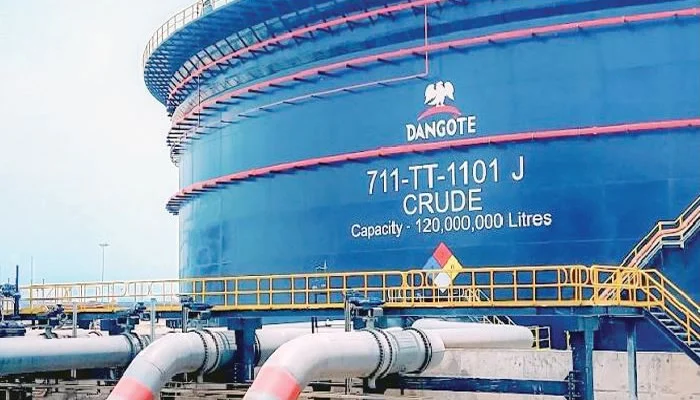
According to a statement on Sunday, GCR upgraded the company’s national scale long-term and short-term issuer ratings to A(NG) and A1(NG) from A-(NG) and A2(NG), respectively, while maintaining a stable outlook.

The rating agency said the upgrade was supported by FCMB Asset Management’s competitive position, financial discipline, and the strengthened credit profile of FCMB Group Plc.

GCR noted that the firm’s decade-long operating track record, brand recognition, diversified product offerings and distribution network contributed to its standalone credit strength, alongside consistent earnings growth and an unleveraged balance sheet.

According to the agency, FCMB Asset Management’s competitive position is supported by “its relatively long track record, strong brand franchise, established product and geographical distribution network, and cross-selling opportunities.”

GCR added that the company ranked among the top five asset managers in Nigeria, with an estimated five per cent share of the fragmented market as of December 31, 2025.

The statement said the company’s revenue increased by 30 per cent, while operating cash flow rose by 13 per cent, allowing the business to fund its operations without debt.

It added that liquidity sources relative to uses improved to 5.0 times in December 2025 from 3.6 times a year earlier, while its EBITDA margin exceeded 58 per cent.

Commenting on the rating action, the Chief Executive Officer of FCMB Asset Management Limited, James Ilori, said, “This upgrade is an important external validation of a strategy we have pursued with discipline over many years: building an investment franchise that performs reliably, governs itself rigorously, and earns trust in every market cycle.

“It speaks to the strength of our membership of FCMB Group Plc and to a culture that holds itself to local and global standards of risk management and capital stewardship.

“As Nigeria’s asset management industry enters a new era of higher capital thresholds and rising investor expectations, we intend to lead from the front — ahead of regulatory timelines, ahead in digital transformation, and ahead in the outcomes we deliver for the clients who trust us to assist them in achieving their investment objectives.”

FCMB Asset Management manages a range of collective investment schemes, including the FCMBAM Money Market Fund, FCMBAM Debt Fund, FCMBAM Equity Fund, FCMBAM USD Bond Fund, and the FCMB-TLG Private Debt Fund. The company also provides discretionary and non-discretionary portfolio management services for high-net-worth and institutional clients.

Established in 1997, FCMB Asset Management Limited is regulated by the Securities and Exchange Commission and provides portfolio management and investment advisory services to individual and institutional investors. It is a subsidiary of FCMB Group Plc

Dangote Cement approves N45 dividend, targets 80m tonnes

Dangote Cement approves N45 dividend, targets 80m tonnesShareholders of Dangote Cement Plc have approved a final dividend of N45 per ordinary share for the financial year ended 31 December 2025, bringing the total payout to an unprecedented N753.8bn.
The approval came as the company reaffirmed its long term strategy of expanding across Africa through aggressive investments in production capacity, cleaner energy, and operational efficiency.

The dividend was approved at the company’s 17th Annual General Meeting in Lagos, where the Chairman of Dangote Cement Plc, Emmanuel Ikazoboh, said the firm was positioning Africa for self sustaining industrial growth by leveraging local resources and strategic investments.

The National President of the Association for the Advancement of the Rights of Nigerian Shareholders, Dr Faruk Umar, lauded the group’s overarching focus on continental independence.

Umar said, “The key thing for this year’s AGM is transforming Africa. You will notice that our founder is trying to ensure he positions Africa to be the source of our own wealth, using our own wealth to take care of our own business and activities, rather than depending on investors from other parts of the world coming to help us build our continent.

“This 50 per cent dividend increase may look like a rumble, but there is a lot of strategy that has gone behind it. Some of the most important strategies have focused on exports. We have grown in areas where we previously weren’t able to reach out because of past challenges. More things are in the pipeline, which are progressively getting implemented. We expect that we can continue the momentum that we have built over the last year into the forthcoming years as well.”

The company noted it was also intensifying efforts to improve operational efficiency by reducing transportation and energy costs through investments in compressed natural gas powered trucks and alternative fuels.

Ikazoboh added that Dangote Cement was expanding its use of alternative fuels by converting waste into energy to power its manufacturing operations.

Speaking on the company’s growth outlook, the Group Managing Director, Arvind Pathak, stated that Dangote Cement’s performance was underpinned by deliberate investments in exports, logistics, and operational efficiency.

Pathak noted that Dangote Cement planned to increase its production capacity from 55 million tonnes to 80 million tonnes by 2030, in line with the Dangote Group’s Vision 2030.

“We intend to grow from 55 million tonnes to 80 million tonnes,” he said.

A shareholder and respected financial analyst, Mr Nornah Awoh, commended the board for its financial discipline, citing the deployment of 3,000 CNG trucks and a 50 per cent reduction in bank borrowings as key drivers of profitability.

Awoh said, “First of all, you have to commend the company because we now have 3,000 CNG trucks being used rather than hiring them, which is improving our revenue. Secondly, the company has drastically reduced its loans; only half of the loan is left to be collected and paid to banks, reducing borrowings by 50 per cent. Another thing is that the first quarter is 101 per cent higher than last year, so you can see what we are expecting.

“They have paid us a 45-naira dividend. If this trend continues to the fourth quarter, we expect nothing less than a 60-to-70-naira dividend. Additionally, you can see the synergy. With the new refinery, we are going to be getting diesel and gas directly from the Dangote Refinery. This is going to boost us and help significantly with profitability.”

He further emphasised the value of the cross border footprint, noting, “Regarding expansion, you can see the African expansion. We have gone into Côte d’Ivoire, apart from Tanzania and many other countries where Dangote is expanding. This expansion in the long run will ensure we make more profit. For the first time, the company’s profitability has crossed N1tn, which is very commendable, and the stock price has gone above 1,000 naira for the first time.”

When questioned on his overall satisfaction with the current returns, Awoh urged the public and the press to weigh long term operational health above short term payouts.

“The media needs to help us understand that a dividend is not the only benefit of an investment. There are instances where a company will pay you a massive dividend this year, but it won’t even exist in the next 50 years.

“What I am satisfied with when I invest, which is exactly the case with Dangote, is that I see a future. For a company that is constantly expanding, it means sustainability. That is the essence of it. None of us wants to eat today and die tomorrow. We must begin to ask companies, even as journalists, ‘Will this company be there tomorrow?’ If it’s not going to be there tomorrow, then I’m not satisfied. But Dangote, from what I’ve seen, will be there for me tomorrow,” Awoh said.

He noted that the planned addition of 25 million tonnes of production capacity reinforced confidence that the company would continue creating generational wealth, adding, “The expectation is simply that they will continue to do even better.”

African armies must unite against terrorism, insecurity – COAS

The Chief of Army Staff, COAS, Lt.-Gen. Waidi Shaibu, has emphasised the need for closer cooperation among African militaries in confronting terrorism, insurgency and other cross-border security threats affecting the continent.
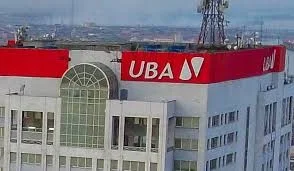
Shaibu made the appeal during the Third African Land Forces Forum, organised as part of the Nigerian Army Day Celebration, NADCEL, 2026 in Port Harcourt.

The development was disclosed in a statement issued on Sunday in Abuja by the Acting Director of Army Public Relations, Col. Appolonia Anele.

According to the statement, the COAS received army chiefs and defence representatives from 17 African nations participating in the forum, noting that their attendance underscored a collective resolve to strengthen continental unity, improve regional security and foster sustainable peace across Africa.

Shaibu explained that incorporating the forum into NADCEL 2026 created an avenue not only to honour the legacy of the Nigerian Army but also to reinforce military partnerships among African countries.

Reflecting on the history of the Nigerian Army, he noted that the force, which began in 1863 as the Glover Hausas, had grown into one of the continent’s most formidable land forces.

He described the forum as an initiative established to encourage dialogue, cooperation and the exchange of operational experiences among African armies.

According to him, the platform is aimed at enhancing interoperability, building long-term strategic alliances and developing joint approaches to addressing common security concerns.

The army chief observed that security threats across Africa had become increasingly sophisticated and transnational, making regional collaboration essential.

Drawing from Nigeria’s experiences in counter-terrorism and counter-insurgency campaigns, Shaibu stressed the value of flexible operational strategies, effective deployment of air power, rigorous troop training and sustained regional partnerships.

He further highlighted the role of the Multinational Joint Task Force, saying it had played a critical part in weakening insurgent groups and recovering territories within the Lake Chad Basin.

Shaibu added that the forum would feature exhibitions showcasing advanced defence technologies, locally developed innovations and military hardware.

He said the exhibitions were expected to encourage capacity development, facilitate knowledge sharing and strengthen strategic cooperation among participating nations.

The COAS urged delegates to take full advantage of the forum by engaging in meaningful discussions and collaborative efforts geared toward improving Africa’s collective security architecture.

He expressed optimism that the gathering would yield practical solutions capable of promoting peace, stability and security across the continent.

UBA, GTCO, Access splash N118bn on aggressive advertising campaigns

UBAThree top banks in Nigeria spent N118.55bn on advertising and marketing over a 15-month period covering the full year 2025 and the first quarter of 2026, as lenders intensified brand promotion amid rising competition in the country’s financial services sector.
The figure, derived from company disclosures and financial statements, comprises N95.71bn spent in 2025 and a further N22.84bn in Q1 2026, according to The PUNCH analysis of filings from United Bank for Africa Group, Guaranty Trust Holding Company, and Access Holdings.

In 2025, the combined advertising and marketing expenditure of the three lenders stood at N95.71bn, representing a 25.1 per cent decline from N127.75bn in 2024. The reduction was driven largely by UBA, which cut its advertising, promotion, and branding expenses to N56.95bn from N89.99bn in 2024, a 36.7 per cent decline.

GTCO, by contrast, increased its marketing spend to N20.02bn from N17.42bn, a 14.9 per cent rise, while Access Holdings, Nigeria’s largest banking group by customer base, with more than 60 million customers across three continents, reduced its expenditure to N18.75bn from N20.35bn, a 7.9 per cent decline.

Spending rose in the first quarter of 2026 to N22.84bn from N14.06bn in the corresponding period of 2025, representing a 62.4 per cent increase.

UBA accounted for the bulk of the quarterly spending at N15.86bn, while GTCO and Access Holdings spent N2.84bn and N4.14bn, respectively, signalling a renewed push for brand visibility and customer acquisition at the start of the year.

Across the 15-month period, UBA spent N72.81bn, representing about 61.4 per cent of the combined N118.55bn. GTCO and Access Holdings spent N22.86bn and N22.89bn, respectively, with each accounting for roughly 19 per cent.

Analysts said the mixed spending pattern suggests a recalibration of marketing budgets across tier-one lenders amid evolving macroeconomic conditions and increasing digital competition from fintech operators.

The Divisional Director, Marketing, Marketing Edge Publications, Anietie Udoh, told The PUNCH that financial institutions are increasingly deploying marketing budgets across digital platforms, sponsorships, and lifestyle-driven campaigns.

He said much of the sector’s communication strategy is now built around audience segmentation rather than broad consumer messaging. According to him, banks such as GTCO and other tier-one lenders are channeling significant resources into events, brand partnerships, and thematic campaigns, even when these are not always visible to retail customers.

He also pointed to intensifying competition from fintech firms, which have expanded their advertising presence through digital channels, influencer marketing, and mass media campaigns.

“Look at what OPay is doing now. OPay is spending heavily on communication, trying to understand what the consumer wants to hear. They are pushing that communication using influencers,” he said.

The marketing executive added that fintech operators such as OPay and Moniepoint are reshaping market dynamics, forcing traditional banks to defend market share through increased visibility and targeted campaigns.

Udoh noted that banking advertising cycles often intensify around recapitalisation programmes, public offers, and capital market activities, when institutions seek to educate and attract investors.

Across channels, banks continue to deploy a mix of traditional media, including television, newspapers, and billboards, alongside programmatic digital advertising, influencer-led campaigns, and native content distributed on platforms such as YouTube.

The sector also maintains cyclical thematic campaigns tied to seasonal and cultural occasions, including New Year, Easter, Eid, and end-of-year festivities, reinforcing year-round brand presence in a highly competitive financial ecosystem.

He said marketing spending tends to rise during periods of heightened economic or political activity, when transaction volumes and consumer engagement typically increase.

An audit by P+ Measurement Services, an independent Nigerian media intelligence and analytics firm, examined print advertising by 29 commercial banks, four telecommunications companies, and 14 insurance firms, tracking advert placements, advertising expenditure, publication choices, and the use of front-page placements.

According to the firm’s Q1 2026 Print Media Advertising and Placement Audit, banks remained the largest users of Nigeria’s print media for advertising in the first quarter of 2026. The report analysed advertising activity using data compiled from nearly 1,800 editions of daily, weekly, and monthly newspapers and magazines.

Of the 29 commercial banks covered in the study, 18 placed print advertisements, generating 1,260 advert placements with combined spending of N1.28bn.

Advertising activity was dominated by a handful of lenders. Zenith Bank accounted for 38 per cent of all advert placements, ahead of Access Bank with 14 per cent, UBA with 12 per cent, and GTBank with 10 per cent, making the four institutions the most visible print advertisers in the sector.

Among the mid-sized lenders, Polaris Bank accounted for nine per cent of advert placements, while FirstBank recorded five per cent. Stanbic IBTC Bank and Fidelity Bank each contributed four per cent, while First City Monument Bank and Wema Bank each posted a two per cent share.

Competition for premium newspaper positions was also intense. Access Bank secured the largest share of front-page advertisements at 42 per cent, followed by Zenith Bank with 37 per cent and Stanbic IBTC Bank with 21 per cent, reflecting a strong preference among leading lenders for high-impact placements.

By advertising expenditure, Zenith Bank ranked first, accounting for 39 per cent of total sector spending during the quarter. Access Bank followed with 20 per cent, while Guaranty Trust Bank accounted for 11 per cent and Polaris Bank contributed 10 per cent.

Dangote beats US, ships N757bn jet fuel to Europe – Report

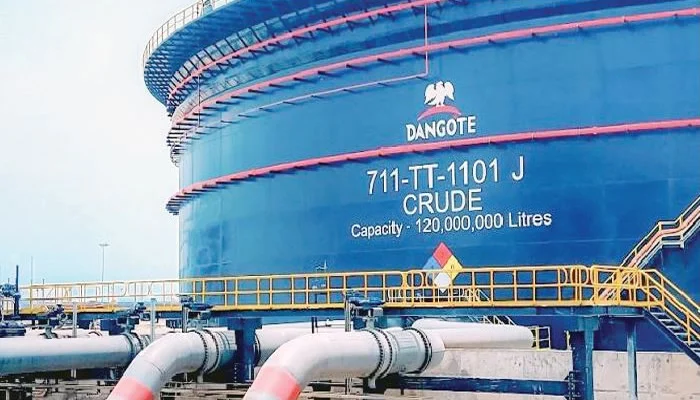
Dangote Petroleum Refinery exported about 466,000 metric tonnes of jet fuel to Europe in June, valued at an estimated N757bn, overtaking shipments from the United States and others.
This is as Nigerian jet fuel exports to the continent reached their highest level since the country became a net exporter of aviation fuel in 2024.

According to a market report by S&P Global Commodity Insights, the refinery’s exports came as the European jet fuel market turned increasingly bearish following a sharp decline in prices from the highs recorded during the Middle East conflict.

The report stated that flows of jet fuel from Nigeria to Europe rose from 232,000 metric tonnes in May to 466,000 metric tonnes in June, the highest volume exported from the country to Europe since Nigeria became a net exporter of jet fuel in 2024, when the Dangote Refinery commenced aviation fuel production.

The June export volume is equivalent to about 582.5 million litres of jet fuel. At an estimated domestic value of N1,300 per litre, the shipment is worth about N757.25bn.

On the other hand, aviation fuel exports from the United States fell sharply in the past months. The report showed that jet fuel exports from the United States to Europe declined steadily over the same period, falling from a record 818,000 metric tonnes in April to 560,000 metric tonnes in May and further to 399,000 metric tonnes in June, leaving Nigeria as a bigger supplier to Europe during the month.

Commenting on the market, a trader attributed the oversupply partly to increased shipments from Dangote and the United States. “Jet is oversupplied because of high local refinery production; refineries pushed back maintenance to make the most of the high prices.

“The US and Dangote also shipped large volumes. Now there are some flows resuming through the Suez, too, from the UAE, but let’s see how it goes,” the trader was quoted as saying.

The report noted that the European jet fuel forward curve had weakened significantly after reaching record highs during the Middle East war, as traders now anticipate an oversupplied summer market amid weaker-than-expected aviation demand.

According to Platts, part of S&P Global Commodity Insights, the Northwest Europe jet CIF cargo financial assessment for July dropped to $981.75 per metric tonne on June 30, down sharply from the all-time high of $1,694.25 per metric tonne recorded on March 30.

Similarly, the August contract declined from $1,507.50 per metric tonne on March 30 to $968.25 per metric tonne by June 30.

The report added that Europe could receive even more jet fuel supplies in the coming months as the East-West arbitrage remains attractive, encouraging exporters in the Middle East and India to ship cargoes westward.

While flows from the United Arab Emirates and Kuwait were absent in June, shipments from Saudi Arabia increased to about 106,000 metric tonnes, up from 7,000 metric tonnes in May, while exports from India rose from 129,000 metric tonnes to 197,000 metric tonnes over the same period.

Despite the current oversupply, two European jet fuel traders reportedly told Platts that market conditions would depend largely on developments in the Strait of Hormuz and the pace at which Middle Eastern refineries recover from disruptions caused by the recent conflict.

They also noted that stronger summer travel demand and refiners’ growing preference to maximise diesel production over jet fuel could gradually help rebalance the aviation fuel market.

Data from the Nigerian Midstream and Downstream Petroleum Regulatory Authority showed that the Dangote refinery exported an estimated 1.66 billion litres of refined petroleum products in April 2026.

This was during the mounting tensions in the Middle East that caused disruption to global fuel supply routes.

An analysis of the NMDPRA’s April 2026 fact sheet showed that the country exported about 513 million litres of premium motor spirit, popularly called ‘petrol’; 534 million litres of automotive gas oil, also known as diesel; and 615 million litres of aviation fuel within the month in April.

The Dangote refinery is the only major functional refinery in Nigeria that currently produces enough refined petroleum products for both local consumption and export.

Nigeria has become a net petrol exporter for the first time in decades due to rising output from the Dangote refinery. The refinery had earlier exported about 434 million litres of petrol in March after domestic production exceeded local consumption levels.

The latest figures underscore Nigeria’s gradual transition from a major importer of refined petroleum products to an export hub within Africa. It was observed that jet fuel exports may rise further with the instability caused by the Middle East crisis, which disrupted traditional supply chains serving Europe and other regions.

FCMB posts N177bn profit, pays N23bn dividend

FCMB Group PlcShareholders of FCMB Group Plc have approved a total dividend payout of N23.08bn for the 2025 financial year following strong profit growth and improved earnings across the group’s businesses.

The approval was granted at the company’s 13th Annual General Meeting held in Lagos recently, where shareholders also endorsed all resolutions presented by the board, including the re-election of Mr Ladi Jadesimi and the ratification of Mrs Adepeju Adebajo as directors. They also elected members of the Audit Committee and authorised the directors to determine the remuneration of the external auditors.

The approval followed a year in which the financial services group recorded higher earnings despite a challenging operating environment.

FCMB Group reported a profit before tax of N202.1bn for the year ended December 31, 2025, representing an 81 per cent increase from N111.9bn recorded in the previous year. Profit after tax rose by 142 per cent to N177.3bn, while gross revenue increased by 42.5 per cent to N1.13tn. Return on equity improved to 23.2 per cent.

The group also reported growth across its major business divisions. Profit before tax in the Banking Group rose by 110 per cent, while Consumer Finance, Investment Banking and Investment Management recorded growth of 107 per cent, 90 per cent and 29 per cent, respectively. According to the company, the momentum continued into the first quarter of 2026.

Chairman of FCMB Group, Ladi Jadesimi, said the results reflected the resilience of the group’s diversified business model.

“We remain steadfast in our objective of balancing immediate shareholder returns with the need to retain sufficient capital to support long-term expansion, strengthen our competitive positioning and optimise value creation for all stakeholders,” Jadesimi said.

The Group Chief Executive, Ladi Balogun, attributed the 2025 performance to collaboration across the group’s business segments.

“2025 was a transformative year for FCMB Group – one in which we witnessed the true impact of ‘The Power of the Group’. A core driver of our performance in 2025 was the effective synergy across our business groups: Banking Group, Consumer Finance, Investment Banking, and Investment Management, each playing a distinct yet complementary role in delivering business growth,” Balogun said.

“Our focus remains firmly on deepening our digital transformation, strengthening our culture of excellence, and amplifying the collective power of our ecosystem.”

Balogun added that the completion of the group’s recapitalisation programme had positioned the organisation for its next phase of long-term growth.

Shareholder representatives commended the board and management for the company’s financial performance and dividend payment.

The National Coordinator of the Pragmatic Shareholders Association of Nigeria, Mrs Bisi Bakare, said the dividend reflected management’s commitment to delivering value to shareholders despite prevailing economic challenges.

The National Chairman of the Progressive Shareholders Association of Nigeria, Mr Boniface Okezie, said the group continued to support small businesses and women-owned enterprises, noting that FCMB provided N537.5bn in financing to small and medium-sized enterprises in 2025, including N51bn to women-owned businesses.

Another shareholder, Mr Eric Akinduro, highlighted the improvement in the group’s asset quality, noting that its non-performing loan ratio declined to five per cent from 5.95 per cent.

FCMB also reported that total assets rose by 8.2 per cent to N7.63tn, while consumer and SME lending increased by 24 per cent to N930bn. Assets under management grew by 24.2 per cent to N1.70tn.

The approved dividend was paid on July 30, 2026, to shareholders whose names appeared in the register of members at the close of business on June 15, 2026.