GTCO Announces 16th Autism Conference And Free Consultations

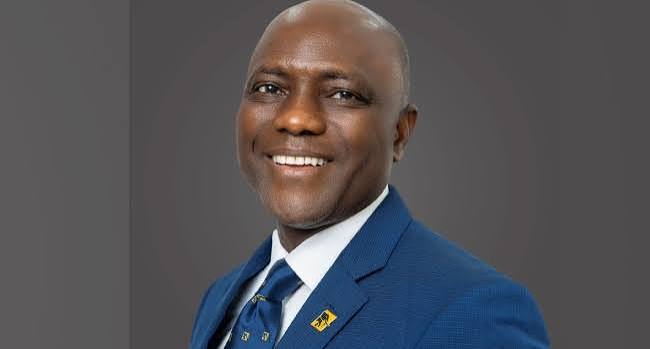
The Guaranty Trust Holding Company Plc (“GTCO”) has announced full plans for its 16th Annual Autism Conference scheduled to hold on Monday, July 27th and Tuesday, July 28th, at the Muson Centre, Lagos. Themed “Acceptance in Action: From Family to Classroom to Workplace to Public Spaces,” the Conference, which will be followed by one-on-one family consultations by specialists, continues the Group’s commitment to advocating for Autism through access to developmental support, professional guidance, and learning opportunities for individuals on the autism spectrum and their families.

Over the years, the GTCO Autism Programme has become a leading platform for Autism advocacy and inclusion across West Africa, bringing together healthcare professionals, therapists, educators, policymakers, caregivers, and families to foster greater understanding of Autism Spectrum Disorders (ASDs). Through sustained engagement and collaboration, the programme has helped advance conversations around acceptance, accessibility, and the support systems required to improve outcomes for individuals on the spectrum.

This year’s theme, “Acceptance in Action,” reflects the need to move beyond awareness towards creating environments where individuals on the Autism spectrum are supported, and empowered at home, in school, in workplace, and public spaces. The 2026 programme will feature expert-led discussions, workshops, and free consultation sessions delivered by leading local and international specialists in developmental and behavioural sciences, covering key areas such as early intervention, behavioural therapy, communication strategies, inclusive education, and caregiver support.

In Nigeria, the conference will hold on Monday, July 27th and Tuesday, July 28th at the Muson Centre, Lagos, followed by free one-on-one family consultations with medical and developmental specialists from July 29th to August 1st at the Adeyemi Bero Auditorium, Alausa Secretariat, Ikeja. In Ghana, the programme will open with a workshop on August 4th at the University of Professional Studies, Accra, followed by free consultations at the same venue from August 5th to 8th.

Commenting on the 2026 GTCO Autism Programme, the Group Chief Executive Officer of Guaranty Trust Holding Company Plc, Mr Segun Agbaje, said: “Sixteen years ago, we set out to help families navigate a journey that too often felt isolating. Today, this programme stands as proof of what sustained commitment can achieve. This year’s theme, ‘Acceptance in Action,’ challenges all of us to move past good intentions and start making inclusion visible, in the way we design our schools, structure our workplaces, and welcome one another in public spaces.”

He added: “No single institution can build an inclusive society alone. It takes families willing to advocate, educators willing to adapt, employers willing to open doors, and policymakers willing to act. Our role is to keep bringing the right expertise and resources to the table, so that every individual on the autism spectrum has a genuine chance to participate fully and confidently in everyday life.”

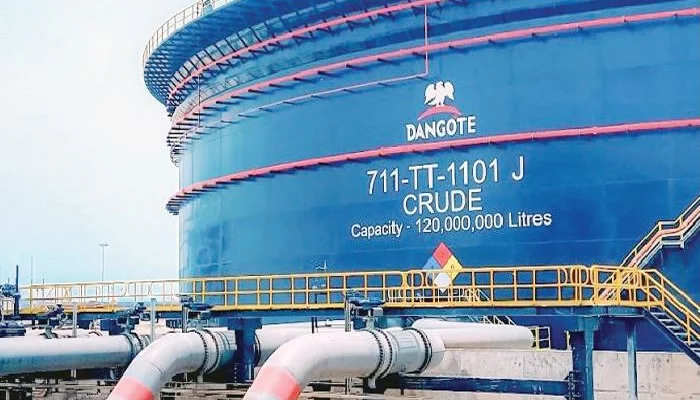
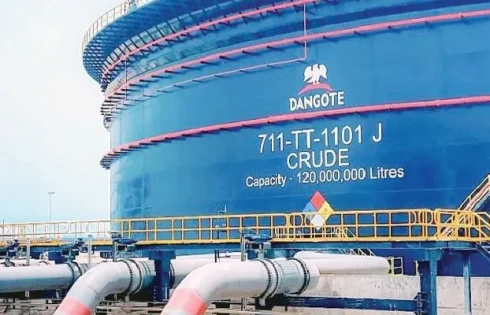
Dangote Halts Petrol Sale In Dollar As Nigeria’s Heightens Imports

In a patriotic gesture to minimize petroleum price shock in the domestic market,
Dangote Petroleum Refinery has resumed the sale of Premium Motor Spirit (PMS) or petrol in naira, providing a measure of relief to marketers and consumers.

The Gantry price is fixed at N1,215/ litre.

Following a week of economic uncertainty owing to Dangote’s decision to load fuel in dollars, the refinery has fixed its new ex-depot (gantry) price to Naira, albeit at a higher cost.

The new price was revised to N1,215 per litre, representing an increase of N140 per litre, or 13.02 per cent, from the previous price of N1,075 per litre.

“Dangote Petroleum Refinery has resumed the sale of Premium Motor Spirit (PMS) in naira, providing a measure of relief to marketers and consumers,” a statement released on Wednesday read

“The gantry price is fixed at N1,215/ litre,” it added”.

After notifying clients of the new conditions on Tuesday, the refinery resumed the acceptance of orders for coastal loading.

Following an extended period of uncertainty within the downstream petroleum market due to the suspension of fuel sale in naira, which compelled several independent marketers to procure supplies from private depots, the refinery has reinstated naira-denominated pricing for truck loading.

Under the dollar pricing system Automotive Gas Oil (diesel) was set to cost $1.087 per litre, while Aviation Turbine Kerosene (ATK) was priced at $0.942 per litre. Petrol delivered via coastal deliveries was tagged at $1,044.62 per metric tonne.

At the time, the refinery notified marketers and customers that all previously issued naira-denominated Proforma Invoices and Deal Recaps for gantry and coastal transactions were no longer legitimate.

The notice, signed by the refinery’s Group Commercial Operations, read, “Following our email on the 9th of July, 2026, regarding the transition from Naira to United States Dollars, please note that all issued Naira Coastal and Gantry PFIs/Deal Recaps are now invalid, and no payments should be made against them.

Meanwhile, Nigeria’s petrol imports more than tripled last month as the country’s main refinery cut domestic supply and increasingly directed output toward export markets to maximize foreign-currency earnings.

Nigeria shipped in 18.1 million liters of the fuel per day in June, compared with 5.6 million liters in May, the Nigerian Midstream and Downstream Petroleum Regulatory Authority (NUPRC) said in a monthly report.

The Dangote Petroleum Refinery increasingly directs output to export markets to maximize foreign currency earnings. Selling products in naira domestically limits the U.S. dollars required to purchase international crude oil feedstock, driving the refinery to prioritize lucrative European and African exports.

According to figures in June, the refinery exported 466,000 metric tonnes of aviation fuel, overtaking the United States as Europe’s largest external supplier of jet fuel.

The facility has expanded its footprint across the continent, successfully exporting cargoes to countries like Côte d’Ivoire, Cameroon, Tanzania, Ghana, and Togo.

The plant’s domestic allocation under the local naira-for-crude agreement has significantly declined.

As a result, the refinery must source a greater share of its feedstock from the international market, which must be paid for in dollars.

Because the refinery struggles to convert naira revenue into the necessary foreign exchange to buy raw crude, it relies heavily on export markets to sustain its operations. Consequently, Nigeria’s domestic petrol imports have recently surged as the refinery reduces local supply according to Bloomberg.

Senate expands Safe Schools probe to TETFund, NELFUND

The Senate on Tuesday extended by three weeks the lifespan of its ad hoc committee investigating the Safe Schools Initiative and broadened the scope of the probe to include the Tertiary Education Trust Fund and Nigerian Education Loan Fund.
Others for probe are the Universal Basic Education Commission, Federal Ministry of Humanitarian Affairs and Poverty Alleviation, and the National Social Investment Programme Agency.

The red chamber said the expansion was aimed at conducting a comprehensive investigation into the funding, implementation and accountability of education and social intervention programmes linked to the safety and welfare of students across the country.

The resolution followed a motion moved by the Chairman of the Senate Ad hoc Committee on the Safe Schools Initiative, Orji Uzor Kalu (APC, Abia North), pursuant to Orders 41 and 51 of the Senate Standing Orders, 2026 (as amended), seeking an expansion of the committee’s terms of reference and additional time to conclude its assignment.

Presenting the motion, Kalu told lawmakers that preliminary investigations had revealed strong links between the implementation and funding of the Safe Schools Initiative and several government agencies responsible for educational funding, student welfare, humanitarian interventions and social investment programmes.

According to him, limiting the investigation to the Safe Schools Initiative alone would prevent the Senate from carrying out a comprehensive assessment of issues affecting school security and educational interventions.

“The issues surrounding student security, educational infrastructure funding and social intervention schemes for vulnerable learners across the country are deeply interwoven.

“Investigating the Safe Schools Initiative without reviewing these complementary bodies will result in fragmented legislative oversight,” Kalu stated.

He added that broadening the committee’s mandate had become necessary to enable the Senate to produce a comprehensive report that could strengthen accountability, safeguard students, and improve transparency in the management of intervention funds.

Under the expanded mandate, the committee will evaluate financial flows, operational challenges and accountability mechanisms across the Safe Schools Initiative and the affected agencies.

It will also review social safety net allocations linked to school feeding programmes, emergency relief for displaced students and educational rehabilitation initiatives implemented through the Federal Ministry of Humanitarian Affairs and Poverty Alleviation and NSIPA.

The panel is further expected to audit infrastructure and security-related intervention projects funded by TETFund in tertiary institutions, assess NELFUND’s disbursement processes, operational readiness, administrative efficiency, and students’ access to education loans, and examine UBEC’s interventions in basic education.

Seeking the Senate’s approval, Kalu said the committee required additional time because some critical aspects of the investigation had yet to be completed due to its extensive workload and other legislative engagements.

“We’re supposed to submit our report, and there are four key areas that were not done. I needed the permission of the Senate so that we can conclude it in the next two or three weeks and come back with a report,” he said.

Following a voice vote called by Senate President Godswill Akpabio, lawmakers unanimously approved the request granting the committee an additional three weeks to conclude its assignment.

The Senate inaugurated the ad hoc committee in December 2025 amid growing concerns over persistent attacks on schools despite years of government funding and policy interventions aimed at protecting educational institutions.

The probe gained further urgency following the abduction of 25 female students of Government Girls Comprehensive Secondary School, Maga, Kebbi State, during which bandits reportedly killed the school’s vice principal, reigniting concerns over the safety of students and teachers in vulnerable communities.

The Safe Schools Initiative was launched in May 2014 after the abduction of 276 schoolgirls from Chibok, Borno State.

Established as a partnership involving the Federal Government, the United Nations and private sector stakeholders, the programme was designed to strengthen security infrastructure around schools, particularly in conflict-affected areas.

The Senate’s ongoing investigation has already raised questions over the utilisation of funds released for the programme.

During previous hearings, the committee scrutinised the disbursement of N15bn released in 2023, with the Nigerian Police Force receiving the highest allocation of N6.225bn.

Other allocations examined by the panel include N3.362bn to the Nigeria Security and Civil Defence Corps, N2.250bn to Defence Headquarters and N519m to the Federal Ministry of Education, while the amount released to the Department of State Services was not publicly disclosed.

The committee also queried alleged financial irregularities and consultancy payments under the programme and directed the Safe Schools Financing Office to submit a reconciled breakdown of all funds released, expenditures, contractors and supporting documents relating to the Central Bank of Nigeria Trust Fund account.

During one of the investigative hearings, the National Coordinator of Financing Safe Schools in Nigeria, Hajia Halima Iliya, disclosed that the initiative received funding from both domestic and international partners, including $10m each from the Federal Government and Nigerian business leaders, $1m from the African Development Bank, €2m from the German Government, $4m from the Norwegian Government managed through UNICEF, as well as additional support from USAID, the Qatar Foundation and United Nations agencies.

With the expanded mandate, the Senate committee is expected to present a broader assessment of how education, security and humanitarian intervention funds are being utilised and whether the various programmes are effectively addressing the safety, welfare and educational needs of Nigerian students.

Industrial sector drags NGX down 0.14%

The Nigerian Exchange Limited experienced a wave of mixed sentiments during the trading week ended 17 July 2026. A sharp decline in the industrial sector effectively offset strong gains in banking equities, reflecting a broader tug-of-war between institutional portfolio rebalancing and macroeconomic headwinds.
The benchmark NGX All-Share Index depreciated marginally by 0.14 per cent to close the week at 243,462.13 points. Conversely, total market capitalisation managed to buck the downward index trend, appreciating by 0.39 per cent to settle at N157.057tn by Friday’s close.

This divergence between the ASI and market capitalisation was primarily attributed to large-scale primary market listings and capital restructuring during the week, which added weight to the total market value despite price depreciation among major equities.

A closer look at the sectoral performance revealed that a steep 6.26 per cent decline in the NGX Industrial Goods Index acted as the primary anchor dragging down the broader market index. The industrial sector continues to face severe pressure from elevated energy costs, persistent foreign exchange illiquidity affecting raw material imports, and the high-interest-rate environment, which has slowed down major real estate and infrastructure projects nationwide.

This downward pressure was further compounded by losses in the NGX Main Board Index, which fell 1.54 per cent, alongside minor pullbacks in the Consumer Goods and Oil & Gas indices. Consumer goods companies, in particular, remain squeezed by weakened disposable income among Nigerian households, forcing investors to adopt a cautious stance.

On the flip side, the banking sector put up a resilient fight against the bears. The NGX Banking Index climbed 9.30 per cent, preventing a more severe market downturn. This rally was largely driven by sustained investor appetite following strong half-year corporate earnings releases and speculative positioning around the Central Bank of Nigeria’s ongoing banking recapitalisation exercise, which has favoured tier-one institutions.

Trading volumes decline

Activity on the trading floor slowed down significantly compared with the previous week’s performance, indicating a temporary shift towards a ‘wait-and-see’ approach by institutional investors ahead of macroeconomic data releases.

Investors traded a total turnover of 2.819bn shares worth N182.499bn in 226,729 deals, representing a noticeable drop from the 3.648bn shares valued at N220.568bn that exchanged hands in the preceding week.

As has become the norm on the local bourse, the Financial Services Industry single-handedly drove the market’s liquidity, accounting for over 71 per cent of the total equity turnover volume. The sector’s dominance underscores its status as the most liquid and actively traded segment of the NGX, especially during periods of broader economic uncertainty.

Divergent price action

Market sentiment measured by price changes leaned slightly towards the bears, as the number of advancing equities dropped from 60 in the previous week to 44, signalling a tightening of market breadth.

First HoldCo Plc emerged as the standout performer of the week, leading the gainers with an impressive 38.66 per cent price surge to close at N95.95 per share. Analysts attributed this rally to robust institutional buying and positive market sentiment surrounding its strategic expansion plans.

BUA Cement Plc suffered the worst hit on the decliners’ table, shedding 18.99 per cent of its value to close at N275.60 per share. The heavy sell-off in BUA Cement heavily influenced the slump in the Industrial Goods index, as investors reacted to profit-taking and broader concerns regarding input cost inflation within the manufacturing sector.

Capital base expansion

The week also featured a significant corporate action as Sterling Financial Holdings Company Plc successfully expanded its presence on the local bourse, highlighting the ongoing capital raising trend in the financial sector.

The Exchange listed an additional 13.812bn ordinary shares arising from the company’s recent public subscription offer at N7.00 per share.

This supplementary listing officially boosted the total issued and fully paid-up shares of the financial holding company from 52.117bn to 65.929bn units.

This capital injection not only strengthens Sterling HoldCo’s balance sheet to absorb potential macroeconomic shocks but also directly contributed to the appreciation of the total NGX market capitalisation, despite the marginal drop in the All-Share Index.

Inflation moderates further

The cautious stance by investors came as Nigeria’s headline inflation slowed marginally for the first time in four months, as easing core inflation offset persistent food price pressures.

In tandem with the cooling inflation data, domestic crude oil production rose to a 74-month high, exceeding Nigeria’s OPEC quota for the second consecutive month.

Simultaneously, the CBN introduced the FX BDC Purchase Tracker to improve transparency and efficiency in the retail foreign exchange market. The centralised digital platform requires licensed Bureau De Change operators to submit foreign exchange transactions in real time.

The initiative builds on the February 2026 policy that restored BDCs’ access to the official FX market through weekly allocations of up to USD150,000 from Authorised Dealer Banks. It replaces the previously manual, delay-prone reporting framework that fostered pricing distortions, speculative hoarding, and ultimately prompted the suspension of official Dollar sales to BDCs.

The platform reinforces the apex bank’s commitment to improving transparency and accountability in the retail FX market. By enabling transaction-level monitoring, the CBN aims to eliminate practices such as round-tripping and currency diversion, while ensuring official FX allocations are deployed solely to meet legitimate retail demand. The system also provides regulators with better visibility into demand dynamics, utilisation rates, and compliance across the BDC segment.

Reacting to the development, analysts at Meristem Securities Limited stated, “We expect the FX BDC Purchase Tracker to strengthen price discovery and improve transparency within the retail foreign exchange market, thereby reducing opportunities for speculative buying and arbitrage opportunities, and gradually compressing the spread between the official and parallel market exchange rates.

“The effectiveness, however, will depend on the CBN’s consistency in enforcing compliance and penalising reporting violations. In the near term, the success of the framework will hinge on its ability to facilitate seamless adoption across dealer banks and BDCs while improving retail FX liquidity, strengthening price discovery, and fostering a more efficient and orderly foreign exchange market.”

NUPRC awards 37 oil blocks, warns against delays

NUPRCThe Nigerian Upstream Petroleum Regulatory Commission on Tuesday declared 31 companies as winners of 37 oil and gas blocks under the 2025 Licensing Round, despite what the commission described as sustained threats and pressure mounted against members of its evaluation team before the conclusion of the exercise.
The successful conclusion of the commercial bid conference marked the end of an eight-month licensing process, with the winning firms now required to pay their signature bonuses and satisfy other post-award conditions within 90 days or risk forfeiting the assets to reserve bidders.

Speaking after the commercial bid conference in Abuja, the Commission Chief Executive of the NUPRC, Oritsemeyiwa Eyesan, disclosed that officials involved in evaluating the bids faced repeated intimidation throughout the process but refused to compromise the integrity of the exercise.

She said the threats persisted until the eve of the commercial bid opening. Eyesan said, “It has been a journey… If you have been told anything contrary to the fact that this process was going to be credible and transparent, do not believe it.”

Commending members of the evaluation committee, she added, “The evaluators have worked tirelessly since June 12. They have been inundated with calls and with threats, serious threats, but they stood their ground. Up until yesterday, we were still threatened, but we stood our ground to say that the times have changed. Nigeria is really open for business.”

She said President Bola Tinubu had mandated the commission to ensure a credible process and thanked the evaluators and observers from the Nigeria Extractive Industries Transparency Initiative for supporting the exercise.

The commission announced that 31 companies emerged successful after 143 companies submitted about 200 bids for 37 oil and gas blocks out of the 50 assets offered during the licensing round.

The successful companies include SSonic Petroleum Limited, CFP Pipeline and Flowlines, Dutchford E&P Limited, Attabanson Global Company Limited, Rosem Energy Limited, Pivot-GIS Limited, Network E&P, Asharami, LexOil, BVOF, Gupsco Energy Limited, Saratoga, Volante, Concept-Reel Petroleum Services Limited, Clinton Oil Field, Nuway Oaklane Limited, Ramec Italia.

Others are Blueridge E&P, Up Energies Limited, AYM Shafa, Blackrock Holdings Limited, Funtay Integrated Business Limited, Riparian Development and Production Limited, Nikstallis, Stardeep Petroleum, Dakoda & U Limited, Southborne Oil and Gas Limited, Lanaka Petroleum, Highban Resources Limited and Eyre Energy Limited.

The commission explained that the successful companies had emerged only as preferred bidders and would receive Petroleum Prospecting Licences after meeting all statutory conditions under the Petroleum Industry Act.

Eyesan urged the winners to immediately commence the post-award process. She said, “These firms will only be presented final awards after the payment of the appropriate signature bonus and the approval of the Minister of Petroleum Resources in line with the Petroleum Industry Act, 2021.”

She warned that failure to fulfil the post-award conditions within 90 days would invalidate the awards, allowing the commission to invite reserve bidders.

The commission explained that the commercial bid process was designed to eliminate human interference through an automated weighted scoring system. Officials said technical evaluations had been completed before the commercial bids were opened publicly, while no one, including members of the evaluation team, had prior access to the commercial bids.

“The weighted score is 40 per cent. All these things are automated. The computer calculates everything. Nobody is using a pen to write any figures. This demonstrates the transparent, efficient and robust process built into this licensing round,” the commission stated.

Meanwhile, the Minister of State for Petroleum Resources (Oil), Senator Heineken Lokpobiri, said the Petroleum Industry Act had ended the discretionary allocation of oil blocks in Nigeria. “The PIA, unfortunately for some people, has prevented discretionary allocation of oil blocks,” he said jokingly.

He stressed that the law guarantees fairness and credibility, assuring investors that no one knows the content of commercial bids before they are officially opened. Lokpobiri also warned successful bidders against treating licences as speculative assets.

“In the past, I have seen people go round conferences across the world carrying licences and looking for partners who never came. Those days must be over. The licences issued today must translate into actual field development and production,” he said.

Also speaking, the Minister of State for Petroleum Resources (Gas), Ekperikpe Ekpo, said the licensing round reflected the Federal Government’s commitment to transparency, competitiveness and credibility.

“The Federal Government remains firmly committed to creating an enabling environment that attracts investment, accelerates exploration and production, and unlocks the full value of Nigeria’s hydrocarbon resources,” Ekpo said.

Imo Exco approves N26.9bn Judges’ quarters, CBT centres, smart signage initiative  

 ….As Uzodimma inaugurates new Commissioner
The Imo State Executive Council (EXCO) has approved projects worth about N26.9 billion, including the construction of judges’ quarters, new computer-based test (CBT) centres and a smart digital signage initiative aimed at modernising infrastructure across the state.
Briefing Government House correspondents after the council meeting held on Monday 20th July, 2026 at the New EXCO Chambers Government House Owerri, Commissioner for Information, Hon. Declan Emelumba, announced that a new Commissioner for Agriculture, Chief Longiers Anyanwu was sworn in by Governor Hope Uzodimma and assigned the agriculture portfolio, succeeding Chief Cosmos Maduba.
Emelumba further disclosed that EXCO approved N25 billion for the construction of 40 duplexes as judges’ quarters, complete with recreational facilities. “The project is designed to provide a conducive living environment for judicial officers,” he said.
He also briefed that the council approved N1.9 billion for the establishment of four CBT centres in Oru Zone to improve access to JAMB and other computer-based examinations, noting that N900 million would be released immediately to commence work at pilot centres in Bishop Okoye Secondary School and Community Secondary School, Omuma.
The council further approved the establishment of Imo Signage Asset Management Limited to regulate and deploy smart digital billboards through a public-private partnership.
Adding his voice, the Commissioner for Digital Economy, Dr. Chimezie Amadi, said the initiative would be financed by private investors “at no cost to the Imo State Government,” adding that Internet of Things (IoT)-enabled infrastructure would support a modern, digitally managed signage ecosystem.
EXCO also directed immediate action to curb the erosion threatening the Otamiri River.
Responding after his swearing in as a Commissioner, Chief Longiers Anyanwu thanked the Governor for finding him worthy to join the league of the APC winning team in the State and pledged to key into the program of the government and make contributions that will be impactful to Imo people
Data on trial: Why MTN chose transparency over corporate silence 

In an era where customer complaints about data consumption often play out on social media, MTN Nigeria took an unusual step. Rather than issue another statement, the company opened its doors andc invited critics, customers, influencers and journalists to interrogate its operations at the Data On Trial in Lagos.
The session offered a rare glimpse into the realities behind Nigeria’s digital economy. MTN Nigeria CEO, Dr Karl Toriola, acknowledged public concerns and encouraged participants to ask difficult questions. “Give it to us as hard as you can. Ask us the most difficult questions, don’t hold back,” he said. The company used the platform to explain how factors such as automatic cloud backups, video streaming and app settings contribute significantly to data consumption, issues many users often overlook.
Beyond addressing consumer concerns, MTN shed light on the scale of investment required to keep Nigeria connected. Toriola disclosed that the company invested close to ₦1 trillion in network infrastructure last year and plans to exceed that figure this year. He explained that these investments support network expansion, improved capacity and service delivery for millions of Nigerians across the country.
Nigeria Business Directory
The session also highlighted MTN’s commitment to accountability. Company executives explained that MTN’s billing systems are independently audited and reviewed by regulators to ensure accuracy and fairness. “What we are saying authoritatively is we will never deliberately shortchange you on the consumption of your data,” Toriola stated, reaffirming the company’s position on customer trust and transparency.
More than a defence of its network, Data On Trial reflected a company willing to engage openly with the people it serves. At a time when digital connectivity has become central to everyday life, MTN’s decision to answer tough questions in public signalled a broader commitment to transparency, customer education and continuous investment in Nigeria’s digital future.
H1 2026: First HoldCo records PBT of N653.5 bn

First HoldCo Plc on Monday reported a record ₦653.54 billion profit before tax for the first half of 2026, representing an 83.5 per cent increase from ₦356.15 billion recorded in the corresponding period of 2025, as stronger earnings and improved operational efficiency reinforced investor confidence.
The banking group’s profit after tax climbed to ₦526.13 billion, while operating profit rose to ₦651.98 billion, reflecting higher non-interest income, lower credit impairment charges and continued improvements in operational performance
The financial results also showed steady balance sheet growth. Total assets increased to ₦30.65 trillion, customer deposits rose to ₦21.93 trillion, and loans to customers expanded to ₦9.51 trillion, highlighting the group’s growing capacity to support businesses and economic activity.
Investors responded positively to the impressive performance, pushing First HoldCo’s share price up 10 per cent during trading after the results were released.
Group Chairman Femi Otedola described the results as another significant milestone in the company’s ongoing transformation.
“This is a major milestone in our transformation journey,” Otedola said.
Management said the strong performance reflected deliberate efforts to strengthen the group’s balance sheet, improve asset quality and position the business for sustainable long-term growth.
“The performance reflects our efforts to strengthen the balance sheet, improve asset quality and position the group for long-term growth,” the company said.
The latest earnings extend a period of steady progress for First HoldCo, formerly FBN Holdings, following governance reforms, business restructuring and renewed strategic investment.
The group has also been strengthening its operations as Nigeria’s banking industry adapts to higher capital requirements introduced by the Central Bank of Nigeria.
Although banks continue to navigate inflationary pressures, foreign exchange volatility and evolving regulatory conditions, First HoldCo’s latest results underscore its resilience and strengthen its position among Nigeria’s leading financial institutions.
Sovereign Trust Insurance Pays N2.7bn Claims, Strengthens Capital Through Rights Issue

Sovereign Trust Insurance Plc has reinforced its financial resilience with the payment of more than N2.7 billion in claims during the first half of 2026, while successfully completing its Rights Issue to strengthen its capital base for future growth.
The insurer said claims worth over N2.7 billion were settled across its various business lines as of June 30, 2026, reaffirming its commitment to prompt claims payment and customer satisfaction.
According to the company, the volume of claims paid reflects its sound underwriting standards, operational efficiency and strong financial position, which has been affirmed by global credit rating agency GCR.
The claims settlement comes shortly after the successful conclusion of the company’s Rights Issue, which recorded strong participation from existing shareholders. The company said the positive response underscores investors’ confidence in its corporate governance, growth strategy and long-term prospects.
Managing Director and Chief Executive Officer of Sovereign Trust Insurance Plc, Dr. Lucas Durojaiye, described prompt claims settlement as one of the clearest indicators of an insurer’s financial strength and credibility.
“Our promise to policyholders goes beyond selling insurance policies. We remain committed to honouring our obligations promptly and efficiently while continuing to build a stronger and more resilient organisation for all our stakeholders,” he said.
The company noted that proceeds from the Rights Issue have further strengthened its capital base, enhancing its underwriting capacity and positioning it to pursue business expansion while creating greater value for shareholders, customers and other stakeholders.
Sovereign Trust Insurance added that with a stronger financial foundation and a clearly defined growth strategy, it remains focused on deepening customer confidence, driving innovation and consolidating its position as one of Nigeria’s leading non-life insurance companies.
NANS slams UNIPORT over students’ union dissolution, insists on due process

The National Association of Nigerian Students, NANS, has condemned the decision by the University of Port Harcourt to dissolve its Students’ Union Government, SUG, describing the action as a violation of students’ democratic rights and calling for its immediate reversal.

In a statement signed by its National President, Akinteye Babatunde Afeez, at the weekend, NANS expressed concern over a memorandum issued by the university’s Office of the Dean of Student Affairs, announcing the dissolution of the Students’ Union, Hall Representatives, and all other students’ union activities with immediate effect.

While acknowledging the university management’s authority to investigate allegations of misconduct involving elected student leaders, NANS argued that dissolving the Students’ Union without due process, transparency, or a fair hearing was unacceptable.

“The Students’ Union is a democratically elected body established to represent the interests and welfare of students and should not be dissolved through an administrative directive without clearly stated allegations, a proper investigation, and an opportunity for the affected officials to defend themselves,” the student body said.

NANS also questioned aspects of the university’s directive, noting that the memorandum instructed union officials to immediately hand over union properties, documents, and financial records while also requiring them to appear before an investigative panel when invited.

The association said the development raised concerns about the transparency, fairness, and independence of the investigative process.

The student body urged the university management to suspend the implementation of the dissolution order, respect the mandate of the elected union officials, and publicly disclose the reasons behind the decision.

It also called for the establishment of an impartial investigative panel and demanded that the affected student leaders be guaranteed their right to a fair hearing.

“We urge the university to refrain from any form of intimidation, victimisation, or disciplinary action against student leaders for carrying out their representative duties,” NANS stated.

“We are not opposed to accountability. We maintain that any student leader found guilty of financial misconduct or any other offence should be sanctioned in line with due process,” the statement added.

It, however, argued that accountability should not be used to undermine students’ democratic institutions or suppress legitimate student representation.

Describing the University of Port Harcourt as a citadel of learning and democracy, NANS said disputes between the university management and the Students’ Union should be resolved through dialogue, investigation, and adherence to due process rather than the unilateral suspension of elected student bodies.

The association disclosed that it was engaging relevant stakeholders and would pursue all lawful measures to protect the rights, welfare, and democratic institutions of students at the university.

It reiterated its demand for the immediate reversal of the dissolution order pending the outcome of what it described as a transparent and fair investigation.