FG proposes 5% turnover fines for erring oil companies

Nigerian Midstream and Downstream Petroleum Regulatory Authority logoThe Federal Government, through the Nigerian Midstream and Downstream Petroleum Regulatory Authority, is proposing fines of up to five per cent of the annual turnover of petroleum operators found guilty of serious anti-competitive practices in the midstream and downstream sectors.

This was disclosed in the draft regulations of the proposed Midstream and Downstream Petroleum Prevention of Anti-Competitive Practices and Behaviour Regulations, 2026, analysed by our correspondent on Wednesday.

Under the proposed regulations, companies involved in serious offences such as price-fixing, bid-rigging, market allocation, abuse of market dominance and other conduct capable of causing significant harm to competition could be fined between three and five per cent of their annual turnover.

Persistent or serious offenders may also have their licences suspended or revoked, while the Authority may impose daily penalties on operators that fail to comply with its orders or continue prohibited conduct after being directed to stop.

The draft regulation states, “Where the Authority determines, after investigation and due process, that a licensee or any other person has engaged in anti-competitive conduct or breached any provision of this Regulation or the Act, it may impose administrative fines as provided herein.”

It further states, “The maximum administrative fine shall not exceed five per cent of the annual turnover of the offending undertaking for the preceding financial year.

“For purposes of these regulations, ‘annual turnover’ means gross revenues or sales derived from the regulated business activities in Nigeria. Where multiple entities or group structures are involved, the Authority may consider the turnover of the group, subsidiary, or segment most directly involved in the infringement.”

The proposed framework classifies competition infringements into three categories, with Category A covering severe offences, Category B moderate offences and Category C minor or technical breaches.

Category A offences attract indicative fines of between three and five per cent of annual turnover. They include cartel agreements involving price-fixing, bid-rigging and market allocation, as well as abuse of dominance with foreclosure effects, such as predatory pricing and refusal to supply an essential facility.

Aggravating factors would include repeat offending, obstructing an investigation, having a large market share or causing significant harm to the market. Mitigating factors include voluntary self-reporting, cooperation beyond legal obligations, early termination of prohibited conduct and an established compliance programme.

Category B offences attract fines of between one and three per cent of annual turnover and include exclusive dealing without clear foreclosure, tying or bundling with minor market harm and unfair discrimination between trading partners.

Category C offences could attract fixed penalties ranging from N5m to N50m or less than one per cent of turnover. These include failure to submit required competition reports, delays in submitting compliance reports and inadvertent data omissions or misstatements.

An operator that fails to comply with a final cease-and-desist order could face a daily penalty of between N5m and N25m until compliance is achieved. The proposed rules provide, “Where a licensee or person fails to comply with an order or directive of the Authority, a daily penalty may be imposed for each day the violation continues.”

Where a prohibited practice continues after a final order, the daily penalty could rise to between N10m and N50m. Before imposing a fine, the NMDPRA would issue a Notice of Intention to Fine setting out the facts and findings, the nature of the infringement, the basis for calculating the proposed fine and the proposed deadline for payment.

The affected operator would have at least 30 days to make written representations or request a hearing.

It states, “Before imposing a fine, the Authority shall issue a Notice of Intention to Fine, specifying: (a) The facts, findings, and nature of the infringement; (b) The basis for the proposed fine, including its calculation; and (c) The proposed deadline for payment. The respondent shall be granted no fewer than 30 days to make written representations or request a hearing.”

The proposed framework also extends accountability to individuals who knowingly participate in serious anti-competitive practices. Directors, managers and officers could face personal sanctions, including referral to the Federal Competition and Consumer Protection Commission for personal liability under the Federal Competition and Consumer Protection Act.

Persistent or serious violations could also result in the suspension or revocation of an operator’s licence or permit. Operators would generally be required to pay penalties within 30 days of a Final Penalty Order. The framework preserves the right to appeal, while unpaid fines would constitute debts recoverable by the Authority.

Meanwhile, stakeholders and operators have up to 21 days to submit comments, approval or objection on the proposed regulations, in compliance with Section 216(1) of the Petroleum Industry Act 2021, which requires stakeholder consultation before regulations are finalised.

SEC fixes 5pm T+1 Dettlement Deadline For Equities, Commodities

The Securities and Exchange Commission (SEC) has fixed 5:00 p.m. on the first business day after a transaction (T+1) as the settlement deadline for equities and commodities traded and settled through the Central Securities Clearing System (CSCS).
 

The Commission made this clarification in a circular issued on Wednesday to capital market operators and other market participants as part of the implementation of the T+1 settlement cycle in the Nigerian capital market.


According to the SEC, all transactions in the affected securities must be fully paid by 5:00 p.m. T+1 to ensure compliance with the standard Delivery versus Payment (DvP) settlement procedure.


It warned that where a broker/dealer’s trading account is not adequately funded to meet its settlement obligation within the prescribed period, the default would be managed in line with the CSCS Default Management Procedure and the applicable transaction settlement guidelines of the relevant exchange.


The Commission also clarified that foreign portfolio investors are not required to prefund their accounts for trades in the Nigerian capital market.


However, it said capital market operators facilitating transactions on behalf of foreign portfolio investors must establish and maintain appropriate controls and processes to ensure timely funding and completion of settlements within the prescribed timeframe.


The clarification follows earlier SEC circulars on the implementation of the T+2 settlement cycle for equities transactions, issued on June 3, 2025, and the transition to the T+1 settlement cycle, issued on May 15, 2026.


The T+1 cycle means that eligible securities transactions are settled one business day after the trade date, reducing the period between execution and final settlement.


The SEC said the transition represents a significant milestone in its efforts to build a more efficient, resilient and internationally aligned trading and post-trade environment.


It added that the shorter settlement cycle would improve settlement efficiency, reduce counterparty risk, enhance liquidity and strengthen the competitiveness of the Nigerian capital market.


According to the Commission, the reforms would ultimately improve the attractiveness of the Nigerian market to both domestic and international investors.

Edo: NDLEA raises alarm over food shortage as farmers turn to cannabis cultivation

The Edo State Command of the National Drug Law Enforcement Agency, NDLEA, has raised an alarm over the potential threat of food shortage, warning that farmers have abandoned food production in favour of cannabis cultivation in the state.
Edo State Commander of the NDLEA, Dr Mitchell Ofoyeju, raised the concerns on Tuesday, at the Edo Central Senatorial District Town Hall meeting organised by Senator Joseph Ikpea at Uromi, Esan North-East Local Government Area.

Ofoyeju noted that if drastic actions are not taken to address the huge trend the people may experience acute food shortages as few arable land would be available for farming activities.

The Edo State NDLEA Commander who spoke on the topic, “Cannabis Cultivation and Rural Insecurity in Edo Central”, lamented  that forestlands once meant for agriculture have been converted into cannabis plantations.

While decrying the escalating threat posed by cannabis cultivation in Edo State, he described the development as a catalyst for kidnapping, arms proliferation, cultism and youth exploitation.

He added that cannabis cultivation would also negatively contribute to environmental pollution.

According to him, what started as hidden plots has grown into large-scale cannabis farms and a chain of insecurity. Where cannabis takes root, crime follows, and where cannabis grows, development dies.

“Cannabis cultivation has created a violent ecosystem that threatens the very fabric of rural communities”, he said.

He, however, advocated for an effective drug control strategy to reduce the problem of crime by fifty percent, noting that most criminal acts are perpetrated under the influence of drugs.

Ofoyeju, in the presentation highlighted a troubling nexus between cannabis farms and criminal enterprises, including arms proliferation, displacing legitimate food farming, and exploiting vulnerable youths.

He posited that legitimate farmers in the state live in constant fear of attack, preventing them from accessing licit farmlands.

“The result has been a dangerous abandonment of food production in favour of cannabis cultivation, coupled with significant environmental pollution.

“Equally worrisome is the devastating health impact of substance abuse, such as severe damage to major organ systems, including the brain, heart, lungs, liver, and kidneys,” he added.

The State NDLEA boss while linking  drug use to the rise of cultism and violent criminality in the state, stated that drugs make cult members bold and reckless.

“They stop caring about human life or rules. Substances like tramadol, codeine, cocaine, heroin and methamphetamine are fuelling brutal rival clashes and organised gang groups, including kidnapping, extortion, cultism and gun running.

He, however, unveiled a multi-pronged strategy centred on community ownership and engagement, following the people’s response to the growing threat of illicit drugs usages.

He listed the approach to include the establishment of confidential intelligence networks within communities, quarterly stakeholder forums involving traditional rulers, youth leaders, and women’s groups.

Others are joint operations to destroy cannabis farms, skill acquisition and start-up grants with tool kits for those ready to embrace alternative livelihoods.

Ofoyeju, who called on stakeholders to own the fight against drug trafficking, assured that the Command under his leadership would continue to ensure that the State is safe, and  drug-free.

He further assured of the Command’s commitment  to protecting forests from cannabis plantations and securing the future of the youths.

In his remarks, Senator Joe Ikpea, who is the Senate Committee chairman on Drugs and Narcotics, thanked the commander for the insightful presentation.

“I am delighted with this presentation on a topical issue affecting all segments of society. While my committee is working hard to address the drug problem in the country, I will ensure that my constituency is free from the ravaging effects of drugs”, he said.

Stanbic IBTC alerts NGX to possible H1 filing delay

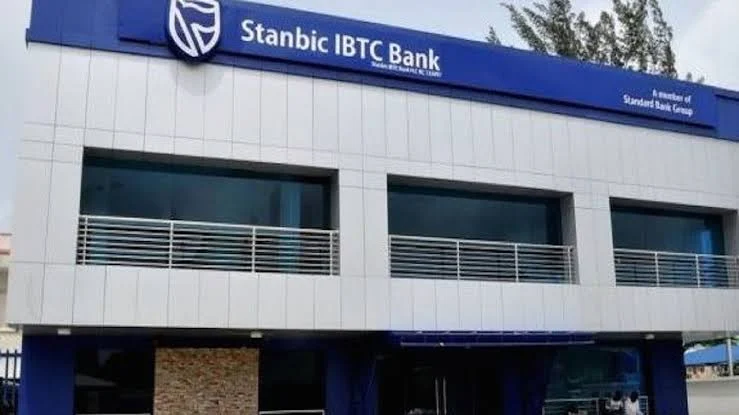
Stanbic IBTC alerts NGX to possible H1 filing delayStanbic IBTC Holdings Plc has notified the Nigerian Exchange Limited and its stakeholders of a potential delay in filing its Audited Financial Statements for the half-year ended 30 June 2026.
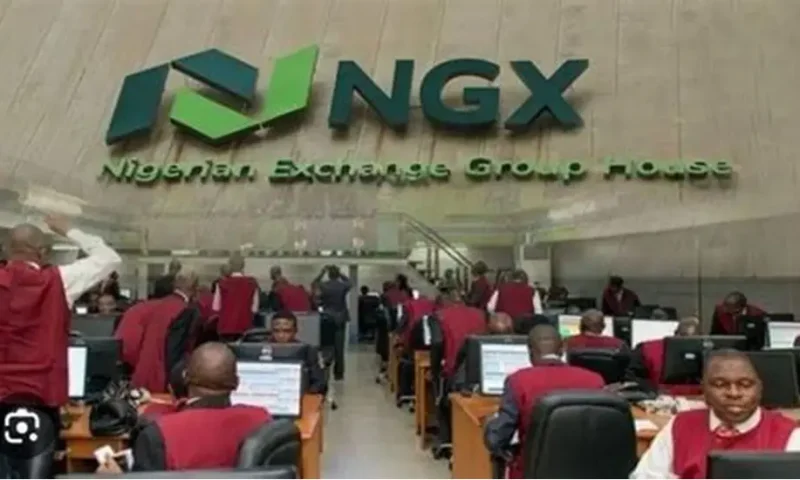
The financial holding company disclosed this in a regulatory statement signed by its Group Company Secretary, Chidi Okezie, and published on the NGX portal on Tuesday.

According to the group, the delay may prevent the submission of the H1 2026 results by the statutory regulatory deadline of 28 August 2026.

The group explained that it was currently finalising the audit of its half-year results, after which it would seek necessary approval from its primary regulator, the Central Bank of Nigeria, before releasing the scorecard to the investing public

The statement read, “This is to inform Nigerian Exchange Limited as well as our Esteemed Stakeholders that Stanbic IBTC Holdings Plc may experience a delay in filing its Audited Financial Statements for the Half Year ended 30 June 2026, by the due date of 28 August 2026.

“The company is currently finalising the audit of its 2026 Half Year Results, following which we would also be seeking the required regulatory approvals.

“We are working diligently to ensure that our company’s 2026 Audited Half Year Financial Statements are submitted to NGX as soon as we have received all required regulatory approvals, and this may occur before or shortly after the regulatory due date of 28 August 2026.”

The company assured shareholders and the market that all efforts were being made to expedite the process and publish the financial statements around or shortly after the regulatory timeline.

Under NGX post-listing rules, quoted companies are required to submit their quarterly and half-year interim reports within 30 to 60 days following the end of the period. However, commercial banks and financial holding institutions that undergo full interim audits are subject to regulatory clearance from the CBN before public release, often necessitating formal notifications to the market when review timelines extend beyond standard submission dates.

Stock market sheds N1tn amid renewed bearish trading

NGXThe domestic equities market closed Tuesday’s trading session on a bearish note, as price depreciation in MTN Nigeria Communications Plc and 25 others dragged the overall market capitalisation lower by N1.17tn.
Consequently, the All-Share Index dropped by 1,806.18 points, or 0.73 per cent, to close at 246,723.57. Similarly, the market capitalisation shed N1.17tn to settle at N159.26tn.

The downturn was primarily driven by sell-offs in large- and medium-capitalised stocks, including MTNN, UACN, Dangote Sugar Refinery, Nigerian Aviation Handling Company, and First Holdco.

Despite the broader market decline, market breadth closed positive with 27 gainers against 26 losers.

FTN Cocoa topped the gainers’ chart, appreciating 9.88 per cent to close at N8.90 per share. C&I Leasing followed with an 8.26 per cent gain to close at N5.90, while Sovereign Trust Insurance rose 6.74 per cent to finish at N1.90 per share.

Regency Alliance Insurance gained 6.33 per cent to close at 84 kobo, while Universal Insurance advanced 6.02 per cent to close at 88 kobo per share.

Conversely, Thomas Wyatt Nigeria led the losers’ chart, dropping 9.97 per cent to close at N2.89 per share. AVA Capital followed with a 9.60 per cent decline to settle at N8.95, while International Energy Insurance lost 6.32 per cent to close at N4.00 per share.

International Breweries fell 5.98 per cent to close at N11.00, while Guinea Insurance declined 5.13 per cent to close at 74 kobo per share.

Activity levels spiked sharply as total volume traded jumped 270.4 per cent to 3.91 billion units, valued at N32.38bn and exchanged in 45,608 deals.

Trading in the shares of Fortis Global Insurance dominated the activity chart with 3.29 billion shares valued at N9.58bn. Trans-Nationwide Express followed with 84.58 million shares worth N181.90m, while Access Holdings traded 66.13 million shares valued at N1.87bn.

Consolidated Hallmark Holdings traded 54.34 million shares valued at N379.42m, while Fidelity Bank transacted 46.86 million shares worth N1.02bn.

NPS processes 26.55m transactions worth N1.4tn

NPS processes 26.55m transactions worth N1.4tn

The rollout of Nigeria’s new sovereign digital infrastructure, the National Payment Stack, has recorded rapid commercial adoption in its early operational phase, processing 26.55 million transactions valued at N1.4tn across 48 participating institutions.

Developed by the Nigeria Inter-Bank Settlement System Plc to modernise the nation’s financial ecosystem, the multi-currency architecture bridges transaction processing and payment intelligence while consolidating payments, identity, and data onto a single rail designed to succeed the legacy NIBSS Instant Payment system.

Commercial banks and fintechs are already driving significant scale across the network. First Bank of Nigeria currently leads the industry in total transaction volume processed on the new platform, while Fidelity Bank holds the top spot for overall transaction value. Other major early adopters powering network activity include Guaranty Trust Bank, Sterling Bank, Access Bank, and Moniepoint.

The platform introduces structured ISO 20022 data architecture, enabling metadata-rich transactions that automate corporate reconciliation, streamline merchant collections, and power request-to-pay invoicing. It also unifies single transfers and high-volume corporate disbursements onto one rail, backed by embedded security features such as automated sanction screening, account validation, end-to-end encryption, and in-flight risk scoring to flag potential fraud before execution.

Highlighting the transformative impact of the new infrastructure, the Managing Director and Chief Executive Officer of NIBSS, Premier Oiwoh, emphasised the platform’s role in shifting the national payments landscape towards deeper intelligence and efficiency.

He said, “The National Payment Stack represents an economic catalyst moving our financial infrastructure from basic transaction processing to comprehensive payment intelligence.

“By delivering an ISO 20022-compliant, multi-currency rail, we are laying the groundwork for unprecedented interoperability, heightened security, and seamless regional trade.”

Complete ecosystem readiness now depends on full participant alignment across technical and operational domains, with NIBSS urging all financial services institutions to activate related debit and credit processing rails to prevent platform congestion.

Supporting this transition, the Director of Payments System Supervision at the Central Bank of Nigeria, Dr Rakiya Yusuf, reaffirmed the apex bank’s full regulatory backing for mandatory integration as the sector prepares for the ultimate decommissioning of the 15-year-old legacy NIP rail.

ASUU gives 20 universities 14-day ultimatum, threatens strike

The Academic Staff Union of Universities, ASUU, has authorised branches in 20 universities to issue 14-day ultimatums to their respective authorities before embarking on strike over the non-implementation of the 2025 Federal Government-ASUU agreement.


The decision was reached at the union’s National Executive Council, NEC, meeting held at the University of Abuja on Saturday and Sunday, August 8 and 9, 2026.

According to the resolutions signed by the ASUU President, Christopher Piwuna, NEC expressed concern over what it described as the haphazard implementation of the 2025 FGN-ASUU agreement and the federal government’s failure to release subvention needed to fully implement the agreement.

The union also faulted visitors to several state-owned universities that had yet to implement the agreement.

Consequently, NEC authorised branches that had approached it for approval to begin procedures for industrial action, subject to the issuance of a 14-day ultimatum.

The affected institutions are Nasarawa State University, Keffi; Ibrahim Badamasi Babangida University, Lapai; University of Medical Sciences, Ondo; Gombe State University; Plateau State University, Bokkos; Adekunle Ajasin University, Akungba; Ambrose Alli University, Ekpoma; Olusegun Agagu University of Science and Technology, Okitipupa; Abia State University, Uturu; and University of Education and Entrepreneurship, Akamkpa.

Others are Emmanuel Alayande University of Education, Oyo; Kaduna State University; Aliko Dangote University of Science and Technology, Wudil; Northwest University Kano; Enugu State University of Science and Technology; Imo State University, Owerri; Niger Delta University; University of Africa, Toru-Orua; Bayelsa Medical University; and Taraba State University, Jalingo.

ASUU directed that upon the expiration of the ultimatums, the affected branches should embark on strike to press home their demands.

MTN Nigeria spent N1.63tn on CAPEX – CFO

MTNThe Chief Financial Officer of MTN Nigeria Plc, Modupe Kadri, has disclosed that the telecom firm spent N1,63tn on capital investment in the last 18 months.

He announced this at the firm’s 25th anniversary celebration, which was commemorated with an exhibition at its headquarters in Lagos on Monday.

“So, over the last 18 months, we spent N1.63m on CAPEX or capital investments. Basically, prior to January 2025, when the regulator gave us a tariff increase. Before that time, there was no increase in prices. So, what we’ve done since then is that we’ve committed over a trillion to CAPEX.

“We’ve also paid over N620bn in terms of taxes and levies. And one thing you need to understand is that at the top line, 2.5 per cent of everything you see is actually operating licence. So, that’s how it works. And we continue to meet our obligations in terms of our licence and insurance,” Kadri explained.

According to the CFO, investing Nigerians have enjoyed appreciable capital gain since MTN listed at the Nigerian Exchange in 2021.

MTN Nigeria shares were first listed on the Premium Board of the Nigerian capital market on May 16, 2019, through a listing by introduction, when 20.35 billion of its existing ordinary shares were listed at N90 per share.

MTN Nigeria shares traded at N845 per share at the close of trading on the Nigerian Exchange on Monday.

“And while today gives us every reason to be proud of the past, anniversaries should never become excesses in nostalgia. The most important question is not what we accomplished in the last 25 years.

The most important question is what will the next 25 years make possible? Is it artificial intelligence? Internet? 5G? And technology that is emerging? If the transformation between 2001 and 2026 has been extraordinary, I believe what lies ahead can be even more profound,” Kadri asserted.

The General Manager, Access Planning and Optimisation, MTN, Nasiru Hayatu, disclosed that the telco currently had over 92 million subscribers, making it the largest telcom firm in the country.

He explained that the firm had been able to manage the significant rise in its subscriber base with the adoption of step-by-step optimisation.

“Step-by-step optimisation is something that we do every year. We have tools that allow us to forecast. We have tools that allow us to look for new areas of opportunity for our architectures,” he added.

MTN Nigeria’s Chief Marketing Officer, Onyinye Ikenna-Emeka, emphasised that the firm had no plan to delve into device sales, noting that it would continue to expand its relationship with original equipment manufacturers of mobile devices to enable Nigerians to enjoy the latest technologies.

“So, what we are doing is further tasking our partners and expanding the possible scope of partnerships to ensure that they don’t just come in and want to concentrate on the other areas that they want to focus on in the region but recognise that the opportunity lies across the entire space of the country,” she said.

Also, the firm’s Chief Digital Officer, Aisha Umar- Mumuni, promised that MTN Nigeria would continue to give Nigerians interesting family content like the Next Afrobest Star, whose second edition was underway.

Meanwhile, during the exhibition tour, the firm’s Chief Customer Relations and Experience Officer, Ugonwa Nwoye, took journalists through the evolution that the telco had undergone, like Project Fame, Extra Cool, etc.

MTN started commercial operations in Nigeria in August 2001, after its historic first test call made on May 16, 2001, at Maritime House in Apapa, Lagos.


UBA, Mikano offer 70% vehicle financing to Nigerian buyers

UBAUnited Bank for Africa Plc has partnered Mikano Motors to offer financing covering up to 70 per cent of the cost of new vehicles, as lenders and auto dealers seek to make vehicle ownership more accessible amid rising vehicle prices.


Under the “Drive Your Dream Today” scheme unveiled in Lagos, eligible customers are required to provide a 30 per cent down payment, while UBA finances the remaining 70 per cent.

The financed amount is repayable over 36 months at an interest rate of 23 per cent, according to the partners.

The scheme is open to both salaried and self-employed Nigerians, including entrepreneurs and other eligible customers who may not have conventional monthly salaries.

The partnership was unveiled at the Mikano Motors showroom in Victoria Island, Lagos, with UBA saying the initiative is aimed at expanding access to consumer credit and encouraging a stronger credit culture.

UBA’s Group Executive Director-designate, Personal and Business Banking, Chidi Okpala, said the arrangement was designed to reduce the upfront financial burden associated with vehicle purchases.

“A customer puts down 30 per cent, we finance the rest, and they pay us back comfortably over a three-year period,” Okpala said.

He said the partnership reflected the bank’s broader effort to provide credit products that respond to customers’ everyday financial needs.

UBA’s Group Head, Consumer Lending, Frank Okoh, said the financing structure was designed to accommodate both salaried workers and business owners.

According to him, prospective customers can begin the process by undergoing an eligibility check at a UBA branch or through the bank’s consumer lending email channel.

Once approved, customers can approach Mikano Motors for a proforma invoice for their preferred vehicle and proceed with the financing process.

For Mikano Motors, the partnership is expected to expand the pool of Nigerians able to purchase its vehicles through structured financing.

General Manager of Mikano Motors, Tarek Mostafa, said the company would complement the financing arrangement with sales and after-sales support.

He said the company provides genuine spare parts, maintenance and other after-sales services to customers across the country.

The partnership comes as vehicle affordability remains a major constraint for many Nigerians, particularly as the cost of new vehicles has risen sharply in recent years.

By allowing buyers to spread the financed portion of the purchase price over three years, the initiative shifts part of the vehicle acquisition burden from an upfront payment to scheduled repayments.

The arrangement also deepens UBA’s consumer lending activities by linking bank credit directly to the purchase of a tangible asset.

Dangote, NUPRC differ over Q2 crude supply

Crude oilThe commission said the refinery had required 63 million barrels during the quarter, but producers offered a higher volume.

“At the level of refinery participation, the statistics show that the Dangote Refinery required 63 million barrels in Q2, but the producers offered higher volumes of 68.1 million barrels. The 68.1 million barrels offered to the Dangote Refinery by producers represents 98 per cent of all offered volumes.

“Eventually, 52.6 million barrels were accepted by the Dangote refinery. This implies that the refinery only accepted 78 per cent of what it was offered,” the NUPRC stated.

The development formed part of the commission’s assessment of compliance with the DCSO, which requires oil producers to make crude available to domestic refineries in line with the provisions of the Petroleum Industry Act.

According to a statement by the NUPRC spokesman, Eniola Akinkuotu, a total of 53.7 million barrels of crude oil and condensate were supplied to local refiners between April and June, representing an overall performance rate of 97.4 per cent.

It said the DCSO was being actively administered and enforced through monthly consultations with crude oil producers and local licensed refineries.

“However, in line with the PIA, the framework operates on a ‘willing buyer, willing seller’ basis, which shapes eventual outcomes,” the commission stated.

The NUPRC said 18.13 million barrels were allocated to producers in April, while 19.31 million barrels were offered to refiners. Actual supply stood at 20.88 million barrels, representing 114.9 per cent performance against the allocation.

In May, it was stated that producers were allocated 18.78 million barrels and offered 23.19 million barrels to local refiners, but actual supply fell to 14.23 million barrels, representing 75.8 per cent compliance.

In June, 18.17 million barrels were allocated to producers, who offered 26.84 million barrels to refiners. The refiners eventually took 18.61 million barrels, representing 102.4 per cent performance.

The commission attributed the improvement in DCSO performance to increased local oil production and the signing of long-term crude supply agreements backed by bankable sales and purchase agreements between producers and domestic refiners.

“The commission observed that the improvement in DCSO coincided with an increase in local oil production and the signing of the long-term crude supply agreement supported by bankable sales and purchase agreements between the producers and domestic refiners,” it said.

The regulator reaffirmed its commitment to the Federal Government’s objective of achieving energy sufficiency, saying it would continue to enforce the DCSO framework while sustaining recent gains in crude oil production.

“The commission reaffirms its commitment to achieving the government’s objective of energy sufficiency. Leveraging the framework of the PIA, 2021, the commission aims to sustain recent gains in crude oil production while continuously enforcing the DCSO,” it stated.

However, Dangote spokesman, Anthony Chiejina, asked the NUPRC to show proof of the crude offered and rejected.

“Let them show us the statistics, we’ll now compare and check, and then we’ll come back to you. That’s all. Because they can’t just by word of mouth tell you, ‘Oh, we give this to Dangote’. It’s crude, it’s not pepper.

“If they have the statistics, let them send it to us and the period it was done, then I will now come back to you to match it. That’s all,” he reacted.