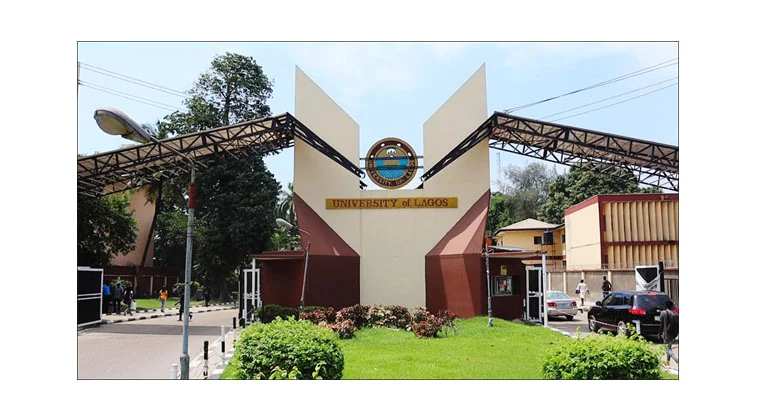
UNILAG faults ASUU strike, insists exams will hold

The management of the University of Lagos has chided the varsity’s chapter of the Academic Staff Union of Universities for declaring an industrial action without following due process.

PUNCH Online reports that the ASUU UNILAG, rising from a congress held on Tuesday, asked lecturers to withdraw their services from Wednesday over what they described as ‘amputated’ January and February salaries received.

The Chairman, ASUU, UNILAG chapter, Prof Idou Keinde, stated that the lecturers did not receive the full complement of their salaries: Consolidated Salary Structure for Academics, Consolidated Academic Tools Allowance and Professorial Allowance.

Keinde vowed that the lecturers would not resume work until their full salaries are pai

But UNILAG, through its Head, Communication Unit, Adejoke Alaga-Ibraheem, on Wednesday, said the university would continue to engage with the ASUU executive to address the issues, especially the unpaid Consolidated Academic Teaching Allowances.

The statement read, “The Management of the University of Lagos has noted reports circulating in the media that the Academic Staff Union of Universities, UNILAG Chapter, at its Congress held on Tuesday, March 10, 2026, directed its members to suspend their services over alleged unpaid Consolidated Academic Teaching Allowances.

“Management observes that due process was not followed in making this declaration. Nevertheless, in its commitment to the welfare of staff and students, the university has continued to engage with the ASUU Executive to address all issues.”

While noting that engagement with the ASUU would continue, the UNILAG management said the ongoing students’ examinations scheduled for Wednesday will proceed as planned.

“The university is particularly mindful that students are currently at a critical stage of the academic session, with semester examinations already underway.

“Any disruption at this time would adversely affect students, especially those scheduled to commence the Students’ Industrial Work Experience Scheme, internships, and those preparing to proceed to the Law School,” the statement added.

It, however, noted that courses for which students have been informed by their Deans or Heads of Department that examinations will not be held will be rescheduled.

“All examinations will continue as scheduled from Thursday, March 12, 2026, and deans are to ensure that necessary arrangements are put in place for the smooth and successful conduct of the examinations.

“Management appeals to all members of the university community to remain calm and continue to go about their lawful academic activities as discussions with ASUU executive continue toward an amicable resolution of the issues raised,” the statement concluded.

SEC cracks down on unregistered digital platforms

AgamaThe Securities and Exchange Commission has officially launched its inaugural Regulator/FinTech Clinic, signalling a proactive step towards strengthening dialogue with Nigeria’s rapidly growing financial technology ecosystem.

The event, held on Tuesday, aims to align innovation with regulatory compliance while ensuring investor protection.

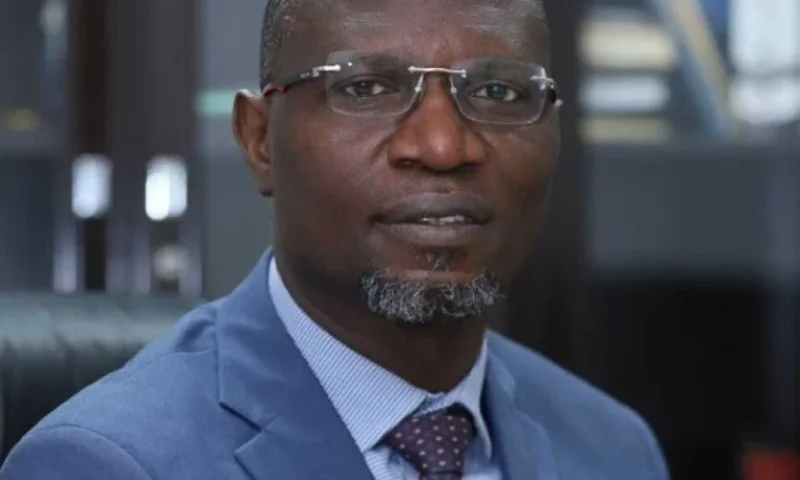
Opening the clinic, the SEC DG Emomotimi Agama highlighted the significance of a collaborative approach between regulators and innovators in one of the most dynamic segments of Nigeria’s financial system.

“This engagement reflects a deliberate step by the Commission to deepen dialogue between the regulator and the FinTech sector,” he said.

Nigeria has emerged as a leading innovation hub in Africa, with FinTech entrepreneurs expanding financial access, democratizing investment opportunities, and leveraging technology to bridge structural gaps in the financial system.

The SEC DG emphasised that while this progress is commendable, regulatory frameworks must evolve in tandem with technological advancements.

He said, “Responsible innovation requires regulatory frameworks that are both protective and adaptable. The Clinic forms part of that continuous review process to ensure our Rules remain proportionate, responsive, and aligned with market realities.”

He said the SEC’s mandate, which is protecting investors, ensuring fair and transparent markets, and facilitating capital formation, remains compatible with innovation.

Agama noted that clarity, predictability, and trust are critical conditions for innovation to thrive.

He states further that since 2018, the Commission has demonstrated a commitment to facilitating technological innovation in Nigeria’s capital market, including the creation of a dedicated FinTech department, adoption of Innovation Facilitators, and drafting of FinTech-focused rules.

The recent enactment of the Investments and Securities Act, 2025, he added, has further strengthened the Commission’s capacity to regulate emerging digital products and platforms while enhancing investor protection.

The clinic serves three primary purposes: providing clarity on the regulatory landscape under the new Act, engaging directly with FinTech operators on common pitfalls, and reinforcing the understanding that legitimacy is foundational to sustainable growth.

“FinTech business models often evolve faster than regulatory frameworks,” the SEC DG noted.

“Early dialogue prevents costly missteps. Compliance embedded at the design stage is far more effective than corrective measures after market entry.”

He encouraged stakeholders to view the clinic as a constructive platform rather than an adversarial forum.

The SEC DG emphasized the Commission’s commitment to helping innovators succeed within a framework that safeguards investor interests and the integrity of Nigeria’s capital market.

He also highlighted the evolving digital financing landscape, referencing the 2021 Crowdfunding framework and ongoing reviews of structural elements to enhance capital formation while maintaining strong investor protections.

He stressed the importance of regulatory clarity, particularly for retail investors who may not fully grasp the complexities of digital financial products.

He reiterated that innovation must be matched with robust governance to ensure sustainable growth and investor confidence.

“As we launch this inaugural Clinic, our goal is to align innovation with integrity, growth with governance, and technology with trust,” the SEC DG said.

In a keynote address, the Executive Commissioner of Operations, SEC, Mr. Bola Ajomale, stated that among the young people, Digital assets have caught their imagination, saying that the future is great.

He said, “We believe that the responsibilities we have and everyone has as players, it must grow in complement with the enthusiasm. There are some risks emerging, and some that have been there are heightened, including unregistered investment platforms, among others.

“We continue to ensure we protect investors, ensure  fair and efficient market and facilitate capital formation. We have taken more than 500 firms to understand how they are evolving and what they are bringing to the market. That is why we are engaging the players to understand what they are bringing to the market and then to set up a framework where we can regulate them”.

Customs seize N6.38bn contraband at Apapa port

The Nigeria Customs Service said it seized 13 containers of prohibited, expired, and falsely declared goods worth over N6.38bn at Apapa Port.
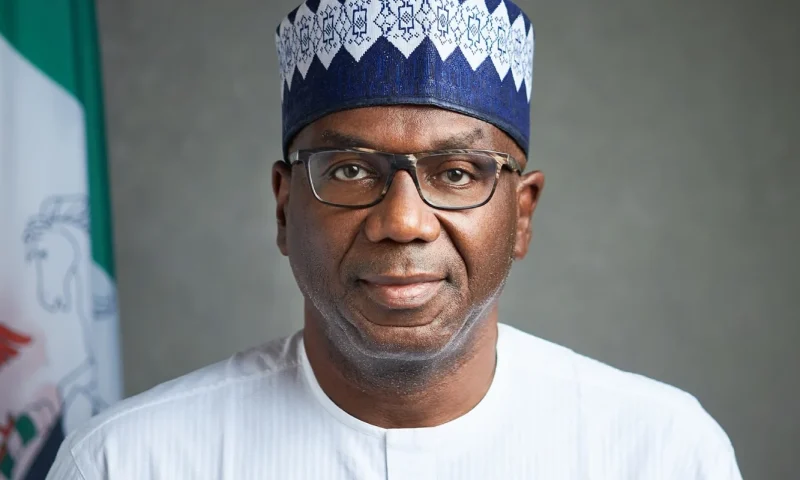
The Comptroller-General of Customs, Adewale Adeniyi, disclosed this while addressing newsmen at the APMT Terminals in Apapa on Tuesday. Adeniyi explained that officers of the command uncovered the contraband following detailed scanning analysis and physical examination.

Giving details of the seizures, he said that a 40-foot container with a registration number was conveying large quantities of expired pharmaceutical products.

Adeniyi added that another two 40-foot containers with registration numbers, MRSU 4584911 and MRSU 6913370, respectively, were conveying large consignments of Hyegra 200 and Sildenafil Citrate, unregistered pharmaceuticals.

He also stated that another 20-foot container with registration number, MRKU 8830266, conveying 800 cartons of codeine was deliberately concealed inside toilet flushing cisterns and sanitary ware, and a 40-foot container (MRSU 5147562) conveying cartons of Artesunate 60 injections.

He hinted that a 20-foot container with registration number, PCIU 286888, was conveying restricted security equipment, including bulletproof vests, helmets, walkie-talkies, and tactical torches, without the End User Certificates.

“Additional seizures include: a 20-foot container with registration number, TCLU 3819607, conveying expired muffin cookie biscuits; a 20-foot container with registration number, UGMU 8692902, containing 36,000 cans of expired Primo energy drinks; a 20-foot container with registration number, SUDU 1696593, loaded with expired tomato paste; and another 20-foot container with registration number, TCLU 1923314, containing expired tomato paste.

“A 40-foot container with registration number, TCNU 7257465, containing 1,700 cartons of codeine cough syrup concealed with luxury food flasks. Another 40-foot container with registration number CAAU 8375050 was found to contain 1,575 cartons of CSMIX with codeine concealed with 156 cartons of electric kettles, alongside additional pharmaceutical seizures including 13 cartons of Bristol brand Co-codamol 500mg and two cartons of Zevita brand Co-codamol 500mg,” he said.

He added that officers also intercepted 13 jumbo bags of cannabis sativa, commonly known as Colorado, weighing 347.57kg, concealed inside a Toyota Sienna vehicle with chassis number 5TDDK3DC7DS057669. “The cumulative duty paid value of the various seizures is N6.38bn,” he stated.

Adeniyi said the importation of expired drugs and controlled substances poses a direct threat to public health, while the concealment of codeine-based products represents a calculated attempt to fuel substance abuse and undermine the nation’s healthcare system.

He warned that Apapa Port is no longer a playground for smugglers or criminal syndicates hiding behind legitimate trade documentation. Adeniyi announced that in accordance with the NCS Act, 2023, the consignments are liable to outright forfeiture, while penalties will be imposed, evaded revenues recovered, and all persons connected to the shipments will face prosecution.

He said Apapa Port remains Nigeria’s busiest maritime gateway and one of the most strategic trade corridors in West Africa, adding that the service had been working closely with government agencies and industry stakeholders to address the persistent challenge of port congestion and improve efficiency across Nigeria’s maritime gateways.

“Measures such as the recent launch of the Green Channel at Lekki Deep Seaport are part of our broader strategy to accelerate cargo clearance for compliant traders and strengthen enforcement against high-risk consignments. Today’s engagement should therefore be seen as part of that continuing effort to modernise our cargo control processes,” he said.

According to him, as the volume of trade passing through Nigerian ports continues to grow, the responsibility placed on the service becomes even greater. He added that thousands of containers pass through this port every day, carrying goods that support businesses, sustain industries, and drive the national economy.

Adeniyi mentioned that while the mandate of the NCS requires trade facilitation, “we must also ensure that our ports are not exploited by criminals.”

“Current operational data from Apapa Port shows that 3,236 consignments were processed through the Orange channel (Non-Intrusive Inspection – scanning), 5,490 through the Yellow channel (documentary checks), while a significantly higher 21,373 consignments were subjected to full physical examination under the Red channel.

Union Bank of Nigeria marks International Women’s Month 2026 with inclusion-first “Give to Gain” campaign

Union Bank marks 2026 International Women's month with 'Give to Gain'  campaign - Blueprint Newspapers Limited
 In observance of International Women’s Month 2026, Union Bank of Nigeria reaffirms its commitment to gender equity through a focused initiative centred on women living with disabilities and women raising children with disabilities.
Aligned with the global theme “Give to Gain,” the Bank’s campaign “Give to Gain: Creating Pathways for Inclusion and Endless Opportunities” centres the lived experiences of women living with disabilities and underscores the need for intentional systems of support for social and economic advancement.
Throughout March, Union Bank will implement targeted initiatives to expand access, foster inclusion, and unlock sustainable opportunities. Activities include a flagship event which held at The Stable, its multipurpose venue in Surulere, Lagos, on Saturday. The event convened women with disabilities, caregivers, supporting organisations, and advocates for dialogue, mentorship, and resource sharing.
Complementary efforts include outreach to disability support facilities and collaboration with educational institutions to distribute learning materials to female students with disabilities. Tailored mentorship programmes will build confidence and capability in education, entrepreneurship, and careers. Through its women’s banking proposition alpher and strategic partnerships, the Bank will also deliver business sustainability training specifically designed for women living with disabilities and women raising children with disabilities.
Internally, Union Bank will activate WeHub — its employee-led women’s network — to strengthen inclusive culture and support professional growth across the organisation.
These actions reflect Union Bank’s long-standing commitment to advancing equity for underserved communities — and align with the United Nations Sustainable Development Goals 5 (Gender Equality) and 10 (Reduced Inequalities). For Union Bank, these are not frameworks to cite; they are commitments to live out.
Olufunmilola Aluko, Chief Brand and Marketing Officer, Union Bank of Nigeria, stated that
“At Union Bank, inclusion is not an abstract ideal; it is a deliberate choice. While many conversations around women’s empowerment are important and necessary, women living with disabilities and women raising children with disabilities are too often left out entirely. This year’s theme, ‘Give to Gain,’ reflects exactly what we believe: that when we intentionally open access, support, and opportunity to these women, the value created extends to families, communities, and society at large.”
Union Bank’s IWD 2026 campaign is a statement of intent: that true inclusion requires us to go further, reach deeper, and serve those who have waited longest for a seat at the table. In 2026, Union Bank is committed to ensuring that a seat exists — and that it is built to last.
Established in 1917, Union Bank is a leading provider of financial services in Nigeria, renowned for its “Simpler, Smarter Banking” philosophy. With a nationwide network and a strong focus on digital innovation, Union Bank continues to empower individuals, businesses, and the public sector to achieve lasting success.
The Bank is a trusted and recognisable brand with an extensive network of over 300 branches across Nigeria. The Bank offers a range of banking services to individual to and corporate clients, including current, savings, and deposit account services, funds transfer, foreign currency domiciliation, loans, overdrafts, equipment leasing, and trade finance. The Bank also offers customers convenient electronic banking channels and products, including Online Banking, Mobile Banking, Debit Cards, ATMs, and POS Systems.
Kwara powers 13 public hospitals with solar energy

The Kwara State Government has extended renewable energy infrastructure to more public hospitals as part of efforts to strengthen healthcare delivery and ensure uninterrupted power supply across the state.
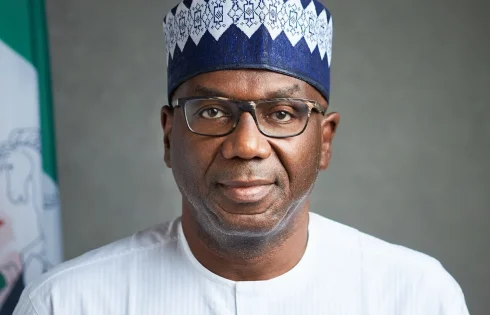
This was disclosed in a statement issued on Monday by the management of the Kwara State Hospitals Management Board and sighted by The PUNCH in Ilorin, the state capital.

According to the statement, the initiative forms part of the government’s commitment to promoting sustainable and climate-friendly healthcare systems while improving electricity supply in public health facilities.

It explained that several hospitals have now joined other health institutions already benefiting from renewable energy systems through the installation of solar inverter solutions.

“Under the intervention, six major hospitals received 30 KVA solar inverter systems to boost their power capacity and enhance service delivery,” the statement read.

The hospitals include General Hospital Share, Specialist Hospital Jebba, General Hospital Erin-Ile, General Hospital Omu-Aran, Children’s Specialist Hospital Ilorin, and the Essential Drugs Programme.

Similarly, seven other health facilities were equipped with 10 KVA solar inverter systems to strengthen electricity supply for routine and emergency medical services.

“These facilities are Cottage Hospital Iponrin, Cottage Hospital Alapa, General Hospital Agbamu, Cottage Hospital Ilemona, General Hospital Oro-Ago, Cottage Hospital Edidi, and Cottage Hospital Idofin Odo-Ashe,” the statement noted.

The board attributed the expansion of renewable energy infrastructure to the commitment of Governor AbdulRahman AbdulRazaq to improving healthcare services and promoting environmentally sustainable initiatives across the state.

It noted that the governor’s administration has continued to prioritise healthcare infrastructural upgrades, sustainability programmes, and improved access to quality medical services for residents.

“The management of the Kwara State Hospitals Management Board remains committed to laying a long-term foundation for a stronger healthcare system in the state through strategic planning, effective coordination, and continuous efforts to improve the operational efficiency of government hospitals,” said Dr Abdulraheem Malik, Executive Secretary of the board.

“Our proactive deployment of renewable energy solutions in health facilities is helping to build a more resilient healthcare system while reducing dependence on fossil fuels and unstable electricity supply,” he added.

The board explained that the installations would stabilise electricity supply, reduce reliance on fuel-powered generators, and guarantee uninterrupted power for critical units such as laboratories, maternity services, cold-chain storage, and emergency care departments, thereby improving the overall quality of healthcare delivery in the state.

NNPC posts N385bn profit as oil output rises

NNPC LimitedThe Nigerian National Petroleum Company Limited recorded a profit after tax of N385bn in January 2026, even as crude oil and condensate production rose to 1.64 million barrels per day, according to the firm’s latest monthly operational report.
The January 2026 NNPC Monthly Report Summary, released on Monday, showed that the state-owned energy company generated N2.571tn in revenue during the month while remitting N726bn as statutory payments to the Federation.

This means the company recorded a sharp 47 per cent decline in its monthly revenue, which fell from N4.82tn in December 2025 to N2.57tn in January 2026. This contraction came despite a marginal increase in the company’s profit after tax.

The report indicated that production recovery during the month was driven largely by the completion of maintenance work at key offshore assets, particularly the Agbami field, as well as operational improvements in other upstream facilities.

It disclosed that Nigeria produced 1.64 million barrels per day, up from 1.55 million barrels per day recorded in December 2025. This represents an increase of 0.09mbpd, or about 5.8 per cent month-on-month.

The development indicates a partial recovery from the production slowdown recorded in the last quarter of 2025, when output had slipped to around 1.54mbpd in October and 1.55mbpd in December.

According to the report, “Production increased month-on-month following the completion of Turn Around Maintenance at Agbami and Renaissance (Estuary Area – EA).”

However, the company noted that operational challenges still affected crude delivery volumes.

It stated, “Despite the improved production profile, planned deliveries for January were reduced due to adverse weather conditions, evacuation constraints, and asset integrity challenges across some production corridors.”

The report also showed that natural gas production rose to 7,283 million standard cubic feet per day, representing a rebound from 6,914 mmscf/d recorded in December 2025.

Gas production had fluctuated throughout 2025, reaching a high of about 7,722 mmscf/d in July before declining later in the year due to operational and supply disruptions. This translates to an increase of 369mmscf/d, representing a 5.3 per cent rise month-on-month.

The rebound suggests stronger upstream performance after several months of fluctuations in 2025, when gas production fell sharply to 6,284mmscf/d in September before gradually recovering towards the end of the year.

Despite these fluctuations, gas production in January reflected renewed output stability as infrastructure upgrades and upstream operations improved. Gas sales also strengthened during the period, with the report indicating that the company sold about 4,978 mmscf/d of gas, one of the highest levels recorded within the past year.

The increase of 224mmscf/d represents growth of about 4.7 per cent month-on-month. This suggests improved gas delivery to power plants, industrial users, and export channels.

FCMB hits N288.96bn capital base, awaits CBN nod

FCMBFCMB Group Plc has reached a pivotal milestone in its race to meet the Central Bank of Nigeria’s new capital requirements, announcing a verified capital base of N288.96bn.

The financial powerhouse is now awaiting final validation from the apex bank to cement its status as a top-tier international banking institution.

The Group’s current capital position follows a rigorous two-phase strategic fund-raising exercise. Despite the remaining gap toward the N500bn threshold required for international licences, the Group remains confident that its recent market activities and pending approvals will bridge the deficit.

“The additional capital will be deployed to strengthen our capital adequacy ratio and accelerate growth. We will invest in human capital and technology, support our international expansion, and reduce high-cost deposits,” stated Ladi Balogun, Group Chief Executive Officer of FCMB Group, during a recent engagement with stakeholders

To address the initial funding gap, FCMB executed a high-velocity capital-raising strategy. Phase 1 of its Public Offer successfully generated N147.5bn, while Phase 2 added another N160bn to the coffers.

While these figures significantly bolster the Group’s balance sheet, they remain subject to formal CBN verification, a routine but critical process for all Nigerian banks ahead of the 31 March 2026 deadline.

Industry analysts suggest that the bank’s proactive approach has placed it within striking distance of its ultimate target.

“We project our earnings per share to grow by over 50 per cent on average over the next two years. This positions FCMB to outperform the market while delivering stronger dividends and shareholder returns,” Balogun added, emphasising the long-term value for investors.

Recognising the high stakes of the recapitalisation exercise, FCMB has established a “Rapid Response” contingency plan. Should the CBN’s final validation reveal any shortfall, the Group is prepared to deploy a Private Placement to instantly secure the remaining funds. This move underscores the urgency felt by international banks to remain competitive in a landscape being reshaped by the CBN’s N500 bn mandate.

Beyond mere compliance, the recapitalisation is expected to transform FCMB’s operational capacity. With a larger capital base, the bank will be better equipped to handle large-scale corporate lending and complex cross-border transactions.

“Together, the public offer and minority divestment provide sufficient capital for the bank to meet the revised N500 bn minimum capital requirement. This is based on verified eligible capital of N266.5 bn as of late 2025, now climbing toward our final goal,” a representative for the Group noted in a regulatory filing.

As the March deadline approaches, all eyes remain on the Central Bank’s headquarters in Abuja. For FCMB, the “nod” from the CBN will not just be a regulatory green light but a signal to the global market that the bank is ready for its next chapter of international expansion.

FAAN issues 100,000 airport access cards after tollgate chaos

FAAN

More than 100,000 airport access cards have been issued to motorists across the country as part of efforts to implement the Federal Government’s cashless policy at airport tollgates, the Managing Director of the Federal Airports Authority of Nigeria, Mrs Olubunmi Kuku, has disclosed.

Kuku revealed on Monday that 62,000 of the cards were issued within just three days of enforcing the cashless policy at airports, a development that turned chaotic as the rollout of the policy at major airports triggered disruptions.

The development comes as motorists have continued to enjoy free access into Nigerian airports for the past five days after President Bola Tinubu ordered that the airport gates be thrown open in response to the disruption caused by the policy’s enforcement.

Recall that attempts to enforce the cashless regime at airport tollgates, effective March 1, led to severe gridlock and confusion, with long queues of vehicles at entry points while many passengers struggled to catch their flights.

Amid public outcry, the President directed that tollgates be opened to allow free passage for motorists as an immediate relief measure.

Speaking on the development and the surge in access card registrations, Kuku acknowledged that the initial enforcement created significant bottlenecks despite prior public awareness campaigns, but also put the number of cards already collected at over 100,000.

She said, “Of course, in the implementation of the cashless policy, it made it quite hectic because a lot of the commuters and even some of the passengers, despite a lot of the awareness, did not believe that we would actually start the enforcement on March 1st. It did create a huge bottleneck over the first few days, but we saw that it actually started to ease up. I gave some interviews yesterday where I reeled out some data from October, when we actually started the implementation, to March 3rd.

“We’ve registered about 100,000 customers, of which 62,000 were actually done in the last three days. In Abuja, for example, we saw the traffic start to ease up. But despite that, we are an airport. And our ultimate goal outside of safety and security is also to make sure that our passengers and the neighbouring areas have a seamless experience. We’re grateful to Mr President. He was able to step in.”

Findings by The PUNCH showed that immediately the directive was issued, officials of FAAN who had been stationed at airport gates to collect tolls vacated the entry points, leaving the barricades open.

A motorist, who identified himself simply as Idris and had been passing through the tollgate after the announcement, confirmed that vehicles were moving freely without payment or checks in the last five days.

Idris said, “I’m surprised. I have been passing through the tollgate for about five days now, and not a single official of FAAN was on the ground. I guess they are restrategising.”

Eyewitnesses noted that the sudden absence of officials created a free flow of traffic at the usually congested tollgates, a sharp contrast to the long queues experienced earlier when the cashless policy was being enforced.

The Federal Government had earlier announced the suspension of the new payment system after the initial rollout sparked confusion and traffic gridlock at major airports, particularly in Lagos and Abuja.

The Minister of Aviation and Aerospace Development, Festus Keyamo, confirmed the President’s directive while briefing State House correspondents after the Federal Executive Council meeting.

“Mr President was very concerned about the welfare of Nigerians and the fact that most Nigerians were missing their flights. So Mr President, out of empathy, directed today that we should suspend the present system because it creates a lot of gridlock and Nigerians are suffering as a result of it,” Keyamo said.

He added that the President had instructed the ministry and FAAN to temporarily revert to the previous payment arrangement while officials work on a more efficient electronic solution for airport access nationwide.

PSC rejects N5m promotion bribery claim, considers lawsuit

Police-Service-Commission

The Police Service Commission has denied allegations that senior police officers paid N5m each to secure promotion to the rank of Assistant Commissioner of Police.

A report by Sahara Reporter alleged that officers bribed officials of the commission to secure promotion from the rank of Chief Superintendent of Police to Assistant Commissioner of Police.

In a statement issued on Sunday in Abuja by its Head of Protocol and Public Affairs, Torty Kalu, the commission described the claim as unfounded and a reckless attempt to tarnish the image of the commission and the Nigeria Police Force.

It also said it was considering legal action against Sahara Reporters over alleged defamation and damage to the reputation of the commission

The commission said the promotion of senior officers from CSP to ACP followed due process and established guidelines.

“PSC has noted with grave concern a publication by Sahara Reporters alleging that senior officers paid N5m each to secure promotion to the rank of ACP.

“The commission categorically denies these unfounded allegations in their entirety and describes the report as a reckless attempt to tarnish the image of both the commission and the Nigeria Police Force.

“Contrary to the narrative peddled by the online publication, the promotion of the senior officers from CSP to ACP followed due process and established guidelines of the commission,” the statement read.

It said the reference in the report to the immediate past Inspector General of Police was mischievous and intended to give credibility to what it described as a baseless allegation.

It explained that the role of the Inspector General of Police in the promotion process is limited to forwarding recommendations based on vacancy and performance, while the final approval rests with the commission.

The commission urged the public to disregard the report, reiterating its commitment to merit-based promotions and effective oversight of the Nigeria Police Force.

Fidson, NREIT listings boost NGX turnover to N177.7bn

FidsonNew listings by Fidson Healthcare and Chapel Hill Denham’s NREIT headlined a N177.7 bn trading week on the Nigerian Exchange, signalling a shift in market appetite on Friday.

While total turnover value dipped slightly, the week closed with a notable reduction in losers, hinting at a recovery in market sentiment heading into mid-March.

Investors on the floor of the Exchange traded a total of 3.695 billion shares valued at N177.687 bn in 370,980 deals, a performance that stood in contrast to the 5.494 billion shares worth N196.709 bn that exchanged hands in 370,233 deals during the previous week.

The week’s trading activities were bolstered by two major additions to the daily official list of the NGX

In specific terms, Fidson Healthcare Plc successfully listed an additional 105,003,725 ordinary shares arising from the company’s employee share scheme, effectively increasing its total issued and fully paid-up capital from 2,294,996,275 to 2,400,000,000 ordinary shares.

Similarly, the real estate sector saw a capital injection as Chapel Hill Denham Management Limited listed 68,158,000 units of its Series 5 Nigeria Real Estate Investment Trust at N103.00 per unit.

This listing, part of a broader N400 bn issuance programme, pushed the total outstanding units of the NREIT from 1.588 billion to 1.656 billion units.

Sectoral analysis revealed that the Financial Services Industry remained the primary engine of market activity. Measured by volume, the sector led the chart with 2.444 billion shares valued at N72.029 billion traded in 145,628 deals, accounting for 66.14% of the total equity turnover volume and 40.54% of its value.

The Oil and Gas Industry secured the second position with 326.073 million shares worth N39.510 bn in 36,458 deals, followed by the Services Industry, which recorded a turnover of 218.374 million shares valued at N2.012 bn in 18,575 deals.

Among individual equities, the trio of Jaiz Bank Plc, Fortis Global Insurance Plc, and Access Holdings Plc emerged as the most heavily traded by volume.

The three stocks alone accounted for 661.242 million shares worth N8.062 bn in 38,534 deals, contributing 17.90% to the total equity turnover volume.

The Exchange-Traded Products segment also witnessed growth, with 3.800 million units valued at N548.240 m traded in 4,487 deals, surpassing the 3.603 million units worth N409.595 m recorded in the preceding week.

Price movement data suggested a gradual easing of bearish pressure as market breadth improved. Forty-four equities appreciated in price during the week, an increase from the thirty-two gainers recorded previously.

Meanwhile, the number of depreciating equities fell to fifty-eight from sixty-nine in the prior week, and forty-six equities remained unchanged.

This cooling of sell-offs, combined with the new listings, provided a stable floor for the market as it transitioned into the second week of March.

However, Cowry Asset Management Limited, in a note to investors on the weekend, said, “Temporary profit-taking and relatively subdued trading activity may limit the pace of gains. Consequently, market performance in the coming week is expected to be driven largely by stock-specific developments and investor sentiment across key sectors.

“In the near term, we expect the domestic equities market to maintain a cautiously positive tone as investors continue to position in fundamentally sound and undervalued stocks following the recent rebound.

“Bargain hunting and selective accumulation, particularly in large-capitalisation and fundamentally strong counters, could provide support to the benchmark NGX All-Share Index.”