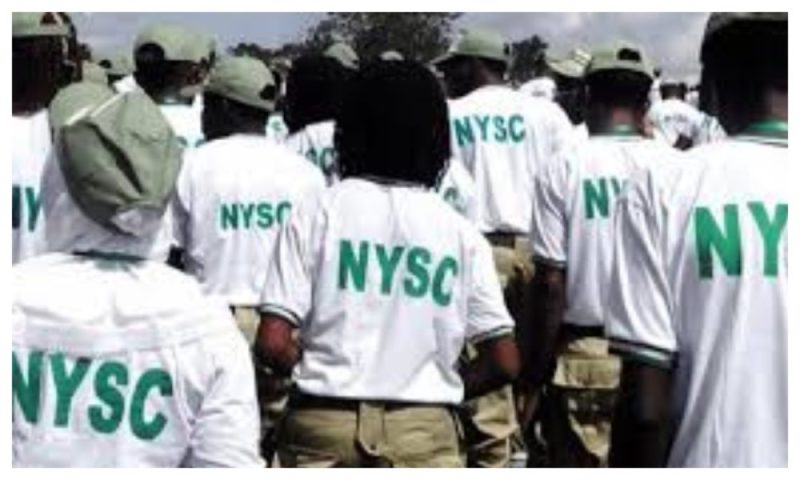
Borno Police urge stranded travellers to seek help at nearest station

Borno Police urge stranded travellers to seek help at nearest stationThe Borno State Police Command has urged travellers who become stranded, lost or distressed during their journeys to seek assistance at the nearest police station.

The command’s Public Relations Officer, ASP Nahum Daso, gave the advice in a post on his official Facebook page on Thursday.

Daso cited the case of a woman who travelled from Maiduguri to Kano to visit her relatives but became stranded after losing contact with them.

He said the woman had no mobile phone and did not know her relatives’ residential address.

According to him, police officers in Kano contacted relevant authorities in Borno State, traced her family in Maiduguri and facilitated her safe return.

Daso advised travellers to inform trusted relatives or friends about their destinations and expected arrival times before embarking on journeys.

He also urged stranded travellers to remain calm, avoid isolated areas and approach the nearest police station or identifiable police officers for assistance.

Kebbi: Attack on Atiku’s campaign convoy threatens opposition’s freedom of assembly – Amnesty

Kebbi: Attack on Atiku’s campaign convoy threatens opposition’s freedom of assembly – AmnestyAmnesty International has warned that the attack on the African Democratic Congress, ADC, presidential candidate, Atiku Abubakar’s campaign convoy in Birnin Kebbi, Kebbi State, threatens the rights of opposition parties to freely hold political activities.

In a statement issued on Thursday, the rights organisation said armed men blocked the convoy, attacked vehicles and assaulted people with cutlasses.

Amnesty said footage it analysed showed armed gangs striking people with cutlasses, attacking vehicles and blocking roads during the incident.

It added that members of the media crew covering the campaign were also targeted, with cameras and other equipment destroyed.

The organisation said the destruction of the equipment was aimed at preventing journalists from documenting the campaign activities.

It warned that the incident could undermine the rights of opposition parties and their supporters to freedom of association and peaceful assembly.

Amnesty said the Kebbi attack came days after similar violence against ADC campaign activities in neighbouring Sokoto State, describing the incidents as part of a troubling pattern of attacks on opposition supporters.

The organisation also cited similar attacks in Niger, Kaduna, Edo and Enugu states, alleging that authorities had failed to ensure accountability in cases it investigated.

“No one should lose their life or face violence simply for taking part in peaceful political activities,” Amnesty said.

It warned that continued attacks on opposition parties and their supporters could undermine democratic participation and create an atmosphere of fear ahead of the 2027 general elections.

Emergency patients: Fix hospitals before punishing health workers – NMA tells NASS

NMA The Nigerian Medical Association, NMA, has rejected a legislative proposal by the National Assembly to impose fines and imprisonment on healthcare workers who reject emergency patients, urging lawmakers to compel governments to fix hospitals before enacting such laws.

The president of the association, Prof. Afekhide Ernest Omoti, who stated this in a statement made available to journalists in Benin City on Thursday, November 5, 2026, described the proposed sanctions as unjust.

Omoti, however, called on the National Assembly to hold governments accountable for failing to provide the resources, infrastructure and enabling environment required for effective emergency medical services.

He urged lawmakers to address the systemic challenges confronting the country’s healthcare sector rather than introduce punitive measures against health professionals.

He noted that the National Health Act, NHA, had already provided a legal framework for protecting patients requiring emergency medical treatment, stressing that existing provisions prohibit the refusal of emergency care.

He said it was fundamentally unfair to impose criminal liability on healthcare workers and hospitals for failing to provide services when governments had not fulfilled their responsibility to provide the necessary resources and enabling environment.

The NMA president said the critical question was not necessarily the absence of legislation but the failure to implement existing provisions and create the enabling environment for their effective execution.

“Of particular importance is Section 6 of the National Health Act, which establishes the Basic Health Care Provision Fund, BHCPF, and provides for the funding of emergency medical treatment.

“This provision recognises that emergency care requires financial support and that healthcare facilities must not be left to bear the cost of providing such services without appropriate reimbursement,” he said.

Omoti lamented that the implementation of the BHCPF remained inadequate, leaving hospitals and healthcare facilities that provide emergency treatment to bear considerable financial costs without the expected refunds or reimbursement.

“This creates an unsustainable situation in which hospitals are expected to provide emergency care without the necessary financial support,” he added.

He further identified the shortage of doctors and other healthcare professionals as a major challenge confronting the country’s healthcare system.

He attributed the situation to poor remuneration, unfavourable working conditions, inadequate infrastructure, insecurity, excessive workloads and the general lack of an enabling professional environment.

According to him, these challenges have contributed to the alarming migration of Nigerian doctors and nurses to other countries, including neighbouring African countries where conditions of service are increasingly attractive.

“Our hospitals are consequently operating with dangerously inadequate manpower. In several facilities, the few available doctors are expected to manage overwhelming patient loads, sometimes under extremely difficult circumstances and without adequate support,” he stated.

The NMA president also decried the deplorable state of infrastructure and a persistent shortage of essential medical supplies across hospitals in the country.

He listed oxygen, essential drugs, blood and blood products, resuscitation equipment, medical consumables, functional ambulances and other life-saving facilities as basic emergency-care requirements that are not readily available in many healthcare institutions.

He questioned how doctors could be expected to provide emergency treatment when hospitals lacked the basic equipment and supplies needed to save lives.

“How can we reasonably expect a doctor to provide emergency care when the hospital lacks the basic equipment, drugs and consumables required to save a life?

“How can we threaten health workers with imprisonment for circumstances that are substantially beyond their control?” he queried.

He advised the National Assembly to address the fundamental deficiencies in the healthcare system rather than introduce punitive measures that could further demoralise an already distressed workforce.

He also urged the Senate to reconsider the proposed amendment in its present form and redirect its legislative efforts towards addressing the challenges undermining emergency healthcare delivery in Nigeria.

NYSC investigates corps members’ complaint over hospital treatment in Osun

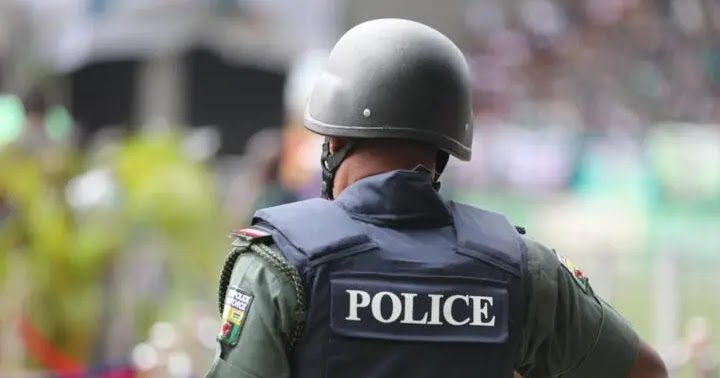
NYSC investigates corps members’ complaint over hospital treatment in Osun The National Youth Service Corps, NYSC, in Osun State has investigated a complaint by a corps member over alleged failure to provide medical attention at the General Hospital, Iwo.
The investigation followed a viral video posted on social media by Olaode Testimony, serving in Ayedire Local Government Area, and his friend, Olusegun Victor, who also serves in the same local government.

In the video, the corps members alleged that they were unable to access medical attention after visiting the General Hospital, Iwo, over suspected food poisoning. They expressed concerns about their experience during the late-night visit.

Olaode explained that they arrived at the hospital at about 10:05 pm after experiencing symptoms they suspected were caused by food poisoning.

He said they visited the facility because they needed medical attention but were unsuccessful in getting treatment.

However, during the investigation conducted by the NYSC Osun State Secretariat, Olaode provided further details about what happened at the hospital, clarifying that they were not completely ignored upon arrival.

He explained that “we were received by a security personnel who directed us to a nurse. The nurse was unable to attend to us when we sought medical assistance.”

The corps member also clarified that his friend, Victor, had earlier received treatment at the same hospital that afternoon.

He disclosed that their unsuccessful attempt to obtain medical attention happened during their subsequent visit at night.

“After leaving the hospital, we proceeded to a pharmacy in Iwo, where we eventually received assistance,” he stated.

The investigation established that they obtained help at the pharmacy after failing to secure the required attention at the general hospital.

The NYSC investigation revealed that the corps member did not use the established communication channels provided by the scheme for reporting emergencies.

He did not contact his Local Government Inspector, LGI, Zonal Inspector, Corps Liaison Officer or State Coordinator.

The NYSC said it provided corps members with the telephone contacts of those officials during their orientation course to facilitate prompt intervention in emergency situations.

The investigation noted that the available communication channels were not utilised before the corps members sought assistance elsewhere.

Speaking during the investigation, the LGI, Abatan Bolanle, explained that the corps member could have contacted him immediately for guidance and assistance.

Abatan explained that he would have directed the two corps members to Bowen University Teaching Hospital, Iwo, if he had received information about their condition.

He indicated that such a referral would have enabled them to obtain the necessary medical attention.

Following the investigation, the Corps Inspection and Monitoring Branch issued queries to the corps members involved, while the matter was referred to the Corps Disciplinary Committee for necessary action.

2027 poll: ‘One-million-man’ protest against Gov Nwifuru set for November 9

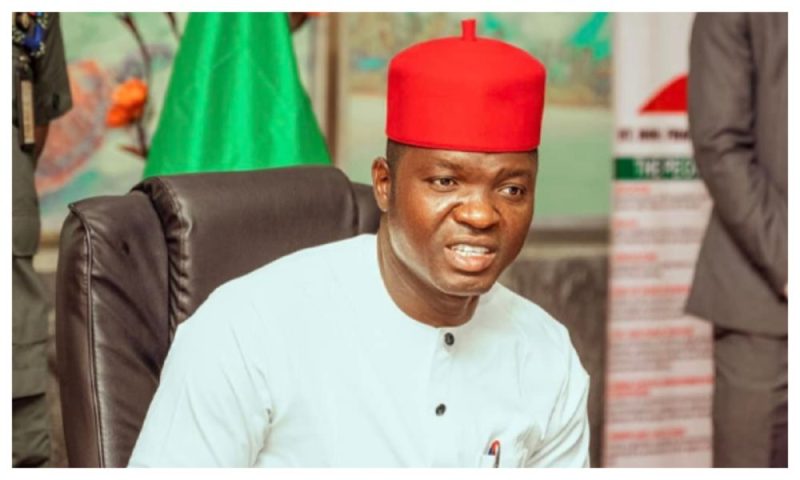
2027 poll: 'One-million-man' protest against Gov Nwifuru set for November 9 A coalition of civil society organisations and non-governmental organisations has announced plans to stage a one-million-man protest against the administration of Governor Francis Nwifuru of Ebonyi State on Monday, November 9, 2026.
The protest, according to the coalition, will take place simultaneously in Abakaliki, Abuja and Lagos, with 56 non-governmental organisations, NGOs, and 39 civil society organisations, CSOs, expected to participate.

The leader of the coalition, Dr Ibiam Oko Ibiam, disclosed this in a press statement made available to journalists in Abakaliki on Thursday.

Ibiam said the demonstration was intended to draw national and international attention to what he described as deteriorating human rights conditions, politically motivated assassinations, electoral violence and alleged mismanagement of public funds in Ebonyi State.

He called on well-meaning Ebonyians, irrespective of political affiliation, to rise and participate in what he described as a collective effort to rescue the state from what he termed the grip of political vampires and blood-sucking forces.

The activist also questioned Governor Nwifuru’s understanding of the responsibilities of the office of governor, particularly his constitutional obligation to protect lives and property and ensure the welfare of citizens.

He specifically expressed concern over the gruesome killing of Ubochi Onwe at Mgbo in Ohaukwu Local Government Area, alleging that the victim’s mouth was cut off after he had offered prayers for an opposition political candidate.

He also referenced other reported assassination incidents in Ezza South Local Government Area, describing the development as alarming and demanding urgent attention from security agencies.

On public expenditure, Ibiam criticised what he described as the administration’s misplaced priorities, questioning the alleged procurement of SUV vehicles for female political office holders, expensive champagne consumption, and distribution of public funds to political guests and associates.

He wondered why government expenditure on entertainment, hospitality and political largesse would allegedly take precedence over education, healthcare and other essential services.

Citing figures covering January to September 2026, Ibiam questioned how the state government could allegedly spend ₦22.2 billion on entertainment, approximately ₦17 billion on cash donations to official guests and ₦30 billion on loan servicing, while only about ₦9.3 billion went to education and primary healthcare.

He described the figures as disturbing, insisting that the government must explain its spending priorities to the people of Ebonyi State.

The coalition leader further raised concerns over the state’s borrowing profile, warning that mounting debt obligations could place considerable pressure on projected government revenue and threaten the state’s financial stability in the coming months.

He urged Ebonyians, human rights advocates, labour groups, youth organisations and other stakeholders to mobilise for the planned demonstration.

According to the statement, the protest locations include Abakaliki, Louis Edet House in Abuja and the American Embassy area in Lagos.

Ibiam maintained that the planned demonstration was aimed at demanding accountability, protection of human rights, an end to political violence and responsible management of public resources.

The coalition called on security agencies to provide adequate protection for peaceful protesters and ensure that the exercise remained peaceful and orderly.

2027 presidency: Tinubu lacks energy, should go back home – Peter Obi

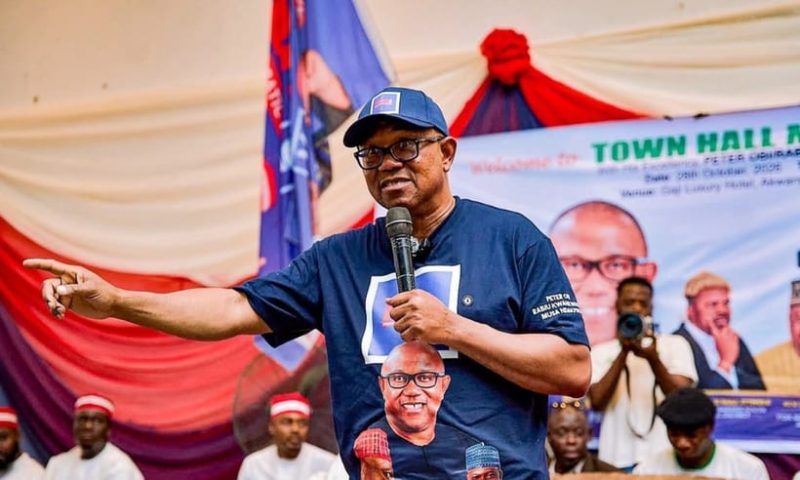
Peter Obi The Nigeria Democratic Congress, NDC, presidential candidate, Peter Obi has declared that President Bola Tinubu lacks the energy to continue ruling Nigeria.
Obi charged Tinubu to “go home” after the 2027 presidential election because he is tired.

Speaking at a town hall meeting in Calabar, Cross River State, Obi urged Nigerians to vote for a competent leader with capacity and commitment to rebuilding the country.

He said: “We want you to go out and help us, elect somebody who is competent, somebody who has capacity, with compassion and commitment to building another Nigeria.

“We want to build a country where a child of a nobody can be somebody without knowing anybody.

“Tinubu is tired, he does not have the energy for the job, he should go home.”

TUC demands permanent incorporation of N70,000 transport allowance into workers’ monthly salaries

TUC demands permanent incorporation of N70,000 transport allowance into workers’ monthly salariesThe Trade Union Congress of Nigeria, TUC, has outlined seven major reasons for rejecting the Federal Government’s proposed N70,000 transport allowance, insisting that workers need a permanent salary increase rather than temporary financial relief.
The Secretary-General of TUC, Nuhu Toro, gave the reasons during an interview with TVC News on Wednesday.

He said the Congress rejected the proposal because it was a temporary six-month intervention that would not provide sustainable relief to Nigerian workers.

“History has shown that no wage award in Nigeria is sustainable. As I speak to you today, there are MDAs, parastatals and government agencies that have not paid the wage award,” Toro said.

He recalled that some government agencies were yet to settle the N40,000 wage award introduced in 2023, describing the situation as evidence that temporary wage interventions could fail to benefit workers.

The TUC secretary-general argued that the N70,000 should instead be incorporated into workers’ monthly salaries as part of their transport or housing allowances.

“Why don’t you embed it into the component of salary? Say, for instance, N70,000 is added to either transport or housing allowance of workers,” he said.

According to him, incorporating the allowance into salaries could raise the value of the existing minimum wage to about N140,000 and give workers a stronger position during subsequent minimum wage negotiations.

Toro also questioned what would happen when the six-month payment period expired without a new minimum wage agreement.

“What happens if between now and six months the new minimum wage does not set in? Are we going to say workers should stop earning it?” he asked.

Another reason for the rejection was the alleged exclusion of some public service unions from the negotiations that produced the allowance.

The union also cited outstanding agreements with the Federal Government, including commitments concerning judicial workers, as part of its broader demands.

Toro said the Congress had presented its demands to the government before the N70,000 allowance was announced and that discussions were continuing with a government delegation led by the Secretary to the Government of the Federation.

He insisted that workers should not accept a temporary arrangement in place of a permanent improvement in their earnings.

“We insist that the N70,000 should be embedded into their salary preceding negotiation of the minimum wage,” he said.

The TUC has also proposed a N300,000 salary for the lowest-paid worker.

FRSC cracks down on fake number plates in Abia, says it’s for national security

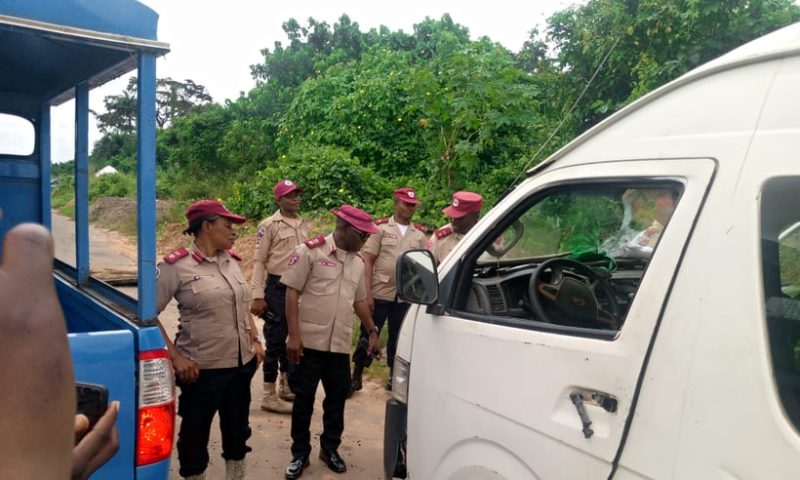
IMG 20261104 113149 748The Federal Road Safety Corps, FRSC, has continued its crackdown on motorists using fake, defaced, and unauthorized diplomatic number plates in Abia State.
The enforcement, which started on Monday, is part of FRSC’s nationwide security measures, following a security report from the Office of the National Security Adviser, ONSA.

In Abia State, the operation is being led by Oki Adetunji, an Assistant Corps Marshal, ACM, sent from the FRSC headquarters, Abuja.

Speaking on Wednesday on the Umuahia axis of the Enugu-Port Harcourt highway, ACM Oki Adetunji said that the use of fake and unauthorized diplomatic number plates by some motorists was constituting a big threat to the security of the nation, adding that it resulted in revenue loss to the Federal Government.

He noted that the enforcement exercise is the second phase, stressing that it was designed to prevent criminal elements from perpetrating crimes on the roads using fake number plates.

Adetunji, who was accompanied by the Sector Commander of Abia State Command, CC Ngozi Ezeoma, in monitoring the enforcement, disclosed that the Office of the National Security Adviser, ONSA, had recently sounded a security alert about the activities of criminal elements who use fake, defaced and unauthorized diplomatic number plates to commit crimes on Nigerian roads.

“Our previous exercise contributed to a reduction in road crashes, but apart from road crashes, we don’t want anybody to use fake number plates to commit crimes or other breaches of the security of this nation.

“Because as soon as they commit crimes with those fake number plates, they remove them, and that is what we are doing.”

Adetunji further advised motorists to stop accusing FRSC officials of punishing or wasting their time on the roads.

The Sector Commander of FRSC , Abia State Command, CC Ngozi Ezeoma, warned against acts that compromise national security and road safety.

During the exercise on Wednesday, a vehicle registered with motorcycle documents was discovered on the Enugu-Port Harcourt highway by the FRSC personnel.

NJC suspends three judges for one year over misconduct, bars them from promotion

NJC suspends three judges for one year over misconduct, bars them from promotionThe National Judicial Council, NJC, has suspended three judicial officers for one year without pay and issued cautions to eight others over alleged misconduct, including unlawful detention of litigants, abuse of judicial authority, and violations of due process.

The decisions were reached at the Council’s 112th meeting, held on November 3, 2026, under the chairmanship of the Chief Justice of Nigeria, Justice Kudirat Kekere-Ekun.

The NJC also approved the issuance of warning letters to three judges following investigations into petitions concerning their conduct of judicial proceedings.

The affected judicial officers suspended for one year are Justice Hannatu Mohammed Kabir of the Nasarawa State High Court, Grand Kadi Mohammed Sani Salihu of the Jigawa State Sharia Court of Appeal and Justice Sobere Biambo of the Rivers State High Court.

Justice Kabir was sanctioned for ordering the arrest and detention of a litigant for 58 days over alleged disobedience of a court order without following the required contempt procedure. The investigation established that she failed to initiate proper contempt proceedings or serve the litigant with the mandatory Forms 48 and 49. The Council held that her action breached the litigant’s right to a fair hearing and consequently barred her from being considered for elevation for three years.

In the case of Grand Kadi Salihu, the NJC found that he exceeded his judicial authority by reopening a judgment delivered by the FCT Upper Area Court. He had constituted a committee to review the judgment before transferring the matter to another judge, who subsequently entertained fresh evidence and delivered another judgment. The Council considered the process an improper attempt to appeal against a subsisting judgment of a court with competent jurisdiction.

Justice Biambo was also suspended for ordering the arrest of litigants and imposing fines of N300,000 on each of them in connection with a civil dispute without complying with the prescribed contempt procedures. He equally failed to serve the relevant forms before making the orders. Like Justice Kabir, he was barred from consideration for elevation for three years.

The Council further issued a caution to Justice Kayode Agunloye of the FCT High Court over his handling of post-judgment garnishee proceedings in a case involving First Bank of Nigeria Plc.

According to the NJC, the judge granted a fresh ex parte application for a Garnishee Order Nisi after an earlier application on the same matter had been withdrawn and struck out. This was done while other pending applications, including a request for a stay of execution, were yet to be heard.

Among the other disciplinary actions, the Council approved a warning against Justice Bello Kawu for granting interim bail to former Attorney-General of the Federation, Abubakar Malami, despite an existing remand order issued by another judge.

Justices Danjuma Oyigbenu and Isa Ebini Kana were also issued warning letters for delivering judgments in an appeal after the expiration of the constitutionally stipulated 90-day period.

Other judicial officers cautioned or placed on the Council’s Watch List included Justice Mohammed Zubairu of the FCT High Court, who made orders after being notified that an appeal had been entered at the Court of Appeal.

The NJC also cited Justice C. A. Ogbuagor of the Enugu State High Court for continuing proceedings despite a pending appeal and an application for stay of proceedings. Justice Chibuike Azuama of the Imo State High Court was similarly cautioned for issuing an ex parte garnishee order that froze the bank accounts of Puma Energy, a company that was not a party to the substantive suit.

The Council also reviewed 29 petitions forwarded by its Preliminary Complaints Assessment Committees. Of these, 24 were dismissed for lacking merit, four were recommended for further investigation, while one was suspended from consideration because the matter was sub judice.

It further ordered the continuation of investigations into a petition against Justice G. N. Ugbala of the Ebonyi State High Court, notwithstanding the petitioner’s notice of withdrawal.

Beyond its disciplinary proceedings, the NJC recommended 28 candidates for judicial appointments across different states of the federation.

The recommendations comprised 24 candidates for appointment as judges of the High Courts in Kano, Ebonyi, Edo, Adamawa and Ogun States, alongside a Grand Kadi for the Plateau State Sharia Court of Appeal, a Kadi for the Adamawa State Sharia Court of Appeal and two judges for the Adamawa State Customary Court of Appeal.

The Council also directed the Imo State Judicial Service Commission to add the name of the Acting Chief Judge, Justice Ijeoma Agugua, to the shortlist for appointment as substantive Chief Judge. The directive followed a petition challenging her exclusion from the selection process.

In addition, the NJC approved the retirement notifications of six judicial officers, including two Justices of the Supreme Court. It also conveyed its condolences over the deaths of nine judicial officers recorded between May and September 2026.

N70,000 allowance saga: Ex-Labour leaders intervene as NLC, TUC presidents ‘fight’ on TV

N70,000 allowance saga: Ex-Labour leaders intervene as NLC, TUC presidents 'fight' on TVFormer national leaders of the Nigeria Labour Congress, NLC, and the Trade Union Congress, TUC, have waded into the quarrel between NLC President, Joe Ajaero, and his TUC counterpart, Festus Osifo, over the Federal Government’s transport allowance for public sector workers.

The disagreement, which degenerated into heated personal attacks on national television, has caused serious tension inside the labour movement.

Confirming the intervention on Wednesday in Abuja, former NLC President, Ayuba Wabba, said respected labour elders had already held separate talks with the two union leaders and got them to agree to stop further public attacks pending a full reconciliatory meeting.

Wabba described the clash as a domestic quarrel that should be settled internally through dialogue.

“It is a family misunderstanding between the two centres, and we have made it clear that workers’ organisations are supposed to be one because the objective is one and the aim is one,” Wabba said.

He said the misunderstanding has already escalated, and that the elders have told both leaders that all hostilities must stop.

“We will actually try to meet with them to see what happened and how future occurrences can also be prevented,” he added.

He named the elder trade unionists driving the peace move as former TUC President Peter Esele, former TUC President Bobboi Kaigama, pioneer NLC President Hassan Sunmonu, former NLC President Abdulwaheed Omar, and himself.

He explained that the peace move is not only to calm the present tension but also to put in place measures that will prevent similar intra-labour disputes in the future.

It was gathered that the quarrel started after Ajaero signed a Memorandum of Understanding with the Federal Government on the N70,000 transport allowance without carrying the TUC along, a move which Osifo later rejected.

Ajaero had maintained that the NLC can negotiate alone, relying on the principle of the most representative workers’ organisation of the ILO, while Osifo argued that Ajaero cannot negotiate for TUC members and that what workers need is a salary increase, not a temporary transport allowance.

Speaking earlier, Ajaero maintained that the N70,000 transport cushion secured for workers will be added to the overall baseline benefits when formal talks for a new national minimum wage start.

The veterans said a formal reconciliatory meeting will be held as soon as all the parties are available.