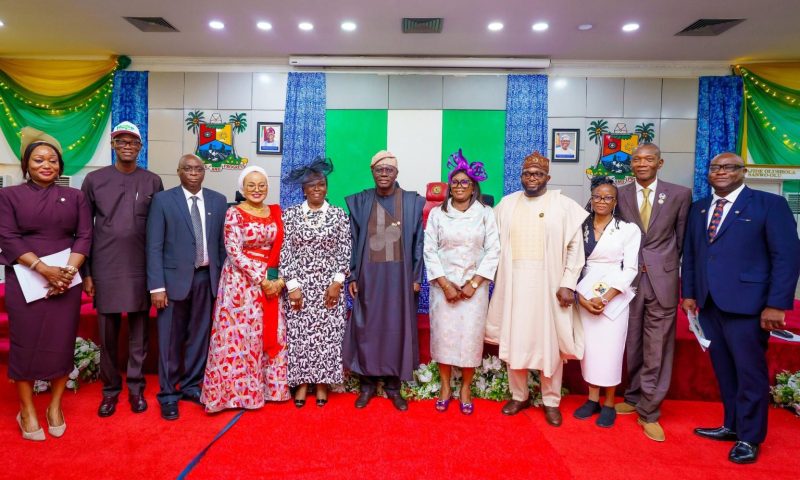
Why Atiku, El-rufai’s sons alliance with APC should make Nigerians love ADC – Austin Okai

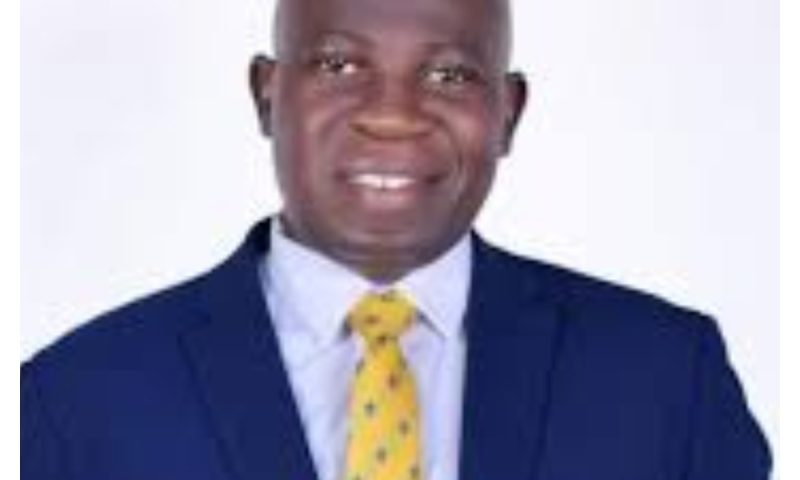
A chieftain of the African Democratic Congress, ADC, Austin Okai has pointed out why Nigerians should rally behind the party despite having children of the party’s leaders in the ruling All Progressives Congress, APC.

Okai was specifically reacting to the decision of former Vice President Atiku Abubakar’s son, Abba, to join the ruling party on Thursday.

DAILY POST reports that Bello El-Rufai, son of another ADC leader and former governor of Kaduna State, Nasir El-rufai is also in APC.

Reacting, Okai said in a Facebook post on Friday that Nigerians should rally behind the party because it has proven that “freedom of choice still matters”

According to him, “ADC is not a family franchise or a closed club. It is a truly democratic platform where conviction, not bloodline, determines your political home.

“In a country used to forced loyalty and political inheritance, ADC is proving that freedom of choice still matters, and that is exactly why Nigerians should rally behind

Lagos: LIRS sets January 31 deadline for 2025 annual tax returns

Lagos State Internal Revenue Service has restated that employers operating in the state must submit their annual tax returns for the 2025 financial year on or before January 31, 2026.

The agency, in a statement issued on Thursday, said the obligation is in line with the provisions of the Nigeria Tax Administration Act 2025, which mandates employers to file detailed records of staff emoluments and ensure that all applicable taxes are properly remitted.

Executive Chairman of LIRS, Dr Ayodele Subair, stressed that compliance with the filing requirement is compulsory, warning that defaulting employers would face statutory sanctions as provided by law.

He explained that the annual returns must reflect accurate employee information, including valid Tax Identification Numbers, noting that discrepancies could delay processing and attract penalties.

Subair further disclosed that all submissions are to be made exclusively through the LIRS eTax platform, as the service no longer accepts manual filings.

He encouraged employers to avoid last-minute submissions by filing early and to utilise official LIRS support channels for guidance or technical assistance where necessary.

BSUTH approves emergency engagement of retired health workers

The management of the Benue State University Teaching Hospital (BSUTH), Makurdi, has approved the immediate engagement of retired midwives and qualified young midwife nurses to restore full services at its labour wards.

The decision targets the main hospital complex, the BSUTH Annex, and the Muhammadu Buhari Mother and Child Hospital, all of which have faced challenges in maintaining uninterrupted delivery and obstetric care due to insufficient staffing.
This was contained in statement  by the Head of Public Relations and Protocol, Tsenenghul Moses.

He said under the emergency arrangement, ten retired midwives, often referred to as matrons, alongside competent young midwife nurses will be brought on board to bridge the gap.

Mr Emmanuel said the hospital management emphasized that the intervention is designed to guarantee seamless services, reduce delays in patient care, and ultimately improve health outcomes for pregnant women and newborns across Benue State.

“Interested and qualified applicants have been directed to report to the Office of the Head of Nursing Services for documentation on Thursday, January 15, and Friday, January 16, 2026, between 8:00 a.m. and 4:00 p.m.

” Successful candidates are expected to commence duties on Monday, January 19, 2026.”

He said the move is part of sustained efforts to enhance service efficiency and address critical gaps in the labour wards, where timely and skilled midwifery support is essential for safe deliveries and emergency obstetric interventions.

Meanwhile the decision of management of BSUTH  has been welcomed by health stakeholders in the state, who view the emergency recruitment as a pragmatic step toward bolstering maternal and child health services at the state’s premier tertiary facility.

Gov Okpebholo sacks new Edo Line CEO

Edo State Governor, Monday Okpebholo has sacked, Ms Tinyan Otuomagie as the Managing Director/CEO of New Edo Line Transport Services Limited.

DAILY POST reports that Governor Okpebholo said the sack is with immediate effect.

The State Commissioner for Transportation, Hon Uwuilekhue Saturday Idehen disclosed this in a statement dated Thursday, January 15, 2026 in Benin City.

The governor, however,  appointed Mr Smart Aigbodion, the General Manager, Maintenance as the Acting Managing Director/CEO of the transport company, pending the appointment of a substantive Managing Director.

He ordered the deployment of the sacked Managing Director/CEO to the Ministry of Information for other assignments as may be determined by the State Government.

The four-paragraph statement read in part: “The Edo State Government wishes to inform the general public that His Excellency, Senator Monday Okpebholo, the Executive Governor of Edo State, has approved the termination of the appointment of Ms Tinyan Otuomagie as the Managing Director/CEO of New Edo Line Transport Services Ltd, with immediate effect.

“Following this development, the General Manager, Maintenance, Mr. Smart Aigbodion, has been appointed as Acting Managing Director/CEO of New Edo Line Transport Services Ltd, pending the appointment of a substantive Managing Director.

“Furthermore, His Excellency has directed that Ms Tinyan Otuomagie be deployed to the Ministry of Information for other assignments as may be determined by the State Government.

“This announcement takes immediate effect.”

EFCC pressured me to indict Emefiele, co-defendant alleges

efcc

A defence witness, Nnamdi Offial, on Thursday told the Special Offences Court in Ikeja that officials of the Economic and Financial Crimes Commission attempted to coerce his client, Henry Omoile, into implicating former Central Bank Governor Godwin Emefiele.

Offial, who represents Omoile—the second defendant in the ongoing $4.5bn and N2.8m fraud trial of Emefiele—made the allegation while testifying in a trial-within-a-trial ordered by Justice Rahman Oshodi to determine whether Omoile’s statement to the EFCC was given voluntarily.

He alleged that EFCC investigators offered inducements, including the promise of bail and possible non-prosecution, if Omoile agreed to provide incriminating evidence against Emefiele.

Emefiele and Omoile are facing charges relating to accepting gratification, receiving gifts through agents, corruption, and fraudulent receipt of property.

The EFCC also accused them of conferring corrupt advantages on associates, contrary to the Corrupt Practices Act 2000. Both men have pleaded not guilty.

At the resumed hearing on Thursday, Offial testified that the head of the EFCC interrogation team assured Omoile that cooperation would earn him leniency.

He further alleged that investigators conducted the interrogation in a restrictive question-and-answer format, refusing to allow Omoile to write responses that did not align with their expectations.

“On several occasions, questions were put to the second defendant and he answered, but he was not allowed to write them down because the answers did not conform to what the interrogators wanted him to say. I objected to this many times,” Offial said.

He recounted that after the session of February 26, 2024, officers informed him they would continue to detain Omoile.

The following day, he found his client being interrogated without his presence and challenged the process.

Offial said an officer identified as David confronted him over his intervention, leading to a showdown in which he was escorted out of the premises.

“I reported the incident to the team leader, who asked me to remain in the waiting area,” he said.

He added that he could not access Omoile again until about 8pm, when officers returned him to the detention facility.

“Later, I was told that he had refused to cooperate with them and that they were not going to release him. That was when I applied for bail from the EFCC zonal head,” Offial said.

He disclosed that EFCC detained Omoile for 21 days, prompting him to file a fundamental rights enforcement suit at the Federal High Court, Lagos.

According to Offial, Justice Muslim Hamza granted bail but ordered that Omoile be remanded at the Ikoyi Correctional Centre pending the perfection of bail conditions.

During cross-examination, EFCC prosecutor, Rotimi Oyedepo (SAN), elicited several admissions from the witness.

Offial confirmed that investigators cautioned Omoile in his presence and that Omoile signed the caution.

He also admitted that he participated in the statement-taking process and understood that anything written could be used against his client in court.

When asked whether he reported the alleged misconduct or filed a petition against the EFCC, Offial said he did not.

He further acknowledged that the judge in the fundamental rights suit did not indict the EFCC for misconduct, and that his client was not harassed in his presence.

Justice Oshodi adjourned the matter to January 16, 2026, for continuation of the trial-within-trial.

Nigeria Revenue Service faults VAT charges report 

NRS Dismisses Claims Of New VAT On Banking Services, Says Tax Has Always  Existed - TheNigeriaLawyer

The Nigeria Revenue Service (NRS) has dispelled misinformation doing the rounds on the imposition of Value-Added Tax (VAT) on banking services, including electronic money transfer, fees and commission, describing the reports as incorrect and misleading.

In a statement on Thursday, NRS said VAT has always applied to banking services and is not newly introduced under the new tax law, the Nigeria Tax Act.

The statement signed by Dare Adekanmbi, Special Adviser on Media to the NRS chairman, Zacch Adedeji, said, “The Nigeria Tax Act did not introduce VAT on banking charges, nor did it impose any new tax obligation on customers in this regard.

“The Nigeria Revenue Service (NRS) wishes to address and correct misleading narratives circulating in sections of the media suggesting that Value Added Tax (VAT) has been newly introduced on banking services, fees, commissions, or electronic money transfers. This claim is categorically incorrect.

“VAT has always applied to fees, commissions, and charges for services rendered by banks and other financial institutions under Nigeria’s long-established VAT regime.

The Nigeria Tax Act did not introduce VAT on banking charges, nor did it impose any new tax obligation on customers in this regard.

“The Nigeria Revenue Service urges members of the public and all stakeholders to disregard misinformation and to rely exclusively on official communications for accurate, authoritative, and up-to-date tax information.”

The statement also included a list of Frequently Asked Questions (FAQs) on VAT as it relates to the tax law to provide further clarity on other areas of concern to Nigerians.

FREQUENTLY ASKED QUESTIONS ON VAT
To further address public concerns and prevent misunderstanding, the Nigeria Revenue Service (NRS) provides the following clarifications.

Q1: Is VAT charged on banking services?

Yes, where a fee or commission is charged for a service.
VAT applies to commissions, fees, and charges for services rendered by banks and other financial institutions, such as transfer fees, USSD charges, card issuance fees, account maintenance fees, and similar service charges.

This has always been the position under Nigerian VAT law, and was not introduced by the Nigeria Tax Act.

Q2: Does VAT apply to the money I transfer or withdraw?
No. VAT is not charged on the amount of money transferred or withdrawn.

It applies only to the service charge or commission imposed by the bank. For example, if a bank charges ₦10 for a transfer, VAT of 7.5% (₦0.75) applies to that ₦10 charge—not to the amount being transferred.

Q3: Is VAT charged on savings account interest or interest on bank deposits?
No. Interest earned on savings accounts, fixed deposits, and similar deposit accounts is not subject to VAT. Interest income is not a supply of goods or services and therefore does not attract VAT under the Nigeria Tax Act, 2025 .

Q4: Are basic food items and essential goods subject to VAT?
No. The Nigeria Tax Act expressly exempts basic food items and essential goods from VAT in order to protect consumers and reduce the cost of living. These exemptions are clearly listed under the VAT exemption provisions of the Act .

Q5: Are medical and pharmaceutical products vatable?
No. Essential medical services and pharmaceutical products are VAT-exempt under the Nigeria Tax Act, consistent with longstanding policy to ensure access to healthcare.

Q6: Are educational services subject to VAT?
No. Tuition and core educational services provided by recognised educational institutions are exempt from VAT under the Act.

Q7: What exactly changed recently if VAT is not new?
What changed is compliance and enforcement, not the law. Financial institutions are being reminded of their existing obligation to remit VAT already charged and collected from customers, in line with the Nigeria Tax Act.

Q8: Did the Nigeria Tax Act introduce any new VAT burden on ordinary Nigerians?
No. The Act did not introduce VAT on savings, basic food, medical care, education, or essential consumption. Claims suggesting otherwise are misleading and incorrect.

Lagos 2027: Seyi Tinubu’s guber ambition face obstacle as power brokers consider Ambode return

As the 2027 general election gathers momentum in Lagos State, former governor Akinwunmi Ambode is re-emerging in political calculations, with party power brokers said to be working to defer Seyi Tinubu’s governorship ambition to 2031.

The contest is shaping up to be one of the most competitive in recent history, with several high-profile aspirants, emerging power blocs, and an increasingly vocal electorate weighing in on the state’s future leadership.

Seyi, 40, who is the son of President Bola Tinubu is being touted by several youth and diaspora groups as a potential contender for the Lagos State governorship.

Last year, there were endorsements from organisations such as the Coalition of Nigerian Youth Leaders, The Future Platform and segments of Nigerian communities in the diaspora who urged him to declare his interest in the race.

The development reportedly threw the Governance Advisory Council (GAC) into a dilemma, as Seyi has neither formally declared his ambition nor received any public endorsement or comment from his father on the matter.

By 2027, Lagos State is expected to have a new governor, as Babajide Sanwo-Olu would be completing his second and constitutionally permitted term in office.

However, there are feelers that the power brokers in the state are considering Ambode to return and complete his second tenure to pave way for Seyi Tinubu in 2031.

Recall that Ambode fell out with Tinubu and Lagos APC leaders ahead of the 2019 election and was denied the APC ticket, losing the party’s primary to Babajide Sanwo-Olu, who went on to win the governorship poll.

Sources said the GAC members are now reportedly working to delay Seyi Tinubu’s governorship bid, moving it to 2031, citing a need for party continuity and strategic planning.

The source told our reporter that although Seyi Tinubu was interested earlier in the governorship race, he was advised to keep a low profile to concentrate on his father’s bid for a second term.

“The party leadership viewed his ambition as a potential distraction to his father’s second-term dream, given the growing opposition to the current government,” Segun Badejo, an APC chieftain in Gbagada, told our reporter.

The GAC, a powerful 30-member political body established by President Bola Ahmed Tinubu during his tenure as Lagos State governor in 1999, led by Prince Tajudeen Olusi, comprises former governors and deputy governors, past speakers of the Lagos State House of Assembly, former and serving senators, as well as respected elder statesmen and women.

The GAC played a decisive role in the emergence of former governors Babatunde Fashola and Akinwunmi Ambode, and later Governor Babajide Sanwo-Olu.

According to a reliable insider, if President Tinubu is re-elected in 2027, he would complete his tenure by 2031, and to sustain his political legacy, Seyi Tinubu is expected to step into the Lagos governorship race by then.

Another source attributed the reason to the anger in the Epe district over the circumstances that led to Ambode’s ouster from office.

Administratively, Lagos State is divided into five districts, collectively referred to as IBILE: Ikorodu, Badagry, Ikeja, Lagos Island and Epe.

Notably, past Lagos governors, Tinubu, Fashola and Sanwo-Olu, all hail from Lagos Island and completed their two terms, while only Ambode, from Epe, was denied a second term.

This has sparked discontent among stakeholders in Epe, who are unhappy with the manner in which their native son, Ambode, was removed from office.

Although Tinubu later rewarded Epe with the appointment of Tunji Alausa as Health Minister and later, Education Minister, the people are still demanding that the zone should be allowed to complete its term.

Stakeholders are claiming that Epe has been politically marginalised and insisted that either Alausa or Ambode should succeed the current Governor Babajide Sanwo-Olu in 2027.

A senior APC stakeholder in Ogba, Ikeja, who requested anonymity while speaking with DAILY POS said, “The idea is not to sideline Seyi Tinubu but to ensure he has a more stable runway.

“The party does not want a repeat of what happened in 2023 when the Labour Party defeated Tinubu in the state.

“Seyi needs to concentrate and mobilize the youth front for his father.

“Going for governorship would divide attention and that would also lead to public outcry.

“You know Nigeria is a very funny country, they may not stand the father as a president and his son as a governor. Right now, the consensus is that Ambode or Alausa has a better chance of carrying the party in 2027,” the source added.

DAILY POST observed that the 2027 field is already crowded in Lagos, with heavyweights including Chief of Staff to President Bola Ahmed Tinubu, Hon. Femi Gbajabiamila, the state assembly speaker, Mudashiru Obasa, Tokunbo Abiru and Abdul-Azeez Adediran, popularly known as Jandor, among others, being touted for the number one seat.

A community leader, who identified himself as Olumide Balogun, told DAILY POST, “We have watched as other regions monopolised power. It’s time for Epe people to be heard. Either Tunji Alausa or Ambode should be our next governor.”

An observer, Edafe Oghenebrume, warned that if the Lagos APC fails to field a governorship candidate from the Lagos West Senatorial District, it would be a disaster.

He warned, “If Lagos APC fails to field a governorship candidate from Lagos West Senatorial district, there might be electoral challenges because since the emergence of democratic rule in 1999, West has been marginalized as regards the governorship seat.”

Meanwhile, only Jandor, a former PDP aspirant who defected to APC in October 2025, has publicly declared his ambition for the governorship.

“I believe Lagosians deserve a fresh vision, one that blends experience with innovation,” Jandor said in an interview with Channels Television.

“Having observed governance from both sides of the aisle, I am ready to offer solutions that reflect the people’s needs if I have a solid backing of Mr President and the party in Lagos State. It will be a walkover,” he added.

Public sentiment and voter perspective 

Residents and electorate across Lagos have been closely watching the political maneuvering, with many expressing a mix of excitement, skepticism and cautious optimism.

A shop owner in Ikeja, Mrs Funke Adeyemi, said, “It doesn’t matter who the party chooses. What we want is someone who will bring development, improve our roads, and secure jobs. Lagosians are tired of promises without action.”

Another resident, Tunde Olanrewaju, emphasised continuity and stability.

“Ambode has governance experience, and Tinubu has political lineage. But we need practical policies, not just the spectacle of politics,” he said.

Younger voters appear keen to see a more inclusive process. A university student, Chidera Nwosu, said, “We need a leader who listens to ordinary people, not just party elders. The next governor must have a vision that goes beyond political calculations.”

The road to 2027

A political consultant familiar with the party’s strategy in Kirikiri Town, Taiwo Akorede stated, “The party must reconcile all interests while projecting a candidate capable of winning in a competitive general election.”

As Lagos gears up for the 2027 governorship election, the race is shaping up to be one of the most closely watched and fiercely contested in recent memory.

One thing is certain, the countdown to 2027 has begun, and Lagosians are watching closely.

2027: INEC reaffirms commitment to credible elections in Zamfara

The Independent National Electoral Commission, INEC, in Zamfara State has reaffirmed its commitment to upholding the highest standards of integrity, transparency and fairness ahead of the 2027 general elections.

Zamfara Resident Electoral Commissioner, REC, Dr Mahmud Isah, gave the assurance during a stakeholders’ meeting on the resumption of the second phase of the Continuous Voter Registration, CVR, exercise in the state.

Isah said the success of the CVR exercise and future elections depends on the collective efforts of all stakeholders, stressing that INEC, as an electoral umpire, cannot deliver a credible process on its own.

“I urge all stakeholders to join hands with the commission to ensure a credible election in 2027,” he said.

The REC emphasised that it is the civic responsibility of all eligible Nigerians to register with INEC and obtain their Permanent Voter Cards (PVCs) in order to participate in electoral activities.

He disclosed that the commission has approved the nationwide resumption of the CVR, with online pre-registration continuing, while physical registration at INEC local government offices is scheduled to commence on January 5, 2026.

The meeting was attended by the Emirs of Gusau and Maru, as well as representatives of political parties including the All Progressives Congress, APC, Peoples Democratic Party, PDP, African Democratic Congress, ADC, Peoples Redemption Party, PRP, Social Democratic Party, SDP, and the New Nigeria People’s Party, NNPP.

Also present were members of the Inter-Party Advisory Council, IPAC, security agencies and media organisations.

$9m contract: You can’t fix insecurity with PR – Criminologist, experts tell Nigerian govt

A criminologist and security expert, Dr. Sulaiman Ishak Muhamad of the Department of Criminology and Security Studies, Federal University, Dutse, has warned that the Federal Government’s reported $9 million lobbying contract in the United States could expose Nigeria’s security framework and weaken the country’s sovereignty.
Dr. Muhammad made the remarks while commenting on reports that the Nigerian government hired a U.S.-based lobbying firm to communicate its protective strategies for Christian communities in Nigeria.

According to him, the contract was signed on December 17, 2025, through Oscar Legal Firm in Kaduna, acting on behalf of the Office of the National Security Adviser (NSA).

He said the lobbying firm, identified as DCI Group, was contracted for six months at a cost of $9 million, with the agreement said to be automatically renewable.

He disclosed that the Nigerian government had already paid $4.5 million upfront, while the firm is also to receive $750,000 monthly as part of the agreement.

“The essence of this contract is to deny claims that Christian communities in Nigeria are being neglected, isolated, exploited, or killed,” Muhammad said during an exclusive interview with DAILYPOST.

“The government wants to communicate that this does not go on in Nigeria and that it is committed to protecting Christian communities.”

He explained that the deal is meant to project Nigeria as safer and more protective of its citizens.

He added that the lobbying effort is expected to improve Nigeria’s diplomatic image globally, especially with the United States.

According to him, there are positive implications to the contract.

“Globally, Nigeria may be accepted as a key economic player in trade, exportation, and international financial institutions like the World Bank and the IMF,” he said.

“Socially, Nigeria’s image may improve, and politically, the country may be seen and acknowledged as a democratic state.”

However, Dr. Muhammad warned that the agreement also carries serious negative consequences, particularly for national security.

“This deal may expose what Nigeria does internally in the name of protection. The United States is a key player, and its motive may go beyond protecting Christian communities.”

He cautioned that the arrangement could open Nigeria to foreign political and economic pressure.

He also noted that powerful countries often pursue broader interests under the guise of support.

“There are economic interests involved, such as oil, lithium, gold, and other natural resources. Nigeria has long been a country of interest, especially because of its resources.”

Dr. Muhammad further warned that once global powers begin to raise red flags against a country, “they do not stop.”

They continue to threaten every aspect of your system. The more Nigeria turns towards these threats, the more vulnerable it becomes in terms of security and defence.”

He also expressed concern that allowing foreign access to Nigeria’s security systems, even under the pretext of assistance, could weaken national independence.

“When a country gains access to your security framework in the name of aid, it often uses that opportunity to understand your system fully,” he said.

He described this as another process of neocolonisation.

“We are now a sovereign nation and when we are asked to do, and not to do, and protect claim by another country who is also a sovereign country, then it shows that we have lost and we are losing our leverage, liberty as a nation, losing our sovereignty as a nation to the United State of America.”

According to him, history shows that countries where foreign powers intervene under religious or humanitarian claims often lose peace and stability.

“Many of these countries have ceased to be peaceful nations because the relationships between stronger countries and lower ones are usually exploitative in nature,” he said.

Dr. Mohamad added that Nigeria’s growing economic capacity, including its oil production and refinery strength, could also attract external pressure.

“Nigerian refineries is a common interest because now Nigeria produces oil that it can feed its population and even give to the global world. Nigeria in the African nation has the largest oil refinery today and this is a threat to the United States and its allies and they may try to bend Nigeria towards their interest and this may affect many things.

“Many key players will be affected but the Nigerian government must be very sensitive, must be very agile and must stand firm in protecting the leverage, the sovereignty of the Nigerian society against foreign interest and foreign threats.

“These are foreign interests, these are foreign threats, possibly these interests, they are interests that might bring Nigeria a lot of damage because these interests don’t stop and history has shown that.

“So Nigerian government must be committed towards understanding what kind of relationship it goes into, what kind of treaties it signs with the United State of America,” he said.

He warned that Nigeria must act with caution, as such pressure could weaken the country’s security balance and also threaten internal stability.

According to him, Christian and Muslim communities in Nigeria currently coexist peacefully; politically, socially and economically with mutual respect.

However, he said claims pushed by the international community could deepen divisions and pose a risk to national unity.

He noted that Nigeria’s deep diversity, with over 500 languages and more than 350 ethnic groups, makes it especially vulnerable to narratives that raise alarm, whether true or not, as such perceptions can influence how citizens view their society and each other.

$9 million contract: You cannot fix insecurity with PR – Security Analyst slams FG

Similarly, a Nigerian security analyst, Abdullahi Bokaji Adamu, has criticised the Federal Government’s reported $9 million lobbying contract in the United States, warning that public relations efforts abroad cannot replace real security action at home.

Adamu, who spoke in an exclusive interview with DAILYPOST on Wednesday, said the move reflects a deeper strategic problem in Nigeria’s approach to insecurity.

“As a Nigerian, a Muslim, and a security analyst, I see this lobbying contract as a symptom of a deeper problem, not a solution,” he said.

The analyst was reacting to reports that the Federal Government hired a lobbying firm to help communicate its efforts at protecting Christians in Nigeria to the United States government.

From a security standpoint, Adamu said no amount of international lobbying can solve Nigeria’s worsening insecurity, stressing that violence affects Christians, Muslims, and traditional communities alike.

“Insecurity in Nigeria is real and it cuts across all religious and ethnic lines. Framing it narrowly as a ‘Christian protection’ issue for foreign audiences oversimplifies a complex crisis.”

According to him, Nigeria’s security challenges are driven by terrorism, banditry, weak policing, poor intelligence coordination, and governance failures, not religious persecution.

“As a Muslim, I reject any suggestion that the Nigerian state tolerates religious persecution. This is not a religious war. It is a failure of security institutions and the justice system.”

He warned that selling a counter-narrative abroad without fixing visible problems at home could damage Nigeria’s credibility internationally.

“You cannot fix insecurity with public relations.”

While noting that governments around the world sometimes hire lobbying firms, Adamu stressed that credibility in security diplomacy comes from results, not contracts.

“International lobbying is not unusual. But credibility is earned through measurable improvements in civilian protection, stronger police capacity, intelligence-led operations, and accountability.”

He added that the most effective message to the United States and the international community would be visible progress in tackling insecurity, rather than spending millions of dollars on lobbying.

“The most effective message to Washington and the world would be measurable improvements in civilian protection, police capacity, intelligence-led operations, and accountability not expensive lobbying. In summary, fixing Nigeria’s security challenges at home will speak louder globally than any lobbyist ever can,” he said.

Lobbying over insecurity an admission of failure – Mahdi Shehu

Also speaking, public affairs analyst Mahdi Shehu criticised the Federal Government’s reported $9 million lobbying contract in the United States, describing it as an admission that the government has failed to tackle insecurity at home.

Shehu made this known in an exclusive interview with DAILYPOST.

“Engaging consultants or lobby groups to sell so-called efforts on insecurity is simply admitting that the claim is true,” Shehu said.

“Action speaks louder than noise.”

He questioned why the government would spend about N16 billion on consultancy and lobbying if it had concrete achievements to show.

“Why would you require N16 billion just to communicate what actions you have taken?” he asked.

“If real work is being done on the ground, there would be no need for panic diplomacy.”

According to him, the expenditure is reckless and shows poor judgment at a time many Nigerians are struggling with hunger, unemployment, and insecurity.

“This N16 billion consultancy is unnecessary and wasteful. It reflects how imprudent this government is and how desperate it has become to cling to power.”

Shehu argued that the money could have been used to directly improve the lives of ordinary Nigerians.

He said the funds could have supported thousands of small businesses and reduced unemployment.

“With N16 billion, about 64,000 Nigerians could receive N250,000 each as seed capital. The multiplier effect could save over 640,000 people from idleness and unemployment.”

He also accused the government of nepotism, alleging that the contract was awarded to a law firm linked to the President’s ethnic group.

“Simply put, this money has been handed to Tinubu’s tribesmen’s legal chamber,” he alleged, describing the move as “open nepotism.”

“Consultancy contracts are supposed to comply with procurement laws. But what we are seeing is handpicking, awarding, disbursing, and ignoring what Nigerians feel.

“Every day is for the thief, one day is for the owner,” Shehu said.