
Lagos tops APC nationwide e-registration as lawmaker raises exclusion allegations

Lagos State has taken the lead in the All Progressives Congress, APC, nationwide e-registration exercise, emerging as the state with the highest number of digitally registered members among the 36 states and the Federal Capital Territory.

The e-registration programme, which commenced in December 2025 and is scheduled to conclude on January 31, 2026, was introduced to create a comprehensive digital database of party members across the country.

DAILY PIST reports that Lagos began its registration process on January 5, 2026, and within a short period displaced Delta State, which had topped the chart for nearly three months.

In just 15 days, the state recorded remarkable figures, putting it on course to meet its ambition of enrolling millions of members into the party.

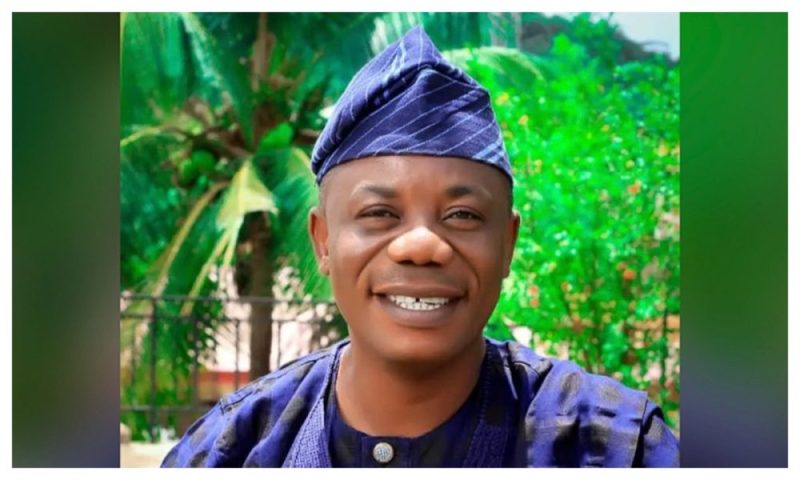
Lagos State Coordinator of the exercise, Comrade Prince Ayodele Adewale, attributed the achievement to meticulous planning, strong collaboration with local government officials and ward-level party structures, as well as the effective deployment of technology to track and manage registrations in real time.

He expressed gratitude to Governor Babajide Olusola Sanwo-Olu, Deputy Governor Dr. Obafemi Hamzat, and members of the Lagos State House of Assembly for their support throughout the process.

Adewale also commended the state APC Chairman, Pastor Cornelius Ojelabi, members of the state executive council, and the Governance Advisory Council, GAC, led by Alhaji Oluyole Olusi, for their strategic leadership and efforts in mobilising party members across the state.

Meanwhile, a member of the House of Representatives representing Kaura-Namoda/Birnin Magaji Federal Constituency in Zamfara State, Hon. Sani Jaji, has raised concerns over alleged attempts to undermine the APC ahead of the 2027 general elections through the ongoing e-membership registration exercise.

Speaking with journalists in Bauna after meeting with the party’s National Chairman, Prof. Nentawe Yilwatda, the lawmaker alleged that certain individuals were deliberately excluded from the registration process.

According to him, some members affiliated with the Jajiyya movement in the state were denied the opportunity to register.

“I met with the National Chairman today because when the e-registration started, I was out of the country on Lesser Hajj. While I was away, my people contacted me and complained that there was a problem,” Jaji said.

“They prevented the State Organising Secretary from fully participating in the process, and some members of the Jajiyya movement were denied registration. Up to this moment, I have not been registered, despite being a sitting member of the House of Representatives and having served as Director of Contact and Mobilisation during the 2023 presidential campaign. That made it clear to me that something was wrong.”

The lawmaker explained that his visit to the party secretariat was prompted by fears that similar internal issues had previously weakened political parties.

He recalled that comparable developments contributed to the decline of the Peoples Democratic Party, PDP, in 2015.

“They undermined the party’s structure in the state, and that was one of the reasons the party collapsed, among other factors.

“We needed to bring this to the attention of the National Chairman so that urgent steps can be taken to stop actions that are unhealthy for the party,” he said.

He stressed the need for transparency and inclusiveness in the registration process to safeguard the unity and strength of the APC ahead of future elections.

2027: INEC must give notice 360 days before elections – Nwankwo

The Executive Director of Policy and Legal Advocacy Centre, Clement Nwankwo, has said that the Independent National Electoral Commission, INEC, must give notice of at least 360 days before elections.

Nwankwo said this on Wednesday while fielding questions in an interview on Arise Television’s ‘Prime Time’ monitored by DAILY POST.

He said that the National Assembly cannot continue to delay the passage of the Electoral Bill, adding that time is running out, and it needs to be prioritised.

“We need time for preparation for the election. We need certain things in the electoral laws and legal framework both the international instruments, including ECOWAS protocols, Nigerian constitution and in fact the Electoral Act stipulates the need for certainty in electoral law.

“When you look at the constitution and the Electoral Act, it’s quite clear saying that you must give notice of election 360 days before the elections. And those 360 days are still in the current 2022 Electoral Act, so it’s not a problem.

“But there are announcements and pronouncements and stipulations you need to put out in terms of that notice being issued and I must say that the National Assembly has been fantastic.

“The Senate and the House of Representatives are going through the process of deliberations, reviews conversation and actually do have a document,” he said.

Court orders Bauchi finance commissioner to report to DSS weekly

DSS logoThe Federal High Court in Abuja on Wednesday ordered Bauchi State Commissioner for Finance, Yakubu Adamu, and three others to report weekly to the Department of State Services until the end of their ongoing terror financing trial.

Justice Mohammed Umar gave the order as part of the conditions attached to the N100m bail he granted the defendants on Wednesday.

While ruling on their bail applications, the judge held that the defendants placed sufficient materials before the court to warrant the exercise of its discretion in their favour judicially and judiciously.

He ordered each defendant to produce two sureties who must be a permanent secretary and a director in the civil service

Family Questions Lagos-Based Transport Company Over Missing Father’s Whereabouts|

Justice Umar further directed the defendants to deposit their passports with the court registry.

The judge adjourned the matter until February 26 for the commencement of the trial.

The Economic and Financial Crimes Commission is procuting the defendants on 10 counts, bordering on terrorism financing and money laundering.

Standing trial alongside Adamu are Balarabe Ilelah, Aminu Bose and Kabiru Mohammed, described as senior civil servants in Bauchi State.

The defendants were initially denied bail by Justice Emeka Nwite in December, when he sat as a vacation judge.

Justice Nwite ruled that the charges against them were too weighty for them to be released on bail.

However, following the reassignment of the case, the defendants were re-arraigned before Justice Umar on January 16 and pleaded not guilty to the charges.

Their bail application was subsequently argued and adjourned to January 21  for ruling.

In urging the court to grant bail, defence counsel, Chief Chris Uche (SAN), told the court that new and additional facts had emerged since the earlier refusal of bail by a sister court.

Uche argued that Bello Bodejo, President of Miyetti Allah Kautal Hore, named in nine of the 10 counts, had never been convicted for any terrorism-related offence by any court.

He said although Bodejo was charged by the Federal Government in a separate matter, the charge was later withdrawn and dismissed by the court on May 29, 2024.

The lawyer also contended that there was no proscription order in the Federal Government’s Official Gazette designating Bodejo or his organisation as a terrorist entity, relying on Section 48(1) of the Terrorism (Prevention and Prohibition) Act, 2022.

According to him, the absence of such designation undermined the prosecution’s case and justified the grant of bail.

He further cited provisions of the Administration of Criminal Justice Act, 2015, urging the court to exercise its discretion in favour of the defendants.

Adamu, a former branch manager of Polaris Bank Plc in Bauchi State, and the other defendants were first arraigned on December 31, 2025, before Justice Nwite.

On January 5, 2026, Justice Nwite refused their bail application, holding that the offences charged posed a threat to national security and public safety.

He ordered their remand at the Kuje Correctional Centre and fixed January 13 for trial.

However, the case file was returned to the Chief Judge for reassignment after the end of the court’s vacation.

The charge, marked FHC/ABJ/CR/705/2025, was filed on December 30, 2025 by EFCC counsel, Samuel Chime.

In one of the counts, the defendants and two others said to be at large, were accused of conspiring between January and May 2024 to provide $2.3m in cash for the benefit of Bello Bodejo and persons associated with him.

The funds were alleged to have been approved by the Bauchi State Government and used, in whole or in part, to finance a terrorist group, an offence said to be contrary to Section 26(1) and punishable under Section 21(2)(a) of the Terrorism (Prevention and Prohibition) Act, 2022.

Lagos Computer Village fire: Affected traders appeal to Sanwo-Olu for financial support

Traders affected by the fire outbreak that razed a commercial storey building at Computer Village in Ikeja Local Government Area of Lagos State have appealed to Governor Babajide Sanwo-Olu for financial assistance to cushion the impact of their losses.

DAILY POST reports that goods valued at several millions of naira were destroyed in the inferno, which occurred in the early hours of Tuesday at Somoye Street, Ikeja.

The affected building housed dealers in computers and accessories, a major hub of commercial activity in the area.

The fire, which broke out shortly after midnight, completely gutted the upper floor of the building.

Preliminary reports attributed the incident to an electrical surge following the restoration of power supply. No loss of life was recorded.

When DAILY POST visited the scene on Wednesday, scavengers were seen picking through the debris in search of salvageable items, as affected shop owners stood by in distress.

Victims of the incident said they had lost virtually all their investments, including cash, laptops, and other high-value electronic devices.

They also called for improved fire safety infrastructure in densely populated commercial centres such as Computer Village.

One of the affected traders, Chucks, who said he had just restocked his shop a day before the fire, described the incident as devastating.

“I’m one of the shop owners and I’m badly affected. I just brought in new goods on Monday, and by Monday night into Tuesday morning, everything was gone.

“When I got to the scene, we couldn’t access the upper floor. Also, the firefighting equipment was not adequate. The water pressure was low, so they couldn’t pump water upstairs from ground level and had to climb ladders to reach the fire,” he said.

Appealing directly to the governor, he added, “We are begging Governor Sanwo-Olu to assist us with compensation. This is not the first time such an incident is happening. We are taxpayers and we meet our obligations.

“We also want the state to better equip its fire service. We are calling on members of the public to support us in any way possible to help us recover from this disaster, which was not caused by us.”

According to Chucks, none of the traders operating on the affected floors was able to save any item.

“There are about 12 traders upstairs and one downstairs, and none of us recovered even a pin. For me alone, my loss is about N130 million. I deal in laptops, which are expensive items, not to mention other personal gadgets. It’s a massive loss, and we don’t even know where to begin,” he said.

Another trader, Ebere Chimosor, said he lost goods worth over N10 million and also appealed for government intervention.

“I’m one of the shop owners in the burnt building. This has nothing to do with tribe. I’m from the eastern part of the country and I do my business here peacefully.

“All we are asking is for the local and state governments to come to our aid. When the fire broke out around 1 a.m., the fire service tried their best, and they helped reduce the damage. Otherwise, the situation could have been far worse,” he said.

The Chairman of Ikeja Local Government Area, Akeem Dauda, later visited the site to assess the extent of the damage and sympathise with the affected traders.

He the victims of the council’s support and urged business owners to strictly observe safety measures, particularly with electrical installations, to prevent future occurrences.

Why Canadian PM, Carney is 21st century Churchill – Shehu Sani

Former Kaduna Central Senator and civil rights advocate, Shehu Sani, has described Canada’s Prime Minister, Mark Carney, as a distinguished global statesman and a moral leader of the Western world.

Sani likened Carney to “the Churchill of the 21st century,” stressing that he consistently upholds and defends democratic values, human rights, respect for national sovereignty, and international law in his public engagements across the world.

In a post on X, the civil rights advocate noted that the Canadian leader’s positions are clear and unambiguous whenever he speaks on global issues.

He said history would ultimately document not only the words spoken at this critical moment, but also the silences, compromises, and acts of cowardice displayed by others on the global stage.

Sani wrote: “Canada’s Prime Minister Mark Carney has distinguished himself as a global statesman and a moral leader of the Western World.

“Wherever he goes and whenever he speaks, he unambiguously defends the values and principles of democracy, human rights, respect for sovereignty of nations and international law.

“He is the Churchill of the 21st century. History will keep records of all the words,all the silence and all the capitulations and cowardice of this moment.”

NiMet predicts 3-day dust haze, thunderstorms from Thursday ‎ ‎

The Nigerian Meteorological Agency (NiMet) has predicted dust haze and thunderstorms from Thursday to Saturday across the country.

NiMet’s weather outlook, released on Wednesday in Abuja, forecasted slight dust haze on Thursday over parts of Kebbi, Zamfara, Sokoto, Yelwa, Katsina, Kano, Bauchi, and Gombe States in the northern region.

It also anticipated Borno, Yobe, Kaduna, and Taraba States to experience sunny and hazy skies throughout the forecast period.

“For the central region, sunny and hazy skies are expected throughout the forecast period, while slight dust haze is anticipated over parts of Nasarawa and Plateau States,” the agency said.

“For the southern region, sunny skies with a few patches of clouds are expected, with prospects of morning thunderstorms accompanied by light rain over Akwa Ibom, Cross River, and Bayelsa States.

“Later in the day, thunderstorms with light rain are expected over parts of Bayelsa, Lagos, Cross River, Ogun, Ondo, Abia, Imo, Rivers, Delta, and Akwa Ibom States,” it added.

According to NiMet, sunny and hazy skies are expected over the northern region throughout the forecast period on Friday, while the North Central region will also experience sunny and hazy conditions.

The agency forecasted sunny skies with a few patches of clouds over the southern region, with chances of afternoon or evening thunderstorms accompanied by light rain over parts of Bayelsa, Cross River, Imo, Abia, Rivers, Delta, and Akwa Ibom States.

NiMet predicted sunny and hazy skies over the northern region throughout the forecast period on Saturday and similar conditions over the North Central region.

For the southern region, sunny skies with a few patches of clouds are anticipated, with chances of afternoon or evening thunderstorms accompanied by light rain over parts of Bayelsa, Rivers, Lagos, Cross River, and Akwa Ibom States.

“Dust particles are in suspension; the public should take necessary precautions. People with asthma or other respiratory conditions should be cautious of the current weather conditions.

“Drivers should exercise caution in the rain. Airline operators are advised to obtain airport-specific weather reports (flight documentation) from NiMet for effective planning.

“Residents are encouraged to stay informed through weather updates from NiMet or visit our website at www.nimet.gov.ng,” the agency said.

Impeachment: Okai, Wali weigh Fubara’s survival chances

A chieftain of the African Democratic Congress, ADC, Austin Okai, has described the impeachment proceedings in Rivers State as an indication that the All Progressives Congress, ADC, has betrayed Governor Siminalayi Fubara.

Okai was also of the opinion that some elements in the presidency had scammed Fubara by refusing to intervene in the impeachment process.

He told DAILY POST in an exclusive interview that Fubara “is having problems; APC has betrayed him.

“If the presidency is protecting him as some people were making up to him, by now the whole impeachment process should have died down; now he has gone to a local court for survival, his hope is hanging on the judiciary.

“You know that the presidency can scam somebody, they have scammed him. He cannot even have control of his own House of Assembly members representing the state, a sitting governor who does not have control of his own House of Assembly.”

The former Peoples Democratic Party candidate for the Dekina/Bassa federal constituency said the impeachment saga was aimed at making Fubara spend only one term in office.

He said: “There is a way out. If they don’t impeach him again and he does only one term is that not okay? I was expecting that by now, APC is supposed to have come to a stage of calling the Assembly members to order because as an APC governor, he is the leader of the party.

“Maybe they don’t need him; you will weigh the option, what does he have to offer when compared to what Wike has to offer? It’s a matter of choice at this moment, what does APC want?”

Meanwhile, a Rivers elder statesman, Wenendah Wali, has said it would be difficult to decide if the impeachment move against Fubara will scale through at this point.

Speaking with DAILY POST, Wali said: “You and I know that one plus one is not two in politics in Nigerian politics. So a lot of funny things happen that you can’t explain.

“But in the process of impeachment, it’s a purely constitutional matter and there are stages equally clearly stipulated to arriving at the point of impeachment.

“From the motions and the House of Assembly, to the notice of impeachment to the governor, to the third vote, to the CJ, committee and all of those, so those things actually limit the purvey of ordinary speculations.

“For example, if the assembly has written to the CJ to constitute a committee of seven Nigerians or people with integrity, I’m not in a position to begin to speculate on what their thinking will be, so it’s actually a difficult question to arrive at if they’re going to succeed or not.

“Everything squarely depends on the CJ right now and the panel that he constitutes. If they look at the terms or the grounds for impeachment and see that the governor actually breached those grounds, every member of the committee will vote.

“And the majority vote will determine whether the governor should be impeached or not. Don’t forget that their vote is final. The assembly cannot overrule them.

“But if they say the governor can be impeached, the governor is guilty of the offenses, then they finally return back to the assembly who will now say fine, we vote for his impeachment or can they decide to say, okay, we want him, he shouldn’t do it next time.

“That was what happened to President Trump in the U.S. He was impeached, but not removed from office, so that’s a bit difficult.

“It’s a bit difficult to say whether they are going to succeed or not. Is the assembly determined to remove him? At this point, the answer is yes.

“Have they been able to convince the CJ to consider a committee?

“So until the CJ decides to say, I’m going to institute the committee or not, every other thing will be widely speculated.”

Uproar as Ebonyi APC pegs LG chairmanship form for N30m

The All Progressives Congress, APC, in Ebonyi State has ignited widespread controversy after announcing that the nomination form for local government chairmanship positions will cost aspirants a staggering N30 million.

The decision, revealed by the state party chairman, Chief Stanley Okoro Emegha, has sparked outrage among political observers, civil society groups and ordinary citizens, who argue that the exorbitant fee effectively excludes grassroots politicians and ordinary Ebonyi indigenes from contesting, turning local elections into an exclusive affair for the wealthy or well-connected.

The announcement came after a closed-door meeting with party officials from the state’s 13 local government areas and 171 wards.

According to Emegha, the N30 million fee covers both the expression of interest and nomination forms for chairmanship aspirants, while councillorship forms are priced at N250,000.

Sales of forms for delegates and councillors began on January 8, with chairmanship forms available from January 9 to January 19, ahead of the planned local government elections in August 2026.

According to data from the Revenue Mobilisation Allocation and Fiscal Commission (RMAFC), even if a local government chairman avoids all personal expenses and saves every kobo of official salary and allowances, the total earnings over a full four-year term would still fall short of N30 million.

This has led many to describe the fee as not just prohibitive but a direct incentive for corruption, as successful candidates may view their tenure primarily as an opportunity to recoup their “investment.”

Public reaction has been swift and sharp. On social media platforms such as X (formerly Twitter), users have condemned the move as “moneycracy” rather than democracy.

The controversy intensified after Osbourne Umahi, the 27-year-old son of former Ebonyi State Governor and current Minister of Works, Senator David Umahi, purchased the N30 million form to contest the Ohaozara Local Government Area chairmanship.

Supporters have praised him as a capable young politician committed to youth empowerment and infrastructure development, with the state APC chairman describing him as “intelligent” and capable of turning around the area’s fortunes.

However, critics see the move as emblematic of how the high fee favours political dynasties and those with access to significant resources or influential godfathers, further alienating average citizens.

The Ebonyi APC has defended the pricing, with some officials suggesting it ensures that only “committed” and financially viable candidates emerge.

Yet, the backlash highlights broader concerns in Nigerian politics about the commercialisation of elective offices, where nomination fees for even modest positions now rival or exceed those for higher national roles in previous election cycles.

As the form sales window closes and primaries approach, the debate rages on: is this a necessary measure for party discipline, or a deliberate barrier that undermines democratic inclusion at the most local level of governance?

For many in Ebonyi, the N30 million price tag sends a clear message — local leadership is no longer within reach of the common man.

Whether this sparks reforms or deeper divisions remains to be seen, but the uproar shows no signs of fading soon.

Sanwo-Olu, Ezekwesili clash over Makoko demolitions

Governor Babajide Sanwo-Olu of Lagos State and former Minister of Education, Mrs Oby Ezekwesili, have engaged in a public exchange over the legality and humanitarian implications of the recent demolition exercise in the Makoko area of the state.

Ezekwesili faulted both the Federal and Lagos State governments, describing the demolitions as unconstitutional, inhumane and a form of state-backed oppression against vulnerable communities.

In response, the governor rejected the accusations and instead alleged that some local and international non-governmental organisations, NGOs, were exploiting the situation for financial gain.

In a detailed memorandum addressed to President Bola Ahmed Tinubu and Governor Sanwo-Olu, Ezekwesili accused authorities of abusing state power to dispossess some of the country’s poorest citizens under the pretext of safety concerns and urban renewal.

She raised questions about governance and citizenship, asking whether Lagos operates as a community of equal citizens or as a space where economic value outweighs human dignity. She further questioned whether Nigeria’s democratic framework protects all citizens or only those with economic privilege.

According to Ezekwesili, residents of Makoko, many of whom rely on fishing, informal trading and small-scale businesses, are not illegal settlers but Nigerian citizens whose rights have been consistently undermined because of their socioeconomic status.

She argued that years of neglect and repeated demolitions have fostered a pattern where poverty is treated as grounds for exclusion from citizenship rights.

The former minister, who founded the School of Politics, Policy and Governance, SPPG, stated that the latest demolition contradicted earlier assurances by Lagos State officials.

She said community leaders were initially informed that only structures located within a 30 to 50-metre safety buffer around high-tension power lines would be affected, an understanding under which residents reportedly cooperated.

However, she alleged that the scope of demolition later expanded significantly, extending hundreds of metres beyond the agreed limits and affecting homes, schools, clinics and sources of livelihood that posed no safety threat.

“A government that alters agreed conditions mid-operation and widens demolition boundaries without notice is not enforcing the law but abusing its authority,” Ezekwesili said.

She further claimed that the operation resulted in fatalities and likened the incident to a forceful land seizure designed to serve elite interests.

According to her, the demolitions were not genuinely motivated by safety or urban planning considerations but amounted to what she described as “class cleansing” of poor communities from valuable waterfront areas.

Ezekwesili warned that the exercise had triggered a humanitarian emergency, displacing thousands of families, disrupting children’s education and exposing vulnerable groups to hunger, disease and insecurity. She argued that once government actions create homelessness, the state bears an immediate constitutional and moral responsibility to provide care and protection.

Responding to the criticism, Governor Sanwo-Olu told journalists that the state government was scrutinising the activities of certain NGOs involved in the matter and would present evidence to support its claims.

“We are aware that some local and international NGOs are attempting to profit from this situation. We are monitoring them and will provide evidence,” the governor said.

He alleged that the organisations had secured significant funding from international donors in the name of supporting affected communities but failed to deliver tangible assistance.

“They have received substantial grants and resources, yet they have not fulfilled the commitments they made. What we are seeing is an attempt to cover up those failures,” Sanwo-Olu stated.

According to the governor, the alleged profiteering partly explains the intensity of criticism directed at the state government.

“That is why some people are protesting louder than those directly affected. We are prepared to confront these issues and explain why certain decisions had to be taken,” he said.

Sanwo-Olu maintained that the demolition exercise was necessary and justified, insisting that it was carried out primarily to safeguard lives due to the dangers posed by illegal structures erected beneath high-tension power lines.

Kaduna: CAN Chairman insists on abduction of worshippers

Chairman of the Christian Association of Nigeria, CAN, in 19 Northern States and the FCT, Joseph John Hayab, has thrown more light on the alleged abduction of over 170 worshippers in three Kaduna churches.

Speaking during an interview on ‘Prime Time’, a programme on Arise Television, Hayab stated that the moment the abduction happened, security agencies were informed.

He was speaking on conflicting reports that trailed the alleged kidnapping of Christians.

The cleric said: “I think one of the reasons you are seeing figures flying today is because in the communication yesterday, in order to refute the story, there was a claim that, okay, if it really happened, show us the name.

“And before 5am the names were already flying everywhere. The truth is that a lot of people were kidnapped.

“So what we keep discussing with the government is that let’s not debate too much about number. Let’s focus about- ‘were people kidnapped?’ Yes! Some had to escape and return.
“The moment the incident happened, security agencies were informed. I think that’s why we were worried and angry. How could security agencies be informed and only to come out later and deny?

“Although these security agencies were informed, they later issued a denial. They sent a signal about this, but they keep denying it happened.

“The Council chairman of the area was even the first to give us the figure because we didn’t have the figure. The Christian Association has a fantastic network.

“Before I will ever say a word, I have more than enough evidence to prove that the story is true. I have done that for decades and never failed and won’t fail even on this one.

“Let me say the security agencies are mistaking information because if I say they are withholding, it will be bad for their image. However, sensitive issues like this must be treated thoroughly.”