Amnesty International demands probe into civilian deaths in Niger airstrike

Human rights group, Amnesty International has called on Nigerian authorities to launch an independent investigation into the death of six civilians reportedly killed during a military airstrike in Niger State.

In a statement issued on Monday, the organization condemned the incident, which reportedly occurred in the early hours of Sunday at Guradnayi settlement near Kusasu in Shiroro Local Government Area.

According to the organization, the airstrike allegedly hit a residential area around 5:00 a.m. during military operations targeting armed groups operating in the area.

The group said at least six civilians were killed, while several others sustained injuries and are currently receiving treatment.

“Nigerian authorities must promptly carry out an independent, impartial and transparent investigation into the incident, make the findings public, and ensure accountability for any violations of international law,” the statement said.

Amnesty International expressed concern over what it described as the recurring loss of civilian lives during military air operations, warning that such incidents raise questions about Nigeria’s compliance with international human rights and humanitarian law.

The organization stressed the need for authorities to adhere to the principles of distinction, proportionality and precaution during security operations.

It also urged the government to provide medical care, humanitarian assistance, psychosocial support and reparations to victims and affected families.

“The Nigerian government must urgently review operational procedures governing aerial bombardments and put in place effective safeguards to prevent further civilian casualties during military operations,” the group added.

Amnesty International further maintained that civilians should never be exposed to danger during security operations.

Adeleke appoints Victoria Samson as UNIOSUN Chancellor

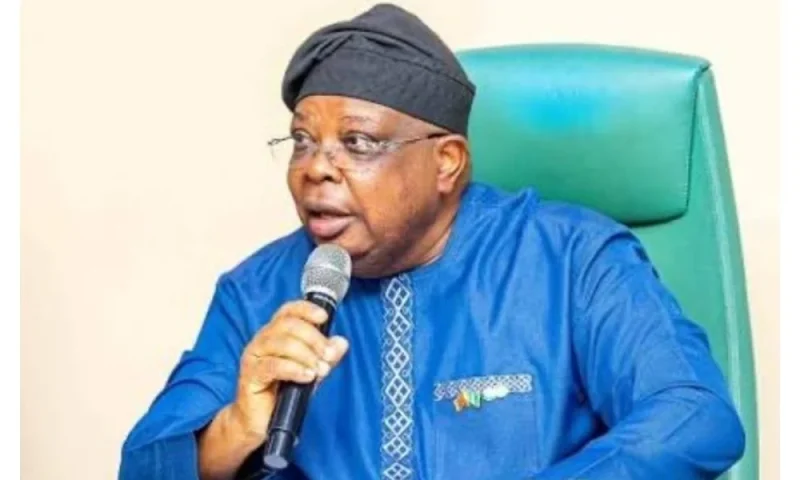
Osun State Governor, Ademola Adeleke, has approved the appointment of Mrs. Victoria Adunola Samson, popularly known as BOVAS, as the new Chancellor of Osun State University, UNIOSUN.

The appointment of Mrs. Samson as the third Chancellor of UNIOSUN was announced in a statement by Olawale Rasheed, Governor Adeleke’s spokesperson, on Sunday in Osogbo.

Her appointment follows the completion of the tenure of the immediate past chancellor, Folorunso Alakija, whose service ended on March 18, 2026, after a decade in office.

The Osun State Government had earlier paid a courtesy visit to Alakija on May 8, 2026, expressing appreciation to her and her family for their contributions to the university’s development.

During the visit, Governor Adeleke commended the former chancellor’s impact, describing her tenure as a period marked by notable achievements and an enduring legacy.

He particularly highlighted the donation of the Modupe and Folorunso Alakija Medical Research and Training Hospital, describing it as a multi-billion-naira intervention that strengthened the institution’s infrastructure.

According to the statement: “Mrs. Samson, widely known as Mama BOVAS, is the founder of BOVAS Oil and Gas, a leading indigenous oil and gas firm.

“An indigene of Iree in Boripe Local Government Area of Osun State, she was born on December 5, 1949.

“Under her leadership alongside her husband, the company expanded from a single petroleum products service station to over 200 outlets nationwide, employing more than 2,000 Nigerians as of December 31, 2025.

“Mrs. Samson also owns the Texaco Petroleum franchise and became the first Nigerian to win the Texaco Latin America and West Africa Award for Best Overall Dealer in 1990.

“She reportedly recorded the highest sales performance across both West Africa and Latin America during the period.

“Her professional career includes service as Matron of the Independent Petroleum Marketers Association of Nigeria at the NNPC/PPMC Satellite Depot in Ejigbo, Lagos, and Apata Depot in Ibadan, as well as membership of the Board of Trustees of the Depot and Petroleum Products Marketing Association.

“She holds a Professional Diploma in Marketing and attended leadership programmes at Harvard Business School and IESE Business School in Barcelona.”

Remarking through the statement, Governor Adeleke said, “We recognise with appreciation your distinct effort to make life easy for consumers of petroleum products. We celebrate you as a symbol of decency, honesty, integrity, and humanity in our society.”

The governor also congratulated Mrs. Samson on behalf of the government and people of Osun State and urged her to bring her experience and leadership to bear in her new role at the university.

Commissioner urges zero malpractice in WAEC examination

The Taraba State Commissioner for Secondary, Technical and Vocational Education, Dr. Augustina Godwin, has charged principals, invigilators and supervisors across the state to ensure a malpractice-free conduct of the 2026 West African Senior School Certificate Examination (WASSCE).

Dr. Godwin gave the charge on the weekend during the WAEC 2026 sensitization meeting organised for principals, invigilators and supervisors from Lau, Karim Lamido, Jalingo and Ardo-Kola Local Government Councils. The meeting was held on Saturday at the Government Technical and Training School, Jalingo.

Speaking, the commissioner stressed the importance of professionalism, discipline and integrity in the administration of the examination. She noted that the Taraba State Government, under Governor Dr. Agbu Kefas, remains committed to promoting quality education and restoring public confidence in the examination system.

She warned examination officials and school administrators against all forms of examination malpractice and urged them to strictly comply with WAEC rules and guidelines.

“Taraba State must continue to stand out in academic excellence through hard work and credibility. We must collectively ensure zero malpractice during the conduct of WAEC examinations,” she stated.

On his part, the WAEC Branch Controller in the state commended Governor Agbu Kefas for his continued support for the education sector.

According to him, Governor Kefas is the first governor in the state to clear all 2026 WAEC-related fees, a move he said had eased the burden on parents and boosted students’ participation in external examinations.

The branch controller also praised the governor for donating a utility van to the WAEC office and for providing other forms of support aimed at improving the operations of the examination body in the state.

The sensitization meeting was observed to have attracted principals, invigilators and supervisors from secondary schools across Lau, Karim Lamido, Jalingo and Ardo-Kola Local Government Councils.

SERAP asks Tinubu to probe alleged N26.9bn telecoms fund fraud

SERAPThe Socio-Economic Rights and Accountability Project has urged President Bola Tinubu to order an immediate probe into the alleged disappearance or diversion of N26.9bn from the Universal Service Provision Fund.

The group specifically called on the President to direct the Minister of Communications, Innovation and Digital Economy, Dr Bosun Tijani, and the Secretary of the USPF, Yomi Arowosafe, to explain the whereabouts of the funds.

SERAP also asked Tinubu to instruct the Attorney General of the Federation and Minister of Justice, Lateef Fagbemi (SAN), alongside relevant anti-corruption agencies, to investigate the allegations and prosecute anyone found culpable.

The allegations are contained in the 2022 audited report of the Auditor-General of the Federation, published on September 9, 2025.

In a letter dated May 9, 2026, and signed by its Deputy Director, Kolawole Oluwadare, SERAP said the alleged financial irregularities represent a serious breach of public trust and threaten efforts to bridge Nigeria’s digital divide.

“The USPF is critical to expanding telecommunications access in underserved and rural communities.

“Any diversion of its funds directly undermines its mandate to support infrastructure development and promote inclusive connectivity,” the organisation said.

SERAP warned that failure to investigate and recover the funds would deny millions of Nigerians access to essential digital services and frustrate national development goals.

According to the group, poor internet access affects citizens’ ability to exercise fundamental rights, including freedom of expression, access to information, education and participation in public affairs.

“It also impacts access to livelihood opportunities, healthcare information, financial services and education, particularly in an increasingly digital economy,” the letter stated.

SERAP gave the Federal Government seven days to act on its demands or face possible legal action aimed at compelling compliance by the government, the Nigerian Communications Commission and the USPF.

The organisation cited several alleged irregularities highlighted by the Auditor-General.

Among them is the USPF’s alleged failure to disclose a domiciliary account and refusal to grant the Auditor-General access to its books.

The audit report also alleged that the agency failed to remit more than N13.8bn in operating surplus between 2016 and 2019, raising concerns that the funds may have been diverted.

“The USPF failed to remit over N13.8bn (13,874,132,629.50), being 25 per cent annual operating surplus for four years, that is, between 2016 and 2019.’ The Auditor-General fears ‘the money may have been diverted.’ He wants the USPF to account for and remit the money.”

It further flagged N11.7m reportedly spent on international training programmes in October 2020 without supporting documents, despite COVID-19 travel restrictions at the time.

“The USPF also claimed to have spent over N11.7m (N11,793,838.40) on international training in October 2020, but these claims were made without any documents.’ There were no documents, such as a letter of invitation for the programme, no receipt/invoice for registration, and no certificate of participation,” it added.

Other allegations include award of contracts worth over N2.8bn without approval or procurement documentation; payment of N8m to a non-existent fund manager; spending of N6.4bn on projects not captured in the approved 2020 budget; disbursement of N2.8bn between January and May 2021 without documentation or explanation; failure to remit over N333m in stamp duties; failure to deduct over N144m in withholding tax; and payment of N391m to consultants without evidence of work done.

“The Auditor-General is concerned that payments may have resulted in the loss of revenue accruable to the government. He wants the money recovered and remitted to the treasury.

“The USPF paid over N390m (N391,311,759.29) to consultants for projects, but ‘without evidence of jobs done.’ There was ‘no evidence that the consultants visited the sites, there was no supply of the quoted items, and there were other problems ranging from malfunctioning of equipment and internet connectivity issues.’

“He wants the money recovered and remitted to the treasury.”

SERAP said the alleged actions undermine transparency, deepen inequality and exclude millions of Nigerians from digital opportunities.

The group based its demands on constitutional provisions requiring the government to abolish corrupt practices and ensure national resources are used for the common good.

It also cited Nigeria’s obligations under the United Nations Convention against Corruption and the African Union Convention on Preventing and Combating Corruption, both of which require effective investigation and sanctions for corruption-related offences.

“Section 13 of the Nigerian Constitution 1999 (as amended) imposes clear responsibility on your government to conform to, observe and apply the provisions of Chapter 2 of the Constitution.

“Section 15(5) imposes the responsibility on your government to ‘abolish all corrupt practices and abuse of power.’ Under Section 16(1) of the Constitution, your government has a responsibility to ‘secure the maximum welfare, freedom and happiness of every citizen based on social justice and equality of status and opportunity.’

“Section 16(2) further provides that the material resources of the nation are harnessed and distributed as best as possible to serve the common good.

“The UN Convention against Corruption and the African Union Convention on Preventing and Combating Corruption, both of which Nigeria is a state party to, obligate your government to effectively prevent and investigate allegations of corruption and hold public officials and non-state actors accountable for any violations.

2027: Why Peter Obi, Kwankwaso ticket won’t win presidency – Baba Yusuf

Policy Strategist and Group CEO, Global Investment and Trade Company, Baba Yusuf, has stated why the Peter Obi and Rabi’u Kwankwaso ticket may not win the 2027 presidential election.

Speaking during an interview on Arise Television’s ‘Prime Time’ on Friday, Yusuf said they may be able to get numbers of voters but the numbers would not spread across the North and South to give them the constitutional requirement to win.

Recall that Obi and Kwankwaso dumped the African Democratic Congress, ADC, for the Nigerian Democratic Congress, NDC, last Sunday citing court cases and internal divisions as reasons for their exit.

Airing his own opinion, Yusuf said, “If you look at the spread of Peter Obi with profound respect to him and Kwankwaso, they won’t be able to win the presidency.

“They may be able to get numbers of about 70 million voters that didn’t vote in 2023 which I reckon people will come out and vote.

“But will those numbers have the spread across the North and Southern Nigeria to give them the constitutional requirement to win the election as Peter Obi and Kwankwaso? I expect a lot of consultations and negotiations that will lead to that.

“The ‘me me’ attitude will not cut it. And I expect maybe Peter Obi and Kwankwaso to sit down with an elder statesman like Atiku Abubakar to say, look, how are we going to share this power?

“It’s a negotiation, but when you come with this attitude of ‘we don’t need you’, it will not yield any positive result,” Yusuf said.

2027 elections: Obi, Dickson meet Kwankwaso in Abuja ahead of NDC convention

Former presidential candidate, Peter Obi, alongside National Chairman of the NDC, Henry Seriake Dickson, paid a courtesy visit to Rabiu Musa Kwankwaso at his residence in Maitama, Abuja, on Friday night.

The visit was disclosed in a statement issued by Kwankwaso’s media aide, Hon. Saifullahi Hassan.

According to the statement, the political figures held discussions on political developments in the country, although details of the meeting were not made public.

Among those who received the visitors alongside Kwankwaso were former Kano State Deputy Governor, Nasiru Yusuf Gawuna; Senator representing Kano Central, Rufa’i Sani Hanga; prominent NNPP chieftain, Buba Galadima; and member of the House of Representatives representing Kura, Madobi and Garun Malam Federal Constituency, Yusuf Datti Kura.

Several other key figures within the Kwankwasiyya movement were also present during the meeting.

Although the exact issues discussed were not disclosed, the development is expected to further fuel speculation over ongoing political realignments ahead of the 2027 presidential election, especially amid reports of possible alliance talks involving Obi and Kwankwaso on a joint presidential ticket.

Kebbi: Residents groan as blackout worsens, businesses under threat

Power outages in parts of Kebbi State have persisted for months, leaving communities in prolonged darkness, crippling businesses, worsening living conditions and deepening economic hardship across affected areas.

Residents across multiple local government areas have decried that the situation has gone beyond occasional power failure, describing it as an unending blackout that has paralyzed homes, shops, and small businesses.

DAILY POST gathered that the recurring power outage has become one of the most pressing challenges in the state, with many communities reporting little or no electricity supply for weeks.

Small business owners say the situation is severely affecting their livelihoods, particularly those who depend on electricity for cooling systems, cold storage, and daily operations.

A shop owner in Badariya, Musa Abdullahi, who sells frozen foods and beverages, said the blackout had forced him into heavy losses, adding that he has been unable to preserve perishable goods due to the prolonged lack of electricity supply.

“I cannot afford a solar system that can carry my fridge and other appliances. I am losing customers every day because I have no way to preserve my goods,” he said.

Another business owner in the Kara area of Birnin Kebbi lamented declining sales and rising operational costs.

“Business has dropped seriously. Without light, customers don’t come like before. Even buying fuel for the generator is too expensive for small traders like us,” she said.

Kaduna Electricity Distribution Company, KAEDCO, which serves as the primary electricity distribution company covering Kebbi State under its franchise area, alongside Kaduna, Sokoto, and Zamfara, has for years remained the main operator responsible for transmitting and distributing power to residents of the state.

Despite its statutory role in ensuring steady electricity supply, the company has repeatedly come under criticism over persistent load shedding, unstable distribution, and inadequate power allocation to Kebbi communities.

KAEDCO has previously attributed its poor supply to low power allocation from the national grid, transmission constraints, and revenue shortfalls, factors it says have continued to cause frequent electricity interruptions across its franchise areas, including Kebbi State.

In response to the worsening situation, the Kebbi State Governor in early April approved the constitution of a Multi-Stakeholders Committee to engage KAEDCO over the lingering electricity challenges.

The decision followed an intensive town hall meeting involving stakeholders and KAEDCO representatives, where issues of epileptic and low power supply in the state were discussed.

The committee was mandated to examine the actual quantum of electricity supplied to Kebbi State in relation to payments made and services rendered, as well as to review billing compliance issues and other operational challenges affecting distribution.

However, DAILY POST gathered that the committee is yet to submit its official report, despite being given a clear timeline by the state government.

The government had directed the committee to submit its findings within two weeks, effective from April 16, 2026.

Weeks after the deadline, there has been no public release of the report, leaving residents uncertain about any concrete solution.

Reacting to the development, the Special Adviser on Media and Publicity to the Kebbi State Governor, Yahaya Sarki, issued a strong statement, calling for urgent action from the electricity distribution company.

“KEDCO, wake up! People have been in darkness for days, this is unacceptable. Please act now. Your culture of silence is unbearable,” he was quoted as saying.

The statement has generated widespread reactions, with residents across affected communities sharing similar accounts of prolonged blackout.

In Kawara community, residents said they have been without electricity for months due to a damaged transformer, with no immediate intervention from authorities.

Many also complained that the cost of solar power systems capable of running refrigerators and other appliances is beyond their financial reach.

Findings by DAILY POST indicate that the ongoing blackout is largely attributed to neglect and poor infrastructure maintenance over time.

The power outage has also affected several parts of Birnin Kebbi, including GRA and Kara feeders, where supply remains unstable or completely absent.

Communities along the Gesse to Rugga axis also report over a month of continuous blackout, further worsening living and economic conditions.

Meanwhile, the state government had earlier suspended its monthly N150 million support to the electricity distribution company, citing poor service delivery.

Officials said the decision followed persistent complaints from residents and businesses over unreliable electricity supply across Kebbi State.

The Nigeria Labour Congress, NLC, has called for immediate measures to address rising xenophobic attacks against African migrants in South Africa, urging the Congress of South African Trade Unions, COSATU, to launch a large-scale awareness campaign to protect migrant workers.

In a letter dated May 7, 2026, and addressed to the leadership of COSATU in Johannesburg, NLC President Joe Ajaero condemned recent incidents involving the killing of African migrants and destruction of their businesses.

Ajaero described the attacks as a consequence of worsening economic conditions and ineffective government policies, stressing that African workers should not be turned against one another.

“We cannot claim to fight for the working class while allowing a section of that class to be hunted like wild animals,” he stated.

The labour leader urged COSATU to lead extensive sensitisation efforts in communities, unions and workplaces to counter narratives blaming migrants for unemployment and poverty.

“We must break, once and for all, the racist myth that a fellow black African from across a colonial border is our enemy,” Ajaero added.

The NLC also criticised what it described as the inadequate response of South African security agencies, accusing authorities of failing to provide sufficient protection for migrants and their businesses.

Ajaero called for the full deployment of security resources to prevent further violence, while demanding the arrest and prosecution of those responsible for the attacks.

He also urged the South African government to ensure compensation for victims and families affected by the violence.

According to the NLC, xenophobia poses a major threat to workers’ solidarity across Africa, weakening labour movements and collective bargaining efforts.

“Xenophobia is not good for anybody, especially the world of work, because it fractures working-class unity and weakens our collective bargaining power against capital,” Ajaero said.

The congress further proposed an emergency meeting involving African labour organisations under the African Regional Organisation of the International Trade Union Confederation and the Organisation of African Trade Union Unity to develop coordinated strategies for protecting migrant workers across the continent.

Ajaero warned that failure to tackle xenophobic violence decisively could encourage similar incidents in other African countries.

“Xenophobia is a cancer that, if not excised in South Africa, will metastasise across the continent,” he said.

Amnesty condemns killing of 12 in Plateau midnight attack, warns Nigerian govt

Human rights organisation, Amnesty International, has condemned the killing of 12 persons during a midnight attack on Ngbra-Zongo village in Bassa Local Government Area of Plateau State.

According to the organisation, the victims included pregnant women and children, while at least 10 other residents are currently receiving treatment for gunshot injuries sustained during the attack.

Amnesty International described the incident as “horrific,” alleging that entire families were locked inside their homes and killed one after another by the attackers.

Labour union denies directing pensioners to submit files to Imo SSG

The  Nigeria Labour Congress, NLC, Imo State chapter and the Nigeria Union of Pensioners, NUP, have jointly debunked information directing pensioners in the State to submit their personal documents to the office of the Secretary to the State Government for onward payment of their gratuities.

In a joint press statement signed by NLC State Chairperson, Uche Chigemezu Nwigwe and State Chairman of NUP, JB Ugochukwu, the Labour Unions described the report as fake and misleading information with the intention of defrauding unsuspecting members of the Public.

Both NLC and NUP discarded the report as unauthorized, and did not emanate from either of the two unions.

“As we are all aware, labour engagement with the State Government for the payment of the next batch of the gratuity is still on and Governor Hope Uzodinma is very much on course for the payment as he promised.

“All pensioners are hereby advised to disregard such fake news and avoid falling victim to misinformation, fraudsters, or unauthorized individuals demanding money or personal details in connection with gratuity payments,” the release added.

They advised pensioners seeking for accurate information and official updates regarding gratuity matters to contact or visit, NUP Office or NLC Secretariat.

The leadership of the organized labour reiterated its committed to protecting the interest and welfare of pensioners and workers at all times.