Gas flare: We no longer sleep at night – Akwa Ibom community (Video)

For the people of Ikot Ebidang in Onna Local Government Area of Akwa Ibom State, sleep has been murdered following the oil and gas exploration activities in their community.

Aside from the smell of the noxious gas discharge that hits anyone who enters the community, the tumultuous sounds from the gas flare sites have sacked some residents and rendered those who do not have alternative homes sleepless.

Ikot Ebidang, host to the Oil and Gas company, Natural Oilfield Service (Sterling Global) has raised the alarm over destruction of their environment, poor crop yield and poor health outcomes through fossil fuel extraction.

One thing remarkable in the sleepy community is the preponderance of darkened and corroded rooftops due to combustion residues from the flare stack.

Speaking during a dialogue on renewable energy, the people decried the destruction of aquatic ecosystems, farm crops, as well as heat and skin rashes which have become very common.

One of the community stakeholders narrated, “We have lost a lot of people in our community, our health is in danger.

“If you are coming into the community, you will be perceiving the gas not to talk of those living around the site. This is not just natural global warming but community burning.

“The soil nutrient is reducing and the gas flare has altered aquatic life. Our forest and rivers are polluted. I don’t know if it’s at the expense of one man or two who wants to do business, we are dying, we need help.

“If you stay here till around 7- 8 pm when everywhere is quiet, the sound alone is like an earthquake, people are afraid of what will happen next.”

Meanwhile, the operating company did not sneak into the community to begin its activities, there must be a Memorandum of Understanding (MoU) between them, the government and the community.

To this end, people of Ikot Ebidang have called for the renegotiation of the MoU granting the company access to their community to adequately address concerns around pollution and environmental harm.

In a communique, the people called on the Akwa Ibom government to halt fossil fuel extraction activities, and the operating company to pipe associated gas away from residential areas rather than flaring within the community.

“Continued flaring within the community worsens health outcomes, environmental degradation, and community vulnerability.

“The community must be compensated for livelihood losses and damages resulting from oil extraction, alongside the provision of adequate health facilities to help residents cope with ongoing impacts,” the communique added.

Gasflaring is illegal – Expert

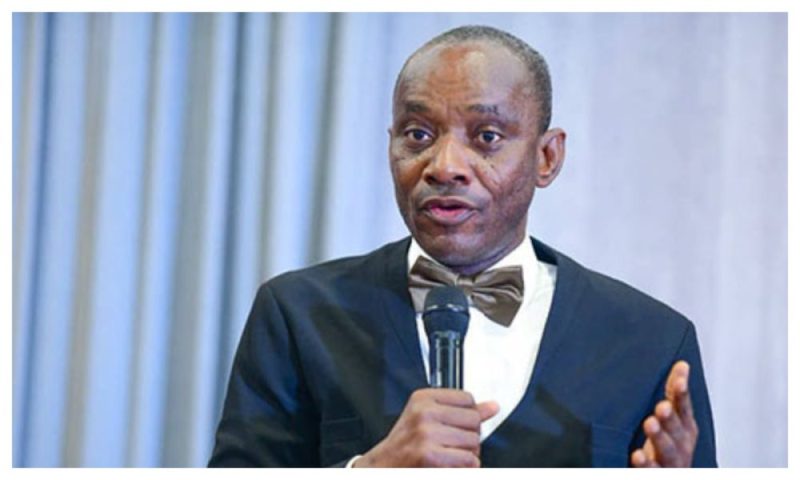
According to an environmental expert, Dr Nnimmo Bassey, who is also the Executive Director of Health of Mother Earth Foundation, (HOMEF), one of the facilitators of the dialogue, gas flaring remains illegal and a violation of human rights in Nigeria, especially when done where people are living.

He stated that every community in the Niger Delta has serious environmental problems, noting that from the complaints of the people of Ikot Ebidang, they have surface knowledge of the implication and life threatening effects of gas flare.

His words, “Gasflare problem is central because of its implication to human health, environmental health.

“In-fact they have not started experiencing the serious problem of gasflare, not just about noise, heat or rashes which they have largely complained of, if it continues this way, they risk reproductive problems, cancers, blood disorders and so many problems associated with gas flaring. I think people actually have a very surface understanding of what is coming.”

He promised to help the community get environmental justice and achieve their demands.

Document Evidence of Negative Impacts – Community told

Meanwhile, the community has been told to document in real time all evidence of negative impacts of gas flare and oil spill they have witnessed.

Umo Isua-Ikoh of the Peace Point Development Foundation, PPDF, also one of the dialogue facilitators, and Edem Edem, the immediate past African representative of Climate Investment Fund of the World Bank, Washington DC, in their joint presentation, harped on the need to have evidence in case either of the parties wants to institute a legal action.

“In environmental monitoring, we are looking at how you can have a good evidence should you be taken to court or you want to go to court, so you must have something the court must accept such as a real time evidence for instance if there is an oil spill, you must have a picture of the spill with GPS camera so that location will be captured.

“You can also take samples with a container, cork and label so that by the time we present it to NODSRA for testing, the test will be able to detect the asset owner.

“The community should also be able to have a picture of how the community was and how it is today. Not only for the court, also for posterity.

“For us as environmentalists, we want to see how we can encourage the communities to take monitoring and evidence documentation seriously because this will enable them to observe changes in their community.

“They can also equally begin to engage themselves to find lasting solutions to their issues,” they stated.

They also noted that communities must be compensated for livelihood losses and damages resulting from oil extraction, alongside the provision of adequate health facilities to help residents cope with ongoing impacts.

“The government must prioritise the wellbeing of communities such as Ikot Ebidang rather than sacrificing them in efforts to increase oil production to 3 million barrels per day.

“The community should be supported to train and deploy environmental advocates who can centre and champion community interests and environmental perspectives.

“The company should provide renewable energy solutions to help address energy poverty while mitigating the impacts of extractive activities on the community.

“The government must ensure routine environmental monitoring and regular air quality inspections to safeguard community health and environmental integrity,” they concluded.

ICPC takes El-Rufai into custody after release by EFCC

Former Kaduna State governor, Nasir El-Rufai, has been taken into custody by the Independent Corrupt Practices and Other Related Offences Commission (ICPC).

El-Rufai was moved to the ICPC headquarter in Abuja after spending 48 hours at the Economic and Financial Crimes Commission (EFCC), where he had earlier been granted bail.

There were initial reports that he had been arrested by the Department of State Services (DSS), which also filed criminal charges against him. However, the ICPC later clarified that the former governor is in its custody.

In a statement issued on Wednesday night, ICPC spokesperson J. Okor Odey confirmed the development.

“The Independent Corrupt Practices and Other Related Offences Commission (ICPC) writes to state that Malam Nasiru El-Rufai, the former Governor of Kaduna state is in our custody as at close of work today Wednesday the 18th day of February, 2026. Malam Nasiru El-Rufai is in the custody of the Commission in connection with investigations,” the statement read.

The commission did not disclose details of the investigation.

The DSS had earlier filed a three-count charge against El-Rufai at the Federal High Court in Abuja, marked FHC/ABJ/CR/99/2026.

The charges followed comments he made during an interview on ARISE Television.

During the programme, El-Rufai alleged that the ICPC, acting on the orders of the National Security Adviser, Nuhu Ribadu, had directed the DSS to arrest him. When asked how he got the information, El-Rufai said someone had tapped Ribadu’s phone and that he heard what the NSA said.

Based on that claim, the DSS accused him of unlawfully intercepting the phone communications of the National Security Adviser, an offence it said violates the Cybercrimes (Prohibition, Prevention, etc.) Amendment Act, 2024, and the Nigerian Communications Act, 2003.

In one of the counts, prosecutors alleged that El-Rufai admitted during the interview that he and others “unlawfully intercepted the phone communications” of Ribadu.

Another count claimed he acknowledged knowing someone who carried out the interception but failed to report the individual to security agencies.

The charges also accused him and others still at large of using technical equipment to intercept communications in a manner that compromised public safety and national security.

El-Rufai, who served as governor of Kaduna State from 2015 to 2023, has also faced separate allegations of financial misconduct.

In 2024, the Kaduna State House of Assembly indicted him over the alleged diversion of N423 billion and money laundering, and asked anti-graft agencies to investigate him.

He denied the allegations and later sued the Assembly, accusing it of attempting to damage his reputation.

Lagos bans ‘korope’ buses amid protest

Lagos State Government has faulted the blockage of traffic along the CMS–Lekki–Epe Expressway by some mini-bus operators, popularly known as korope, describing the action as a breach of earlier agreements reached with transport unions.

In a statement issued by the Lagos State Ministry of Transportation, the government said the disruption occurred on Tuesday, February 17, and Wednesday, February 18, 2026, despite extensive consultations with key stakeholders.

According to the statement, the government had engaged the two major transport unions, the National Union of Road Transport Workers (NURTW) and the Road Transport Employers Association of Nigeria (RTEAN), before rolling out reforms for the Lekki–Epe corridor.

Speaking on behalf of the government, the Special Adviser on Transportation, Hon. Sola Giwa, said the actions of the protesting operators undermine the Bus Reform Initiative (BRI), a programme designed to improve transportation services along the busy axis.

“Such disruptions go against the agreements we made with the unions.

“The government has worked closely with all stakeholders to provide safe and efficient transportation for Lagos residents. We strongly encourage all operators to comply with the reform in the interest of commuters and the state,” Giwa said.

The Bus Reform Initiative, which was first discussed in 2024, is aimed at restructuring public transportation on major routes. The plan includes deploying high-capacity buses, relocating korope and mini-buses to inner arterial roads, introducing e-ticketing, regulating bus operations, and strengthening security along the corridor.

At a stakeholders’ meeting held on June 27, 2024, a formal agreement was endorsed by Giwa, the Permanent Secretary of the Ministry of Transportation, and the state leadership of NURTW and RTEAN. The meeting outlined the framework for the reform and stressed the importance of cooperation among all parties.

A follow-up meeting on December 2, 2025, fixed December 8, 2025, as the official commencement date of the reform. The first phase covers four major routes: Ajah–CMS (Marina)/Obalende, Ajah–Oshodi, Ajah–Berger, and Ajah–Iyana Ipaja.

Under the arrangement, one operator provides express services, while others run regular stopping services along the corridor.

All buses participating in the scheme are painted in the standard Lagos State blue-and-white colour scheme. They are fitted with QR codes embedded in PTCS stickers for verification, unique identification numbers, and Touch and Pay (TAP) stickers. Drivers are also required to display official Ministry of Transportation badges to promote accountability and boost commuter confidence.

Giwa reiterated the government’s commitment to formalising transport operations, improving commuter comfort, enhancing safety, and maintaining fare stability across the state.

“The success of this initiative depends on the cooperation of all transport operators.

“The state remains determined to protect commuters’ interests and ensure that Lagos continues to operate as a safe and efficient transport city,” he said.

The State Government added that it will continue engagement with stakeholders while strictly enforcing the Bus Reform Initiative, warning that non-compliance will not be tolerated.

FCT council election: Police restrict movement ahead of Feb 21 election

The Federal Capital Territory (FCT) Police Command has imposed a 12-hour restriction of movement across Abuja from 6 a.m. to 6 p.m. on February 21 to facilitate the conduct of the Area Councils’ elections.

The command’s Public Relations Officer, SP Josephine Adeh, announced the measure on Wednesday, explaining that it applies to all residents except essential service providers and individuals officially engaged in the electoral process.

Adeh said extensive security deployments have been made across the territory to maintain order and ensure a free poll.

The operation involves a joint effort by multiple security agencies, including the Nigerian military, the Department of State Services, and the Nigeria Security and Civil Defence Corps.

“Agencies involved in the deployment include the Nigeria Army, Nigeria Air Force, Nigeria Navy, Department of State Services (DSS), Nigeria Security and Civil Defence Corps (NSCDC), among others,” she said.

She quoted the FCT Commissioner of Police, CP Miller Dantawaye, as directing officers to demonstrate professionalism, and respect for citizens’ rights while on election duty.

“He also advised officers to remain vigilant, impartial, and courteous in the discharge of their duties, while respecting the rights of all citizens,” she said.

The commissioner also appealed to residents to cooperate with security personnel and observe operational guidelines during the elections.

He assured voters that adequate security arrangements are in place to support a free, fair, and peaceful exercise and encouraged them to participate without fear.

Dantawaye further urged members of the public to remain vigilant and report suspicious activities through the police emergency lines: 08032003913 and 08061581938.

APC have all governors, afraid of free, fair election – ADC

The African Democratic Congress, ADC, has criticised the ruling All Progressives Congress, APC, over the controversial passage of the Electoral Act Amendment Bill by the National Assembly

Reacting to the development on Wednesday, the spokesperson of the African Democratic Congress, Bolaji Abdullahi, accused the APC of undermining Nigeria’s democracy.

In a post shared via his X handle, Abdullahi said the level of impunity displayed by the ruling party was troubling, warning that it should not be allowed to become “the death of our democracy.”

He alleged that despite having almost all state governors under its control, the APC was still apprehensive about conducting a free and fair election.

According to him, Nigerians would resist any form of tyranny, adding that the country had experienced similar situations in the past.

He said: “With this level of impunity, we pray that the APC does not become the death of our democracy.

“Almost all the governors are in their party, yet they are afraid of a free and fair election. But Nigerians will never surrender to tyranny. We have seen this before.”

Turaki PDP faction officially inaugurates Abia State Caretaker committee

The National Working Committee, NWC, of the Peoples Democratic Party, PDP, led by Kabiru Tanimu Turaki, SAN, has officially inaugurated a Caretaker Committee to steer the affairs of the party in Abia State.

Speaking at the event, the Vice Chairman of PDP, Southeast, Ali Odefa, charged the newly inaugurated committee to “keep the flag flying” and resist what he described as internal and external forces allegedly working to destabilize the party.

Odefa alleged that for over a year, the party had faced “anti-democratic forces” determined to weaken its structures. According to him, ongoing legal disputes over the party’s leadership have now been consolidated at the Court of Appeal, with judgment reserved.

He described the newly appointed chairman of the Abia Caretaker Committee, Mr. Ikpegbu Emeka-Yello, as experienced, fearless, and capable of navigating what he admitted would not be an easy assignment.

In his acceptance speech, Mr. Ikpegbu Emeka-Yellow described the appointment as “a call to service, sacrifice and selfless leadership”

He acknowledged that the PDP in Abia had suffered a serious leadership crisis in recent years, weakening its structures and morale but emphasized reconciliation as the central mission of the caretaker committee.

However, the Nyesom Wike-backed faction of the PDP in Abia has described the committee as illegal.

Ramadan: UN scribe laments humanitarian crisis in Gaza, Sudan, others

As Muslims around the world commence Ramadan fast today, United Nations Secretary General, Antonio Guterres, has expressed worry over persistent conflict, hunger, displacement in Gaza, Sudan, Yemen and Afghanistan.

Guterres made his feelings known in a Ramadan message while advocating that the global community heed Ramadan’s enduring massage of unity, deliver help and hope to those who are suffering and safeguard the rights and dignity of every person.

“Ramadan also represents a noble vision of hope and peace. But for too many members of the human family, this vision remains distant. From Afghanistan to Yemen, from Gaza to Sudan and beyond, people are suffering the horror of conflict, hunger, displacement and more.

“In this difficult and divided times, let us heed Ramadan’s enduring massage to bridge divides, deliver help and hope to those who are suffering and safeguard the rights and dignity of every person”, he said.

The UN Scribe believes that the holy month would inspire the world to work as one to build a peaceful, generous and just world for all people.

“Every year, I pay a special solidarity visit to a Muslim community and join in the fast. And every year I come away heartened by Ramadan’s spirit of peace a compassion.

“Ramadan Kareem!”, he said.

Private school teachers open up on daily struggles amid N10,000 monthly salary

In the past, the teaching profession was seen as one of the most noble professions anyone could find themselves in. Teachers were seen as the moulders of society because every professional went through the tutelage of a teacher.

However, teachers have become the dregs of society, especially those in private schools.

Private school teachers, especially those in Jos, the capital of Plateau State, have been reduced to mere tools by school proprietors to be used and dumped at will.

They face severe low-income and poor working conditions, highlighting their silent struggles but with a resilience that goes to show that if given the right conditions to work, they will excel.

Though private schools have become the largest employer of labour in Jos with many of them springing up in almost every street, the teachers they employ have been the ones at the receiving end as their salaries and remuneration are nothing to write home about.

Findings by DAILY POST show that some private schools pay NCE, HND, BSc, and Master’s degree holders between N10,000 and N25,000 monthly and the teacher may not have a salary increase for the next five to ten years of teaching.

Even when the salary is increased, it may not be more than 10% of the basic salary.

Teaching in a private school, therefore, has become a means to an end with the teachers just hanging in there waiting for an opportunity to come up, and off they go.

Some teachers who spoke to DAILY POST on their silent struggles while trying to build the lives of their pupils, say they get ‘imprisoned’ almost all day between 7am and 3pm and at the end of the month, they are paid paltry sums that do not last up to a week.

Most of them are made to take classes from JSS1 to SS3 and as to be expected, these overworked and underpaid teachers cannot give their best, thereby contributing to the falling standard of education in the state.

The school proprietors too do not help matters in any form or shade.

As soon as a teacher starts to grumble and ask questions, they are relieved and replaced almost immediately.

It has become a regular sight to see teachers engaging in manual labour at construction sites, farms, and even illegal mining sites to augment their poor income.

Some private school teachers revealed that they had no option but to endure the hardship while looking forward to better days ahead.

First to speak was Ezekiel Atangs who has been a private school teacher for over 15 years.

He said, “I have been teaching in private schools for the past 15 years and I can say that my experiences have never been palatable. Where I am currently working is my third but the story has been the same.

“I have been here for the past four years on a N15,000 salary. There has never been an increment and anytime we approach the proprietor for an increase, she will tell us that anyone who is not happy with the salary can leave.

“I have a wife and three children, so I have to engage in menial labour to augment the stipend I get from my teaching job. When I close and during weekends, I go to construction sites to work. If not, my family will starve.”

Another private school teacher, Ishaya Bitson, also shared his bitter experience.

“I can tell you in all honesty that private school teachers in Plateau State are really suffering.

“I have a degree in education but all efforts to get a job with either the state or federal governments have proved abortive, I had to pick a job with a popular private school in Jos.

“On the surface, the school is one of the most prestigious in Jos with the school fees running into hundreds of thousands of naira. But it will interest you to know that the teachers are poorly paid.

“When I was employed five years ago, my salary was N20,000 with the promise of a review after one year but since then, I have been stuck on the same salary.

“Whenever I approach the principal to talk about the increase, he will tell me to be patient or if I can’t cope any longer, I should put in my resignation letter. We are really suffering in silence,” he lamented.

For Leonard Bagudu, the story is the same.

“I have an NCE and I’ve been teaching in a private school for the past eight years on a salary of N12,000 with no hope of a change in the near future.

“I teach JSS3 to SS3, yet I am not happy. Imagine resuming work at 7am and teaching all round till 3pm, yet you are paid a paltry sum. I can tell you that no private school teacher in Jos is happy due to the poor salaries we get,” he disclosed.

A school proprietor, who spoke on the poor salary package for teachers however, claimed there was nothing they could do than pay whatever they can afford.

“Yes, there is no doubt the salary of private school teachers is poor but there is nothing much we can do about it. Everyone knows the current economic situation in the country and we barely survive or break even after paying levies to the state ministry of education and other relevant authorities.

“Some parents also do not help matters as they don’t pay their children’s fees on time and this too affects what we manage to pay our teachers.

“Many people think we proprietors are the ones enjoying it, but I can tell you that we barely break even,” he narrated.

However, an assistant director in the Plateau State Ministry of Education, who spoke on the condition of anonymity, stated that there is little or nothing the ministry can do as the salaries of the private schools are not regulated by the government.

According to him, “We have had complaints of poor salaries paid by private schools but there is nothing the ministry can do because they are regulated by the government.

“Private schools, just like other private organizations, are at liberty to negotiate their salary structure with their staff but all we have been telling them is to be fair to their employees.

“We have heard of private school teachers being paid as low as N10,000 or N15,000 and we have been talking with them to find a balance and raise these salaries.”

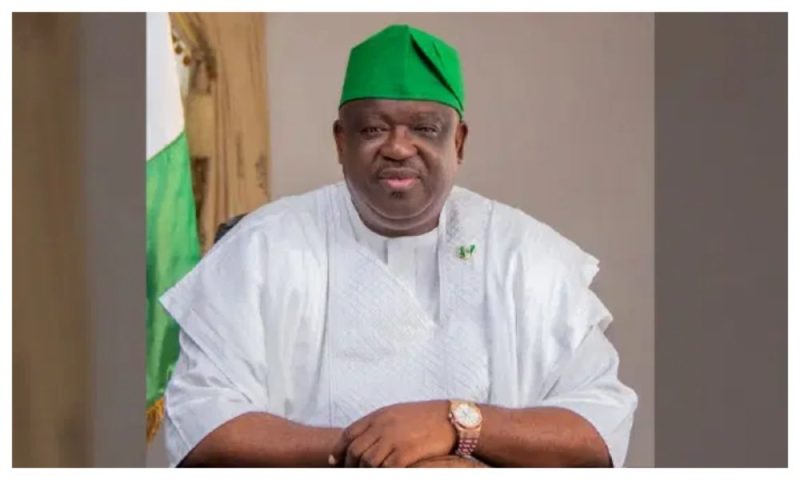
Aiyedatiwa holds parallel stakeholders’ meeting, blames ‘vested interests’ over crisis

Following the violent chaos that rocked the stakeholders’ meeting of the All Progressives Congress (APC), Ondo State chapter, on Tuesday, Governor Lucky Aiyedatiwa has denied his involvement in the crisis.

According to Aiyedatiwa, miscreants with no form of business at the state secretariat of the party were responsible for the chaos.

The Chairman of the party in the state, Ade Adetimehin, was beaten and injured along with other party chieftains after some hoodlums alleged to be members of the National Union of Road Transport Workers (NURTW) stormed the secretariat in Akure, the state capital.

The injured chieftains of the party, who are currently hospitalised, accused the governor of sponsoring the hoodlums to disrupt the stakeholders’ meeting.

Meanwhile, Aiyedatiwa, who led party leaders from across the state to a parallel stakeholders’ meeting with members of the congress committees from the national secretariat of the party, disclosed that the initial plan for a 10 a.m. meeting on Tuesday was never formalised, as he had requested it be moved to 2 p.m. to allow him and other top officials, including the Speaker and Deputy Governor, to attend.

While stressing his commitment to due process and denying any animosity towards the congresses, Aiyedatiwa attributed the violence to factional disputes over candidacy, stressing that the earlier incident was a gathering of rival supporters rather than an official party meeting.

He said, “Normally, we have stakeholders’ meetings, and as the governor, I am always in attendance, alongside the speaker and the deputy governor. All of us are always present at every stakeholder’s meeting. ‎

“In the first quarter of this year, we had one in January before the anniversary of the state. We had 60 persons per local government. But this one was an impromptu stakeholders’ meeting because of the congresses at the ward and local government levels.

“Later on, I got a call from one of them saying there were some problems around, or some miscreants around the party secretariat.

“I asked him to call the Commissioner of Police, and I also called the Commissioner of Police myself to ensure the place was protected because I was going to attend the meeting. I asked that security operatives be deployed to protect the place.”

List of senators who opposed manual backup clause in electoral bill released

The identities of the 15 senators who voted in support of mandatory real-time electronic transmission of election results during deliberations on the Electoral Act (Repeal and Re-Enactment) Bill, 2026 have been revealed.

The lawmakers opposed the retention of a controversial provision that allows manual collation of results as a backup.

DAILY POST recalls that the Senate approved the electronic transmission of election results while retaining manual collation as a fallback option in a plenary session on Tuesday.

The resolution followed a tense plenary session in the red chamber of the National Assembly.

During a dramatic division on the floor, 55 senators voted in favour of keeping the manual backup clause, while Senator Enyinnaya Abaribe and the 14 others stood against it, insisting on mandatory real-time electronic transmission.

The senators include:

Natasha Akpoti-Uduaghan (PDP, Kogi Central)

Enyinnaya Abaribe (ADC, Abia South)

Abdul Ningi (PDP, Bauchi Central)

Aminu Tambuwal (PDP, Sokoto South)

Ireti Kingibe (ADC, FCT)

Seriake Dickson (PDP, Bayelsa West)

Onawo Ogwoshi (ADC, Nasarawa South)

Tony Nwoye (ADC, Anambra North)

Victor Umeh (ADC, Anambra Central)

Ibrahim Dankwambo (PDP, Gombe Central)

Austin Akobundu (PDP, Abia Central)

Khalid Mustapha (PDP, Kaduna North)

Sikayo Yaro (PDP, Gombe South)

Emmanuel Nwachukwu (APGA, Anambra South)

Peter Jiya (PDP, Niger South)