Nollywood actor, Alex Ekubo’s death big loss to Abia, entertainment industry – Otti

The Abia Governor,  Alex Otti, has condoled the family of Ekubo over the death of their son and Nollywood actor,  Alex Ikenna Ekubo Okwaraeke .

Otti who stated this on Thursday at Arochukwu, Abia State during a funeral service conducted for Ekubo  by the Streams of Joy Church ,  Governor Otti described the death of Ekubo, as a profound loss to Abia State and the  Nigerian   entertainment industry .

The Governor who represented by his Chief of Staff,  Caleb Ajagba, said that the late actor was not only a celebrated entertainer but also a cultural ambassador, whose talent projected the image of Abia state and nation on the global stage.

He praised the late actor  for always carrying his roots with pride and demonstrating through hard work and discipline that dreams can be achieved regardless of one’s background, adding that his rise from  Arochukwu to becoming a household name across Africa and beyond remains a powerful inspiration to young people.

“Alex possessed that rare gift of connecting with people.

Through his performances, he brought joy to homes, inspired

young people, and demonstrated that with discipline, dedication,

and excellence.

Governor Otti further encouraged the wife of the deceased,  the Ekubo-Okwaraeke family, the people of Arochukwu and the Nigerian creative industry to be strong, courageous and take solace in God.

Aged 40, Late Dr Alex Ikenna Ekubo Okwaraeke, who until his death was a renowned Nollywood actor and died as a result of complications from advanced metastatic kidney cancer, is survived by wife, parents, siblings and a host of other relatives.

The burial was attended by actors, actresses and other entertainers.

Osun LGs: Fresh court judgment worsens crisis as parties seek police intervention

The political dispute over the control of local government councils in Osun State intensified on Thursday as the state government sought police protection for chairmen elected on the platform of the Peoples Democratic Party, PDP, while the All Progressives Congress, APC, urged security agencies to prevent what it described as an unlawful takeover of council secretariats.

The development followed the June 15, 2026 judgment of the Federal High Court in Osogbo, which dismissed a suit filed by chairmen elected under the APC in the October 15, 2022 local government election and rejected their request for tenure elongation.

In a letter dated June 18, 2026 and addressed to the Assistant Inspector-General of Police, Zone XI Headquarters, Osogbo, counsel to the Osun State Government and the local government areas, Oluwabusola Oluwaniyi, requested police protection for officials elected in the February 22, 2025 local government election to enable them to resume office.

The government also urged the police to remove APC chairmen currently occupying council secretariats across the state, arguing that the Federal High Court had dismissed all the reliefs sought by the officials, including prayers to continue in office and requests restraining their removal.

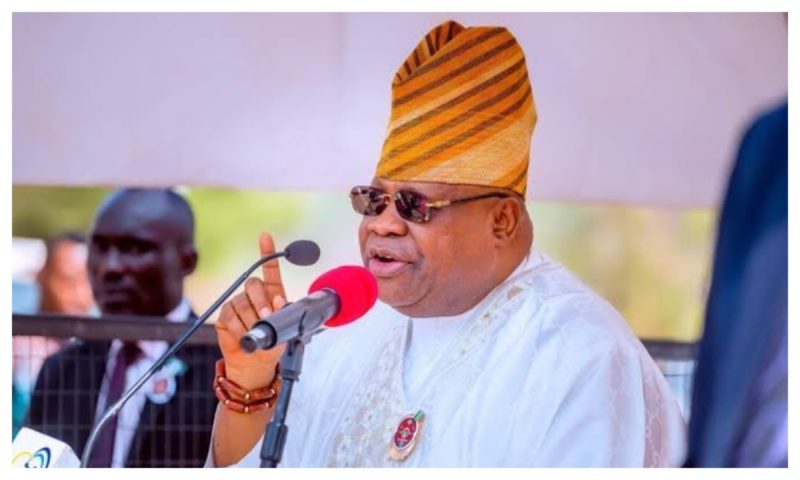
According to the letter, Governor Ademola Adeleke directed security agencies to ensure the safety of local government staff and facilitate the resumption of officials elected in the 2025 poll.

The government maintained that there was no court order staying the judgment or restraining its enforcement.

The letter stated, “All the reliefs specifically sought by them were expressly refused by the court, and their originating summons was dismissed in its entirety. The filing of an appeal did not amount to a stay of execution.”

However, the APC warned against any attempt to enforce the judgment while an appeal process was underway.

In a statement signed by the party’s Director of Media and Information, Kola Olabisi, the party alleged that supporters of the PDP and the Accord Party were planning to invade council secretariats beginning from Friday.

The opposition party called on the Commissioner of Police and other security agencies to be on alert, insisting that the legal process had not been exhausted following the filing of a notice of appeal by the affected chairmen.

“It is the law that once an appeal and an application for stay of execution of a judgment have been filed, no party is allowed to proceed with the execution of such a judgment,” the APC stated.

The party urged security agencies to hold Governor Adeleke and labour leaders accountable for any breakdown of law and order, alleging that attempts to forcefully assume control of the councils could trigger unrest across the state.

Meanwhile, counsel to the APC chairmen, Kunle Adegoke (SAN), formally wrote to the Inspector-General of Police in Abuja, informing him that his clients had filed both a notice of appeal and an application for stay of execution against the Federal High Court judgment.

In the letter dated June 17, 2026, Adegoke said the appeal was lodged at the Court of Appeal, Akure Division, on June 16, while a motion seeking a stay of execution was filed at the Federal High Court on the same day.

He cited the Court of Appeal decision in M. O. Kanu, Sons & Co. v. F.B.N. Plc, urging the police to refrain from enforcing the judgment pending the determination of the appeal and the motion for stay.

Adegoke wrote, “We respectfully urge you and your good offices to refrain from taking any step towards the execution of the judgment, as such execution will undermine the pending judicial process at the Court of Appeal and occasion a grave miscarriage of justice.”

Mustapha Kwankwaso was Gwarzo’s choice – Kwankwasiyya’s spokesman Mohammed

The Kwankwasiyya Movement has dismissed claims of nepotism in the emergence of Mustapha Kwankwaso as the deputy governorship candidate in Kano, insisting that his selection followed due process and was solely the decision of the party’s governorship candidate, Aminu Abdussalam Gwarzo.
The spokesperson of the movement, Habeeb Saleh Mohammed, revealed this on Wednesday in an exclusive interview with DAILY POST.

He said the criticisms trailing the nomination, particularly from the All Progressives Congress (APC), were based on misunderstanding and personal opinions.

“First, I will not have wanted to react to the reaction of APC or anybody from APC on issues regarding the choice of the deputy governor here in Kano,” he said.

“Because whoever we choose, they will end up having one or two things to say. That is normal in politics.”

Recall that on Monday, the Nigeria Democratic Congress (NDC) announced Mustapha Kwankwaso, the first son of its vice-presidential candidate, Rabiu Musa Kwankwaso, as the running mate to Gwarzo.

Before his nomination, Mustapha served as Commissioner for Youths and Sports Development in Kano State under Governor Abba Kabir Yusuf.

The development has since caused mixed reactions across political circles and social media, with supporters describing it as a step toward youth inclusion, while critics, including the APC, allege it reflects an attempt by Kwankwaso to rule by proxy.

Providing background to the development, Mohammed revealed that the Nigeria Democratic Congress (NDC) had initially approached Kwankwaso before political alignments were finalised.

According to him, the party leadership met Kwankwaso while trying to establish its presence in Kano and sought his support.

“They met our national leader when they were trying to bring the party to Kano and asked him to join. But at that time, he had already made up his mind to join the ADC.”

He added that when the move to recruit Kwankwaso failed, the party proposed an alternative involving his son.

“They felt, okay, if you will not join, why not allow your son to join us? They even said they were ready to make him governor,” Mohammed said.

Kwankwaso, however, rejected the idea.

“He told them clearly that he is not the kind of person who will be in one party and send his own child to another party for whatever reason.

“He thanked them for the offer and told them to go ahead with their plans, while he moved to ADC.”

Mohammed explained that subsequent political developments, including internal challenges within the ADC, later created an opening for fresh negotiations, which eventually led to collaboration with the NDC and its presidential candidate, Peter Obi.

He maintained that Mustapha’s eventual emergence as deputy governorship candidate followed a structured and grassroots-driven process.

Mohammed rejected the allegations that Mustapha’s emergence was based on family ties.

“For those thinking that Gwarzo chose him out of loyalty, they are entitled to their opinion. No matter what you say, they will not agree. But the best thing is to lay out the process of how he emerged.”

He explained that the selection process began with consultations and nominations at the grassroots level, where aspirants were asked to return to their local governments for screening and endorsement by stakeholders.

“Our national leader made it very clear that tickets are not given at the centre. All aspirants were asked to go back to their local governments, meet stakeholders, and be screened. Those stakeholders were the ones to nominate candidates.”

He cited examples of aspirants who followed the process and secured nominations.

“Some of them accepted the advice and went back to their people. For instance, a candidate from Ajingi returned, engaged stakeholders, and eventually got the nomination. The same thing happened in Dawakin Kudu and other places,” he said.

According to him, aspirants who refused to follow the grassroots process and instead focused on lobbying at the party headquarters did not succeed.

“Some refused to pass through that process and continued to push themselves at the headquarters. At the end of the day, they did not get the nomination,” he added.

Mohammed further revealed that after Gwarzo emerged as the governorship candidate, he was constitutionally empowered to pick his running mate.

“The candidate has the right to choose whoever he wants to work with. But even at that, the choice must still be presented to stakeholders.”

He disclosed that Mustapha was initially presented to the party leadership by stakeholders, but Rabiu Musa Kwankwaso was not immediately in support.

“When Mustapha was first presented, our national leader vehemently refused. It was the candidate himself who took the responsibility of convincing him, explaining that this was his personal choice.”

He added that Gwarzo insisted on Mustapha after consultations and eventually unveiled him to stakeholders.

“It was Gwarzo who did the convincing and made it clear that this is the person he wants to work with. At that point, there was nothing anyone could do but accept,” he said.

Mohammed also said Mustapha’s track record and youth engagement influenced the decision.

“One of the reasons cited by Gwarzo was the need to carry the youth along. Mustapha has served as commissioner for youth, runs his own business, and has programmes aimed at empowering young people.

“He (Gwarzo) believes that while he has the experience and wisdom, working with someone younger will bring fresh ideas and strengthen inclusivity.”

He maintained that the entire process reflected internal democracy and not favoritism.

“This is the true position of how Mustapha emerged. He was nominated through the party process and eventually chosen by the candidate, not imposed by anyone.”

Ekiti guber: INEC reveals number of registered voters, provides update on PVCs

The Independent National Electoral Commission, INEC, has issued an update regarding the collection of Permanent Voters Cards, PVCs, by eligible voters for the upcoming governorship election in Ekiti State.

The update was provided as the Commission announced the completion of the PVC collection process in the State.

A statement from Mohammed Kudu Haruna, the National Commissioner and Chairman of the Information and Voter Education Committee, indicated that after the suspension of the Continuous Voter Registration (CVR) exercise in the State on Thursday, 15th May 2026, and the subsequent cleaning of the voters’ register, the total number of registered voters in the State has increased from 987,647 in 2023 to 1,059,360 in 2026.

Furthermore, it was noted that the number of PVCs collected has grown from 958,052 in 2023, which reflects a collection rate of 97.0 percent, to 1,028,929 in 2026, corresponding to 97.1 percent of registered voters.

INEC also reminded that the PVC collection period, initially set to conclude on 11th June 2026, was extended to 14th June 2026 after discussions with stakeholders during a meeting held in Ado-Ekiti.

“With regards to Section 18(1) of the Electoral Act 2026, which requires the Commission to make available to registered voters replacement PVCs in the event of the loss, damage or defacement of their original PVC, 14,406 applications were received within the stipulated time and all 14,406 replacement PVCs were printed most of which have been collected,” the statement added.

“The option of a downloadable copy of the lost, damaged or defaced Voter Cards could not be implemented in this election because the necessary technology infrastructure for this is yet to be completed. The option would be available to voters in subsequent elections, especially the Osun Governorship election in August 2026 and the 2027 General Election.

“For the Ekiti State Governorship Election, all the PVCs were printed and made available for all eligible applicants, including those who requested a transfer, or applied for the replacement of lost, damaged or defaced cards. A detailed breakdown of PVC collection by Local Government Area (LGA) has been uploaded on the Commission’s website and social media platforms,” it stated.

INEC called on all registered voters who have collected their PVCs to turn out peacefully and exercise their franchise on election day.

2026 World Cup: South Africa paying for xenophobic mobs – Shehu Sani

Former lawmaker, who represented Kaduna Central Senatorial District, Shehu Sani, has said that Bafana Bafana of South Africa are paying the price of their xenophobic mobs in the ongoing FIFA World Cup.

Sani made this remark in a post on his verified X handle on Thursday.

He was reacting to South Africa’s loss in the opening of the tournament.

Recall that the South Africa side suffered a  2-0 defeat to co-hosts Mexico in the opening match at the Mexico City Stadium.

Similarly, South Africa attacking midfielder Themba Zwane has been suspended for three matches for his red card against Mexico, subject to appeal, by the FIFA Disciplinary Committee.

Reacting to the development, the former lawmaker said, “Bafana are paying the price for the behaviour of the Xenophobic mobs in their country.”

Seyi Bakare: Of sore losers and illusion of Ijebu-Remo State

Like the corrupt and perennially lazy workman blaming his tools, the camp of the drowning Ogun East senator, Gbenga Daniel, has not ceased bellyaching over their principal’s failed 2027 re-election bid. The latest excuse—that Governor Dapo Abiodun is behind the failure of Daniel’s state creation gambit—is an afterthought cooked up to pacify bruised political egos.

In a treatise titled “Governor Dapo Abiodun and the Stalled Dream of Ijebu-Remo State,” with the rider “Senate Triumph Sabotaged in the House,” Victor Ojelabi, publisher of the blog Freelanews, piles up allegations against the Ogun State governor, accusing him of truncating the state creation initiative by allegedly influencing Ogun APC lawmakers in the House of Representatives.

Seeking to avoid the burden of proving his claims, Ojelabi repeatedly deploys words such as “allegedly” and “reportedly” while presenting speculation as fact. According to him, “Governor Dapo Abiodun stands accused of single-handedly sabotaging the creation of Ijebu-Remo State, a move that could have transformed the region into a booming economic powerhouse.” He further claims, without presenting any verifiable evidence, that Senator Daniel had “reportedly secured a staggering 75 signatures from distinguished senators, pushing the Ijebu-Remo State Creation Bill with determination and strategic brilliance.” Yet, he fails to explain how such an allegedly persuasive legislator could not secure corresponding support in the House of Representatives.

Even if one agrees, for the sake of argument, that 75 signatures constitute a significant political endorsement, it still stretches logic beyond reasonable limits to suggest that a proposal capable of attracting such support in one chamber would inexplicably fail to secure meaningful traction in the other solely because of Governor Abiodun. Rather than casting the governor in a bad light, this narrative raises questions about the seriousness and preparedness of those who now claim to be the sole proponents of the proposal.

A serious advocate of state creation would ordinarily prioritise painstaking consultations and broad-based support across both chambers of the National Assembly. Failing to secure such support while blaming others for the outcome reveals a troubling lack of political homework.

Losers will always search for excuses, and it cannot be plainer that these characters have struggled to come to terms with the loss of a senatorial ticket they apparently considered their birthright. They have accused virtually everyone of conspiracy, including President Bola Tinubu—the same political leader on whose behalf they once floated a “BAT-OGD” movement—alleging collusion with Governor Abiodun to edge their principal out of the 2027 race.

In their eagerness to shift blame, they conveniently forget that agitation for state creation predates the current controversy by decades. Since the return to democratic rule in 1999, no new state has been created in Nigeria. Even attempts to create additional local government councils have often resulted in prolonged constitutional and political disputes. Nigerians need only recall the challenges encountered during efforts to create additional local governments in Lagos State in the early years of the Fourth Republic.

The reason is simple: the Nigerian Constitution deliberately makes state creation one of the most difficult political exercises imaginable. It is designed that way because creating a state is not merely a matter of drawing a new boundary on a map; it is a fundamental restructuring of the federation. Section 8 of the Constitution imposes a maze of requirements involving elected representatives from affected areas, local government councils, State Houses of Assembly, the National Assembly, and the electorate itself through a referendum. Every stage presents a hurdle capable of terminating the process.

Indeed, the Constitution practically requires a national consensus before any new state can emerge. The proposal must survive multiple veto points, any one of which can kill it. That is why state creation remains one of the rarest constitutional exercises in the federation. It is easier to campaign for a new state than to create one.

Beyond the constitutional requirements lie even more daunting political realities. Every new state changes the distribution of federal revenue, legislative representation, ministerial appointments, and access to federal institutions. Inevitably, every proposal produces winners and losers. Those who stand to lose influence or resources naturally oppose it.

Approving one new state would also open the floodgates to dozens of similar demands across the federation. This is precisely why state creation has remained largely theoretical since 1999. In recent constitution review exercises, agitators demanded dozens of new states from different regions. If one is granted today, proponents of all the others would insist on equal treatment tomorrow. In Oyo State, there are agitations for Ibadan State and New Oyo State. In Lagos, there are demands for Lagoon State. Similar agitations exist across the federation. The question then becomes: if every region wants its own state, where does it end?

There is also the inconvenient economic reality that many of the existing 36 states struggle to survive without monthly federal allocations. Most generate insufficient internal revenue to sustain themselves. Creating more states means more governors, more commissioners, more assemblies, more bureaucracies, and more recurrent expenditure. At a time when the national conversation is about economic efficiency and reducing the cost of governance, many policymakers view additional states as a financial burden rather than a solution.

There is also the question of timing. At a period when many Nigerians are questioning the sustainability of the existing federal structure and calling for stronger economic viability among states, the creation of additional administrative units is bound to attract intense scrutiny. Any serious advocate of state creation must first answer the question of viability before seeking constitutional approval.

State creation also raises contentious issues relating to boundaries, ownership of resources, traditional institutions, and ethnic identity. Communities that appear united in agitation often become divided when questions arise about the location of a capital city, the sharing of assets, or political dominance within the proposed state. History has shown that such disagreements can derail even the most enthusiastic campaigns.

Against this backdrop, the attempt to blame Governor Abiodun for the failure of the Ijebu State creation proposal is not merely dishonest; it is absurd. If presidents, elder statesmen, constitutional conferences, influential regional blocs, and determined agitators have failed to create a state in nearly three decades, how exactly was Senator Daniel expecting to achieve this constitutional miracle? More importantly, why did a man who allegedly conquered the Senate fail to secure corresponding support in the House of Representatives?

The more plausible explanation is that the state creation campaign was never conceived as a serious constitutional project. It was a political slogan designed to generate excitement and sympathy ahead of the APC primary cycle. It was intended to create the illusion of a historic mission rather than deliver a constitutionally attainable objective.

The timing of the agitation raises legitimate questions. Aspirations for statehood are usually long-term, multi-generational projects pursued consistently across political cycles. They are not typically activated only when an incumbent office-holder faces a difficult re-election contest. That coincidence alone invites scrutiny.

If sincere agitators for new states have not succeeded since 1999, how could a senator who appeared to be using the state creation gambit to bolster his re-election prospects succeed? In the Senate, Gbenga Daniel is not among the most influential voices. He is not among the senators whose interventions regularly shape national discourse. By contrast, on virtually any issue in the polity, Nigerians know where senators such as Adams Oshiomhole and Ali Ndume stand because their views are frequently heard. When last did the Nigerian public hear Senator Daniel take a defining position on a major national issue?

The man has been busy fighting his state government instead of giving the people of Ogun East quality representation. To reduce the failure of Ijebu State creation to Governor Abiodun’s alleged lack of support is to ignore the possibility that the project itself lacked the broad political and constitutional backing necessary for success.

Besides, how logical is it for a sitting governor to preside over the dissolution of the very state he was elected to govern? And if Daniel were truly sincere about this cause, why did he not vigorously champion it throughout his eight years as governor? Why did the agitation suddenly become urgent when his political future became uncertain? Does it mean that Ijebu State can only be created if it aligns with Daniel’s personal ambition?

Perhaps the greatest irony is that a politician whose political positioning has frequently evolved with prevailing circumstances now seeks to present himself as the unquestioned custodian of a movement rooted in history, identity, and collective heritage. Questions of identity are sensitive matters, and those whose political trajectory has frequently invited debate should exercise caution before appropriating a people’s aspiration as a personal political project.

While the people of Ijebu and Remo have every democratic right to agitate for a new state, such agitation cannot be tied to the political survival of any single individual. Besides, Ojelabi shot himself in the foot by claiming that his principal is agitating for a so-called Ijebu-Remo State when the agitation has historically been about Ijebu State. If you are going to defend Ijebu State, do so without opportunistically redefining it. The sudden attempt to rebrand the agitation only raises further questions about sincerity, clarity of purpose, and motive.

The truth remains stubborn. The Constitution—not Governor Abiodun—is the greatest obstacle to state creation in Nigeria. The sooner Daniel and his sympathisers come to terms with that reality, the sooner they can stop manufacturing conspiracies to explain what was, from the outset, a politically convenient but constitutionally improbable project. State creation is not achieved through press statements, sponsored articles, or election-season sloganeering. It requires consensus, credibility, and constitutional compliance—three commodities that appear to have been in short supply throughout this ill-fated adventure.

Bakare leads a youth advocacy group in Abeokuta, Ogun State.

Lagos CP visits Pan-Atlantic University over viral security video

The Commissioner of Police in Lagos State, CP Olohundare Jimoh, on Wednesday, carried out an on-the-spot security inspection at Pan-Atlantic University in Lekki following the circulation of a viral video showing two masked individuals emerging from a forested area near the institution.

The visit, which was conducted alongside operational officers of the Lagos State Police Command, formed part of efforts to assess the security situation around the university and reassure students, staff and parents of ongoing safety measures.

During the inspection, the police commissioner met with the management of the institution and emphasised the need to strengthen security arrangements within and around the campus to prevent possible threats.

Jimoh advised the university authorities on practical strategies to improve security while warning against actions that could compromise existing safety structures.

According to a statement issued by the Lagos State Police Command, the commissioner stressed the importance of proactive security measures, particularly in the areas of perimeter surveillance, access control and cooperation with relevant security agencies.

As part of efforts to enhance security operations around the institution and neighbouring communities, the Lagos State Security Trust Fund has deployed surveillance drones to support law enforcement activities in the area.

The police said the drone deployment, facilitated by the Lagos State Government, is expected to improve aerial monitoring, intelligence gathering and crime prevention efforts within the Lekki axis.

Speaking during the visit, Jimoh reaffirmed the command’s commitment to safeguarding lives and property across the state.

He assured the management, students, staff and parents of Pan-Atlantic University of the police’s readiness to respond promptly to security concerns and maintain a safe environment for academic and lawful activities.

The commissioner also urged the institution to sustain close collaboration with security agencies and remain vigilant against emerging security threats.

“The Command remains committed to the protection of lives and property across Lagos State,” he stated, while encouraging members of the university community to promptly report suspicious activities to security agencies.

The Lagos State Police Command further reiterated its commitment to maintaining public safety and security across the state and urged residents to remain alert and provide timely information to law enforcement authorities.

Residents were also encouraged to make use of the command’s emergency lines to report suspicious movements and security-related incidents.

NUJ, IPC secure police apology over Osun journalist’s arrest

Osun State Council of the Nigeria Union of Journalists, NUJ, and the International Press Centre, IPC, have secured an apology from the Osun State Police Command following the arrest and detention of the union’s secretary, Olalekan Akindoju.

The apology was conveyed by the Police Public Relations Officer, DSP Abiodun Ojelabi, during a live programme on Rave 91.7FM, where he spoke on behalf of the Commissioner of Police, Mr Ibrahim Gotan.

DSP Ojelabi said the police command regretted the incident and had commenced an investigation into the conduct of the operatives involved in the operation.

He extended the apology to Mr Akindoju, the Osun NUJ, Rave 91.7FM/WSTV and journalists across the state.

“We apologise to Mr Akindoju, the NUJ, Rave 91.7FM/WSTV and the entire journalism profession over the unlawful detention. The officers involved were already being investigated,” Ojelabi stated.

The apology followed widespread reactions to the arrest of Akindoju, who is also the Head of News and Current Affairs at Rave 91.7FM/WSTV.

He was arrested at his residence in Osogbo in the early hours of June 11 by armed police operatives.

Narrating the incident, Akindoju said he was asleep when he heard unusual movements around his residence at about 6 a.m.

According to him, some individuals had jumped over the fence into his compound before identifying themselves as policemen.

He said the officers ignored his explanation that he was a journalist and disregarded his official identity card before arresting him.

“I identified myself as a journalist and presented my identity card, but I was still arrested,” he recalled.

Akindoju added that his phone and identity card were confiscated before he was handcuffed and taken to the Osun State Police Command Headquarters in Osogbo, where he remained in custody for several hours.

He was eventually released after interventions by colleagues, the NUJ and other concerned stakeholders.

The police later explained that the arrest resulted from a case of mistaken identity during an operation targeting suspected criminals in the area.

The incident drew criticism from media organisations, civil society groups and advocates of press freedom, with many describing the detention as a violation of journalists’ rights and professional freedom.

Reacting to the development, the Osun NUJ described the arrest as unacceptable and demanded a public apology from the Nigeria Police Force to Akindoju, his family, Rave 91.7FM/WSTV and the journalism profession for what it termed the embarrassment and reputational damage caused by the incident.

Similarly, the IPC, through its Safety and Protection of Journalists Hub, condemned the detention and called for measures to protect journalists from harassment, intimidation and unlawful arrests, while urging the police authorities to ensure accountability for officers involved in the operation.

Alleged defamation: Peter Obi vows to proceed with charges against Kenneth Okonkwo

The Nigeria Democratic Congress, NDC, presidential candidate, Peter Obi, has vowed to continue with a defamation lawsuit against a chieftain of the African Democratic Congress, ADC, Kenneth Okonkwo over allegations of corruption during the party’s primary elections.

Obi made the vow on Tuesday during  an exclusive interview on Nevon Media hosted by Oseni Rufai.

Recall that the Nollywood veteran-turned politician had appeared on a national television and claimed that House of Representatives aspirants were coerced into paying a N10 million bribe under Obi’s watch to secure tickets.

The lawyer claimed that the aspirant privately described the former governor as the leader of the extortion scheme, stating that Peter Obi is the head, stomach, and feet of the criminal gang.

Okonkwo accused Obi handpicking candidates who did not win or participate in the primaries at a hotel in Abuja.

Reacting during the interview, Obi said, “The issue of taking Kenneth Okonkwo to court wouldn’t have arisen if he had stopped at those allegations. But he claimed he still has more he would expose about me in the future.

“So I am very happy to take him to court so that he can expose me publicly, alongside other Nigerians. If any of them has any criminal allegations against me, they should bring it to court.”

NDC introduces anti-defection oath, candidates risk losing seats for dumping party

The Nigeria Democratic Congress (NDC) has introduced a new anti-defection policy requiring candidates seeking elective offices on its platform to sign legal documents committing to vacate their positions if they leave the party after winning elections.

The development was disclosed during a ceremony held at the party’s National Secretariat in Abuja, where party officials unveiled indemnity and affidavit forms for aspirants and candidates ahead of future elections.

According to the National Chairman of the party, Moses Cleopas, the policy will apply to candidates contesting presidential, governorship, National Assembly and other elective positions under the NDC platform.

Cleopas said the decision was aimed at strengthening party discipline and preventing situations where politicians secure electoral victories on a party platform and later defect to another political party.

“In our last NEC meeting, a motion was moved, supported and adopted, establishing that when we take over government, people elected on the platform of our party must respect the party’s instrument,” he said.

The chairman stated that the party was determined to protect its electoral mandates and preserve what he described as the principle of party supremacy.

“One thing we have come to observe is that in the present polity, when people contest elections and win under political parties, they become gods. And within the period they ought to serve, they will, on one minor excuse, dump the platform and perhaps move to the ruling party,” he added.

Cleopas cited experiences from previous election cycles, noting that some opposition parties lost several elected members after elections despite securing victories on their platforms.

“A very typical example that we have all seen in the last three years is the Labour Party, where so many individuals won elections under the platform of the party. Now, we are in another election cycle. Go and check their history. How many of the people who won elections under the Labour Party and were inaugurated are still members of the party?” he said.

He stressed that membership of the party remains voluntary but insisted that anyone seeking elective office under the NDC must agree to abide by its internal regulations.

“If you want to contest an election under the platform of the NDC, you are free to come. Nobody is forcing you. But when you come, you should know that there are certain rules by which we, as a political party, guide our members,” Cleopas stated.

Also speaking, the party’s National Legal Adviser, Reuben Egwuaba, defended the policy, arguing that political parties operate as voluntary associations governed by rules accepted by members.

“A political party is just like a club, church or mosque where there are rules and regulations. That is why the 1999 Constitution, under Section 222, states that a candidate of a political party is merely an agent of the party,” he said.

He maintained that electoral mandates belong to political parties rather than individual candidates.

“So, if you are privileged to win an election after clinching the party ticket, that does not mean the mandate belongs to you,” Egwuaba added.

The party said the affidavit and indemnity forms are intended to reinforce loyalty to the platform and ensure that elected officials remain committed to the party throughout their tenure.