No herder was killed in Bassa – Irigwe youths counter MACBAN claims

The Irigwe Youth Movement, IYM, has swiftly countered allegations by the Plateau State chapter of the Miyetti Allah Cattle Breeders Association of Nigeria, MACBAN, that a herdsman, identified as Muhammadu Alh. Rebo, was killed in Ancha Village of Bassa Local Government Area of the state.

In a statement issued on Friday by MACBAN Chairman, Alh. Ibrahim Yusuf Babayo, the association had alleged that the herdsman was attacked and killed in Ancha Village of Bassa Local Government Area.

But in a counter statement signed by the IYM Publicity Secretary, Joseph Yokpa, the youth group refuted the allegations, saying MACBAN was pushing out lies to justify planned attacks on communities.

The IYM stated that it was a grand plot often employed by the Fulani people whenever they intend to unleash violence on Plateau communities and called on security agencies to be on the alert to avert any violent invasion.

Insisting that no attack or killing occurred in any part of Irigwe land, the group said instead, a 60-year-old man, Bulus Turu, was brutally murdered by Fulani militias in Ancha village.

“The attention of the Irigwe community has been drawn to a misleading statement released by the MACBAN, alleging that Irigwe youths killed a young man. We categorically refute this falsehood and wish to set the record straight,” the statement said.

“For clarity, there have been no cows within our village and its surroundings throughout the past week, let alone any grazing activities on Ancha village and its surroundings.

“The fabricated narrative was deliberately concocted to divert public attention and seek sympathy, while concealing the heinous acts of Fulani militias who brutally murdered Mr. Bulus Turu, aged 60, on his way back from his farm.

“The Irigwe youths are known to be peaceful, loving, and law-abiding. At no time have they taken the law into their own hands. This truth has been affirmed by security operatives who have testified that the claims made in the said statement are baseless, unfounded, and a complete fallacy.

“We urge the public and stakeholders to disregard the cooked story circulated by MACBAN. The Irigwe people remain committed to peace, justice, and the protection of lives and property in Plateau State.”

Benue: Catholic Diocese, police give conflicting accounts on missing seminarian

The Catholic Diocese of Otukpo and the Benue State Police Command have presented conflicting versions of events surrounding the disappearance of seminarian, Kelvin Ochai from the residence of the Catholic Bishop of Otukpo, Most Rev. Michael Ekwoyi Apochi.

While the Catholic Diocese maintained that Ochai was abducted on Wednesday night from the Bishop’s residence in Asa III, Otukpo, the police said the incident is currently being investigated as a missing person case.

In a statement issued on Friday, the Diocesan Chancellor, Rev. Joseph Itodo, disclosed that no communication had been received from the alleged kidnappers since the incident occurred.

He added that efforts were being intensified to ensure the seminarian regained his freedom.

The statement read in part, “The Catholic Bishop of Otukpo Diocese, Most Rev. Michael Ekwoyi Apochi, expressed deep sadness over the incident and called on all Christ’s faithful within the diocese and people of goodwill to offer earnest prayers for the seminarian’s quick and safe release.

“The Bishop also assured the faithful that efforts are being intensified to secure Mr. Ochai’s freedom.”

The diocese further entrusted the safety of the missing seminarian and other kidnap victims across Nigeria to the intercession of the Blessed Virgin Mary, praying for their swift and safe return.

However, the Benue State Police Command said available information does not yet support claims that the seminarian was kidnapped.

Speaking on the matter, the Police Public Relations Officer, Peter Aondona, explained that investigators were handling the case as a disappearance pending further findings.

“The report in our possession is that the seminarian went out to take his bath, and the place where he went is different from where he resides. After some time, he could no longer be found. For now, it is still a case of a missing person,” the police spokesman said.

Aondona also stated that the command had no official report of an alleged attempted abduction at the bishop’s residence about two weeks before the latest incident.

“The rumour was that about two weeks ago, some persons came to the house and attempted to abduct the seminarian, but that was never officially reported to us. It was only after this incident that we started hearing about it,” he said.

The police spokesperson added that investigations are continuing to determine the exact circumstances surrounding Ochai’s disappearance.

Outrage as police allegedly push motorist off Maryland Bridge in Lagos

Police officers stationed at the Odo Iya Alaro Link Bridge in the Maryland area of Lagos State have been accused of pushing a motorist off the bridge during an altercation over an alleged Bus Rapid Transit, BRT, lane violation.

The allegation surfaced in a video shared by Objectv Media on Facebook on Friday. According to the report, the incident occurred after the officers stopped the motorist for allegedly driving on the designated BRT lane.

The situation reportedly escalated into a heated disagreement over the alleged offence and the associated penalty before the motorist was allegedly pushed from the bridge.

The video showed several police officers engaged in a confrontation with more than 10 young men on the bridge, while another scene captured the alleged victim lying on the ground surrounded by a crowd believed to be sympathisers.

Narrating the incident in Pidgin English, the individual behind the camera alleged that the officers routinely harass motorists over BRT lane violations and demand large sums of money.

“All those BRT people who stay at the BRT lane in Maryland have pushed someone from the top of the bridge. This is how they hold motorists all the time and make them withdraw N50,000 or N80,000 as a fine.

“Look at them here. This is how they operate. They will stop vehicles on the BRT lane and impose fines of N80,000 or N100,000. Just because he refused to withdraw money for them, they pushed him off the bridge where everyone else was driving. Look at the person on the ground.

“This is how they stand at Odo Iya Alaro Bridge and harass people, claiming they drove on the BRT lane. They cause traffic and detain people. See what has happened now. While arguing with the man, they pushed him down from the top of the bridge,” the narrator alleged.

As of the time of filing this report, the identity and condition of the alleged victim could not be independently verified, while it remained unclear whether he survived the incident.

When contacted for a reaction, the Head of Corporate Communication and Public Affairs of the Lagos Metropolitan Area Transport Authority, LAMATA, Mr Kolawole Ojelabi, referred enquiries to the Lagos State Ministry of Transportation.

Attempts to obtain comments from the ministry’s Director of Public Affairs, Mrs Bolanle Ogunlola, were unsuccessful as telephone calls did not connect, while a text message sent to her had yet to receive a response.

Similarly, efforts to reach the Lagos State Police Public Relations Officer, CSP Abimbola Adebisi, were unsuccessful. Calls placed to her phone were not answered, and a text message sent to her had not been replied to as of the time this report was filed.


With about six months to the 2027 general elections, Niger State’s political landscape is undergoing a rapid transformation as parties reposition, old alliances are tested and new ones begin to emerge.

What started as disagreements over the outcome of party primaries has evolved into defections, reconciliation efforts and intensified political consultations, setting the stage for what many observers believe could be one of the state’s most competitive governorship contests in recent years.

For the ruling All Progressives Congress, APC, the task is to preserve its dominance and unite members after divisive party primaries.

Opposition parties, on the other hand, are seeking to convert the cracks within the ruling party into electoral gains, insisting that security, governance, public spending and economic realities have reshaped the political conversation ahead of the polls.

Amid the shifting alliances, the Nigeria Democratic Congress, NDC, is battling its own internal disputes over leadership and candidacies, while the Peoples Democratic Party, PDP, says it remains firmly in contention despite growing attention on the APC and the African Democratic Congress, ADC.

As political actors intensify consultations and parties rebuild their structures, DAILY POST examines the events shaping the race, the competing narratives from the major political players and the issues that could influence voters when Niger people eventually head to the polls.

Fallout from APC Primaries

The current political realignments can be traced to the APC primaries held in May 2026, where candidates emerged for various elective positions ahead of next year’s elections.

Although party leaders hailed the exercise as successful, its outcome left some aspirants dissatisfied, with complaints over the emergence of candidates in some constituencies.

Some aggrieved members remained in the APC to seek reconciliation, but others began exploring political alternatives, setting the stage for one of the biggest waves of defections witnessed in the state in recent years.

Political observers say the fallout from the primaries has continued to influence political calculations, forcing both the ruling party and the opposition to review their strategies ahead of the election.

Defections Alter Political Calculations

Those calculations became more pronounced on Thursday, July 16, 2026, when the Niger Rescue Movement Political Family announced its decision to dump the APC for the ADC.

The political family, led by former Chief of Staff to former Governor Abubakar Sani Bello, Maikil Al-Amin Bmitosahi, defected alongside former commissioners, former local government chairmen, former councillors and other party loyalists.

The defectors cited dissatisfaction with developments in the APC led administration of Governor Bago following the primaries and declared their intention to work for political change ahead of the 2027 general elections.

Their decision immediately sparked debate across the state, with supporters and critics of the ruling party offering different interpretations of what it could mean for the governorship race.

Opposition parties described the defections as evidence that cracks were beginning to appear within the APC. The ruling party, on its part, dismissed the move as politically insignificant, insisting it remained united and focused.

Bago Moves to Reconcile Aggrieved Members

Days later, Governor Bago convened a special meeting with APC candidates and unsuccessful aspirants, a move seen as part of efforts to consolidate the party and address concerns arising from the primaries ahead of the 2027 elections.

The defections and post-primary discontent prompted the APC leadership to step up efforts to restore confidence within its ranks.

The meeting, held on Saturday, July 25, brought together Deputy Governor Yakubu Garba, APC North Central Zonal Vice Chairman Mu’azu Bawa Rijau, APC State Chairman Aminu Musa Bobi, candidates, aspirants and other party stakeholders.

According to the governor’s Chief Press Secretary, Bologi Ibrahim, the meeting was aimed at strengthening unity among party members and evolving strategies to ensure victory for all APC candidates in the 2027 general elections.

Addressing the gathering, Bago urged party members to remain committed to the APC, the Renewed Hope Agenda of President Bola Tinubu and his administration’s New Niger Agenda.

He stressed that loyalty and unity remained critical to the party’s success, urging members to place the collective interest of the APC above personal ambitions.

The meeting also provided an opportunity for candidates and aspirants to deliberate on issues arising from the primaries and offer suggestions on strengthening the party ahead of the elections.

The reconciliation meeting came days after Governor Bago made remarks that generated political reactions across the state.

‘I Have Their Files’

During a sympathy visit to Kagara following the communal violence in Rafi Local Government Area, the governor disclosed that he had records relating to the immediate past administration but had deliberately chosen not to investigate former Governor Abubakar Sani Bello.

According to him, although some people had urged him to probe his predecessor, he considered peace and stability more important than political vendetta.

Bago also criticised politicians who left the APC after the primaries, suggesting that some were driven by personal interests rather than the overall interest of the state.

He further warned against fake news and misinformation, directing security agencies to investigate individuals spreading information capable of causing public disorder.

Government Dismisses Claims of Political Rift

Amid the political speculations, the state government dismissed reports suggesting that influential stakeholders had withdrawn support for Governor Bago.

Speaking with DAILY POST, the governor’s Chief Press Secretary, Bologi Ibrahim, said there was no truth to claims that elder statesmen in the state were opposed to the governor’s re-election.

He said former military president Ibrahim Badamasi Babangida and former Head of State Gen. Abdulsalami Abubakar remained supportive of the administration, adding that both leaders had continued to commend Governor Bago’s developmental efforts.

Bologi also dismissed claims that the governor was facing an internal rebellion within the APC, insisting that reconciliation efforts were already yielding results.

According to him, the meeting with candidates and aspirants demonstrated the party’s resolve to close ranks and approach the 2027 elections as a united family.

ADC Sees Opportunity

If the APC insists the post-primary crisis has been brought under control, the opposition believes the developments present an opportunity to reshape the state’s political landscape ahead of 2027.

The governorship candidate of the ADC, Dr. Mohammed Kpautagi Mohammed, accused the Bago administration of poor governance, lack of transparency and disregard for due process, urging Niger people to vote out the ruling APC in the next election.

Kpautagi promised that an ADC administration would prioritise security, healthcare, education, agriculture, infrastructure, local government autonomy and prudent management of public resources.

He also maintained that insecurity, economic hardship and what he described as poor governance had created the need for a change in leadership.

An ADC chieftain, Dr. Abdullahi Ishaq, said the party was not depending solely on the recent defections from the APC but had been quietly strengthening its structures across the state before the current political realignments.

According to him, the recent influx of politicians into the ADC would further boost the party’s grassroots mobilisation ahead of the election.

He argued that insecurity had remained the biggest challenge confronting many communities in Niger State, adding that governance should be measured not only by physical infrastructure but also by the protection of lives and livelihoods.

Ishaq also said issues of fiscal responsibility, public spending, humanitarian support for victims of insecurity and service delivery would feature prominently in the party’s campaign.

PDP Rejects Third Force Label

On its part, the Peoples Democratic Party, PDP, has, however, dismissed suggestions that the governorship contest would be between only the APC and the ADC.

Speaking with DAILY POST, the party’s State Secretary, Hamidu A. A. Kadi Kuta said the PDP remained a strong political force and should not be excluded from any assessment of the 2027 race.

He expressed confidence that more political realignments would occur before the election, insisting that the PDP had the structure and capacity to challenge for power.

According to him, the party was concentrating on strengthening its organisation across the state and ensuring that all its candidates were properly uploaded to the Independent National Electoral Commission (INEC) portal.

On Governor Bago’s performance, Kadi Kuta declined to give a direct assessment, saying it was for Niger people to compare the present administration with previous governments of PDP and decide who deserved their mandate.

NDC Battles Internal Crisis

Even as opposition parties attempt to capitalise on the APC’s internal challenges, the NDC is battling a crisis that has also raised questions about its preparedness for the election.

In an early July statement, a House of Representatives aspirant for Bida/Katcha/Gbako Federal Constituency, Mohammed Abubakar Katcha, called for the resignation of the party’s Niger State Chairman, Ahmed Inuwa.

Katcha alleged that the chairman had “mortgaged the party in Niger State to advance the interests of APC candidates,” warning that such actions could undermine the party’s chances in the 2027 elections.

He also accused the state leadership of compromising the party’s internal processes and appealed to the national leadership to intervene before the situation deteriorated further.

The uncertainty appears to have extended to the governorship ticket, with Alhaji Yahaya Muhammad Guregi and Idris Usman Makanta, popularly known as Shinkafan Nupe, both laying claim to being the party’s governorship candidate.

A source within the party, who requested anonymity, told DAILY POST that the lingering dispute had unsettled many members of the party.

“As it is, our party is not in order. We still have issues resulting from our primaries aside from the governorship candidate wahala. We feel there are forces out to destabilise our party,” the source said.

Checks by DAILY POST showed that both aspirants have their posters displayed in parts of the state, each presenting himself as the party’s governorship candidate.

Although some political observers have linked the crisis to alleged attempts to weaken the NDC ahead of the election, Makanta, in a separate interview with journalists, however, denied claims that he was in the party to work for Governor Mohammed Umaru Bago or the APC.

Governance Takes Centre Stage

Beyond the shifting political alliances, governance is expected to dominate the conversation ahead of the 2027 governorship election.

Security, infrastructure, public spending, agriculture, education, healthcare, youth employment and the state’s borrowing profile have emerged as some of the issues political parties are expected to campaign on.

Political analyst, Mark Martins said it was still too early to conclude that recent defections would determine the outcome of the election.

According to him, elections are won through effective grassroots mobilisation, party cohesion, voter acceptance and sustained political engagement rather than defections alone.

For Mahmoud Sani, a commercial bus driver in Minna, performance will be the deciding factor.

“It is not going to be about party but individual performance. Even if a candidate has never held public office before, I will look at the person’s antecedents and success story. Nigerians should vote for whoever has the capacity to deliver.”

With campaigns soon to officially commence, political calculations in Niger State remain fluid.

The APC says it has begun reconciling aggrieved members and remains confident of retaining power.

The ADC believes the recent defections and public dissatisfaction have strengthened its chances, while the PDP insists it still has the structure and capacity to challenge for Government House.

The NDC, however, faces the immediate task of resolving its internal disputes before presenting itself as a viable alternative.

For many residents, party affiliation alone may no longer be enough.

As political parties continue to mobilise support and consolidate their positions, the ultimate verdict will rest with the electorate, whose votes will determine whether the ruling APC secures another term or whether the opposition succeeds in changing the political direction of Niger State.

Online scams driving human trafficking – Remi Tinubu

Nigeria’s First Lady, Oluremi Tinubu, has urged Nigerians to be more alert to online scams that are increasingly being used as tools for human trafficking.

Speaking in a message marking the 2026 World Day Against Trafficking in Persons, observed annually on July 30, she noted that human trafficking has evolved beyond traditional forms and now includes online deception, forced criminal activities, and organised transnational crime.

Referencing this year’s theme, “Trapped Behind the Scam,” Tinubu explained that many young Nigerians, including graduates, are being lured abroad through fake employment and investment opportunities.

Once recruited, victims often find themselves trapped in exploitative conditions and compelled to participate in criminal operations.

She called on citizens, communities, and institutions to remain vigilant and report suspicious activities, stressing the need to protect vulnerable individuals from traffickers’ increasingly sophisticated methods.

“Let us remain vigilant, protect the vulnerable, and ensure that no one falls victim to exploitation,” she said, adding that collective efforts are necessary to build a society where people can live with freedom, dignity, and hope.

The World Day Against Trafficking in Persons was established by the United Nations General Assembly in 2013 to raise awareness about human trafficking and promote the protection of victims’ rights.

Nigeria continues to face significant challenges related to trafficking, serving as a source, transit, and destination country

According to the National Agency for the Prohibition of Trafficking in Persons (NAPTIP), 156 victims have been rescued since January 2026, while more than 300 Nigerians were repatriated from Ghana and Côte d’Ivoire in 2025.

NAPTIP Director-General, Binta Adamu Bello, recently revealed that over 300,000 people are trafficked annually into scam compounds across Southeast Asia.

Victims are often forced, under threats and intimidation, to operate romance scams, cryptocurrency fraud schemes, and other online investment scams targeting individuals in countries such as the United States, United Kingdom, and Canada.

One of the fastest growing trafficking methods involves fake job offers in fields such as information technology, digital marketing, and cryptocurrency trading.

Upon arrival abroad, victims reportedly have their travel documents confiscated and are coerced into carrying out online fraudulent activities.

Osun poll: Amupitan vows full weight of law against trouble makers

Chairman of the Independent National Electoral Commission, INEC, Prof. Joash Amupitan, has expressed grave concern regarding the level of insecurity in Osun State as the August 15, 2026 governorship election approaches.

He issued a caution to political leaders and their supporters as the Commission collaborated with the National Peace Committee (NPC), security agencies, traditional rulers, and 14 competing political parties to sign a Peace Accord in preparation for the Osun State Governorship Election.

During the signing event in Osogbo, Amupitan, SAN, indicated that the Commission had successfully completed 11 tasks outlined in its Timetable and Schedule of Activities, with only the conclusion of campaigns at midnight on August 13 and the commencement of polls on August 15 remaining.

He revealed that the Commission would be deployed across 30 Local Government Areas and the Modakeke Area Office, encompassing 332 Registration Areas and 3,763 Polling Units, with a verified Register of Voters comprising 2,339,233 eligible voters following the Automated Biometric Identification System (ABIS) exercise.

Amupitan noted that 322,822 Permanent Voter Cards, which account for 62 percent of newly registered voters, had been collected by the end of primary distribution. He added that the collection period at all Local Government Area offices had been extended to Friday, July 31, 2026, to promote inclusivity.

The INEC Chairman expressed his concerns regarding the security landscape leading up to the election, asserting that the Commission would not permit the democratic will of the populace to be undermined by fear or coercion.

He emphasized that INEC was profoundly troubled by reports of violence and intimidation in various regions of the state, characterizing insecurity as a direct threat to the integrity of the ballot.

Amupitan stated that the Commission had adjusted its security approach from reactive monitoring to proactive prevention, establishing a strong collaboration through the Inter-Agency Consultative Committee on Election Security (ICCES) to implement intelligence-driven security measures at every polling unit and collation center.

He said INEC was working closely with the Police and the Armed Forces to protect its staff, materials and voters, and warned that any attempt to disrupt the election would be met with the full weight of the law.

Regarding the theft of uncollected PVCs in Okuku, Odo-Otin Local Government Area, and Ife Central, the Chairman reassured the public that the stolen cards were non-functional, as accreditation could not occur without live biometric verification via the Bimodal Voter Accreditation System (BVAS).

He stated that the serial numbers of the stolen cards were being blacklisted, law enforcement was closing in on the offenders, and affected voters were being provided with replacement cards or permitted to download digital verification PVCs.

Amupitan indicated that the Commission had incorporated the Electoral Risk Management (ERM) framework into its planning to facilitate systematic collection, analysis, and monitoring of risk indicators across socio-political and security dimensions of the electoral process.

He noted that in collaboration with ICCES and other stakeholders, the Commission had identified localized risk corridors, recognized emerging threats, and prioritized interventions, especially in Atakumosa East and West, Boripe, Ede North and South, Ife Central, Ifedayo, Ila, Osogbo, Ifelodun, and Oriade Local Government Areas, which he referred to as hotspots that would receive specialized, high-visibility security deployment.

He further mentioned that security forces had been given strict operational directives to counter any form of violence or attempts at ballot disruption while ensuring complete professional neutrality.

Concerning vote buying, the INEC Chairman stated that the Commission was collaborating closely with the Economic and Financial Crimes Commission (EFCC), the Independent Corrupt Practices and Other Related Offences Commission (ICPC), and the Office of the Attorney-General of the Federation to deploy plain-cloth financial intelligence officers around polling unit perimeters.

He cautioned that anyone found engaging in vote buying or selling, whether through cash or digital transfers, would face arrest and prosecution under the Electoral Act 2026.

Amupitan said 4,427 BVAS devices, including a 15 per cent operational reserve, had been configured for the election, and that all polling unit result sheets would be uploaded to the INEC Result Viewing Portal (IReV) immediately after voting closes. He announced that a statewide Mock Accreditation Exercise would hold on Saturday, 1 August 2026, across 12 Local Government Areas, four from each senatorial district, and invited candidates, party agents, observers and the media to witness the exercise.

He said the Commission had also integrated assistive devices across polling locations, including Braille ballot guides, magnifying glasses, EC40H posters for the hearing-impaired, and priority voting queues for persons with disabilities, pregnant women and the elderly.

Delivering the welcome address on behalf of the NPC Chairman, General Abdulsalami Abubakar, Cardinal John Onaiyekan appealed to political parties to conduct their campaigns peacefully and to honour the accord in both spirit and letter, describing it as more than a ceremonial ritual.

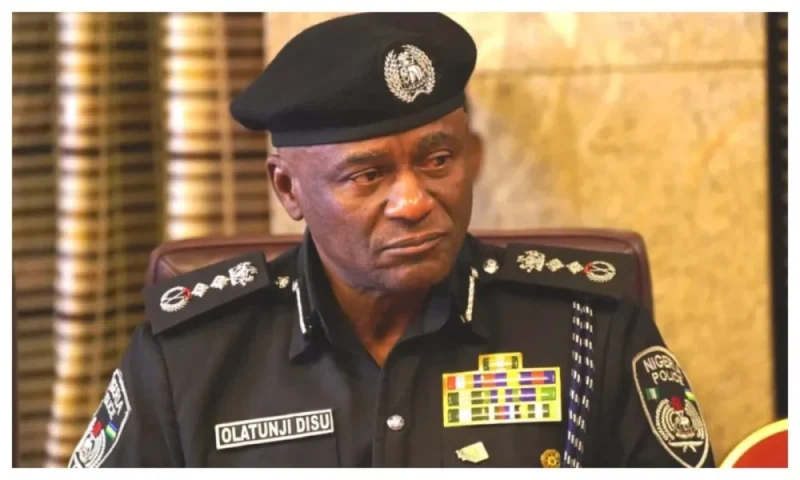
Representing the Inspector-General of Police, Tunji Disu, Assistant Inspector-General Fasuba Akinyele Olabode assured residents of adequate police deployment across the state and pledged that officers would remain neutral throughout the process, drawing a comparison with the peaceful conduct of the Ekiti State election in June.

In his remarks, the Ooni of Ife, Oba Enitan Ogunwusi, commended INEC’s independence and urged political actors to shun violence, describing Osun State as greater than the interests of any individual or party.

The event was attended by the Osun State Governor, the National Chairman of the Inter-Party Advisory Council (IPAC), INEC National Commissioners, the Resident Electoral Commissioner for Osun State, other Senior Management team from INEC, traditional rulers, religious leaders, representatives of civil society, and Security agencies.

The INEC Chairman and his entourage also made two quick stops at the INEC Osogbo LGA office, and Ede-South Local government office as part of the readiness assessment tour. They were received by the Electoral Officers and other staff of the LGA offices.

Amupitan announced that 4,427 BVAS devices, which include a 15 percent operational reserve, have been set up for the election. He stated that all result sheets from polling units would be uploaded to the INEC Result Viewing Portal (IReV) immediately after the conclusion of voting. Furthermore, he revealed that a statewide Mock Accreditation Exercise is scheduled for Saturday, 1 August 2026, across 12 Local Government Areas, with four from each senatorial district, and extended an invitation to candidates, party agents, observers, and the media to attend the exercise.

He also mentioned that the Commission has incorporated assistive devices at polling locations, such as Braille ballot guides, magnifying glasses, EC40H posters for individuals with hearing impairments, and priority voting queues for persons with disabilities, pregnant women, and the elderly.

In delivering the welcome address on behalf of the NPC Chairman, General Abdulsalami Abubakar, Cardinal John Onaiyekan urged political parties to conduct their campaigns in a peaceful manner and to adhere to the accord in both spirit and letter, emphasizing that it is more than just a ceremonial obligation.

Assistant Inspector-General Fasuba Akinyele Olabode, representing the Inspector-General of Police, assured residents of sufficient police presence throughout the state and committed to maintaining neutrality among officers during the process, drawing parallels with the peaceful execution of the Ekiti State election in June.

In his address, the Ooni of Ife, Oba Enitan Ogunwusi, praised INEC’s autonomy and called on political figures to reject violence, asserting that Osun State’s interests surpass those of any individual or political party.

The event was attended by the Osun State Governor, the National Chairman of the Inter-Party Advisory Council (IPAC), INEC National Commissioners, the Resident Electoral Commissioner for Osun State, other senior management from INEC, traditional leaders, religious figures, civil society representatives, and security agencies.

Insecurity: Nigerian Govt, South-East leaders to design new framework

The Federal Ministry of Defence says it would establish a comprehensive framework to implement the resolutions gathered from the 2026 Southeast regional security summit held in Umuahia, Abia State.

The Special Assistant to the Minister of Defence, Rear Admiral Oluwale Bankole (Rtd.), disclosed this on Thursday in Umuahia while reading out the communique of South East security summit hosted by Abia State.

Rear Admiral Bankole stated that the 2026 Southeast Regional Security Summit was convened by the Federal Ministry of Defence in collaboration with the Office of the Senior Special Assistant to the President on Community Engagement (Southeast) aimed at developing practical solutions to the security challenges in the South East.

The summit acknowledged that the security situation in the Southeast has improved significantly but noted that the region still grapples with serious threats, including kidnapping, armed robbery, politically motivated violence, attacks on security personnel and public infrastructure.

The summit also reported that proliferation of illicit arms, drug abuse, misinformation, criminal activities and the violent enforcement of unlawful sit-at-home orders were some factors that fueled insecurity in the South East.

The communiqué, which further noted that insecurity transcends state boundaries, said that criminal elements often operate across neighbouring states, making isolated responses by individual states ineffective.

It emphasized that no single government, institution or security agency can successfully address the prevailing challenges without sustained regional cooperation, coordinated action and the active participation of all stakeholders.

A major recommendation of the summit was the establishment of a shared South East database to facilitate intelligence gathering, including the use of CCTVs and coordinated law enforcement.

Also, the Minister of Information and National Orientation, Mohammed Idris, who spoke at the event, called on the Nigerian media to give less prominence to negative news.

Generation of children at risk – Amnesty International laments Sokoto school shutdown over insecurity

Amnesty International Nigeria has condemned the closure of primary and secondary schools in 20 of Sokoto State’s 23 local government areas following escalating bandit attacks, warning that the development could leave an entire generation of children without access to education.
In a statement issued on Friday, the organization said the worsening insecurity has placed education under serious threat across northern Nigeria.

“Sokoto State Government had shut down primary and secondary schools in 20 out of 23 local government areas of the state as a result of escalating attacks by bandits across the state. This means, a generation of children are at the risk of missing out entirely on education,” Amnesty International Nigeria said.

The rights group stressed that schools must remain safe spaces for learning, saying, “Education is under attack in northern Nigeria. Schools should be places of safety, and no child should have to choose between their education and their life.”

Amnesty International further noted that many children have already lost access to education due to repeated attacks and displacement, particularly in Sabon Birni Local Government Area.

“Already many children have had to abandon their education after being displaced by frequent violent attacks on their communities, especially in Sabon Birni LGA, and many teachers have been forced to flee to other states,” the statement added.

The organization called on the Nigerian authorities to take urgent action to address the crisis and protect schools from further attacks.

“The Nigerian authorities must act immediately to prevent attacks on schools, to protect children’s lives and their right to education,” Amnesty International Nigeria said.

Osun guber: Police raids targeting senior officials — State govt

Osun State Government has accused the Nigeria Police of carrying out coordinated raids on the residences of senior government officials, alleging that the operations amount to intimidation ahead of the forthcoming governorship election in the state.

In a statement issued on Wednesday by the Commissioner for Information and Public Enlightenment, Kolapo Alimi, the government claimed that the latest operation involved the residence of the Secretary to the State Government, SSG, Teslim Igbalaye, where police officers reportedly arrested individuals attending a political meeting.

According to the government, “the ward officials were meeting within the premises of the SSG’s residence while Igbalaye himself was attending the Independent National Electoral Commission (INEC) stakeholders’ forum elsewhere in Osogbo when police officers entered the property.”

Alimi alleged that the operation was led by the Deputy Commissioner of Police in charge of Operations, adding that members of the SSG’s family were also taken away during the raid.

“The SSG’s residence was bursted by a combined team of police officers led by the Deputy Commissioner for Operations, with family members of the SSG taken to unknown destinations,” the statement said.

The state government further alleged that the operation formed part of a series of similar actions targeting members of the administration, claiming that the residences of about six commissioners and other senior government officials had also been searched by security operatives.

It also claimed that the residence of the Commissioner for Energy, Festus Adeyemo, in Ikire was raided on Tuesday, alleging that officers searched the premises and damaged property during the operation.

According to the government, “several other commissioners had reported surveillance around their homes, while some residences were allegedly entered despite, it claimed, the absence of any unlawful activity.”

The statement alleged that a number of members of the Accord had been detained at the Criminal Investigation Department of the Osun State Police Command without being granted bail following recent security operations.

Describing the development as an attack on democratic institutions, the government said, “These raids on the SSG and our commissioners are an aggravated assault on the government and people of Osun State. This campaign of repression constitutes grave danger to democracy.”

The government also accused the Osun State Police Command of acting in a partisan manner, alleging that the security agency had become “a direct tool in the hands of Osun APC” and was undermining constitutional principles.

It argued that the timing of the operations, which coincided with the visit of the Chairman of the Independent National Electoral Commission for election-related engagements, could negatively affect public confidence in the electoral process.

The government appealed to the Inspector-General of Police, the Nigeria Police Service, the National Security Adviser, President Bola Ahmed Tinubu and traditional rulers to intervene, urging them to halt what it described as targeted actions against government officials and members of the Accord Party.

“Our governor has consistently tasked the populace to calm down and not to take law into their own hands. The situation is reaching a boiling point. We must save our democracy from these lawless elements within the Nigerian police,” the statement added.

The government’s reaction came after an earlier announcement by the Osun State Police Command confirming the arrest of several suspects, including Secretary to the State Government Teslim Igbalaye, during an operation linked to an investigation into alleged vote buying in Osogbo.

The police’s disclosure was contained in a statement issued by the command’s spokesperson, DSP Abiodun Ojelabi, on behalf of the Commissioner of Police, Ibrahim Gotan.

2027: ADC fumes as Abia govt slams heavy campaign charges on candidates

African Democratic Congress, ADC, has rejected the new campaign fees announced by the Abia State Structure for Signage and Advertising Agency, ABSSAA.

DAILY POST recalls that the agency placed N200m and N150m outdoor campaign fees on presidential and governorship candidates, respectively.

The Abia advertising agency also placed N150m, N50m and N20m on Senatorial, House of Representatives and House of Assembly candidates.

The Chairman of the ADC in Abia State, Kalu Kalu, who was present on Wednesday when the new campaign regime was announced, questioned the rationale behind the charges.

Kalu who was accompanied by the ADC House of Assembly candidate for Arochukwu constituency, Francess Ogbonnaya Tabitha, raised the alarm that the humongous fees contravened the provisions of the Electoral Act, as regards campaign expenditure limit.

He also alleged that the campaign fees, if allowed to stay, could affect the chances of the candidates of the opposition parties, as well as destroy fair play during the 2027 polls in Abia.

“Has it not exceeded the election expenses that are provided by the Electoral Act,” the Abia State ADC Chairman fumed.

He advised the Abia agency to reduce the campaign fees to acceptable rates, noting that the agency must avoid actions that contravened the Electoral Act.

But unveiling the new campaign fees on Wednesday in Aba, the agency said no political party was being discriminated against in the advertising policy.