OPEC+ pauses oil output hike, weighs Venezuela shock

OPECThe Organisation of Petroleum Exporting Countries and its allies, OPEC+, have agreed to pause their planned oil supply increases through the first quarter of 2026, opting to maintain current production levels amid a growing global surplus and uncertainty surrounding future output from Venezuela.

The decision was reached at a brief meeting on Sunday led by the group’s dominant producers, Saudi Arabia and Russia, according to a Bloomberg report.

Delegates at the meeting said it would be premature to adjust supply policy in response to recent political developments in Venezuela, following the reported capture of the country’s leader, Nicolás Maduro, by United States forces.

The report read, “OPEC+ stuck with plans to pause supply increases in the first quarter at a meeting on Sunday, as global markets face a surplus and the group awaits clarity on whether the shock US capture of Venezuelan leader Nicolas Maduro will impact supplies.

“Key members led by Saudi Arabia and Russia will maintain collective production levels through the end of March, the delegates said, asking not to be identified because the decision isn’t public.

“While they added it would be premature to adjust supply in response to Maduro’s capture, the outlook for Venezuelan output may become an important question in the months ahead for the group.”

Bloomberg noted that the virtual meeting lasted less than 10 minutes and did not include detailed discussions on Venezuela, as members agreed that any immediate supply response would be hasty.

Key producers confirmed that collective output levels would be maintained at least until the end of March 2026, reflecting a cautious stance as oil markets face oversupply and weakening price momentum.

Global crude markets have struggled under the weight of excess supply, with oil futures falling about 18 per cent last year, their steepest annual decline since the COVID-19 pandemic in 2020.

Forecasts for 2026 also point to a widening supply glut as production from OPEC+ and non-OPEC producers continues to outpace demand growth. Venezuela, which holds the world’s largest proven oil reserves, currently produces about 800,000 barrels per day, less than one per cent of global supply and a fraction of its historical capacity.

While the country’s long-term output recovery could add significant volumes to the market, analysts say such a turnaround would take years, even with renewed foreign investment.

US President Donald Trump recently said American oil companies could invest billions of dollars to rebuild Venezuela’s dilapidated energy infrastructure following the military operation that led to Maduro’s capture. However, sources cited by Bloomberg said key oil facilities were not damaged during the operation.

The latest pause comes after a strategic shift by OPEC+ in April 2025, when the group began rapidly restoring production cuts introduced in 2023. The move was widely seen as an attempt to reclaim market share lost to rivals such as US shale producers, despite signs that global supply was already ample.

Before Sunday’s decision, OPEC+ had agreed to bring back about two-thirds of the 3.85 million barrels per day of output previously curtailed, leaving roughly 1.2 million barrels per day yet to be restored.

However, actual supply increases have lagged behind targets due to capacity constraints in some member states and efforts by others to compensate for earlier overproduction.

The decision to freeze supply increases carries significant implications for Nigeria’s oil-dependent economy. As Africa’s largest crude producer and a member of OPEC, Nigeria’s fiscal position remains closely tied to global oil prices and export volumes.

By maintaining current output levels in a market already facing surplus, OPEC+ is likely to keep crude prices stable but subdued in the near term, limiting upside revenue potential for oil exporters.

Oil earnings account for the bulk of Nigeria’s foreign exchange inflows and a substantial share of government revenue, making OPEC+ supply decisions critical for budget planning, debt servicing, and exchange rate stability.

Nigeria has also struggled in recent years to fully meet its OPEC production quota due to oil theft, pipeline vandalism, and years of underinvestment, constraining its ability to benefit even when output caps are loosened.

Prolonged periods of weak oil prices could further strain Nigeria’s public finances, widen budget deficits, and increase pressure on the naira.

In response, the Federal Government has continued to push reforms aimed at boosting crude output, improving domestic refining capacity, and accelerating economic diversification away from oil through non-oil exports and domestic revenue mobilisation.

OPEC+, which includes the 13-member OPEC bloc and allies such as Russia, controls a significant share of global oil supply, giving its production decisions outsized influence over oil prices and the economic fortunes of oil-producing nations like Nigeria.

NNPC subsidiaries’ debt balloons 70% to N30tn

GCEO NNPC Ltd, Mr Bashir Bayo Ojulari addresses the staff of the company during his inaugural town hall meeting held at the NNPC Towers, on Thursday. CREDIT: NNPCLDespite its transition into a commercial entity, the Nigerian National Petroleum Company Limited is grappling with mounting financial pressure as unviable and underperforming subsidiaries deepen inter-company indebtedness, pushing outstanding obligations owed to the company to N30.30tn.

Latest findings from NNPC’s 2024 audited financial statements showed that debts owed by subsidiaries, joint ventures, and other related entities rose by 70.4 per cent, or N12.52tn, from N17.78tn in 2023 to N30.30tn as of December 31, 2024. The sharp increase has raised fresh concerns about the company’s liquidity management and long-term financial sustainability.

An analysis of the audited accounts, recently released by the oil firm, conducted on Sunday, revealed that several of the national oil company’s core operating subsidiaries—particularly its refineries, trading arms, and gas infrastructure units—accounted for the bulk of the ballooning intercompany receivables.

The report showed that while the national oil company operates 32 subsidiaries, only eight are not indebted to the parent company, leaving the majority burdened with varying levels of inter-company debt.

This development comes as NNPC continues to navigate concerns surrounding the write-off of substantial debts owed to the Federation and advances plans to divest non-core assets as part of its ongoing transformation into a profitable, commercially oriented national oil company.

Last week, The PUNCH exclusively reported that President Bola Tinubu approved the cancellation of a significant portion of the debts owed by NNPC to the Federation Account, wiping off about $1.42bn and N5.57tn after a reconciliation of records between both parties.

The company has also begun moves to sell stakes in some of its oil and gas assets.

Announcing the company’s 2024 financial results, Group Chief Executive Officer, Bashir Bayo Ojulari, said NNPC recorded a Profit After Tax of N5.4tn on the back of N45.1tn in revenue for the year, representing increases of 64 per cent and 88 per cent respectively over the 2023 figures.

Despite these strong headline numbers, the surge in inter-company debts to N30.30tn underscores the need for a rethink of liquidity strategy and balance-sheet management if the company is to sustain profitability and successfully execute its planned divestments and restructuring.

Topping the list of subsidiaries owing NNPC is the Port Harcourt Refining Company Limited, which posted inter-company debts of N4.22tn in 2024, up sharply from N2.00tn in 2023. This reflects the financial strain associated with years of rehabilitation spending and prolonged operational downtime.

Next was the Kaduna Refining and Petrochemical Company Limited, whose obligations rose to N2.39tn from N1.36tn a year earlier, while the Warri Refining and Petrochemical Company Limited owed N2.06tn, up from N1.17tn in 2023.

The PUNCH reports that although the Port Harcourt, Warri, and Kaduna refineries have undergone several rounds of turnaround maintenance aimed at boosting domestic refined petroleum output, they have yet to operate sustainably at commercially viable levels.

As a result, they remain largely dependent on continued financial support from the parent company, contributing significantly to rising inter-company debts reflected in NNPC’s 2024 accounts.

NNPC’s trading operations also featured prominently, with NNPC Trading SA owing the parent company N19.15tn, more than double the N8.57tn recorded in the previous year.

Smaller but notable receivables were recorded from NNPC Gas Infrastructure Company Limited (N847.98bn), Nigerian Pipelines and Storage Company Limited (N466.74bn), Maiduguri Emergency Power Plant (N179.33bn), NNPC Eighteen Operating Limited (N681m), NNPC Trading Services (UK) Limited (N1.97bn), Nidas Shipping Service Agency Limited (N1.26bn), Kaduna IPP Limited (N1.83bn), Kano IPP Limited (N1.47bn) and Hyson Nigeria Limited (Joint Venture) (N102m).

Other subsidiaries with outstanding balances include Petroleum Products Marketing Company Limited (N264.75bn), NNPC Medical Services Limited (N106.75bn), NNPC Shipping and Logistics Limited (N99.99bn), NNPC Gas Marketing Company Limited (N54.71bn), NNPC Engineering and Technical Company Limited (N50.86bn), Gwagwalada Power Limited (N326.58bn), National Petroleum Telecommunication Limited (N26.37bn), NNPC LNG Limited (N28.22bn), NNPC Properties Limited (N18.94bn), and NNPC New Energy Limited (N5.51bn).

In total, amounts owed by related parties climbed from N17.78tn in 2023 to N30.30tn in 2024, underscoring deepening liquidity pressures within the NNPC group structure.

Conversely, the report showed that NNPC’s obligations to its subsidiaries and related entities also increased, rising to N20.51tn in 2024 from N14.17tn in 2023, representing a 44.7 per cent year-on-year increase.

The bulk of this exposure relates to NNPC Trading Limited, to which the national oil company owed N16.36tn as of December 2024, up sharply from N6.70tn a year earlier.

Similarly, NNPC Exploration and Production Limited was owed N4.02tn, down from N4.85tn in 2023, while smaller balances were recorded for NNPC Retail Limited (N10.95bn), NNPC HMO (N3.47bn), Antan Producing Limited (N7.20bn) and NNPC Gas Infrastructure Company Limited (N106.97bn).

The sharp rise in inter-company balances reflects lingering financial complexities arising from NNPCL’s transition from a state corporation to a limited liability company under the Petroleum Industry Act.

The swelling debts come amid the company’s renewed push to divest non-core assets, improve liquidity and attract external capital. NNPCL has repeatedly signalled plans to sell stakes in refineries, pipelines, power plants and other infrastructure assets to strengthen its balance sheet.

Recently, the company confirmed it was reviewing its asset portfolio to unlock value, reduce debt exposure and reposition itself as a commercially viable national oil company capable of competing globally.

Energy experts say resolving inter-company receivables and payables will be critical if NNPC is to execute its asset-sale plans successfully and reassure potential investors of its financial discipline.

Commenting, petroleum economist Prof Wumi Iledare said NNPC must begin operating as a true commercial holding company by enforcing strict settlement timelines among subsidiaries and ending the practice of allowing inter-company obligations to linger indefinitely.

He warned that the N30.3tn inter-company debts recorded in NNPC’s 2024 audited accounts point to deep-rooted structural and governance weaknesses, rather than outright insolvency.

In a personal note reacting to The PUNCH report titled “NNPC’s N30.3tn Debt, A Simple Way to See It from PEWI’s Lens,” Iledare said the scale and pace of the debt build-up should raise red flags, particularly as it represents a 70 per cent increase within a single year.

“The audited report showing N30.3tn in debts between NNPC and its subsidiaries should worry us, not because NNPC is ‘bankrupt,’ but because it exposes a deep structural problem.

“Most of this debt is NNPC owing itself. That usually happens when subsidiaries keep operating without paying for crude, products, or services, while losses are quietly carried forward. But a 70 per cent jump in one year is a clear warning sign. It means inefficiencies are growing faster than reforms.

“Only eight out of 32 subsidiaries being debt-free tells us this is not bad luck; it is weak commercial discipline,” he said.

Iledare stressed that the issue could not be dismissed as operational misfortune, noting that the solution lies in enforcing strict commercial rules rather than writing off debts.

“Even internal debt affects operations. Cash that should go into maintenance, investments and growth is tied down. Profitable units end up subsidising weak ones. Over time, accountability disappears, and performance suffers. The real fix is not debt forgiveness.

“NNPC must act like a true commercial holding company: enforce settlement timelines between subsidiaries, restructure or merge non-viable entities, clearly separate legacy pre-PIA debts from new obligations, and hold subsidiary CEOs accountable for cash flow and profitability,” he added.

He concluded that the rising inter-company debt burden represents a defining moment for the restructured national oil company.

“Bottom line: this debt is a governance test, not just an accounting number. If tolerated, it will recreate the old NNPC problems under a new name. If confronted honestly, it can become the turning point toward a truly profitable, PIA-compliant NNPC.”

Also commenting, the Chief Executive Officer of Petroleumprice.ng, Jeremiah Olatide, said the 70 per cent increase from 2023 reflects “financial recklessness” within the national oil company. “The N30.3tn debt owed by NNPCL and its subsidiaries is quite alarming,” Olatide told The PUNCH.

“A 70 per cent increase from 2023 represents financial recklessness. This debt burden could have a largely negative impact on the company’s operations, given that 25 out of 33 subsidiaries are in debt.

“If not for the intervention of the Federal Government to cancel $1.42bn in legacy debts to ease financial pressure—which is commendable—NNPCL management would be under even greater strain. However, the cycle of debt must be urgently addressed, as it will be detrimental to future operations,” he said.

Olatide added that a strong debt-management framework is essential for NNPCL’s sustainability. “Going forward, proper debt management and restructuring, combined with regular audits and transparent reporting, will enhance accountability and help mitigate the recycling of debts within the group,” he said.

Meanwhile, NNPC’s borrowings more than doubled in 2024, rising from N55.7bn in 2023 to N122.8bn, according to the company’s audited financial statements. The increase, driven largely by new loan arrangements and accrued interest, reflects efforts to fund strategic projects such as the Gwagwalada Independent Power Project.

The report showed that the company added N44.36bn in new borrowings during the year, alongside N1.69bn in interest and an exchange adjustment of N4.02bn, bringing total borrowings to N122.76bn as of December 31, 2024.

Of this amount, N70.56bn was classified as current borrowings, while N52.20bn was non-current, highlighting repayment obligations extending beyond 12 months.

According to the report, loan facilities were extended by NNPC E&P Limited and The Wheel Insurance Company to fund the Gwagwalada IPP. NNPC E&P disbursed N92bn in 2023, repayable over four years with a one-year moratorium on principal repayment, while The Wheel Insurance provided N46bn in 2024, repayable over one year with a six-month moratorium. Interest on both facilities accrues at 30-day Term SOFR plus a four per cent margin, with an additional liquidity premium applied to the NNPC E&P loan.

The report also indicated that the consolidated group reported no borrowings in both 2023 and 2024, suggesting that these liabilities are company-level obligations and do not reflect debt at the subsidiary or joint-venture level.

The surge in loans comes as NNPCL continues to manage complex inter-company debt dynamics, with subsidiaries owing the parent company N30.3tn as of 2024, raising further questions about internal cash management and the financial sustainability of certain units within the group.

Dangote pumps 43 million litres, denies petrol shutdown

DANGOTE REFINERYOfficials of the the Dangote Petroleum Refinery have said that the plant pumped 43.3 million litres of Premium Motor Spirit (petrol) into the Nigerian market on Saturday.

They exclusively disclosed this to our correspondent, debunking claims that the refinery had shut down its petrol processing unit for maintenance.

The officials, who preferred not to be named due to a lack of authorisation to speak on the matter, explained that some marketers were only looking for excuses to increase petrol gantry prices, which the refinery crashed from N828 to N699 per litre.

Over the weekend, there were reports that some depots raised petrol prices above N800 per litre, on claims that the Dangote refinery had shut its petrol u

But an official of the $20bn plant queried the plan by depot operators to increase petrol prices.

Asked if the refinery had been undergoing a maintenance downtime that could trigger a price hike, the source replied, “False! Have we stopped loading or turned back a single truck that has come to load? Yesterday (Saturday) alone, we loaded 43.30 million litres of PMS.”

The source said this was “about 50 per cent more than the actual daily (petrol) consumption of Nigeria”.

Another official told The PUNCH that the company has enough fuel in its tanks to serve the country for the next 20 days, saying this was to allay any fear of supply disruptions or fuel scarcity. “We have a stock which is more than 20 days of Nigerian consumption,” the source stated.

The official expressed concerns that some traders were hiking prices to create tension in the sector, urging Nigerians to patronise filling stations selling Dangote products. “The public should go only to filling stations where our products are sold. They will get whatever they require there,” he stated.

The PUNCH reports that private depots across Lagos and other key fuel trading hubs have increased the ex-depot price of PMS to as high as N800 per litre over the claim that Dangote had shut down its petrol unit.

According to petroleumprice.ng on Saturday, the average cost of petrol at private depots increased within 48 hours, creating concerns over a possible spike in retail pump prices. While the Dangote refinery said it sells petrol at N699 per litre, other depot prices jumped above N800.

Eterna and Integrated depots raised petrol prices to N800 per litre on Friday, compared with N726 per litre at Shellplux and AIPEC earlier in the week, indicating a jump of N74 per litre within two days. Similarly, Aiteo and Lister depots sold petrol at N780 per litre, up from the N750–N760 band recorded on Wednesday.

The impact was more pronounced in Warri, one of the country’s key petroleum logistics hubs. While Matrix Energy and other major depots sold petrol at N800 per litre on Wednesday, prices climbed to as high as N805 per litre by Friday, according to the report.

Marketers were said to have linked the price surge to a “shutdown of the petrol unit at the Dangote refinery”, which is currently a major domestic supplier of PMS, helping to moderate prices following the removal of fuel subsidies.

In December, the Dangote refinery reduced its petrol gantry price from N828 to N699 per litre. The refinery shocked depot owners and marketers when it slashed the gantry price of petrol by N129, causing them to incur losses running into billions of naira.

During a briefing, the President of the Dangote Group, Aliko Dangote, vowed to enforce the new price regime, with MRS selling petrol at N739 nationwide.

The PUNCH reports that as more MRS filling stations in Lagos and Ogun states joined in dispensing petrol produced by the Dangote Petroleum Refinery at N739 per litre, motorists started boycotting retail outlets that sold the product at higher prices.

This compelled other stations to lower their petrol prices, selling at an amount that is far below their cost of purchase.

Meanwhile, as marketers said they were losing billions of naira, Dangote replied that he was also losing money. Findings by The PUNCH showed that petrol importers might lose as much as N102.48bn monthly following the Dangote refinery’s reduction in gantry price.

At the same time, the refinery is projected to lose about N91bn in a month as a direct consequence of the price cut. But Aliko Dangote said he would prefer losing money to allowing petrol imports to thrive.

Analysts noted that the price uptick is a deliberate move by importers to make up for the losses suffered when Dangote slashed petrol prices. However, this may not be achieved, as the refinery ruled out any imminent supply disruptions.

FirstBank to host economic outlook event for 2026

FirstBank

In a statement, the bank announced that the Nigeria Economic Outlook 2026 will take place on Tuesday under the theme “The Great Calibration: Mastering Resilience in an Era of Asynchronous Growth.”

The PUNCH reports that the event is an annual customer-facing session designed to provide insights into prevailing economic realities and help customers navigate the economy at the start of the year.

Commenting ahead of the event, the Acting Group Head, Marketing and Corporate Communications, FirstBank, Olayinka Ijabiyi, said the initiative would help customers make informed decisions based on expert insights.

The session will feature a lineup of economic analysts and industry leaders, with the keynote address to be delivered by the Group Chief Economist and Managing Director, Research and Trade Intelligence, Afreximbank, Yemi Kale.

The bank reaffirmed its commitment to supporting Nigerians in achieving their financial aspirations and driving growth across the economy.

Afrinvest renames Optimus, targets broader digital investors

AfrinvestInvestment management firm Afrinvest has announced the rebranding of its digital investment platform, Optimus by Afrinvest, to PlutusNeo by Afrinvest.

In a statement on Friday, the rebranding was described as the next phase of the firm’s digital strategy, focused on expanding access to wealth creation.

The digital platform, first launched in 2022, was created to give individuals secure and easy access to Afrinvest-managed investment products through a modern digital interface. Since its launch, it has become a trusted channel for Nigerians seeking professionally managed investment solutions, supported by Afrinvest’s over 30 years of experience across Nigeria’s capital markets.

Speaking on the rebrand, the Managing Director of PlutusNeo by Afrinvest, Ayodeji Ebo, said the change positions the platform for long-term growth.

“Optimus represented an important phase in our digital investment journey. PlutusNeo builds on that progress, evolving the platform into one designed to support long-term wealth creation for a broader audience. It also reflects our vision to develop a more connected digital ecosystem over time,” he said.

According to the Group Managing Director of Afrinvest, Ike Chioke, the platform reflects the firm’s long-standing commitment to inclusive wealth creation.

“For over 30 years, Afrinvest has operated through multiple market cycles, and that experience shapes how we approach investing,” he said. “We understand the importance of discipline and long-term thinking in wealth creation. PlutusNeo extends this approach to a wider audience, allowing more people to participate meaningfully in building wealth, regardless of income level or status.”

NAMA assures safe flights amid harmattan haze

Nigerian Airspace Management Agency – NAMA

The Nigerian Airspace Management Agency has reassured air travellers that Nigeria’s airspace and airport landing facilities remain safe and fully operational during the current haze associated with the harmattan season.

In a Friday statement signed by the spokesperson of the agency, Dr Abdullahi Musa, the agency addressed public concerns over flight operations amid reduced visibility during the Harmattan.

Usually, harmattan rents the atmosphere in Nigeria from December till sometime in February. NAMA dismissed insinuations that navigational facilities at Nigerian airports are poorly maintained or unfit for operations during the haze period, describing such claims as misleading and not supported by technical facts.

According to the agency, all navigational aids at Federal Government airports are routinely maintained, flight-checked, and calibrated in strict compliance with the International Civil Aviation Organization Standards and Recommended Practices, as well as the Nigerian Civil Aviation Regulations.

Speaking on the matter, the NAMA spokesperson added that the maintenance and calibration of critical air navigation infrastructure are mandatory safety requirements.

He said, “These processes are not optional. They are compulsory safety procedures carried out using NAMA’s dedicated flight inspection and calibration aircraft, operated by highly trained technical and flight inspection personnel.”

He explained that key systems such as Instrument Landing Systems, VHF Omnidirectional Range, Distance Measuring Equipment, and other Communication, Navigation, Surveillance/Air Traffic Management facilities undergo periodic ground and airborne verification to ensure accuracy, signal integrity, and operational reliability.

He added that all calibration and maintenance activities are conducted under continuous regulatory oversight by the Nigerian Civil Aviation Authority. “The NCAA audits our compliance, validates calibration cycles, and enforces corrective actions where required, ensuring that safety standards are consistently upheld,” he said.

He cited AIP Supplement S81/2025, dated 9 October 2025, which documented the calibration and serviceability status of all NAVAIDs in Nigeria.

“At the time of that publication, only the ILS facilities at Maiduguri, Ilorin, Owerri, Zaria, Minna, and Calabar were approaching their due calibration dates, while all other systems nationwide were within valid inspection periods,” Musa stated.

He revealed that NAMA conducted a nationwide round of flight calibration exercises in December 2025, restoring serviceability timelines at several airports, with another round scheduled early in the new year for Katsina, Jos, Ilorin, Yola, and Owerri airports.

Addressing public debate over the absence of CAT III Instrument Landing Systems at all airports, Musa clarified that such systems are not a universal requirement for safe operations during haze conditions.

“The deployment of ILS CAT I, CAT II, or CAT III is based on operational needs, traffic volume, aircraft capability, and long-term meteorological data, not on public perception.

“NAMA has therefore designed and published instrument approach procedures aligned with ILS CAT II minima, which adequately support safe aircraft operations during the most challenging seasonal conditions typically experienced in Nigeria,” Musa explained.

He emphasised that the absence of widespread CAT III systems does not indicate compromised safety, stressing that aviation safety depends on the appropriateness and reliability of systems in use.

Musa further noted that delays, diversions, or cancellations during the haze period are largely influenced by weather conditions, airline operational decisions, and aircraft capability rather than failures of navigational aids.

He added that NAMA works closely with the Nigerian Meteorological Agency to ensure the continuous dissemination of accurate weather information and provide real-time air traffic management support throughout the haze period.

“While haze conditions present operational challenges, they do not imply infrastructural failure or reduced safety standards. Our priority remains the safety, security, and efficiency of air travel in Nigeria,” he said.

Insurance firms project N10.59bn combined Q1 profit

Nigerian-Insurance-firms-e1721202317384-750×375Nigerian insurers are projected to record a combined Profit After Tax of N10.59bn for the first quarter of 2026, according to company filings with the Nigerian Exchange Group.

The forecast reflects strong contributions from major players, including AIICO Insurance Plc, Regency Alliance Insurance Plc, AXA Mansard Insurance Plc, and International Energy Insurance Plc.

AIICO Insurance Plc leads the sector with a projected PAT of N5.06bn, driven by an insurance service result of N3.26bn and net investment income of N20.85bn. Its cash flow outlook shows a net increase in cash and cash equivalents of N4.87bn, bringing closing cash balances to N24.08bn.

Regency Alliance Insurance Plc is expected to deliver a profit after tax of N1.06bn, supported by insurance revenue of N3.75bn and investment income of N420.27m. The company forecasts a net cash increase of N238.63m, ending the quarter with N1.52bn in cash and bank balances.

AXA Mansard Insurance Plc projects a PAT of N3.60bn, with insurance revenue of N47.18bn and net investment and other income of N5.42bn. Despite investment outflows of N7.02bn, the company maintains a strong cash position of N9.20bn at the quarter-end.

International Energy Insurance Plc forecasts a profit after tax of N868.48m, based on gross written premiums of N3.76bn and an insurance service result of N2.71bn.

FirstBank completes N500bn capital raise

Femi OtedolaAs someone who has spent over three decades investing, building businesses, and navigating Nigeria’s economic cycles, I rarely comment publicly on policy. But there are moments when leadership must be acknowledged.

President Bola Ahmed Tinubu has shown remarkable courage and clarity in steering our country through difficult but necessary reforms. His bold sense of direction, guided by a deep understanding of our economy, has created the foundation for policies that are now being recognised across the world. I have seen many administrations, but his conviction at this critical time deserves commendation.

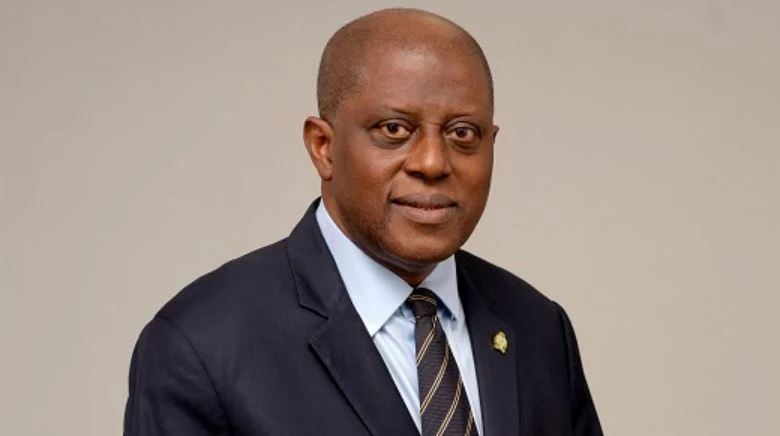
In that same spirit of boldness, the Central Bank Governor, Mr. Yemi Cardoso, has been nothing short of exceptional. The slowdown in the rate of inflation is proof of his disciplined return to orthodox monetary policy. This is not theory; these are real results, visible in the gradual easing of pressure on households and businesses.I appreciate this because I know, from experience, how damaging policy inconsistency can be.

His reforms in the foreign exchange market have restored confidence that had long been missing. For the first time in years, the naira is strengthening on the back of market forces not artificial fixes. To me, this is the most powerful signal that we are finally doing things the right way. The fact that our external reserves have climbed to a seven-year high above $46 billion is further evidence of his steady hand.

I am also impressed by the bold decision to recapitalize the banking sector. Some people criticised it early on, unnecessarily in my view, but today it is clear it was the right move. Following the massive profits banks recorded in 2024, 2025 has rightly become a year of prudence and consolidation.This is the only way banks can support real sector lending and drive genuine economic growth next year.

From where I stand, and with the benefit of many years in Nigeria’s business landscape, I believe it is time to raise the minimum capital requirement for international banking licences from ₦500 billion to at least ₦1 trillion. A modern economy aiming for the $1 trillion mark cannot rely on weakly capitalised banks. Stronger banks mean better governance, broader ownership, and institutions that are not run like personal estates, a problem we have lived with for far too long.

FirstBank, the commercial banking arm of First HoldCo Plc, has met the ₦500 billion minimum capital base required by the Central Bank of Nigeria (CBN) for an international banking licence. The shareholders of FirstHoldco are committed to injecting additional capital into its existing subsidiaries and new business adjacencies.

I say this without hesitation: Yemi Cardoso is the best Central Bank Governor Nigeria has ever produced. His calmness, discipline, and unwavering focus on doing what is right, not what is easy, reminds me of the kind of leadership any serious economy needs.

I encourage him to continue on this path. Nigeria is turning a corner, and those of us who believe in this country will continue to support the bold monetary reforms that are laying a stronger foundation for our future.

Fidelity Bank appoints Onwughalu as new Chairman 

Tier one lender, Fidelity Bank Plc, has announced the completion of the tenure of Mr. Mustafa Chike-Obi as Chairman of its Board of Directors effective December 31, 2025, and the appointment of Mrs. Amaka Onwughalu as the new Chairman of the Board, effective January 1, 2026.
The board transitions are in alignment with the Bank’s policy and have been communicated to the Central Bank of Nigeria, the Nigerian Exchange Group, and other stakeholders.
Under Mr. Chike-Obi’s leadership, Fidelity Bank repaid its Eurobond, completed the first tranche of its public offer and rights issue that were oversubscribed by 237 percent and 137.73 percent respectively, expanded internationally to the United Kingdom, and received improved ratings from various agencies amongst a long list of achievements. His tenure also saw the Bank strengthen its capital position, record steady growth in customer deposits and total assets, deepen its digital banking capabilities, and enhance its corporate and investment banking proposition. The bank equally made notable progress in governance, risk management, and operational efficiency, all of which contributed to strengthened market confidence and the Bank’s sustained upward performance trajectory.
Reflecting on his tenure, Mr. Mustafa Chike-Obi said, “It has been a privilege to serve as Chairman of Fidelity Bank. The dedication of our Board, management, and staff has enabled us to reach significant milestones. I am confident that the Bank will continue to thrive and deliver value to all stakeholders.”
Mrs. Amaka Onwughalu’s appointment marks a new chapter for Fidelity Bank. She joined the Board in December 2020 and has chaired key committees. With over 30 years of banking experience, including executive roles at Mainstreet Bank Limited and Skye Bank Plc. She holds degrees in Economics, Corporate Governance, and Business Administration, and has attended executive programmes at global institutions. Mrs. Onwughalu is a Fellow of several professional bodies and has received awards for accountability and financial management.
“I am honoured to lead the Board of Fidelity Bank at this exciting time. Our recent achievements have set a strong foundation for continued growth. I look forward to working with my colleagues to drive our strategy and deliver sustainable value,” commented Mrs. Onwughalu.
Ranked among the best banks in Nigeria, Fidelity Bank Plc is a full-fledged Commercial Deposit Money Bank serving over 9.1 million customers through digital banking channels, its 255 business offices in Nigeria and United Kingdom subsidiary, FidBank UK Limited.
The Bank is a recipient of multiple local and international Awards, including the 2024 Excellence in Digital Transformation & MSME Banking Award by BusinessDay Banks and Financial Institutions (BAFI) Awards; the 2024 Most Innovative Mobile Banking Application award for its Fidelity Mobile App by Global Business Outlook, and the 2024 Most Innovative Investment Banking Service Provider award by Global Brands Magazine. Additionally, the Bank was recognized as the Best Bank for SMEs in Nigeria by the Euromoney Awards for Excellence and as the Export Financing Bank of the Year by the BusinessDay Banks and Financial Institutions (BAFI) Awards.
Bank recapitalisation to drive bullish capital market, says CBN

CBN-VUILDING-700×375The Central Bank of Nigeria has projected that the Nigerian capital market will remain bullish in 2026, driven largely by the ongoing bank recapitalisation exercise, rising investor confidence and supportive policy measures.

This outlook is contained in the CBN’s “Macroeconomic Outlook for Nigeria, 2026: Consolidating Macroeconomic Stability Amid Global Uncertainty”, recently released by the apex bank.

According to the report, the recapitalisation of banks is expected to strengthen balance sheets, enhance financial stability and deepen market activity, thereby supporting sustained growth in the capital market.

“The capital market is expected to remain bullish in 2026, supported by the bank recapitalisation exercise, rising investor confidence and other policy measures aimed at fostering growth,” the CBN stated.

The apex bank projected that Nigeria’s economy would continue its expansion trajectory in 2026, with growth estimated at 4.49 per cent, up from 3.89 per cent in 2025, anchored on broad-based structural reforms and a gradually easing monetary policy stance.

The CBN also forecast a moderation in headline inflation to an average of 12.94 per cent in 2026, driven by declining food prices and lower premium motor spirit costs, following improvements in domestic refining capacity and supply conditions.

In the financial sector, the bank noted that while monetary aggregates slowed in 2025 due to tight monetary conditions, a calibrated policy easing and prudential measures would support credit discipline and financial stability in 2026. The recapitalisation programme is also expected to enhance banks’ capacity to support private-sector-led growth.

On the external front, the CBN projected sustained improvement, with external reserves expected to rise to $51.04bn in 2026, supported by stronger exports, steady remittance inflows and increased oil and gas output. The current account surplus is forecast to grow to $18.81bn.

However, the apex bank cautioned that the outlook remains subject to risks, including potential inflationary pressures, global financial market volatility, geopolitical tensions and possible disruptions to crude oil production.

Despite these risks, the CBN reaffirmed its commitment to balancing price stability with output growth, noting that appropriate policy tools would be deployed to attract foreign investment, sustain exchange rate stability and strengthen confidence in Nigeria’s financial markets.