FX reserves to hit $51bn by 2026 — CBN

Governor of the Central Bank of Nigeria, Olayemi CardosoThe Central Bank of Nigeria predicts external reserves will climb to $51.04bn in 2026, up from $45bn in 2025.

This projection was contained in the Macroeconomic Outlook for Nigeria, 2026, titled ‘Consolidating Macroeconomic Stability Amid Global Uncertainty’, published by the CBN on Tuesday.

The PUNCH reported that Nigeria’s external reserves as of Monday, 29 December 2025, stood at $45.45bn, following days of steady accretion.

“The external reserves are projected at $51.04bn in 2026, compared with $45.01bn in 2025. The external reserves are expected to be boosted by reduced pressure in the FX market based on the anticipated rise in oil earnings, sovereign bond issuance, and diaspora remittance inflows.

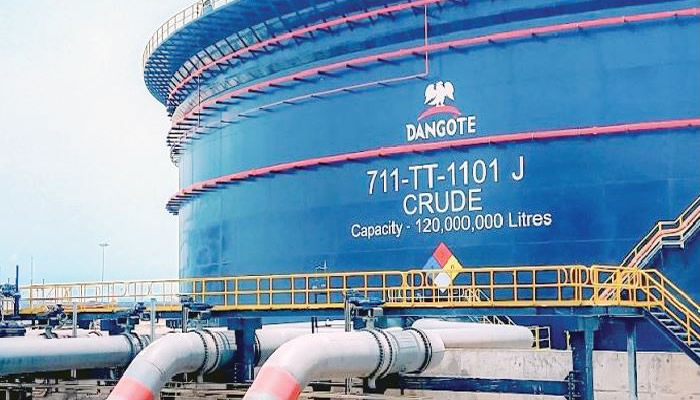
“Additionally, Dangote refinery’s expansion of its nameplate capacity to 700,000 bpd from 650,000 bpd in 2025 and eventually to 1.4 million bpd in the medium term would further support the growth in external reserves,” the report read.

In the FX market, the apex bank noted that reforms are expected to further enhance efficiency and transparency, narrow the premium between the Nigerian Foreign Exchange Market and Bureau de Change rates, and sustain exchange rate stability. In addition, improved domestic oil refining capacity is expected to reduce foreign exchange demand for fuel imports.

On inflation, the CBN anticipates that headline inflation will decelerate further to 12.94 per cent in 2026, driven by a combination of factors, and is expected to come down to 10.75 per cent in 2027.

According to data from the National Bureau of Statistics, inflation has been falling for consecutive months, supported by the base-year effect.

As of November, headline inflation had dropped to 14.45 per cent, relative to the October 2025 headline inflation rate of 16.05 per cent. However, the NBS said the Consumer Price Index rose to 130.5 points in November 2025 from 128.9 points in October, reflecting a 1.6-point increase month-on-month.

The CBN stated, “Inflation is expected to continue its downward trend in 2026. The inflation outlook is predicated on continued stability in the foreign exchange and energy markets, the lagged effect of previous rate hikes, and improved policy coordination. Headline inflation is projected to further decelerate to 12.94 per cent in 2026 from 21.26 per cent estimated for 2025. The anticipated moderation would be driven by declining food and premium motor spirit prices. The expected deceleration in PMS prices would be driven by increasing competition within the midstream segment of the oil industry.

“Furthermore, the anticipated faster decline in food prices is expected to drive the slower pace of inflation. This would be on account of the expected increase in food supply following the launch of various agriculture sector-based policies, improved security in major food-producing regions, and favourable weather conditions.”

The CBN also added that in the transition phase, monetary policy will be flexible to balance price stability and growth objectives. Hence, the Monetary Policy Rate, the Cash Reserve Ratio and other instruments would be adjusted appropriately to manage the growth in money supply and attain a non-accelerating inflation growth path.

On projected monetary conditions in 2026, the CBN said they are expected to be relatively loose in view of the macroeconomic stability observed in 2025, as inflation and exchange rate risks continue to subside.

“In line with its price stability mandate, the Bank will deploy appropriate tools to anchor expectations, foster financial stability, and promote confidence in the economy. The trajectory of monetary aggregates in 2026 is expected to be influenced by external conditions and fiscal operations. Changes in the naira value of foreign currency deposits, arising from exchange rate movements, will continue to influence monetary aggregates. Nevertheless, the Bank’s policy stance, complemented by measures to stabilise the foreign exchange market, is expected to moderate the growth rate of monetary aggregates in 2026,” the bank said.

On the fiscal front, the apex bank noted that the outlook for 2026 is broadly positive, buoyed by sustained improvements in domestic crude oil production and the phased implementation of the Nigeria Tax Act, 2025, which is expected to strengthen non-oil revenue mobilisation.

“However, downside risks persist. A sustained decline in global oil prices below the budget benchmark and an unexpected reduction in oil production could undermine projected oil revenues. Elevated debt service obligations, extra-budgetary spending, and a potential rise in statutory transfers due to pre-election spending could further constrain the fiscal space. The fiscal outlook for 2026 is vulnerable to various risk factors. Notably, a budget risk could crystallise if crude oil prices and domestic production fall below benchmarks, thereby dampening the optimism about oil revenue contribution (57.01 per cent) to the total revenue outcome in 2026.

“Although crude oil production is expected to ramp up in the near term, the domestic oil sector remains sensitive to global shocks. The expectation of a strong non-oil revenue performance in 2026 is hinged on the successful implementation of the Nigeria Tax Act, 2025, and the sustenance of the ongoing tax effort. However, low tax awareness and compliance levels, as well as gaps in tax administration systems, remain significant risks to tax revenue projections,” the bank noted.

In the financial sector, the CBN expressed concerns about rising non-performing loans and their impact on banks, saying, “Rising NPLs pose a direct threat to banks’ profitability, credit availability, and overall risk-bearing capacity. This underscores the need to sustain measures to ensure that worsening NPLs do not weaken banks’ balance sheets, impair asset quality, and trigger systemic contagion. Although recent gains in capital adequacy and liquidity ratios provide a buffer, these indicators remain susceptible to unforeseen macroeconomic shocks.

“An increase in credit losses or foreign exchange illiquidity could erode capital reserves, breach prudential thresholds, and strain liquidity coverage. These conditions could disrupt financial intermediation, diminish market confidence, and amplify vulnerabilities across the banking sector.”

GTCO to raise N10bn through private placement

GTCOGuaranty Trust Holding Company Plc has secured approvals from the Central Bank of Nigeria and the Securities and Exchange Commission to undertake a private placement of its ordinary shares worth N10bn, the company announced on Tuesday.

The private placement, detailed in a notice filed with the Nigerian Exchange Limited, will involve the allotment of 125 million ordinary shares at N80 per share, with each share having a nominal value of 50 kobo. It is scheduled to close on December 31, 2025, subject to the fulfilment of all regulatory conditions, GTCO said.

“The board has authorised the company to embark on a private placement to raise N10bn by the allotment of 125 million ordinary shares of 50 kobo each,” the company said in a statement signed by Erhi Obebeduo, Group General Counsel.

GTCO explained that the private placement is being undertaken pursuant to Section 7.1 of the Guidelines for Licensing and Regulation of Financial Holding Companies in Nigeria.

It follows a shareholders’ resolution passed at the 2024 Annual General Meeting, which authorised the Board to establish a capital raising programme of up to $750m or its equivalent through various instruments and methods, including private placements.

The move comes after GTCO’s banking subsidiary, Guaranty Trust Bank Limited, surpassed the CBN’s new minimum capital requirement for commercial banks with international authorisation, increasing its capital to N504.04bn.

“The professional parties involved will use their respective reasonable endeavours to procure a placee for the private placement shares. The Private Placement is not being underwritten,” the statement added.

GTCO’s Board said the exercise is aimed at strengthening the holding company’s capital base and supporting its ongoing strategic objectives.

FCMB-TLG Private Debt Fund gets approval for Series II issuance

FCMB Asset Management LimitedFCMB Asset Management Limited has received regulatory approval for the FCMB-TLG Private Debt Fund Series II issuance of up to N20bn.

In a statement on Monday, it was indicated that the approval marked a significant milestone in the Fund’s growth strategy. Upon the receipt of regulatory approval, a formal signing ceremony was held in Lagos to execute the relevant transaction documents, signalling the imminent launch of the Fund’s Series II Issuance.

The PUNCH reports that the FCMB-TLG Private Debt Fund, launched in May 2024, is a 10-year, closed-ended fund registered with the Securities and Exchange Commission. It is managed by FCMB Asset Management with technical support from TLG Capital. The fund achieved an N10bn first series as part of an N100bn programme. It is Nigeria’s first naira-denominated private debt fund.

Speaking at the signing ceremony, Chief Executive Officer of FCMB Asset Management, James Ilori, stated, “The approval of the Fund’s Series II Issuance is a validation of the confidence the Securities and Exchange Commission has in our ability to successfully manage the Fund, deepen the private debt market, create value for our investors, and support investee companies. Our aim is to continue to support those sectors of the Nigerian economy that promote economic growth and development.”

The CEO further thanked the professional parties and the regulator for their various roles in ensuring the successful registration of the Fund’s Series II Issuance and assured them of the commitment of FCMBAM, together with its technical partner, TLG Capital Investments Limited, to ensure the success of the Series II Offer, which is expected to open in January 2026, subject to the relevant regulatory clearance.

Isha Doshi of TLG Capital Investments Limited also said, “This Series II approval reflects the strengthening partnership between TLG Capital and FCMB Asset Management with a shared focus on building a robust local private credit ecosystem. Through this collaboration, we are helping to deepen the asset class, catalyse domestic capital, and support Nigerian businesses with long-term, well-structured financing that underpins sustainable growth.”

The statement added that, similar to the Fund’s Series I and building on its success, Series II has been designed to raise capital from qualified institutional investors as well as High Net Worth Individuals and deploy the same as corporate debt to mid-sized corporate organisations in sectors of the Nigerian economy that are aligned to the United Nations Sustainable Development Goals. Specifically, Series II will focus on supporting businesses in agriculture, clean energy, education, healthcare, IT/technology, and transport/logistics.

“In line with global best practices, Series II will integrate environmental, social, and governance principles into its investment strategy. This ensures that capital deployment not only delivers competitive risk-adjusted returns but also promotes responsible investing and long-term impact,” concluded the statement.

The FCMB Asset Management Limited, the asset management arm of FCMB Group Plc, has been in operation since 2000, providing portfolio management and investment advisory services to a broad base of individual and institutional clients. TLG Capital Investments Limited is a private, employee‑owned, and London‑based investment firm specialising in Sub‑Saharan Africa since 2009. The TLG Group manages assets in excess of $180m across private credit and growth strategies and recently announced the launch of Africa Growth Impact Fund II with a $75m first close anchored by IFC, Swedfund, Norfund and Bpifrance.

NGX gains N542bn as Ecobank leads rally

NGXThe Nigerian Exchange recorded a positive start to trading on Monday, gaining N542bn in market value as investors returned from the holiday break. The market capitalisation of the exchange now stands at N98.4tn, reflecting renewed investor confidence ahead of the year-end.

A total of 1,468,187,076 shares were traded in 47,873 deals, corresponding to a turnover of N35.53bn. Compared with the last trading session on Wednesday, December 24, trading volume declined by 16 per cent, while turnover rose by 22 per cent and the number of deals improved by 147 per cent.

In total, 128 equities participated in trading, with 41 gainers and 37 losers. Ecobank Transnational Inc. led the gainers with a 10 per cent share price increase, closing at N41.80 per share. Austin Laz & Company also rose by 10 per cent, while Eunisell Interlinked gained 9.95 per cent and Honeywell Flour Mill rose by 9.86 per cent. Guinness Nigeria added 9.82 per cent, and Morison Industries rose by 9.81 per cent.

On the losing side, International Energy Insurance recorded the highest decline, falling 10 per cent to close at N2.34 per share. Meyer Plc and E-Tranzact International both shed 9.92 per cent, while Livestock Feeds declined 9.60 per cent. Cileasing and FirstHoldCo also recorded losses of 8.06 per cent and 6.98 per cent, respectively.

In terms of trading volume, Access Bank led with 594 million shares exchanged for a value of N12.36bn. Champion Breweries followed with 122 million shares worth N1.84bn, while FCMB Group traded 116 million shares valued at N1.26bn. Japaul Gold and Ventures recorded 66 million shares traded at N155.25m, and FirstHoldCo traded 51 million shares worth N2.56bn.

Zenith Bank, Champion Breweries, FirstHoldCo, and WAPCO were also among the top value stocks, reflecting strong investor activity in major market players.

Market analysts said the performance reflected a combination of year-end portfolio adjustments by institutional investors and renewed interest in high-performing stocks such as Ecobank, Guinness, and Honeywell Flour Mill.

The market’s gain of N542bn in a single session signals optimism as the year draws to a close, with investors keenly watching for opportunities in blue-chip stocks and high-volume counters.

NNPC writes off N4.01tn subsidy, other FG debts

NNPC LimitedThe Nigerian National Petroleum Company Limited has cancelled subsidy arrears and other debts owed by the Federal Government totalling N4.01tn, following a reconciliation of accounts between both parties, an analysis of official FAAC documents has shown.

The debt write-off formed part of an agreement approving the cancellation of a substantial portion of outstanding liabilities by the government and was detailed in documents submitted by the NNPCL to the Federal Allocation Accounts Committee at its October and November 2025 meetings. Our correspondent obtained the document on Monday.

Recall that The PUNCH exclusively reported on Monday that President Bola Tinubu has approved the cancellation of a substantial portion of the debts owed by the NNPCL to the Federation Account, wiping off about $1.42bn and N5.57tn after a reconciliation of records between both parties.

The report, titled “Report of October 2025 Revenue Collection Presented at the Federation Account Allocation Committee Meeting Held on 18th November 2025.”

In the section headed “Recovery from NNPC Ltd Outstanding Obligations,” the commission said the debts earlier reported at the October 2025 FAAC meeting stood at “$1,480,610,652.58 and N6,332,884,316,237.13 for PSC, DSDP, RA & MCA Liftings and JV & PSC Royalty Receivables respectively.”

It disclosed that the Presidency had now approved that most of those balances be removed from the Federation’s books.

A further analysis of the NNPCL document revealed that the amount forgiven by the national oil company represents the difference between NNPCL’s payables to the Federation as at the October 2025 FAAC meeting and the revised figure presented at the November 2025 meeting.

FAAC records showed that NNPCL’s payables to the Federation stood at N4.72tn as at October 2025. However, by the November 2025 FAAC meeting, the outstanding amount had dropped sharply to N706.32bn, implying a cancellation of N4.01tn.

“The NNPC Ltd Payables to Federation amounted to N4,716,488,337,458.65 as at October 2025 FAAC. The NNPC LTD payables to the Federation are N706,317,894,682.09 as at November 2025 FAAC,” the report noted.

The documents, however, indicated that the forgiven sum was lower than earlier subsidy arrears figures, following the wiping off of about $1.42bn and N5.57tn after an extensive reconciliation of records between the Federal Government and the national oil company.

The discrepancy between figures earlier cited by the Nigerian Upstream Petroleum Regulatory Commission and those presented by the Nigerian National Petroleum Company Limited was also clarified in the documents submitted to FAAC.

According to the records, the total equivalent outstanding liabilities in naira stood at N4.72tn, while the grand total outstanding amounted to N6.75tn.

The documents explained that the variation arose largely from how certain legacy obligations were treated. Specifically, outstanding liabilities for the period up to May 2023 relating to royalty, tax, and 40 per cent Production Sharing Contract profit due to the Federation had already been captured under the Presidential Approved Stakeholder Alignment Committee framework.

It further noted that the sum of N2.03tn, covering royalty payments of N1.19tn and tax obligations of N843.28bn for the period from June to December 2023, was excluded from NNPCL’s liabilities and is to be accounted for by the Office of the Accountant-General of the Federation.

“The outstandings for the period up to May 2023 for Royalty, Tax, & 40% PSC Profit due to Federation were included in the Presidential Approved Stakeholder Alignment Committee. The sum of N2,032,479,380,677.87, comprising Royalty of N1,189,200,005,557.13 & Tax of N843,279,375,120.73 from June to Dec 2023, is to be accounted for by OAGF

“The USD was converted based on CBN advised exchange rate of the lifting month,” the report added.

According to the explanation, the difference arose because NNPC maintained that part of the variance should be accounted for by the Office of the Accountant-General of the Federation, rather than the national oil company.

Breakdowns in the FAAC submission showed that total crude oil and gas export receipts and other inflows stood at $23.40m and N3.58bn during the period under review. These inflows formed part of the broader reconciliation of government take and remittances to the Federation Account.

The subsidy debt cancellations come against the backdrop of Nigeria’s long-running fuel subsidy regime, which gulped trillions of naira annually before its removal in mid-2023. For years, NNPC had been the sole importer of petrol, often carrying subsidy costs on its books as under-recoveries owed by the Federal Government.

The latest write-off reflects ongoing efforts to clean up legacy subsidy obligations, improve transparency around oil revenue remittances, and present a clearer financial position for the national oil company, especially as it positions itself for greater commercial credibility and potential capital market transactions.

Despite the reconciliation, concerns remain among experts over the impact of such large debt cancellations on federal revenues and the clarity of inter-agency accounting, particularly between NNPCL, NUPRC, and the Office of the Accountant-General of the Federation.

An analysis of the figures shows that the presidential directive wiped out about 96 per cent of the dollar-denominated debt and about 88 per cent of the naira-denominated obligations previously reported as outstanding.

The document indicates that the approval followed the recommendations of the Stakeholder Alignment Committee on the Reconciliation of Indebtedness between NNPC Ltd and the Federation, which reviewed the company’s royalty and lifting-related liabilities up to December 31, 2024.

Despite the cancellation of the legacy balances, fresh debts built up in 2025 remain. In a separate section titled “NNPC Ltd Outstanding Obligations,” the regulator disclosed that statutory obligations arising between January and October 2025 still stood at “$56,808,752.32 and N1,021,550,672,578.87 for PSC & MCA Liftings and JV Royalty Receivables respectively.”

The commission added that part of the dollar component was recovered in the month under review, stating: “However, the commission received $55,003,997.00 in the month under review from the outstanding, leaving a balance of $1,804,755.32 and N1,021,550,672,578.87. The amount of $55,003,997.00 received is part of the total collection reported above for sharing by the Federation this month.”

The NUPRC confirmed that it had already implemented the directive in the Federation Account, noting that “the Commission has passed the appropriate accounting entries as approved.”

The approval effectively resolves long-running disputes over NNPC’s legacy indebtedness to the Federation, while current liabilities from ongoing operations continue to be tracked for future recovery.

CBN FX reforms drive return of foreign cards

Foreign card usage is returning to Nigeria after years of restrictions, reflecting improved FX liquidity and renewed investor confidence. Recent CBN directives signal a shift from blanket controls to targeted safeguards, highlighting how exchange-rate reforms are reshaping Nigeria’s payments ecosystem, SAMI TUNJI reports

for some years, foreign card usage in Nigeria sat at the crossroads of policy caution and market stress. International transactions on naira debit cards were suspended as the country battled acute foreign-exchange shortages, weak external buffers, and rising arbitrage between official and parallel markets. Businesses and travellers were pushed towards cash, informal channels and offshore cards, while foreign cardholders visiting Nigeria faced limited access to local payment infrastructure.

That backdrop explains why the Central Bank of Nigeria’s latest directive on foreign card transactions is being read not as an isolated compliance update, but as part of a longer arc of reforms that began after the current management of the Central Bank of Nigeria assumed office in September 2023. Since 2023, the CBN has liberalised the FX market, unified exchange rates, and halted monetary financing of fiscal deficits. Clearing of the $7bn FX backlog marked a turning point for investors. Nigeria returned to international capital markets in December 2023, issuing new debt instruments. Ratings agencies responded by upgrading the country’s outlook, while multilateral lenders described the reforms as necessary for sustainability.

The World Bank recently described the measures as “bold interventions” that address structural weaknesses. Nigeria’s sovereign risk spread fell to its lowest point since January 2020, reflecting improved investor sentiment. Portfolio managers have noted the shift. “Nigeria appears to be back in business as long-awaited economic reforms take shape,” said East Capital’s Emre Akcakmak. He highlighted improved liquidity and flexibility in profit repatriation as key factors in renewed interest.

At the heart of the latest directive on foreign card transactions is a requirement for banks and non-bank acquirers to implement multi-factor authentication for such transactions, a step the regulator says is aimed at strengthening security while improving the user experience for international cardholders. The measures are designed to ensure uninterrupted and efficient local currency withdrawals, payments and transfers for users of foreign-issued payment cards across Nigeria, particularly tourists and Nigerians in the diaspora visiting the country. This is a notable shift from an earlier period when the priority was conserving scarce dollars.

The new rules did not emerge in a vacuum. Foreign capital inflows reached $20.98bn in the first 10 months of 2025, representing a 70 per cent increase over total inflows recorded in 2024 and a 428 per cent jump from the $3.9bn recorded in 2023. That improvement in inflows has allowed the CBN to cautiously loosen constraints around card usage, both domestically and abroad, without reopening the door to the kind of speculative pressure that defined earlier years.

It was against this backdrop that Nigerian banks began lifting restrictions on card transactions abroad. Three Tier-1 lenders and a mid-tier bank, United Bank for Africa, FirstBank, GTBank and Wema Bank, announced the resumption of international transactions on their naira debit cards. For customers, the announcements marked the end of an extended moratorium. For regulators, they signalled confidence that FX liquidity had improved enough to support controlled outbound spending.

While customers welcomed the return of international card functionality, the CBN moved to tighten the operating framework around foreign card usage within Nigeria. According to the apex bank, the new framework is designed to improve access to funds, enhance transaction security and boost the overall user experience for foreign cardholders, without compromising financial integrity.

Inside the CBN’s new card rules

The operational details of the policy were outlined in a circular signed by the CBN’s Director of Financial Policy and Regulation, Dr Rita Sike. Financial institutions were instructed to apply multi-factor authentication to all withdrawals and online transactions exceeding $200 per day, $500 per week and $1,000 per month, or their naira equivalents. The same requirements apply across automated teller machines, point-of-sale terminals and virtual payment channels.

The circular states: “In this regard, banks and non-bank acquirers shall implement multi-factor authentication for all withdrawals and online transactions exceeding $200 per day, $500 per week, and $1,000 per month (or their equivalent).” It further directs institutions to ensure compliance with approved cash withdrawal limits for ATM transactions.

Beyond authentication thresholds, the CBN emphasised transparency and settlement discipline. Banks and acquirers were instructed to “clearly communicate the applicable exchange rate, which shall be market-driven and based on the prevailing official rate, as well as other associated charges to users. Transactions should only be completed after the user has accepted the terms (with evidence obtained).”

The regulator also required institutions to maintain sufficient liquidity to settle transactions and to ensure that merchants are settled in local currency. Transaction monitoring systems must be calibrated to detect unusual patterns in the use of foreign cards across all terminals, while know-your-customer and anti-money laundering controls for merchants handling foreign card payments are to be strengthened.

Merchants, in turn, are required to ensure that card-present transaction receipts are properly signed and that valid identity documents are requested where a transaction appears suspicious. Banks and non-bank acquirers were also directed to report suspicious transactions to the Nigeria Financial Intelligence Unit and to recalibrate fraud-monitoring systems to reduce false declines on legitimate transactions.

Taken together, the measures reflect a balancing act. The CBN is reopening channels for foreign cards and international spending, but within a framework that prioritises traceability, system resilience and regulatory oversight. For foreign cardholders, the changes promise broader acceptance and fewer failed transactions. For regulators, they are a safeguard against abuse at a time when confidence in the FX market is still being rebuilt.

Liquidity, confidence and the return of cards

The broader economic context explains why the CBN now appears more comfortable easing restrictions around card usage. According to the CBN Governor, Olayemi Cardoso, Nigeria’s external sector strengthened decisively in 2025, with the current account balance rising by over 85 per cent to $5.28bn in the second quarter from $2.85bn in the first quarter. Foreign reserves stood at $46.7bn by mid-November, providing more than 10 months of forward import cover. Analysts at United Capital Research have expressed optimism that Nigeria’s external reserves will continue their steady ascent in the final quarter of 2025, buoyed by stronger oil export receipts, robust diaspora remittances, and a favourable trade balance.

“With the reserves position strengthening, the CBN will have greater flexibility to sustain its interventionist approach in the FX market. This, in turn, should help to maintain relative stability in the naira across both official and parallel markets,” analysts at Cowry Assets said in a recent weekly market report.

For market operators, these metrics matter because they speak directly to the sustainability of policy choices. The President of the Association of Bureaux De Change Operators of Nigeria, Dr Aminu Gwadabe, said reforms in the FX market are yielding results, including the reactivation of international transactions on naira-denominated debit cards, which he said is benefiting travellers and businesses.

Also, the CBN’s Quarterly Statistical Bulletin for the first quarter of 2025 revealed that total foreign-exchange utilisation across the economy increased by 19 per cent quarter-on-quarter to $9.3bn in Q1 2025, representing a 39 per cent year-on-year growth. The rise was driven mainly by a surge in invisible transactions, such as services and transfers, which grew by 54 per cent quarter-on-quarter to $4.5bn. This category’s share of total FX usage expanded to about 48 per cent, up from 37 per cent in the fourth quarter of 2024.

These numbers indicate that the country is gradually rebuilding foreign-exchange buffers. Analysts at FBNQuest added that ample liquidity and attractive yields in the domestic market have supported robust investor participation in government securities auctions, further strengthening market stability and investor confidence in the naira.

Analysts broadly agree that the return of card functionality is tied to improved liquidity and reduced arbitrage. The Head of Financial Institutions Ratings at Agusto & Co, Ayokunle Olubunmi, said improved liquidity in the FX market supported banks’ decision to reactivate naira cards for global transactions. “The moderating premium on parallel market transactions and the reduced arbitrage opportunities are also responsible for the decision,” he said.

Data from recent months support that assessment. Nigeria attracted average monthly FX inflows of about $5.96bn from May 2025, with inflows in that month rising by 62 per cent month-on-month, driven largely by increased participation from domestic and foreign investors. Diaspora remittances, estimated at about $23bn annually, continue to provide a stable source of foreign exchange.

In a note to investors, analysts at Financial Derivatives Company Limited attributed rising inflows to a combination of higher oil prices and multiple FX channels activated by the CBN. These include new products to support diaspora remittances, licensing of additional international money transfer operators, adoption of a willing buyer, willing seller FX model and improved naira liquidity access for authorised dealers.

The impact is also visible in reserve quality. Net foreign-exchange reserves stood at $23.11bn at the end of last year, up from $3.99bn at the end of 2023. Cardoso said the improvement reflected deliberate policy choices, including a reduction in short-term FX liabilities and efforts to rebuild confidence. “This improvement in our net reserves is not accidental; it is the outcome of deliberate policy choices aimed at rebuilding confidence, reducing vulnerabilities, and laying the foundation for long-term stability,” he said.

For consumers and businesses, the return of foreign card access and international naira card usage does not eliminate FX risk or policy uncertainty. But it signals a shift from blanket restrictions to more targeted controls, anchored on liquidity, monitoring and transparency. In that sense, the re-entry of foreign cards into Nigeria’s payment ecosystem is less about convenience alone and more about what it says about the direction of FX policy.

Fuel price competition good for consumers – NNPC

GCEO NNPC Ltd, Mr Bashir Bayo Ojulari addresses the staff of the company during his inaugural town hall meeting held at the NNPC Towers, on Thursday. CREDIT: NNPCLThe Group Chief Executive Officer of the Nigerian National Petroleum Company Limited, Bayo Ojulari, on Sunday, assured Nigerians that ongoing price competition in the downstream petroleum sector will ultimately benefit consumers.

He described current market tensions as a natural consequence of Nigeria’s transition from total import dependence to domestic refining. “Where there is healthy competition, the buyers are the ultimate beneficiaries.

And I think for us, we need to keep in mind that the market will stabilise. After a while, there’ll be some tension, because we’re going through a major transition,” Ojulari told journalists after briefing President Bola Tinubu in Lagos.

The NNPC boss made the remarks against the backdrop of an intense price war that has seen petrol prices crash from over N1,200 per litre in November 2024 to as low as N739 per litre at some retail outlets in December 2025, driven primarily by competition between Dangote Refinery, NNPC, and independent marketers.

“At the end of the day, I can tell you that Nigerians on the street are going to be the beneficiaries,” Ojulari declared. Clarifying NNPC’s role in the deregulated market, Ojulari emphasised that the company is no longer responsible for petroleum product pricing or regulation under the Petroleum Industry Act.

“The first thing you have to know is that the PIA did something fundamental. Before the PIA in 2021, which rolled in 2022, everything was under NNPC, including some regulations. The PIA divided the roles of regulation from what I will call the business,” he explained.

Ojulari added, “The NMDPRA is responsible for all downstream regulation and midstream, as you know, and the NUPRC is responsible for all upstream regulations. So it’s very important that Nigerians understand that post-PIA, we as NNPC, we are not regulators.”

He stressed that NNPC has been instituted by the PIA to become “a commercial company, which means a company that needs to compete profitably and be successful profitably.”

Ojulari disclosed that NNPCL no longer receives federation allocations and must raise finance independently “like any other business.”

Nigeria’s downstream petroleum sector has been gripped by fierce competition since September 2024, when Dangote Refinery, Africa’s largest single-train refinery with 650,000 barrels per day capacity, began producing petrol locally.

According to the National Bureau of Statistics, the average retail price of Premium Motor Spirit fell by N153 per litre between November 2024 and November 2025—from N1,214.17 to N1,061.35, driven by supply improvements and stronger competition.

The price war intensified dramatically in December 2025 when Dangote slashed its ex-depot price from N970 to N699 per litre, forcing other players to follow suit or risk losing market share.

MRS filling stations, Dangote’s retail partner, began selling at N739 per litre nationwide, while NNPC retail outlets dropped prices from N875 to between N825 and N840 per litre depending on location. Independent marketers followed, with some selling as low as N865 per litre.

Data from Petroleumprice.ng showed that Dangote Refinery made over 20 price adjustments in 2025 alone. The rapid price reductions created significant challenges for petroleum marketers who purchased products at higher prices and now must sell at a loss or lose customers entirely.

IPMAN confirmed that “price competition now determines customer loyalty,” with its spokesperson, Chinedu Ukadike, noting that “any marketer unwilling to adjust prices risks losing patronage and facing mounting bank interest costs.”

Ojulari described NNPCL as “the supplier of last resort,” working closely with all key downstream players, including Dangote Refinery, in which we have an interest, to ensure product availability.

“For us as NNPC, our focus is to generate more production. As we generate more production, we believe there’ll be more production to feed the refineries as much as possible. We also believe the additional production will create more flexibility in terms of the ability for downstream players to be able to participate effectively,” he stated.

Ojulari acknowledged that having major refineries like Dangote and NNPC’s rehabilitated facilities operating simultaneously has disrupted market equilibrium.

“To be honest with you, by the time you have a refinery like Dangote in-country, which has not been there before, with NNPC refinery now under a major review, such a huge refinery in the country, you can expect the market will be impacted right now.

“All we need to do together is to walk through that reality,” he said. “Reality is a great thing to have a major refinery in Nigeria, supplying West Africa and other parts of the world. The question now is, how do we then ensure that the market forces stabilise so that everyone can be okay?”

He emphasised that NNPCL would “let the NMDPRA manage the issue of competitiveness,” noting that “competitiveness is not easy, and I think in these early stages, we are seeing a lot of tension with willing buyer, willing market.”

Before Dangote’s entry, Nigeria’s petroleum sector was characterised by near-total import dependence despite being Africa’s largest oil producer. NNPC held a virtual monopoly on imports and distribution under a heavily subsidized regime.

The removal of fuel subsidies by President Tinubu in May 2023 led to pump prices skyrocketing from around N195 per litre to over N1,030 per litre by October 2024, worsening economic challenges for Nigerians facing inflation exceeding 30 per cent.

The Federal Government attempted to restart the Port Harcourt refinery in November 2024, but imports remained essential until Dangote’s production ramped up significantly in late 2024 and early 2025.

Ojulari said he briefed President Tinubu on NNPC’s production achievements in 2025, revealing that oil production has risen from 1.5 million barrels per day last year to over 1.7 million barrels per day currently. “Some of those are underpinned by very structural changes within the organization,” he explained.

Gas production also increased from 6.5 billion standard cubic feet to over seven billion standard cubic feet daily. The GCEO said NNPC aims to achieve at least 1.8 million barrels per day in 2026, stepping toward President Tinubu’s target of two million barrels per day by 2027 and attracting over $30bn in additional investment by 2030.

Ojulari also disclosed that NNPCL has successfully completed welding of the main line of the Ajaokuta-Kaduna-Kano gas pipeline, including crossing the River Niger. “You remember sometimes in summer, we were able to cross the River Niger, which has been a struggle for many years.

“By completing this main line, what that means now is that we can begin to connect, make all the connections to the main line, which we will do in the earlier parts of next year,” he said.

The 614-kilometer AKK pipeline will bring gas to northern Nigeria for industrialisation, fertilizer plants, and power generation when commissioned in early 2026. “We believe that we are in a good state to be able to commence the implementation,” Ojulari stated.

FirstBank introduces premium seating at Carnival Calabar 2025

First-Bank logoFirstBank has officially announced the introduction of the first-ever private premium seating area at the Carnival Calabar & Festival 2025, which it is sponsoring.

According to the bank, the highlight of its sponsorship is the construction of a 500-seater premium bleacher, designed to provide comfort, safety, and an elevated viewing experience for carnival enthusiasts.

Speaking on the sponsorship, Acting Group Head, Marketing and Corporate Communications, FirstBank, Olayinka Ijabiyi, noted that the carnival aligns with the bank’s First@Arts initiative, a platform dedicated to supporting the creative arts value chain across Nigeria.

He said, “We recognise the transformative power of the arts, including carnivals, in inspiring people and strengthening national unity. For more than 131 years, we have supported platforms that promote self-expression, social reflection, and cultural exchange. Our investment in the Carnival Calabar & Festival demonstrates our commitment to preserving the nation’s rich cultural heritage through First@Arts.

“As part of our sponsorship this year, we are introducing the first-ever private 500-seater premium bleacher to further elevate the carnival experience. This exclusive seating is designed to provide exceptional comfort and an unforgettable viewing experience for attendees.”

The Chairman of the Cross River State Carnival Calabar Commission, Gabe Onah, also commented on FirstBank’s sponsorship, saying, “FirstBank’s involvement is a strong demonstration of private-sector support for culture and tourism. This partnership not only enhances the overall quality of the carnival but also strengthens its global appeal.”

The Carnival Calabar & Festival 2025 is officially marketed by Okhma Global Limited, which is responsible for brand partnerships, promotional engagements, and ticket sales.

FX reserves add $4.39bn in one year

CBN headquartersNigeria’s external reserves grew by $4.39bn between December 23, 2024, and December 23, 2025, according to data sourced from the Central Bank of Nigeria.

As of Tuesday, December 23, the FX reserves stood at $45.24bn, higher than $40.85bn on the same day last year. The reserves have maintained an upward trajectory in the last few months of the year, although there were periods of decline.

The external reserves closed 2024 at $40.87bn and dipped to $39.72bn in January 2025. They fell further to $38.41bn in February, continued the downward trend in March to $38.30bn, and declined to $37.93bn in April. The drop in reserves during this period was attributed to increased debt-servicing commitments.

In a statement during this period, the CBN said, “Reserves have continued to strengthen in 2025. While the first-quarter figures reflected some seasonal and transitional adjustments, including significant interest payments on foreign-denominated debt, underlying fundamentals remain intact, and reserves are expected to continue improving over the second quarter of the year.”

Data from the CBN revealed that Nigeria’s total debt service payments amounted to $540m in January 2025 and $276m in February 2025. This means that a total of $816m was spent on foreign debt servicing in the first two months of the year, The PUNCH reported.

In May, the reserves clawed back some gains to settle at $38.45bn, but those gains were erased in June as the reserves closed at $37.21bn. This wrapped up a first half in which external reserves shed $3.67bn due to debt servicing and the CBN’s interventions in the foreign exchange market.

In the second half of the year, the reserves maintained steady appreciation, rising to $39.35bn in July and crossing the $40bn mark in August to close at $41.30bn. They appreciated by about two per cent in September to close at $42.35bn.

The upward movement continued in October to $43.19bn, while in November the reserves closed at $44.66bn. The accretion continued into December until the 15th day of the month, when the first decline in over two months was recorded.

The reserves dropped to $45.32bn from $45.47bn. Thereafter, they fell to $45.27bn before a day-on-day decline of $57.05m brought them to $45.21bn as of December 17, 2025. Some of the losses have since been recovered, with the reserves standing at $45.24bn as of Tuesday.

Providing insight into the growth in the FX reserves in October, the CBN Governor, Olayemi Cardoso, said the clearing of the foreign exchange backlog and sustained efforts to improve transparency in the FX market were instrumental.

The PUNCH reported that Cardoso made the remarks at the inaugural CBN Governor Annual Lecture Series held at the Lagos Business School under the theme, ‘Next Generation Leadership in Monetary Policy and Nation Building.’

He stressed that credibility and trust were essential to attracting long-term investment, saying, “If we are a going concern, and if we expect people to trust and invest in our economy, we must keep our promises. That action contributed in no small way to the rise in our reserves. People invest when they see credibility and transparency.”

In November, The PUNCH reported that the CBN governor said Nigeria’s foreign reserves had surged to their strongest level in seven years, hitting $46.7bn as of November 14, 2025. Cardoso, who was represented by the Deputy Governor in charge of Economic Policy, Dr Muhammad Abdullahi, said the reserves had reached a new high for the first time since 2018, attributing the resurgence to renewed investor confidence, improved oil receipts, and stronger balance-of-payments inflows.

While not entirely enthusiastic about the sources of accretion to the FX reserves, the Managing Director of Financial Derivatives, Bismarck Rewane, said robust reserves would support FX supply and reduce pressure on the naira.

Speaking at the annual Parthian Economic Discourse 2025 held in late November, Rewane said, “External reserves must be viewed in the context of debt. The recent rise in reserves was due to the Eurobond issuance.”

He added that while diaspora remittances had become an important support for the FX reserves, they were being threatened by AI-induced job losses among Nigerians abroad.

In their macroeconomic review, analysts at Afrinvest Research commended the Cardoso-led CBN for its innovations in the FX market, which they said had supported the external reserves.

“With a net addition of roughly $4.4bn between January and November 2025, foreign reserves hit a multi-year high of $45.4bn on December 9, 2025, implying nearly 11 months of import cover versus an eight-month comfort-level floor for low-income countries,” they said, while cautioning that the pre-election year could prompt investors to adopt a more cautious stance toward the Nigerian market.

Nigeria not at war, Edun tells investors

Olawale EdunThe Minister of Finance and Coordinating Minister for the Economy, Wale Edun, has assured investors that the country’s recent joint security operation with the United States in Sokoto will not destabilise markets, but rather reinforce economic confidence.

Speaking in a statement on Sunday, Edun emphasised that the operation, conducted on Christmas Day, was intelligence-led and targeted solely at terrorist elements threatening national stability and communities.

The PUNCH reports that US President Donald Trump had made good on his threat of military action against terrorists in Nigeria — a threat he made in November that financial markets reacted to negatively.

Trump, on his Truth Social platform, had said, “Tonight, at my direction as Commander in Chief, the United States launched a powerful and deadly strike against ISIS terrorist scum in northwest Nigeria, who have been targeting and viciously killing, primarily, innocent Christians, at levels not seen for many years, and even centuries.

‘I have previously warned these terrorists that if they did not stop the slaughtering of Christians, there would be hell to pay, and tonight, there was. The Department of War executed numerous perfect strikes, as only the United States is capable of doing.

“Under my leadership, our country will not allow radical Islamic terrorism to prosper. May God bless our military, and Merry Christmas to all, including the dead terrorists, of which there will be many more if their slaughter of Christians continues.”

The military strikes have since been framed as an operation approved by the Federal Government, with more strikes likely.

In his statement on Sunday, Edun stressed that Nigeria is not at war with itself or any other country, and that the action is part of ongoing efforts to safeguard citizens and protect economic activity.

“The operation in question was precise, intelligence-led, and focused exclusively on terrorist elements that threaten innocent lives, national stability, and economic activity. Far from destabilising markets or weakening confidence, such actions strengthen the foundations of peace, protect productive communities, and reinforce the conditions required for sustainable growth. Security and economic stability are inseparable; every effort to safeguard Nigerians is, by definition, pro-growth and pro-investment,” he said.

The finance minister also underscored Nigeria’s solid macroeconomic performance, noting GDP growth of 3.98 per cent in the third quarter of 2025, following a 4.23 per cent expansion in Q2. Inflation has continued its downward trend for the seventh consecutive period, falling below 15 per cent reflecting improving price stability.

He maintained, “Our financial markets remain resilient. Domestic and international debt markets are stable and functioning efficiently, supported by prudent fiscal management. Over the past year, Nigeria has received credit rating upgrades from Moody’s, Fitch, and Standard & Poor’s—clear, independent endorsements of the strength of our reforms and the credibility of our economic direction. We have maintained fiscal discipline, prioritised efficiency, and protected macroeconomic stability—demonstrating resilience in the face of external shocks.

“As President Bola Tinubu noted in his address last week, our overarching objective for 2026 is to consolidate the gains of 2025, strengthen Nigeria’s economic resilience, and continue building a sustainable, inclusive, and growth-oriented economy.

“The actions we take today—on security, reforms, and fiscal discipline—are aligned with that goal. As markets reopen on Monday, 29 December 2025, investors can be confident that Nigeria remains focused, reform-driven, and committed to stability. The fundamentals are strengthening, the policy direction is clear, and the resolve of this administration—to protect lives, secure prosperity, and grow the economy—is unwavering.”

As markets reopen on Monday, Edun reassured investors that Nigeria remains open for business, anchored in peace, and firmly focused on the future.

The PUNCH reports that when Trump issued the threat of a military strike in early November, both the naira and the Nigerian Exchange reacted bearishly. The naira slid from its 2025 peak of N1,421.73/$ to N1,436.34/$ — a sharp 1.03 per cent decline, or N14.61, on November 3, 2025. At the parallel market, the naira also weakened to N1,455.00/$.

On the same day, the Nigerian Exchange Limited’s All-Share Index contracted by 0.25 per cent to settle at 153,739.11 points, bringing year-to-date gains to 49.37 per cent. The trading trend also led to a loss of N245.88bn in market capitalisation.

At the bond market, Cowry Assets Management indicated that appetite for Nigerian Eurobonds weakened, with average yields expanding by five basis points to 7.70 per cent. This was indicative of bearish sentiment and defensive positioning in the offshore debt space, driven by prevailing macroeconomic headwinds and heightened geopolitical risk aversion across emerging market credit.