Govt urges airlines to halt shutdown over fuel crisis

Minister of Aviation and Aerospace Development, Festus Keyamo.The Federal Government has appealed to domestic airlines to suspend plans to halt flight operations and reconsider any increase in airfares following the sharp rise in the price of Jet A1 fuel.

The Minister of Aviation and Aerospace Development, Festus Keyamo, made the appeal in a letter addressed to the Airline Operators of Nigeria on Thursday. The move comes amid growing concerns over threats by airlines to suspend operations next week due to the rising cost of aviation fuel.

In the letter, the minister stated, “I write in reference to your correspondence dated April 14, 2026, concerning the operational challenges currently confronting your member airlines, especially the sudden hike in Jet A1 fuel from N900 per litre as at February 28, 2026, to N3,300 per litre as at today, representing a 300 oer cent increase.”

He commended the resilience of airline operators despite the challenging operating environment. The letter read, “At the outset, I wish to commend the resilience, professionalism, and steadfast commitment of your members in sustaining air transport services under evidently difficult conditions.”

Reaffirming the Federal Government’s commitment to the aviation sector under President Bola Ahmed Tinubu, the minister emphasised the strategic importance of the industry.

He said, “Let me reiterate that the administration of President Bola Ahmed Tinubu accords the aviation sector the highest strategic importance. In line with the provisions of the Civil Aviation Act, 2022, the sector remains a critical national asset essential to trade facilitation, national security, employment generation, and overall economic integration.”

“You will also acknowledge that the Government of President Bola Ahmed Tinubu has initiated unprecedented reforms in the sector aimed at supporting the growth and sustenance of the businesses of local operators.”

Keyamo urged the airlines to exercise restraint in adjusting ticket prices despite mounting operational costs.

He stated, “First, I urge your members to exercise restraint with respect to any proposed increase in airfares at this time. While the prevailing cost pressures on your operations are fully acknowledged, any immediate upward adjustment in ticket prices would impose significant hardship on the travelling public, potentially depress demand, and limit accessibility to air transport for a broad segment of Nigerians.”

The minister also appealed to operators to reconsider any plans to suspend flights, warning of wider economic consequences.

He added, “Secondly, I appeal for the reconsideration of any planned suspension of flight operations. Such action would have far-reaching adverse implications for the national economy, disrupt critical mobility and logistics networks, erode public confidence, and undermine the progress recorded under the ongoing reforms within the aviation sector.”

He assured stakeholders that the Federal Government was already taking steps to address the situation. According to him, “I wish to formally assure you that the concerns raised by your members have received the full attention of the Federal Government and we shall take immediate steps to address the issues.”

The minister further disclosed that an emergency stakeholders’ meeting had been convened to find a lasting solution.

He said, “Accordingly, a high-level emergency stakeholders’ meeting has been scheduled to be held on Wednesday, April 22, 2026, in Abuja, bringing together all relevant stakeholders and regulatory authorities with a view to achieving a prompt, practical, and sustainable resolution. The venue and time will be communicated in due course.”

Airlines have recently raised concerns over the soaring cost of Jet A1 fuel, warning that the situation could force them to suspend operations if urgent intervention is not provided.

The development follows earlier warnings by the Airline Operators of Nigeria that domestic carriers may be forced to shut down operations from April 20 if the rising cost of aviation fuel is not urgently addressed. In a letter dated April 14, 2026, the operators said the price of Jet A1 had surged from N900 per litre as at February 28 to N3,300 per litre, representing an increase of over 300 per cent, which they described as “astronomical and artificial.”

The operators noted that airlines had continued to operate for weeks despite mounting losses, stressing that the situation had become unsustainable as revenues could no longer cover even the cost of fuel alone. They warned that the trend posed an existential threat to the aviation industry and could force multiple airlines to suspend operations if no intervention is made.

They further cautioned that a shutdown of flight operations would have far-reaching consequences on the economy, including job losses, disruption to financial institutions, and increased insecurity, while also noting that any attempt to pass the cost to passengers through higher fares could significantly reduce demand for air travel.

MAN rejects petrol import proposal

MAN logo manufacturers Association of NigeriaThe Manufacturers Association of Nigeria has urged the Federal Government to reject policy recommendations suggesting the reinstatement of petrol import licences, describing the proposal as flawed and harmful to Nigeria’s industrialisation drive.

The position follows the now-retracted recommendation by the World Bank in its April 2026 Nigeria Development Update. In a statement on Friday, Director-General of MAN, Segun Ajayi-Kadir, said the idea of reopening the country to petrol imports as a long-term solution to inflation was misguided.

“It is not, and should not be considered as an option. Suggesting that Nigeria should open its borders to imported Premium Motor Spirit to solve an inflationary crisis is structurally flawed, counterproductive, and highly detrimental to Nigeria’s industrialisation agenda,” Ajayi-Kadir said.

He warned that such a move would worsen Nigeria’s economic structure, noting that “in the long run, it will perpetually constrain Nigeria into the circle of exporting jobs and wealth, and importing poverty.”

MAN faulted the World Bank’s earlier position that suspending import licences reduced competition and contributed to rising fuel prices, arguing that the analysis ignored key macroeconomic realities.

Ajayi-Kadir said, “Promoting PMS imports means returning to the era of fiercely competing for scarce foreign exchange to fund foreign refineries. Such depletion of FX depreciates the naira further, and a weakened naira spikes the cost of importing critical raw materials and machinery for domestic manufacturers.”

He added that an increased reliance on imports would trigger broader inflationary pressures across sectors, extending beyond fuel pricing.

The MAN DG also warned that reinstating fuel importation would reverse gains recorded in Nigeria’s energy sector.

“For decades, Nigeria exported raw crude only to import refined products; effectively exporting our wealth, jobs, and capital to subsidise the manufacturing sectorsof Europe and Asia. Reverting to importation is to succumb to economic sabotage,” Ajayi-Kadir said.

On energy security, he stressed that dependence on imported fuel would expose the country to global shocks. “Relying on imported fuel exposes Nigeria to damaging external supply shocks. True and lasting price stability can only be achieved through local production, where internal supply buffers insulate the domestic market,” he noted.

Instead of fuel importation, MAN proposed a set of alternative measures to tackle inflation and stabilise the energy market. Ajayi-Kadir called for improved implementation of the naira-for-crude policy, saying, “The Federal Government should mandate total transparency in the domestic pricing matrix and ensure that local refineries receive their full, unhindered daily crude quotas.”

He also urged the government to accelerate the adoption of alternative energy sources, particularly compressed natural gas. “The government should accelerate the Presidential CNG Initiative by heavily subsidising the conversion of commercial and industrial transport fleets. Shifting from PMS and diesel to locally sourced CNG is the ultimate inflation-buster,” he said.

The association further advocated targeted support for manufacturers, including easing trade bottlenecks and providing affordable credit. “We should not expand trade deficits through petroleum imports; we should focus on removing supply-side bottlenecks for manufacturers,” Ajayi-Kadir added.

He also emphasised the need to invest in power infrastructure to reduce dependence on costly fuels for industrial production. Ajayi-Kadir reiterated that Nigeria must prioritise local production over import dependence.

“It is not in our national interest to perpetuate avoidable dependence on imported fuel when we have domestic capacity to meet demand. We must strive to produce what we consume and consume what we produce,” he said.

He warned the government against adopting policies that could undermine local industries. “We urge the Federal Government to be wary of neo-liberal prescriptions that could jeopardise our hard-won domestic manufacturing capabilities. The path to inclusive growth and a strong naira is surer when we protect our local industries,” Ajayi-Kadir stated.

The MAN DG concluded with a strong caution: “We should therefore reject any policy recommendation that would ultimately lead to the exportation of jobs and importation of poverty.”

CBN And FMDA Agrees On Introduction Of NOFR As New Money Benchmark 

The Central Bank of Nigeria (CBN), in collaboration with the Financial Markets Dealers Association (FMDA), has announced the introduction of the Nigerian Overnight Financing Rate (NOFR), a standardized benchmark aimed at enhancing transparency, strengthening monetary policy transmission, and deepening Nigeria’s money market.

The NOFR was developed to align Nigeria with global best practices in short-term interest rate benchmarks. It is expected to improve price discovery and transparency while promoting consistent pricing of money market instruments. It will enhance the

effectiveness of monetary policy, support financial innovation, boost investor

confidence, and strengthen risk management across the financial system.

The introduction of NOFR positions Nigeria alongside leading global benchmarks such as SOFR (United States), SONIA (United Kingdom), €STR (Eurozone), and TONA

(Japan).

It also complements African benchmarks such as JIBAR (South Africa).

Following a stakeholder engagement session held on February 27, 2026, where

market participants formally adopted the benchmark, and subsequent regulatory

approval, NOFR is now in use, with the CBN serving as the benchmark administrator.

The Bank will ensure governance, transparency, and regular publication of the rate.

NGX Expands Trading Window From 9:00 A.M. To  4:00 P.M


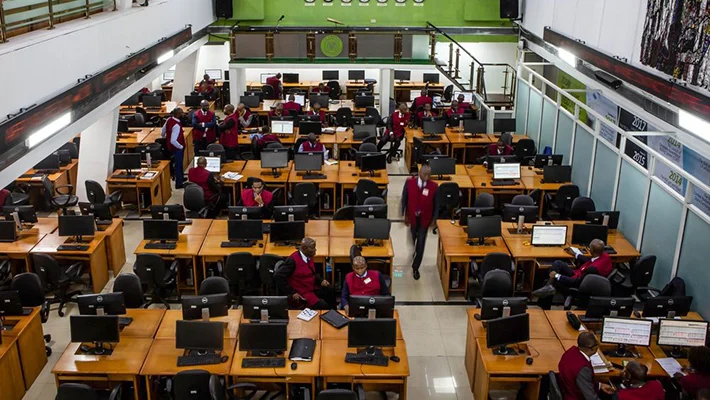
 Nigerian Exchange Limited (NGX) announces the expansion of its trading hours from 9:00 a.m. to 4:00 p.m. (WAT), effective Monday, 27 April 2026, in a move designed to deepen market liquidity, enhance price discovery, and broaden investor access.


Approved by the Securities and Exchange Commission (SEC) Nigeria, the expansion shifts the market opening earlier from 9:30 a.m. to 9:00 a.m. and extends the close from 2:30 p.m. to 4:00 p.m., marking a significant evolution in the Exchange’s market structure.


The extended trading window will provide greater flexibility for investors, improve responsiveness to market-moving information, and support broader participation across the market. The development builds on the momentum of Nigeria’s recent reclassification to Frontier Market status by FTSE Russell, reinforcing NGX’s global positioning and enhancing its attractiveness to a broader pool of domestic and international investors.


This reform reflects strong regulatory collaboration and underscores the Securities and Exchange Commission’s continued commitment to advancing market development initiatives. Alongside Nigeria’s Frontier Market reclassification, it signals a deliberate shift towards a more accessible, liquid, and globally competitive market.


The implementation follows extensive stakeholder engagement, ensuring alignment and operational readiness ahead of the go-live date. NGX Regulation Limited will continue to provide robust oversight to support a smooth and orderly transition, while maintaining high standards of transparency and investor protection.


With this development, NGX reinforces its position as a leading multi-asset exchange, deepening liquidity, improving market access, and supporting efficient capital formation within Nigeria’s financial markets.

No plan to borrow from IMF’s $50bn fund – FG

The Federal Government on Thursday declared that it has no plan to approach the International Monetary Fund to borrow from the estimated $50bn, which the IMF had earlier announced on Wednesday that it plans to use and support struggling economies in Africa.

The Minister of Finance and Coordinating Minister for the Economy, Wale Edun, disclosed this at a press briefing during the ongoing Spring Meetings of the World Bank/IMF in Washington DC, United States.

The PUNCH earlier reported that the Managing Director, IMF, Kristalina Georgieva, had advised countries facing economic pressures to act swiftly in seeking financial support when necessary, warning that delays could worsen economic conditions.

“My advice is that when you need help financially, don’t hesitate to move fast, because the sooner we act, the more we protect the economy,” she

Georgieva also revealed that the institution was committed to financially supporting member countries through the current challenges, adding that about $20bn to $50bn was being planned by the IMF for this exercise.

“We anticipate financial demand for IMF support to range between $20bn and $50bn, which represents augmentation of some existing problems and prospective demands from new problems from at least a dozen countries, a number of them in Sub-Saharan Africa,” she said.

But while responding to a question on Thursday, whether the Federal Government would approach the IMF to borrow from the fund, Nigeria’s finance minister, Edun, responded negatively.

“Nigeria has no plan at the moment to approach the IMF for any other such burden,” Edun declared.

The minister also told the meeting on Thursday that African nations need “extra help” at this moment.

He noted that the Middle East crisis is one that affects African countries and economies disproportionately, stressing that while nations in this region “are not creators in any way of this situation, they stand to command greater pressure than perhaps any other region.”

The minister added, “This is in terms of the threat to macroeconomic stability, growth trajectories, and their ability to create jobs and reduce poverty in their countries.

And I think that is a clear statement, particularly to those identified as the most vulnerable oil-importing countries. They need and deserve extra help at this time.”

Recall that Georgieva earlier observed that many of the countries most affected by the Middle East crisis are located in Sub-Saharan Africa, adding that the IMF was working to identify those in urgent need of assistance. “We are very determined to use this week to identify which of the countries must get our support,” she stated.

She emphasised the importance of strong fiscal and economic policies, urging governments to build buffers during periods of economic stability to better withstand future shocks. According to her, prudent economic management in good times remains critical for resilience during downturns.

The IMF chief also disclosed that during a meeting with central bank governors and finance ministers from Africa held the previous day, officials did not request immediate financial assistance but instead sought policy guidance.

“But, of course, there could be a need for financial support. And my advice is that when you need help financially, don’t hesitate to move fast, because the sooner we act, the more we protect the economy,” she said.

Georgieva highlighted the broader global implications of the Middle East conflict, noting that it has already inflicted significant economic damage. “We have been watching developments in the Middle East. A war that causes significant pain to people and economies in the region and around the world. The impact on the global economy is already large,” she said.

She explained that supply chain disruptions and damage to infrastructure are driving up prices and slowing global economic growth. According to her, global growth is projected to decline from 3.4 per cent last year to 2.1 per cent in 2026. She warned that if the conflict persists and oil prices remain elevated for a prolonged period, global economic conditions could deteriorate further.

“But if the conflict persists, and oil prices stay high for an extended period, we must brace for tough times ahead,” she added.

On the IMF’s global outlook, Georgieva cautioned that in a worst-case scenario, global growth could fall to two per cent, stressing that the impact would be widespread. She noted that countries that depend on energy imports are particularly vulnerable, many of which are low-income or fragile economies.

“In the most adverse case, growth could fall to two per cent, and the shock is global,” she said, adding that the highest negative impact is being felt by energy-importing nations.

MTN suspends Xtratime over new lending regulations

MTN-new-logo-e1663465256894MTN Nigeria, the country’s largest telecoms operator, has suspended its airtime and data lending service known as “Xtratime” as new regulatory requirements under Nigeria’s expanded digital credit rules take effect.

The company said the temporary suspension was driven by compliance obligations under the Federal Competition and Consumer Protection Commission’s Digital, Electronic, Online or Non-Traditional Consumer Lending Regulations, 2025, which introduce a revised licensing and oversight framework for providers of digital credit services.

MTN disclosed the decision in a corporate filing to the Nigerian Exchange Limited on Thursday, noting that Xtratime, which allows prepaid subscribers to borrow airtime or data and repay on their next recharge, would remain unavailable while the company aligns with the new requirements.

In the disclosure signed by its Company Secretary, Uto Ukpanah, MTN said the service falls within the scope of the updated regulations and therefore requires additional compliance processes before it can resume.

“MTN Nigeria Communications PLC hereby notifies the Nigerian Exchange Limited and the investing public that the company has temporarily suspended its airtime and data credit advance service (‘Xtratime’),” the company said.

It added that the suspension relates to “the implementation of processes under the Digital, Electronic, Online or Non-Traditional Consumer Lending Regulations, 2025, which introduced a new compliance and licensing framework for entities providing digital or non-traditional consumer credit services”.

Despite the suspension, MTN said customers would continue to access other channels for purchasing airtime and data and stressed that the decision is not expected to materially affect earnings.

“Given the scale within the revenue mix, we do not expect the temporary suspension to have a material impact,” the company said, adding that it was monitoring customer behaviour and usage patterns and would provide updates in its first-quarter 2026 results.

The suspension highlights the widening scope of Nigeria’s consumer lending regulation, which now extends beyond traditional financial institutions t include telecoms operators and other providers of short-term digital credit.

The FCCPC had previously introduced a limited regulatory framework for digital lending in 2022 but escalated its oversight with the 2025 regulations, which require all operators in the sector to register and obtain approval to continue offering services.

Under the rules, companies providing non-traditional credit services, including airtime and data advances, are required to comply with licensing conditions as part of efforts to improve transparency, consumer protection, and data governance in the rapidly growing digital lending space.

The commission has also set transitional deadlines for operators already providing such services, with a compliance window extended to April 2026 for full registration under the new framework.

The regulatory tightening reflects broader concerns around consumer debt exposure, data privacy, and aggressive lending practices in Nigeria’s fast-expanding digital credit market, which has seen rapid growth in recent years alongside mobile penetration.

For telecom operators, the changes introduce a new layer of compliance in services that have become a key feature of prepaid mobile offerings, particularly for low-income users who rely on short-term airtime advances to stay connected.

MTN said it would continue to monitor developments under the new framework as it works toward full compliance before resuming the service.

Crude oil prices rise on renewed US-Iran talks

Crude oilCrude oil prices moved higher on Thursday, with WTI trading near $92 per barrel and Brent rising above $95, as markets rebounded from earlier weakness and tracked fresh developments around the US-Iran conflict. The recovery comes as traders reassess geopolitical risks and weigh whether ongoing ceasefire discussions could stabilise supply routes.

Coin Paper reports indicate that Washington and Tehran are considering extending their current two-week ceasefire to allow more time for negotiations. That possibility has started to shift sentiment.

The White House has signalled optimism about a potential agreement, with officials pointing toward a second round of talks likely to take place in Pakistan. At the same time, Iranian officials are engaging in parallel discussions, including meetings in Tehran aimed at relaying messages between both sides.

Despite the talks, the Strait of Hormuz remains effectively closed under a US naval blockade targeting Iranian ports. This chokepoint handles a significant share of global oil shipments, so any disruption quickly ripples through energy market

While US officials say they have halted commercial traffic to and from Iranian ports, some Iran-linked vessels have continued to move through the strait. That contradiction raises a key question: how much supply actually flows right now? The answer remains unclear, and that uncertainty keeps volatility elevated.

Iran has also issued warnings. Officials have indicated that an extended blockade could trigger retaliation, including disruptions across the Persian Gulf, the Sea of Oman, and even the Red Sea. Such threats continue to anchor risk premiums in oil prices.

At the same time, military developments continue to shape expectations. Reports suggest that the US Department of Defence plans to deploy thousands of additional troops to the region in the coming weeks. Meanwhile, Israeli airstrikes in southern Lebanon highlight how the conflict extends beyond a single front.

These overlapping tensions complicate the outlook. Even as diplomacy gains traction, military activity continues to influence trader sentiment. The market now faces two competing forces: optimism around talks and concern over escalation.

Attention now shifts to the expected second round of US-Iran negotiations. These discussions will likely focus on reopening the Strait of Hormuz and addressing Iran’s nuclear programme. Progress on either front could quickly shift market direction.

Investors also track broader regional diplomacy. Planned talks between Israel and Lebanon mark another potential turning point, especially as efforts to reduce cross-border tensions gain momentum.

Oil markets now move in a narrow but volatile range, reacting to every update. Traders watch closely for confirmation of a ceasefire extension and any signals that shipping routes may reopen. Each headline carries weight, and price swings reflect that reality in real time.


Nigerian Breweries strengthens operations against macro risks

Nigerian Breweries PlcNigerian Breweries Plc has assured stakeholders and consumers that it is strengthening its operations against key risks, including supply chain disruptions linked to the Middle East crisis, naira instability, and rising inflation, particularly food inflation.

The company outlined strategies to sustain growth and protect consumers from pricing shocks during its 80th pre-annual general meeting media briefing held in Lagos on Thursday. Explaining the strategies, NB Plc Finance Director Maria Karaseva said the brewer had identified three major external risks and was proactively managing them to build resilience. She noted that Heineken’s financial moat kept the company relatively secure.

Karaseva said, “We are pulling out three factors, and they have different impacts on us. First is the sustainability of supply driven by the Middle East crisis, which affects our ability to maintain consistent production levels and meet market demand. Here we are relatively in control. We are part of the Heineken Group. Heineken is our major investor. We are relying on the proven supply cusps and tracks. We are tracking regularly the sustainability of our supply. We see no big issues coming out of Nigeria from what is going on.”

Karaseva added that the company was leveraging its relationship with its majority shareholder to cushion potential supply shocks.

On currency volatility, she said the firm was deploying financial hedging tools to protect its business, particularly in response to the instability of the naira, which has been fluctuating significantly against major currencies. “The second thing is the instability of the naira. We have observed it so far. The naira passed the stress test when the crisis happened,” she noted. “It continues to be stable, and I should say that this is fundamental for the economy of Nigeria to have a stable currency. We really ask the government to continue with its efforts to keep the naira’s stability in place. From our side, we are also using financial instruments and tools to protect us against potential volatility.”

Addressing inflationary pressures, particularly rising food prices, Karaseva said the company was focused on maintaining affordability for consumers through flexible pricing strategies.

She said, “The third factor on the macro level which can impact us is the rise in inflation, especially in food. We, as Nigerian communities, feel a responsibility as leaders of this category. We feel responsible for what happens with the price of the products and the affordability of our products to the consumers. So we are doing all that we can.

“We have a very wide tool set on how not to take pricing further in this difficult environment. We have global food practices which we are bringing to Nigerian ground to contain pricing inflation.”

The finance chief added that the company was building a resilient structure capable of absorbing shocks if conditions worsen.

Karaseva said, “So these are the major risks, and we are on a pathway to build a resilient structure which will help us to absorb those shocks at least if they don’t escalate any further.”

The Managing Director/Chief Executive Officer, Thibaut Boidin, also acknowledged that the operating environment remained volatile, citing inflation, foreign exchange pressures, and weak consumer purchasing power.

He said, “It’s not a secret that we’re operating in a very volatile environment, a very complex environment. (Although) In 2025, we can all recognise that the macroeconomic environment was a bit more stable than in the previous years, but we remain dependent on FX, and purchasing power remains under pressure.”

Boidin noted that the Middle East crisis continued to pose risks to the broader economy, while inflation had constrained beer consumption due to reduced disposable income.

Despite the challenges, the company reported a strong financial rebound in 2025. Group revenue rose by 35 per cent to N1.5tn, while gross profit increased 77 per cent to N565bn. Operating profit grew 194 per cent to N205bn.

The brewer also returned to profitability, posting a profit before tax of N161bn and a net profit of N99bn, compared to losses recorded in 2024.

Finance director Karaseva attributed the turnaround partly to improved cost management and reduced finance expenses following the company’s 2024 rights issue.

She said, “2025 was really a financially successful year for us. In 2024, the operating environment was really difficult, but in 2025, the stability of the Naira, the strength of our brands, and a focus on premiumisation supported the growth in our results.”

The company also recorded a positive cash flow position after years of negative balances, reflecting improved operational efficiency.

Looking ahead, Nigerian Breweries said it would prioritise consumer protection and affordability while maintaining financial discipline.

Karaseva said, “Taking very accurate revenue management, not passing all the problems happening around us to our consumers, is our prime goal, and we will see that in the year 2026.”

NB Plc added that while it had made a significant recovery, it would retain earnings to strengthen its balance sheet amid ongoing uncertainties, with dividend payments to resume once the business fully exits its recovery phase.

AXA Mansard grows by revenue 22% to N160.56bn

AXA Mansard HealthAXA Mansard Insurance Plc has reported a robust 22 per cent increase in insurance revenues, reaching N160.56bn for the financial year ended 31 December 2025. The results, released in Lagos, underscore the insurer’s resilience in a macroeconomic environment characterised by heightened inflationary pressures and foreign exchange volatility.

The growth was broad-based across the Group’s core segments, with Gross Written Premiums rising 23 per cent to N170.87bn. The performance was particularly bolstered by a 40 per cent surge in the health insurance segment, alongside steady gains in Property & Casualty and Life & Savings operations.

Commenting on the financial performance, the Chief Financial Officer of AXA Mansard, Ngozi Ola-Israel, said, “Our performance reflects strong execution and resilience across our diversified portfolio.

While Profit Before Tax declined to N6.12bn, this was largely due to the absence of the significant foreign exchange gains recorded in 2024. Adjusting for this non-recurring impact, our underlying profit would have grown by 50 per cent year-on-year.

Despite the impressive topline growth, the insurer faced significant bottom-line pressure. Profit After Tax dropped to N0.62bn, impacted by a N1bn FX loss compared to a N27bn gain in the previous year, as well as an increase in capital gains tax from 10 per cent to 30 per cent.

Addressing the strategic direction of the company amid these headwinds, the leadership emphasised that the firm’s focus remains on long-term stability and capital preservation.

Similarly, the Chief Executive Officer of AXA Mansard, Kunle Ahmed, said, “We delivered strong topline growth and stable underlying earnings despite cost pressures and global economic uncertainties. Our current financial position comfortably exceeds the new minimum capital requirements of N15bn for non-life and N10bn for life operations. To further strengthen these buffers, the board has decided not to propose dividend payments for the 2025 financial year.”

The company’s asset base grew 18 per cent to N227.94bn, while shareholders’ funds rose to N52.3bn, reinforcing its capital strength ahead of the industry-wide recapitalisation exercise. The CEO expressed optimism that the company is well-positioned to navigate the evolving regulatory landscape.

“With a strong balance sheet, disciplined execution, and clear strategic priorities, we are well positioned to improve profitability and deliver long-term value to shareholders as macroeconomic conditions stabilise and FX volatility eases,” Ahmed added.

Market analysts noted that AXA Mansard’s decision to retain earnings aligns with a broader trend of Nigerian insurers repositioning to meet stricter capital thresholds. The results also highlight the rapid expansion of the health insurance sector, which has become a critical revenue driver as corporate demand for employee coverage continues to rise across the country.

Seplat shares hits N10,000 as Heirs Energies investment drives rally

Seplat Energy PlcSeplat Energy Plc has become the first company in the 65-year history of the Nigerian Exchange to close above N10,000 per share, following a rally linked to a strategic investment by Tony Elumelu’s Heirs Energies.

Seplat closed trading on April 14, 2026, at N10,450 per share, representing an 80 per cent gain since January and adding approximately N2.9tn in market capitalisation within four months, according to a statement on Wednesday.

The rally traces to a transaction in December 2025, when Heirs Energies acquired a 20.07 per cent stake in Seplat Energy for about $500m, becoming the company’s largest shareholder. Elumelu subsequently joined Seplat’s Board as a Non-Executive Director in January 2026.

The $500m investment is now valued at over $800m, representing a $300m paper gain in under 120 days. Market analysts have described the surge as the “Elumelu effect,” citing the investor’s track record in transforming companies such as United Bank for Africa and Transcorp.

Since Heirs Energies became the largest shareholder, Seplat’s share price has gained more than N4,600, making it the most valuable indigenous energy stock on the continent.

The rally has also been supported by Nigeria’s recent reclassification by FTSE Russell from “Unclassified” to Frontier Market status, effective September 2026. Analysts project the upgrade could drive between $840m and over $1bn in foreign portfolio inflows into Nigerian equities, with Seplat positioned as a major beneficiary.

The company’s strong 2025 financial performance has further underpinned the share price growth. Revenue rose by 144 per cent to $2.73bn, while profit before tax increased by 86.7 per cent to $497.8m. Adjusted EBITDA climbed 137 per cent to $1.28bn, and total dividend increased by 52 per cent to 25.0 cents per share.

Seplat’s production averaged 131,506 barrels of oil equivalent per day in 2025, up 148 per cent, reflecting the first full-year consolidation of offshore assets following its acquisition of Mobil Producing Nigeria Unlimited.

The company has issued a 2026 production guidance of 135–155 kboepd and plans to drill 17 new wells.

Following the record close, the NGX All-Share Index rose to an all-time high of 205,831.38 points, while the Oil & Gas Index gained 4.36 per cent, led by Seplat.

CardinalStone Research described Seplat as “the undisputed heavyweight driver of the session,” while Meristem Securities reinstated a Buy rating on the stock.