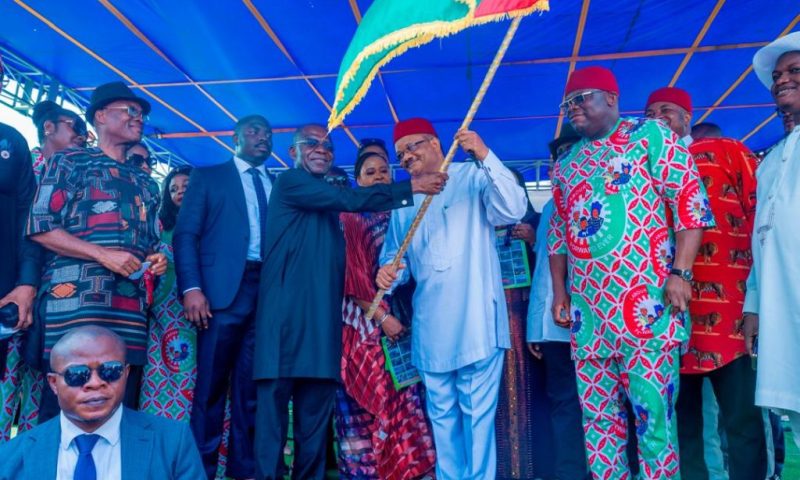
A former governorship candidate of the All Progressives Grand Alliance, APGA, Reagan Ufomba has officially quit the Peoples Democratic Party, PDP, and defected to the Labour Party, LP.
Receiving Ufomba and his supporters into LP on Wednesday at Okpuala Ngwa, Abia State Governor, Alex Otti said the defection is a major boost to the Labour Party and to the development of the State.
The Governor described the Labour Party as one founded on equity, inclusiveness and equal opportunities for all members and assured the new entrants that they would not be subjected to discrimination by old LP members.
“The interesting thing about Labour Party is that there is no discrimination.
“We don’t have old and new members,” Governor Otti said.
The Governor commended Chief Ufomba for his commitment to the development of the State and acknowledged his support for the administration’s reform agenda.
Earlier in his speech, Ufomba pledged his commitment to contributing to the growth and progress of Abia State under the platform of the Labour Party.
He thanked Alex Otti and the leadership of the LP in Abia State for receiving him into their fold.
The Independent National Electoral Commission (INEC) has fixed June 16 to June 25, 2026, for the conduct of political party primaries in restored state constituencies across Benue, Delta, Jigawa and Kogi states ahead of the 2027 General Election.
The commission announced the decision in a press statement issued on Wednesday by the National Commissioner and Chairman of the Information and Voter Education Committee, Mohammed Kudu Haruna.
According to INEC, the action followed court judgments directing the restoration of several previously suppressed constituencies and was carried out in line with the provisions of the Constitution of the Federal Republic of Nigeria and the Electoral Act 2026.
In Benue State, the restored constituencies are Nyamatsor, Ukum Afia, Konshisha III (Shangev-Tiev), Makurdi III (South East), and Gboko III State Constituencies.
INEC said the special primary elections would enable political parties to nominate candidates for the restored constituencies in preparation for the 2027 general election.
“For the avoidance of doubt, all other timelines and activities contained in the already published revised Timetable and Schedule of Activities for the 2027 General Election shall apply to the restored constituencies,” the commission stated.
The electoral body also directed political parties to submit notices of their primaries to the commission before the scheduled dates, citing the peculiar nature of the arrangement.
INEC reaffirmed its commitment to conducting credible, inclusive and transparent electoral processes as preparations for the 2027 general election continue.
The Emir of Kano, Muhammad Sanusi II, has called for urgent and long-term action to address poverty and inequality in the North-West.
According to him, no child’s future should be determined by the circumstances of their birth.
He made the statement while delivering a keynote address at the High-Level North-West Policy Dialogue held in Kano State, where he urged leaders to focus on practical solutions rather than speeches and promises.
“The measure of any society is found in how it expands opportunity and protects the vulnerable. No child’s future should be foreclosed by the poverty of their birth.”
Sanusi warned that poverty in the region remains deeply rooted and is reflected in poor education outcomes, weak health systems, and high levels of child malnutrition and unemployment.
He said addressing the crisis requires strong political commitment and consistent investment in people, especially children and young people.
Among his key recommendations was a call for the creation of a long-term social investment framework in each state, with protected budget lines for health, education, social protection, and youth development.
He also proposed a minimum social package that guarantees basic services for citizens at different stages of life, from early childhood to adulthood.
Sanusi stressed the importance of early childhood development, saying the first years of life are critical to a child’s future learning and wellbeing.
He urged states to invest more in nutrition, early learning, and parental support, adding that what happens in those early years determines what a child becomes.”
The Emir also recommended stronger programmes for out-of-school children, adult literacy, and youth skills development to reduce unemployment and improve livelihoods.
He further called for better use of traditional institutions in community data gathering and programme delivery, saying they are closer to the people and understand local needs better.
Sanusi also pushed for improved accountability, urging governments in the region to publish results of social investments and track progress annually.
He warned that without honest leadership and sustained action, poverty in the region would continue to deepen and affect future generations.
The Nigerian Army, through its 82 Division, has acknowledged concerns regarding the unauthorized entry of personnel from the Cameroonian Armed Forces into the Danare Community within the Boki Local Government Area of Cross River State on 9 June 2026.
In a statement issued by Lieutenant Colonel Olabisi Olalekan, Acting Deputy Director of Army Public Relations for the 82 Division of the Nigerian Army, it was reported that troops stationed at the Forward Operating Base (FOB) in Danare responded promptly upon receiving notifications of foreign military presence.
They reached out to the appropriate authorities of the Cameroonian Armed Forces, which resulted in the withdrawal of Cameroonian troops from Nigerian territory, adhering to established border protocols.
“Consequently, the situation was swiftly contained without any further escalation,” the statement indicated.
Additionally, preliminary investigations suggest that the incident was instigated by a dispute concerning the collection of levies on farmland situated between the Danare Community in Nigeria and the Dadi Community in Cameroon.
Furthermore, to enhance existing diplomatic and military collaboration and as a measure to build confidence, the General Officer Commanding the 82 Division has instructed the Commander of the 13 Brigade to engage with his Cameroonian counterpart for further discussions regarding the situation.
“This initiative aims to bolster border coordination, clarify operational procedures along the boundary, and avert future incidents,” it further stated.
The Division reiterated its commitment to protecting Nigeria’s territorial integrity and ensuring the security of all communities along the nation’s borders within its Area of Operations.
“Residents of Danare and surrounding areas are assured that the situation is stable and entirely under control. Troops remain alert and continue to oversee border activities,” it concluded.
The Army urged the public to stay calm, carry on with their lawful activities, and avoid disseminating unverified information that could lead to unnecessary tension.
The Dangote Petroleum Refinery could gain stronger positioning in the global aviation fuel market following Russia’s decision to extend its ban on jet fuel exports until 30 November 2026, amid sustained attacks on its refining infrastructure.
Russia announced the restriction on Monday, saying the move is aimed at securing domestic aviation fuel supply as Ukrainian drone strikes continue to disrupt key refineries and export facilities. The ban follows earlier curbs on gasoline exports introduced in April.
Although Russia is not a major exporter of jet fuel, the development adds to concerns about tightening global aviation fuel supply, especially at a time when demand is recovering and several supply routes remain under geopolitical pressure.
The disruption comes against the backdrop of broader instability in global energy markets, including tensions in the Middle East, which have already strained refining output and shifted trade flows towards alternative suppliers.
In recent months, Europe has increasingly turned to the Atlantic Basin, including West Africa, to meet jet fuel demand shortfalls caused by reduced supplies from traditional Gulf sources.
Against this backdrop, the Dangote refinery has emerged as one of the notable new entrants reshaping global fuel trade flows.
Recent industry reports show that the refinery has already exported large volumes of aviation fuel to Europe. In one of its strongest export windows, Dangote shipped about 1.1 billion litres of jet fuel to Europe between March and April 2026, while also supplying more than 95 per cent of Nigeria’s domestic Jet A1 demand.
The refinery is also reported to have exported about 615 million litres of aviation fuel in April alone, as part of a broader 1.66 billion litres of refined products shipped during the period, driven by strong international demand and disruptions in global supply chains.
It was observed that the combination of rising geopolitical risks and refinery disruptions in major producing regions is gradually strengthening the role of new large-scale refiners such as Dangote in global aviation fuel trade.
While Russia’s export restriction may not significantly alter global jet fuel volumes on its own, it contributes to a broader tightening environment that supports alternative suppliers with export capacity.
Already, market reports indicate that Dangote is benefiting from strong demand in Europe and other regions seeking reliable non-traditional sources of jet fuel amid uncertainty around Middle East supply routes and refinery outages.
Russia had announced that the restriction was aimed at stabilising domestic fuel supply and ensuring adequate availability for its aviation sector. According to Reuters, the measure applies to jet fuel sold through exchange markets and commercial channels but excludes supplies covered under intergovernmental agreements and fuel already in transit or customs clearance.
The ban marks one of Moscow’s most significant interventions in its refined products market in recent years, coming after a series of earlier restrictions on gasoline exports introduced in April as pressure on its refining system intensifies.
According to reports, Ukrainian drone strikes have repeatedly targeted Russian refineries and export-linked infrastructure over the past year, forcing temporary shutdowns and reducing processing capacity at several major plants. The attacks are part of Kyiv’s strategy to weaken Russia’s energy revenues, which remain central to its war financing.
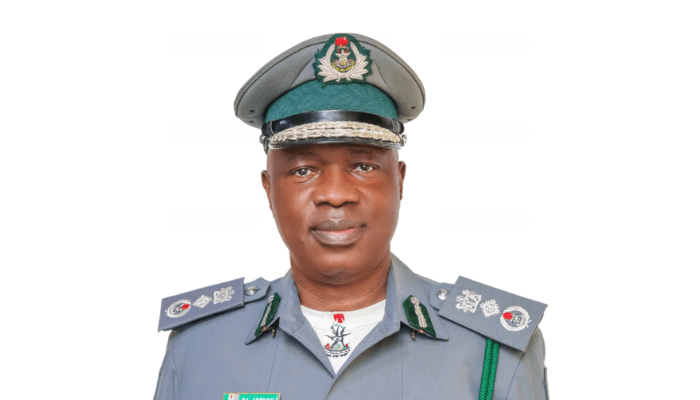
The Nigeria Customs Service said it recorded about 65 seizures of vegetable oil products in 2025 and another 23 in 2026, with a combined duty-paid value of approximately N1.314bn.
This is even as the service announced that it has intensified efforts to combat the smuggling of vegetable oil into the country, with plans to launch intelligence-driven special operations aimed at protecting local investments, preserving jobs and supporting the growth of the agricultural value chain.
According to a statement on Wednesday, the Comptroller-General of Customs, Adewale Adeniyi, disclosed this on Friday during a meeting with stakeholders in the vegetable oil industry in Abuja.
Adeniyi said the service remains committed to tackling smuggling through strategic enforcement, intelligence gathering and stakeholder collaboration, adding that the NCS and operators in the vegetable oil sector share a common objective of protecting legitimate businesses, encouraging investment and strengthening the national economy
The CGC explained that addressing smuggling requires sustained cooperation between government agencies and the private sector, particularly in sectors that contribute significantly to employment generation and economic development.
He also called on stakeholders to support enforcement efforts by providing credible intelligence on smuggling routes and illicit trade activities. “Fighting smuggling is a continuous process that requires intelligence, policy support, and collaboration. We value constructive engagement with stakeholders and will continue to strengthen our partnership with the private sector,” he stated.
Also speaking, the Deputy Comptroller-General in charge of Enforcement, Inspection and Investigation, Timi Bomodi, highlighted the service’s achievements in curbing the illegal importation of vegetable oil products.
Bomodi disclosed that Customs recorded several seizures across key border corridors and assured stakeholders that surveillance would be intensified in vulnerable locations.
“We recorded about 65 seizures of vegetable oil products in 2025 and another 23 seizures in 2026, with a combined Duty Paid Value of approximately N1.314bn,” he said.
He noted that many of the seizures were made along major smuggling corridors, including Seme and Idiroko, stressing that surveillance would also be strengthened in other identified vulnerable locations.
Leading the industry delegation, the Founder of the Plantation Owners Forum of Nigeria, Dr Fatai Afolabi, commended the NCS for creating a platform for dialogue while drawing attention to the need to clamp down on vegetable oil smuggling into the country.
“Smuggling of vegetable oil will undermine local production, discouraging investment and threatening thousands of jobs across the value chain,” Afolabi stated.
First City Monument Bank Limited has appointed Bismarck Rewane as a Non-Executive Director and Chairman of its Board of Directors following approval from the Central Bank of Nigeria.
It stated in a statement that the appointment brings one of Nigeria’s leading economists to the board of the lender as it seeks to strengthen its governance and strategic leadership.
Rewane has more than 40 years of experience spanning macroeconomic research, investment banking and strategic management. He is the Managing Director of Financial Derivatives Company Limited, a financial advisory and economic research firm.
A Fellow of the Nigerian Economic Society, Rewane previously held leadership positions at International Merchant Bank Nigeria Limited and First National Bank of Chicago.
He graduated from the University of Ibadan with a degree in Economics and is a Fellow of the Chartered Institute of Bankers of Nigeria as well as an Associate of the Institute of Chartered Bankers of England and Wales.
His boardroom experience includes serving on the boards of several companies, including Guinness Nigeria Plc, British American Tobacco, Henkel Nigeria Limited, Top Feeds Nigeria Limited and Africa Infrastructure Plus Partners.
Rewane also served as a member of the Presidential Steering Committee for the Resolution of the Global Economic Crisis.
In addition, he has completed executive management programmes at institutions including the Oxford International Capital Markets Programme, the Euromoney Institute of Finance and IMD Lausanne, Switzerland.
Commenting on the appointment, the Board of Directors of First City Monument Bank said it welcomed Rewane and expressed confidence that his experience would support the bank’s growth objectives.
The board stated, “The bank is confident that his expertise in macroeconomics, corporate governance, and strategic management, together with the Bank’s stronger capital base, will strengthen its leadership and help drive the next phase of growth while continuing to deliver value to stakeholders.
The Economic and Financial Crimes Commission, EFCC, Lagos Zonal Directorate 2, Ikoyi, Lagos, on Wednesday, June 10, 2026, arraigned a social media influencer, Okoro Blessing Nkiruka,( a.k.a Blessing CEO) for alleged N13,000,000 (Thirteen Million Naira) Cancer fraud before Justice Yelim Bogoro of the Federal High Court sitting in Ikoyi, Lagos.
The EFCC filed a fresh six-count charge bordering on obtaining money by false pretence and retaining the proceeds to the tune of N13,000,000 against her, following the receipt of several petitions from individuals and groups, including the Nigeria Cancer Society.
The petitioners allegedly made donations to the defendant after her social media posts claiming that she was battling Stage 4 breast cancer and seeking financial support for treatment.
She was, however, later discovered to have allegedly falsified the document she presented to members of the public.
One of the counts reads:
“That you, OKORO BLESSING NKIRUKA (A.K.A. BLESSING CEO), female, adult, sometime in 2026 in Lagos State, within the jurisdiction of this Honourable Court, did obtain the total sum of N13,000,000 (Thirteen Million Naira) from unsuspecting citizens under the false pretence of being diagnosed with a terminal illness, to wit: left breast lump and invasive ductal carcinoma with lobular feature, which representation you knew to be false, and you thereby committed an offence contrary to Section 1(3) of the Advance Fee Fraud and Other Fraud Related Offences Act, 2006.”
Another count reads: “ That you, OKORO BLESSING NKIRUKA (A.K.A BLESSING CEO) (female), adult, sometime in 2026 in Lagos State within the Jurisdiction of this honourable court, knowingly forged a medical report titled “Histopathology/Cytopathology Report”, purported to have emanated from Xinus Medical Diagnostics knowing same to be false with intent to gain advantage for yourself from unsuspecting citizens and you, thereby committed and offence contrary to and punishable under section 1(2) (c) of the Miscellaneous Offences Act, CAP M17, Laws of the Federation of Nigeria, 2004.”
The defendant pleaded “not guilty” to the charges when they were read to her.
Following her plea, the prosecution counsel H. U. KofarNaisa, asked the court for a trial date and prayed that the defendant be remanded in a correctional centre.
Responding, counsel to the defendant, Stanley Ofoegbu, prayed the court for a short adjournment to enable him file a bail application on behalf of the defendant.
Justice Bogoro, consequently, adjourned the matter till September 24, 2026, for the commencement of trial and ordered that the defendant be remanded in a Correctional centre.
The Nigeria Civil Aviation Authority (NCAA) has grounded a privately operated aircraft and launched an investigation following a dramatic emergency landing on a roadway near Asaba, Delta State.
According to preliminary details released by the Authority on Wednesday, the incident occurred on June 10, 2026, when the aircraft aborted its landing at Asaba Airport after executing a missed approach at about 7:43 a.m. local time.
The aircraft subsequently landed on a road in the Ogwashi-Uku area, raising concerns among aviation regulators.
However, all four crew members on board were safely evacuated from the aircraft and transported to Asaba by road, with no injuries reported.
In a development that has drawn regulatory scrutiny, the NCAA disclosed that the aircraft later departed the scene at approximately 11:02 GMT and flew back to Lagos without obtaining the required approval. Air Traffic Control, the Authority noted, was only informed after the aircraft had already taken off.
The NCAA described the action as a violation of the Nigeria Civil Aviation Regulations and confirmed that a full investigation is underway.
Upon its arrival in Lagos, the aircraft was immediately grounded, while the flight crew have been placed under regulatory review pending the outcome of ongoing inquiries.
The Authority also confirmed that it has notified the Nigerian Safety Investigation Bureau (NSIB) and is working with key stakeholders, including the Nigerian Airspace Management Agency and the aircraft operator, to determine the circumstances surrounding both the emergency landing and the Unauthorised departure.
As part of its initial enforcement measures, the NCAA has suspended the operator’s Permit for Non-Commercial Flights (PNCF).
It added that a comprehensive audit of the aircraft’s operational, maintenance, airworthiness, and flight records is in progress, with further actions to be taken in line with aviation regulations.
The NCAA reiterated its commitment to ensuring strict compliance with safety standards and maintaining the integrity of Nigeria’s aviation sector.
Photo caption: L-R: Divisional Head, Small and Medium-scale Enterprises (SMEs), Fidelity Bank Plc, Mrs. Ugochi Osinigwe; Executive Director, South, Fidelity Bank Plc, Mrs. Pamela Shodipo; and Representative of the President of the Port Harcourt Chamber of Commerce, Industry, Mines and Agriculture (PHCCIMA) and Chairman of SMEs and Non-Governmental Organizations (NGOs) Trade Group, Mr. Jack Daboikiabo; at the Fidelity Bank SME Quarterly Business Forum held in Port Harcourt, recently.
Leading financial institution, Fidelity Bank Plc, has reaffirmed its commitment to advancing the growth and sustainability of Micro, Small and Medium-scale Enterprises (MSMEs), positioning itself as a trusted partner beyond traditional banking and financing.
This commitment was reiterated by the bank’s management during a keynote address delivered by the Executive Director, South, Mrs. Pamela Shodipo, at the recently held SME Quarterly Business Forum in Port Harcourt, Rivers State.
The Forum, themed “Scaling Trade and Distribution of Businesses for Sustainable Growth,” brought together entrepreneurs, business owners, industry experts and customers for insightful discussions on strategies for expanding businesses, strengthening distribution networks and unlocking sustainable growth opportunities in Nigeria’s evolving marketplace.
In her address, Shodipo reiterated Fidelity Bank’s commitment to supporting SMEs beyond traditional banking and financing. She stated, “Our objective is clear: to help Nigerian enterprises grow, become more competitive and create sustainable value in their communities and the wider economy. We want to be more than a provider of funds; we want to be your trusted partner in growth,” she said.
Further emphasising the strategic importance of the host city, the bank’s Executive Director described Port Harcourt as a critical economic hub, with significant influence across trade, logistics, marine services, manufacturing, agriculture, and the energy sector.
“Port Harcourt occupies a strategic place in the economic life of Nigeria. It is a major commercial hub, a gateway to the South-South and a city whose influence extends across trade, logistics, marine services, manufacturing, agriculture and energy. Businesses here understand what it means to operate in a dynamic environment, respond to market demand quickly and keep commerce moving,” she said.
Shodipo maintained that, the Forum’s theme was particularly relevant given the vital role trade and distribution businesses play in connecting producers to consumers, supporting supply chains, creating jobs and sustaining livelihoods.
“Trade and distribution businesses play a critical role in the Nigerian economy. They connect producers to consumers, support supply chains, create jobs and sustain livelihoods. In the South-South, this role is even more significant because the region remains one of the vital arteries of commerce in Nigeria, with strong links to ports, industrial activity, wholesale trade and regional distribution networks,” she remarked.
The bank’s Executive Director also highlighted initiatives such as the Fidelity Nigeria International Trade and Creative Connect (FNITCC), which connects businesses to international markets like the UK and US, as well as partnerships with the Nigeria Export Promotion Council (NEPC) and Lagos Business School through the Export Management Programme, alongside the Fidelity SME Hub for advisory support.
In her remarks, Mrs. Ugochi Osinigwe, Divisional Head, Small and Medium-scale Enterprises, Fidelity Bank Plc, said the forum was designed to provide business owners with actionable insights and valuable networking opportunities that can accelerate growth.
“SMEs remain the backbone of Nigeria’s economy, and at Fidelity Bank, we are deliberate about creating platforms that expose entrepreneurs to knowledge, innovation and opportunities that help them build resilient and scalable businesses. This forum reflects our ongoing commitment to supporting SMEs beyond banking by equipping them with the tools and connections needed to thrive in today’s competitive environment,” Osinigwe said.
She encouraged participants to leverage the Bank’s various SME-focused initiatives, advisory services and digital solutions to strengthen their operations and position their businesses for long-term success.
Participants at the forum commended Fidelity Bank for creating a platform that addresses real business challenges and provided practical solutions.
One of the participants, Mr. Andy Macozi, praised the initiative, saying, “The forum was timely and informative. The discussions addressed challenges many business owners face daily, and I believe more entrepreneurs will benefit if Fidelity Bank continues to organize such seminars and knowledge-sharing sessions.”
Also speaking, Chief Uche Aham, an oil and marine services entrepreneur, described the forum as insightful and impactful.
“I commend Fidelity Bank for bringing together business owners to learn and exchange ideas. The sessions were practical and insightful. It would also be helpful if participants could receive comprehensive materials from the forum for future reference and implementation,” he noted.
The Fidelity Bank SME Quarterly Business Forum is the latest of the bank’s initiatives aimed at empowering entrepreneurs, fostering innovation and driving sustainable economic development across Nigeria.
Ranked among the best banks in Nigeria, Fidelity Bank Plc is a full-fledged Commercial Deposit Money Bank serving over 10 million customers through digital banking channels, its 255 business offices in Nigeria and United Kingdom subsidiary, FidBank UK Limited.
The Bank is a recipient of multiple local and international awards, including the 2025 Development Bank of Nigeria (DBN) Innovation Award for MSME support; Best Retail and SME Bank Award from Independent Newspapers; Best Bank for Export & Trade Finance and Most Innovative Bank of the Year at the 2025 BusinessDay Banks and Financial Institutions (BAFI) Awards; and Nigeria’s Best Private Bank at the 2025 Euromoney Awards. The Bank also received the inaugural Most Improved Commercial Bank of the Year award by Nairametrics, the SME Bank of the Year award by NewsDirect, and the Straight-Through Processing (STP) Excellence Award by Citi Group, in addition to recognition by Global Brands Magazine for Excellence in Community Empowerment

 A former governorship candidate of the All Progressives Grand Alliance, APGA, Reagan Ufomba has officially quit the Peoples Democratic Party, PDP, and defected to the Labour Party, LP.
 The Independent National Electoral Commission (INEC) has fixed June 16 to June 25, 2026, for the conduct of political party primaries in restored state constituencies across Benue, Delta, Jigawa and Kogi states ahead of the 2027 General Election.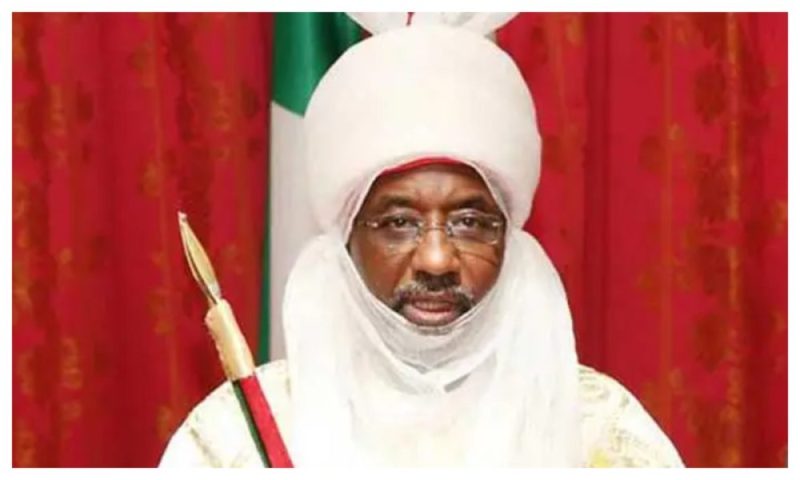
 The Emir of Kano, Muhammad Sanusi II, has called for urgent and long-term action to address poverty and inequality in the North-West.
 The Nigerian Army, through its 82 Division, has acknowledged concerns regarding the unauthorized entry of personnel from the Cameroonian Armed Forces into the Danare Community within the Boki Local Government Area of Cross River State on 9 June 2026.

 The Nigeria Customs Service said it recorded about 65 seizures of vegetable oil products in 2025 and another 23 in 2026, with a combined duty-paid value of approximately N1.314bn.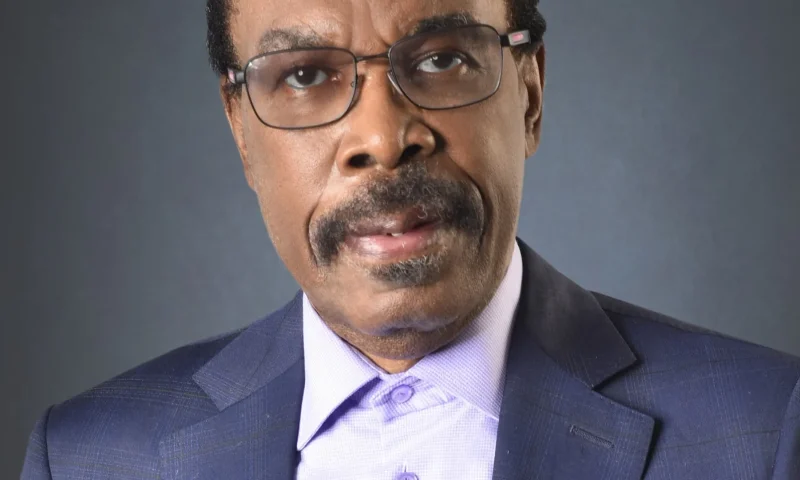
 First City Monument Bank Limited has appointed Bismarck Rewane as a Non-Executive Director and Chairman of its Board of Directors following approval from the Central Bank of Nigeria.