
W’Bank to approve $500m loan for Nigeria today

The World Bank is set to approve a $500m loan to Nigeria on Friday (today) as part of efforts to expand access to finance for micro, small and medium enterprises across the country.
The proposed facility, titled the Fostering Inclusive Finance for MSMEs in Nigeria (FINCLUDE) Project, aims to mobilise private capital and promote innovative financial products for small businesses, according to information obtained from the World Bank.
Negotiations on the loan are ongoing, and approval by the World Bank Group’s board is expected on Friday. The approval, expected on December 19, 2025, will see the World Bank commit $500m to the project out of an estimated total cost of $2.39bn.
Of the World Bank financing, $400m will be provided by the International Bank for Reconstruction and Development, while $100m will come from the International Development Association.
The Federal Government will be the borrower under the arrangement, with the Development Bank of Nigeria serving as the implementing agency with overall responsibility for managing the funds. The remaining $1.89bn required for the project is expected to be provided by commercial lenders as unguaranteed financing.
According to the World Bank, the FINCLUDE project will leverage the platforms of the Development Bank of Nigeria and its subsidiary, Impact Credit Guarantee Limited, to deepen credit access for MSMEs.
“The proposed FINCLUDE Project leverages the platforms of the Development Bank of Nigeria and its subsidiary, the Impact Credit Guarantee Limited, to drive inclusive MSME finance,” a document from the World Bank read. “Through these catalytic institutions, the project will deploy a package of complementary, inclusive, and innovative instruments tailored to the diverse needs of MSMEs in Nigeria.”
The World Bank described DBN as “a partner well known to the World Bank with high implementation capacity and a proven track record in designing and executing complex, innovative projects,” noting that its role would be central to the success of the intervention.
The project is structured around three main components. These include the provision of inclusive and innovative MSME finance products, the de-risking and mobilisation of private capital through partial credit guarantees, and technical assistance aimed at modernising and digitising Nigeria’s MSME finance ecosystem.
Under the first component, the World Bank said the project would provide Tier 2 subordinated capital to eligible financial institutions and support the establishment of an MSME investment fund to deliver equity and long-term debt financing to small businesses. The bank said this approach would help “crowd-in private capital, test market innovations and promote financial sustainability” within the MSME segment.
Also, the project will offer targeted technical assistance to strengthen the capacity of financial institutions, improve regulatory oversight and modernise the MSME finance value chain linking DBN, lenders and entrepreneurs.
In its appraisal report, the World Bank highlighted Nigeria’s ongoing economic reforms, describing the country as being “in a critical transition.” It noted that the removal of fuel and foreign exchange subsidies, alongside the unification of exchange rates, had begun to stabilise the economy and restore investor confidence.
“These reforms have improved fiscal space, enhanced FX liquidity, and eased inflation to 18 per cent as of September 2025,” the report stated, adding that growth prospects were strengthening, with the International Monetary Fund projecting 3.9 per cent real GDP growth in 2025.
Despite these improvements, the World Bank warned that access to finance remained uneven, particularly for MSMEs, women and the agriculture sector. It noted that agriculture accounted for just over five per cent of total bank credit in 2024, while high interest rates and shallow credit penetration continued to constrain lending to smaller enterprises.
If approved on Friday, the FINCLUDE project will add to Nigeria’s growing portfolio of World Bank-supported programmes. As of June 30, 2025, Nigeria’s external debt stood at $46.98bn, according to the Debt Management Office.
The World Bank Group remains Nigeria’s largest single creditor, accounting for $19.39bn of the total, comprising $18.04bn from the IDA and $1.35bn from the IBRD. This represents 41.3 per cent of the country’s external debt, underscoring the bank’s dominant role in financing Nigeria’s development initiatives.
The PUNCH earlier reported that the World Bank loans to Nigeria between 2023 and 2025 are projected to reach $9.65bn by the end of this year as fresh approvals, ongoing negotiations, and disbursements gather pace across key sectors.
The amount covers International Bank for Reconstruction and Development and International Development Association loans only, according to an analysis of data on the bank’s website by The PUNCH. When grants are added, total World Bank support rises to about $9.77bn within the three-year window.
The International Bank for Reconstruction and Development provides loans on commercial or near-commercial terms to middle-income and creditworthy low-income countries, while the International Development Association offers highly concessional loans and grants to the world’s poorest nations.
The PUNCH also reported that Nigeria’s stock of World Bank International Development Association loans rose to $18.5bn, making it the largest IDA borrower in Africa and the third-biggest in the world.
Fresh data from the IDA’s unaudited financial statements for the third quarter of 2025 confirmed that the country has maintained the ranking it first attained in 2024, when it climbed to third place after overtaking India. The country was the fourth-largest borrower in 2023.
According to the report, Nigeria’s exposure increased from $17.1bn in September 2024 to $18.5bn in September 2025, representing a rise of $1.4bn or 8.2 per cent. The increase reflects the country’s heavier reliance on concessional financing to plug infrastructure gaps, stabilise its reform programme, and support social spending amid volatile oil earnings.
Economists warn that the rising loan pipeline, while potentially beneficial for long-term development, could deepen fiscal pressures if not matched with stronger domestic revenue mobilisation and prudent expenditure management.
Lagos-based economist, Adewale Abimbola, reacting to the rising World Bank commitments to Nigeria, said loans from multilateral institutions such as the World Bank are largely concessionary, with interest rates typically below market levels and longer repayment tenors.
He noted that the critical question is not whether Nigeria should be borrowing, but whether the loans are structured and deployed effectively. “If it’s concessionary and tied to viable projects with medium-term revenue prospects, I don’t think it’s a bad idea,” Abimbola explained. “Borrowing isn’t bad; what matters is utilisation.”
He stressed that the economic impact of such loans depends on how well they are channelled into projects that can generate sustainable growth, strengthen revenue, and improve public services over time.

 Gombe State’s 2023 Peoples Democratic Party, PDP, gubernatorial candidate, Mohammad Barde, has formally joined the African Democratic Congress, ADC.
 Supporters of former Sokoto State governor, Alhaji Attahiru Bafarawa, under the banner of the Bafarawa Akida Movement, have formally defected from the Peoples Democratic Party, PDP, to the ruling All Progressives Congress, APC, in the state.
 The High Court of Lagos State has officially declared its 2025 Christmas vacation, with regular court sessions suspended from Wednesday, December 24, 2025, through Friday, January 2, 2026.
 As Nigeria targets 2.06 million barrels per day crude oil production in 2026, the Nigeria National Petroleum Corporation Limited said it is building synergy with surveillance companies like Pipeline Infrastructure Nigeria Limited to achieve the feat.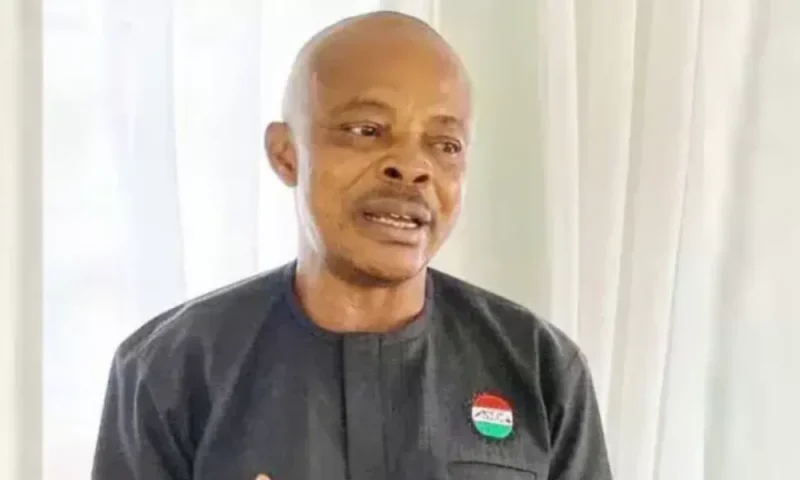
 The Nigeria Labour Congress and its affiliates on Wednesday protested nationwide against rising insecurity in the country.
 The Presidency, on Wednesday, rejected calls for the suspension of President Bola Tinubu’s recently-signed tax reform laws, insisting the legislation was “unstoppable” and would take effect from January 1, 2026.
 Polaris Bank has continued its commitment to empowering the Nigerian girl-child through health education and essential support, as it distributed hygiene essentials to female students of Kuramo and Victoria Island Junior and Senior Secondary Schools, Lagos.
 TotalEnergies Marketing Nigeria Plc has launched the TotalEnergies Mobility Card Plus, positioning it as a technology-driven upgrade designed to deliver stronger security, real-time control and greater convenience for individual users and businesses across the country.
 Deposit Money Banks are shoring up their capital base as the Central Bank of Nigeria intensifies oversight, reinforcing governance, transparency, and risk management to ensure a resilient, stable financial system, OLUWAKEMI ABIMBOLA writes