Jigawa approves ₦419m to boost primary healthcare

The Jigawa State Government has approved ₦419.47 million to improve primary healthcare services and pay allowances to frontline health workers across the state.

The approval was announced by the Commissioner for Information, Youth, Sports and Culture, Mr. Sagir Musa, after the State Executive Council, SEC, meeting held in Dutse on Tuesday.

According to Musa, ₦362.8 million will be released to 281 accredited Primary Health Care (PHC) centres spread across the 27 Local Government Areas under the Direct Facility Financing programme of the Basic Health Care Provision Fund. The money will cover operations from July to December 2025.

He explained that the intervention is aimed at helping health centres run more effectively, stock essential drugs, and provide better medical services, especially in rural communities where access to healthcare is often limited.

Musa said the funding would also strengthen Jigawa’s healthcare system and move the state closer to achieving universal health coverage for residents.

In addition, the council approved ₦56.67 million for allowances for frontline health workers for the same six-month period.

Those to benefit include 75 midwives, 650 Community Health Influencers, Promoters and Services (CHIPS) agents, and 130 Community Engagement Focal Persons who work closely with communities on maternal and child health, disease prevention, and public health awareness.

The commissioner said the combined approvals is part of the government’s commitment to improving healthcare delivery while encouraging workers who serve at the grassroots level.

Troops raid illegal mining site, arrest three suspects in Kogi

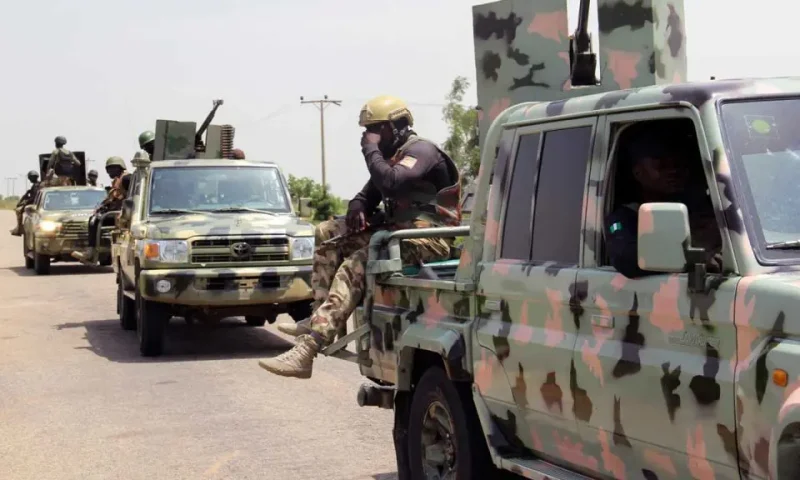
Troops under Operation MESA have raided an illegal mining site in Yagba West Local Government Area of Kogi State, arresting three suspects and recovering arms and other items.

A counter-insurgency and security expert in the Lake Chad region, Zagazola Makama, made this known in a post on X.

Makama said the operation was carried out at about 1:00 p.m. on April 13 at Taki following coordinated efforts between troops of 12 Brigade and local vigilantes.

According to Makama, the suspects claimed to be gold dealers and members of the Miyetti Allah socio-cultural group.

He added that items recovered during the raid include one locally made pistol, four cartridges, two rounds of 7.62mm special ammunition, two motorcycles, three mobile phones, two cutlasses and the sum of N68,100.

“The suspects and recovered exhibits are currently in military custody for further investigation and necessary action,” Makama said.

He further stated that the operation forms part of ongoing efforts to curb illegal mining and related criminal activities in the state.

Lagos plans more fire stations as safety infrastructure expands

The Lagos State Government has indicated plans to expand fire safety infrastructure across the state, following the addition of a new fire station as part of recently commissioned projects aimed at improving public safety and development.

According to a statement by the Lagos State government, the projects were unveiled during a two-day commissioning programme held from April 8 to April 9, 2026, under the administration of Governor Babajide Olusola Sanwo-Olu. The exercise was carried out on behalf of Bola Ahmed Tinubu by Godswill Akpabio.

Among the key projects delivered is the Tolu School Complex located in Olodi Apapa, Ajegunle, in Ajeromi-Ifelodun Local Government Area. The complex comprises 36 schools, a modern fire station, and a stadium with 19 mini football pitches.

The inclusion of a fire station within the facility reflects the government’s efforts to protect lives and property while also supporting community growth.

A multi-agency complex named after President Bola Ahmed Tinubu was also commissioned during the event. The facility is expected to strengthen collaboration among emergency responders and other public service institutions in the state.

Speaking at the event, the Controller-General of the Lagos State Fire and Rescue Service, Margaret Adeseye, commended the government for its continued investment in safety infrastructure, noting that the new fire station will improve emergency response, especially in heavily populated areas.

“The additional fire station will significantly enhance emergency response coverage, particularly within densely populated communities,” Adeseye said.

Adeseye stated that with the addition of the Tolu Fire Station, the number of Lagos State Fire and Rescue Service (LSFRS) locations has increased to 25, making it the 11th fire station delivered by the current administration. He added that three more stations are at different stages of completion, with two already included in this year’s budget.

The development highlights the government’s continued focus on strengthening emergency services and building a safer, more resilient, and inclusive environment for residents across the state.

Police call for stronger community cooperation on Security in Jigawa

The Jigawa State Police Command has urged residents to play a more active role in keeping their communities safe by reporting suspicious activities and sharing useful information with security agencies.

The Commissioner of Police, Haruna Alaba Yahaya, made the appeal on Tuesday during a stakeholders’ meeting held at the Command Headquarters in Dutse.

He assured the public that information provided to the police would be handled confidentially.

He said the fight against crime cannot be left to security agencies alone, noting that community members often see and know things that can help prevent attacks, theft, and other criminal acts before they occur.

According to him, the Command is focusing on proactive policing, intelligence gathering, and respect for human rights as part of efforts to improve safety across the state.

Stakeholders, however, pledged their support for closer cooperation with the police.

The Police Command said it would continue to engage residents and key groups across Jigawa as part of efforts to build trust and strengthen security statewide.

Airtel Africa deploys 1,500 base stations in one year

Airtel logoAfrica’s second biggest telco, Airtel, expanded its telecommunications infrastructure in Nigeria with the addition of more than 1,500 base stations over the past year, strengthening broadband capacity and extending connectivity to underserved areas as demand for data services continues to rise.

The expansion forms part of the company’s broader investment strategy aimed at improving network quality, supporting growing internet adoption and reinforcing Nigeria’s digital economy, the operator, which has 650 million customers,  said in a statement.

Over the past three years, Airtel Nigeria has increased its national site count from just above 13,000 to nearly 17,200 sites, marking one of the fastest infrastructure scaling phases in the operator’s recent history. The latest deployments have deepened capacity in high-demand urban corridors while expanding high-speed coverage into rural and previously underserved communities.

“Data from the Nigerian Communications Commission highlights the significance of Airtel’s infrastructure growth within the wider industry. As of December 2025, Nigeria recorded 145,141 base stations across 2G, 3G, 4G and 5G networks nationwide. Airtel accounts for 46,918 base-station layers, underscoring its substantial contribution to the country’s radio access network as mobile data consumption accelerates,” the company stated.

Nearly 99 per cent of Airtel Nigeria’s sites are now 4G-enabled, positioning the operator among providers with near-ubiquitous high-speed broadband coverage. Thousands of sites have also undergone capacity upgrades within the past year, improving speeds and enhancing network stability during peak usage periods.

The infrastructure expansion coincides with rising internet adoption across the country. According to the latest regulatory figures, Nigeria’s internet penetration has climbed above 50 per cent, with Airtel recording one of the largest monthly increases in new internet subscribers, supported by network upgrades across multiple states and rural corridors.

Beyond terrestrial network expansion, Airtel is also investing in international connectivity resilience to address Nigeria’s reliance on limited internet gateway routes.

The company is advancing plans for a second submarine cable internet breakout point at Kwa Ibo in Akwa Ibom State as part of the rollout of the 2Africa cable system. The additional landing point is expected to improve redundancy, increase speeds and enhance national network reliability for businesses and consumers.

Across the country, Airtel operates approximately 4,000 exclusive retail outlets, providing customer support, device access and digital services in urban centres, small towns and community markets. The extensive distribution network continues to serve as a key differentiator in improving service accessibility and customer engagement.

Fuel imports surge 97% despite improved local supply

The importation of Premium Motor Spirit, also known as petrol, by oil marketers increased sharply in March 2026, surging by about 96.7 per cent compared to February, according to the latest data from the Nigerian Midstream and Downstream Petroleum Regulatory Authority.

Latest data from the regulator’s March 2026 fact sheet obtained by our correspondent on Tuesday showed that petrol import volumes climbed from 3.0 million litres per day in February to 5.9 million litres per day in March, reflecting renewed reliance on foreign supply amid shifting domestic dynamics.

The report read, “Petrol import volumes rose significantly in March from 3.0 million litres per day in February to 5.9 million litres per day in March.”

At the same time, the NMDPRA said local supply is gradually improving. This growth is being driven by domestic refiners, including the Dangote Petroleum Refinery, which is quickly becoming a major player in the market.

It said domestic petrol supply rose significantly from 30.5 million litres per day to 34.2 million litres per day, underscoring growing contributions from local refining capacity.

Overall, total daily petrol supply increased marginally from 39.5 million litres to 40.1 million litres during the period under review.

An analysis of the figures indicates that while imports nearly doubled within the month, domestic supply still accounted for the bulk of the market, reinforcing the increasing role of local refiners, particularly the Dangote refinery, as a stabilising force in Nigeria’s downstream sector.

The refinery operated at an average capacity utilisation of 93.62 per cent in March 2026.

Data on the refinery’s performance showed that it produced 48.2 million litres per day of Premium Motor Spirit (petrol) during the period, out of which 34.2 million litres per day was supplied to the domestic market.

This indicates that Dangote alone accounted for about 72.3 per cent of Nigeria’s total petrol consumption, estimated at 47.3 million litres per day in March, reinforcing its position as the single largest supplier of fuel in the country.

In the diesel segment, the refinery produced 16.5 million litres per day of Automotive Gas Oil, with 2.2 million litres per day distributed locally, while the rest was either exported or held for other uses.

The data also revealed a notable decline in petrol consumption, which dropped from 56.9 million litres per day in February to 47.3 million litres per day in March, suggesting weaker demand due to the high pricing of petroleum products during the period.

Recall that the Dangote refinery increased its petrol price at least five times to N1,275 per litre in March.

Similarly, petrol stock sufficiency fell sharply from 30.7 days to 21.2 days, indicating tighter inventory levels despite increased imports.

The report also indicates growing concerns that the current days of petrol sufficiency may decline due to the limited number of import licences issued to marketers, raising fears of potential supply constraints.

Stakeholders warn that Nigeria could face fuel shortages if stock levels are not improved and supply buffers are not strengthened in the coming weeks.

This combination of rising imports, increasing domestic supply, and falling stock cover highlights ongoing adjustments in Nigeria’s fuel supply chain.

The development comes against the backdrop of policy shifts by the NMDPRA regarding petrol import licences.

Earlier, the regulator had restricted the issuance of new import licences in a bid to prioritise locally refined products and support investments in domestic refining, particularly following the commencement of operations at the Dangote refinery.

However, the authority later reinstated the issuance of import licences to oil marketers, citing the need to prevent supply disruptions and ensure energy security during the transition phase.

Further breakdown of the fact sheet showed that diesel (AGO) supply declined significantly from 24.4 million litres per day in February to 10.3 million litres per day in March, while LPG supply remained stable at 4.7 kilotonnes per day, with domestic contribution increasing.

Domestic gas supply also rose slightly from 4.771 billion standard cubic feet per day to 4.888 bscf/d, reflecting steady growth in the gas segment.

Commenting, oil marketers have called for liberalisation of the downstream sector, where other players with licences will be allowed to import more PMS, or petrol, into the country. National President of the Petroleum Products Retail Outlets Owners Association of Nigeria, Billy Gillis-Harry, made his stance known while appearing as a guest on Channels Television’s The Morning Brief on Tuesday.

According to him, healthy competition in the downstream sector will further protect the country from petrol price shocks following the ongoing crisis in the Middle East, which has affected the importation of petrol into the country.

The crisis in the Middle East has seen petrol rise above N1,200 per litre locally. He argued that market liberalisation will create healthy competition among players and eventually lead to product affordability.

He said, “We do not want to recommend a total dependence on getting petroleum products from foreign countries. Importation should not be a permanent thing.

“Our position is that since we have a local refinery, such as the Dangote Refinery, which has helped advance the economy, there is still clearly a need to bring in additional product sources. This will help liberalise the market and ensure that it is competitive.

“The fact that we are depending on the Dangote Refinery today is a great pointer to where we can go. While we think that refining will increase in the country, temporarily, we should also allow imports to come in because that will help us to be able to compete favourably”.

Gillis-Harry faulted the recent position of the World Bank, which advised Nigeria to further deepen fuel importation.

In its April 2026 Nigeria Development Update, the World Bank dished out a clear set of policy actions centred on removing supply-side constraints, warning that without decisive intervention, inflationary pressures could intensify despite recent moderation.

The report identified restricted competition in the downstream petroleum sector and trade barriers on critical imports as key drivers of cost escalation across the economy. It recommended reinstating petrol import licences to reintroduce competition in the PMS market, where pricing pressures have intensified following the suspension of import permits earlier in the year.

According to the report, the absence of competitive supply has contributed to a situation where domestic petrol prices have risen above import parity levels.

As of March 2026, PMS prices stood at about N1,275 per litre locally, compared to an estimated import parity price of around N1,122 per litre, implying a cost differential of roughly 12 per cent.

“I do not accept everything that the World Bank advises. We have enough intellectuals in this country. We have very great financial minds and economists who can give Nigeria the direction we can drive. Not that we are an island, but most of these advices are tinted, in my own opinion,” the PETROAN Chair said.

Gillis-Harry faulted popular claims that the country risks falling prey to substandard imported products.

“This is not correct, although I won’t say that imported is better than locally refined products.

“Rather, I will say that imported products will go through the necessary check processes of the regulator to ensure that the quality is better. So, there will be no time that substandard products will be allowed into the system.

“Yes, there were times we suffered those kinds of challenges, but they are not permanent. I believe that NMDPRA has always risen to the occasion to make sure that those products are taken out of circulation or repaired immediately to meet up to the standard.

“PETROAN members do import. We also have receptacles for that huge quantity of refined products. For us, buying from Dangote is good, but having some alternatives is also helpful.

“Our members cut across all the stakeholders, whether major depot marketers or others. So, we import when the opportunity comes for those who have been given licences. And they won’t import substandard products. They must import what will be acceptable,” he noted.

He emphasised the importance of a liberalised downstream sector, adding that product affordability is key.

“We don’t want to depend on importation. We also want to support the local refinery, which is the Dangote Refinery. But while we are doing that, to ensure we don’t have difficulty in supplies, liberalisation will do a lot of good for us.

“If you have five suppliers, there will be competition and products will be affordable. Affordability is a good thing for Nigerians. Importation should not stop us from mounting pressure on NNPC to make our local refineries roar back to life. And we should also encourage more refiners like BUA and Azika so we can have multiple sources of products.

“We celebrate Dangote Refinery. We are so proud of Dangote Refinery. We are comfortable with him, but while we are comfortable with him, we should also think about the future. Liberalisation will be the focus to guarantee affordability,” he said.

Meanwhile, the regulator highlighted progress in refining projects, noting that the Waltersmith Refinery’s second train has commenced the introduction of hydrocarbons, signalling incremental expansion of Nigeria’s refining capacity.

The combined impact of the Dangote refinery’s operations and modular refinery expansions could significantly reduce Nigeria’s long-term dependence on imported fuel.

The March data reinforces the complexity of Nigeria’s downstream transition, where increased domestic refining capacity is beginning to reshape supply patterns, even as imports remain a critical buffer to ensure nationwide fuel availability.

Ecobank Group posts 29% rise in operating profit

Ecobank Transnational IncorporatedEcobank Transnational Incorporated, the parent company of the Ecobank Group, has released its audited financial results for the full year ended 31 December 2025, showing a remarkably strong performance across all key balance sheet and income metrics.

In a regulatory filing signed on Tuesday by the Group Chief Executive Officer, Jeremy Awori, and the Group Executive Director/CFO, Ayo Adepoju, the pan-African lender reported that its operating profit before impairment charges jumped by 29 per cent to reach $1.265bn. In local currency terms, this reflected a 31 per cent increase to N1.927tn.

The Group’s top-line growth remained robust throughout the period, with gross earnings by 14 per cent to $3.207bn (N4.883 tn). Revenue followed a similar upward trajectory, growing 17 per cent to $2.449bn, supported by the bank’s diversified pan-African footprint and digital expansion strategies.

Bottom-line performance was equally impressive. The Group’s profit before tax rose 21 per cent to $800.9m (N1.220tn), while profit after tax grew 20 per cent to settle at $594.1m (N904.7bn)

Ecobank’s balance sheet witnessed significant scaling during the 2025 financial year. Total assets expanded 23 per cent to hit $34.5bn, a figure that translates to N49.659tn in Naira terms. This growth was underpinned by a surge in customer confidence, as deposits from customers grew 24 per cent to $25.3bn. The bank also increased its support to the real sector, with loans and advances to customers rising 19 per cent to reach $11.8bn.

One of the most notable highlights of the report was the massive leap in shareholder wealth. Total equity surged 60 per cent to reach $2.9bn (N4.123tn), reflecting a significantly strengthened capital position and retained earnings.

The results underscore the bank’s resilience in a complex macroeconomic environment. By maintaining a sharp focus on operating efficiency, the management team, led by Awori and Adepoju, has successfully translated revenue growth into higher operating margins.

The 2025 audited report indicates that the Group is successfully navigating currency fluctuations and inflationary pressures across its various markets while maintaining a solid trajectory for sustainable growth and value creation for its shareholders.

Seplat, Stanbic, Lafarge fuel N883bn market rally

The Nigerian Exchange maintained its upward trajectory as the overall market capitalisation crossed the N132tn threshold, bolstered by significant gains in 40 listed stocks. At the close of the trading session on Tuesday, the market capitalisation rose by N883bn to settle at N132.492tn, while the All-Share Index advanced by 1,372.52 points, or 0.67 per cent, to end at 205,831.38 points.

This bullish performance was primarily driven by price appreciation in large and medium capitalised stocks, most notably Seplat Energy, Nigerian Exchange Group, Stanbic IBTC Holdings, Lafarge Africa, and MeCure Industries.

Investor sentiment remained firmly positive as market breadth finished with 40 gainers against 21 decliners. Ecobank Transnational Incorporated and Stanbic IBTC Holdings emerged as the primary drivers of the rally, with both stocks gaining 10 per cent to close at N4.60 and N161.70, respectively.

The Nigerian Exchange Group followed closely with a 9.97 per cent appreciation to close at N168.75 per share, while Cornerstone Insurance and MeCure Industries saw their share prices rise 9.94 per cent and 9.92 per cent, respectively.

Conversely, the losers’ chart was led by Fortis Global Insurance, which shed 8.20 per cent to close at N1.12, followed by McNichols Consolidated and Academy Press, which declined 8.17 per cent and 6.96 per cent.

Liquidity in the market saw a significant boost as the total volume traded appreciated by 21.13 per cent to 569.309 million units, valued at N32.250bn across 45,777 deals. Access Holdings dominated activity by volume with 67.530 million shares worth N1.746bn, while Zenith Bank led in terms of value with 39.741 million shares exchanged for N4.50bn.

Other highly traded equities included VFD Group, Guaranty Trust Holding Company, and Lasaco Assurance. Regarding the market outlook, analysts at Futureview Group indicated that the market is expected to sustain its positive bias in the near term as investors continue to position themselves in fundamentally sound stocks, though they cautioned that intermittent profit-taking could potentially temper the upside.

Hamzat meets GAC ahead of 2027 Lagos governorship race

Deputy Governor of Lagos State, Obafemi Hamzat, has commenced preliminary political consultations with the Governance Advisory Council, GAC, in what observers see as early positioning ahead of the 2027 governorship contest in the state.

Hamzat revealed via his X account that he met with members of the influential council on Monday, describing the engagement as a platform for meaningful dialogue on the future direction of Lagos.

“I had thoughtful conversations about the future of Lagos and the kind of leadership it requires. I value the experience and guidance shared. This is about listening, learning and working with others to build a stronger Lagos,” he wrote.

The development has drawn renewed focus on succession politics within Lagos, where the ruling All Progressives Congress, APC, is known for its structured internal consultation process, which often shapes candidate emergence well before formal primaries.

The GAC remains a key decision-influencing body within the party’s Lagos chapter. Led by Tajudeen Olusi, the council comprises veteran politicians and major stakeholders, including President Bola Ahmed Tinubu and Senator Oluremi Tinubu. It plays a significant role in strategic decisions such as succession planning, zoning arrangements and endorsements within the state’s political framework.

Hamzat’s meeting with the council is widely viewed as part of the customary early consultations that precede major political contests in Lagos, where aspirants typically engage key stakeholders years ahead of elections.

Meanwhile, reactions on social media have begun to frame the engagement as a potential endorsement, with some unverified claims suggesting that consensus may already be forming within the party.

A Lagos-based political commentary platform alleged that the meeting was marked by emotional moments, claiming that a GAC member from Lagos East, Otunba Alebiosu, popularly known as Bush, was visibly moved after Hamzat purportedly secured the council’s backing as the APC’s preferred candidate for the 2027 governorship election.

However, these claims remain unconfirmed.

Wike threatened to revoke license of facility owner – ADC gives update on national convention venue

The African Democratic Congress (ADC) led by David Mark has accused authorities in the Federal Capital Territory (FCT) led by Nyesom Wike of attempting to frustrate its planned National Convention scheduled for Tuesday in Abuja.
In a statement posted on X, the faction’s spokesperson, Bolaji Abdullahi, alleged that the management of the Rainbow Event Centre informed the party of external pressure to withdraw the venue.

According to Abdullahi, the venue owner claimed he had been threatened with the revocation of his license by officials of the Federal Capital Development Authority (FCDA) and the FCT Minister, Nyesom Wike, if the facility was used for the ADC gathering.

He noted that the party had already fulfilled all financial obligations and formalized an agreement with the venue prior to the development.

Despite the alleged pressure, Abdullahi insisted that the faction would proceed with the convention as scheduled at the Rainbow Event Centre.

He added that the group would not be deterred, describing the situation as an attempt to undermine democratic processes.

“After paying all the fees required and setting up for our convention tomorrow, the owner of Rainbow Event Centre has just informed us that he has come under pressure from the FCDA and the minister of the FCT, Nyesom Wike, that if he allows the ADC the use of his facilities, his license will be revoked.

“But we have already signed the contract with him. We will hold our convention tomorrow as planned at the Rainbow Event Center.

‘We will not bow to this creeping tyranny. And definitely not to this petty tyrant,” he wrote on X Monday.

However, the minister of FCT, Nyesome Wike, had earlier dismissed claims that he denied ADC access to Eagles Square for its planned national convention.