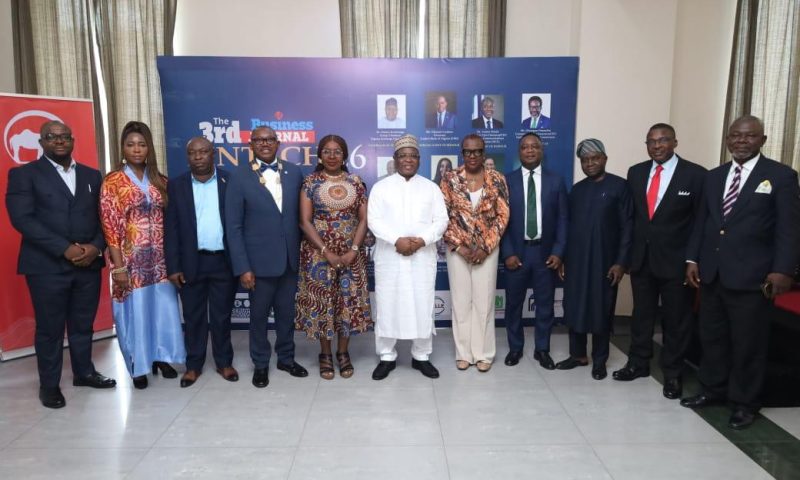
UBA Group Chairman, Elumelu Retires August 21 As Emmanuel Nnorom Takes Over

United Bank for Africa(UBA) Plc says that Group Chairman of the bank, Mr. Tony Elumelu will retire from the Board of Directors of UBA on August 21, 2026.

Elumelu’s retirement is coming on the heels of the completion of the 12-year tenure limit prescribed for Non-Executive Directors of Banks by the Central Bank of Nigeria(CBN)

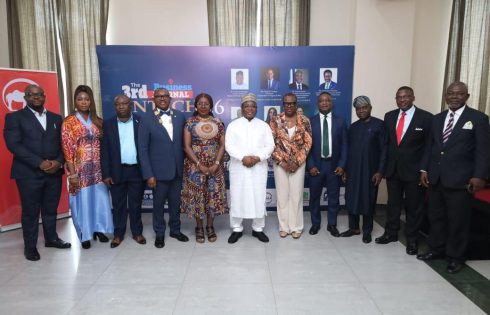
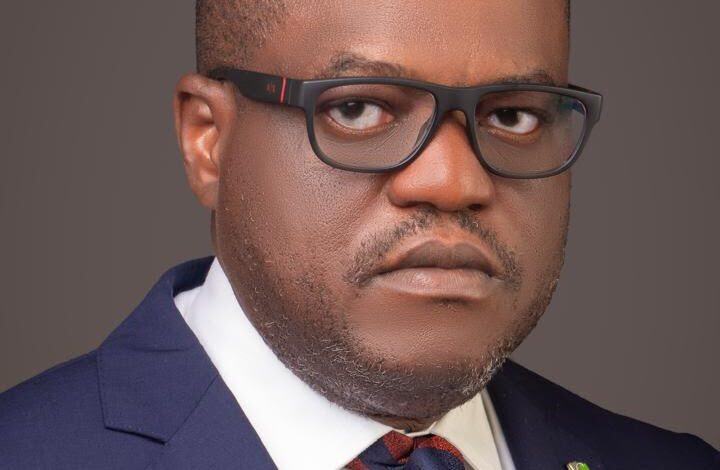
At its meeting held on July 6, 2026, the Board accepted Elumelu’s retirement and elected Mr. Emmanuel Nnorom, a Non-Executive Director of the Bank, as his successor, with effect from August 21, 2026.

The Board places on record its profound appreciation to Elumelu for his visionary leadership and exceptional contribution to the strategic vision and institutional strength of the UBA Group.

Elumelu’s tenure has been a defining chapter in the Group’s history. Under his stewardship, UBA was transformed into a Pan African institution, operating in 20 African countries and 4 global financial centres and serving over 50 million customers.

Nnorom is a chartered accountant with over ,40 years’ experience in banking, finance and audit.

He brings to the role extensive leadership experience and deep institutional knowledge of UBA.

Speaking on his retirement, Elumelu, said, “Serving United Bank for Africa has been one of the great privileges of my career. UBA has established a unique competitive position, across Africa and globally, and I leave the Board with great confidence in UBA’s future. Emmanuel Nnorom is a leader of integrity, experience and sound judgement, and I am confident that the Bank will continue to thrive under his leadership.”

Nnorom, on his appointment, said,
“I am honoured by the trust the Board has placed in me and deeply conscious of the legacy I inherit. I look forward to working with my colleagues on the Board, Management and our staff across all our markets to sustain UBA’s momentum and continue delivering long-term value to our shareholders, customers and stakeholders.”

United Bank for Africa Plc is Africa’s Global Bank.

It operates across 20 African countries and in the United Kingdom, the United States of America, France and the United Arab Emirates, UBA provides retail, commercial and institutional banking services, leading financial inclusion and implementing cutting edge technology.

UBA is one of the largest employers in the financial sector on the African continent, with 25,000 employees group wide and serving over 50 million customers globally.

Labour Party reacts as Appeal Court upholds leadership authority, dismisses unauthorized appeal

The Labour Party has commended the ruling issued by the Court of Appeal, Owerri Judicial Division, on July 2, 2026, describing it as a reaffirmation of the legitimacy of its recognized national leadership under Senator Nenadi Usman to initiate and manage legal proceedings on behalf of the party.

This ruling was delivered in Appeal No. CA/OW/104/2026: Labour Party & 14 Others v. Abia State Independent Electoral Commission & 4 Others, which addresses a pre-election dispute arising from earlier proceedings at the Federal High Court.

According to a statement released on Monday by the party’s National Publicity Secretary, Ken Asogwa, the appeal had been filed in the name of the Labour Party without the knowledge, consent, or authorization of the party’s recognized national leadership.

The statement further explained that upon discovering the appeal, the National Legal Adviser, Mrs. Taiwo Mary Ajayi, Esq., instructed Mr. C. Okoroafor through a formal letter dated June 22, 2026, to represent the party and take the necessary steps to withdraw the case.

During the proceedings at the Court of Appeal, two different attorneys appeared on behalf of the Labour Party, prompting the court to request documentary evidence confirming their authority to represent the party.

While Mrs. A. Oteh, who initiated the appeal, presented a letter allegedly issued by Mr. C. K. Igara, who claimed to be the Labour Party’s South-East Vice Chairman, Mr. Okoroafor relied on a formal authorization letter from the National Legal Adviser representing the party’s recognized national leadership.

After reviewing the documents, the appellate court acknowledged the authority granted through the Office of the National Legal Adviser as the legitimate representation of the Labour Party.

As a result, Mrs. Oteh withdrew both her representation for the party and the counter-affidavit previously submitted against the application for the withdrawal of the appeal. The court subsequently rejected the appeal and imposed costs of N100,000 against the counsel who acted under the alleged authority of Mr. Igara.

In response to the ruling, the Labour Party stated that the decision reinforces the legal principle that only the officially recognized national leadership of the party, through authorized representatives, has the right to engage legal counsel and to initiate, defend, or maintain legal actions in the name of the party.

The party further asserted that the ruling effectively reaffirmed Senator Nenadi Usman’s leadership as the legitimate and legally recognized authority of the Labour Party.

Additionally, it pledged to persist in contesting what it termed as efforts by unauthorized individuals, including Barrister Julius Abure and Mr. C. K. Igara, to represent the party or conduct legal proceedings on its behalf without proper authority.

Reiterating its dedication to democratic principles, the Labour Party committed to upholding the rule of law, constitutional order, internal party discipline, respect for judicial decisions, and the safeguarding of its corporate identity and institutional integrity.

Court orders ADC welfare secretary to pay N100m damages to two judges

The Federal High Court in Abuja has ordered the National Welfare Secretary of the African Democratic Congress (ADC), Nkemakolam Ukandu, to pay a total of N100 million in damages to the Chief Judge of the Federal High Court, Justice John Tsoho, and Justice Peter Lifu over a suit the court struck out for lack of diligent prosecution.

Justice Salim Ibrahim, who delivered the ruling on Monday, ordered Ukandu to pay N50 million each to Justice Tsoho and Justice Lifu within 14 days.

The order followed an oral application by counsel to the two judges, Mr J. U. K. Igwe, SAN.

Earlier, Justice Ibrahim struck out Ukandu’s suit, marked FHC/ABJ/CS/1165/2026, after finding that the plaintiff had failed to diligently prosecute the matter.

Ukandu had sued the National Judicial Council (NJC), Justice Tsoho and Justice Lifu over allegations of judicial bias and disobedience to court orders. He sought an order compelling the NJC to investigate claims of corruption, abuse of judicial powers, and bias allegedly committed by the two judges.

However, the plaintiff and his lawyer repeatedly failed to appear before Justice Ibrahim after the case was assigned to him.

The judge had, on June 30, warned that the suit could be dismissed if neither Ukandu nor his counsel appeared at subsequent proceedings.

The case arose from the ongoing leadership dispute within the ADC involving an aggrieved party member, Nafiu-Bala Gombe, whose substantive suit is pending before Justice Lifu.

Gombe is seeking a court order restraining the leadership of the party, led by former Senate President David Mark, from presenting themselves as the legitimate leaders of the ADC.

Ukandu, who is seeking to be joined in that case, accused Justice Tsoho and Justice Lifu of manifest bias and alleged that they were acting in the interest of certain individuals against the party.

In his originating suit, Ukandu challenged the decision of the Chief Judge to reassign the leadership dispute from Justice Emeka Nwite to Justice Lifu, arguing that the reassignment violated both an earlier order of Justice Nwite and a decision of the Supreme Court.

Ekiti guber fallout: Oyebanji visits ADC candidate, extends hands of fellowship.

Governor Biodun Oyebanji on Monday evening paid a courtesy visit to the Candidate of the African Democratic Congress, ADC, in the just concluded governorship election, Ambassador Dare Bejide at his residence in Ado-Ekiti.

The visit was in fulfillment of the Governor’s decision to reach out to all the contestants in the election, and seek their cooperation and input in the governance of the State.

Governor Oyebanji, who was accompanied on the visit by his Special Adviser on Political Matters, Chief Jide Awe, was received by Ambassador Bejide.

The two leaders had some discussions on the development of the State.

Recall that Governor Oyebanji had shortly after the official announcement of the June 20 election reached out to the candidates of the PDP and ADC, Dr Wole Oluyede and Ambasasor Bejide respectively on the phone with a promise to follow up with a personal visit.

The Governor has since visited Dr Oluyede at his residence together with some leaders of the party, before Monday’s visit to the ADC Candidate’s residence.

Governor Oyebanji’s policy of inclusion is geared towards promoting unity, peace, understanding and mutual respect among the citizens as a major enabler for sustainable development and growth.

Technology, intelligence key to tackling Nigeria’s evolving security threats — COAS

The Chief of Army Staff, COAS, Olufemi Oluyede, has said the Nigerian Army is strengthening its investment in technology, intelligence and modern combat equipment to address the country’s evolving security challenges.

Oluyede made the remarks on Monday at the grand finale of the 2026 Nigerian Army Day Celebration, NADCEL, and the African Land Forces Forum in Port Harcourt, Rivers State.

He said the changing nature of security threats requires a military that is professionally trained and equipped with modern technologies capable of responding to contemporary warfare.

According to the Army Chief, the Nigerian Army has continued to adapt its operational strategies by modernising its capabilities and strengthening collaboration with other security agencies.

He noted that sustained military operations, improved intelligence gathering and the deployment of modern military assets had enhanced the Army’s efforts against insurgency, terrorism, banditry and other security threats.

Oluyede said intelligence and technology have become central to the Army’s operations, enabling troops to identify threats more accurately, respond swiftly and conduct operations with greater precision.

He added that the Army would continue to acquire and deploy modern combat equipment and other force enablers to improve operational effectiveness and enhance the safety of personnel.

The COAS said the Army’s modernisation programme also focuses on training officers and soldiers to operate advanced military platforms and adapt to emerging security challenges.

He stressed that recently acquired equipment would be fully integrated into counter-insurgency, counter-terrorism and other internal security operations across the country.

Oluyede underscored the importance of intelligence-driven operations, saying the growing complexity of terrorism and organised crime requires timely intelligence, inter-agency collaboration and the application of emerging technologies.

He said the Nigerian Army would continue to work closely with the Nigerian Navy, the Nigerian Air Force and other security agencies to improve intelligence sharing and coordinate joint operations.

The Army Chief noted that innovation, intelligence and rapid decision-making have become critical elements of modern warfare, adding that technology must be complemented by professionalism, discipline and adherence to ethical standards.

He also called for continued public support, urging Nigerians to provide credible and timely information to security agencies to strengthen efforts to combat insecurity.

Lagos expands fire response network with 11 new stations, 62 trucks

Lagos State Governor, Babajide Sanwo-Olu, has revealed that his administration has expanded the state’s emergency response infrastructure with the establishment of 11 new fire stations, the deployment of 62 state-of-the-art firefighting vehicles, the reconstruction of the Lagos State Fire and Rescue Service headquarters, and the recruitment of 150 additional firefighters currently undergoing training at the upgraded Fire Academy.

The governor also disclosed that emergency response agencies in the state rescued more than 1,900 people and prevented property losses estimated at N118 billion in 2025.

Sanwo-Olu made the disclosure on Monday at the opening of the third edition of the Lagos International Fire Safety Conference in Ikeja, themed “Preventing the Preventable: Strengthening Fire Safety in Buildings and Business Hubs.” He was represented at the event by the Deputy Governor, Dr Kadri Obafemi Hamzat.

According to the governor, the state government remains committed to strengthening emergency response capabilities while placing greater emphasis on preventive measures, regulatory enforcement, public awareness campaigns and strategic collaboration with relevant stakeholders.

He noted that the state had intensified the enforcement of fire safety regulations through stricter inspections and the implementation of the Fire Safety Levy.

“The compliance must go beyond obtaining certificates to ensuring that safety equipment and systems remain fully functional,” Sanwo-Olu said.

The governor explained that the latest interventions have increased the number of fire stations across Lagos to 29, with additional facilities currently under construction in Yaba, Ikotun and Oworonshoki.

He added that the expansion demonstrates the effectiveness of the state’s integrated emergency management framework.

Sanwo-Olu also announced the introduction of the Fire Marshal Programme, an initiative designed to train volunteers in homes, schools, markets, offices, worship centres and industrial facilities to detect fire hazards early, coordinate emergency evacuations and work closely with professional responders before incidents escalate.

Reaffirming his administration’s commitment to safeguarding lives and property, the governor pledged sustained investment in personnel, equipment and emergency response systems.

He also urged property developers, business owners and residents to embrace a culture of fire prevention, stressing that proactive safety measures remain more effective than dealing with the consequences of disasters.

President Tinubu vows to modernise Nigerian Army as security threats intensify

President Bola Tinubu has reiterated his administration’s resolve to reposition and strengthen the Nigerian Army as the country grapples with growing security challenges.

The President made the declaration at the closing ceremony of the 163rd Nigerian Army Day Celebration, held on Monday at the Yakubu Gowon Stadium in Port Harcourt, Rivers State.

Represented by Vice President Kashim Shettima, Tinubu said his administration would modernise the Nigerian Army by deploying emerging technologies and strengthening operational capabilities across all theatres of operation to improve military planning, combat readiness and the nation’s response to evolving security threats.

“My administration is firmly committed to countering contemporary threats through the adoption of emerging technologies and the building of capacity across all battle spaces, thereby improving operational planning and combat readiness,” he stated.

He noted that ongoing investment in research and development within the Armed Forces, alongside efforts to advance technology and strengthen homegrown innovation, continues to gain traction.

Central to this drive, he said, is the revitalisation of the Defence Industries Corporation of Nigeria, DICON, with the forum’s partnership expected to inject fresh momentum into local defence manufacturing, create skilled jobs and strengthen Nigeria’s capacity to support counter-terrorism operations through indigenous production.

Tinubu also welcomed the establishment of the African Land Forces Forum, describing it as a platform for strengthening security cooperation across Africa.

“This administration is committed to modernising our Army to enhance its capacity to meet contemporary security challenges,” Tinubu said, adding that his government shares the aspirations of the forum’s organisers to elevate Nigeria’s standing in defence diplomacy and enhance the Army’s combat readiness through shared expertise.

The President commended Nigerian troops for their sacrifices in safeguarding the nation’s territorial integrity and pledged that the Federal Government would continue to support the families of personnel who lost their lives in the line of duty.

“To the officers and men of the Nigerian Army, you carry a trust that few are asked to bear, and you carry it with an honour that steadies the whole nation.

“Serve the people with the same devotion you bring to defending them, for the uniform commands respect only when it protects the weak and upholds the dignity of every citizen,” he said.

Also speaking, Rivers State Governor Siminalayi Fubara commended the Nigerian Army for its notable strides in technological advancement and manpower development.

He reaffirmed his administration’s continued support for the institution and called for improved welfare for soldiers, saying better conditions of service would enhance their effectiveness in carrying out their duties.

In his welcome remarks, the Chief of Army Staff, Lieutenant General Waidi Shaibu, said this year’s celebration comes at a critical period, with more than 80 per cent of Nigerian soldiers currently engaged in operations against insurgency and other security threats across the country.

He observed that the Army has continually evolved alongside the nation over the decades, adapting to emerging realities and assuming greater responsibilities in defence of the country.

Shaibu said the Army is aware of the infiltration of jihadist groups from neighbouring countries and assured Nigerians that troops remain fully prepared to confront and defeat the threat.

He described the Army as an institution anchored on selfless service, unwavering loyalty, honour, courage and sacrifice, stressing its unwavering commitment to defending Nigeria’s sovereignty, preserving its territorial integrity and protecting the lives and aspirations of its citizens.

Describing the anniversary as a renewal of the Army’s dedication to national service, he said, “This celebration is also a reaffirmation of our commitment to protecting the nation and serving the people, regardless of the challenges of any era.”

He added that the Army is closely monitoring the deteriorating security situation across the Sahel region.

“We have already noticed the footprints of foreign jihadists across our borders. However, I would like to assure us all that the Nigerian Army is alert and equal to the task.

“Like our forebears who successfully dealt with the challenges of their generations during the two World Wars, the Nigerian Civil War and the ECOMOG missions, the Nigerian Army of today will certainly prevail in confronting the security challenges of our generation,” Shaibu said.

This year’s Nigerian Army Day Celebration was held under the theme, “Protecting the People and Serving the Nation: A Way Forward for the Nigerian Army.”

The event featured demonstrations of the Army’s land and aerial combat capabilities, alongside parades by its various corps and departments.

Dignitaries in attendance included the Minister of Defence, the Chief of Defence Staff, the Chief of the Naval Staff, the Chief of the Air Staff, former President Olusegun Obasanjo, former Head of State Yakubu Gowon, retired service chiefs and Army chiefs from several African countries, among other dignitaries.

Galaxy Backbone woos banks after CBN directive

Galaxy Backbone woos banks after CBN directiveThe Federal Government-owned Galaxy Backbone has intensified efforts to attract banks, fintechs and other financial institutions to its digital infrastructure services following the recent directive by the Central Bank of Nigeria requiring payment transaction data generated within the country to be stored on local servers.

The move was disclosed in a statement issued by Galaxy Backbone on Monday after the organisation hosted chief information officers from banks, fintech firms and other technology stakeholders at its second-quarter webinar on digital trust, regulatory compliance and infrastructure resilience.

The statement said the webinar, themed “Building Digital Trust in Nigeria’s Financial Sector: Navigating Regulatory Compliance and Infrastructure Performance,” focused on the growing need for secure digital infrastructure as financial institutions adjust to evolving regulatory requirements and increasing digital adoption.

According to the statement, the event came as the CBN directed banks, fintech companies, mobile money operators and other payment service providers to store payment transaction data generated within Nigeria on local servers.

“The policy is intended to strengthen regulatory oversight, improve transparency, reduce concentration risks and ensure that critical payment data reains within the country’s jurisdiction,” the statement read.

Opening the webinar, Galaxy Backbone’s Executive Director, Finance, Ibrahim Sani, said the rapid transformation of Nigeria’s financial sector had reinforced the need for trusted digital infrastructure capable of supporting secure, reliable and future-ready financial services.

The statement read, “He noted that Galaxy Backbone continues to provide the digital backbone that supports both public and private sector institutions, including several financial institutions that already rely on its secure connectivity, cloud and data centre services.”

Sani added that the organisation remained well positioned to support the industry’s compliance journey by providing resilient infrastructure that meets evolving regulatory and business requirements.

The statement also quoted the Executive Director, Digital Exploration and Technical Services, Olumbe Akinkugbe, as saying that compliance with CBN directives and other regulatory frameworks was essential to strengthening transparency, accountability, consumer confidence and the security of financial data in Nigeria’s increasingly digital economy.

It added that Galaxy Backbone’s Head of Automation and Integration, Thomas Oghenebhumhe, demonstrated the organisation’s sovereign cloud capabilities during the webinar, explaining how resilient cloud infrastructure enables financial institutions to innovate faster, improve operational efficiency, protect sensitive information and maintain compliance with regulatory standards.

According to the statement, the presentation generated discussions among participants on cloud migration, data sovereignty and regulatory compliance.

The Head of Data Centre Operations, Samuel Olusola Oyeleke, also highlighted Galaxy Backbone’s globally certified Tier III and Tier IV data centre infrastructure, noting that the facilities provide resilience, high availability and reliability to support uninterrupted digital services, disaster recovery and business continuity for mission-critical financial operations.

Speaking at the close of the webinar, the Executive Director, Customer Centricity and Marketing, Olusegun Olulade, stressed the need for collaboration among regulators, technology providers and financial institutions to strengthen digital trust.

“He noted that as Nigeria’s financial ecosystem becomes increasingly digital, organisations must invest in infrastructure that not only meets regulatory requirements but also guarantees resilience, security, business continuity and customer confidence,” the statement read.

Olulade reaffirmed Galaxy Backbone’s commitment to supporting the financial services industry with “secure, resilient and globally aligned digital infrastructure that enables institutions to innovate with confidence while maintaining compliance with evolving regulatory standards.”

The statement added that the organisation’s Uptime-certified data centres, Payment Card Industry Data Security Standard certification, sovereign cloud platform and nationwide fibre infrastructure provide banks, fintechs and payment service providers with platforms for secure data hosting, payment security, regulatory compliance, business continuity and disaster recovery.

It stated that the infrastructure also supports the growing need for data sovereignty by ensuring that critical financial data is securely hosted within Nigeria in line with regulatory expectations.

The PUNCH earlier reported that the Central Bank of Nigeria directed banks, fintech firms and other payment service providers to store payment transaction data generated within the country on local servers from January 1, 2027, as part of new measures to strengthen oversight of the fast-growing digital payments ecosystem.

The directive was contained in a circular issued by the Payments System Supervision Department of the CBN and addressed to deposit money banks, microfinance banks, mobile money operators, switching and processing companies, payment terminal service providers, payment solution service providers, super agents and other licensed operators in the payments industry.

The circular, signed by the Director of the Payments System Supervision Department, Rakiya Yusuf, also introduced new market structure rules, beneficial ownership disclosure requirements and systemic oversight measures for payment service operators.

Marketers push N800/l petrol, seek import licences

Independent petroleum marketers on Monday pushed for the restoration of importation rights and projected that the pump price of Premium Motor Spirit, popularly called petrol, could fall below N800 per litre as the Federal Government intensified efforts to force down the cost of petrol.

The development came as the Federal Government met with major operators in the downstream petroleum sector, including representatives of the Dangote Petroleum Refinery, over what it described as the disconnect between falling global crude oil prices and the relatively high pump prices of petrol in the domestic market.

The stakeholders’ meeting on cost-reflective pricing of PMS, held at the headquarters of the Nigerian Midstream and Downstream Petroleum Regulatory Authority in Abuja, brought together the Federal Competition and Consumer Protection Commission, the Independent Petroleum Marketers Association of Nigeria, the Major Energy Marketers Association of Nigeria, the Depot and Petroleum Products Retailers Association of Nigeria, the Depot and Petroleum Products Marketers Association of Nigeria, the Nigerian Association of Road Transport Owners, and other major operators in the sector.

Also in attendance were chief executives and representatives of TotalEnergies, Eterna Plc, Matrix Energy Group, officials of the NMDPRA, and delegates from the Dangote refinery.

The PUNCH reports that petrol prices have remained a major source of hardship for households and businesses in Nigeria, with pump prices surging following the spike in global crude oil prices triggered by tensions in the Middle East, particularly between Iran and the United States.

Although crude prices have moderated after diplomatic efforts eased the tensions, the reduction has yet to be fully reflected in domestic petrol prices, prompting the Federal Government to convene a stakeholders’ meeting aimed at driving a fair reduction in pump prices.

The National President of the Independent Petroleum Marketers Association of Nigeria, Abubakar Maigandi, urged the government to permit independent marketers to import petroleum products directly, saying greater competition would ultimately reduce prices.

Maigandi also called for support for local refineries, particularly the Dangote Petroleum Refinery, while stressing the need to allow marketers to import products whenever necessary.

“Our major concern is that if products are to be distributed, let IPMAN buy products directly from the Dangote refinery and then, if we request importation, let IPMAN import by themselves. What we are trying to encourage is our local refinery. Let the government allow the local refinery to function properly and assist those who intend to refine products too,” he said.

The IPMAN president assured Nigerians that independent marketers were prepared to slash petrol prices significantly and projected that pump prices could fall below N800 per litre under the right market conditions.

“The price of the product is coming down bit by bit. Even when the price was increased, it was not increased at the same time. Likewise, now, as the price is coming down, we too are bringing the price down. If you check prices all over the country, you will see that independent petroleum marketers are reducing their prices gradually. Presently, we have reduced by N125 per litre nationwide,” he stated.

Miagandi added, “At any time when there is a reduction in price, we are ready to reduce the price to even below N800 per litre, not even N900. It depends on the way we buy the product from the private depot owners and the Dangote refinery.

“I thank God that the Dangote refinery has accepted independent petroleum marketers to start purchasing products directly. It is a plus, and very soon the populace will see the change in terms of price.”

The renewed push for importation comes amid an intense pricing battle in the downstream sector following the commencement of large-scale production at the Dangote refinery and the deregulation of the petrol market

Speaking to journalists after a closed-door session with the stakeholders, the Minister of State for Petroleum Resources (Oil), Senator Heineken Lokpobiri, said the government remained concerned that current petrol prices were not reflective of prevailing crude oil prices in the international market.

According to him, the government had engaged marketers in frank discussions aimed at ensuring that the reduction in global crude prices translates into lower pump prices for Nigerians.

Lokpobiri said, “The engagements are ongoing. We had very fruitful and frank discussions with the marketers and the leaders of the downstream sector of the petroleum industry with a view to driving down the price of PMS.

“My own opinion is that the petrol prices are not cost-reflective; they are not reflective of the cost of crude oil. But the marketers are also saying that crude oil prices are still high.

“In fact, somebody told us right there that the crude oil price for a month is still over $90 per barrel. But we are saying that when Brent crude was over $118 per barrel, the price was rapidly going up. Now that the price has come down drastically, why has petrol not come down correspondingly? That is a worry.”

The minister said the government had communicated the concerns of consumers to operators and directed them to return with practical measures that would lead to lower petrol prices.

“We have said that these are the issues of concern to the government. They have also said they will go back and think about what they can put together with a view to addressing the issue of the high cost of PMS that is not reflective of the price of crude in the market.

“We told them the concern of the Nigerian consumer, and they have also said they will go back and think of what concrete steps can be taken with a view to ensuring that the price drops,” he stated.

On when Nigerians should expect a reduction in petrol prices, Lokpobiri said discussions were still ongoing and declined to give a deadline. “As we called you today, we will call you as soon as possible. But the important thing is that discussions are ongoing,” he added.

Before the closed-door meeting, Lokpobiri warned petroleum marketers against using profits from previously acquired expensive fuel inventories as justification for maintaining high petrol prices, insisting that the benefits of lower replacement costs must be passed on to consumers.

The government said the continued disconnect between falling international crude oil prices and domestic petrol prices had become a source of concern, warning petroleum marketers against sustaining high pump prices of Premium Motor Spirit despite declining global crude prices and insisting that Nigerians should enjoy the benefits of lower replacement costs in a deregulated market.

He insisted that temporary gains realised from inventories purchased when crude oil prices were higher should not become the basis for sustaining elevated pump prices after global oil prices had declined.

“I am aware that PMS pricing is influenced by several factors beyond crude oil prices, but it is equally important to distinguish between genuine replacement cost and windfall gains arising from inventory management.

“Temporary gains realised from inventories acquired at higher prices should not become the basis for sustaining elevated pump prices after replacement costs have declined. As inventories are replenished at lower costs, the benefits of those lower costs should be transmitted to consumers in a timely and transparent manner. That is the essence of a competitive and efficiently functioning market,” he stated.

FCMB Asset Management earns higher GCR ratings

FCMB Asset Management earns higher GCR ratingsFCMB Asset Management Limited has received an upgrade to its national long-term and short-term issuer ratings from GCR Ratings, reflecting the firm’s financial performance, liquidity position and the stronger credit profile of its parent company, FCMB Group Plc.

According to a statement on Sunday, GCR upgraded the company’s national scale long-term and short-term issuer ratings to A(NG) and A1(NG) from A-(NG) and A2(NG), respectively, while maintaining a stable outlook.

The rating agency said the upgrade was supported by FCMB Asset Management’s competitive position, financial discipline, and the strengthened credit profile of FCMB Group Plc.

GCR noted that the firm’s decade-long operating track record, brand recognition, diversified product offerings and distribution network contributed to its standalone credit strength, alongside consistent earnings growth and an unleveraged balance sheet.

According to the agency, FCMB Asset Management’s competitive position is supported by “its relatively long track record, strong brand franchise, established product and geographical distribution network, and cross-selling opportunities.”

GCR added that the company ranked among the top five asset managers in Nigeria, with an estimated five per cent share of the fragmented market as of December 31, 2025.

The statement said the company’s revenue increased by 30 per cent, while operating cash flow rose by 13 per cent, allowing the business to fund its operations without debt.

It added that liquidity sources relative to uses improved to 5.0 times in December 2025 from 3.6 times a year earlier, while its EBITDA margin exceeded 58 per cent.

Commenting on the rating action, the Chief Executive Officer of FCMB Asset Management Limited, James Ilori, said, “This upgrade is an important external validation of a strategy we have pursued with discipline over many years: building an investment franchise that performs reliably, governs itself rigorously, and earns trust in every market cycle.

“It speaks to the strength of our membership of FCMB Group Plc and to a culture that holds itself to local and global standards of risk management and capital stewardship.

“As Nigeria’s asset management industry enters a new era of higher capital thresholds and rising investor expectations, we intend to lead from the front — ahead of regulatory timelines, ahead in digital transformation, and ahead in the outcomes we deliver for the clients who trust us to assist them in achieving their investment objectives.”

FCMB Asset Management manages a range of collective investment schemes, including the FCMBAM Money Market Fund, FCMBAM Debt Fund, FCMBAM Equity Fund, FCMBAM USD Bond Fund, and the FCMB-TLG Private Debt Fund. The company also provides discretionary and non-discretionary portfolio management services for high-net-worth and institutional clients.

Established in 1997, FCMB Asset Management Limited is regulated by the Securities and Exchange Commission and provides portfolio management and investment advisory services to individual and institutional investors. It is a subsidiary of FCMB Group Plc