
Seplat to complete 10% NNPC JV sale December
Seplat Energy is expected to complete the sale of a 10 per cent working interest in its joint venture with the Nigerian National Petroleum Company Limited by December, with the transaction expected to reshape the energy firm’s production profile and reserves.

The company disclosed this in an update obtained by The PUNCH on the proposed disposal of Seplat’s interest in the NNPCL/SEPNU Joint Venture for a headline transaction value of approximately $281.6m.

Seplat said its subsidiaries, Seplat Energy Offshore Limited and Seplat Energy Producing Nigeria Unlimited, had signed a legally binding Heads of Agreement with NNPC Limited for the transaction.

The deal is subject to applicable regulatory approvals and other customary conditions, with completion expected in the second half of 2026, meaning the completion is expected between October and December.

Following completion, SEPNU’s working interest in the joint venture assets will fall from 40 per cent to 30 per cent, while NNPC Limited’s interest will increase from 60 per cent to 70 per cent.

Despite the reduction in its stake, Seplat said it would continue to own 100 per cent of SEPNU, which will remain the operator of the joint venture.

“Following completion of the transaction, SEPNU will retain a 30 per cent working interest in the joint venture assets and will continue as Operator. NNPC Limited’s working interest in the JV will increase from 60 per cent to 70 per cent. Seplat Energy will continue to own 100 per cent of the share capital of SEPNU,” Seplat said.

Seplat disclosed that the commercial terms of the $281.6m transaction represent approximately 25 per cent of the gross transaction consideration it paid, together with any contingent consideration payable by SEOL, for its acquisition of SEPNU.

In simple terms, the company is saying that the $281.6m it expects to receive from selling the 10 per cent JV interest is equivalent to about one-quarter of the total consideration it paid to acquire SEPNU, including any additional payment that could become due under the acquisition agreement.

It was shown that the transaction would have a direct impact on Seplat’s attributable production.

The company explained that SEPNU currently represents approximately 80,000 barrels of oil equivalent per day at the midpoint of its 2026 group production guidance of between 135,000 barrels of oil equivalent per day and 155,000 boepd.

With the transaction effective from 1 April 2026, that contribution will fall to approximately 65,000 boepd.

Seplat stated that its production guidance would be updated upon completion of the transaction.

The company’s 2030 production target will also be affected, falling from 200,000 boepd to 170,000 boepd on a net working-interest basis.

However, Seplat said the proceeds from the transaction and the lower capital expenditure associated with the divested interest would largely offset the net cash flow impact of the reduced working interest in the JV assets through 2030.

The transaction will also affect the company’s reserves position, as the disposal would result in group 2P reserves being adjusted down by approximately 13 per cent to 872.9 million barrels of oil equivalent.

It said an updated group 2P reserves figure would be provided following completion of the transaction.

Beyond the immediate impact on production and reserves, Seplat said the disposal would provide funds to support its capital allocation plans.

The company intends to use approximately 50 per cent of the proceeds to reduce debt and the remaining 50 per cent to enhance shareholder returns.

Subject to completion, approximately $140m, equivalent to 23.3 US cents per share, will be paid to shareholders as a cash dividend.

The payment will be made in addition to the underlying business performance dividend.

The company said $200m of its Advanced Payment Facility had already been repaid in the second quarter of 2026, while the remaining $100m would be paid after completion of the transaction.

It was added that the transaction would not change the NNPC/SEPNU JV production targets, which remain supported by production performance year-to-date.

Commenting on the transaction, Seplat Energy’s Chief Executive Officer, Roger Brown, said the joint venture remained strategically important to the company and Nigeria.

“The NNPC/SEPNU JV is one of the pre-eminent licence areas in Nigeria and of strategic importance to the country. Our relations with our partner, NNPC, are strong and we are fully aligned on the agreed work programmes. Together, we are focused on delivering significant value from the JV which has responded very well to increased development activity since we became operator and has clear potential to deliver strong production growth well into the next decade.”

NDIC begins payouts to depositors of 46 failed MFBs

NDIC logoThe Nigeria Deposit Insurance Corporation has commenced the payment of insured deposits to customers of 46 failed microfinance banks whose operating licences were revoked by the Central Bank of Nigeria, while intensifying loan recoveries and asset sales to reimburse depositors with balances above the insured limit.
Managing Director and Chief Executive Officer of the NDIC, Thompson Sunday, disclosed this on Wednesday in Lagos during a retreat for members of the House of Representatives Committee on Insurance and Actuarial Matters.

Speaking on the sidelines of the event, Sunday said the corporation moved swiftly to begin liquidation after the CBN revoked the licences of the affected MFBs and appointed the NDIC as provisional liquidator.

“We’ve started paying depositors of those banks, and gradually, we intend to cover all the insured depositors,” he said.

According to him, the NDIC is also pursuing debtors of the failed institutions and disposing of their assets to generate funds for the payment of uninsured deposits.

“Our function as liquidator involves paying the guaranteed sums. Thereafter, we go after those owing the institutions and ensure that available assets are sold to realise funds for settling the uninsured portions of deposits,” Sunday said.

He said the corporation had overhauled its reimbursement process through a partnership with the Nigeria Inter-Bank Settlement System, enabling automatic payments to depositors through their Bank Verification Number.

Under the arrangement, depositors with linked BVNs receive payments directly into their accounts in other banks without filing claims, thereby reducing delays in accessing insured funds.

Sunday said the same approach had accelerated payments to depositors of Heritage Bank, where about 700,000 customers have already received their insured deposits since the lender’s licence was revoked.

He, however, noted that some Heritage Bank depositors were yet to be traced because the bank inherited customer accounts from legacy institutions, including Enterprise Bank, Spring Bank and Guardian Express Bank, many of which predated the BVN system.

“There are depositors that we have not been able to trace, and this is an opportunity for them to come forward. Once they do, we will pay them,” he said.

He added that proceeds from loan recoveries and the sale of assets belonging to failed banks would be used to settle depositors whose balances exceeded the insured limit.

Sunday also said the recent banking sector recapitalisation had strengthened lenders’ ability to support economic growth but stressed that stronger capital must be complemented by effective supervision, sound corporate governance and robust risk management to safeguard financial stability.

I don’t respond to my subordinate – Amaechi fires back at Wike

The African Democratic Congress, ADC, vice presidential candidate, Rotimi Amaechi, has fired back at the FCT Minister, Nyesom Wike, who said Atiku Abubakar picked him as running mate because of money.


Featuring in an interview on ‘Politics Today’, a programme on Channels Television on Tuesday, Amaechi said he does not respond to his subordinate.

Wike during a media parley with selected journalists on Tuesday had said that Amaechi does not have political value in Rivers state.

Reacting, Amaechi said, “I don’t respond to my subordinate. Wike never hired me. By the time I finish mourning and go into campaign, anybody that insults me, I will insult him back.”

It will be recalled that Amaechi was a presidential candidate of the African Democratic Congress, ADC, but lost out to Atiku Abubakar in the party’s primaries.

Atiku later approached Amaechi after the exercise and later, the ADC announced Amaechi as his running mate ahead of the 2027 general elections.

2027: APP will win elective positions through ballot not court – Ugochinyere

The member representing Ideato North/South Federal Constituency at the National Assembly,  Ikenga Ugochinyere has declared that Action Peoples Party, APP, will win elective positions in the coming general elections through the ballot not court.
He made the declaration at his country home Umukegwu Akokwa in Ideato North as he addressed party supporters and political.

The lawmaker maintained that 2027 electoral contest will be historical as APP is fully prepared for  the exercise not minding  what he termed evil scheming of the ruling party to manipulate the process, especially in Imo  State.

Ugochinyere, the  flag bearer of  APP for  Ideato North/South Federal seat, said that the party is a new political movement that will change the political landscape of the State.

The Ideato born politicians alleged that the ruling party has concluded plans to rig the election but that they would be disappointed as he would ensure that the electorate defended their booths during and after casting their votes.

He encouraged his people and party faithful to always stand and defend their mandate, pointing out that exercising their franchise is their fundamental right that cannot be taken away from them.

“You people elected me while I’m in exile and you are going to repeat the same thing this time around.

“We will never allow outsiders to destroy the legacies of our forefathers who gave their best to ensure better society.

“Our opponents are afraid of us; they know they lack electoral value, that’s why they are resorting to violence, destroying our billboards but we are not going to allow them. We will continue to beat them at their own game,” he said.

Lagos-Calabar Highway won’t go anywhere, Nigeria can’t afford it – Donald Duke

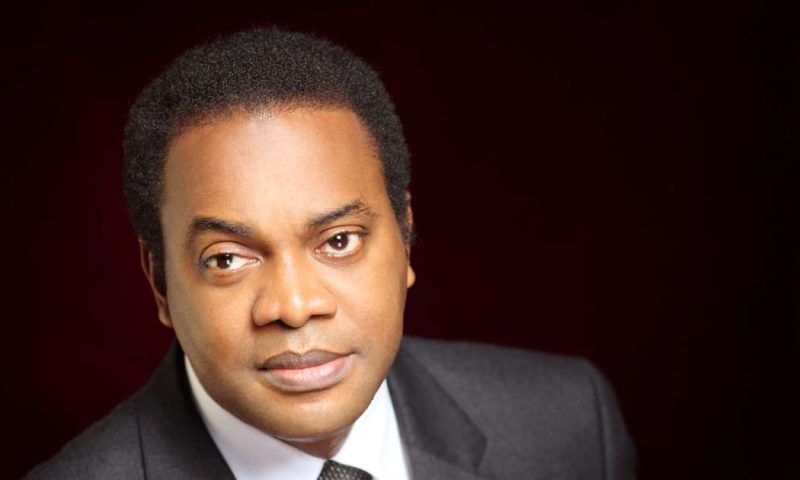
The Peoples Redemption Party, PRP, presidential candidate, Donald Duke, has said that the Nigerian government cannot afford the Lagos-Calabar Coastal Highway, noting that it won’t go anywhere.
Featuring in an interview on Arise Television’s ‘Prime Time’ on Tuesday, Duke argued against ‘unnecessary’ projects.

He suggested that the Nigerian government should rather prioritize investing in essential services like electricity and healthcare.

“Nigeria cannot afford the Lagos-Calabar Coastal Highway. I don’t think the road will go beyond Epe.

“And I think the road serves other purposes because I drove once on the road, and all I saw was land reclamation and all that.

“There is already a road from Lagos to Calabar. I’ve driven from Lagos to Calabar several times. If the road is poor, fix it.

“There are some expenditures we make that do not reflect the realities of our circumstances.

“The amount spent on that road could be better spent providing electricity or upgrading the healthcare system.

“Last year, I think the capital budget that was released for health was barely 36 million naira, and this came from the minister himself.

“That’s pathetic for a country of 230 million people. Not to talk of the schooling system that is hardly funded,” he said.

Osun 2026: Gov Adeleke alleges EFCC plot to freeze govt accounts

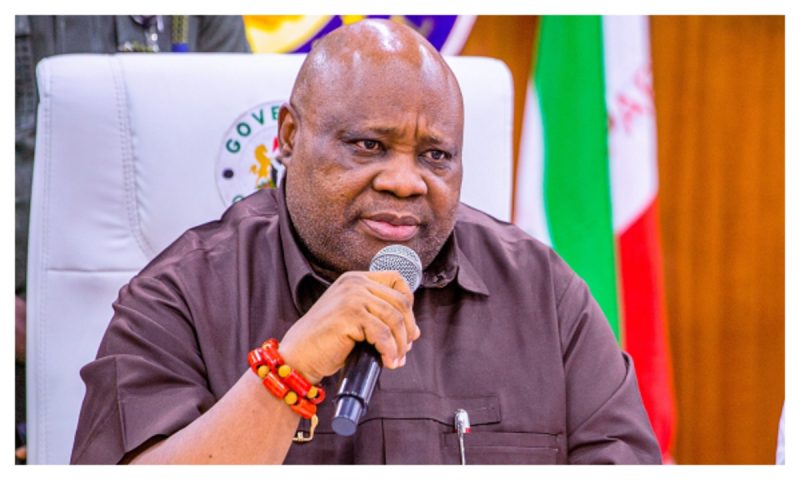
Osun State Governor, Ademola Adeleke, has alleged that the Economic and Financial Crimes Commission, EFCC, is planning to freeze the bank accounts of the state government ahead of the August 15 governorship election.
This allegation was contained in a statement issued on Tuesday in Osogbo by the Commissioner for Information and Public Enlightenment, Kolapo Alimi, on behalf of the governor.

According to the statement, “the state government received credible reports that the anti-graft agency had concluded plans to freeze all Osun State Government accounts.”

The governor also alleged that the EFCC was planning to freeze the accounts of top government functionaries, a move that would disrupt government operations in the days leading to the governorship election.

Adeleke described the alleged plan as “the height of lawlessness. Any attempt to freeze the state’s accounts would be aimed at paralysing government activities before residents go to the polls on August 15.

“There is no legal basis or justification for any push to freeze the state government accounts. The anti-graft agency has no legal powers to freeze the account of a state government.”

He maintained that the reported move, if carried out, would amount to an abuse of power and could undermine the smooth running of government business during a critical period in the state.

Governor Adeleke also described it as an emerging threat to the administration’s ability to function ahead of the election.

NAF bomb terrorists hideout in Borno, 12 suspected insurgents neutralised

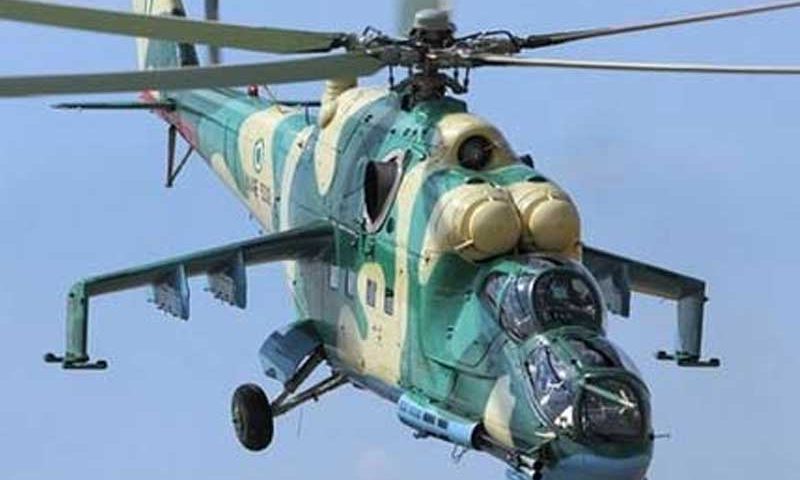
The Nigerian Air Force, NAF, has reportedly destroyed a suspected terrorist enclave in Borno State, neutralising about 12 suspected insurgents during a precision airstrike carried out under Operation HADIN KAI.
The operation was reported by security analyst, Zagazola Makama.

According to the report, the airstrike was conducted on August 4 after intelligence revealed renewed terrorist activities around Chiralia, a densely forested area believed to have been used by insurgents as a hideout because of its difficult terrain and natural cover.

Makama reported that an Intelligence, Surveillance and Reconnaissance, ISR, platform was deployed at about 11:40am. to carry out an armed reconnaissance mission over the area.

During the surveillance operation, the aircraft reportedly identified suspected terrorists moving within the location alongside several concealed structures believed to have served as operational shelters, logistics bases and staging points for insurgent activities.

“After confirming the targets, attack aircraft carried out precision strikes on the identified locations, recording direct hits on the concealed structures,” the report stated.

A post-strike Battle Damage Assessment, according to Makama, confirmed that the suspected terrorist camp and its supporting infrastructure were destroyed, while about 12 insurgents were neutralised during the operation.

Makama further reported that secondary explosions and fires observed after the strike suggested that additional weapons, equipment and supplies stored within the enclave were also destroyed.

Military sources, according to the report, described the mission as an intelligence-driven operation that reflected the growing coordination between aerial surveillance and precision strike capabilities under Operation HADIN KAI.

The sources added that the operation is expected to weaken the operational capacity of the terrorist cell by denying it a safe haven and disrupting its ability to regroup, plan attacks and sustain logistics within the area.

Makama noted that although the overall security situation across the theatre remains relatively calm, military authorities believe the threat remains unpredictable because of the fluid movement of insurgents, adding that troops will continue sustained offensive operations against terrorist hideouts across the North-East.

Transfer: Salah finally begins negotiations to join new club

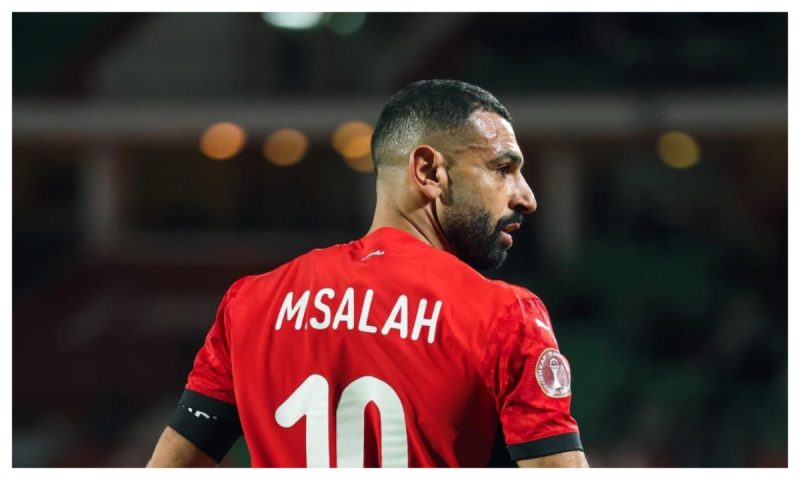
Turkish Super Lig club, Trabzonspor, have confirmed they have begun negotiations to sign free agent Mo Salah.
Salah has been without a club since leaving Liverpool at the end of last season.

The Egypt international now appears to decide where he will play next.

“Negotiations have begun regarding the transfer of professional footballer Mohamed Salah to our club,” Trabzonspor said in a terse statement.

Salah had initially been linked with another Turkish club Besiktas.

However, the player’s agent denied they were any talks.

Reports say Salah will sign a two-year contract with Trabzonspor.

Boeing 737 MAX 7 secures FAA flight approval


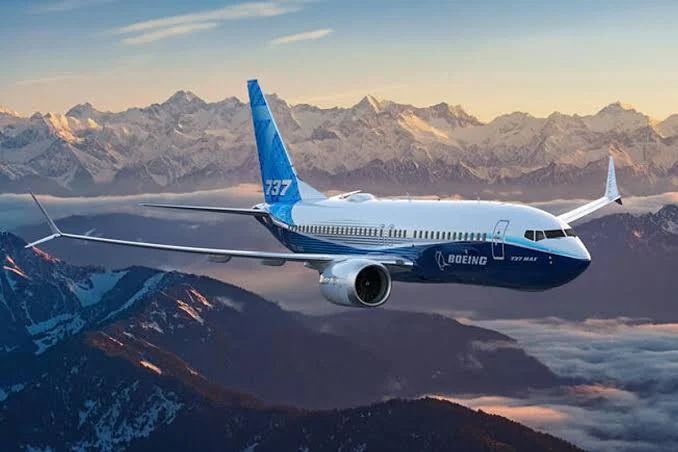
Boeing 737 MAX 7 secures FAA flight approvalAfter years of regulatory scrutiny, technical evaluations and industry anticipation, Boeing has secured a milestone as the US Federal Aviation Administration granted an amended type certificate for the Boeing 737 MAX 7, clearing the aircraft for commercial service.
The approval marks the end of a certification journey that began in 2018 and paves the way for the delivery of the latest member of Boeing’s 737 MAX family aircraft to airlines.

For Boeing, the certification represents more than a regulatory victory. It is another step in rebuilding confidence in the 737 MAX programme, which has faced years of intense oversight following the worldwide grounding of the aircraft family after two fatal crashes in 2018 and 2019.

Reacting to the development, Boeing described the certification as a landmark achievement for both the company and its workforce.

Announcing the approval on its verified X account, the aerospace manufacturer stated, “The Federal Aviation Administration has certified the 737-7!

“This milestone for the longest-range 737 MAX validates the rigor of the design and testing and recognizes #TeamBoeing’s determination and resilience.

“Certification includes more than 1,000 hours of flight and ground testing, along with safety analysis overseen by @FAANews. This approval clears the way for delivery of the first airplane.”

 The FAA’s approval followed what Boeing described as a comprehensive certification programme involving extensive testing and technical analysis to demonstrate that the aircraft meets all applicable commercial aviation safety regulations.

 According to the manufacturer, the certification campaign included more than 1,000 hours of flight and ground testing, with the safety evaluation conducted under FAA oversight.

 In addition to certifying the aircraft, the regulator also updated Boeing Production Certificate No. 700 (PC 700) to include the 737-7, allowing the company to begin production and deliveries under its existing manufacturing approval.

 Boeing and Southwest Airlines are now preparing to receive the first aircraft, with teams completing final configuration updates ahead of delivery.

 The 737 MAX 7 is the smallest and longest-range variant in the MAX family. It is designed to accommodate between 135 and 160 passengers in a typical two-class layout while offering a range of up to 3,800 nautical miles (about 7,040 kilometres), making it particularly suitable for airlines operating from airports located in hot climates and at high altitudes.

 The manufacturer says the aircraft also delivers significant environmental benefits, consuming about 20 per cent less fuel and producing 20 per cent fewer carbon dioxide emissions than the older-generation aircraft it is intended to replace. It also reduces airport noise by approximately 50 per cent.

 The certification comes as global demand for more fuel-efficient narrow-body aircraft continues to grow.

 Boeing said the 737 MAX family has accumulated more than 7,200 orders worldwide, with over 2,300 aircraft delivered as of the end of June 2026.

 The MAX family includes the 737 MAX 8, seating between 160 and 180 passengers; the MAX 9, which accommodates 175 to 195 passengers; and the larger MAX 10, capable of carrying between 185 and 210 passengers.

 Boeing said it continues to work towards certifying the MAX 10 later this year.

Rising fuel prices slash petrol, diesel, cooking gas demand

Rising fuel prices slash petrol, diesel, cooking gas demandRising pump prices forced Nigerian consumers to cut petrol, diesel and cooking gas consumption during the first half of 2026 as higher energy costs squeezed household incomes and raised transportation and production costs.

An analysis of the H1 2026 Downstream Industry Analysis Report by the Major Energy Marketers Association of Nigeria, obtained by The PUNCH, showed a clear relationship between rising fuel prices and weakening demand for the country’s three major petroleum products.

According to the report, the average retail price of Premium Motor Spirit (petrol) rose from N1,035 per litre in January to N1,051 in February, before climbing to N1,289 in March. It increased further to N1,533 in April and peaked at N1,596 in May before easing to N1,300 in June.

The price increases coincided with declining consumption. Average daily petrol consumption fell from about 60–61 million litres in January to around 58 million litres in February, dropped sharply to about 48 million litres in March, recovered slightly to roughly 51 million litres in April, declined to 46–47 million litres in May, and improved marginally to about 48 million litres in June after pump prices eased.

Diesel consumption also weakened as prices rose. Automotive Gas Oil sold for an average of N1,362 per litre in January, N1,420 in February and N1,648 in March. Prices surged to N2,475 in April, reached N3,277 in May and moderated to N2,900 in June.

Average diesel consumption stood at about 19.5 million litres per day in January, rose slightly to around 20 million litres in February, then declined to about 15.5–16 million litres in March. It recovered modestly to approximately 17.5 million litres in April before settling at about 16 million litres daily in May and June.

Liquefied Petroleum Gas also recorded weaker demand. Average LPG prices increased from N1,086 per kilogramme in January to N1,360 in February, N1,572 in March, N1,791 in April and N1,800 in May before easing to N1,661 in June.

Consumption moved in the opposite direction, falling from about 4.9–5.0 kilotonnes daily in January to roughly 4.3–4.4 kilotonnes in February. Demand briefly recovered to about 5.1–5.2 kilotonnes in March before declining steadily to around 4.2 kilotonnes in June.

MEMAN attributed the higher fuel prices to rising global crude oil prices driven by geopolitical tensions in the Middle East and disruptions to shipping through the Strait of Hormuz. Although crude prices eased in June, they remained above levels recorded at the beginning of the year.

The association said the figures showed that Nigerian consumers had become increasingly price-sensitive, with higher pump prices translating into lower consumption of petrol, diesel and cooking gas.

Meanwhile, MEMAN cautioned against relying solely on domestic refining for Nigeria’s fuel supply, warning that complementary imports would remain critical to guaranteeing energy security, promoting competition and preventing excessive market concentration.

The report stated, “The Nigerian downstream petroleum sector enters the second half of 2026 at a defining moment. The structural transition from an import-dependent market to one supported by significantly expanded domestic refining capacity has largely been achieved.

“The focus now shifts from increasing refining output to building a competitive, transparent, and resilient downstream market capable of sustaining long-term growth and energy security.”

MEMAN said imports should continue to complement local refining despite improved domestic capacity. It said, “Although domestic refining has significantly reduced Nigeria’s reliance on imported petroleum products, imports will continue to play a complementary role in ensuring supply diversity and sustaining competitive market conditions.

“While Dangote Refinery maintains that imports should be banned where sufficient domestic supply exists, the Federal Government has consistently maintained that preserving its authority to issue import licences is essential to managing the country’s strategic and security stocks, preventing supply shortages, safeguarding competition, and mitigating excessive market concentration.”

The association also warned that Nigeria’s long-term fuel supply should not depend on a single refinery and called for the establishment of a National Strategic Stock to cushion refinery outages, logistics disruptions and geopolitical shocks. It added that the second half of 2026 would be a period of market consolidation, with priorities centred on stronger regulation, balanced supply arrangements and enhanced energy security.