Amnesty International has called for an investigation into the alleged killing of two persons by personnel of the Department of State Services (DSS) in the Karmajiji community of the Federal Capital Territory (FCT), Abuja.

The rights organisation made the call in a statement published on its official Facebook page on Thursday, where it described the incident as an extrajudicial execution and an abuse of power by security operatives.

“The Department of State Services (DSS) must investigate the extrajudicial execution of two persons by its personnel Ajayi Abayomi. The incident which occurred on 19 January 2026 at Karmajiji community of the Federal Capital Territory is yet another indication of reckless and unlawful use of firearms and abuse of power,” Amnesty International said.

According to the organisation, the first victim, Musa Adamu, died a few hours after the incident, while the second victim, Mallam Suleiman Salisu, died on Wednesday, January 28, at the Federal Medical Centre, Abuja.

“The DSS must investigate this horrifying incident and ensure that the suspect is brought to justice through fair trial. This gross violation of human rights must not be swept under the carpet,” the statement added.

Amnesty International further warned that misconduct by security operatives poses a serious threat to public safety and trust, noting that, “While security personnel are supposed to protect people, gradually some of them are unleashing terror on the society creating a toxic climate of fear and corruption.”

The organisation said such actions “undermine trust and leave people vulenrable to wanton atrocities.”

The organisation also expressed concern over the alleged involvement of security personnel in civil matters, stressing that, “Amnesty International deeply concerned that in addition to their stated remit of ensuring law and order, some security personnel investigate civil matters and in some cases tortures suspects involved in contractual, business and even non-criminal disputes.”

NAFDAC resumes enforcement of sachet alcohol ban, dismisses shutdown claims

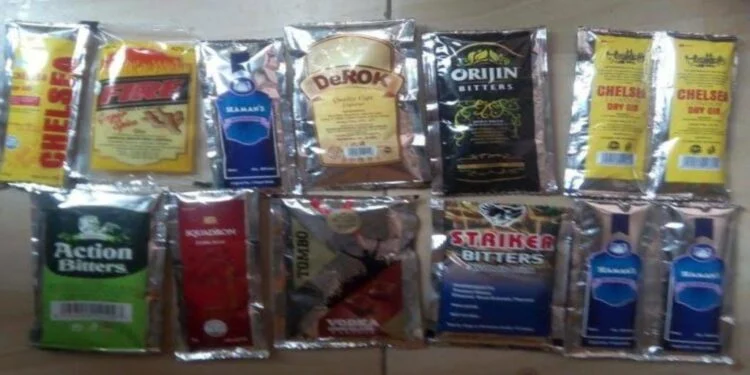
alcoholic-drinks-750×375The National Agency for Food and Drug Administration and Control has resumed enforcement of the ban on the production and sale of alcoholic beverages packaged in sachets and small plastic or glass bottles below 200 millilitres.

The agency clarified that it did not shut down any alcohol-producing company but only prohibited the sale of alcohol in sachets and small containers, citing public health concerns.

In a statement on Thursday, the Director-General of NAFDAC, Prof. Mojisola Christianah Adeyeye, said the move was aimed at protecting children, adolescents and young adults from the harmful use of alcohol.

“The National Agency for Food and Drug Administration and Control has resumed enforcement of the ban on the production and sale of alcoholic beverages packaged in sachets and small-volume PET or glass bottles below 200ml, in line with a resolution of the Senate of the Federal Republic of Nigeria and the Agency’s public health mandate,” the statement read.

According to the agency, the widespread availability of high-alcohol-content beverages in sachets and small containers has made alcohol cheap, easily accessible and easily concealable, contributing to rising cases of underage drinking, addiction, domestic violence, road accidents, school dropouts and other social vices.

Adeyeye noted that placing warning labels such as “Not for children” on sachets and small containers had proven ineffective due to societal realities.

“Many parents do not even know their children consume sachet alcohol because the pack size is small, cheap and easily concealed,” she said.

She revealed that reports from schools had shown disturbing trends, including a recent case in which a teacher disclosed that a student claimed he could not sit for an examination without first taking sachet alcohol.

NAFDAC recalled that in December 2018, it, alongside the Federal Ministry of Health and Social Welfare and the Federal Competition and Consumer Protection Commission, signed a five-year Memorandum of Understanding with manufacturers to phase out sachet and small-volume alcohol packaging by January 31, 2024.

The moratorium was later extended to December 2025 to allow manufacturers to exhaust existing stock and reconfigure their production lines.

“The current Senate resolution aligns with the spirit and letter of that agreement and with Nigeria’s commitment to the World Health Assembly Global Strategy to Reduce the Harmful Use of Alcohol,” she said.

Adeyeye stressed that the ban was not punitive but protective.

“This ban is not punitive; it is protective. It is aimed at safeguarding the health and future of our children and youth by not allowing alcohol in small pack sizes.

“The decision is rooted in scientific evidence and public health considerations. We cannot continue to sacrifice the well-being of Nigerians for economic gain. The health of a nation is its true wealth.”

She reiterated that only spirit drinks packaged in sachets and small PET or glass bottles below 200ml were affected, adding that NAFDAC still approved alcoholic beverages in larger pack sizes.

The renewed enforcement has sparked immediate reactions across industry, labour, and public spheres.

The Manufacturers Association of Nigeria and other stakeholders, including the Food and Beverage Tobacco Outgrowers and Bottlers (FOBTOB), have criticised the move as inconsistent and potentially damaging.

On January 23, members of the Distillers and Blenders Association of Nigeria, Nigerian Labour Congress and the Trade Union Congress gathered at the Lagos office of NAFDAC to protest the ban.

They warned that the enforcement would displace no fewer than 5.5 million Nigerians from their jobs.

Some protesters described the policy as a serious regulatory misstep that fails to balance public health goals with economic realities—particularly in a country where low-cost sachet spirits remain popular among low-income consumers.

But NAFDAC called on manufacturers, distributors and retailers to comply fully with the directive, stressing that no further extension would be granted beyond December 2025.

NiMet predicts dust haze in North, thunderstorms across South Friday

NiMet

The Nigerian Meteorological Agency has forecast moderate to slight dust haze across parts of the country, particularly in the northern states, on Friday, January 30, 2026.

NiMet said moderate dust haze with horizontal visibility of between two and five kilometres is expected in parts of Yobe, Katsina, northern Bauchi, Kano and Jigawa states during the morning hours.

This was contained in the agency’s Daily Weather Outlook for Friday, released via its X handle on Thursday.

“The remaining parts of the region (North) are expected to experience slight dust haze in the morning.

“Moderate to slight dust haze is expected to persist across the region throughout the afternoon and evening,” the agency said.

For the North Central states, NiMet forecasts slight dust haze in the morning, which is expected to continue through the afternoon and evening.

In the southern states, the agency predicted sunny skies with few patches of cloud during the morning hours.

“Sunny skies with cloud patches are expected, with slim prospects of isolated thunderstorms accompanied by light rainfall over parts of Bayelsa, Cross River, Akwa Ibom and Rivers states, while the remaining areas will experience sunny skies with few patches of cloud,” NiMet noted.

The agency warned that dust haze could lead to reduced visibility, especially during the early morning hours.

It advised people with respiratory ailments to take necessary precautions and urged motorists to exercise caution while driving under hazy conditions.

NiMet also encouraged airline operators to obtain airport-specific weather information from the agency to aid effective operational planning.

BUA Foods reports N508bn profit after tax

BUA-Foods

BUA Foods Plc has reported a profit after tax of N507.7bn for the year ended 31 December 2025, representing a 91 per cent increase from N266.0bn recorded in 2024. The growth was supported by higher turnover, improved gross profit, and controlled operating expenses.

The Statement of Profit or Loss and Other Comprehensive Income for the year ended 31 December 2025, as filed on the Nigerian Exchange recently, showed that the group’s turnover rose to N1.80tn in 2025 from N1.53tn in 2024, reflecting a 17.9 per cent increase. Cost of sales also rose to N1.13tn from N987.1bn, resulting in a gross profit of N672.2bn, up from N540.8bn in the previous year.

Operating profit for the year was N565.4bn, compared with N472.1bn in 2024, while administrative expenses increased to N40.46bn from N28.56bn. Selling and distribution expenses rose to N68.73bn from N40.26bn. Net finance costs, including finance income and finance costs, amounted to N14.39bn, down from N187.8bn in 2024, largely due to reduced borrowing costs.

The company also recorded finance exchange losses of N16.1bn, which impacted total profit before tax. Profit before tax stood at N534.9bn, up from N284.3bn in 2024, representing an 88 per cent increase year-on-year.

For the company alone, profit after tax reached N322.5bn, compared with N263.2bn in 2024, while earnings per share rose to 28.21 kobo from 14.78 kobo in 2024.

On the balance sheet, BUA Foods Group’s total assets grew to N1.39tn from N1.10tn, driven by an increase in current assets, particularly cash and short-term deposits, which reached N844.2bn from N547.4bn, while non-current assets, including property, plant, and equipment, stood at N394.9bn.

The group’s total equity strengthened to N702.8bn, up from N429.1bn, supported by growth in retained earnings, which rose to N694.7bn. Total liabilities amounted to N683.5bn, marginally higher than N666.4bn in 2024.

According to the Managing Director, Ayodele Abioye, BUA Foods’ market position, both domestically and regionally, remains strong due to its efficient and effective supply chain.

“For us, we continue to drive operational efficiency, product quality, and customer satisfaction while maintaining a disciplined expansion strategy in an evolving economic landscape,” Abioye said.

The Acting Chief Financial Officer, Michael Ehimah, noted that diversifying energy sources and improving supply chain efficiency helped cushion the impact of rising input costs. He added that preserving a healthy balance sheet while funding key growth initiatives will remain a priority in 2026.

Looking ahead, BUA Foods plans to complete its sugar backward integration programme, which is expected to allow the company to refine over 220,000 metric tonnes of sugar in the first phase. The company will also continue its expansion across other business divisions.

The MD emphasised that BUA Foods will remain focused on margin preservation in a competitive environment while advancing ongoing expansion projects. He added that the board and management are confident in the company’s strong fundamentals and its ability to deliver sustainable long-term value to shareholders.

BUA Foods closed the 2025 financial year as the most valued company on the Nigerian Exchange, with a market capitalisation exceeding N14tn, reflecting strong investor confidence and operational performance in the consumer goods sector.

NGX market cap rises by N232b

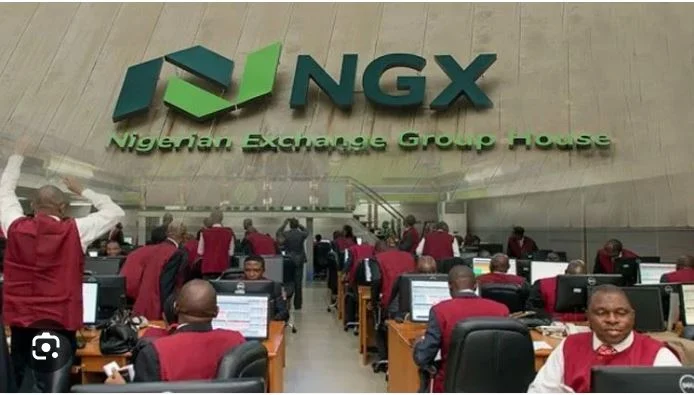
NGXThe Nigerian Stock Exchange closed higher on Thursday, 29 January 2026, as investors responded to positive market sentiment despite a slowdown in trading activity.

The total market capitalisation rose by N232bn, from N105.74tn on Wednesday, 28 January, to N105.97tn, representing a 0.22 per cent increase. Similarly, the All Share Index gained 362.93 points, moving from 165,164.38 to 165,527.31.

Trading activity, however, experienced a decline compared with the previous session. A total of 550.4 million shares were exchanged in 38,635 deals, with a turnover of N14.14bn, representing a 12 per cent decline in volume, a 14 per cent drop in turnover, and an 8 per cent decrease in deals. In total, 131 equities participated in the session, with 41 gainers and 27 losers.

Leading the gainers was RT Briscoe, which climbed 10 per cent to close at N7.15 per share, followed closely by SCOA Nigeria, up 9.91 per cent; Deap Capital Management & Trust, up 9.91 per cent; and Veritas Kapital Assurance, up 9.85 per cent. On the losing side, Haldane McCall led the laggards with a 9.84 per cent decline, closing at N3.94 per share, while Union Dicon Salt down 9.79 per cent, University Press down 8 per cent, and Legend Internet down 7.56 per cent also recorded significant losses.

In terms of volume, Veritas Kapital Assurance topped the chart with 56.6 million shares traded, followed by Guaranty Trust Holding with 26 million shares, Tantalizers with 26 million shares, and Japaul Gold and Ventures with 25.9 million shares.

FCMB posts N177bn profit

FCMBFCMB Group Plc has reported a profit after tax of N177bn for the year ended 31 December 2025, marking a 141 per cent increase from N73.3bn recorded in 2024. The performance underscores the bank’s earnings base, driven by higher interest income and improved non-interest revenue streams.

The group’s gross earnings rose sharply to N1.13tn in 2025 from N794.4bn in 2024, representing a 42 per cent growth year-on-year. This growth was largely powered by interest and discount income, which surged by 61 per cent to N1.0tn, reflecting strong lending activities across the group. Consequently, net interest income jumped to N503bn, more than double the N225.3bn posted in the previous year.

The Consolidated and Separate Statements of Profit or Loss and Other Comprehensive Income for the year ended 31 December 2025 revealed that non-interest income also contributed significantly to the bottom line. Fee and commission income increased by 29 per cent to N96bn, while net trading and other gains added further support despite some volatility. In total, the group’s other operating income and gains contributed N28bn, although this was lower than the N93.3bn recorded in 2024 due to market adjustments.


On the expense front, FCMB continued to invest in human capital and infrastructure. Personnel expenses rose to N106bn, up from N79.3bn, reflecting strategic hires and staff development programmes. General and administrative expenses increased to N127bn, while net impairment losses on financial instruments rose to N86bn, more than double the N41.2bn in 2024, highlighting proactive risk management amid a dynamic lending environment.

The bank’s total assets grew to N7.54tn,from N7.05tn in 2024, driven by growth in cash and cash equivalents, which rose to N1.3tn, and investment securities, which climbed to N2.06tn. Loans and advances to customers remained robust at N2.29tn, underscoring the group’s commitment to supporting businesses and households across Nigeria.

Moniepoint Celebrates A Decade Of impact, Microfinance Bank Disburses Over ₦1 Trillion In Credit To Empower Small Businesses in 2025

Moniepoint Inc., Nigeria’s definitive platform for small businesses and Africa’s all-in-one financial ecosystem, today released its 2025 Year in Review, marking a decade of “financial happiness” and a transformative year of growth. Highlighting its role as the backbone of Nigeria’s entrepreneurial economy with over 6 million active businesses, the company revealed that its microfinance bank has now disbursed over ₦1 trillion in credit to thousands of businesses from provision stores and supermarkets to building materials sellers.


It is worthy to note that on average these businesses experienced growth by more than 36% after accessing credit, signposting its primacy as a transformational growth level and instrument of deepening shared prosperity. Moniepoint uses alternative data points that include transaction histories, business patterns and payment behaviours in a bid to accommodate what traditional credit scoring misses to drive financial inclusion and access to credit. The company’s 2025 performance reinforces its role as a critical financial infrastructure which not only supports the Nigerian economy, but also impacts everyday lives, creating immense value.


Founded in 2015 by Tosin Eniolorunda and Felix Ike, Moniepoint Inc (formerly known as TeamApt Inc) has established itself as the leading financial platform for Nigeria’s vast network of small and medium-sized businesses (SMEs), offering an integrated suite of services, including digital payments, business bank accounts, credit, foreign exchange (FX), and management tools.


During the year, as Nigeria’s largest merchant acquirer, now powering 8 out of every 10 in-person payments made across the country, Moniepoint MFB, the banking and payments subsidiary, processed ₦412 trillion in transaction value handling more than 14 billion transactions. This clearly suggests that Moniepoint is well-positioned to play a greater role in Nigeria’s steady march towards a trillion dollar economy by 2030.


“Our journey has been one of intentional evolution,” said Tosin Eniolorunda, Group CEO and Founder of Moniepoint Inc. “What started as a passion to solve overlooked problems has evolved into a platform powering the dreams of millions. As 83% of employment in Africa exists in the informal economy, our mission to create financial happiness is an operational mandate that guides our product development, our market expansion, and our capital allocation decisions.”


Beaming with enthusiasm, Eniolorunda continues, “Yet for all we have accomplished, we approach our second decade with the clarity that our work remains unfinished. As we enter this next chapter, we do so with strengthened conviction in our strategy, deepened partnerships with world-class institutional investors, and an organisation scaled to deliver on Africa’s entrepreneurial potential. The infrastructure we have built over the past decade provides the foundation. The journey is far from over, but our resolve has never been stronger. To our partners, our customers, and our team: thank you for a decade of impact. We are just getting started.”


In 2025, Moniepoint Inc. reached a series of critical inflexion points, highlighted by the successful completion of its Series C funding round, which raised over $200 million in equity financing from leading institutional investors, including Development Partners International, Google’s Africa Investment Fund, Visa, the International Finance Corporation, and Verod Capital. The year also marked the launch of MonieWorld in the United Kingdom, extending Moniepoint’s platform to serve the African diaspora by strengthening key remittance corridors and laying the foundation for the delivery of comprehensive cross-border financial services.


Moniepoint MFB re-launched its savings product in a firm demonstration of the company’s commitment toward its’ oft stated mantra of providing financial happiness. Data reveals in terms of savings behavioral patterns, the majority of users choose to save on a daily basis, with focus across business operations (24%), rent (16.5%), and education (10%) representing top savings priorities. The launch of Moniebook and the acquisition of a national Microfinance Bank license for Moniepoint MFB further expand the company’s regulated capabilities and product depth.


TeamApt Ltd, the switching and processing subsidiary of Moniepoint Inc., also achieved major regulatory and operational milestones in 2025 that have solidified its position in the global payments landscape. After a rigorous certification process, the company successfully secured licenses from Mastercard and Visa to act as a processor and acquirer for these global card schemes.. This strategic move allows TeamApt to support international card payments directly and offer these critical switching services to other businesses across the continent. Monnify, the web payment gateway processed N25 trillion in the period under review, demonstrating remarkable resilience and industry confidence firmly positioning it for more business-to-business transactions.


Moniepoint’s impact extended beyond banking into critical social interventions even as the company partnered with the Federal Government to support the Rice Intervention Programme, reaching nearly 850,000 beneficiaries, and worked with the Kaduna State Government in grants disbursement to vulnerable citizens. Through these initiatives, Moniepoint continues to build the infrastructure required to unlock Africa’s entrepreneurial potential, positioning itself as a trusted partner for the delivery of large-scale economic empowerment programmes.


As Moniepoint Inc. enters its second decade, its well chronicled decade-long evolution from a backend technology provider to a household name, directly complements the Nigerian government’s vision of a more inclusive, data-driven, and productive financial landscape

Uzodimma provides details of APC govs meeting

The Progressives Governors’ Forum, PGF, has called for transparent and coordinated management of party congresses and the forthcoming national convention.

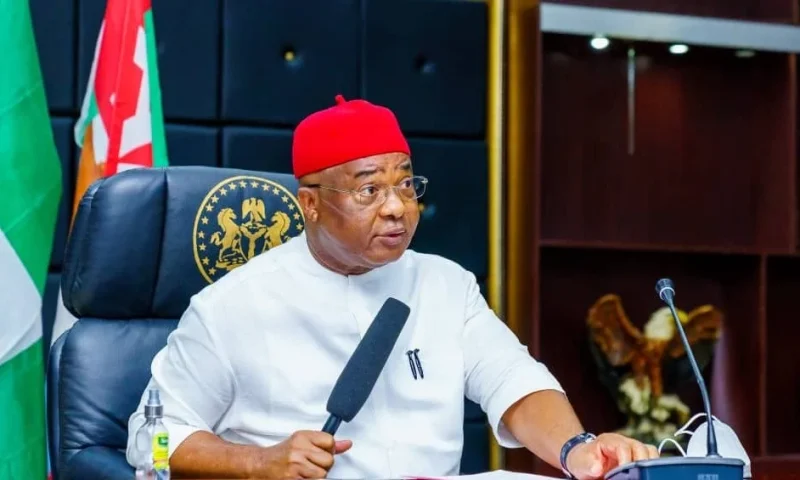
Chairman of the Forum and Imo Governor, Hope Uzodimma, made the call while presenting a communiqué after a meeting with APC leadership in Abuja on Wednesday.

Uzodimma said transparency, consistency and accountability must guide every stage to strengthen trust and credibility within the party.

He said: “These standards must apply uniformly across all states, including where the party currently has no governors.

“The PGF reaffirmed its unwavering commitment to party unity and internal harmony.”

He stressed responsible leadership, clear communication and collective discipline as essential to strengthening public confidence in the party’s democratic processes.

The governor reaffirmed PGF’s commitment to deepening internal democracy, strengthening party structures and advancing reforms promoting transparency, accountability and inclusiveness nationwide.

He said the governors welcomed a briefing on the national e-registration and digital membership update by the APC national chairman.

“This has recorded significant growth, increased youth participation and integration of the National Identity Number,” he stated.

Uzodimma noted the initiative would enhance data-driven planning, improve demographic insights and strengthen grassroots engagement across communities.

He said the governors endorsed the timetable and institutional framework approved by the party’s National Executive Committee (NEC) for upcoming congresses and the convention.

He commended the party leadership under National Chairman, Prof. Nentawe Yilwatda, for guiding the process.

Uzodimma also confirmed strategic engagements and state visits to reinforce grassroots structures and party cohesion.

He said visits would begin in Taraba on Jan. 31 and formally welcomed the governors of Taraba and Plateau into the Forum.

He reaffirmed resolve to partner with APC leadership to advance national development, democratic consolidation and people-centred governance.

Uzodimma said the governors appreciated President Bola Tinubu’s leadership, saying, “We will continue to partner with him to ensure good governance at all levels.”

Osun LG crisis deepens as Gov Adeleke, state govt, PDP, Oyetola counter claims

The dispute over local government administration in Osun State escalated on Wednesday as the state governor, Ademola Adeleke, the state government and the Peoples Democratic Party, PDP, dismissed claims by the All Progressives Congress, APC, that its sacked council chairmen still had a right to remain in office.

In separate statements issued in Osogbo, the PDP and the state government said recent actions and court developments showed that the APC’s position on the councils lacked legal backing.

The state governor, Ademola Adeleke restated his accusation against Blue Economy Minister, Adegboyega Oyetola and his alleged the masterminding of Osun local government crisis

Governor Adeleke asserted that the self-awarded tenure of APC Chairmen lapsed in 2025 and cannot be elongated under the law and Supreme Court precedents.

Governor Adeleke in a statement by his spokesperson, Olawale Rasheed faulted the entire submission of the minister on the local government crisis, positing that the former Governor remains the chief architect of the paralysis and the untold hardship being inflicted on Osun people.

He said, “Under what authority is Mr Oyetola and his cronies in the guise of council chairmen disbursing funds meant for salaries of local government workers. Under what authority is he deciding who gets paid or not? Why are they not paying salaries of local health workers, local teachers and local retirees?”

The governor also called on the Minister to stop dragging President Bola Tinubu’s name in the mud.

Meanwhile, the Osun State Government also drew attention to proceedings at the Federal High Court in Osogbo concerning a suit filed by the APC on the issue of council tenure.

The Commissioner for Information and Public Enlightenment, Kolapo Alimi, in a statement said the case, which came up for hearing on Wednesday, was adjourned to March 4, 2026, following the absence of APC lawyers in court.

According to Alimi, “none of the legal representatives listed by the APC, including three Senior Advocates of Nigeria, appeared when the matter was called.

“The election conducted on October 15, 2022 was nullified by the Federal High Court because it violated the Electoral Act.”

He added that subsequent judgments had not reinstated the APC chairmen, contrary to claims by the party.

Alimi said “the government was concerned that the APC continued to rely on a pending court case to justify remaining in council offices.

“They filed a suit and are yet to diligently pursue it, yet they claim it is the basis for their continued stay in the secretariats.”

The commissioner also accused the APC of misrepresenting the status of local government finances, saying questions remained over the handling of allocations during the period of dispute.

The PDP, reacting to a press conference addressed by the Osun APC leadership, said the opposition party was attempting to justify an expired and unlawful occupation of council secretariats across the state.

In a statement signed by its state chairman, Sunday Bisi, the PDP maintained that the APC chairmen had no valid mandate from the outset and insisted that their election had been nullified by the courts before Governor Ademola Adeleke assumed office.

“Governor Ademola Adeleke did not sack any local government officials. The courts invalidated an election that was conducted in breach of the Electoral Act,” the party said.

The PDP argued that local government funds were being contested because of ongoing legal disputes arising from the 2022 council election conducted under the previous APC administration.

It added that the governor, as the state’s chief executive, had a constitutional duty to safeguard public funds meant for grassroots development pending the resolution of the legal issues.

The PDP called on President Bola Tinubu to intervene by urging party members in Osun to respect court decisions and allow due process to run its course.

“The situation in Osun requires adherence to the rule of law to prevent further tension at the grassroots,” the party said.

Reacting, Dr. Bolaji Akinola, the Special Adviser to the Minister of Marine and Blue Economy, Adegboyega Oyetola, on Wednesday accused Osun State Governor, Ademola Adeleke, of lying against his predecessor on issues relating to the current impasse in the local government administration in Osun.

Akinola, in a statement issued in response to allegations by Adeleke, who had alleged that Oyetola was backing illegal occupation of council areas in the state, stated that Adeleke was using propaganda, falsehood and deliberate misinformation to conceal his administrative failure and disregard for judicial authority.

Referring to Adeleke’s earlier claim that Oyetola was using his influence to withhold funds due to the local government areas in the state, Akinola described the claims as “nothing more than a desperate attempt to deflect attention from his glaring incompetence and serial abuse of the judicial process.”

He insisted that Oyetola was not responsible for any disruption in local government financing in Osun, adding that, “if there is any delay or complication in financial disbursements, the responsibility lies squarely with the Adeleke-led Osun State Government, which has flooded the courts with lawsuits in a failed attempt to overturn settled judicial decisions. No serious government sabotages its own legal standing and then seeks scapegoats for the consequences.”

He accused Adeleke of having previously paralysed local government administration in the state by instigating a prolonged strike by local government workers.

“The local government secretariats are open and functioning. Services continue to run, workers are back to their posts, and council administrations are carrying out their statutory responsibilities. The narrative of paralysis exists only in the imagination of a governor using falsehood to seek public sympathy,” he said.

He referenced a Court of Appeal judgement delivered on February 10, 2025, which he stated reinstated elected local government chairmen in Osun State, emphasising that the judgement was not appealed by the Osun State Government and therefore remains final and binding in law.

Commenting on alleged tenure elongation by the APC chairmen, the minister’s aide maintained that they were elected for a three-year term and were “removed illegally within weeks of assuming office. Any suggestion to the contrary amounted to ignorance or intentional misinformation.”

He disclosed that the issue of tenure is pending before the courts and advised Adeleke to desist from interfering in the affairs of an independent tier of government, as the Supreme Court has already granted full financial autonomy to the local government areas in the country.

Lagos govt to probe Mile 2 warehouse fire over stored chemicals

Reports have emerged that the Lagos State government plans to investigate the recent fire incident at a warehouse in Mile 2, Amuwo-Odofin Local Government Area of the state.

Sources within the government circles told reporters that the probe will centre on the nature of the chemical substances stored in the facility, which is situated within an industrial layout.

The state government, particularly the governor, is reported to be taking a keen interest in the incident, particularly in view of the dangers posed by the chemicals and concerns about safety of residents.

“Efforts are also ongoing to identify the owner of the warehouse and commence an investigation into the chemical content, and to ascertain the level of emergency measures put in place before the fire incident.

“The probe is being initiated over safety concerns about the type and volume of chemicals kept in the warehouse,” our source said on Thursday.

Margaret Adeseye, controller-general of the Lagos State fire and rescue service, said the agency received a distress call at about 8:29 pm on Sunday.

Adeseye said firefighters arrived at the scene at 8:40 pm.

She revealed that crews from the Ajegunle, Sari Iganmu, Okota and Alausa fire stations were immediately deployed to tackle the blaze.

“The affected warehouse was stocked with chemical materials stored in hundreds of 200-litre drums, posing a significant risk.”

She said the fire was brought under control through “swift and coordinated intervention”, preventing damage to adjoining facilities.

Adeseye added that although no casualties were recorded, the cause of the fire was yet to be determined.

“The Lagos State Fire and Rescue Service reiterates its commitment to safeguarding lives and property and urges residents and business owners to adhere strictly to fire safety regulations at all times,” she said.

Meanwhile, Damilola Oke-Osanyitolu, Permanent Secretary of the Lagos State Emergency Management Agency (LASEMA), said preliminary findings indicated that chemicals stored in a warehouse triggered the fire.

He explained that the first responders established that the fire originated from a structure located behind the SAPID Container Terminal at Mile 2.

“Further investigation by the team established that several drums of chemicals and oils were stored inside the building, and this definitely is the cause of the fire.”

He added that the prompt response of emergency agencies prevented any loss of life.

“Eyewitnesses in the area said the fire started from the section of the warehouse facing the Apapa-Oshodi expressway.

“The fire started on this side, which is the Oshodi-Apapa expressway, just beside the Lacasera company,” Dotun, an eyewitness, told newsmen.

“At first, no one could gain access to assist because it was a weekend, and by the time the gate was opened, the fire was already too much.”

Another resident said explosions were heard intermittently as the fire raged.

“We could hear the sound of explosions at intervals while the building was burning, which scared people from moving close to the scene,” the resident said.

A section of the building believed to house the administrative offices of the warehouse was partially affected by the fire.