Running under the banner of the Accord Party, a third-party platform, Adeleke polled 511,067 votes (50.8 per cent), decisively defeating the APC’s Bola Oyebamiji, who recorded 444,815 votes (44.2 per cent).
DAILY POST reports that the State Returning Officer of the Independent National Electoral Commission, INEC, Prof. Joshua Ogunwole, declared Adeleke the winner of the election after he swept 19 of Osun’s 30 local government areas, leaving 11 for Oyebamiji.
Adeleke won in Ede North, Ede South, Ejigbo, Iwo, Egbedore, Ife North, Ife East, Ife Central, Oriade, Ifelodun, Orolu, Ayedaade, Odo Otin, Boluwaduro, Ilesa West, Ifedayo, Osogbo and Ayedire Local Government Areas, while Oyebamiji won in Ilesa East, Boripe, Irepodun, Obokun, Atakunmosa West, Irewole, Atakunmosa East, Isokan, Ola Oluwa, Ife South and Olorunda Local Government Areas.
“That Ademola Nurudeen-Jackson Adeleke, having satisfied the requirements of the law, is hereby declared the winner of the August 15 governorship election and returned elected,” Ogunwole stated.
INEC data also show that the total number of registered voters was 2,339,233, while the total votes cast were 1,005,800, representing 43 per cent. A total of 20,721 ballots were rejected, representing about 2.06 per cent of the total votes cast.
The Power Shift: From PDP to Accord
Adeleke’s journey to victory was marked by sharp political manoeuvring. Having won his first term in 2022 on the platform of the Peoples Democratic Party, PDP, internal battles within the state chapter forced Adeleke to make a high-stakes political gamble in December 2025 by formally resigning from the PDP and defecting to the Accord Party.
In a letter addressed to the PDP Chairman of Ward 2, Sagba Abogunde, in Ede North Local Government Area of Osun State, Adeleke cited the ongoing crisis within the PDP’s national leadership as the reason for his departure.
He noted that he opted for the Accord Party because its mission of welfarism aligns with his passionate focus on the welfare of citizens and workers.
APC’s Heavyweight Deployment
DAILY POST reports that for the August 15 Osun election, the national leadership of the ruling All Progressives Congress mobilised significant human and material resources with the aim of taking Osun into its fold.
Recall that the last APC governor of Osun State was Adegboyega Isiaka Oyetola, who served a four-year term from November 27, 2018, to November 27, 2022. Overall, the APC held continuous power in Osun State for 12 years (2010 to 2022), beginning when Rauf Aregbesola assumed office in November 2010 following a court verdict that declared him the winner of the 2007 election.
Aregbesola completed two terms under the progressive political alliance that transitioned from the Action Congress of Nigeria, ACN, into the All Progressives Congress before handing over to Oyetola in 2018.
The 12-year progressive legacy was broken in the July 2022 poll. Adeleke, then flying the PDP flag, secured a hard-fought victory with 403,371 votes, narrowly defeating Oyetola, who scored 375,027 votes.
Four years later, Oyetola, who now serves in President Bola Tinubu’s cabinet as Minister of Marine and Blue Economy, returned to Osun as a chief strategist for the APC’s campaign council.
It was observed that multiple APC governors, federal officials and key stakeholders, including Hope Uzodimma of Imo, Mai Mala Buni of Yobe, Biodun Oyebanji of Ekiti, Dapo Abiodun of Ogun, Lucky Aiyedatiwa of Ondo, Babajide Sanwo-Olu of Lagos and Bassey Otu of Cross River State, alongside Godswill Akpabio, Tajudeen Abbas and others, also relocated to Osun in the weeks preceding the poll.
Yet, despite assembling a formidable coalition of regional heavyweights and federal officials to avenge the 2022 loss, APC’s push failed to dismantle Adeleke’s local base.
The governors and party chieftains were seen leaving Osogbo, the Osun State capital, in their convoys at about 2:09 a.m. on Sunday.
A video clip seen by DAILY POST showed the convoy of the APC leaders driving out as some residents shouted, “Ole! Ole! Okpebholo Ole!”
The Davido Factor: Youth Vigilance and Vow Against APC
Beyond traditional party structures, the re-election bid drew massive momentum from global music icon, David Adeleke, aka Davido, who actively anchored youth campaign mobilisation for his uncle under the Accord banner.
Throughout the campaign, the Afrobeats star served as a fierce digital and field watchdog, warning visiting APC heavyweights against interfering in Osun’s internal politics.
He also raised an alarm in a post he shared on his official X handle on Thursday while urging members of the party to stay safe, saying, “Accord members stay safe! Just got intel, the next few hours they want to start arresting our people for nothing!”
“The plan cannot work! Stay safe! Mount your guard! We are coasting to victory,” Davido wrote.
Refusing to back down, the singer repeatedly called out APC’s campaign strategies, declaring that no amount of political pressure or federal deployment could suppress the will of Osun voters.
The singer, in a post on X on Saturday, vowed never to support the APC, lambasting the ruling party for deploying state apparatuses and alleged intimidation tactics against opposition supporters.
“I can never support APC in my life,” his post read.
He also challenged security deployments: “Because we are winning. They want to withdraw the police and military! Mr President Tinubu! Ur killing democracy.”
Tinubu Congratulates Adeleke After Victory
President Bola Tinubu congratulated Governor Adeleke on his re-election, asserting that the victory was an assurance that democracy would continue to flourish under his administration.
Tinubu also commended the courage and discipline displayed by other contestants in the election, stressing that their participation deepened and enriched the country’s democratic culture.
The President, on Sunday, in a statement by his Special Adviser, Bayo Onanuga, described the outcome of the election as a reflection of the will of the people and a fitting assurance that democracy will continue to flourish in the country.
Part of the statement reads: “I called Governor Ademola Adeleke earlier today to congratulate him on his election victory in Osun State. His victory once again confirmed the confidence the people of Osun State have in him.
“I wish him great success as he prepares to lead the state for the next four years. Now that he has won, Governor Adeleke must unite the people of Osun State and rally them for growth, stability and social and economic progress, regardless of the political choices they made at the election.”
Tinubu also commended the INEC and the security agencies for conducting a peaceful and transparent election.
Adeleke Commends Tinubu for Free Election, Reaffirms 2027 Endorsement After Victory
Shortly after he was declared winner of the August 15 governorship election, Adeleke, in a press conference, expressed gratitude to President Tinubu, praising his commitment to ensuring a peaceful and transparent electoral process.
He confirmed receiving a congratulatory phone call directly from the President.
“I want to seize the opportunity to thank Mr President. Mr President has called me and he has congratulated me, and I thank you for making sure democracy lives on because we fought for it.
“I have a God who never fails. I have a God who never fails. I have a God who never fails. He will never fail. And Jesus never fails. I’m expecting Oyebamiji, even as a civilised person, to call and congratulate me,” Adeleke added.
He also reaffirmed his endorsement of President Bola Tinubu for a second term, describing him as a son of the state.
“At this point, I must deeply appreciate Mr President, His Excellency Senator Bola Ahmed Tinubu, for his strong support for a free and fair election.
“Mr President is a son of Osun State, and I hereby reaffirm my earlier endorsement of him for a second term in the 2027 presidential election,” Adeleke said.
Acknowledging Adeleke’s victory and endorsement, the Minister of Aviation and Aerospace Development, Festus Keyamo, congratulated Governor Adeleke and stressed the importance of honouring political agreements.
In two different posts on X, Keyamo said, “Huge congratulations to Governor Ademola Adeleke on his historic victory in the governorship election in Osun State.
“Thank you, Governor Ademola Adeleke, for the public and unequivocal endorsement of President Bola Ahmed Tinubu @officialABAT for the 2027 Presidential Election.
“You are a man of integrity and honour. ‘Agreement is agreement.’”
However, the campaign council of Governor Adeleke denied having any political deal with the President.
The council’s spokesperson, Pelumi Olajengbesi, in a post on X, said Adeleke’s support for Tinubu was based on the President’s performance and reforms, rather than a pre-arranged political deal.
“Do not undermine the resilience of the Osun people. There is no agreement,” he said.
Recall that Adeleke had previously endorsed Tinubu for the 2027 presidential election.
Osun APC Hints at Legal Battle
While President Tinubu, who is the APC national leader, took a statesmanlike stance by personally phoning Governor Adeleke to congratulate him and commend the peaceful poll, the Osun State chapter of the party has signalled that the election outcome may face a prolonged legal challenge.
In a statement issued on Sunday by the party’s Director of Media and Information, Kola Olabisi, the APC disclosed that its leadership was conducting a ward-by-ward review across all 332 wards in the state before determining the next move.
The party maintained that the electoral process does not end with INEC’s declaration of a winner, emphasising its readiness to explore constitutional channels.
“We are currently studying the results of the governorship election in each of the 332 wards across the state with a view to exploring further the allowed constitutional window of opportunity in this regard.
“We are not unaware of the fact that election is a process which begins at the registration of voters through the primary election to the election proper, which extends to the Tribunal, the Appeal Court and terminates at the Supreme Court.
“An election cannot be said to have been concluded without having explored all these constitutionally allowed legal opportunities to correct anomalies observed in the process of the election as enshrined in the Electoral Act 2026 as amended,” the party stated.
While calling on its members to remain calm and avoid responding to political provocations, and urging security agencies to protect its supporters, the APC affirmed that it would consult its legal team.
IPAC Validates Win, Decries Vote Buying
Meanwhile, the Osun State chapter of the Inter-Party Advisory Council, IPAC, has congratulated Governor Adeleke on his re-election, describing the outcome as a reflection of the people’s confidence in his leadership.
In a statement issued on Sunday by the state IPAC Chairman, Odesola Titus, the council praised voters for their turnout and commended the INEC for conducting a free, fair and conclusive election. He also lauded security agencies for maintaining peace during the poll.
However, the council expressed strong concern over reports of voter inducement, describing the practice as a direct threat to democratic integrity, and urged relevant stakeholders to take steps to address the practice in future elections.
“Such action undermines the integrity of our democratic process and must be addressed to uphold the principles of democracy and fairness in our elections.
“As we move forward, let us all remain committed to building a more robust electoral system that reflects the will of the people.
“We extend our heartfelt congratulations to Governor Ademola Adeleke on his impressive re-election victory.
“This commendable achievement reflects the confidence of the people of Osun in your leadership and vision for the state,” he added.


 Chevron has confirmed an oil and gas condensate discovery at the 105-4X exploration well in Block 0, offshore Angola.
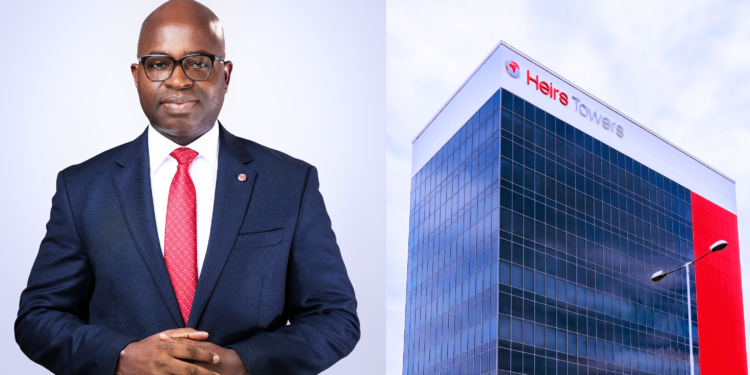
 Heirs Insurance Group (HIG), has published the audited financial results of its companies for the year ended December 31, 2025, delivering a landmark performance marked by strong year-on-year record, increased claims payout, and international recognition for growth.
 Downstream marketing Association has challenged the Nigerian National Petroleum Company Limited (NNPCL), to move beyond ceremonial restarts of state run refineries to measurable indicators including commercial viability, throughput, plant availability, operating margins and returns on investment.
 An opposition coalition leader, Salihu Lukman, has said that the victory of Ademola Adeleke in the just-concluded Osun governorship election showed how opposition parties can remove President Bola Ahmed Tinubu in the 2027 presidential election.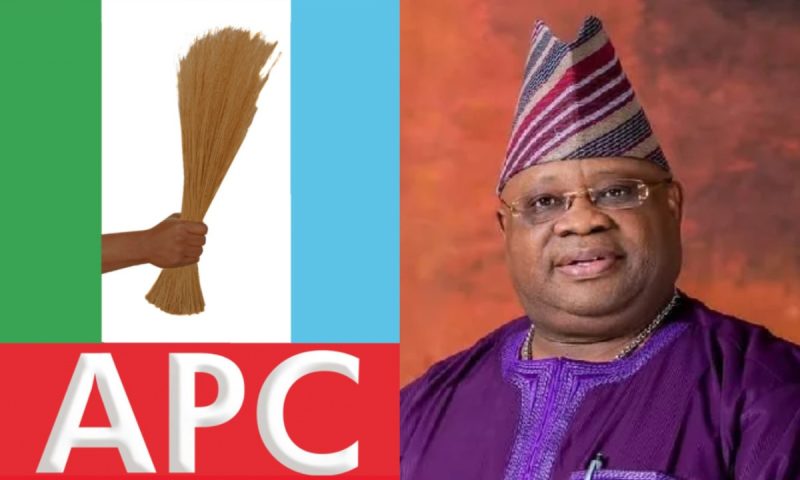
 In a major political upset that reshaped Osun State’s electoral dynamics, the incumbent governor, Ademola Adeleke, secured his re-election on Saturday under the banner of the Accord Party, overcoming the formidable machinery of the ruling All Progressives Congress, APC.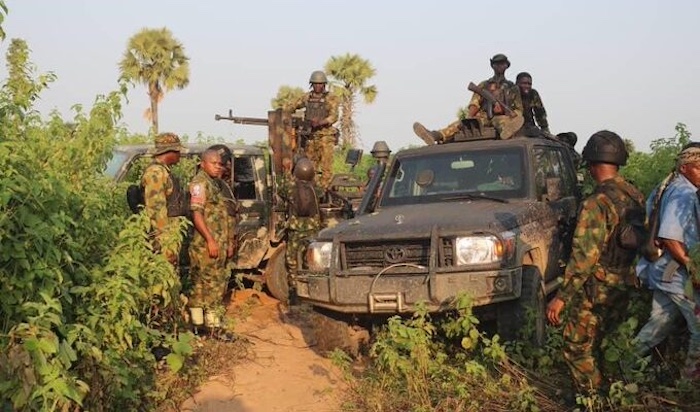
 The Nigerian Army has strengthened its security operations along the Sokoto-Kebbi border axis following renewed threats linked to the Lakurawa terrorist group.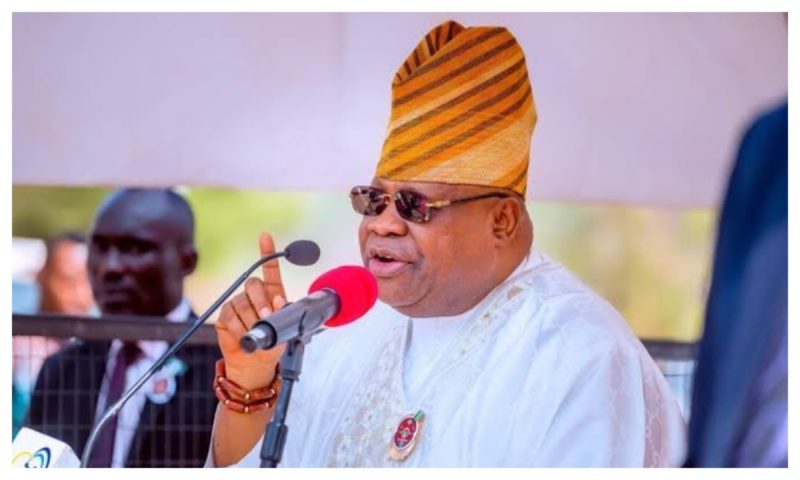
 Re-elected Osun State governor, Ademola Adeleke, has announced that he has instructed the state’s Attorney General to withdraw the lawsuit against the Economic and Financial Crimes Commission, EFCC, concerning the freezing of the state government’s bank account.
 The Nasarawa State Police Command, in collaboration with other security agencies, is set to commence a continuous show-of-force operation across the state ahead of the commencement of nationwide political campaigns on Wednesday, August 19, 2026.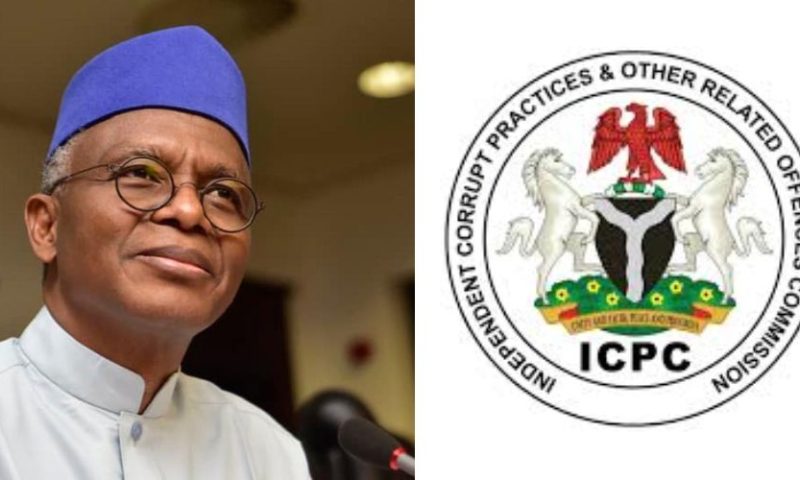
 Former Kaduna State Governor Nasir El-Rufai has filed a fresh N10 billion lawsuit against the Independent Corrupt Practices and Other Related Offences Commission (ICPC) over alleged restrictions on his family members visiting him in custody.
 The Central Bank of Nigeria sharply increased its foreign exchange interventions in March 2026, supplying $953.41m to the market, indicating a renewed effort to support liquidity after weak sales in the opening months of the year.