2027: Resign, you’ve failed Nigerians – ADC chieftain blasts INEC chair

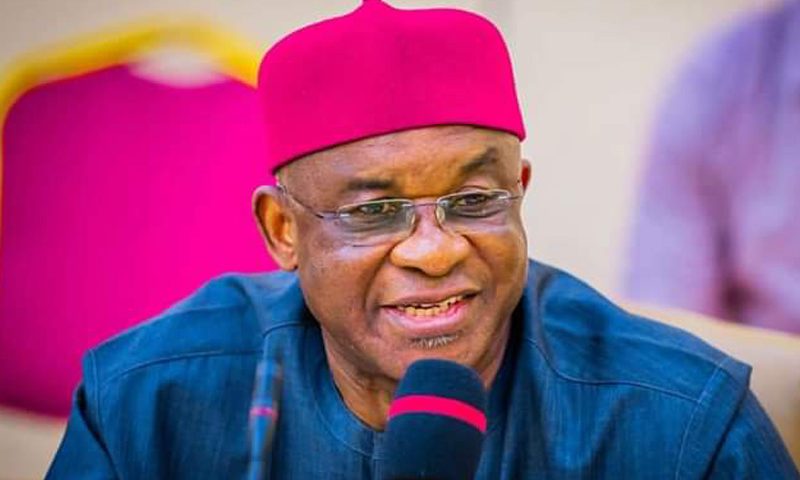
A chieftain of the African Democratic Congress, ADC, Joemartins Uzodike, has lambasted the Chairman of the Independent National Electoral Commission, INEC, Prof Joash Amupitan, alleging that he has already failed Nigerians, even before the conduct of any election.

Uzodike asked Amupitan to resign.

He spoke in reaction to INEC’s withdrawal of recognition of the Senator David Mark-led leadership of the ADC.

Uzodike, a lawyer, described Amupitan’s pronouncements on the matter as disgraceful and mischievous.

He added that the interpretation of a court order by INEC under Amupitan’s leadership, despite his status as a Professor of Law and Senior Advocate of Nigeria, SAN, showed bias.

The ADC stalwart accused the electoral umpire of relying on an order submitted by an individual, thereby displaying what he described as deliberate ignorance of the law, particularly the meaning and application of status quo ante bellum.

According to him, the action of the INEC chairman had brought serious embarrassment to the legal system, accusing him of using a court order to create a leadership vacuum in an opposition political party.

He also faulted what he described as the recognition of an individual as a faction, arguing that Nafiu Bala neither has a secretary nor leads any known executive committee.

“You’ve failed Nigerians even before the election. I have been around in this country since independence and have actively participated in many elections. I make bold to say that an electoral umpire has never descended so brazenly and carelessly into the arena as we are witnessing now.

“The chairman is a Professor of Law and a Senior Advocate of Nigeria. How can he not interpret the meaning of status quo ante bellum, which means to return to the position before the matter went to court?

“At what point was the ADC before Nafiu Bala went to court, and who was the chairman at that time?

“The court simply said whoever was in office should remain pending the determination of the matter, but Amupitan’s INEC is saying the ADC does not exist,” he said

Amnesty International urges probe into reckless military gunfire following Maiduguri girl’s death

Amnesty International has called on Nigerian authorities to urgently investigate what it described as the reckless use of firearms by military personnel that led to the death of a 14-year-old girl in Maiduguri, Borno State.

The incident occurred on Saturday, April 4, when the secondary school student was struck by a stray bullet while inside her home.

Reports indicate that the bullet was fired by military personnel who were allegedly shooting into the air during a wedding celebration at a nearby event centre.

Reacting in a post on its official X handle on Sunday, Amnesty International said the killing was avoidable and must not go without accountability.

“The Nigerian authorities must investigate the reckless use of firearms by the military that killed a girl in Maiduguri, Borno State,” the organisation said.

A family friend of the victim explained that the teenager was not anywhere near the celebration when the tragedy occurred.

“She lived in the University of Maiduguri Teaching Hospital (UMTH) quarters with her family and was inside her home when the tragedy occurred,” the source said. “She had just finished applying henna for her mother and herself, joyfully preparing for a family wedding scheduled for that same day.”

The girl was later buried on Sunday morning at the Maiduguri cemetery, as family members and friends struggled to come to terms with the sudden loss.

Amnesty International stressed that incidents like this illustrate the dangers of unlawful or careless use of weapons, particularly in civilian areas.

The group called for a transparent, impartial, and effective investigation into the shooting, adding that those found responsible must be held accountable.

Air Peace to launch London flights from Ogun’s Gateway International Airport this summer — Onyema

Air Peace, Nigeria’s largest airline and a leading carrier in West Africa, has announced plans to commence international flight operations from Gateway International Airport to London this summer.

The airline’s Chief Executive Officer, Allen Onyema, disclosed this during an interview with journalists after inspecting the airport facilities alongside Dapo Abiodun. The visit followed the official commissioning of the airport by Bola Ahmed Tinubu.

According to Onyema, Air Peace will operate flights connecting the airport to both London Gatwick Airport and Heathrow Airport, marking a significant milestone for Ogun State’s aviation sector.

He praised the state government for delivering a world-class aviation facility, describing the airport as one of the best-equipped in Sub-Saharan Africa.

“This is one of the best-equipped airports in Sub-Saharan Africa, and Air Peace will not sit back and watch this facility go unused,” Onyema said.
“When you see a promising initiative, you must embrace it.”

He emphasized that the airport’s infrastructure meets global standards and highlighted its 4-kilometre runway, capable of accommodating large aircraft such as the Airbus A380. Air Peace, he noted, plans to deploy its Boeing 777 fleet for the London route.

Onyema also revealed that he had received approval from the Minister of Aviation to proceed with the operations, describing the project as a national asset rather than a purely state initiative.

Governor Abiodun, in his remarks, announced plans to further expand the airport’s ecosystem with the construction of an international conference and convention centre, alongside a 550-room five-star hotel. He said the development would position Ogun State as a hub for global business and tourism.

The governor also disclosed that cargo operations have already commenced with Allied Air, while Ethiopian Airlines is expected to begin operations soon. Additionally, another European carrier is set to launch cargo services into the state.

Abiodun projected that approximately 50 cargo flights would operate through the airport between April and the end of the year.

He further revealed the establishment of Gateway Airlines, which has acquired two Bombardier CRJ900 aircraft. The 90-seater planes are expected to enhance connectivity between Ogun State, Abuja, and other major Nigerian cities.

With these developments, the governor expressed confidence that the Gateway International Airport could soon become Nigeria’s third busiest aviation hub, after Lagos and Abuja.

LASTMA deploys more personnel, warns against reckless driving in Lagos

The Lagos State Traffic Management Authority, LASTMA, has strengthened its operational presence across the state for the Easter celebrations, deploying additional personnel and logistics to manage the expected surge in traffic.

The General Manager of LASTMA, Olalekan Bakare-Oki, issued the advisory as Lagos prepares for increased human and vehicular movement during the festive period.

He urged motorists and other road users to exercise caution, discipline, and strict compliance with traffic regulations, warning against behaviours such as driving under the influence of alcohol, excessive speeding, and dangerous overtaking.

Bakare-Oki emphasised that such actions could result in avoidable road accidents, loss of lives, and damage to property, stressing that no celebration should come at the expense of public safety.

To ensure smooth traffic flow, the agency has positioned additional officers at strategic locations, including major highways, transport terminals, intersections, business districts, recreational centres, and religious venues across the five divisions of the state.

The deployed personnel have been mandated to intensify monitoring, enforce traffic laws, and respond promptly to incidents on the roads.

In addition, LASTMA has pre-positioned high- and medium-capacity tow trucks, traffic cones, safety barriers, and other essential equipment to quickly address vehicle breakdowns and traffic disruptions.

According to Bakare-Oki, the enhanced deployment shows the agency’s commitment to maintaining safe and efficient movement throughout the Easter period, noting that operational teams are fully mobilised to manage the anticipated increase in traffic volume.

He appealed to motorists to remain patient, obey traffic officials, and prioritise safety at all times, warning that a moment of negligence could lead to irreversible consequences.

The LASTMA boss also called on commercial drivers, transport unions, fleet operators, and logistics companies to sensitise their members on the dangers of overloading, speeding, and substance abuse, stressing that collective responsibility is vital in reducing road accidents.

He extended Easter greetings to residents and reaffirmed the agency’s readiness to ensure seamless traffic management during the celebrations, while encouraging the public to report traffic violations, obstructions, and emergencies for prompt intervention.

Easter: Nigerians must stand together to fight insecurity – APC Chair, Yilwatda

National Chairman of the All Progressives Congress, APC, Prof. Nentawe Yilwatda, has emphasized the necessity for citizens to unite in the battle against insecurity.

In his Easter message directed to Christians throughout Nigeria, he encouraged all individuals to adopt the enduring principles of sacrifice, hope, peace, love, and national unity.

Yilwatda remarked that Easter serves as the foundation of the Christian faith and is a season that powerfully reminds believers of the redemptive sacrifice, death, and resurrection of Jesus Christ.

He pointed out that Easter is not merely a time of celebration for Christians but also a significant moment for introspection on the profound lessons of faith, resilience, forgiveness, humility, and hope amidst adversity.

“Easter teaches us that sacrifice is the pathway to glory, that suffering is never the end of the story, and that with faith in God, hope can rise again even in difficult times,” he articulated.

The APC National Chairman highlighted that the message of Easter is deeply pertinent to Nigeria’s current circumstances, urging citizens to draw motivation from the resurrection narrative and to remain unwavering in faith and patriotism despite the challenges facing the nation.

He called upon Christians to utilize the Easter season to recommit to the principles of righteousness, compassion, unity, prayer, and service to humanity, emphasizing that the nation requires individuals who will not only profess their faith but also embody its values in both public and private spheres.

Professor Yilwatda also conveyed his profound concern regarding the security issues plaguing various regions of the country and expressed sympathy for families and communities impacted by violence, banditry, insurgency, kidnapping, and other criminal activities.

He remarked that the pain and losses endured by numerous Nigerians constitute a source of collective national sorrow and urged for enhanced solidarity, vigilance, and collaboration among citizens and institutions in the quest to restore peace and security throughout the nation.

“In times like these, we must not let fear, division, or despair characterize us as a society. Instead, we should unite in solidarity and determination, placing our trust in God and supporting all lawful initiatives aimed at restoring peace, order, and safety within our communities,” he stated.

Yilwatda recognized the ongoing initiatives of President Bola Ahmed Tinubu’s administration in addressing insecurity and stabilizing the nation, highlighting that the Federal Government has consistently shown its commitment through strategic interventions, institutional reforms, and renewed backing for the country’s security framework.

He called for continued cooperation among all tiers of government, security agencies, community leaders, faith organizations, and citizens to ensure that peace, justice, and security prevail throughout the federation.

The APC National Chairman further urged Nigerians to utilize the Easter season as a moment to pray for the nation, its leaders, security personnel, and all those who continue to shoulder the responsibilities of national service.

“This is a period for prayer, contemplation, and renewed hope. As Christians commemorate the resurrection of Christ, we must also pray for the rejuvenation of our nation; for healing where there is suffering, peace where there is discord, and hope where there is despair,” he added.

He expressed confidence that with faith in God, responsible leadership, and a collective commitment to national unity and progress, Nigeria will surmount its current challenges and emerge more resilient.

Yilwatda concluded by wishing all Christians a peaceful and spiritually enriching Easter celebration and encouraged all Nigerians to remain hopeful, law-abiding, and dedicated to the common goal of building a secure, united and prosperous nation.

REA disburses N9bn to boost mini-grid projects

The Rural Electrification Agency has disbursed about N9bn to support the deployment of mini-grid projects in Taraba, Kogi, and Kwara states as efforts to expand renewable energy access gather pace.

This was contained in a statement made available to our correspondent by the agency on Sunday. According to the statement, the agency announced that N7.95bn was released to Havenhill to finance critical equipment for four mini-grid power projects across the three states.

It also disclosed that N1.056bn was disbursed to Faraday & Otstred Limited for mini-grid deployments across three sites in Niger State. According to the agency, the allocations followed earlier financing approvals of N7.4bn for Ventura Logistics Services and N3.2bn for Zanoplus, reflecting growing financial support for renewable energy infrastructure.

The REA explained that the funding was backed by the Distributed Access through Renewable Energy Scale-up Programme’s Performance-Based Grant framework, which stems from a recently signed N100bn Memorandum of Understanding with Lotus Bank.

Commenting on the development, the agency’s Managing Director, Abba Aliyu, described the disbursement as part of a consistent flow of capital into Nigeria’s renewable energy sector.

“What is particularly encouraging here is the consistency; this is not a one-off thing; it is a pattern of capital being deployed, projects moving forward, and confidence in the system continuing to grow,” he said.

“For developers, this means access to the equipment and financing needed to deliver. For communities, it means faster timelines for reliable power. And for the market, it reinforces the point that local financing is stepping up in a significant way,” Aliyu added.

He further stated that the agency remained committed to empowering local companies to deliver electricity solutions nationwide. “This is exactly the kind of energy we hoped to unlock, where Nigerian financial institutions take the lead in powering Nigeria’s renewable infrastructure, backed by strong, performance-based frameworks. We are building momentum, and it is beginning to show,” he said.

Recently, the Rural Electrification Agency said it disbursed N3.2bn to Zanoplus for the deployment of solar mini-grid projects in Bauchi State. The agency noted that the fund was targeted at accelerating electricity access in unserved and underserved communities through decentralised energy solutions.

According to the REA, the disbursement was part of ongoing efforts under the Distributed Access through Renewable Energy Scale-up Programme. “The Rural Electrification Agency has achieved another significant milestone in its mission to close the energy gap in unserved and underserved communities with the successful disbursement of N3.2bn to Zanoplus,” the agency said.

Refiners, NLC seek crude, lower prices amid 1.8mbpd output

Crude oilLocal refiners and organised labour have renewed calls for increased crude supply and lower fuel prices following confirmation that Nigeria’s oil production has risen to about 1.8 million barrels per day, saying higher output should translate into improved feedstock availability for domestic refineries and relief for consumers.

The spokesperson for the Crude Oil Refiners Association of Nigeria, Eche Idoko, on Sunday declared that refiners would intensify demand for more crude with the reported improvement in national production.

In a statement on Friday, issued by the Head of Media and Corporate Communication at the Nigerian Upstream Petroleum Regulatory Commission, Eniola Akinkuotu, the NUPRC said daily oil production had risen to 1.8mbpd, adding that it was eyeing 2mbpd.

Speaking in an interview with our correspondent, the CORAN spokesperson, Idoko, said the association would continue to intensify its demand for increased crude supply to local refineries.

Idoko said he read a report that the Nigerian National Petroleum Company Limited was planning to increase crude supply to the Dangote refinery in Lagos from five to seven cargoes. While commending the decision, he noted that seven is still low compared to what the refinery needs for daily production.

“We will intensify our demand for more crude. We heard last week that the NNPC intends to increase its cargoes to Dangote from five to seven out of the 14 that are required daily. We felt that was a welcome development, but of course, it hasn’t solved the problem. Seven out of 14 is still a far cry from what is available,” he said.

Idoko noted that rising production could help local refineries but stressed that adequate implementation of the domestic crude supply obligations remained critical. “So yes, while we say that increasing production would help, it is on the condition that the DCSO is effectively implemented as it’s supposed to be,” he added.

He expressed optimism that domestic refineries could receive more crude with increased output, noting that supply was possible even at lower production levels, but said the obstacle has been the failure to implement the domestic crude supply obligation due to unfavourable pricing.

“We’ve always been hopeful that with increasing production, they will get crude to local refineries, even at the volume we were doing before. At the volume we were doing before, we could still have conveniently got crude to local refineries. But the issue, again, is that the DCSO could not be implemented because we are unable to lift the cargoes due to the unfavourable pricing,” he stated.

The CORAN spokesman explained that consistent crude supply would improve refinery operations and profitability, noting that modular refineries would not make profits unless they get enough feedstock locally.

“If we get crude, of course, we will make gains; we have our cash flow. If we get regular products like we ought to do, yes, we would make gains. But without products, we are not making gains. If the oil producers give us feedstock, we will make gains. That’s how good the refining business is,” he said.

He added that improved crude supply would also benefit government revenues. “The Federal Government will make gains as well. The Federal Government will be able to come out to tell you how much it makes from the refineries that are producing now in the ways of taxes, levies, and charges,” Idoko said.

He added that pricing has been a major issue between producers and refiners, saying, “If I’m going to refine, I want to refine to make profits. For a modular refinery to break even, the pricing has to be reasonable.

In a situation where the price of crude goes as high as it is right now, it is not the most favourable one for a modular refinery.”

Naira settlement policy reshapes Nigeria’s remittance landscape

Governor of the Central Bank of Nigeria, Olayemi CardosoThe Central Bank of Nigeria recently unveiled a sweeping policy that is set to reshape how diaspora remittances are received in the country, marking a decisive shift from decades of dollar-denominated payouts to a naira-based system.

Under the new directive, all international money transfer operators are required to open naira settlement accounts and channel all remittance inflows through these accounts. Beginning May 1, recipients of funds sent from abroad will be paid exclusively in the local currency, effectively ending the longstanding practice of collecting such transfers in dollars.

The apex bank explained that the policy is designed to deepen diaspora remittance flows while strengthening transparency, traceability, and regulatory oversight within the foreign exchange market. For years, remittances have remained a vital source of foreign exchange for Nigeria, supporting household incomes and contributing significantly to the country’s external reserves.

However, concerns have persisted over how quickly these inflows exit the domestic economy, limiting their broader impact. By mandating naira settlements, the regulator aims to retain more value within the system and improve monitoring of foreign exchange movements.

The Director of the Trade and Exchange Department, CBN, Musa Nakorji, emphasised the compulsory nature of the directive. “All IMTOs (international money transfer operators) are hereby directed to open naira settlement accounts and ensure that all transactions are routed strictly through their designated settlement accounts, maintained with authorised dealer banks in Nigeria,” he recently stated.

The bank further clarified that every transaction linked to international money transfers must be processed exclusively through these designated accounts. This includes payments to beneficiaries as well as all related settlements. Operators are permitted to either designate existing accounts or create new ones and may maintain multiple settlement accounts across different authorised dealer banks.

According to the guidelines, these accounts are restricted in scope and can only receive remittance inflows and proceeds from foreign exchange conversions conducted by licensed IMTOs or their agents through authorised participants in the Nigerian Foreign Exchange Market.

To ensure compliance and enhance regulatory visibility, IMTOs are also required to notify the central bank’s trade and exchange department of all designated settlement accounts and provide updates whenever changes occur.

The directive extends to how foreign exchange is managed within the system. Authorised dealer banks are permitted to process foreign currency transfers from IMTO settlement accounts to other approved participants, including bureau de change operators. This provision is expected to improve liquidity and efficiency in the foreign exchange market.

On pricing, the central bank has also introduced a benchmark mechanism to guide operators. IMTOs are instructed to align their rates with real-time market prices available on Bloomberg’s BMatch platform. “IMTOs shall observe real-time market prices from the Bloomberg BMatch and utilise this as guidance for pricing transactions with their customers and authorised dealers,” the bank stated.

This approach, according to the regulator, is intended to enhance price discovery, reduce information asymmetry, and encourage greater participation in the official foreign exchange market. By aligning rates more closely with market realities, the policy seeks to curb distortions that have historically driven transactions into informal channels.

In addition to operational directives, the apex bank reiterated the importance of strict compliance with anti-money laundering, combating the financing of terrorism, and counter-proliferation financing requirements. Operators are expected to maintain comprehensive records to support audits and regulatory reviews, reinforcing the integrity of the financial system.

Cross-border payment reforms

The remittance policy forms part of a broader effort to modernise Nigeria’s cross-border payment ecosystem and align it with global best practices. For emerging economies like Nigeria, improving the efficiency of international payments is seen as critical to fostering economic inclusion and supporting trade.

Policymakers have increasingly recognised that seamless cross-border transactions can unlock opportunities for households and businesses, particularly micro, small, and medium enterprises that rely on international markets.

CBN Governor Olayemi Cardoso underscored the importance of reforming digital payment systems during the G-24 Technical Group Meetings held in Abuja. He noted that efficient payment infrastructure is essential for inclusive growth, yet several structural challenges continue to limit participation.

Among these challenges are high remittance costs, delays in settlement, fragmented payment systems, and the heavy compliance requirements that often discourage smaller players from engaging in global trade. These barriers, he observed, restrict access to financial services and exclude millions from participating in modern economic activity.

Cardoso pointed out that global remittance corridors still attract average costs exceeding six per cent, while transactions can take several days to settle. Such inefficiencies, he argued, undermine the potential benefits of digital finance and slow economic progress.

Reforms within Nigeria’s financial system are therefore aimed at addressing these constraints and creating a more seamless payment environment that serves all stakeholders. By leveraging digital technologies and improving regulatory frameworks, the country hopes to enhance the speed, affordability, and accessibility of cross-border transactions.

However, the governor also cautioned that digital payments come with inherent risks. These include the possibility of currency substitution, weakened monetary policy transmission, increased volatility in foreign exchange markets, pressures on capital flows, and fragmentation in regulatory oversight.

Balancing innovation with stability remains a central objective for the CBN. To mitigate risks, Cardoso highlighted measures already implemented to strengthen oversight and compliance.

“We have strengthened our Anti-Money Laundering and Countering the Financing of Terrorism frameworks in line with Financial Action Task Force guidelines, requiring strict dual-screening of cross-border transactions to mitigate risks,” he stated.

In a bid to promote regional integration, the CBN has also introduced simplified Know Your Customer and AML requirements for low-value cross-border transactions. This move is designed to encourage wider participation in the Pan-African Payment and Settlement System, making it easier for Nigerian businesses to engage in intra-African trade.

Cardoso added that the bank is embracing financial technology innovation through its regulatory sandbox, which allows fintech firms to test new solutions under close supervision. These initiatives are part of a broader commitment to building a resilient and inclusive financial system.

Global financial standards

Nigeria’s recent removal from the Financial Action Task Force grey list represents a significant milestone in its financial reform journey. The grey list identifies countries with deficiencies in combating money laundering and terrorist financing, and removal signals improved compliance with international standards.

Reacting to the development, Cardoso described it as a validation of ongoing reforms. “The FATF’s decision to remove Nigeria from the grey list is a strong affirmation of our reform trajectory and the growing integrity of our financial system.

“It reflects a clear policy direction and the coordinated efforts of key national institutions working together to deliver sustainable, standards-based reforms. Our priority now is to consolidate these gains, ensuring that compliance, innovation, and trust continue to advance hand in hand to reinforce financial stability and strengthen Nigeria’s global credibility.”

The decision is expected to enhance Nigeria’s standing in global financial markets by boosting investor confidence and potentially lowering the cost of capital. It also underscores the country’s commitment to tackling illicit financial flows and strengthening regulatory oversight.

The Financial Action Task Force, a Paris-based body backed by the World Bank Group and the International Monetary Fund, sets international standards for combating financial crimes. Its evaluations carry significant weight, influencing how countries are perceived by investors and financial institutions.

Nigeria’s exit from the grey list follows similar progress by other African countries, including South Africa, Mozambique, and Burkina Faso. By addressing identified weaknesses, these nations have improved their compliance with global standards and strengthened their financial systems.

President of the Association of Bureaux De Change Operators of Nigeria, Dr Aminu Gwadabe, welcomed the development, noting its positive impact on market confidence. “The recent announcement of the Financial Action Task Force on the removal of Nigeria from its grey list, known as the Dirty Money list, shows Nigeria’s commitment to achieving the 40 FATF recommendations. The move has tremendously induced confidence and removed tension in the financial market,” he said.

Beyond regulatory reforms, Nigeria’s financial landscape is undergoing rapid transformation driven by the growth of financial technology. Over the past decade, the country has evolved into one of Africa’s most dynamic fintech ecosystems, attracting investment and fostering innovation.

Cardoso highlighted the transformative potential of digital finance, noting its ability to expand access to financial services, create employment, and improve livelihoods. He stressed that harnessing fintech innovation is central to the Central Bank’s strategy for national development.

“Nigeria is undergoing a rapid and significant financial evolution. Over the past decade, our nation’s fintech landscape has grown from a handful of startups into one of Africa’s most vibrant innovation ecosystems. Even amid global economic headwinds, Nigerian fintech firms continued to attract investment and drive change,” he said.

With greater stability in the domestic economy and currency, the opportunities for scaling financial innovation have become more evident. Digital platforms are reshaping how individuals send money, access credit, and interact with financial institutions, positioning Nigeria as both a leader and a testing ground for new technologies.

The CBN has emphasised its commitment to fostering a supportive environment for fintech growth while maintaining financial stability. Through collaboration with industry stakeholders, the regulator has gathered insights into the sector’s progress and challenges.

“These findings illuminate both our progress and the gaps we must address, from modernising regulatory frameworks and payments infrastructure to supporting startups in reaching Nigeria’s unbanked communities. The report is careful to contextualise Nigeria’s fintech journey within global trends, reminding us that we are part of a rapidly evolving digital finance landscape that offers immense opportunities as well as new risks,” Cardoso stated.

At the heart of these efforts is the goal of financial inclusion. The Central Bank envisions a system where digital financial services reach every segment of the population, from urban centres to rural communities.

“We are committed to creating an environment where new ideas can flourish under prudent oversight, and where inclusion is at the heart of our endeavours. Fintech must help deliver financial services to the last mile of our population, from the bustling cities to the rural villages, so that no Nigerian is left behind in the digital economy,” he said.

Financial technology encompasses a wide range of services, including digital payments, remittances, lending platforms, crowdfunding, insurance technology, wealth management solutions, and regulatory technology. These innovations are transforming the financial sector and expanding access to services.

Nigeria’s position as a leading fintech hub is reflected in investment trends. In 2024, startups in the country attracted over $520 million in equity funding, out of a total of $2.2bn raised across Africa. This places Nigeria among the continent’s top destinations for tech investment.

The growth trajectory is not new. In 2019, Nigerian startups secured approximately $747m, accounting for about 37 per cent of all funding on the continent that year. These figures highlight the sustained interest in Nigeria’s tech ecosystem and its potential for future expansion.

A system in transition

The central bank’s latest remittance policy, combined with broader financial reforms, signals a system in transition. By prioritising transparency, efficiency, and inclusion, the regulator is seeking to build a more resilient financial architecture capable of supporting long-term economic growth.

While the shift to naira-based remittance payouts marks a significant departure from past practices, it also reflects a broader strategy to strengthen the domestic economy and enhance the effectiveness of monetary policy.

As Nigeria continues to navigate the complexities of global finance, the success of these reforms will depend on their implementation and the ability of stakeholders to adapt. For millions of Nigerians who rely on remittances, the changes represent both a new reality and an opportunity for a more integrated financial system.

AXA Mansard Grows Insurance Revenue By 22% To ₦160.6bn, Navigates Profit Dip Amid FX Volatility

AXA Mansard Insurance Plc has reported a 22 per cent increase in insurance revenues to ₦160.56 billion for the financial year ended December 31, 2025, underlining sustained growth momentum despite a challenging macroeconomic environment marked by inflationary pressures and foreign exchange volatility.


The insurer, a member of the AXA Group, disclosed this in its audited financial results released in Lagos on Monday, showing broad-based expansion across its core business segments of Property & Casualty, Life & Savings, and Health.
Gross Written Premiums (GWP) rose by 23 per cent to ₦170.87 billion from ₦138.55 billion recorded in 2024, driven by improved customer retention, new business acquisitions, and expansion of its distribution network.


A breakdown of the performance shows that Property & Casualty revenues grew by 11 per cent to ₦68.48 billion, Life & Savings increased by 14 per cent to ₦25.77 billion, while the Health segment recorded the strongest growth, rising by 40 per cent to ₦66.32 billion.


Similarly, GWP in the Property & Casualty business climbed 20 per cent to ₦73.42 billion, while Life & Savings rose 15 per cent to ₦26.84 billion. Health premiums also expanded significantly by 31 per cent to ₦70.60 billion.


Speaking on the results, Chief Financial Officer, Ngozi Ola-Israel, said the company’s performance reflects strong execution and resilience across its diversified portfolio.
She noted that although Profit Before Tax (PBT) declined sharply by 81 per cent to ₦6.12 billion, compared to ₦31.69 billion in 2024, the drop was largely due to the absence of significant foreign exchange gains recorded in the prior year.
“In FY 2024, earnings were boosted by ₦27 billion in FX gains, compared to a ₦1 billion FX loss in 2025. Adjusting for this non-recurring impact, underlying profit would have grown by 50 per cent year-on-year,” she explained.


According to her, the Group maintained a solid financial position supported by strong premium growth, prudent capital management, and adequate liquidity buffers, even as rising claims and inflation weighed on margins.


Also commenting, Chief Executive Officer, Kunle Ahmed, said the company delivered strong topline growth and stable underlying earnings despite cost pressures and global economic uncertainties.
He added that AXA Mansard’s 2025 audited results position it to exceed the new minimum capital requirements recently introduced under Nigeria’s insurance reform framework.


“In line with the new capital thresholds, our current financial position comfortably exceeds the ₦15 billion requirement for non-life business and ₦10 billion for life operations. To further strengthen capital buffers, the board has decided not to propose dividend payments for the 2025 financial year,” Ahmed said.
Industry analysts note that AXA Mansard’s decision to retain earnings aligns with a broader trend among Nigerian insurers repositioning ahead of recapitalisation requirements expected to reshape the competitive landscape.


The firm’s Insurance Service Result rose by 9 per cent to ₦14.87 billion, supported largely by a 65 per cent surge in earnings from the Property & Casualty segment. However, performance in the Life & Savings and Health segments moderated, declining by 4 per cent and 42 per cent respectively due to higher technical reserves and increased claims severity.
Operating expenses also rose during the period, with insurance service expenses increasing by 32 per cent, reflecting elevated claims across key portfolios, particularly in general accident and aviation businesses.


Despite the pressure on profitability, AXA Mansard’s balance sheet remained robust. Total assets grew by 18 per cent to ₦227.94 billion, while shareholders’ funds rose by 11 per cent to ₦52.3 billion, reinforcing its capital strength.


However, Profit After Tax dropped significantly by 98 per cent to ₦0.62 billion, impacted not only by FX-related effects but also by changes in tax regulations, including an increase in capital gains tax from 10 per cent to 30 per cent, which led to a one-off deferred tax adjustment.
From an industry perspective, analysts say the company’s performance mirrors wider trends in Nigeria’s insurance sector, where premium growth remains strong but profitability is increasingly influenced by macroeconomic headwinds, regulatory changes, and claims inflation.


The sharp contrast between revenue growth and bottom-line performance highlights the sector’s ongoing transition under IFRS 17 reporting standards, which place greater emphasis on underwriting discipline and earnings quality rather than one-off gains.
Experts also point to the rapid expansion of the health insurance segment as a key industry driver, fueled by rising healthcare costs, increased awareness, and corporate demand for employee health coverage.
Looking ahead, AXA Mansard said it would focus on strengthening underwriting discipline, enhancing operational efficiency, and deepening digital capabilities to drive sustainable growth.


Ahmed expressed optimism that as macroeconomic conditions stabilise and FX volatility eases, the company’s underlying earnings strength will become more evident.
“With a strong balance sheet, disciplined execution, and clear strategic priorities, we are well positioned to improve profitability and deliver long-term value to shareholders,” he said.


Market watchers believe insurers that successfully balance growth with cost control, capital adequacy, and innovation will emerge stronger as the industry enters a new phase of consolidation and regulatory tightening.

Former Jigawa APC governorship aspirant Nakudu resigns from party

A former gubernatorial aspirant of the All Progressives Congress (APC) in Jigawa State, Senator Sabo Mohammed Nakudu, has resigned his membership of the ruling party.

Nakudu, who contested the APC governorship ticket ahead of the 2023 general election, announced his exit from the party in a resignation letter addressed to party officials in Sundimina Ward, Birnin Kudu Local Government Area.

In the letter, the senator said his decision followed careful consideration, noting that he was grateful to the party for the opportunities it afforded him during his time as a member.

He also acknowledged the support he received from party stakeholders and supporters throughout his political journey in the APC.

According to him, the resignation takes immediate effect from Friday, April 3, 2026, and includes his withdrawal from all party activities.

Nakudu served in the Federal House of Representatives for two tenures (2007–2011) and (2011–2015) under the Peoples Democratic Party (PDP).
He also served as a Senator of the Federal Republic of Nigeria between 2015 and 2019 under the platform of the All Progressives Congress (APC).

Although he did not indicate his next move, findings revealed that he is joining the African Democratic Congress (ADC) and is expected to announce his membership soon.