Board refunds 109 Kano pilgrims, remits N23bn to NAHCON

Lamin Rabi’u DanbappaThe Kano State Pilgrims Welfare Board has approved the payment of excess refunds to 109 pilgrims who made initial deposits of N8,500,000 and N8,440,000 for the 2026 Hajj exercise.

This is contained in a statement released by the board’s Public Relations Officer Sulaiman Dederi on Wednesday.

According to Dederi, the Director General of the State Pilgrims Welfare Board, Lamin Rabi’u Danbappa, made the disclosure while fielding questions from newsmen in his office on Wednesday.

Danbappa explained that a total of 593 pilgrims made their initial deposits before the announcement of the final Hajj fare.

“A total of 593 intending pilgrims paid initial deposits before the announcement of the final fare for the 2026 Hajj,” the statement quoted the DG as saying.

Therefore, he called on the remaining affected pilgrims to visit the board to collect their balance before the commencement of airlifting operations.

Speaking on the registration status, the Director General stated that 3,607 pilgrims have so far been registered for the 2026 Hajj exercise.

He further revealed that the board has already paid over N23 billion to the National Hajj Commission of Nigeria on behalf of the registered pilgrims.

The Director General urged pilgrims who have yet to submit their international passports to do so immediately to facilitate timely visa processing.

Meanwhile, the Director General commended the Kano State Government for its support and contributions toward the welfare of pilgrims in the state.

Arewa PUNCH recalls that the President, Bola Tinubu, had in early October 2015 directed the National Hajj Commission of Nigeria to immediately reduce the cost of the 2026 Hajj fares, which it had recently announced.

The commission had then announced over N8.2 million as the final fares for the 2026 Hajj.

Following the downward review of the fare, the Kano State Pilgrims Welfare Board announced the approved amount of N7,696,769.76 as the 2026 Hajj fare.

All intending pilgrims who initially deposited N8,500,000.00 will receive a refund of N803,230.24, while those who paid N8,244,813.67 will receive a refund of N548,043.91.

Christmas: Northern CAN urges Tinubu, governors to ensure safety of lives, property

The Christian Association of Nigeria, CAN, in the 19 northern states and the Federal Capital Territory, FCT, has called on President Bola Tinubu, northern state governors and the Minister of the FCT to take urgent and decisive measures to guarantee the safety of lives and property during the Christmas celebrations and beyond.

The appeal was contained in a statement issued on Thursday by the Chairman of Northern CAN, Rev. Dr. Yakubu Pam, to mark the Yuletide season.

Pam expressed concern over persistent security challenges across Northern Nigeria, citing the activities of bandits, terrorists and other criminal elements, which he said have continued to create fear and uncertainty among residents.

According to him, the situation has particularly affected Christian faithful, many of whom are increasingly reluctant to travel or gather for worship during Christmas due to safety concerns.

“Christmas is a season that celebrates the birth of Jesus Christ, the Prince of Peace, and is traditionally marked by family reunions, communal worship and acts of love,” Pam said.

“However, information available to Northern CAN indicates that many Christians are considering staying indoors for fear of attacks, as highways, rural communities and even places of worship have become targets.”

He described the situation as unacceptable in a constitutional democracy, stressing that citizens’ rights to freedom of movement, worship and association must be protected at all times.

Northern CAN urged the Federal Government and the governments of the 19 northern states to demonstrate renewed commitment to security by strengthening the nation’s security architecture, enhancing intelligence-led operations and deploying adequate personnel to vulnerable areas, major highways, worship centres and public spaces during the festive period.

“The safety of all citizens, irrespective of faith or ethnicity, is fundamental to national unity and social stability,” the statement added.

While calling on authorities to act swiftly, the association also appealed to Christians to remain vigilant and exercise caution, while staying steadfast in prayer and faith.

Pam expressed optimism that Nigeria would overcome its security challenges through purposeful leadership, collective responsibility and divine intervention, adding that the country would emerge stronger and more united.

Global oversupply leaves Nigerian crude unsold

Crude oilNigerian crude oil sellers are struggling to find buyers on the global market, even as the Dangote Petroleum Refinery recently cried out over the low supply of the feedstock locally.

According to a Reuters report on Thursday, West African crude oil sellers are struggling to find buyers for up to December 26- and January-loading cargoes due to stiff competition from plentiful and cheaper alternative supplies.

About 20 million barrels of Nigerian oil for December and January loading remained unsold by Thursday, according to two traders who spoke with Reuters.

This comes as the Dangote refinery recently said it was importing heavily from the United States, Ghana, and other African countries due to a lack of sufficient supply from local oil producers.

According to the Reuters report, the amount of unsold Nigerian and Angolan crude, analysts said, is a symptom of a wider oil market surplus. This drove selling on the international futures market, pushing Brent crude below $60 per barrel to its lowest level since May this week.

“The overhang of West African cargoes partly reflects the broader global crude supply surplus emerging in Q1,” said Victoria Grabenwoger of analytics firm Kpler.

It was reported that “approximately 20 million barrels of Nigerian oil for December and January loading remained unsold by Thursday, according to two traders, while Angola’s December-January programmes still had as many as five to six cargoes available.”

These cargoes have reportedly slowed the start of the trading cycle for February cargoes, even though Angola’s loading schedule and term nominations have already been released.

The report added that such a large amount of unsold oil is unusual, especially for the current month, given that the West African trade cycle is typically closer to two months ahead.

Estimates for both countries’ overhang were as high as 40 million barrels earlier this week. “Current market softness appears to be partly seasonal and partly due to shifting buying patterns in response to freight costs and alternative supply options,” said OilX analyst Francisco Gutierrez, adding that Angolan January trade is 20 per cent behind its long-term average pace because the world’s biggest commodities buyer, China, has switched to cheaper or nearer alternative grades.

Supplies from the Middle East are said to be displacing medium and heavy West African grades in Asia, as lowered official selling prices in January, and shorter voyages give those grades a competitive edge, the analysts were quoted as saying.

India’s oil imports from Russia have remained resilient despite tightening Western sanctions, displacing medium-heavy density West African crudes, while light- to medium-density West African grades are struggling to compete with supplies from Argentina and Brazil, two traders stated.

“Nigeria has also been left to market more oil because of reduced imports by Africa’s largest oil refinery, the 650,000-barrel-per-day Dangote plant, which will in January undergo maintenance,” Kpler’s Grabenwoger said.

However, during a media briefing on Sunday, the President of the Dangote Group, Alhaji Aliko Dangote, complained about low crude supply despite the domestic crude supply obligation under the Petroleum Industry Act. Dangote said the refinery had been importing crude oil from various countries in order not to run out of feedstock.

Asked if the naira-for-crude deal had solved his challenge of low crude supply, he retorted, “We are not getting enough crude still; that’s why we buy from Ghana, we buy from a few African countries, and we buy from the United States. The US has been one of our major suppliers. On average, we don’t buy less than 100 million barrels from the US. The US is also a major beneficiary of our refinery,” the billionaire businessman said.

There was friction between the Dangote refinery and the Nigerian Upstream Petroleum Regulatory Commission over the domestic crude supply obligation.

In June 2024, Dangote’s deputy, Devakumar Edwin, accused international oil companies of deliberately frustrating the refinery’s access to local crude by selling above the market prices, forcing it to import crude from the United States and other countries.

The refinery also accused the NUPRC of failing to enforce the domestic supply obligations. Although the NUPRC defended its actions, the dispute lingered until the Federal Government ordered the Nigerian National Petroleum Company Limited to sell crude to Dangote in naira.

The naira-for-crude deal, which began in October 2024, boosted local fuel supply, reduced queues and contributed to price cuts. Dangote subsequently slashed petrol prices from about N1,100 per litre to N875, and later to N739. However, he has said repeatedly that the refinery still depends on imported crude to keep its operations running.

FirstBank partners UNIBEN to expand digital banking

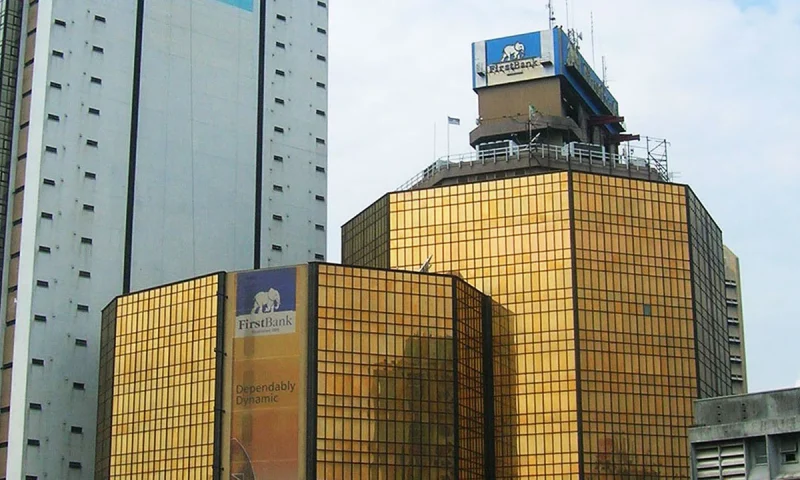
FirstBankThe Chief Executive Officer of First Bank of Nigeria, Olusegun Alebiosu, has said the bank’s Digital Xperience Centre is a step towards redefining how banking connects with education, technology, and the wider community.

He stated this at the launch of a Digital Xperience Centre, the ninth in the country, at the University of Benin recently. Alebiosu also allayed fears that the DXC, which he said is meant to improve customers’ experience, would lead to job losses.

He said the DXCs are gateways to a smarter, faster, and more personalised financial journey. The FirstBank boss said the centres are equipped with cutting-edge technology, as well as state-of-the-art self-service terminals designed to simplify transactions while ensuring top-tier security and efficiency.

He said the partnership with UNIBEN led to the creation of a hub where students, faculty, and community members can access FirstBank’s digital world. Alebiosu said the centre provides an elevated banking experience with speed and ease, designed to put the customer in control.

He said, “This digital experience centre set up by FirstBank is to take banking to the next step. It is virtually everything you see in a banking hall, and the same service. You can do everything from account opening, change of phone number, change of email, make complaints, and all others, cash withdrawal, and account statement. You can deposit money into your account.

“It will not lead to any loss of jobs. More and more people are accessing banking services, but banking platforms are not expanding as fast. This digital experience is to complement a branch. Instead of having crowds in a banking hall, frustration and complaints, people can come to the centre. It is for flexibility. The banking hall can close at 4 pm, but this one is a 24-hour operation.

“Students having examinations do not have to worry. They can come here at any time. They can be here at midnight. It is convenient and flexible. Our DXCs operate around the clock, including weekends, providing the convenience you need to bank anytime in just a few minutes.

“It embodies our commitment to Environmental, Social, and Governance principles, as it promotes financial inclusion, fosters digital literacy, and uses sustainable technology to empower underserved communities.”

The Vice-Chancellor of UNIBEN, Prof Edoba Omoregie, said the institution was pleased with the centre. He said, “We are excited and grateful to the bank. It is going to expand the scope of our staff and faculty. It will make our operations better. Ours is a big university, and the university is pleased with the bank for bringing it here.”

Petroleum regulators pledge reforms to unlock investments

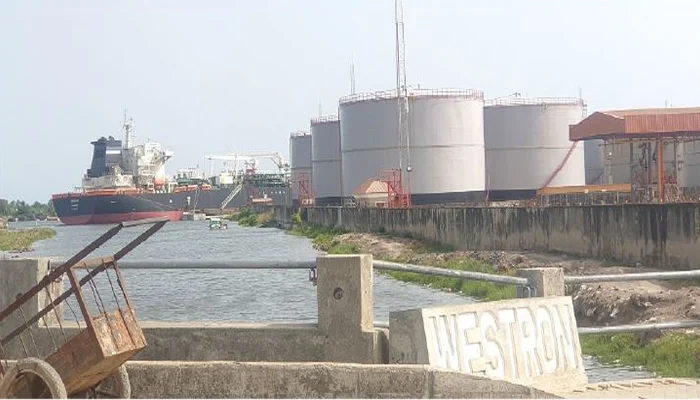
SHIP OFFLOADINGPresident Bola Tinubu’s nominees for the leadership of Nigeria’s petroleum regulators on Thursday pledged sweeping reforms aimed at plugging value leakages, restoring discipline across the sector and unlocking fresh investments under the Petroleum Industry Act.

The nominee for the Nigerian Upstream Petroleum Regulatory Commission, Oritsemeyiwa Eyesan, and her counterpart at the Nigerian Midstream and Downstream Petroleum Regulatory Authority, Saidu Mohammed, made the commitments during their screening by the Senate at Room 117 shortly after plenary.

Both nominees told lawmakers that digitisation, strict contract enforcement, credible data management and accelerated gas development would be central to their leadership, as Nigeria seeks to reposition its oil and gas industry amid declining revenues and global energy transition pressures.

Eyesan, who is slated to head the upstream regulator, said weak data integration and heavy reliance on manual processes were costing the country enormous value in an industry that is rapidly becoming digital worldwide.

“We are still largely manual, while the world is moving at jet speed. Without digitisation and real-time data, you cannot truly understand what you are regulating, and you will continue to lose money,” she said, stressing that effective oversight depends on accurate numbers, asset integrity monitoring and transparent systems.

She told the committee that collaboration between regulators, operators and policymakers would be key to addressing long-standing bottlenecks in the upstream sector. “We must collaborate with stakeholders, identify our pain points, and address them collectively. That is how we move the needle forward,” Eyesan added.

The NUPRC nominee assured senators that she would fully deploy the Petroleum Industry Act as a regulatory tool to attract fresh investments and ensure Nigeria remains competitive in the global energy market, describing the law as a “valuable document” whose gains depend on proper implementation.

A graduate of Economics from the University of Benin, Eyesan spent nearly 33 years at the Nigerian National Petroleum Company Limited and its subsidiaries, retiring as Executive Vice President, Upstream.

She highlighted her role in resolving disputes with international partners, restoring investor confidence during divestment threats, and facilitating multi-billion-dollar deep offshore investments.

She also recalled signing Nigeria’s first non-associated gas development contract and contributing to an increase in crude oil production from about 1.3 million barrels per day to 1.8 million barrels per day during her tenure.

“Having worked as an operator and participated in resource development, I believe I have the competence to regulate the industry and ensure we maximise the enormous opportunities before us,” she told the committee.

On his part, Mohammed, the nominee for the midstream and downstream regulator, placed emphasis on restoring discipline to Nigeria’s gas and petroleum supply systems through strict enforcement of contracts and quality standards.

“Gas is not a favour; it is a commodity. It must be sold based on enforceable contracts from the producer to the transporter and the end-user,” he said, arguing that weak contractual frameworks had contributed to persistent gas shortages, particularly in the power sector.

He noted that uninterrupted gas supply to some power plants was only possible where contracts existed, and obligations were clearly defined, adding that enforcing the Gas Network Code would help stabilise the system and rebuild investor confidence.

Mohammed also warned against neglecting domestic refining and processing capacity, cautioning that failure to protect local value could see the sector suffer the same fate as Nigeria’s once-thriving textile industry.

While backing exports, he said domestic needs must come first to guarantee energy security. The NMDPRA nominee pledged to revive pipeline transportation of petroleum products, attract billions of dollars in investments for gas processing infrastructure, and strengthen quality assurance through in-house laboratory facilities.

“You cannot enforce quality if you do not have the capacity to test and certify products yourself,” he said. Born in Gombe in 1957, Mohammed is a chemical engineering graduate of Ahmadu Bello University, Zaria, with decades of experience across the oil and gas value chain.

He has served as Managing Director of the Nigerian Gas Company and Kaduna Refining and Petrochemical Company, as well as Group Executive Director and Chief Operating Officer, Gas and Power, at NNPC.

Reacting, the Chairman of the Senate Committee on Petroleum Resources (Downstream), Senator Sumaila Kawu, said the screening was taking place at a critical moment for the country, noting that boosting energy production and efficiency was central to Nigeria’s economic recovery.

He disclosed that further engagements with the nominees would continue into January to deepen legislative–regulatory collaboration. The Senate is expected to consider the committee’s report in the coming days and move towards confirming the nominees, a step that would mark a new phase in the regulation of Nigeria’s oil and gas industry under the Tinubu administration.

The nominations followed the resignation of the pioneer chief executives of both agencies, Gbenga Komolafe of the NUPRC and Farouk Ahmed of the NMDPRA, who were appointed in 2021 after the Petroleum Industry Act came into force.

W’Bank to approve $500m loan for Nigeria today

World-Bank

The World Bank is set to approve a $500m loan to Nigeria on Friday (today) as part of efforts to expand access to finance for micro, small and medium enterprises across the country.

The proposed facility, titled the Fostering Inclusive Finance for MSMEs in Nigeria (FINCLUDE) Project, aims to mobilise private capital and promote innovative financial products for small businesses, according to information obtained from the World Bank.

Negotiations on the loan are ongoing, and approval by the World Bank Group’s board is expected on Friday. The approval, expected on December 19, 2025, will see the World Bank commit $500m to the project out of an estimated total cost of $2.39bn.

Of the World Bank financing, $400m will be provided by the International Bank for Reconstruction and Development, while $100m will come from the International Development Association.

The Federal Government will be the borrower under the arrangement, with the Development Bank of Nigeria serving as the implementing agency with overall responsibility for managing the funds. The remaining $1.89bn required for the project is expected to be provided by commercial lenders as unguaranteed financing.

According to the World Bank, the FINCLUDE project will leverage the platforms of the Development Bank of Nigeria and its subsidiary, Impact Credit Guarantee Limited, to deepen credit access for MSMEs.

“The proposed FINCLUDE Project leverages the platforms of the Development Bank of Nigeria and its subsidiary, the Impact Credit Guarantee Limited, to drive inclusive MSME finance,” a document from the World Bank read. “Through these catalytic institutions, the project will deploy a package of complementary, inclusive, and innovative instruments tailored to the diverse needs of MSMEs in Nigeria.”

The World Bank described DBN as “a partner well known to the World Bank with high implementation capacity and a proven track record in designing and executing complex, innovative projects,” noting that its role would be central to the success of the intervention.

The project is structured around three main components. These include the provision of inclusive and innovative MSME finance products, the de-risking and mobilisation of private capital through partial credit guarantees, and technical assistance aimed at modernising and digitising Nigeria’s MSME finance ecosystem.

Under the first component, the World Bank said the project would provide Tier 2 subordinated capital to eligible financial institutions and support the establishment of an MSME investment fund to deliver equity and long-term debt financing to small businesses. The bank said this approach would help “crowd-in private capital, test market innovations and promote financial sustainability” within the MSME segment.

Also, the project will offer targeted technical assistance to strengthen the capacity of financial institutions, improve regulatory oversight and modernise the MSME finance value chain linking DBN, lenders and entrepreneurs.

In its appraisal report, the World Bank highlighted Nigeria’s ongoing economic reforms, describing the country as being “in a critical transition.” It noted that the removal of fuel and foreign exchange subsidies, alongside the unification of exchange rates, had begun to stabilise the economy and restore investor confidence.

“These reforms have improved fiscal space, enhanced FX liquidity, and eased inflation to 18 per cent as of September 2025,” the report stated, adding that growth prospects were strengthening, with the International Monetary Fund projecting 3.9 per cent real GDP growth in 2025.

Despite these improvements, the World Bank warned that access to finance remained uneven, particularly for MSMEs, women and the agriculture sector. It noted that agriculture accounted for just over five per cent of total bank credit in 2024, while high interest rates and shallow credit penetration continued to constrain lending to smaller enterprises.

If approved on Friday, the FINCLUDE project will add to Nigeria’s growing portfolio of World Bank-supported programmes. As of June 30, 2025, Nigeria’s external debt stood at $46.98bn, according to the Debt Management Office.

The World Bank Group remains Nigeria’s largest single creditor, accounting for $19.39bn of the total, comprising $18.04bn from the IDA and $1.35bn from the IBRD. This represents 41.3 per cent of the country’s external debt, underscoring the bank’s dominant role in financing Nigeria’s development initiatives.

The PUNCH earlier reported that the World Bank loans to Nigeria between 2023 and 2025 are projected to reach $9.65bn by the end of this year as fresh approvals, ongoing negotiations, and disbursements gather pace across key sectors.

The amount covers International Bank for Reconstruction and Development and International Development Association loans only, according to an analysis of data on the bank’s website by The PUNCH. When grants are added, total World Bank support rises to about $9.77bn within the three-year window.

The International Bank for Reconstruction and Development provides loans on commercial or near-commercial terms to middle-income and creditworthy low-income countries, while the International Development Association offers highly concessional loans and grants to the world’s poorest nations.

The PUNCH also reported that Nigeria’s stock of World Bank International Development Association loans rose to $18.5bn, making it the largest IDA borrower in Africa and the third-biggest in the world.

Fresh data from the IDA’s unaudited financial statements for the third quarter of 2025 confirmed that the country has maintained the ranking it first attained in 2024, when it climbed to third place after overtaking India. The country was the fourth-largest borrower in 2023.

According to the report, Nigeria’s exposure increased from $17.1bn in September 2024 to $18.5bn in September 2025, representing a rise of $1.4bn or 8.2 per cent. The increase reflects the country’s heavier reliance on concessional financing to plug infrastructure gaps, stabilise its reform programme, and support social spending amid volatile oil earnings.

Economists warn that the rising loan pipeline, while potentially beneficial for long-term development, could deepen fiscal pressures if not matched with stronger domestic revenue mobilisation and prudent expenditure management.

Lagos-based economist, Adewale Abimbola, reacting to the rising World Bank commitments to Nigeria, said loans from multilateral institutions such as the World Bank are largely concessionary, with interest rates typically below market levels and longer repayment tenors.

He noted that the critical question is not whether Nigeria should be borrowing, but whether the loans are structured and deployed effectively. “If it’s concessionary and tied to viable projects with medium-term revenue prospects, I don’t think it’s a bad idea,” Abimbola explained. “Borrowing isn’t bad; what matters is utilisation.”

He stressed that the economic impact of such loans depends on how well they are channelled into projects that can generate sustainable growth, strengthen revenue, and improve public services over time.

Gombe PDP ex-guber candidate, Barde defects to ADC

Gombe State’s 2023 Peoples Democratic Party, PDP, gubernatorial candidate, Mohammad Barde, has formally joined the African Democratic Congress, ADC.
Barde, who came second in Gombe State’s 2023 governorship election behind Governor Inuwa Yahaya, said he joined the ADC as part of his preparations for the 2027 general elections.

In an interview after validating his ADC membership, Barde criticised the current state of insecurity and poor infrastructure in Gombe and across the country, asserting that the ADC is committed to addressing these challenges.

He expressed confidence in the party’s ability to bring positive change, highlighting its focus on inclusive leadership and equal opportunities for all.

Barde also outlined ADC’s plan to hold state congresses and a national convention in February 2026, urging members to participate in membership revalidation and mobilise new supporters ahead of the events.

Ex-governor Bafarawa’s supporters defect from PDP to APC in Sokoto

Supporters of former Sokoto State governor, Alhaji Attahiru Bafarawa, under the banner of the Bafarawa Akida Movement, have formally defected from the Peoples Democratic Party, PDP, to the ruling All Progressives Congress, APC, in the state.
The decision was announced on Wednesday following a consultative meeting of elders and leaders of the movement from all 23 local government areas of Sokoto State.

Speaking after the meeting, the movement’s chairman, Prof. Hamza Maishanu, said the defection followed extensive consultations and reflected the collective decision of members.

He added that the elders resolved to support the administration of Governor Ahmed Aliyu, citing its performance and cordial relationship with Bafarawa.

Maishanu confirmed that the decision to join the APC was formal and would be followed by further consultations to complete necessary procedures.

He dismissed claims linking the move to 2027 elections or external political pressure.

Meanwhile, Bafarawa reiterated that he had quit active politics and had not personally joined the APC, but said he supported the decision of his followers.

Lagos High Court announces 2025 Christmas vacation

The High Court of Lagos State has officially declared its 2025 Christmas vacation, with regular court sessions suspended from Wednesday, December 24, 2025, through Friday, January 2, 2026.
Court proceedings are scheduled to resume on Monday, January 5, 2026.

The vacation period was approved by the Chief Judge of Lagos State, Justice Kazeem Olanrewaju Alogba, under the authority of Order 49, Rules 4(c) and 5 of the High Court of Lagos State (Civil Procedure) Rules, 2019, which grants the Chief Judge power to determine court vacation dates and make provisions for urgent judicial matters.

This was communicated in a public notice issued by the Chief Registrar of the High Court, Mr. T. A. Elias, and dated November 26, 2025.

The notice confirms that the vacation period includes all dates between December 24, 2025, and January 2, 2026, in line with established court practice.

While regular hearings will be suspended during the Christmas break, the court clarified that urgent judicial matters will still be addressed.

Judges are authorised to hear and determine urgent applications relating to substantive cases already assigned to them.

For new urgent applications not connected to existing cases, a judge will be designated specifically to handle such matters during the vacation.

The notice also emphasised that any matter certified as urgent may be entertained during this period, provided it complies strictly with the requirements set out in Order 49, Rule 5 of the Lagos High Court (Civil Procedure) Rules, 2019.

NNPCL sure of meeting 2.06mbpd target with PINL partnership

NNPCLAs Nigeria targets 2.06 million barrels per day crude oil production in 2026, the Nigeria National Petroleum Corporation Limited said it is building synergy with surveillance companies like Pipeline Infrastructure Nigeria Limited to achieve the feat.

NNPCL Head, Field Operations, Eastern Corridor, Project Monitoring Office, Akponime Omojevwhe, stated this at the PINL December meeting with stakeholders in Yenagoa, the Bayelsa State capital.

Omojevwhe said in a statement on Monday that the cordial partnership between the host communities and PINL has resulted in unhindered production on the Trans Niger Pipeline.

He revealed that the company’s projection for 2026 is 2.06 million barrels per day with a budgeted benchmark of 1.84 million barrels per day.

“Our projection for 2026 is 2.06mbpd while the budget is 1.84mbpd and with the kind of synergy we are seeing here in Bayelsa and other PINL coordinated areas, we can do it. If everybody comes together, it’s achievable and it’s realistic.”

Meanwhile, PINL promised to advocate for more development from government and international oil companies operating in the host communities of the TNP.

The surveillance company which operates on the eastern corridor of the TNP argued that siting development projects in host communities would help reduce the temptations of vandalism and oil theft by community people.

PINL General Manager, Community Relations and Stakeholder Engagement, Dr. Akpos Mezeh, said the decision to canvass for more development in the host communities followed several communities’ requests.

Mezeh said, “We have become one of the closest interfaces with the communities and those communities may not even understand that we don’t have the capacity to provide most of those things they are asking for, but for the fact that we have been able to create that platform to air their grievance. We have complaints of lack of basic amenities, so in 2026, we’ll advocate for more government attention in our communities.”

He said the meeting afforded the company the opportunity to review its progress in the fight against pipeline vandalism and crude oil theft, and also celebrate, fellowship and appreciate critical stakeholders, especially leaders of host communities for their support and commitment which he said have sustained the economic stability of the country.

The Chairman of Ijaw National Congress,  Central Zone, Chief Moses Theophilus, commended the company for its impactful services in the region on the outgoing year, noting that PINL’s services have greatly reduced vandalism, oil theft and environmental pollution in the area.