2027: PDP dismisses alliance with other parties in Abia

The Peoples Democratic Party, PDP, Abia State chapter has dismissed every suggestion linking it with alliance with other political parties in the State.

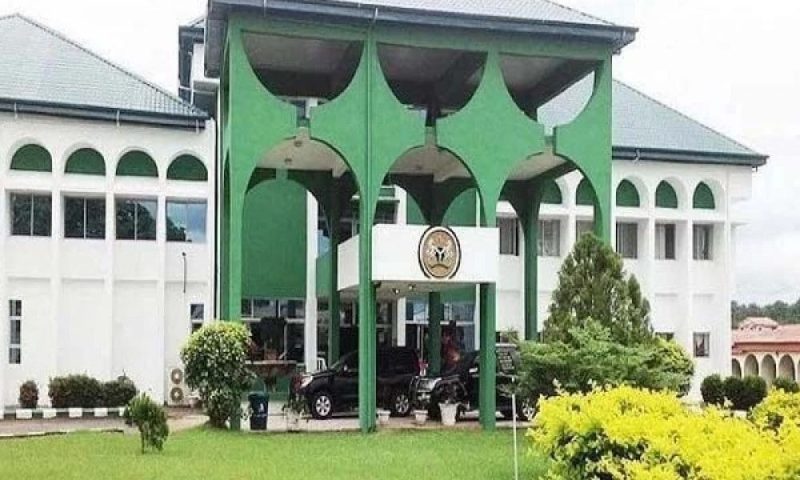
The Chairman of the PDP in Abia State, Abraham Amah stated this on Thursday at the PDP State Secretariat, Umuahia, while reacting to questions about a possible alliance involving the party.

Amah, who described the PDP as strong, united and formidable for the 2027 battle in Abia, said anybody issuing statement in proposal or support of an alliance is not speaking for the party.

He maintained that having successfully uploaded the names of its candidates for various elective posts, his party is prepared to go into the 2027 election battle without seeking the support of any other party or donating its platform to any other political party to use.

“As far as we are concerned, as at today, we do not have any agreement with any other political party.

“Am privileged to know what is happening at the party, not only in the State but at the national level. So we do not have any such agreement with anybody,” Amah said.

The Abia PDP Chairman also declared that there is no faction in the State as according the him, all the names of the candidates of the PDP he leads, had already been successfully uploaded on the INEC official portal.

He further said that Abia PDP has taken up the task of reconciling aggrieved primary election aspirants.

Earlier in his speech during a press conference, the PDP governorship candidate in Abia State, Kelechi Anosike said he would pay N90,000 minimum wage to Abia civil servants if elected the governor.

Anosike, who faulted the Abia State government for its system of salary payment, alleged that the State government is not paying N70,000 salary across board.

Police detain suspect over alleged death of unidentified man in Kano

The Kano State Police Command has detained a suspect following the death of an unidentified man whose body was discovered inside an unoccupied house in the Badawa area of Kano State.

The deceased, believed to be about 28 years old, was found with a deep injury to his neck, which residents suspect led to his death before help could reach him.

A resident of the area, Yusuf Da’u Ibrahim, said the incident came to light after a neighbour alerted the ward head that a badly injured man was inside a vacant house and needed urgent help.

“Before emergency responders arrived, the police had already been informed. They quickly came to the scene, arrested a suspect and evacuated the body to the hospital,” Ibrahim said.

He added that residents did not recognise the victim and said it was the first time such an incident had occurred in the neighbourhood.

“We don’t know who the deceased is. This is the first time we have witnessed such a tragic incident in our community,” he said.

When contacted, the spokesperson for the Kano State Police Command, CSP Abdullahi Haruna Kiyawa, said he had not yet received a detailed report on the incident.

“I have not received the full report yet, but the command will investigate the matter to establish exactly what happened,” Kiyawa said.

2027: INEC can’t decide candidates for political parties – Sambo

Director of News and Political Editor of Arise News, Sumner Sambo, says the Independent National Electoral Commission, INEC, cannot dictate to political parties who their candidates should be.

Sambo made this statement on Thursday when he appeared as a guest in an interview on Arise Television’s ‘Prime Time’.

He was speaking on the list of candidates each political party submitted to the electoral body ahead of the 2027 general elections.

“INEC cannot tell a political party who is or ought to be its candidate

“What INEC can do is be a witness to how a candidate emerges, take down notes, and preserve them, and if the process goes to court, they can present that in court.

“If the process does not go to court, INEC must accept the candidate presented by the party.

“All it has to do is to await for the candidate that has been deprived as the person who claimed he won to approach the court,” he said.

Emefiele didn’t benefit from $6.2m looted in CBN – EFCC witness tells court

A witness of the Economic and Financial Crimes Commission, EFCC, Mr Okpoziakpo Eloho, on Thursday told a High Court of the Federal Capital Territory, FCT, that the former Governor of the Central Bank of Nigeria, CBN, Godwin Emefiele, did not benefit from the $6,230,000, reportedly stolen from the apex bank.

The witness, a Commissioner of Police at the Fraud Unit of the Force Headquarters, Abuja, admitted that there was no evidence that Emefiele benefitted from the loot either in cash or in transfer into his account by those who admitted stealing the money.

Eloho made the clarification during cross examination by Mathew Burka, SAN, lead counsel to the defendant.

Emefiele is being prosecuted by the anti-graft agency on alleged procurement fraud and abuse of office before Justice Hamza Muazu.

At Thursday’s proceedings Eloho, who led the police investigation of the former CBN boss, stated that Emefiele in the statement he made to the team of investigators denied ever giving approval and authorization for the release of the money to anybody.

The witness also said that the defendant also denied ever receiving any letter from the then Secretary to the Government of the Federation, Boss Mustapha, or acted on any such letter in relation to the alleged stealing.

Answering a question, CP Eloho admitted that one Jibril Abubakar appeared before his probe panel during investigation and admitted collecting the $6. 2 million from the Abuja branch of the CBN.

He also said that none of those interviewed or investigated in respect of the money told the investigators that the defendant benefitted in one way or the other.

The police commissioner said that although Jibril Abubakar claimed to be a staff in the Office of the SGF, investigation later showed that he was never an employee of the office.

The witness further stated that despite the confession of Abubakar that he collected the money from the apex bank, he (witness) was not aware of the trial of Abubakar in any law court.

Also answering a question, the EFCC witness claimed that one Bashirudeen Maishanu, a staff of the CBN, was also interrogated and he confessed to be one of those who stole the money.

The witness further stated that he was not aware of the trial of the said Maishanu and that he would be shocked if the man was promoted by CBN in spite of his confession to the stealing of the money.

When confronted with series of exhibits especially correspondences exchanged during the processing, approval and release of the looted fund, the witness admitted that protocol was breached going by the hierarchy of the management of the apex bank, adding that under normal circumstances correspondence from CBN governor ought to go to the deputy governor and from there downwards.

“I recall that on December 13, 2023, we were at Kuje correctional center where the defendant made his statement in relation to his office on the $6.2 million.

“He was confronted with the issue of the money, his approval and authorization for the release of the money.

“In the process the defendant denied he did not sign for the approval or release of the money.

“The defendant also denied receiving any letter from SGF, he also stated that the signature on the documents that related to the approval and release of the money was not his,” he said.

Answering another question on the statement made by former SGF, Boss Mustapha to the investigators, the witness told the court that it was the special investigator, Jim Obaze, that was present when Boss Mustapha claimed his signature was forged.

On the forensic examination carried out by EFCC on the signature of Boss Mustapha to verify the alleged forgery, the witness told the court that it would have been desirable to carry out similar forensic examination on Emefiele’s signature the way it was done to Boss Mustapha.

The trial continues July 3.

FRSC opens 2026 recruitment July 3, how to apply

FRSC opens 2026 recruitment July 3, how to applyThe Federal Road Safety Corps has announced that its 2026 recruitment exercise will commence on Friday, July 3, inviting qualified Nigerians to apply for vacancies across its officer, marshal inspectorate and road marshal assistant cadres.

FRSC said applications would be accepted online for four weeks through its recruitment portal.

The recruitment is contained in a notice dated June 24, sighted on Wednesday and signed by the Deputy Corps Marshal and Head of Administration and Human Resources, Pauline Olaye, on behalf of the Corps Marshal.

The corps stressed that the application process is free.

So This Happened (EP 408) reviews: Court nullifies NDC registration

“Application is free and attracts no cost,” the notice stated.

To apply, applicants must submit applications through its official recruitment portal at https://recruitment.frsc.gov.ng,

Shortlisted candidates will be required to present printed copies of their application forms during the screening exercise.

“Applications must be submitted online within four (4) weeks with effect from Friday, 3rd July, 2026,” the notice added.

The recruitment covers three broad categories.

Categories and Requirements

Under the Officer Cadre, the FRSC is recruiting Superintendent Route Commanders, Route Commanders/Deputy Route Commanders and Assistant Route Commanders.

Medical doctors, pharmacists, nurses, medical laboratory scientists, lawyers, engineers, and graduates with B.Sc., BA or HND qualifications are eligible to apply, depending on the position. Applicants in this category must generally be between 18 and 35 years old.

For the Marshal Inspectorate Cadre, applicants with NCE, ND/OND, Registered Nurse/Registered Midwife and Community Health Extension Worker qualifications may apply. Candidates must be between 18 and 30 years old.

The Road Marshal Assistant Cadre is open to candidates with a minimum of three credits in SSCE, including English Language and Mathematics, as well as artisans and drivers.

The corps said artisans such as computer operators, mechanics, electricians, plumbers, tailors, motorcycle riders and drivers could also apply under the category, subject to relevant trade qualifications and licences.

Applicants seeking driver and rider positions must possess the appropriate class of valid driver’s licence, while articulated and tow-truck drivers must be between 26 and 40 years old.

Registration

Browse FRSC official recruitment portal at https://recruitment.frsc.gov.ng,

Confirm the preferred position and specialisation you qualify for based on the requirements above.

Click on the desired specialisation and proceed to registration.

During registration, you will be required to enter the following information accurately: NIN, driver’s licence number, surname, other names, email address (and confirmation), contact address, phone number, date and place of birth, nationality, state and LGA of origin, hometown, preferred physical screening venue, height, weight, gender, and marital status.

Click on “submit draft application” after filling in the required information.

After submission, you will be required to confirm your email.

General Requirements

The FRSC also listed several general requirements for prospective applicants.

Applicants must be Nigerian by birth, computer literate, medically fit and single. They must also possess the required educational qualifications and professional licences where applicable.

The corps further stated that male applicants must be at least 1.65 metres tall, while female applicants must have a minimum height of 1.58 metres.

“Ensure that all certificates and qualifications are declared and presented at the point of recruitment, as undeclared qualifications will not be accepted for future career progression in the Corps,” the notice said.

The corps also said applicants “must be of good character, free from financial indebtedness, and must not have been convicted of any criminal offence.”

It added that applicants must not have tattoos on any part of their bodies and should use their personal email addresses and phone numbers when submitting applications.

The FRSC advised pregnant women not to apply for the exercise.

The corps warned prospective applicants to beware of fraudsters, reiterating that the recruitment process is free of charge.

“This recruitment is absolutely free. Interested applicants should beware of fraudsters,” the notice stated.

For enquiries, the FRSC directed members of the public to call 122.

Beta Glass reports N37.5bn revenue, reconstitutes board

Beta Glass PlcBeta Glass Plc has reconstituted its board and outlined plans to expand investment in manufacturing technology after reporting first-quarter revenue of N37.54bn.

The company announced this at its 52nd Annual General Meeting held in Lagos, where shareholders reviewed its financial performance and approved key governance decisions.

According to the company, the unaudited interim financial statements for the quarter ended March 31, 2026, showed revenue of N37.54bn, which it attributed to operational performance and asset utilisation.

The company also cited findings from an independent socio-economic impact report by Deloitte, which estimated that Beta Glass contributed more than N1tn to Nigeria’s economy over the past decade, accounting for nearly one per cent of the country’s manufacturing output and 14 per cent of the non-metallic products sub-sector.

A major outcome of the meeting was the reconstitution of the Board of Directors with the appointment of four non-executive directors. The new appointees are Nitin Kaul, Olusola Carrena, Bolaji Olatunbosun Osunsanya, and Boye Olusanya.

Speaking at the meeting, the Chairman of the Board, Dr Vitus Ezinwa, said the new board composition would support the company’s long-term strategy. “The newly reconstituted Board positions Beta Glass to accelerate sustainable growth, strengthen shareholder value, and enhance the resilience of its regional supply chains amid an evolving global business landscape,” Ezinwa said.

The Chief Executive Officer, Alex Gendis, said the company would continue to focus on operational efficiency and strategic partnerships.

“The results achieved during the year demonstrate the resilience of our business and our ability to adapt to changing market conditions. We will continue to focus on operational excellence, innovation, and disciplined execution as we position the Company for sustainable growth, underpinned by our commitment to building and sustaining strong strategic partnerships with our customers,” Gendis said.

A shareholder, Williams Adebayo, welcomed the company’s dividend decision and earnings retention plan. “We are pleased with the dividend of ₦7.20 kobo declared and the decision to retain 51 per cent of the earnings to support the company’s future growth. We also commend Beta Glass for its youth skills empowerment initiatives. These efforts give us confidence that the company’s future is very bright,” Adebayo said.

Looking ahead, the company said it would continue investing in manufacturing technology and climate-related initiatives, including upgrades to furnace infrastructure to improve thermal efficiency and reduce emissions.

According to the company, the investments form part of its broader strategy to improve operational efficiency and support sustainable manufacturing.

Dangote slashes petrol price by N50 again

The Dangote Petroleum Refinery has reduced its ex-gantry price of Premium Motor Spirit, popularly known as petrol, from N1,125 per litre to N1,075 per litre, The PUNCH reports.

The latest adjustment represents a N50, or 4.4 per cent, reduction from the previous price and is expected to further intensify competition in Nigeria’s downstream petroleum sector.

The new N50-per-litre ex-gantry price reduction marks the second cut within seven days, bringing the price down from N1,175 to N1,125 per litre and now to N1,075 per litre.

Findings by The PUNCH on Thursday showed that the refinery also aligned its coastal loading price with the ex-gantry price at N1,075 per litre, effectively removing the earlier price differential between coastal and gantry sales.

A senior official of the Dangote Petroleum Refinery, who confirmed the development to our correspondent on condition of anonymity because he was not authorised to speak publicly, said the new pricing regime took effect immediately.

“The refinery has reduced the ex-gantry price of PMS from N1,125 per litre to N1,075 per litre. The coastal loading price has also been adjusted to N1,075 per litre. This is part of the refinery’s efforts to make products more accessible and competitive in the market,” the official said.

The official further disclosed that the refinery had suspended its 20-member consortium arrangement, opening product loading to all qualified marketers.

“The consortium arrangement has been cancelled. Loading at both the gantry and coastal terminals is now open to all marketers who meet the necessary requirements. The objective is to deepen market access and ensure seamless distribution of products across the country,” the source added.

Checks on Petroleumprice.ng also confirmed the new ex-depot price of N1,075 per litre at the Dangote refinery. The latest reduction could compel filling stations to adjust their pump prices downward in the coming days, especially those sourcing products directly from the refinery.

The development comes amid increasing competition in the downstream sector and renewed efforts by the Federal Government to ensure that Nigerians benefit from the deregulation of the petroleum market.

Earlier this week, the Minister of State for Petroleum Resources (Oil), Heineken Lokpobiri, insisted that fuel prices in a deregulated market would be determined by market forces and competition rather than government directives.

The minister maintained that the era of government-fixed fuel prices was over, stressing that increased domestic refining capacity would naturally lead to more competitive pricing and improved energy security.

Similarly, the Nigerian Midstream and Downstream Petroleum Regulatory Authority has repeatedly stated that petrol prices must remain cost-reflective under the deregulation regime.

The authority recently warned against profiteering and arbitrary pricing practices in the downstream market, insisting that operators must adhere to the principles of fair competition and transparency.

Shell, banks launch $3bn financing for oil contractors

Shell, banks launch $3bn financing for oil contractorsShell Nigeria Exploration and Production Company Limited has partnered with nine Nigerian banks to launch a $3bn contract finance facility aimed at improving access to credit for indigenous oil and gas contractors executing projects for the company.

According to a statement, the financing scheme, unveiled on Thursday, is designed to provide credit support to local contractors handling projects for SNEPCo and will be available in both naira and United States dollars.

The participating banks are First Bank, Guaranty Trust Bank, Zenith Bank, Access Bank, United Bank for Africa, Stanbic IBTC, Standard Chartered Bank, First City Monument Bank, and Fidelity Bank.

Speaking at the signing of the Memorandum of Understanding in Lagos, the Managing Director of SNEPCo, Ronald Adams, said the initiative aligns with the objectives of the Nigerian Oil and Gas Industry Content Development Act by promoting greater in-country value retention.

“The initiative reflects the spirit of the Nigerian Oil and Gas Industry Content Development Act, which is aimed at in-country value retention. Our partner banks offer capital and discipline.

“SNEPCo brings contracts and domiciliation of payments that de-risk lending.

On their part, the contractors provide performance. Each is accountable to the others, and the mutual accountability gives the arrangement its strength,” he said.

The Vice President, Finance, Shell Nigeria, CJ Akwaeze, said the financing scheme demonstrates Shell’s commitment to supporting the growth of oil and gas operations in Nigeria.

The Chairman of the Petroleum Technology Association of Nigeria, Wole Ogunsanya, who was represented by Dr Joan Faluyi, described the facility as a major boost for indigenous contractors.

Ogunsanya lauded the initiative as a “gateway to unlocking contractor financing issues, which will also drive efficiency in contract execution.”

Representatives of the participating banks also commended SNEPCo for introducing the financing arrangement, saying the partnership would strengthen local contractors, and pledged their continued support for the initiative.

SNEPCo said Nigerian companies have continued to play significant roles in its operations and project delivery. It noted that earlier this year, 43 wholly Nigerian companies participated in the turnaround maintenance exercise at the Bonga Floating Production Storage and Offloading vessel out of the 53 companies involved in the exercise.

According to the company, the Contract Finance Facility is expected to further strengthen the capacity of Nigerian companies and enhance value delivery in the operations of Nigeria’s premier deepwater producer.

‘Foreign airlines, companies owe NAMA over N67bn’

‘Foreign airlines, companies owe NAMA over N67bn’Foreign airlines and other organisations owe the Nigerian Airspace Management Agency more than N67bn in unpaid charges, a debt burden that is deepening the financial strain on the country’s air navigation service provider and threatening industrial peace in the aviation sector.

The mounting debt has emerged as a key factor in the dispute between NAMA and the Nigerian Meteorological Agency, with aviation unions warning that the agency cannot remit funds it has not received.

Meanwhile, despite the huge debt, The PUNCH learnt that international airlines remain the major contributors to NAMA’s revenue, while many domestic airlines have been reluctant to meet their payment obligations.

The PUNCH gathered that the cumulative debt owed to NAMA by both foreign and domestic airlines, as well as other companies, exceeds N90bn, with domestic airlines identified as the most difficult debtors from whom to recover payment

Findings by The PUNCH from NAMA’s Credit Control Records, an internal document obtained by our correspondent, showed that as of April 30, 2026, the agency was owed N34.69bn in domestic receivables and $49.48m in foreign receivables. At prevailing exchange rates, the combined debt exceeds N67bn.

The revelation comes amid rising tension in the aviation industry following NiMet’s threat to embark on a nationwide industrial action over the alleged non-remittance of its statutory revenue by NAMA.

The PUNCH reported last week that the NiMet Unions Joint Action Committee accused NAMA of failing to remit the statutory 10 per cent of en-route and overflight charges due to the agency.

The unions alleged that the non-remittance persisted despite the intervention of the Minister of Aviation and Aerospace Development, Festus Keyamo.

A strike by NiMet workers could have far-reaching consequences for the aviation industry, as the agency’s meteorologists provide the weather briefings and forecasts pilots rely on before take-off and landing. Any disruption to those critical services could significantly affect flight operations nationwide.

But in a letter jointly addressed to the minister, aviation unions defended NAMA, insisting that the agency’s financial challenges were largely caused by huge outstanding debts owed by airlines, government agencies, state governments and corporate organisations.

The letter was jointly signed by the Branch Chairman of the Air Transport Services Senior Staff Association of Nigeria, Oluwole Dada; Branch Chairman of the Association of Nigeria Aviation Professionals, Afatakpa Patrick; Branch Chairman of the National Union of Air Transport Employees, Abah Mathias; and Branch Chairman of the Amalgamated Union of Public Corporations, Civil Service Technical and Recreational Services Employees, Turkur M.

According to the unions, NAMA had continued to make payments to NiMet despite its financial difficulties. The letter read in part, “While we recognize and respect the legitimate rights of every worker and every aviation agency to pursue its welfare within the law, it has become imperative to present the complete financial picture surrounding this issue in order to ensure that the government is fully apprised of the underlying facts.

“Available records indicate that despite NAMA’s severe financial constraints, the Agency has continued to demonstrate good faith by paying approximately N400 million to NiMet between April and June 2026 towards the settlement of its outstanding obligations. This clearly demonstrates NAMA’s commitment to meeting its statutory responsibilities even under extremely difficult financial conditions.

“However, it is important to state that NAMA itself is operating under enormous financial constraints largely because huge statutory revenues due to the Agency remain unpaid by several government agencies, airlines, state governments, corporate organisations and other debtors. Simply put, NAMA cannot reasonably be expected to pay what it has not received.”

Documents obtained by The PUNCH further corroborate the unions’ position. The agency’s Credit Control Records stated that “as at 30th April 2026, NAMA is owed over N34.69bn in domestic receivables and approximately US$49.48m in foreign receivables.”

According to the unions, the development showed the growing financial pressure facing the country’s aviation agencies, with concerns mounting that unless the debts are recovered promptly, funding challenges could continue to disrupt critical industry services and fuel further labour unrest across the sector.

When contacted, the spokesperson for NAMA, Abdullahi Musa, confirmed the development but said the agency’s major concern was domestic operators, adding that both the Nigeria Civil Aviation Authority and NAMA’s commercial and legal departments were handling the debt recovery process.

He said, “Our major debtors are airline operators in Nigeria. The NCAA, Commercial Department, and Legal Department are on top of the situation for debt recovery.”

He added, “Many of the foreign airlines have been paying because IATA stands as their intermediary.” He further stated that the larger chunk of the foreign debts was owed by African airlines, adding that “they behave like domestic airlines.”

Efforts to obtain the minister’s reaction on the issue were unsuccessful. A message seeking clarification on the Federal Government’s plans to address the mounting debts was sent to him, but as of the time of filing this report, he had yet to respond.

Attempts to obtain the reaction of the Airlines Operators of Nigeria on the reasons for not paying charges due to NAMA were also unsuccessful. Calls and text messages sent to the spokesperson for AON, Prof Obiora Okonkwo, were not responded to.

2027: Atiku appoints Kenneth Okonkwo spokesperson after ADC VP dispute

Former Vice President Atiku Abubakar has appointed actor-turned-politician and chieftain of the African Democratic Congress, ADC, Kenneth Okonkwo, as his spokesperson.

This came weeks after the politician openly criticised the party’s choice of vice-presidential candidate for the 2027 general election.

Okonkwo disclosed the appointment in a statement posted on his official X handle on Thursday, where he expressed appreciation to Atiku for entrusting him with the role.

“I give God all the glory to be appointed by His Excellency Atiku Abubakar as his Spokesperson. I thank HE AA for the immense confidence reposed in me,” he wrote.

The former Labour Party, LP, presidential campaign spokesperson described the appointment as a reflection of Atiku’s inclusive leadership style, noting that the former vice president prefers dialogue and consensus-building rather than hostility toward associates who express differing opinions.

“Rather than pick offence against any of his associates for expressing genuine reservations of any action taken, HE AA always opts for dialogue and compromise that will engender solution to problems,” Okonkwo stated.

He revealed that discussions held with Atiku and other leaders of the ADC addressed concerns surrounding the political interests of the South-East despite what he described as limitations created by the Electoral Act, 2026.

“At a dialogue with HE AA and other well-meaning members of the African Democratic Congress, the interests of the South-East have been discussed and guaranteed within the existing challenges posed by the Electoral Act, 2026, and the realities on the ground,” he added.

Okonkwo also expressed gratitude to Kashim Imam, former ADC National Chairman Ralphs Nwosu, and Atiku’s Senior Special Assistant on Special Duties, Ekene Onwuka, for their contributions toward strengthening the party ahead of the 2027 elections.

“My sincere gratitude to my family, fans, and friends for their support and prayers, which God answered in covering my errors and colouring my efforts to pave way for this appointment. I still covet your prayers for wisdom, courage, provision, and protection needed to carry out this challenging post, which will usher in a glorious and great Nigeria,” he said.

The appointment comes shortly after Okonkwo publicly faulted the ADC’s selection of its vice-presidential candidate for the 2027 presidential election.

He had warned that reports suggesting the party was considering a candidate from the South-South region for the vice-presidential slot could deepen what he described as the continued marginalisation of the South-East in Nigeria’s political structure.

According to him, such a decision would further deny the South-East the opportunity of producing either the president or vice president, a situation he noted had persisted since 1999.