

Crude-backed loans gulped N8.36tn of 2025 revenue

About 14.66 per cent of Nigeria’s crude oil production in 2025 was likely committed to servicing crude-backed loan facilities, based on estimates derived from disclosures in the Nigerian National Petroleum Company Limited’s 2024 financial statements and official production data.

An analysis by The PUNCH shows that four major crude-secured arrangements — Project Gazelle, Project Yield, Project Leopard, and Eagle Export Funding — are backed by a combined 213,000 barrels of crude oil per day.

If this allocation remained unchanged throughout 2025, the total volume committed to debt servicing would amount to 77.75 million barrels for the year, calculated by multiplying 213,000 barrels per day by 365 days.

Data from the Nigerian Upstream Petroleum Regulatory Commission indicate that Nigeria produced 530.41 million barrels of crude oil between January and December 2025.

The 77.75 million barrels tied to crude-for-loan arrangements therefore represent 14.66 per cent of total annual production. Using the 2025 average Bonny Light price of $72.08 per barrel, the 77.75 million barrels translate to about $5.60bn.

Converted at the official exchange rate of N1,492 to the dollar, the crude potentially deployed to service the loans is valued at approximately N8.36tn. This implies that out of the estimated gross crude oil earnings for 2025, a sizeable portion of output by volume was effectively earmarked for debt servicing before revenues could fully accrue to government coffers.

The obligations span multiple forward-sale and project-financing arrangements expected to be serviced through substantial crude oil and gas deliveries. These commitments have become a central pillar of NNPC’s funding framework following years of fiscal strain, volatile production, and declining upstream investment.

Several of the facilities were used to refinance legacy debts, fund refinery rehabilitation, support cash flow, and meet government revenue obligations.

One of the major exposures is linked to the Eagle Export Funding arrangement. Although the 2024 financial statement notes that “at least 1.8 million barrels” must be delivered per cycle, earlier reporting by The PUNCH indicates that the facility comprises three separate loan tranches.

The first, a $935m loan secured in 2020 and backed by 30,000 barrels per day, was fully repaid by September 2023. A second tranche of $635m was also cleared within the same period. The only outstanding portion is the Project Eagle Export Funding Subsequent 2 Debt, a $900m facility obtained in 2023 and secured against 21,000 barrels per day.

Repayment was scheduled to commence in June 2024, with final maturity expected in 2028. As of December 2024, the outstanding balance stood at N1.1tn, making Eagle one of the company’s significant forward-sale exposures.

“The company had capital commitments of N1.1tn as at the year ended 31 December 2024 (31 December 2023: N1.2tn). This relates to the forward sale agreement with Eagle Export Funding Limited for the delivery of Crude Oil.

“Under the contract, Eagle Export Funding Limited will make an upfront payment to NEPL for crude in a Forward Sale Agreement. The payment received is required to be settled with the delivery of crude oil volumes, i.e., NEPL sells crude to Eagle Export Funding Limited based on a delivery schedule.

“Based on the agreement, at least 1,800,000 barrels of Crude oil must be nominated and scheduled by NEPL (and delivered at the relevant delivery terminal to Eagle Export Limited in every delivery period commencing on 28 August 2020,” the NNPC financial statement read.

Another significant obligation arises from the incremental gas-supply financing arrangement with Nigeria LNG Limited. Under the agreement, NLNG provided upfront funding of N772bn for gas supplies to be delivered over time.

By the end of 2024, gas worth N535bn had been drawn and N312bn recovered by NLNG, leaving N460bn yet to be supplied. A financing charge of N12bn also accrued during the period, bringing the total outstanding balance to N472bn.

The refinery rehabilitation programme accounts for some of the largest crude-secured debt commitments. Project Yield, the financing structure backing the Port Harcourt Refinery upgrade, had an outstanding drawdown of N1.4tn at the close of 2024.

The agreement requires NNPC to deliver refined-product-equivalent volumes of 67,000 barrels per day, with repayment scheduled to begin in June 2025 after a two-and-a-half-year moratorium.

“This is a 7-year N1.5tn PxF loan obtained in October 2022 for general corporate purposes with the ultimate use being the execution of the EPC Contract between PHRC and Tecnimont for the rehabilitation of Port Harcourt Refinery.

“It is secured with a forward sale of refined product equivalent of 67kbpd of crude oil. As of 31 December 2024, the amount drawn is N1.4tn with principal repayment to commence in June 2025 after a moratorium period of two years and 6 months. Therefore, loan commitment as of 31 December 2024 is N1.4tn,” the financial statement read.

Similarly, Project Leopard, another crude-backed forward-sale facility, carried an outstanding balance of N1.3tn. The five-year financing agreement commits the company to deliver 35,000 barrels of crude oil per day, with repayments expected to begin in mid-2025 after a six-month moratorium.

The largest exposure relates to Project Gazelle, a substantial crude-for-cash arrangement used to finance advance tax and royalty payments on Production Sharing Contract assets.

NNPC had drawn N4.9tn out of the total N5.1tn facility by December 2024. Crude valued at N991bn had been delivered, leaving an outstanding N3.8tn. The agreement requires sustained deliveries of 90,000 barrels per day until the liability is fully extinguished.

Taken together, the company’s major crude-for-loan facilities — Eagle Export Funding (21,000 bpd), Project Yield (67,000 bpd), Project Leopard (35,000 bpd) and Project Gazelle (90,000 bpd) — represent a combined commitment of 213,000 barrels per day, in addition to separate gas-delivery obligations under the NLNG arrangement.

Although the N8.36tn estimate reflects the gross market value of crude tied to loan servicing, actual fiscal receipts depend on pricing formulas, lifting schedules, repayment structures and other contractual terms.

The PUNCH earlier reported that Nigeria earned an average of N55.5tn from crude oil sales in 2025, compared to N50.88tn in 2024. NUPRC data show that Nigeria produced 530.41 million barrels of crude oil between January and December 2025, with output fluctuating during the year amid outages, operational disruptions and gradual recovery in some fields.

Industry analysts noted that the revenue figure represents gross earnings and does not account for production costs, joint venture cash calls, production-sharing contract cost recovery, oil theft, domestic supply obligations, or deferred liftings.

Nonetheless, the analysis highlights the scale of crude inflows generated during the year and underscores the importance of output stability and price performance to Nigeria’s oil-dependent economy.

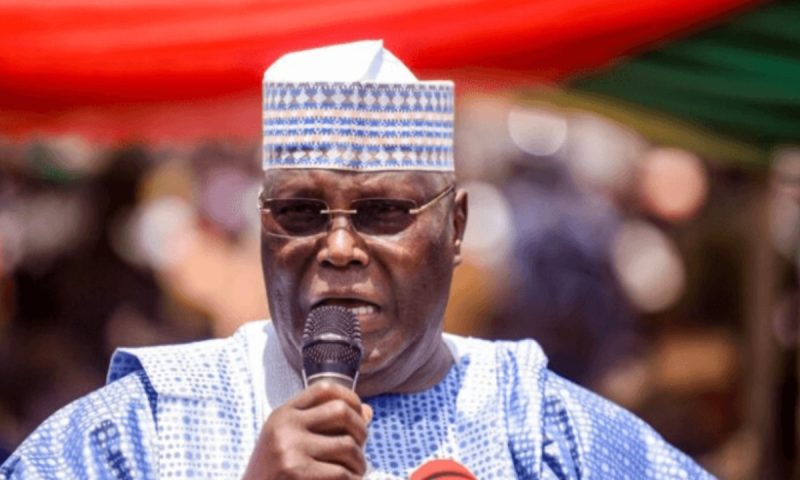
Gov Fintiri: Millions of Nigerians defecting due to survival – Atiku

Former Vice President, Atiku Abubakar on Friday said that millions of Nigerians are switching political allegiance out of sheer necessity, saying their primary concern is survival.
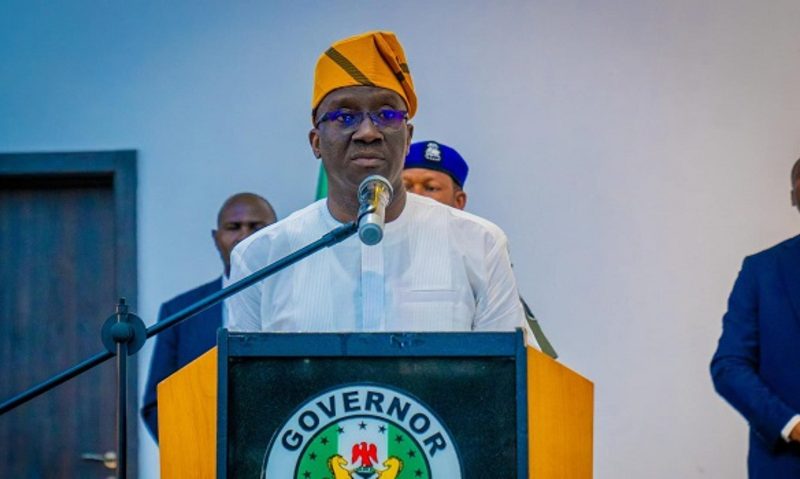
Atiku’s remark was contained in a statement released by his media office in reaction to the defection of Governor Ahmadu Fintiri of Adamawa State from the Peoples Democratic Party (PDP) to the All Progressives Congress (APC).

He criticized the growing trend of opposition governors joining the ruling party.

Atiku argued that the spate of defections reflects mounting pressure and political intimidation rather than genuine support, alleging that the administration of Bola Tinubu is deploying state institutions to harass rivals in an attempt to edge the country toward a one-party system.

Atiku maintained that intimidation tactics cannot distract from the severe economic realities confronting citizens, pointing to escalating food prices, deepening poverty, deteriorating security, and widespread joblessness, which he blamed on ineffective economic management.

“While some governors may switch parties to protect their own interests, ordinary Nigerians are changing political camps because they are fighting to stay afloat.

“Governors may defect for personal survival. Nigerians are defecting in their millions because they want survival,” Atiku said.

He urged citizens not to equate political cross-carpeting with popularity, questioning what the APC would campaign on in 2027.

“What will the APC campaign on in 2027 — hunger? hardship? hopelessness?” He asked.

2027: I will resign if Tinubu does not win – Gov Okpebholo

Governor Monday Okpebholo of Edo State has vowed to resign if President Bola Tinubu does not win the 2027 general elections.

Okpebholo made this vow on Friday during an interview on African Independent Television, AIT.

He reeled out development projects in the state, saying that Edo people will appreciate Tinubu through the ballot come 2027.

“Edo people have not even thanked Tinubu. How they will thank him is through their votes.

“The various projects across the state are the things that will speak for Tinubu and he will win here. Bet me, if he doesn’t win, I will resign as governor.

“There’s no election here for him. I’m a politician, who under-studied Chief Aneni. My style of politics is not thuggery but grassroots,” he said.

Simi: NAPTIP begins full investigations into alleged child sexual misconduct

The National Agency for the Prohibition of Trafficking in Persons, NAPTIP, has commenced a full investigation into alleged child molestation and abuse in a daycare setting in Lagos, based on suggestive online posts by Simi.

According to a statement released on Friday by NAPTIP, the Director-General, Binta Adamu Bello, announced the commencement of full investigations following renewed controversy over old tweets linked to alleged child sexual misconduct.

“Director-General Binta Adamu Bello has directed operatives of the agency to commence a full-scale investigation into the alleged child molestation and abuse in a daycare setting in Lagos, based on suggestive online posts linked to a popular Nigerian singer,” the statement said.

The agency had earlier appealed to the general public for anyone directly involved to reach out to them.

However, in the early hours of Friday, the Director-General of NAPTIP, Binta Adamu Bello, ordered an immediate investigation into the matter.

Simi, the Joromi crooner, has been facing paedophile allegations from netizens over her old tweets involving a four-year-old boy at her mother’s daycare in Lagos.

Preliminarily, the Executive Secretary of the Lagos State Domestic and Sexual Violence Agency (DSVA), Lola Vivour-Adeniyi, during her appearance on Channels Television’s programme Morning Brief on Thursday, February 26, referred Simi to the Nigerian Police for a full-scale investigation.

Vivour-Adeniyi said the Lagos State Government had been monitoring developments after old tweets, allegedly posted by the singer in 2012 and 2014, resurfaced online and sparked public concern.

“I can speak for what Lagos State is doing,” she said.

According to her, the state decided to involve the police to establish the facts surrounding the allegations.

“What we have done is to refer the case to the Commissioner of Police to at least conduct some preliminary investigation,” Vivour-Adeniyi said.

She added that the alleged incident may have taken place in a crèche reportedly run by the singer’s mother.

She, however, noted that prosecution would be difficult without a complainant and appealed to anyone who may have been affected to come forward.

“It is going to be very difficult to prosecute Simi without a survivor being present. We encourage anyone who was allegedly sexually assaulted by Simi to come forward and make a statement so the process can begin,” she said.

Earlier, NAPTIP had also called on members of the public to assist with information related to the allegations, following growing discussions around alleged child sexual abuse and misconduct in daycare centres across Nigeria.

“We are committed to thoroughly investigating credible reports,” the agency said in a public notice.

The singer later addressed the controversy, insisting that the tweets were innocent jokes taken out of context. She denied any wrongdoing and said she has always spoken against rape and sexual assault.

“Fourteen years ago, I was 23, so I was definitely not a child. I’m not here to make excuses because I don’t have anything to make excuses for. What I can’t let anyone do is twist my story to fit false narratives. I have always spoken against rape and sexual assault even before you knew I existed,” she said.

NAPTIP has again urged anyone with clear information, evidence, direct knowledge, or personal experience related to the allegations to contact the agency privately so investigations can proceed.

INEC absent as court adjourns APP deregistration case to April 16

A Federal High Court sitting in Owerri has adjourned the matter seeking to disqualify the Action Peoples Party, APP, from participating in any electoral exercise following its deregistration by the Independent National Electoral Commission, INEC.
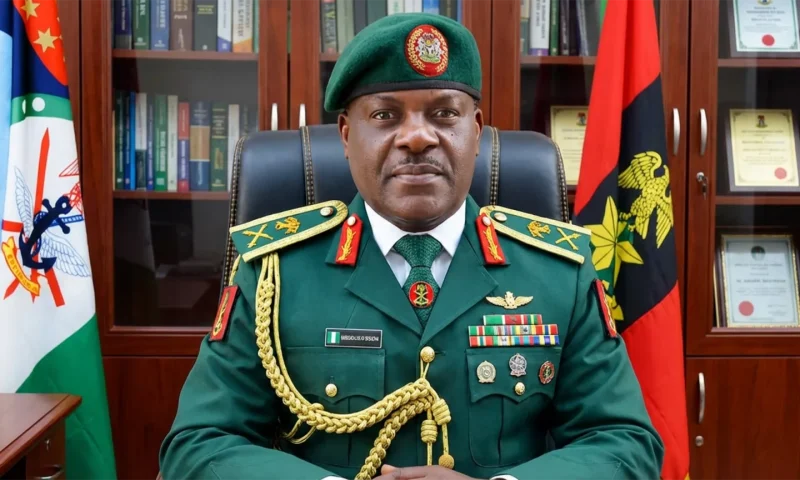
The case, which was supposed to commence fully, was adjourned to April 16 following the absence of a legal representative from INEC and a plea for more time to prepare a defence by APP’s legal team.

The case, with Suit No: FHC/CS/03/2026, was filed by one Mr. Franklin Ngoforo, the Coordinator of Civic Action for Democracy (CAC), seeking the delisting of APP as a political party.

Present in court were members of the legal team from the Office of the Attorney General of the Federation, representing the Federal Government, as well as some civil society organisations.

At the commencement of proceedings, APP’s legal team pleaded for more time to enable them prepare their defence, while INEC did not send any legal representative.

The presiding judge, after listening to submissions from all parties present, adjourned the matter to April 16, giving APP’s legal team roughly seven weeks to file any defence they wish to present.

Speaking on the matter, a constitutional lawyer, Chinyere Obi, explained that when a defendant in a suit chooses not to appear or be represented, it is typically a signal that either they have no defence to present or are conceding the plaintiff’s argument by default.

In his observation, Barr. Chinedu Obasi of the Civil Liberties and Accountability Initiative described the proceedings as a watershed, signifying that Nigeria is still battling with electoral integrity.

He asserted that civil society organisations would exert pressure on INEC to ensure the right thing is done in that sector.

Ngoforo had filed a 21-count charge seeking to stop APP from operating as a political party.

He pointed out that APP was deregistered by INEC on February 6, 2020, and that the Supreme Court of Nigeria judgment of March 2022 affirmed it.

DHQ reviewing rehabilitation program for repentant insurgents – Onoja

The Defence Headquarters (DHQ) has commenced a review of its rehabilitation and reintegration programme for repentant insurgents, known as Operation Safe Corridor, as part of efforts to strengthen Nigeria’s counter insurgency strategy.


The Director of Defence Media Operations, Maj. Gen. Micheal Onoja, disclosed this on Friday while briefing journalists on ongoing military operations nationwide. He said the review was informed by emerging challenges and public concerns regarding the Federal Government’s de radicalisation and rehabilitation initiative.

Onoja explained that Operation Safe Corridor was introduced by the Defence Headquarters in collaboration with the Borno State Government and relevant federal ministries to provide a pathway for insurgents who voluntarily surrendered to abandon violence and reintegrate into society.

“For a period of time, that system achieved some significant success. As with everything, any human activity has some point of challenges. We do not deny that there are challenges, and we also acknowledge that there is a need for a review,” he said.

He noted that the ongoing reassessment was aimed at strengthening the programme and ensuring it remains effective in addressing current security realities.

The military spokesman added that while insurgents would be held accountable for their actions, the opportunity for rehabilitation remains an important component of national security efforts.

“We are also as concerned as you and other members of the public. We have heard a lot of things the public is saying. I can assure you that the review will be done and you will hear our new operational directives for Operation Safe Corridor,” he said.

Onoja also addressed concerns over peace initiatives involving insurgents at the state level, noting that governors have a responsibility to protect their states but must operate within the framework of federal security policies.

“Some states have the rights and the powers to take every action that will secure their states. However, I can tell you confidently that they will not be able to do that without the authorisation of the Office of the National Security Adviser,” he said.

He reaffirmed that the Armed Forces of Nigeria remain committed to implementing federal government policies and supporting authorised measures aimed at restoring peace and stability in affected areas.

Court sentences Orient Petroleum MD, Nwawka, others to 14 years for N25 billion fraud

Justice O. M. Anyachebelu of the Anambra State High Court has convicted and sentenced Nnaemeka Nwawka, Managing Director of Orient Petroleum Resources Plc, alongside Jude Anniekwe Cyril and Sage Nebefeife Foundation, to 14 years’ imprisonment each for fraud involving about N25 billion.

The court found them guilty of stealing, conversion, and gratification after a lengthy trial that lasted a decade.

The defendants were convicted on a ten-count charge relating to financial crimes. Part of the charge stated: “that you, Nnaemeka Cyril, and the registered trustees of Sage Nebefeife Foundation, fraudulently converted to your personal use the aggregate sum of N29,620,733.”

Another count accused them of converting “the aggregate sum of N29,620,733” in similar transactions within Anambra State between 2012 and 2013.

They had pleaded not guilty when the charges were read, prompting the Economic and Financial Crimes Commission (EFCC), through its counsel, to proceed with full prosecution.

During the trial, the commission presented four witnesses and several documents, detailing how contracts were allegedly awarded to associates’ companies, with funds later traced to the foundation linked to Nwawka for personal use.

In his ruling, the judge held that the prosecution proved its case beyond reasonable doubt and ordered Nwawka and his foundation to refund N140.9 million to Orient Petroleum Resources Plc.

The court concluded that the evidence showed a pattern of diversion of company funds through questionable contract awards and financial transfers.

The case followed a petition by investor Cletus Ibeto, who alleged that he invested N25 billion in the company but suspected that large sums were diverted through “suspicious and bogus contracts” awarded to linked firms.

REA plans 500 power projects in N170bn 2026 budget

Abba AliyuThe Rural Electrification Agency has unveiled plans to execute more than 500 electrification projects in the 2026 fiscal year, as part of a N170bn budget proposal aimed at expanding reliable power supply to public institutions and underserved rural communities across the country.
The Managing Director of the agency, Abba Aliyu, disclosed this while briefing journalists on the sidelines of the 2026 budget defence session organised by the House Committee on Rural Electrification in Abuja on Friday.

Aliyu said the agency’s total budget proposal for 2026 stands at N170bn, out of which N100bn has been approved for the National Public Sector Solarisation Initiative, a flagship programme designed to provide sustainable and cost-effective electricity to government institutions.

He said, “N100 billion has been earmarked and approved for the National Public Sector Solarisation Initiative — a flagship programme designed to provide sustainable and cost-effective electricity to government institutions.”

He explained that the allocation will fund the deployment of hybrid mini-grids for Ministries, Departments and Agencies within and outside Abuja, reducing dependence on the national grid and cutting energy costs in public facilities.

Citing the National Hospital Abuja as an example, the REA boss noted that solar-based infrastructure has already been deployed to ensure uninterrupted electricity supply, significantly lowering operational costs while improving service delivery.

Giving a breakdown of the proposed interventions, Aliyu said the 2026 budget captures a mix of solutions tailored to the energy needs of different communities.

He added, “A significant number of the projects involve grid extension to communities located near existing power infrastructure.

“In such cases, the agency will extend distribution lines and install transformers to connect households and businesses to the national grid.”

For agrarian settlements and communities with cottage industries, the agency plans to deploy renewable-powered mini-grids to stimulate economic productivity. Mini-grids are also earmarked for agricultural processing clusters to enhance value addition, reduce post-harvest losses and support rural enterprise development.

In less populated and hard-to-reach areas, the REA intends to deploy solar home systems to provide standalone renewable electricity to households that are not economically viable for grid or mini-grid connectivity.

“What we presented to the National Assembly are the comprehensive details of these over 500 projects scheduled for execution in 2026,” Aliyu stated.

On budget implementation, the Managing Director disclosed that the agency achieved an 85 per cent execution rate for the 2024 budget.

He added that despite low releases in 2025, the agency has so far recorded 32 per cent performance for the current fiscal year, expressing optimism that implementation would improve as additional funds are released.

Earlier, the Chairman of the House Committee on Rural Electrification, Mohammed Bukar, said the committee was satisfied with the agency’s submissions after detailed scrutiny.

Bukar noted that the REA has made measurable progress in expanding access to electricity through off-grid and renewable energy interventions across rural communities, federal institutions and public sector establishments nationwide.

He commended the agency’s compliance with procurement regulations, fiduciary safeguards and development partner frameworks guiding its operations, but stressed that the committee would conduct oversight visits to project sites.

“Legislative oversight is a critical pillar of accountability, and we will continue to ensure that the Rural Electrification Agency remains aligned with its statutory mandate and national development priorities.

“However, at this stage, we are satisfied that the agency is operating within its mandate and delivering tangible impact. We encourage the agency to sustain this momentum as Nigeria advances its rural electrification and energy transition objectives,” Bukar said.

PUNCH Online reports that in recent years, REA has emerged as a key driver of Nigeria’s rural electrification and energy transition agenda, particularly through off-grid renewable solutions. The agency has implemented major programmes such as the Energising Education Programme, which has delivered solar hybrid power plants to federal universities and teaching hospitals, and the Energising Economies Initiative, targeting markets and small business clusters.

Through partnerships with development partners, including the World Bank and the African Development Bank, the agency has deployed hundreds of mini-grids and solar home systems under the Nigeria Electrification Project, bringing electricity to millions of Nigerians in previously unserved communities.

TotalEnergies hands OLO Trust to Aradel

TotalEnergies Marketing Nigeria PlcThe Nigerian Upstream Petroleum Regulatory Commission has presided over the formal handover of the OLO Oilfield Host Community Development Trust from TotalEnergies to Aradel Holdings, in what officials described as a major milestone in the implementation of the Petroleum Industry Act and the protection of host community interests during operator transitions.

The ceremony, held at the commission’s headquarters in Abuja, brought together senior officials of the regulator, executives of both companies, and representatives of the OLO host communities to formally complete the transfer of settlor responsibilities under the trust.

A statement issued by the NUPRC Head, Media and Strategic Communication, Eniola Akinkuotu, on Friday said the move is expected to ensure continuity in community development programmes despite the change in operator of the Olo/Olo West marginal field.

The OLO Host Community Development Trust was established in line with the provisions of the Petroleum Industry Act, which mandates operators to contribute three per cent of their previous year’s operating expenditure to support sustainable development in host communities.

Between 2023 and 2025, the trust has enabled the completion of more than 100 projects covering water supply, electricity, road construction, education, and healthcare. About 40 additional projects are currently ongoing, with over 25,000 residents across the host communities said to have benefited directly from the interventions.

TotalEnergies previously operated the Olo/Olo West marginal field within the former OML 58 in the Eastern Niger Delta before its acquisition by Aradel Holdings, making the transfer of responsibilities under the trust a statutory and operational requirement.

The oil major confirmed that all obligations up to the date of transfer had been fully met and that there were no outstanding liabilities. Aradel has now formally assumed full responsibility following the Commission’s regulatory consent.

Speaking at the ceremony, the Commission Chief Executive of the NUPRC, Oritsemeyiwa Eyesan, who was represented by the Executive Commissioner, Health, Safety, Environment and Community, Capt John Tonlagha, said the transition demonstrates the effectiveness of the PIA framework in safeguarding host community interests.

He said the trust’s structure and governance have been preserved, ensuring that ongoing projects will continue without disruption.

“The Olo Oilfield Host Community Development Trust remains intact. Its governance structure has been preserved, and its statutory funding obligations are transitioning seamlessly to the new settlor, exactly as envisioned by the Petroleum Industry Act,” Tonlagha said.

He added, “The commission will continue to provide firm and consistent oversight to ensure full compliance with the provisions of the Act for the benefit of both the host communities and the industry. This is a critical component of building trust and stability in Nigeria’s upstream sector.”

In his remarks, the General Manager, Community Affairs, Projects and Development at TotalEnergies, Dornu Kogam, urged the new operator to sustain the transparent and inclusive engagement model that had guided the implementation of projects.

“We encourage Aradel Holdings to maintain the same transparent, community-centred approach. The success recorded so far is the result of sustained dialogue, mutual respect, and shared development goals,” he said.

Responding, the Community Affairs Manager of Aradel Holdings, Blessyn Okpowo, assured stakeholders of the company’s commitment to fulfilling its obligations and sustaining the development momentum.

“We want to assure the host communities and the Commission that, in line with the Petroleum Industry Act, we will honour all commitments and duties required of the settlor. We also intend to work very smoothly and continue the engagement model established by TotalEnergies,” he said.

The Chairman of the Board of Trustees of the OLO Host Community Development Trust, Wale Godwin, commended the progress recorded so far, noting that 118 projects had already been delivered out of 160 planned.

He also praised the regulator’s oversight role, particularly its approval of the Community Development Plan before the commencement of projects.

“We appreciate the commission for ensuring proper regulatory guidance and approval processes. This has strengthened transparency and confidence among stakeholders and ensured that projects are aligned with the real needs of the communities,” he said.

The host community framework under the Petroleum Industry Act is widely regarded as one of the most significant reforms in Nigeria’s oil and gas sector. It was introduced to address longstanding grievances in oil-producing communities over environmental degradation, poverty, and perceived neglect despite decades of resource extraction.

Under the law, operators are required to set up Host Community Development Trusts and contribute three per cent of their annual operating expenditure to fund sustainable development initiatives.

This model is designed to reduce conflicts, curb pipeline vandalism, and promote stability in the Niger Delta by ensuring that communities derive measurable benefits from oil operations.

The successful transition of the OLO trust signals growing confidence in the new regulatory regime and highlights the importance of continuity and accountability in community development amid asset divestments and acquisitions across Nigeria’s upstream sector.

MTN invests N1tn on fibre rollout, network upgrade

New-mtn-logoMTN Nigeria said it invested N1tn in 2025 to expand fibre infrastructure, roll out additional base stations and strengthen network capacity nationwide, as the country’s biggest telco returned to profitability after a choking financial year marked by foreign exchange pressures and negative equity.

The capital expenditure, more than double the prior year’s spending, formed part of a broader recovery that saw the company post a profit after tax of N1.1tn for the year ended December 31, 2025. The rebound followed a difficult 2024 in which MTN suspended dividend payments and grappled with balance sheet strain.

Chief Executive Officer Dr Karl Toriola described 2025 as a defining year for the company, linking the improved earnings position to renewed long-term infrastructure investment.

“During the year, we invested N1tn in network expansion and modernisation, more than double the prior year’s capital expenditure. This investment translates to additional base stations, deeper fibre rollout, expanded capacity and improved network resilience across the country because sustaining critical digital infrastructure requires disciplined capital allocation and a deliberate long-term approach,” the executive said.

The telcos’ total subscriber base increased to 87.3 million, up 7.9 per cent, while active data subscribers rose to 53.2 million. Data traffic grew by 34 per cent during the year. These figures reflect sustained demand for digital services across the country and underscore the need for continued investment in network capacity and resilience.

“We are mindful that in a period of economic pressure, expectations from customers are heightened. When Nigerians purchase data or rely on our network for work, education, financial services or daily communication, they expect reliability, fairness and continuous improvement. That expectation is both legitimate and central to our responsibility, Toriola noted.

MTN’s service revenue rose 55.1 per cent to N5.2tn in 2025, while earnings before interest, tax, depreciation and amortisation more than doubled to N2.7tn. Earnings per share improved to N53.07 from a negative N19.05 a year earlier, reflecting the sharp turnaround in operational performance.

Chief Financial Officer Modupe Kadiri said the company’s financial recovery was built on deliberate balance sheet repair, disciplined capital allocation and reduced foreign exchange exposure.

“A year ago, MTN Nigeria was in negative equity. Today, we are declaring a N20 total dividend for the 2025 financial year,” Kadiri stated.

The board approved a final dividend of N15 per share, subject to shareholder approval at the annual general meeting, bringing the total dividend for the year to N20 per share, including an interim dividend of N5 already paid in the fourth quarter.

According to its report, MTN generated N1.2tn in free cash flow during the year and rebuilt shareholders’ equity to N548.7bn, with retained earnings standing at N400.4bn at year-end, signalling restored financial stability after the previous year’s market volatility.

Toriola said profitability would continue to underpin infrastructure expansion, noting that profit enables sustained reinvestment in network quality and broader coverage rather than serving as an end in itself.

“Profit, in our context, is not an end in itself. It is the mechanism that enables continued investment in network quality, broader coverage and enhanced customer experience. As Nigeria’s digital ecosystem continues to expand across fintech, small businesses, education and public services, resilient and future-ready telecommunications infrastructure remains foundational to national development,” he added.