Abia govt bans tricycle operators on selected routes

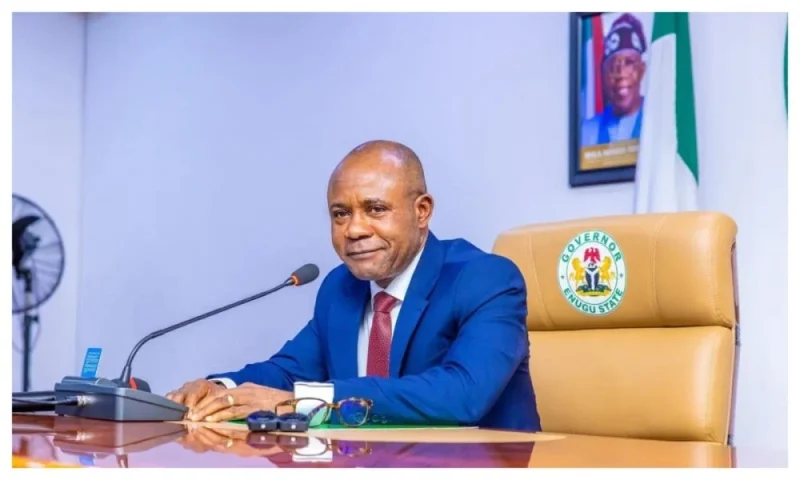
Abia State Government has ordered all tricycle operators to stop operating on the Umuahia–Obowo–Owerri route.

It also directed the immediate stoppage of tricycle movement from Umuahia to Ohafia and Arochukwu, with a directive that all defaulters be arrested.

In a statement, the state’s Commissioner for Transport, Chimezie Isaac Ukaegbu, said the measure was aimed at ensuring sanity, order, and safety on the state’s roads.

He warned that any tricycle operator found violating the directive would be arrested, adding that the tricycle belonging to the violator would be impounded.

The government urged all affected tricycle operators, popularly known as Keke NAPEP, as well as members of the public, to comply with the directive.

Responding to panic among operators in Umuahia, Ukaegbu said the policy was targeted only at long-distance journeys, stressing that it was not a total ban on tricycles in the state.

“Keke (tricycle) operators are not banned from operating in Abia State.

“The restriction only applies to the use of tricycles for long-distance passenger transportation to destinations such as Owerri, Obowo, Mbaise, and Arochukwu,” Ukaegbu said.

Recapitalisation to drive H2 2026 lending, tech expansion

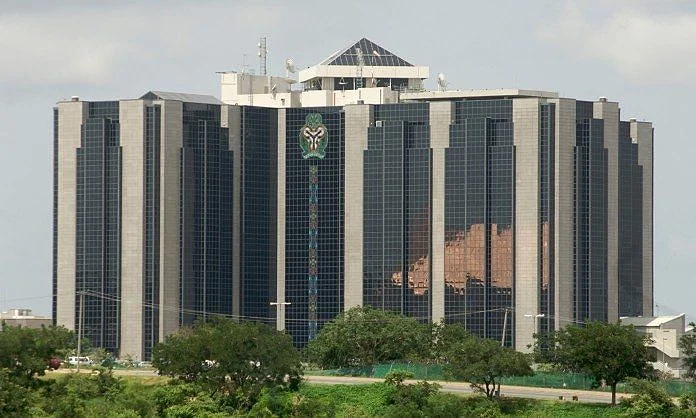
The Governor of the Central Bank of Nigeria, Mr Olayemi Cardoso.Nigeria’s banking industry is heading into the second half of 2026 with improved capital positions after completing the Central Bank’s recapitalisation exercise, as lenders are expected to channel the additional funds into expanding credit, enhancing technology and building long-term resilience. JIDE AJIA reports

Following the conclusion of the CBN’s 24-month recapitalisation exercise, financial institutions across the country are entering the second half of 2026 with significantly fortified capital bases.

The policy, introduced by the CBN Governor Olayemi Cardoso in March 2024, mandated substantial capital increases, raising minimum paid-in capital to N500bn for international commercial banks and N200bn for national lenders, to build sector resilience and support Nigeria’s target of a $1tn economy by 2030.

The newly injected capital proceeds, raised via public offers, rights issues and private placements, are now set to reshape industry strategy as the primary catalyst for expanded credit delivery to the real sector and accelerated technology investments.

Highlighting this strategic pivot, analysts at Meristem Research, in their monthly review released on Wednesday, stated, “In light of the recently completed recapitalisation exercise for the banking sector, as indicated, we anticipate that banks within our universe of coverage will utilise the proceeds to grow their capital base, invest in improved technological adoption, and increase loan advances to the real sector”.

Market intelligence indicates that domestic lenders plan to deploy these expanded capital buffers towards building resilient loan books and upgrading critical operational infrastructure.

This strategic redeployment comes at a pivotal juncture, enabling institutions to navigate ongoing high-yield environments while positioning themselves for long-term operational resilience.

Beyond capital accumulation, the deployment strategy emphasises technology adoption to improve efficiency and customer reach. Financial institutions within the coverage universe are leveraging their enhanced capital positions to upgrade IT systems, automate core banking infrastructure and broaden institutional coverage.

Simultaneously, the expanded equity base enables banks to absorb credit risks more effectively, facilitating targeted credit flows into key real-sector industries, including manufacturing, agriculture and commerce.

The structural changes are already reflecting positively across financial market metrics. In July 2026, the Nigerian Banking Index posted a sharp month-on-month recovery of 22.10 per cent, reversing earlier profit-taking trends as institutional investors positioned themselves around Tier-1 heavyweights.

Strong performance across top-tier lenders, such as FIRSTHOLDCO, which posted record half-year gross earnings of N1.93tn, underscores how diversified revenue models and improved funding efficiency are translating into robust shareholder value.

Looking ahead to the remainder of 2026, analysts maintain a broadly positive outlook for the banking landscape, noting that the combination of newly raised recapitalisation proceeds, sustained net interest margins and ongoing digital transformation is expected to drive sector earnings, spur corporate growth and reinforce overall systemic stability.

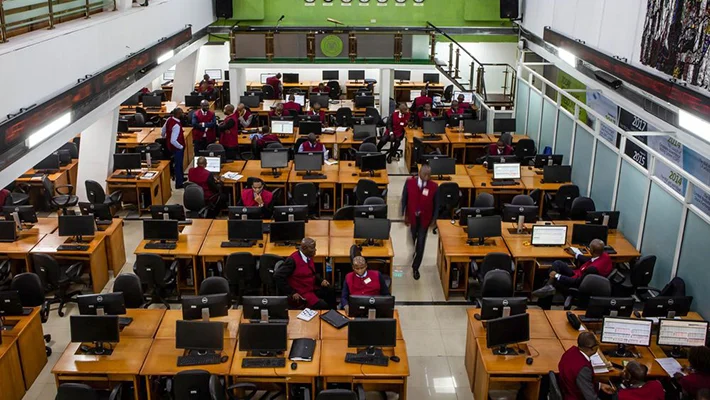
NGX sheds N613bn as bearish momentum persists

NGXThe Nigerian Exchange Limited closed trading on Thursday on a slightly bearish note, extending a multi-day pullback. The All-Share Index declined by 949.71 points, or 0.39 per cent, to close at 243,017.38 points, down from the 243,967.09 points recorded on Wednesday.

In tandem with the index decline, total equities market capitalisation contracted by N613.08bn to settle at N156.88tn.

Selling pressure was broad-based across major market sectors, as reflected in the sectoral indices. The NGX Main-Board Index slid to 10,939.43, while the NGX 30 Index dropped to 8,907.98. Banking equities recorded a soft retreat, with the NGX Banking Index dipping to 2,553.87.

The Insurance Index fell to 1,145.85, Consumer Goods decreased to 4,056.39, Industrial Goods slipped to 10,379.12, and the Growth Index contracted to 27,380.30. The Sovereign Bond Index remained unchanged at 668.35.

Market sentiment closed negative, as decliners comfortably outnumbered advancers across the trading floor.

Overall equities activity saw 4.24 billion shares exchanged across 41,389 transactions.

The equities market gainers were led by International Energy Insurance Plc, which advanced 10.00 per cent to close at N4.84, gaining N0.44. John Holt Plc followed closely, adding 9.89 per cent to settle at N10.00, while Trans-Nationwide Express Plc grew 9.75 per cent to end the session at N2.59.

SUNU Assurances Nigeria Plc appreciated 8.48 per cent to close at N3.58, and NEM Insurance Plc rounded out the top performance chart with a 6.25 per cent rally to N34.00.

On the losing side, Unilever Nigeria Plc led the decliners after shedding 9.97 per cent to close at N118.30, down by N13.10. Chellarams Plc plummeted 9.66 per cent to N10.75, while Chapel Hill Denham NIDF dropped 9.55 per cent to N147.70.

DAAR Communications Plc recorded a decline of 9.25 per cent to close at N1.57, and Cornerstone Insurance Plc sank 9.09 per cent to finish at N5.00.

Large-cap and tier-one banking counters displayed mixed movements throughout the trading session. United Bank for Africa Plc advanced 1.21 per cent to N46.00, and Ecobank Transnational Incorporated gained 3.64 per cent to reach N74.00.

On the other hand, Zenith Bank Plc slipped 2.24 per cent to N122.00, and Access Holdings Plc declined 3.28 per cent to settle at N26.50.

Trading in Exchange Traded Products logged 746 trades with 307,433 units executed. Top gains in the segment were led by The SIAML Pension ETF 40, which rallied 8.20 per cent to close at N2,600.00, and Meristem Value ETF, which added 1.54 per cent to end at N132.00.

Conversely, Vetiva Banking ETF fell 3.31 per cent to N34.81, and VSPBond ETF dropped 3.06 per cent to N222.00.

Oil output, reforms sustain Nigeria’s economic growth – OPEC

Oil output, reforms sustain Nigeria’s economic growth – OPECNigeria’s economic outlook remains positive as improved macroeconomic stability, steady oil production, recovering private-sector activity and continued reforms support economic expansion, the Organisation of the Petroleum Exporting Countries has said.

OPEC stated this in its latest assessment of the Nigerian economy, noting that the country’s economy expanded by 3.9 per cent year-on-year in the first quarter of 2026.

The growth rate was only slightly below the 4.0 per cent recorded in the fourth quarter of 2025, confirming that economic growth remained close to recent highs.

According to the oil producers’ organisation, the non-oil economy continued to provide the main support for growth, with activity driven by agriculture, manufacturing, construction, trade, finance and insurance.

It said higher oil output had also improved fiscal revenues, foreign exchange inflows and external buffers. “The economy expanded by 3.9 per cent, year-on-year, in 1Q26, only slightly below the 4Q25 pace of 4.0 per cent, confirming that growth remains close to recent highs,” OPEC stated.

The organisation said survey indicators pointed to continued, though moderating, momentum in private-sector activity. It noted that the Stanbic IBTC Bank Nigeria Purchasing Managers’ Index eased to 52.5 in July, from 53.4 in June and 54.1 in May.

The July reading, it said, was the weakest since March but still signalled a sixth consecutive monthly improvement in private-sector conditions. OPEC said firms again reported a marked increase in new orders, supported by improved customer demand, better pricing and new product launches.

It added that output and employment also rose modestly during the month. The organisation said higher domestic refining capacity, particularly improved fuel supply from the Dangote Petroleum Refinery, should further support energy availability and reduce some of the pressures associated with petroleum imports.

“Higher domestic refining capacity, including improved fuel supply from the Dangote refinery, should continue to support energy availability and reduce some import-related pressures,” OPEC stated.

The Dangote refinery, with a nameplate capacity of 650,000 barrels per day, has become a major source of locally refined petroleum products as its operations have expanded.

The refinery’s increased supply of petrol and other refined products has also reduced some of the country’s reliance on imported petroleum products, in line with the impact highlighted by OPEC.

On inflation, OPEC said pressures had begun to soften, with headline inflation standing at 15.9 per cent year-on-year in both June and May. “The July PMI pointed to softening input costs, despite higher fuel and raw material costs,” the organisation stated.

The report said the moderation in input costs was an indication that some cost pressures facing businesses had begun to ease, although higher fuel and raw material costs remained a challenge.

OPEC said Nigeria’s near-term outlook remained positive, with oil production, reform progress, infrastructure investment and stronger business activity providing support.

“Overall, Nigeria’s near-term outlook remains positive, supported by oil production, progress on reforms, infrastructure investment, and stronger business activity,” it stated.

The organisation’s assessment comes as increased oil production continues to strengthen Nigeria’s fiscal position and foreign exchange inflows, while reforms and infrastructure investment support activity outside the petroleum sector.

The non-oil economy’s contribution remains significant, with agriculture, manufacturing, construction, trade, finance and insurance identified as the major drivers of activity.

Meanwhile, the July PMI data indicated that private-sector businesses continued to expand despite the moderation in the pace of growth. Firms reported increased new orders as customer demand improved, while better pricing and new product launches also supported activity.

Output and employment recorded modest increases, pointing to continued expansion in business activity. OPEC said the combination of improved macroeconomic stability, steady oil production and continued reform momentum had strengthened Nigeria’s economic outlook.

With domestic refining capacity also increasing, the organisation expects improved fuel availability to support energy supply while easing some import-related pressures.

The organisation maintained that the country’s near-term prospects remained favourable, supported by higher oil output, reforms, infrastructure investment and stronger private-sector activity.

Guinea Insurance Completes Recapitalisation, Positioned For Market Leadership And The Next Phase Of Growth


Guinea Insurance Plc has successfully completed its recapitalisation exercise, with its capital position now above the ₦15 billion minimum capital requirement for non-life insurers, following the conclusion of the verification process by the National Insurance Commission (NAICOM).


The successful completion marks a defining moment in the Company’s transformation and positions Guinea Insurance with the financial strength, underwriting capacity and strategic platform to compete more aggressively, pursue larger opportunities and play a leading role in Nigeria’s insurance market.


For Guinea Insurance, recapitalisation is not the destination. It is the platform for growth. The Company is now focused on converting its enhanced capital position into greater underwriting capacity, stronger customer propositions, improved service delivery, strategic partnerships and sustainable market growth.


Commenting on the development, the Managing Director/Chief Executive Officer, Mr. Ademola Abidogun, said:
“Recapitalisation has given Guinea Insurance the strength to think bigger, compete harder and pursue opportunities with greater confidence. We have strengthened our capital; now we are focused on strengthening our position in the market.”
He added:


“Nigeria is a market of enormous opportunities, and Guinea Insurance intends to be at the forefront of capturing those opportunities. Whether it is supporting major corporates, SMEs, institutions or individuals, we are ready to provide the capacity, expertise and confidence that businesses need to grow.”


The completion of the recapitalisation also reinforces Guinea Insurance’s ambition to become a more competitive, innovative and customer-focused insurer, with increased capacity to participate in larger risks, develop relevant insurance solutions and deepen its relationships across the insurance value chain.


The Company will build on this stronger foundation through disciplined underwriting, technology and innovation, operational excellence, robust risk management and a relentless focus on customer experience. It will also pursue strategic opportunities that expand its market reach and create sustainable value for shareholders and other stakeholders.


According to the Company, the objective is clear: to turn capital strength into market strength. Guinea Insurance expressed its appreciation to its shareholders, investors, policyholders, brokers, employees, business partners, regulators and other stakeholders whose confidence and support contributed to the successful completion of the recapitalisation exercise.


As Guinea Insurance enters its next phase, the Company is looking beyond compliance and capital adequacy. It is preparing to compete for bigger opportunities, serve more customers, support more businesses and deliver greater value across the Nigerian economy.

Osun election: Akpabio, Uzodimma, others storm Osogbo for APC mega rally

Senate President Godswill Akpabio, Chairman of the Progressive Governors Forum, Hope Uzodimma, and other state governors have arrived in Osogbo, the Osun State capital, for a mega rally of the All Progressives Congress, APC, ahead of the August 15, 2026, governorship election in the state.

Other APC members at the rally include Edo State Governor Monday Okpebholo, Kogi State Governor Ahmed Usman Ododo, Ondo State Governor Lucky Aiyedatiwa, and a member of the House of Representatives representing Ikeja Federal Constituency, James Faleke.

The rally is part of the party’s final mobilisation efforts for its governorship candidate, Asiwaju Munirudeen Bola Oyebamiji, ahead of the election.

Coming on the final day of the official campaign period, the mega rally is expected to attract APC leaders, party supporters, campaign coordinators and members from across the 30 local government areas of Osun State.

Recall that the Independent National Electoral Commission, INEC, fixed Thursday, August 13, as the deadline for campaigns ahead of the election following the adjustment of the poll date from August 8 to August 15.

The APC leadership is rooting for its governorship candidate, Oyebamiji, who emerged following the governorship primary conducted in Osogbo.

Oyebamiji is keenly contesting against the incumbent governor, Ademola Adeleke of the Accord Party, and candidates from the African Democratic Congress, ADC, the People’s Redemption Party, PRP, among others.

DAILY POST reports that Osun State has witnessed unprecedented violence in the past few weeks, with the Accord Party accusing the APC of using federal might to suppress other political parties.

Recall that the Economic and Financial Crimes Commission, EFCC, last week froze the Osun State Government’s account a few days before the election.

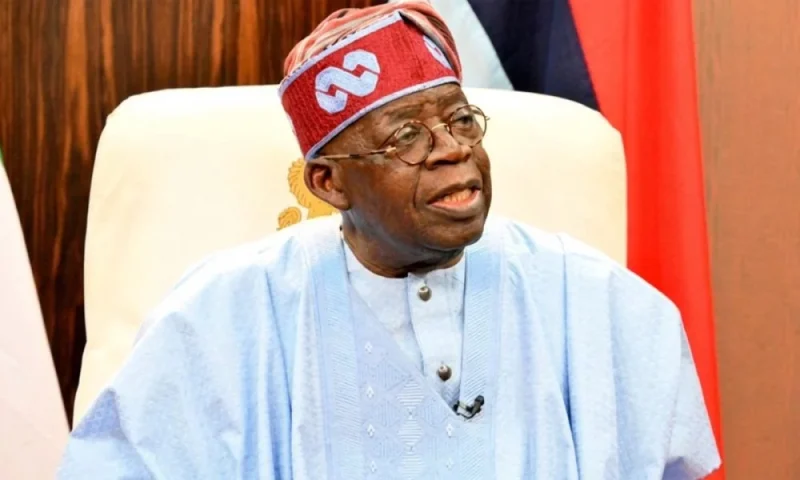
However, President Bola Tinubu intervened and ordered the anti-graft agency to immediately unfreeze the account.

Osun election do-or-die affair for APC – ADC alleges

The African Democratic Congress, ADC, has said that the Osun state governorship election scheduled for August 15, 2026, is a do-or-die affair for the All Progressives Congress, APC.

National Publicity Secretary of the party, Bolaji Abdullahi made this allegation on Wednesday while fielding questions in an interview on Arise Television’s ‘Prime Time’.

He said the ‘go and kill them’ statement by the lawmaker representing Osun East Senatorial District, Francis Fadahunsi, was not just a metaphor.

DAILY POST recalls that Fadahunsi was spotted in a video where he told his supporters to kill any member of the Accord Party they see ahead of the August 15, 2026 governorship election in the state.

However, the lawmaker later claimed he was quoted out of context, stressing that he meant defeating the Accord Party and not killing its members.

Reacting, the ADC spokesman said, “the Osun election is a do-or-die affair to the APC. Senator Fadahunsi’s ‘go and kill them’ comment was not a metaphor.

“I don’t blame the senator for saying what he said; I blame the president because he got his authorisation from the president.

“President Tinubu has said all is fair in politics, and that means you can kill, steal, or do whatever it takes to deliver victory.”

We will help you fight quackery, impersonation – Police, FRSC tell NUJ

The Commissioner of Police, Ekiti State Command, CP Michael Falade and the Ekiti Sector Commander of the Federal Road Safety Corps, FRSC, Corps Commander, Sanya Adeoye have pledged support for the State Council of the Nigeria Union of Journalists, NUJ, in its quest to curb quackery and impersonation in the profession.

Speaking at a courtesy call in Ado Ekiti on Wednesday, the Commissioner of Police promised to provide the NUJ Anti-Quackery Task Force the necessary support required to clamp down on non-journalists who impersonate the men of the pen profession and engage in practices capable of undermining the integrity and credibility of the profession.

Falade who noted that the Police and Journalists have been partners in progress, assured of the Command’s readiness to collaborate with the Union within the ambit of the law.

While reiterating the commitment of the Command to maintaining an open-door policy and constructive engagement with the media, the Commissioner expressed gratitude to journalists in the state for their cooperation, professionalism and support in disseminating credible information and promoting public awareness on security and crime prevention.

Also speaking in his office, the FRSC Corp Commander, Sanya Adeoye hailed Ekiti journalists for helping the Corps command in disseminating information and sensitising the public on proper road usage.

Adeoye who stated that the Media has demonstrated that road safety is everybody’s business pledged the readiness of his Command to assist the NUJ in its quest to clamp down on indiscriminate use of the NUJ Stickers on vehicles.

He said while the FRSC accords the Union certain privileges, the partnership would help fish out non-journalists who use the press stickers to perpetrate heinous activities.

Earlier, the NUJ delegation led by the Union’s Vice Chairman, Olayinka Ilori and the Chairman of the Anti-Quackery committee, Abiodun Olofe solicited the support of the Police and the FRSC in enforcing a clamp down on people who impersonate journalists in the state.

US court convicts Nigerian over $2.7m romance scam money laundering

A 41-year-old Nigerian, Babajide Adesayo, has been convicted by a federal jury in the United States for laundering more than $2.7 million allegedly obtained from victims of romance fraud and other online scams.

The United States Department of Justice disclosed this in a statement published on its website on Wednesday, saying Adesayo was found guilty on August 6, 2026, after an eight-day trial.

Adesayo, who resides in Douglasville, Georgia, was convicted on two counts of conspiracy to commit money laundering and 16 counts of transactional money laundering.

According to the US Department of Justice, the offences were committed between April 2020 and September 2021 as fraudsters allegedly targeted elderly victims through online relationships.

The victims were reportedly deceived by individuals posing as friends, business associates or romantic partners before being asked to provide money for fabricated reasons, including business equipment, medical expenses, injuries and alleged imprisonment.

Court evidence showed that victims were directed to send substantial amounts of money, including retirement savings and other personal income, to business accounts linked to Adesayo’s co-defendant, Efemena Igbe, also a Nigerian national.

The Department of Justice said Igbe allegedly transferred most of the funds to back the payments as money for the purchase of vehicles from Adesayo’s automobile business.

Investigators said Adesayo subsequently transferred much of the money to overseas accounts in China, Hong Kong, Nigeria and other countries.

Over a period of 17 months, he allegedly received and moved more than $2.7 million belonging to victims of the fraud scheme.

The prosecution further alleged that Adesayo continued laundering money after his arrest in June 2024 while awaiting trial.

According to the US authorities, some victims sent money directly to accounts associated with Adesayo’s businesses, while others transferred funds to third-party accounts before the money was eventually routed to him.

The Department of Justice said Adesayo typically withdrew or transferred the funds shortly after receiving them.

His bond was subsequently revoked after authorities uncovered the alleged post-arrest activities, and he has remained in federal custody since March 2, 2026.

Adesayo is scheduled to be sentenced on November 20, 2026, before United States District Judge Mark H. Cohen.

The US Department of Justice said he faces a maximum sentence of 20 years’ imprisonment for each of the two conspiracy convictions and up to 10 years for each transactional money-laundering conviction.

He could also receive an additional consecutive sentence of up to 10 years for allegedly committing offences while on release.

The department noted, however, that the final sentence would be determined by the court after consideration of the United States Sentencing Guidelines, which provide recommended sentencing ranges but are not binding on the judge.

NEITI Audit: EFCC confirms N115bn statutory levies recovery from oil companies

The Economic and Financial Crimes Commission, EFCC, on Wednesday revealed that it has recovered over N115 billion in statutory levies owed to the Niger Delta Development Commission, NDDC, by defaulting oil companies between 2021 and 2023.

The amount, presented to the Senate Committee on Public Accounts, is made up of N76.883 billion and $81.076 million.

EFCC representative, Mr. Francis Oka-Phillips Usani, disclosed this during the committee’s probe of the Nigeria Extractive Industries Transparency Initiative, NEITI, 2021–2023 Oil and Gas Sector Audit findings.

Usani said 43 oil companies were investigated, out of which 24 operating within the Niger Delta were found to have outstanding liabilities.

“At the commencement of investigation, EFCC invited 43 oil companies out of which 24 operating within the Niger Delta, were found to have outstanding liabilities in the sums of N76,883,705,907.17 and $81,076,655.00 while the remaining 19 oil companies were given a clean bill of health,” he said.

He added that under pressure from the EFCC, some of the 24 companies paid directly to NDDC, totalling N6.709 billion and $16.994 million.

According to him, out of the total recovered, N73.373 billion and $67.070 million have been released to NDDC. The balance of N3.510 billion and $14.005 million remains in the EFCC recovery account.

Usani explained that the investigation focused on the 3% statutory levy due to NDDC as identified in the NEITI report, but noted that other unpaid statutory obligations and taxes to the Federal Government were not ignored.

After the EFCC presentation, the Senator Ibrahim Hassan Dankwambo-led committee rejected an attempt by TotalEnergies EP Nigeria Limited to defend queries raised against it due to under-representation.

The committee resolved that the Managing Director of TotalEnergies must appear in person next week. It also gave the Managing Directors of South Atlantic Petroleum Limited, Oando Oil Limited, Famfa Oil and Green Energy International Limited a “last chance” to appear physically.

Senator Dankwambo said the investigative session will continue on Thursday.