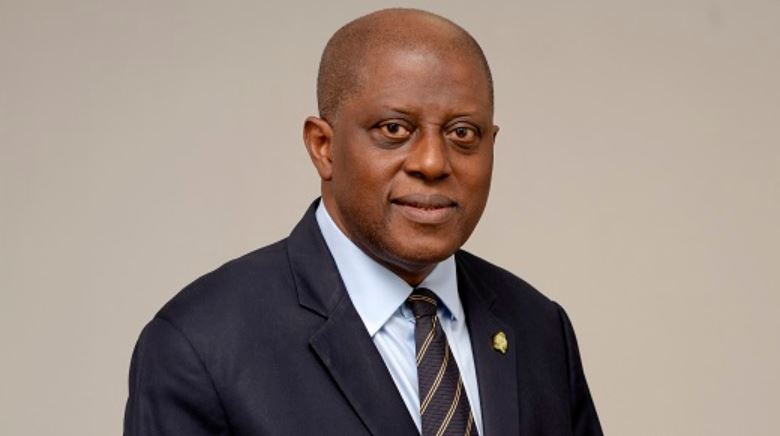
NUPRC opens 50 oil blocks for bidding

NUPRCThe Nigerian Upstream Petroleum Regulatory Commission has opened 50 oil and gas blocks across five sedimentary basins for bidding and exploration in the 2025 licensing round, warning that only technically competent and financially strong firms will be allowed to scale through the process.

The commission said the exercise is designed to eliminate speculative participation and reposition Nigeria’s upstream sector as a transparent, rules-based destination for long-term investment.

The Chief Executive of the NUPRC, Oritsemeyiwa Eyesan, made this known on Wednesday during the 2025 licensing round pre-bid webinar, where the regulator outlined the framework, evaluation criteria, and commercial terms guiding the bid process.

Eyesan said the licensing round should be viewed as a strategic intervention to grow reserves, improve production, and strengthen Nigeria’s energy security in a rapidly evolving global energy landscape.

“This upstream sector is serious business. It is for long-term investment, and it is an open invitation to partnership, transparency, and shared responsibility as we work together to shape the next phase of Nigeria’s upstream oil and gas industry,” she said.

According to her, the commission has adopted a strictly merit-based approach that places technical competence and financial capacity at the centre of the selection process.

“Only candidates with strong technical and financial credentials, professionalism, and credible plans will move forward. Winners will be chosen through a transparent, merit-based process that takes you from award to exploration, appraisal, and ultimately full production,” Eyesan stated.

She disclosed that the 50 oil and gas blocks on offer are spread across five of Nigeria’s seven sedimentary basins, giving investors access to both frontier and mature terrains.

“In this licensing round, 50 oil and gas blocks across Nigeria are available, allowing investors to access the country’s key basins and create long-term value,” she said.

Eyesan added that, with the approval of President Bola Tinubu, the Commission had reviewed the commercial structure of the bid round to lower entry barriers while discouraging unserious bidders.

She revealed that signature bonuses for the 2025 licensing round have been set within a $3m–$7m range, with greater emphasis placed on work programmes and speed to production.

The CCE said the new structure places greater emphasis on technical capability, credible work programmes, and speed to production, rather than aggressive cash bids, as Nigeria competes for mobile global capital amid tightening energy security and supply.

“With the approval of His Excellency, President Bola Tinubu, signature bonuses for the 2025 licensing round are now set within a value range of $3m–$7m that reduces entry barriers and places greater weight on what truly matters, technical capability, credible work programmes, financial strength, and the ability to deliver production within the shortest possible time,” she said.

According to her, the decision was informed by global capital mobility and the need to make Nigeria competitive in attracting serious, long-term upstream investors.

“This has been done deliberately to increase competitiveness and in response to capital mobility. The upstream sector is serious business. It is for long-term investment, and it is an open invitation to partnership, transparency, and shared responsibility,” Eyesan stated.

The NUPRC boss said the licensing round follows a five-stage process comprising registration and pre-qualification, data acquisition, technical bid submission, evaluation, and a commercial bid conference.

She stressed that the entire exercise would comply strictly with the Petroleum Industry Act 2021, with digital tools deployed to ensure transparency and public accountability.

“Let me emphasise clearly that the bid process will comply with the Petroleum Industry Act, promote the use of digital tools for smooth data access and remain open to public and institutional scrutiny through NEITI and other oversight agencies,” Eyesan said.

She added that all licensing materials had been uploaded on the commission’s portal since December 1, 2025, with dedicated support channels created to respond promptly to investor enquiries.

Eyesan reaffirmed that the entire process would comply fully with the PIA 2021, with extensive use of digital tools to ensure transparency and public scrutiny.

“The bid process will comply strictly with the PIA, promote the use of digital tools for smooth data access, and remain open to public, international, and institutional scrutiny through NEITI and other oversight agencies,” she said.

The NUPRC boss concluded that the 2025 licensing round represents a strategic signal to global investors that Nigeria’s upstream sector has been re-engineered for long-term value creation.

“Let me emphasise clearly that the Nigeria 2025 Licensing Round is not merely a bidding exercise. It is a clear signal of a re-imagined upstream sector, anchored on the rule of law, driven by data, aligned with global investment realities, and focused on long-term value creation,” Eyesan said.

In a technical presentation to participants, the Director of Lease Administration, Exploration and Acreage Management at NUPRC, Amber Ndoma-Egba, said the 2025 licensing round cuts across the Chad Basin, Benue Trough, Anambra Basin, Bida Basin, and the Niger Delta Basin.

He explained that the technical evaluation would focus on subsurface understanding, exploration work programmes, development concepts, sustainability, host community plans, and lifecycle management.

“We look at your understanding of the block, your subsurface evaluation, your exploration work programme, your development and production concept, sustainability, decarbonisation objectives, and host community development. Technically weak firms will not scale through this process.

“We have seven sedimentary basins in Nigeria. We have the Sokoto Basin, the Chad Basin. We have the Benin trough, Bida Basin, Anambra Basin, Benin Basin, and, of course, the mature Niger Delta Basin. This licensing round will take place across five of the seven sedimentary basins,” Ndoma-Egba said.

On commercial terms, Ndoma-Egba disclosed that the Commission, in a bid to support investment, had approved a minimum work performance security of one per cent, although bidders could voluntarily increase it to improve their technical score.

“The Commission Chief Executive, in the spirit of enablement and support for investment, has approved that the minimum work performance security should be one per cent. However, bidders may boost this if they want a higher weighting in their score,” he said.

He said bidders must clearly outline their exploration plans within the initial exploration period, three years for onshore assets and five years for deepwater and frontier blocks.

“We look at your understanding of the block, your subsurface evaluation, your exploration work programme, your development and production concept, evacuation and facilities planning, sustainability, decarbonisation objectives, and host community development

He also confirmed that final winners would emerge based on a weighted combination of technical and commercial scores, in line with the Petroleum Industry Act.

On December 1, 2025, the NUPRC announced the official commencement of the 2025 petroleum licensing round, targeting about $10 billion in new investments.

Gov Yusuf lost re-election when Ganduje raised his hand – Kwankwaso fumes

The 2023 presidential candidate of the New Nigerian Peoples Party NNPP, Rabiu Musa Kwankwaso has vowed that the Kano State Governor, Abba Yusuf will not be re-elected in 2027.

The former governor of Kano spoke to BBC Hausa while reacting to Governor Yusuf’s defection to the All Progressives Congress, APC.

According to Kwankwaso, the governor lost the election the moment former APC National Chairman, Abdullahi Ganduje raised his hand.

He declared that the governor will regret the decision of dumping NNPP for the ruling party.

He said, “We never expected this kind of betrayal from Governor Abba. He will regret his decision.

“The moment Ganjude raises his hand, he has already lost the election. Let him first say we didn’t allow him to govern, we will give him an answer”.

Defection: Gov Yusuf’s betrayal should be in Guiness World Record – Buba Galadima

A chieftain of the New Nigerian Peoples Party, NNPP, Buba Galadima, has said that the defection of Kano State Governor, Abba Yusuf into the All Progressives Congress, APC, is the worst betrayal in the entire world.

Galadima made this statement on Tuesday when he appeared as a guest in an interview on ‘Prime Time’, a programme on Arise Television.

He said that the betrayal of the governor should be in Guiness World Record, adding that January 23, when Governor Yusuf resigned from the NNPP, should be marked every year as World Betrayal Day.

DAILY POST reports that Governor Yusuf resigned his membership of the NNPP last Friday and officially rejoined the APC on Monday.

Reacting, the elder statesman said: “Governor Yusuf’s defection was done for his personal interest. It is a betrayal to the people of Kano.

“I have grey hairs on my head. I’m well above 75 years of age and if I could shed tears on anything, it must have touched me beyond expression because I don’t give in to sentiments.”

“This betrayal is the third in the history of humanity. It follows Judas’ betrayal of Jesus, and the second was Brutus against the Caesar,” Galadima said.

Nigerian govt gives update on national grid collapse

The Nigerian government has announced that restoration of the national grid has commenced hours after its collapse on Tuesday, the second such incident since Friday last week.

The Nigeria Independent System Operator (NISO), in an update on Tuesday, said nationwide electricity restoration began around 11:00 a.m. following the collapse at about 10:48 a.m. the same day.

NISO clarified that the grid disturbance originated from the Gombe Transmission Substation. However, restoration began at about 11:11 a.m. and has since been completed.

“The national grid experienced a voltage disturbance which originated from the Gombe Transmission Substation.

“The disturbance rapidly propagated across the network, affecting Jebba, Kainji, and subsequently Ayede Transmission Substations. The event was accompanied by the tripping of some transmission lines and generating units, resulting in a partial system collapse.

“Appropriate corrective actions were immediately implemented to stabilise the system and restore normal operations. Restoration, which began at about 11:11 a.m., has since been completed.

“The incident only affected part of the grid; therefore, it was not a total collapse as reported.”

He added that the national grid has been fully restored and electricity supply across the affected areas has returned to normal.

Sit-at-home: Soludo, market leaders meet Thursday

Anambra State Governor, Prof. Chukwuma Soludo, will on Thursday, January 29, meet with chairmen and secretaries of various markets in the state over the continued adherence to sit-at-home orders by traders, despite government directives.

A letter from the Ministry of Trade and Commerce, signed on behalf of the commissioner by the Special Adviser to the Governor (SPAD) on Trade and Markets, Mr. Evarist Uba, and sighted by this newspaper, stated that the meeting would hold at the International Convention Center in Awka.

A top government source, who spoke with DAILY POST, denied that the meeting was a result of government capitulation following the traders’ protest on Tuesday. Rather, it was convened because some market leaders reached out to the government to appeal for the reopening of the market.

The letter read: “President General of ASMATA (Anambra State Market Traders Association), All Market Chairmen and Secretaries, All Zonal Chairmen and Secretaries, and All Line Chairmen and Secretaries are hereby invited to a crucial meeting with Mr. Governor, Prof. Charles Chukwuma Soludo CFR (Oluatuegwu), on matters of urgent importance.

“Date: Thursday, 29 January 2026. Time: 11:00 a.m. prompt. Venue: International Convention Centre (ICC), Awka.”

There was tension in Onitsha Main Market on Tuesday following the forceful closure of the market by the governor and the deployment of significant security personnel to enforce it.

While traders had cited the continued incarceration of Nnamdi Kanu as their reason for observing the sit-at-home order, market leaders reached out to the state government to plead for leniency and the reopening of the market.

It was gathered that Thursday’s meeting would be heavily policed, and all attendees will be screened. This is to prevent any attempt by separatist elements to hijack the meeting.

NBA raises alarm as non-lawyer police prosecutors withdraw in Niger

Niger State Attorney General and Commissioner for Justice, Barr Nasir Mua’zu, has clarified that the recent withdrawal of non-lawyer police prosecutors from Magistrate and Shariah Courts is simply the enforcement of existing laws, specifically the Administration of Criminal Justice Law and the Police Act 2020.

The state Chief Judge, Justice Halima Abdulmalik, had last week issued a circular through the Chief Registrar of the Niger State High Court, Hajiya Amina Laminde Musa Saidu, directing the Police Legal Department to withdraw police prosecutors without law degrees from prosecuting cases, with immediate effect.

Mua’zu explained that this directive was not new, as the Chief Judge had earlier warned stakeholders six months ago to comply with the directive.

“What is being done is simply to give effect to the Administration of Criminal Justice Law and the Police Act 2020, which restrict prosecution to qualified lawyers,” he noted.

He added that the Ministry of Justice plans to fill the gap by deploying lawyers to magistrate courts, starting with major towns like Minna, Bida, Kontagora, and Suleja.

According to him, “These laws may seem harsh now, but in the end, they will improve the administration of criminal justice in Niger State. Before now, the police were prosecuting cases in more than 200 courts across the state, with some courts having up to two police prosecutors. Suddenly withdrawing all of them poses a major challenge for the ministry.”

However, the Chairman of the Nigerian Bar Association (NBA), Minna Branch, Isyaku Barau, Esq., expressed concerns that the directive barring non-lawyer police prosecutors from Magistrate and Shariah Courts may slow down criminal justice administration in Niger State.

He argued that many pending cases were being handled by these prosecutors and will now face delays due to the shortage of qualified lawyers in the Niger State Police Command and the Director of Public Prosecution (DPP) office.

Barau appealed to the Chief Judge and the state government to address the issue, citing the interests of justice and the rights of defendants awaiting trial in the state.

MAN Calls for Restraint as NAFDAC Enforces Sachet Alcohol Ban

MAN calls for restraint on NAFDAC's sachet alcohol ban - Businessday NGThe Manufacturers Association of Nigeria (MAN) has expressed concern over the recent enforcement actions by the National Agency for Food and Drug Administration and Control (NAFDAC), which it says are disrupting the operations of its members in the wines and spirits sector and threatening jobs and investments.
MAN noted that NAFDAC has begun implementing a ban on the production and sale of alcoholic beverages in sachets and small PET bottles, despite a directive from the Office of the Secretary to the Government of the Federation dated December 15, 2025, which suspended such action. The association described the move as harmful to business confidence and the broader economy.
According to MAN, the enforcement also contradicts a March 14, 2024 resolution of the House of Representatives, reached after a public hearing with stakeholders, which restrained NAFDAC from imposing the ban. Instead, NAFDAC relied on a Senate resolution that did not involve broad stakeholder engagement, creating confusion for operators faced with conflicting directives.
MAN explained that sachet and PET-bottled alcoholic drinks were introduced to provide affordable options for adult consumers with low incomes and could help limit excessive consumption due to smaller portions. It added that these products are produced under hygienic conditions and certified by regulatory agencies, including NAFDAC.
The association warned that banning regulated sachet alcohol could encourage the spread of illicit and unregulated products, posing greater health risks. It also rejected claims that the products promote underage drinking, citing independent research and over ₦1 billion spent by the industry on nationwide responsible consumption campaigns.
MAN reaffirmed its support for evidence-based regulation and appealed to the Federal Government to intervene and direct NAFDAC to halt enforcement of the ban, in order to protect jobs, revenues, and consumer choice while further stakeholder engagement continues.
CBN approves temporary use of expired NAFDAC licences for imports

Governor of the Central Bank of Nigeria, Olayemi CardosoThe Central Bank of Nigeria has approved a temporary window allowing importers to use expired National Agency for Food and Drug Administration and Control licences for import documentation, offering short-term relief to businesses affected by system changes in Nigeria’s trade processing framework.

In a circular issued on January 26, 2026, by its Trade and Exchange Department and published on the bank’s website on Tuesday, the CBN said authorised dealer banks may continue to process Form M applications with NAFDAC licences that expired on December 31, 2025.

The approval, which takes effect immediately, will run for two months and lapse on February 28, 2026.

The circular, signed by Aliyu M. Ashiru for the Director of the Trade and Exchange Department, read, “The Central Bank of Nigeria wishes to notify all Authorised Dealer Banks and the general public of a temporary dispensation offered by the National Agency for Food and Drug Administration and Control permitting the continued use of NAFDAC licences that expired on 31st December, 2025, for the processing of Forms M for a two-month temporary dispensation ending February 28, 2026.”

The apex bank explained that the approval followed a temporary dispensation granted by NAFDAC and applies strictly to Form M processing during the period. It said the measure was necessitated by operational challenges linked to the migration from the legacy Nigeria Integrated Customs Information System II platform.

According to the CBN, importers have been unable to validate or renew NAFDAC licences since the transition, particularly due to difficulties encountered on the B’Odogwu platform after December 2025.

To ease the bottlenecks and prevent delays in import documentation, the bank directed all authorised dealer banks to continue accepting the affected licences within the approved window.

The CBN stressed that the arrangement itime-bound and urged banks to comply strictly with its terms, noting that the approval would lapse automatically on February 28, 2026. It added that the move is intended to ensure continuity in trade transactions while NAFDAC completes the integration of its systems with the National Single Window.

Earlier in October 2025, The PUNCH reported that the Federal Government announced a decisive step toward digitalising and streamlining the nation’s import and export processes with the formal unveiling of the National Single Window and a new Trade Facilitation Portal.

The initiative, championed by the Minister of Industry, Trade, and Investment, Dr Jumoke Oduwole, is expected to drastically reduce bureaucracy, enhance transparency, and improve Nigeria’s global trade competitiveness.

The National Single Window is a single, centralised digital platform where all stakeholders, including customs and regulatory agencies, importers, and exporters, can submit standardised trade and regulatory documentation.

The government has set a firm target for the National Single Window to become fully operational by the first quarter of 2026, specifically in March 2026.

Nigeria Customs Deepens Trade Reforms with Strategic Leadership Training on Ease of Doing Business

Nigeria Customs Concludes Strategic Leadership Training on Trade Reforms  The Nigeria Customs Service (NCS) has concluded a high-level, two-day  management workshop aimed at accelerating trade facilitation reforms and  streamlining the ease of
The Nigeria Customs Service (NCS) has concluded a high-level, two-day management workshop designed to accelerate trade facilitation reforms and enhance the ease of doing business across the country.
Organised in partnership with Reverso Business Services Limited, the training programme, held from 22 to 23 January 2026, reaffirmed the Service’s commitment to digital modernisation, institutional capacity building, and the elimination of bureaucratic bottlenecks along Nigeria’s trade corridors.
The engagement forms part of the broader reform agenda under the leadership of the Comptroller General of Customs, Adewale Adeniyi, focused on aligning NCS operations with global best practices and positioning Customs as a strategic driver of Nigeria’s economic growth.
The final day of the workshop examined emerging trends in global trade, digital transformation, and the evolving role of modern Customs administrations. Senior officers participated in in-depth sessions on adaptive strategies, operational efficiency, and stakeholder collaboration, underscoring the Service’s determination to remain responsive in a rapidly changing trade environment.
Addressing participants, CGC Adeniyi highlighted the dynamic nature of international commerce and stressed that Customs must stay ahead of change to effectively support national development.
“Our environment will continue to be very dynamic. What will not change, however, is Nigeria’s expectation that Customs will contribute meaningfully to economic prosperity, public health and national security. When these elements come together, we are better positioned to facilitate trade”, he said.
He further charged officers to uphold professional excellence, noting that the Service’s transformation drive is a deliberate move to become a reference Customs administration known for accountability, responsiveness, and performance.
“These are standards we voluntarily hold ourselves to. We want to be that reference organisation — responsive to our commitments and obligations and supportive of government efforts to create an environment where the economy can prosper”, Adeniyi added.
Also speaking, the Founder and Chief Executive Officer of Reverso Business Services Limited, Ayokunnu Ojeniyi, praised the NCS for embracing innovation and continuous improvement, stressing the need to institutionalise change through sustained capacity development.
“If you don’t take change by the hand, it will seize you by the throat. The environment is changing, and Customs must continue to manage that change proactively”, he said, urging officers to convert lessons from the workshop into measurable operational improvements across their commands.
The workshop aligns with the Nigeria Customs Service’s ongoing modernisation programme, which features process automation, enhanced stakeholder engagement, and strategic partnerships aimed at improving service delivery, trade efficiency, and Nigeria’s competitiveness in the global marketplace.
SIFAX Marine Charts Asset-Driven Expansion to Capture Bigger Share of Energy Market in 2026

SIFAX Marine Services Limited has unveiled an ambitious expansion roadmap for 2026, anchored on asset-led growth and a stronger push into Nigeria’s offshore and oil and gas marine services space.
The strategy signals a major shift from revenue growth driven largely by pricing adjustments to a more sustainable, scalable model based on vessel ownership, fleet expansion, and operational capacity building.
Speaking on the plan, Executive Director of SIFAX Marine, Afolabi Olayinka, said the company’s recent performance underscored the need for deliberate investment in owned marine assets as the foundation for long-term competitiveness.
“Our experience over the past year has shown that sustainable and exponential growth can only come from deliberate investment in assets that we own and control. While rate adjustments supported revenue in the last financial year, the future of SIFAX Marine lies in building a strong market for offshore and energy logistics services.
Looking ahead, industry observers say SIFAX Marine’s asset-led strategy aligns with broader shifts in Nigeria’s marine and offshore economy, where operators are increasingly judged not just by pricing but by capacity, compliance strength, and reliability of owned equipment.
As oil and gas activities rebound and offshore projects become more technically complex, service providers with modern, compliant fleets are better positioned to support exploration, production, and logistics operations efficiently.
For SIFAX Marine, the 2026 expansion drive is therefore not merely a business growth plan, but a strategic repositioning — from a service operator dependent on hired capacity to an integrated marine logistics player with controlled assets and deeper operational influence.
The Management believes the combination of fleet expansion, regulatory readiness, partnerships, and service diversification will strengthen revenue stability, improve margins, and enhance the company’s profile with international oil companies and indigenous operators alike.
With these initiatives, SIFAX Marine is setting the stage to compete more aggressively in Nigeria’s offshore and oil and gas marine services market, reinforcing its role as a dependable partner in supporting the country’s energy and maritime value chain in the years ahead.