Gov Mbah swears in 13 new Permanent Secretaries

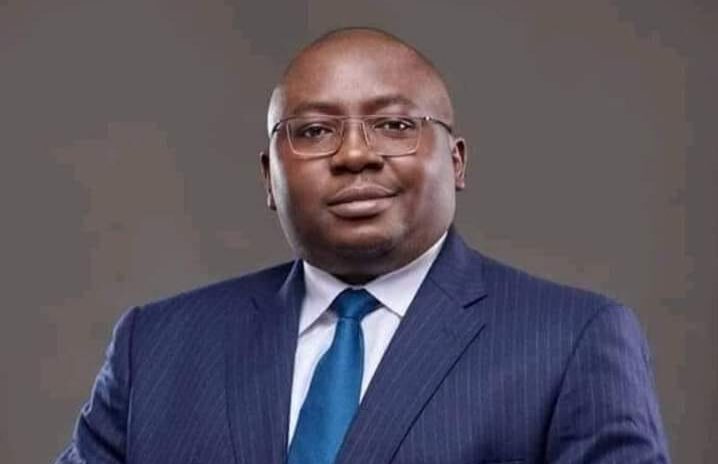
Governor Peter Mbah of Enugu State on Monday sworn in 13 newly appointed permanent secretaries, charging them to align with his administration’s delivery-oriented governance model.

The new Permanent Secretaries are Mr Chigbogu Nnaji, Mrs Phoebe Edeh, Mr Philip Arum, Mr Jeremiah Egbonwonu and Mrs Ifeoma Igwe.

Others were Mrs Ngozi Egbo, Mrs Nkiru Ede-Ogunnaike, Mrs Pamela Ikpa, Mr Canice Ngene, Mr Anyaora Okereke, Mrs Adaobi Nwodo, Mr Ikechukwu Ezenwukwa, and Paul Nwabuisi.

According to the governor, there would be no honeymoon period for them in office.

He noted that the appointments were strictly merit-based, having emerged from a rigorous and transparent selection process, while also filling existing vacancies in the civil service to promote equality, inclusion and fairness.

Governor Mbah also reminded them that so much responsibility accompanied their elevation, pointing out that the reward for hard work was more work.

“I believe you worked very hard to get to this level in your career, and you went through a very rigorous process to be selected.

“So, it is well deserved. But let me also remind you that the honeymoon is over. To whom much is given, much is expected,” he said.

Alleged bandit ties: Remove Matawalle or face nationwide protest — NANS issues ultimatum

The National Association of Nigerian Students, NANS, has demanded the immediate removal of the Minister of State for Defence, Bello Matawalle, following allegations linking him to banditry, describing the claims as “shocking and deeply troubling.”

In a statement signed by the President of the NANS Headquarters Senate, Usman Adamu Nagwaza, on Monday, the student body said Nigerians deserved transparency and accountability in the handling of the matter.

The association said it was committed to fighting corruption and ensuring government officials were held responsible for their actions, stressing that the public must be protected from abuse of power.

NANS expressed concern over Matawalle’s alleged relationship with bandits, calling it a “serious breach of trust” that questioned his integrity and suitability to remain in office.

The statement highlighted that the allegations were particularly disturbing given the minister’s role in defending the nation against security threats.

“His alleged relationship with bandits is a betrayal of the trust reposed in him by the Nigerian people and undermines the government’s efforts to combat insecurity,” the association said.

NANS demanded Matawalle’s removal pending a full investigation, insisting such action was necessary to ensure a fair and unhindered inquiry, prevent further damage to national security, and restore public confidence.

The student body warned that the minister’s alleged ties to criminals could embolden banditry and worsen the displacement of innocent Nigerians.

It also issued a one-week ultimatum for his removal, threatening to mobilise students nationwide to block major highways if the government failed to act.

The association further urged President Bola Tinubu to act decisively, warning that Nigerians would not tolerate corruption or complicity with terrorists.

“It is essential that the government takes decisive action to address these allegations. The rule of law must be upheld, and all wrongdoing punished,” NANS stated.

Fire guts Gombe timber market, gov orders probe, pledges support

486636Gombe State Governor, Muhammadu Inuwa Yahaya, has ordered an immediate investigation and emergency relief measures following a fire outbreak that destroyed parts of the popular Gombe timber market, known as Kasuwar Katako, along the Railway Station area of the state capital.

The inferno, which occurred on Monday night after traders had closed for the day, razed several shops and goods, leaving many traders counting heavy losses.

In a statement issued by the Director-General, Press Affairs, Gombe Government House, Ismaila Misilli, the governor described the incident as painful and distressing, noting that it had disrupted the livelihoods of many hardworking residents who depend on the market for survival.

Yahaya expressed sympathy with affected traders and business owners, assuring them of the state government’s support at what he described as a difficult moment

“We assure them that the government stands firmly with them at this difficult moment,” the governor said.

He directed the Gombe State Emergency Management Agency and other relevant agencies to immediately assess the extent of the damage, investigate the cause of the fire and provide urgent relief to victims to cushion the impact of their losses.

The governor commended the Gombe State Fire Service, personnel from Gombe State University, the Federal Fire Service, private tanker operators, security agencies and the Nigerian Red Cross Society for their swift intervention, which he said helped to prevent the fire from spreading further.

While urging victims to remain calm, Yahaya reaffirmed his administration’s commitment to strengthening fire prevention and response mechanisms across the state, including plans to establish a fully equipped, state-of-the-art fire service office.

The statement also noted that the governor was briefed on an accident involving one of the firefighting trucks during the operation, expressing concern for those affected and praying for their quick recovery.

PSC opens portal for 50,000 constables recruitment

Police-Service-Commission

The Police Service Commission has launched a nationwide recruitment drive for 50,000 constables into the Nigeria Police Force, aimed at strengthening community policing and enhancing internal security across the country.

In a statement on Monday, the Sokoto State Police Command announced that the online application portal opened on Monday, December 15, 2025, in line with a Presidential directive to expand the Force’s manpower.

The commission stressed that the recruitment exercise is entirely free of charge and cautioned applicants against using unauthorized individuals or websites.

Prospective candidates must be Nigerian citizens by birth, possess a valid National Identification Number, and be medically, physically, and psychologically fit. Applicants must also be free from criminal convictions or financial embarrassment and meet all other requirements outlined on the official recruitment portal

The recruitment covers two cadres: General Duty and Specialists. For the General Duty cadre, applicants must be aged 18 to 25, possess a minimum of five credits in WAEC, SSCE, or NECO (in not more than two sittings), including English Language and Mathematics, and meet the minimum height of 1.67 metres for males and 1.64 metres for females.

Specialists must be aged 18 to 28, hold at least four relevant credits, and possess recognised qualifications or trade test certificates with a minimum of three years’ practical experience in fields such as medical services, ICT, engineering, driving, and motor mechanics.

The PSC noted that the application portal will remain open for six weeks, closing at 11:59 pm on Sunday, January 25, 2026. Applications must be submitted exclusively via the official portal at npfapplication.psc.gov.ng. Multiple applications or attempts to influence the process will result in immediate disqualification.

The Sokoto State Police Command urged eligible Nigerians to seize the opportunity to serve the nation and contribute to improved security, assuring that the recruitment process will be transparent and merit-based.

NPA reports 1,085% export container surge in Q3

NPAThe Nigerian Ports Authority said it has recorded a 1,085 per cent surge in export-laden containers as total cargo throughput rose to 33.52 million metric tonnes in the third quarter of 2025.

In a statement on Monday, the NPA stressed that the figure is one of its strongest quarterly performances in recent years.

The statement explained that operational data released by the authority over the weekend showed that cargo handled during the period increased by 16.2 per cent, up from 28.84 million metric tonnes recorded in the corresponding quarter of 2024, reflecting rising trade activity across Nigeria’s ports.

It added that container operations were a significant contributor to the improved performance. “The NPA recorded a dramatic 1,085 per cent surge in export-laden containers as total cargo throughput rose to 33.52 million metric tonnes in the third quarter of 2025. Total container traffic climbed by 18.9 per cent to 546,931 twenty-foot equivalent units in Q3 2025, compared with 460,038 TEUs in Q3 2024.

“Within this, import-laden containers rose by 33.1 per cent to 268,713 TEUs, from 201,839 TEUs a year earlier, while export-laden containers surged to 69,039 TEUs, from just 5,812 TEUs in the same period of 2024,” the statement read in part.

It highlighted that the sharp rise in export containers also led to a 21.5 per cent reduction in empty container traffic, signalling improved balance between imports and exports and stronger non-oil export activity.

“Ship traffic equally recorded notable growth during the quarter. The number of vessel calls increased by 8.4 per cent to 1,074 ships, from 991 vessels in Q3 2024. At the same time, the total gross registered tonnage jumped by 18 per cent to 42.64 million, compared with 36.13 million recorded a year earlier, indicating that Nigerian ports are increasingly handling larger vessels,” it added.

A breakdown of the number of ship calls along the port locations revealed that Tincan Port topped the chart at 22.7 per cent, followed by Apapa Port at 22.2 per cent, while Onne and Lekki Ports followed with 18.9 per cent and 18.4 per cent respectively, “while Calabar Port contributed the least at 2.1 per cent.”

The analysis of ship calls by size of ship revealed that Lekki Port received the largest size ships with an average gross registered tonnage of 57,244, followed by Onne Port with an average of 51,276 GRT.

“Apapa and Tincan Island Port received ships of average GRT of 35,556 and 34,400 respectively, while the average size of boats calling at Delta Ports was 18,677 tonnes,” it added.

Similarly, a breakdown of cargo throughput by port showed that Lekki Port emerged as the dominant growth driver, accounting for 46.8 per cent of total cargo handled in Q3 2025.

The report mentioned that Onne Port contributed 17 per cent, followed by Apapa Port with 15.1 per cent and Tincan Island Port with 10 per cent, while Calabar Port recorded the lowest share.

The report pointed out that a further analysis along the cargo type revealed that liquid bulk accounted for the highest share at 53.8 per cent, followed by containerised cargo, which contributed 26.6 per cent, while dry bulk and other general cargo contributed 11.3 per cent and 8.2 per cent respectively.

Speaking on the figures, the Managing Director of the NPA, Abubakar Dantsoho, attributed the strong performance to the Federal Government’s export-focused economic reforms and improved investor confidence, noting that the results reflect growing efficiency across all pilotage districts.

He added that ongoing port modernisation, the deployment of export processing terminals, and the expansion of digital systems such as the electronic truck call-up platform have helped reduce bottlenecks, improve turnaround time, and position Nigeria’s ports to play a more strategic role in regional trade.

Nigeria has seen consistent growth in containerised exports, with significant increases reported in recent years.

Dangote names N739 as new petrol pump price

Dangote_Group_Logo.svgBarring any last-minute change, MRS and other partners of the Dangote Petroleum Refinery are set to begin selling petrol at N739 per litre.

This comes two days after the refinery slashed its petrol gantry price from N828 to N699 per litre. Speaking at a press briefing at the Lekki refinery on Sunday, the President of the Dangote Group, Alhaji Aliko Dangote, said he was aware that despite lower gantry prices, some filling stations often choose to keep pump prices high, thereby sabotaging his efforts.

According to him, MRS would commence the sale of petrol at N739 per litre from Tuesday, while other partners would follow. Dangote alleged that some officials had met with certain marketers and encouraged them to keep prices high in order to frustrate the price reduction, stressing that he would fight to enforce the new price regime.

“I was told that the marketers have met with (some officials) and were told to make sure that the price is maintained high. But this price we are going to introduce, we are going to start with MRS stations most likely on Tuesday in Lagos; that N970 per litre, you won’t see it again. We have also asked members of IPMAN to come now.

We have asked anybody who can buy 10 trucks to come and buy 10 trucks at N699.

“We are going to use whatever resources that we have to make sure that we crash the price down. We will get these sales; maybe it will take us a week to 10 days. But first of all, within a week to 10 days, we will be able to deliver. For this December and January, we don’t want people to sell petrol for more than N740 nationwide. Those who want to keep the price to sabotage the government, we will fight as much as we can to make sure that these prices are down. That’s not the price. If you have money to come and buy, you can pick up petrol at N699,” he said.

Dangote said transporting petrol from the refinery costs no more than N15 per litre, questioning why pump prices would rise as high as N900 per litre. He also accused the Nigerian Midstream and Downstream Petroleum Regulatory Authority of issuing 47 import licences to bring in more than seven billion litres of petrol in the first quarter of 2026, a move he said was killing local investments.

“Freight within Lagos is N10 or N15, maximum. So if it’s N10 to N15, everything is going to cost you N715. Why do you want to sell at N900? People should get the real price. I cannot come now and take the hit. Did we make money? No, we didn’t make money. But as we speak now, even our tanks are full because the NMDPRA has issued reckless licences. And we have to now go and complain to the government.

“They normally issue licences in the middle of the month. So, they are now ready to issue licences for about 7.5 billion litres for the first quarter of 2026, despite the fact that we have guaranteed to supply enough quantity.

“If you are talking about monopoly, did we stop anybody? They issued 47 licences. Let those people come and put up a refinery here, or let them go and buy even NNPC’s and operate them. If it’s profitable, they should go and do that now. NNPC was the only business that was bringing in fuel before.

“Now, we are the only one and one of the few modular refineries that are producing. Those modular refineries, I can tell you for nothing that they are almost on the verge of collapse. None of them is making a dime,” he added.

The billionaire businessman assured Nigerians that the N739 per litre price would be enforced, beginning with MRS stations on Tuesday. “Starting from Tuesday, MRS will start selling petrol at N739/litre. Definitely, we will enforce that low price. We will make sure that it’s implemented. If you have your truck, you can come here and buy it. We are selling at N699. The N699 includes the percentage of NMDPRA. So what actually comes out to us is about N389 or so,” he stated.

Contacted for his reaction, the NMDPRA spokesman, George Ene-Ita, said, “For now, no comment.”

Inflation eases to 14.45%, OPS seeks MSME credit support

InflationNigeria’s headline inflation rate eased further in November 2025 as consumer price pressures moderated under the new base year, according to the latest Consumer Price Index report released by the National Bureau of Statistics.

The NBS said the Consumer Price Index rose to 130.5 points in November 2025 from 128.9 points in October, reflecting a 1.6-point increase month on month, but the headline inflation rate declined to 14.45 per cent year on year, compared with 16.05 per cent recorded in October 2025.

This came as the organised private sector stated that the sustained easing of Nigeria’s inflation rate to 14.45 per cent in November 2025 would boost consumer purchasing power and support business activity, while urging the Federal Government to provide targeted credit facilities to micro, small, and medium enterprises.

“The Consumer Price Index rose to 130.5 in November 2025, reflecting a 1.6-point increase from the preceding month (128.9).

In November 2025, the headline inflation rate eased to 14.45 per cent relative to the October 2025 headline inflation rate of 16.05 per cent.

“Looking at the movement, the November 2025 headline inflation rate showed a decrease of 1.6 per cent compared to the October 2025 headline inflation rate,” the NBS report read.

On a month-on-month basis, headline inflation stood at 1.22 per cent in November, higher than the 0.93 per cent recorded in October, indicating that average prices still increased at a faster pace during the month despite the moderation in annual inflation.

The statistical agency noted that on a year-on-year basis, headline inflation in November 2025 was 20.15 percentage points lower than the 34.60 per cent recorded in November 2024, largely reflecting the effect of the rebasing exercise, with the new base year set at 2024 instead of 2009.

Data from the report showed that the average CPI for the twelve months ending November 2025 increased by 20.41 per cent compared with the average of the preceding twelve months, representing a sharp slowdown from the 32.77 per cent recorded in November 2024.

Food and non-alcoholic beverages remained the largest contributor to headline inflation on a year-on-year basis, accounting for 5.78 percentage points, followed by restaurants and accommodation services at 1.87 percentage points and transport at 1.54 percentage points.

Housing, water, electricity, gas, and other fuels contributed 1.22 percentage points, while education services and health accounted for 0.90 and 0.88 percentage points, respectively.

At the month-on-month level, food and non-alcoholic beverages also drove price increases, contributing 0.49 percentage points, followed by restaurants and accommodation services at 0.16 percentage points and transport at 0.13 percentage points.

A breakdown of inflation across locations showed that urban inflation stood at 13.61 per cent year on year in November 2025, representing a steep decline of 23.49 percentage points from the 37.10 per cent recorded in November 2024.

On a month-on-month basis, urban inflation slowed to 0.95 per cent from 1.14 per cent in October, while the twelve-month average urban inflation rate eased to 20.80 per cent.

In contrast, rural inflation was higher at 15.15 per cent year on year in November, although this was still 17.12 percentage points lower than the 32.27 per cent recorded in the corresponding period of 2024. Month-on-month rural inflation accelerated sharply to 1.88 per cent from 0.45 per cent in October, reflecting stronger price pressures in rural areas during the month.

Food inflation also moderated significantly on an annual basis. The NBS reported that food inflation stood at 11.08 per cent year on year in November 2025, down by 28.85 percentage points from 39.93 per cent recorded in November 2024.

However, month-on-month food inflation rose to 1.13 per cent from a contraction of 0.37 per cent in October, driven by price increases in items such as dried tomatoes, cassava tubers, shelled periwinkle, ground pepper, eggs, crayfish, egusi, oxtail, and fresh onions.

The average annual food inflation rate for the twelve months ending November 2025 was 19.68 per cent, compared with 38.67 per cent in the corresponding period of 2024. Core inflation, which excludes volatile agricultural produce and energy prices, stood at 18.04 per cent year on year in November 2025, down from 28.75 per cent in November 2024.

On a month-on-month basis, core inflation eased slightly to 1.28 per cent from 1.42 per cent in October, while the twelve-month average core inflation rate fell to 20.76 per cent. Other sub-indices showed that farm produce inflation stood at 0.79 per cent in November, compared with zero per cent in October, while energy inflation rose to 1.08 per cent from 0.50 per cent.

Services inflation increased to 1.82 per cent from 1.54 per cent, and goods inflation rose to 0.79 per cent from 0.63 per cent in the previous month. At the state level, Rivers recorded the highest year-on-year all-items inflation rate at 17.78 per cent, followed by Ogun at 17.65 per cent and Ekiti at 16.77 per cent.

Plateau recorded the lowest year-on-year inflation at 9.13 per cent, alongside Kebbi at 10.32 per cent and Katsina at 10.60 per cent. On a month-on-month basis, Bayelsa recorded the highest increase at 6.58 per cent, followed by Gombe at 5.11 per cent and Edo at 4.45 per cent, while Plateau, Delta, and Kaduna recorded declines.

Food inflation at the state level showed that Kogi recorded the highest year-on-year increase at 17.83 per cent, followed by Ogun at 16.52 per cent and Rivers at 16.11 per cent.

Imo, Katsina, and Akwa Ibom recorded the slowest rise in food prices on a year-on-year basis. Month-on-month food inflation was highest in Yobe at 9.52 per cent, Katsina at 6.61 per cent, and Ondo at 6.04 per cent, while Imo, Nasarawa, and Enugu recorded declines.

The NBS cautioned that interstate comparisons should be interpreted carefully, noting that CPI weights vary across states based on consumption patterns, which can make direct comparisons of inflation baskets misleading.

OPS speaks

Reacting to the development, the organised private sector said the sustained easing of Nigeria’s inflation would boost consumer purchasing power and support business activity, while urging the Federal Government to provide targeted credit facilities to micro, small, and medium enterprises.

In separate phone interviews with The PUNCH, stakeholders welcomed the slowdown with cautious optimism. These stakeholders, including the President of the Association of Small Business Owners of Nigeria, Dr Femi Egbesola, and the President of the Lagos Chamber of Commerce and Industry, Leye Kupoluyi, stated that the government must sustain the reforms while providing credit to small businesses.

The President of ASBON said, “The Nigerian economy, particularly MSMEs, still needs support, especially access to funding through government intervention. Targeted credit facilities are critical to ensure small businesses can compete and grow.”

Kupoluyi stated that the continued moderation in inflation would leave more money in the pockets of Nigerians and support consumption.

He said, “When inflation keeps going down, firstly, it will impact the purchasing power of people, and when people can spend money, that is what the business, that is the private sector, wants. We want people to have an income that they can spend on all other items, not just on food.”

Kupoluyi attributed the easing to the fading impact of fuel subsidy removal shocks, improved stability in the petroleum market, and marginal improvement in oil prices, which support foreign inflows.

“The stability in the petroleum market is part of the reason for the inflation to go down,” he said, adding that sustained infrastructure investment and reopening agriculture to large-scale participation would further moderate prices.

LCCI’s president called for structured support for agriculture, noting that food prices remained central to inflation outcomes. Kupoluyi explained: “Everywhere in the world, you need to subsidise agriculture. It may not be direct; it may be an input subsidy or creating a market so farmers do not lose the value of their labour. The more food we make available, the more inflation will keep going down.”

He added that if the trend persisted, Nigerians would begin to feel broader economic improvements by the first quarter of 2026. “There will be a convergence of the Consumer Price Index going down and the Gross Domestic Product going up,” he said.

Also speaking, National Vice President of the National Association of Small-Scale Industrialists, Segun Kuti-George, described the sustained slowdown as a positive signal of policy discipline, even as he cautioned that it did not immediately translate to higher disposable income.

Kuti-George said, “The sustained slowdown of the inflation rate is a good development. Although it does not mean more money in the pocket of the people, it is a reflection of disciplined fiscal and monetary policies.”

He cited the retention of key monetary policy parameters, increased supply of agricultural products, stability in energy prices, and a relatively stable exchange rate as major drivers of the disinflation.

“Stable inflation rates are good for everyone, not only businesses, but consumers also,” he said, explaining that lower inflation would reduce input costs for manufacturers and improve profitability, while easing pressure on household spending.

President of the ASBON, Dr Egbesola, stated that the inflation data indicated that the recent policy reforms were beginning to gain traction and restore confidence among investors and consumers.

He explained that the relative stability in the foreign exchange market and improved food supply contributed to the easing of inflation. “When we have more supply than demand in terms of food, prices will naturally come down, and this affects a whole lot of things,” he said.

He added that easing inflation would lift consumer purchasing power and support MSMEs through higher sales. “For us in the Micro, Small, and Medium-sized Enterprises space, it is good news because when inflation comes down, consumer purchasing power will go up. That means we will sell more of our products, make more profits, retain jobs and stabilise our businesses,” he said.

However, Egbesola warned that improved macroeconomic stability could disproportionately favour large corporations unless the government intervened deliberately to support smaller firms.

“When investment comes into a stable economy, it often goes to more structured companies, the big corporations. That can leave MSMEs behind,” the ASBON president noted, urging the government not to withdraw support prematurely.

He called for sustained intervention through access to affordable funding. “The Nigerian economy, particularly MSMEs, still needs support, especially access to funding through government intervention. Targeted credit facilities are critical to ensure small businesses can compete and grow,” Egbesola stressed.

He added that overall, MSMEs would benefit from lower inflation through improved planning and predictability. “It helps us to forecast costs and revenue better, stabilise prices and create a more predictable business environment,” he said.

Nigeria’s inflation eased to 14.45% in November, says NBS

NBSNigeria’s headline inflation rate eased further in November 2025 as consumer price pressures moderated under the new base year, according to the latest Consumer Price Index report released by the National Bureau of Statistics.

In the report published on its website on Monday, NBS said the Consumer Price Index rose to 130.5 points in November 2025 from 128.9 points in October, reflecting a 1.6-point increase month on month, but the headline inflation rate declined to 14.45 per cent year on year, compared with 16.05 per cent recorded in October 2025.

“The Consumer Price Index rose to 130.5 in November 2025, reflecting a 1.6-point increase from the preceding month (128.9).

“In November 2025, the Headline inflation rate eased to 14.45 per cent relative to the October 2025 headline inflation rate of 16.05 per cent.

“Looking at the movement, the November 2025 Headline inflation rate showed a decrease of 1.6 per cent compared to the October 2025 Headline inflation rate,” the NBS report read.

On a month-on-month basis, headline inflation stood at 1.22 per cent in November, higher than the 0.93 per cent recorded in October, indicating that average prices still increased at a faster pace during the month despite the moderation in annual inflation.

The statistical agency noted that on a year-on-year basis, headline inflation in November 2025 was 20.15 percentage points lower than the 34.60 per cent recorded in November 2024, largely reflecting the effect of the rebasing exercise, with the new base year set at 2024 instead of 2009.

Data from the report showed that the average CPI for the twelve months ending November 2025 increased by 20.41 per cent compared with the average of the preceding twelve months, representing a sharp slowdown from the 32.77 per cent recorded in November 2024.

Food and non-alcoholic beverages remained the largest contributor to headline inflation on a year-on-year basis, accounting for 5.78 percentage points, followed by restaurants and accommodation services at 1.87 percentage points and transport at 1.54 percentage points.

Housing, water, electricity, gas and other fuels contributed 1.22 percentage points, while education services and health accounted for 0.90 and 0.88 percentage points, respectively.

At the month-on-month level, food and non-alcoholic beverages also drove price increases, contributing 0.49 percentage points, followed by restaurants and accommodation services at 0.16 percentage points and transport at 0.13 percentage points.

A breakdown of inflation across locations showed that urban inflation stood at 13.61 per cent year on year in November 2025, representing a steep decline of 23.49 percentage points from the 37.10 per cent recorded in November 2024.

On a month-on-month basis, urban inflation slowed to 0.95 per cent from 1.14 per cent in October, while the twelve-month average urban inflation rate eased to 20.80 per cent.

In contrast, rural inflation was higher at 15.15 per cent year on year in November, although this was still 17.12 percentage points lower than the 32.27 per cent recorded in the corresponding period of 2024.

Month-on-month rural inflation accelerated sharply to 1.88 per cent from 0.45 per cent in October, reflecting stronger price pressures in rural areas during the month.

Food inflation also moderated significantly on an annual basis. The NBS reported that food inflation stood at 11.08 per cent year on year in November 2025, down by 28.85 percentage points from 39.93 per cent recorded in November 2024.

However, month-on-month food inflation rose to 1.13 per cent from a contraction of 0.37 per cent in October, driven by price increases in items such as dried tomatoes, cassava tubers, shelled periwinkle, ground pepper, eggs, crayfish, egusi, oxtail, and fresh onions.

The average annual food inflation rate for the twelve months ending November 2025 was 19.68 per cent, compared with 38.67 per cent in the corresponding period of 2024.

Core inflation, which excludes volatile agricultural produce and energy prices, stood at 18.04 per cent year on year in November 2025, down from 28.75 per cent in November 2024.

On a month-on-month basis, core inflation eased slightly to 1.28 per cent from 1.42 per cent in October, while the twelve-month average core inflation rate fell to 20.76 per cent.

Other sub-indices showed that farm produce inflation stood at 0.79 per cent in November, compared with zero per cent in October, while energy inflation rose to 1.08 per cent from 0.50 per cent.

Services inflation increased to 1.82 per cent from 1.54 per cent, and goods inflation rose to 0.79 per cent from 0.63 per cent in the previous month.

At the state level, Rivers recorded the highest year-on-year all-items inflation rate at 17.78 per cent, followed by Ogun at 17.65 per cent and Ekiti at 16.77 per cent.

Plateau recorded the lowest year-on-year inflation at 9.13 per cent, alongside Kebbi at 10.32 per cent and Katsina at 10.60 per cent.

On a month-on-month basis, Bayelsa recorded the highest increase at 6.58 per cent, followed by Gombe at 5.11 per cent and Edo at 4.45 per cent, while Plateau, Delta, and Kaduna recorded declines.

Food inflation at the state level showed that Kogi recorded the highest year-on-year increase at 17.83 per cent, followed by Ogun at 16.52 per cent and Rivers at 16.11 per cent.

Imo, Katsina, and Akwa Ibom recorded the slowest rise in food prices on a year-on-year basis. Month-on-month food inflation was highest in Yobe at 9.52 per cent, Katsina at 6.61 per cent, and Ondo at 6.04 per cent, while Imo, Nasarawa, and Enugu recorded declines.

The NBS cautioned that interstate comparisons should be interpreted carefully, noting that CPI weights vary across states based on consumption patterns, which can make direct comparisons of inflation baskets misleading.

Lagos PDP governorship aspirant faults Sanwo-Olu’s N4.237tn 2026 budget proposal

A governorship aspirant of the Peoples Democratic Party, PDP, in Lagos State, Funso Doherty, has criticised the N4.237 trillion 2026 budget proposal presented by Governor Babajide Sanwo-Olu, alleging inaccuracies in the figures, weak fiscal transparency, and questionable spending priorities.

In an open letter dated Thursday, December 11, 2025, and addressed to the Speaker of the Lagos State House of Assembly, Doherty described the budget estimates submitted to lawmakers on November 25, 2025, as flawed and in need of urgent clarification before legislative approval.

The Lagos State House of Assembly has since passed the appropriation bill through second reading and referred it to the House Committee on Economic Planning and Budget for detailed scrutiny, with a mandate to report back within five weeks.

In his letter, Doherty argued that the headline figures in the budget were incorrectly presented.

He noted that the proposal outlined a total expenditure of N4.237 trillion, made up of N2.052 trillion in recurrent spending and N2.185 trillion in capital expenditure.

However, he pointed out that the recurrent component reportedly includes about N383 billion earmarked for debt servicing, which he argued should be classified as capital expenditure.

According to him, this misclassification distorts the true size of both the recurrent and capital budgets, potentially rendering the overall figures inaccurate.

Doherty also questioned the internal coherence of the proposal, stating that when sectoral allocations were added together, they amounted to roughly N3.4 trillion, significantly below the total budget figure presented.

“One or both sets of figures cannot be correct,” he said.

Beyond numerical discrepancies, the PDP aspirant criticised what he described as the Lagos State Government’s lack of transparency in the budgeting process.

He argued that the public is routinely denied access to detailed budget proposals until after the Appropriation Act has been passed, limiting opportunities for independent review and public input.

He raised concerns over the scale of spending on consultancy and professional services, noting that such costs allegedly account for nearly 15 per cent of the state’s total recurrent expenditure.

“At that scale, it is unclear what services justify these recurring costs and why such a large proportion of public funds is being devoted to them,” he said.

Doherty also accused the state government of backsliding on transparency despite increased revenues following the removal of fuel subsidies and currency devaluation.

He claimed that information on contract awards was no longer being routinely published by the Lagos State Public Procurement Agency, as required by law.

On spending priorities, Doherty argued that Lagos State has consistently underfunded key social sectors essential for human development.

He said that over a five-year period, combined spending on education, health, housing, and water supply accounted for only 17 per cent of total government expenditure.

According to him, in a state with a youthful population such as Lagos, education and health should each receive allocations of close to 15 per cent.

He described it as disturbing that the 2025 capital allocation to the Lagos State House of Assembly alone reportedly exceeded the combined allocations for health and education.

Doherty said the consequences of what he termed prolonged underinvestment were visible in poor public school outcomes, persistent housing shortages, and under-five mortality rates.

He also criticised what he called a pattern of overly optimistic revenue forecasts in Lagos budgets.

He noted that while the 2026 budget projects total revenue of N4.237 trillion, actual revenues as of September 2025 stood at N2.07 trillion, against a full-year projection of N3.37 trillion.

“Persistent overestimation of revenue undermines effective planning, prioritisation, and execution of government programmes,” he said.

While acknowledging some marginal improvements in budget preparation, Doherty urged the House of Assembly to demand greater openness from the executive.

He called on lawmakers to ensure that detailed budget proposals for 2026 and subsequent fiscal years are made publicly available during the legislative process, before passage into law.

Efforts to obtain a response from the Lagos State Government were unsuccessful, as the Special Adviser to the Governor on Media and Publicity, Gboyega Akosile, could not be reached for comment as of the time of filing this report.

Osun 2026: APC, Adeleke trade words over Oyebamiji candidacy

Osun State chapter of the All Progressives Congress, APC, and Governor Ademola Adeleke have exchanged words following the emergence of Bola Oyebamiji as the APC governorship candidate for the 2026 election.

In a statement issued on Sunday, the APC accused Governor Adeleke of being jittery and restless over Oyebamiji’s emergence through a seamless consensus primary held in Osogbo on Saturday, December 13, 2025.

The party’s Director of Media and Information, Kola Olabisi, said the governor’s reaction, conveyed through his spokesman, to comments credited to the APC National Chairman, Professor Nentawe Yilwatda, reflected unease within the governor’s camp.

Professor Yilwatda had reportedly said the APC could not afford to lose additional states after the recent governorship election in Anambra State, a remark that drew criticism from the Osun State Government.

The APC also alleged that Governor Adeleke’s administration had performed poorly in governance, citing the dismissal of teachers and health workers employed by the previous administration of former Governor Adegboyega Oyetola, now Minister of Marine and Blue Economy.

“The people of Osun State are tired of mere edifices without adequate manpower in schools and hospitals. The APC’s candidate is prepared to contest and win the August 8, 2026 election,” he said

The party while challenging Governor Adeleke to a televised debate with Oyebamiji, who is tested and experienced, advised the governor to prepare for a transition of power.

Reacting, Governor Adeleke dismissed the APC’s claims and reaffirmed his determination to seek re-election, declaring that he would defeat Oyebamiji by the might of God and the people.

In a statement signed by his spokesman, Olawale Rasheed, the governor described comments attributed to Oyetola at the APC primary as wishful thinking and illusory grandstanding.

Governor Adeleke characterised the previous APC administration as an anti-people era and alleged that Osun State faced economic and social challenges when he assumed office in 2022.

He said his government enjoyed the backing of the people through people-oriented policies in workers’ welfare, infrastructure, healthcare, education, and inclusive development.

“The people of the State are fully satisfied with the responsive governance being delivered by the present administration,” he stated.

Governor Adeleke also accused the APC of resorting to anti-democratic practices, questioning the party’s confidence in its popularity ahead of the 2026 polls.

He maintained that his administration was reversing past challenges and restoring dignity to governance.