
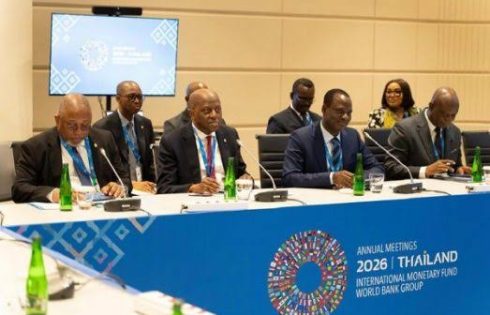
Nigeria is targeting economic growth of seven per cent in 2027 and has ruled out a return to fuel subsidies and multiple exchange rates, Finance Minister and Coordinating Minister of the Economy, Taiwo Oyedele, has said.
Oyedele, in company of the Governor of the Central Bank of Nigeria (CBN), Olayemi Cardoso, said the government’s priority was to sustain the economic reforms already introduced, reduce inflation and borrowing costs, and create conditions for stronger investment and jobs.
He spoke at the closing press briefing of the ongoing International Monetary Fund (IMF) and World Bank Group Annual Meetings in Bangkok, Thailand, where Nigerian economic officials discussed the country’s reform programme, growth prospects and efforts to attract private capital.
The seven per cent growth target is higher than the growth projections for Nigeria cited during the meetings. Oyedele, expressed confidence that the economy could expand faster, if the government sustained its reforms and addressed the major factors driving the cost of living and in doing business.
He identified food prices, energy costs and logistics as important areas requiring attention, alongside effective fiscal and monetary policies and greater stability in the foreign exchange market.
According to him, bringing inflation down to single digits would also create room for interest rates to fall to single-digit levels, reducing the cost of borrowing for businesses and individuals.
Oyedele’s comments are coming on the heels of the Federal Government’s efforts to move the economy from stabilisation towards faster growth, with greater emphasis hinged on investment, production and employment.
He said Nigeria would not return to fuel subsidies, or multiple exchange rates, describing the continuation of reforms as necessary to maintain confidence in the economy.
“There will be no return to fresh subsidies, or multiple exchange rates,” he said, warning that reversing the reforms could weaken investor confidence, trigger capital flight, put pressure on the foreign exchange market and undermine the value of the naira.
The government’s position reflects its argument that maintaining a more predictable economic environment is necessary to attract long-term investment, even as households and businesses continue to face high living and operating costs.
Oyedele said the country needed to build on the progress made so far rather than reverse policies that the government considers important to economic stability.
The briefing also addressed the recent reduction in fuel retail margins by the Nigerian National Petroleum Company Limited (NNPC), which Oyedele said, has been misinterpreted by some consumers as a possible return to subsidy arrangements.
Oyedele explained that the reduction was a commercial decision by the company, rather than a publicly funded fuel subsidy.
He said under the arrangement, NNPC reduced its retail margins in a bid to attract customers. The company could make up for lower margins per litre through higher sales volumes, according to the explanation presented at the briefing.
He said the distinction was important because a commercial price reduction funded by a company is different from a government subsidy financed with public funds.
The government has maintained that the NNPC’s decision does not represent a reversal of the fuel subsidy removal policy.
Oyedele’s position was that the country must preserve the gains expected from the reforms, while pursuing measures that can ease economic pressures and improve living conditions.
The government’s growth ambition, he said , is also tied to its efforts to attract private investment into major sectors of the economy.
At the briefing, Oyedele presented Nigeria’s investment drive, known as Project Nigeria, which comprises 65 projects valued at about $78.5 billion across several sectors.
The projects cover energy, transport, industry and mining, agriculture, healthcare and urban services. The minister said feasibility studies had been carried out and that potential investors from Asia and Europe have expressed interest.
The proposed investments are intended to help address infrastructure gaps, expand productive capacity and support economic activity across the country.
However, the $78.5 billion represents the estimated value of the project pipeline, not money already invested in Nigeria, or financing that has been secured. The projects would still require investment commitments and implementation.
The initiative formed part of Nigeria’s engagement with international investors and development partners during the meetings, as the government sought to present specific opportunities for investment, rather than focus solely on requests for financial assistance.
Oyedele and Cardoso, also stressed the importance of policy consistency in attracting investors.
Their position was that investors needed confidence that major economic policies would remain predictable and that the country would not abandon its reform programme whenever difficult decisions became politically challenging.
For Nigeria, the challenge is to convert improved economic stability and expressions of investor interest into actual investments, additional production and jobs.
Cardoso said the recent performance of key economic indicators suggested that the country had made progress in stabilising the economy.
He said headline inflation fell to 14.63 per cent in September 2026, from about 34.8 per cent at the end of 2024. He also reported that the country’s external reserves had risen above $55 billion, the highest level in about 18 years.
Cardoso said the Monetary Policy Rate had been reduced from 26.5 per cent to 23 per cent as inflation moderated, describing the reduction in inflation and the improvement in external reserves, as important developments in the country’s economic adjustment.
Cardoso, however, said the medium-term objective remained, to bring inflation down to single digits, saying achieving that goal would be important for lowering borrowing costs, improving planning by businesses and strengthening household purchasing power.
He also said that the gap between the official and parallel foreign exchange markets had narrowed substantially from a peak of about 60 per cent, to between three and four per cent.
According to him, the reduced gap had improved confidence in the foreign exchange market and created better conditions for long-term naira financing.
The improvement could support institutions such as the Africa Finance Corporation and the Development Bank of Nigeria in financing projects in local currency, reducing some of the risks associated with borrowing in foreign currencies.
Cardoso also disclosed that private capital inflows had increased from about $300 million in 2023 to nearly $6 billion in 2026, representing a substantial rise in funds entering the country.
The increase was presented as evidence of growing investor interest following changes in economic policy. However, the government’s ability to sustain the inflows will depend partly on whether investors continue to see Nigeria as a predictable destination for long-term capital.
The CBN governor said the banking sector had also attracted fresh capital through the recapitalisation exercise, which raised about N4.65 trillion. More than 70 per cent of the funds, he said, came from domestic investors.
The exercise was designed to strengthen banks’ capital bases and improve their capacity to support businesses, households and larger investment projects.
Cardoso said the strong participation of domestic investors reflected greater confidence in the Nigerian financial system.
He said the government is seeking to use the stronger financial position of banks and the improved foreign exchange environment to support investment in productive sectors, pointing out that the impact will depend on whether businesses can obtain financing at affordable rates.
Oyedele also raised concerns about the cost of borrowing faced by developing economies, arguing that high financing costs continue to limit their ability to invest in infrastructure, social services and job creation.
He cited estimates that developing countries pay about $500 billion more annually to borrow, than advanced economies, describing the additional cost as a “prejudice premium”.
Oyedele called for changes to the international financial system to make financing more affordable and responsive to the needs of developing countries.
His proposals included greater representation for developing economies in the IMF, more transparent credit-rating processes, stronger local-currency capital markets and improved access to climate finance.
He also supported the development of an African credit-rating agency, arguing that the continent needed financing assessments that accurately reflected its economic conditions and investment opportunities.
Oyedele’s argument was that expensive borrowing limits the resources available to governments and businesses, making it harder to finance projects that could raise productivity and create employment.
Beyond attracting investment and reducing borrowing costs, the Nigerian delegation drew attention to the potential impact of artificial intelligence on employment.
Oyedele warned that the growth of artificial intelligence and other new technologies could create serious challenges for countries that failed to prepare their workers for changes in the labour market.
Estimates cited during the briefing suggested that about 1.2 billion people could enter the global labour market over the next 10 to 15 years, while only about 400 million new jobs might be created, leaving a potential shortfall of 800 million jobs.
The estimates were presented as a warning about the scale of the employment challenge facing governments, particularly in developing countries with large and growing populations of young people.
Oyedele argued that economic success should not be measured only by the amount of capital attracted, or the rate at which gross domestic product expands. The ability of an economy to create decent jobs and improve living standards, he said, must also be central to assessing progress.
He called for greater investment in skills, technology and businesses capable of employing more people, while urging policymakers to consider how the benefits of artificial intelligence could be shared more widely.
Cardoso also warned that the growing use of artificial intelligence presented risks for financial stability and cybersecurity.
He said Nigeria needed a clear strategy to benefit from the productivity gains associated with the technology, while protecting the financial system against new threats. The CBN had engaged artificial intelligence specialists to brief its board on the opportunities and risks, he said.
The discussions reflected a wider concern that technology could improve productivity, but also disrupt employment and expose financial institutions to new forms of cyber risk if governments and regulators failed to prepare.
Oyedele said Nigeria needed to ensure that economic reforms translate into tangible improvements for citizens. He encouraged people who understood the reforms to explain them to others in their communities and through social media.
He argued that public understanding of the reforms was important as the government sought to maintain support for policies that could produce benefits over time.
International partners also expressed willingness to continue working with Nigeria on economic and development priorities. Discussions covered power, infrastructure guarantees, fiscal management, transparency, statistics, healthcare, energy and financial integrity.
The World Bank referred to instruments that could help support power and infrastructure projects, while the IMF indicated that it would continue providing technical assistance in areas including fiscal implementation, transparency and statistics.
Other partners, including the Japan International Cooperation Agency, the Islamic Development Bank, the United States Treasury and the European Union, also discussed areas of cooperation.
Oyedele’s account presented these engagements as commitments to continued cooperation, rather than announcements of new funding for Nigeria.
He said the country was seeking to use its engagement with international institutions and private investors to support the next phase of its economic programme.
For Nigeria, the central test will be whether lower inflation, stronger external reserves, improved foreign exchange conditions and increased investor interest, can translate into affordable financing, productive investment and more jobs.
While the government remains confident that its reforms can support the seven per cent economic growth in 2027, achieving the target will require sustained investment, improved productivity and measures that address the costs facing businesses and ordinary Nigerians.