
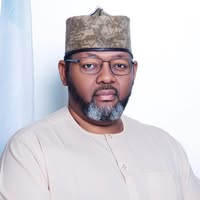
FG records 160 operational CNG stations, targets 500 more

Ismaeel Ahmed. CNGThe Federal Government has disclosed that Nigeria currently has about 160 operational Compressed Natural Gas refuelling stations, while another 170 facilities are at different stages of development and licensing as part of efforts to expand the adoption of alternative fuels and reduce transportation costs.

The Executive Chairman and Chief Executive Officer of the Presidential Initiative on Compressed Natural Gas and Electric Vehicles, Barrister Ismaeel Ahmed, disclosed this on Friday at the official commissioning of a CNG Integrated Refuelling Unit station established through a partnership between the State House, Pi-CNG and Electric Vehicles, and Rolling Energy in Karu, Abuja.

He said the country had moved beyond the experimental stage of CNG adoption, with private investors committing about $2.6bn to the development of infrastructure across the country.

Ismaeel said the Federal Government was pushing to accelerate the expansion of refuelling facilities, adding that President Bola Tinubu had ordered another round of infrastructure development to increase access to CNG across the country.

He said, “This is almost our 106th station across the country in less than two years. This is not beginning any longer. The market has been proven.

“The investors are putting in $2.6bn worth of private investment. Our President has ordered for another round of about 500 infrastructure units to come in through the MDGIF. So I don’t think it’s a proof of concept any longer.

“It’s not the beginning. It’s a scale thing. Nigeria is 220 million people strong, 12 million vehicles. We are moving at a scale that we need to move. The work is in progress. What we need is to fasten up the scale.”

He added that about 160 refuelling stations were currently operating nationwide, while another 170 were undergoing development or awaiting regulatory approvals from the Nigerian Midstream and Downstream Petroleum Regulatory Authority.

According to him, the President has also directed further infrastructure expansion, with additional facilities expected to come on stream between this year and early 2027.

Ismaeel urged more private investors to participate in the programme, noting that the expansion of CNG infrastructure was necessary to serve Nigeria’s large vehicle population and improve access to cheaper transportation fuel.

He said, “A lot of entrepreneurs are seeing the need for this, and they are coming in, and we are calling them to come in and invest more.

“It took us 60 years to get to 24,000 PMS stations, and like the Permanent Secretary said, these are all privately owned.”

The Pi-CNG chairman also disclosed that the adoption of CNG-powered buses had reduced transportation fares by between 30 per cent and 40 per cent on some routes where the vehicles were operating.

He cited routes in Abuja, Lagos and Kano, including the Kano-Katsina route, where passengers were now paying significantly less than they previously paid for transportation.

He said, “It has significantly reduced about 30 per cent to 40 per cent of transportation fees in the routes where CNG buses are ferrying. Our goal now is to extend this to every nook and cranny of where commercial vehicles and their high-traffic corridors. That’s the goal.

“But where it is currently in operation, even in Abuja, in Lagos, in Kano, between Kano and Katsina, that used to take about N3,000, N4,000 to travel, now you take N1,500 for CNG buses that are flying that route.”

He explained that the figures were obtained by comparing existing transport fares charged by commercial vehicle operators with the fares introduced after CNG-powered buses were deployed on the same routes.

The development comes as the Federal Government seeks to encourage the use of natural gas as a cheaper alternative to petrol following the removal of fuel subsidy in 2023, which triggered a sharp increase in transportation costs.

Nigeria has substantial natural gas reserves, but much of the resource has remained underutilised, with significant volumes historically lost through gas flaring.

Speaking at the commissioning, the Permanent Secretary, State House, Temitope Peter Fashedemi, said the new facility demonstrated the government’s commitment to promoting CNG as an alternative transportation fuel and encouraging private-sector participation in the programme.

He explained that the facility was established by converting an abandoned petrol dispensing station belonging to the State House into a CNG refuelling and vehicle conversion centre.

According to him, the State House provided the existing facility, while Rolling Energy invested in its rehabilitation and installation of the necessary equipment without government expenditure on the project.

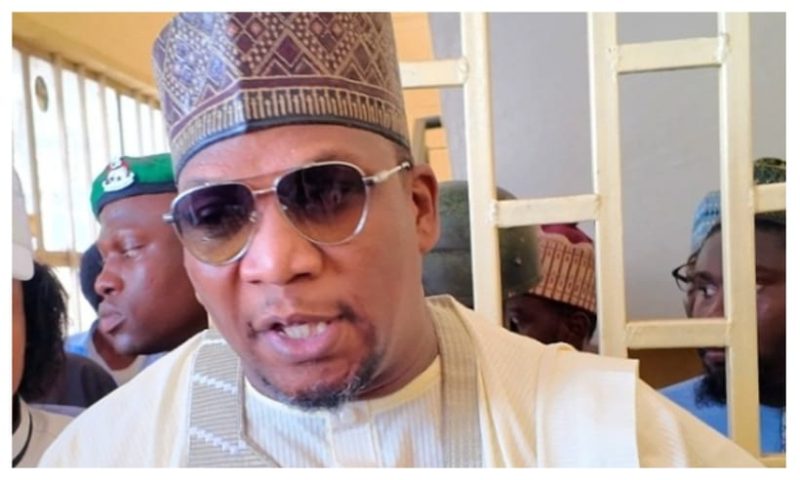
Kaduna PDP guber candidate, Bawa suspends activities over death of party members

Kaduna State, Usman Shehu BawaThe governorship candidate of the Peoples Democratic Party, PDP, in the 2027 election in Kaduna State, Usman Shehu Bawa, ABG, has suspended all his campaign activities following the death of three party members in a fatal motor accident.
The victims died on their way home after attending a meeting in Kaduna.

A statement issued by his spokesperson, Yusuf Idris, said the gubernatorial candidate expressed deep sorrow over the death of the party members.

He explained that the inauguration of his campaign council, and other related activities planned for Saturday have been suspended till further notice.

He expressed regret for the inconvenience the suspension may have caused, particularly to individuals invited for the occasion.

The three deceased members are all from Jema’a Local Government Area of the state and are identified as Caleb Ishaya Alot – Secretary of PDP, Jema’a LGA, Mercy Achi – Women leader, Wise Ward and Charity Bahago – member of the PDP, Wise Ward.

According to Shehu ABG, “The incident is a painful loss to the bereaved families and the entire PDP family in the state.”

He extended his heartfelt condolences to the immediate families and the people of Jema’a Local Government Area and members of the party in the state over the painful loss.

He also prayed for the speedy recovery of those who sustained injuries in the accident.

2027: Court ruling won’t derail our ambition – Jigawa ADC governorship candidate

‎2027: Court ruling won’t derail our ambition - Jigawa ADC governorship candidateThe governorship candidate of the African Democratic Congress, ADC, in Jigawa State, Senator Sabo Mohammed Nakudu, has assured party members that the recent court judgement challenging the Senator David Mark-led national leadership will not derail the party’s 2027 electoral ambition.
‎

This was contained ‎in a statement signed by his media aide, Mati Ali, issued to newsmen on Thursday.

Nakudu recalled that Justice Musa Liman of the Federal High Court had earlier dismissed a similar challenge in Suit No. FHC/ABJ/CS/1637/2025.

‎Nakudu urged ADC members and supporters across Jigawa State to remain calm, united and focused, describing Thursday’s court judgement as erroneous and a calculated attempt to distract the party.

‎He called on party members not to panic or allow the court ruling to weaken their commitment to the party, urging them instead to remain steadfast and intensify grassroots mobilisation ahead of the 2027 general elections.

‎

‎The ADC governorship candidate also cited the party’s recent presidential campaign rally in Kebbi State, which he said attracted a significantly larger crowd than the previous rally in Sokoto, as evidence of the party’s growing political momentum.

‎

‎Nakudu alleged that there were attempts to weaken the party and frustrate its candidates, but maintained that such developments would not affect ADC’s activities or campaign programmes across the country.

‎

‎He directed party members and supporters in Jigawa State to continue their normal political activities, sustain mobilisation efforts and await further directives from the ADC National Headquarters.

‎

‎He assured them that the national leadership would take appropriate steps to address the court judgement.

Borno Police urge stranded travellers to seek help at nearest station

Borno Police urge stranded travellers to seek help at nearest stationThe Borno State Police Command has urged travellers who become stranded, lost or distressed during their journeys to seek assistance at the nearest police station.
The command’s Public Relations Officer, ASP Nahum Daso, gave the advice in a post on his official Facebook page on Thursday.

Daso cited the case of a woman who travelled from Maiduguri to Kano to visit her relatives but became stranded after losing contact with them.

He said the woman had no mobile phone and did not know her relatives’ residential address.

According to him, police officers in Kano contacted relevant authorities in Borno State, traced her family in Maiduguri and facilitated her safe return.

Daso advised travellers to inform trusted relatives or friends about their destinations and expected arrival times before embarking on journeys.

He also urged stranded travellers to remain calm, avoid isolated areas and approach the nearest police station or identifiable police officers for assistance.

Kebbi: Attack on Atiku’s campaign convoy threatens opposition’s freedom of assembly – Amnesty

Kebbi: Attack on Atiku’s campaign convoy threatens opposition’s freedom of assembly – AmnestyAmnesty International has warned that the attack on the African Democratic Congress, ADC, presidential candidate, Atiku Abubakar’s campaign convoy in Birnin Kebbi, Kebbi State, threatens the rights of opposition parties to freely hold political activities.
In a statement issued on Thursday, the rights organisation said armed men blocked the convoy, attacked vehicles and assaulted people with cutlasses.

Amnesty said footage it analysed showed armed gangs striking people with cutlasses, attacking vehicles and blocking roads during the incident.

It added that members of the media crew covering the campaign were also targeted, with cameras and other equipment destroyed.

The organisation said the destruction of the equipment was aimed at preventing journalists from documenting the campaign activities.

It warned that the incident could undermine the rights of opposition parties and their supporters to freedom of association and peaceful assembly.

Amnesty said the Kebbi attack came days after similar violence against ADC campaign activities in neighbouring Sokoto State, describing the incidents as part of a troubling pattern of attacks on opposition supporters.

The organisation also cited similar attacks in Niger, Kaduna, Edo and Enugu states, alleging that authorities had failed to ensure accountability in cases it investigated.

“No one should lose their life or face violence simply for taking part in peaceful political activities,” Amnesty said.

It warned that continued attacks on opposition parties and their supporters could undermine democratic participation and create an atmosphere of fear ahead of the 2027 general elections.

Emergency patients: Fix hospitals before punishing health workers – NMA tells NASS

NMA The Nigerian Medical Association, NMA, has rejected a legislative proposal by the National Assembly to impose fines and imprisonment on healthcare workers who reject emergency patients, urging lawmakers to compel governments to fix hospitals before enacting such laws.
The president of the association, Prof. Afekhide Ernest Omoti, who stated this in a statement made available to journalists in Benin City on Thursday, November 5, 2026, described the proposed sanctions as unjust.

Omoti, however, called on the National Assembly to hold governments accountable for failing to provide the resources, infrastructure and enabling environment required for effective emergency medical services.

He urged lawmakers to address the systemic challenges confronting the country’s healthcare sector rather than introduce punitive measures against health professionals.

He noted that the National Health Act, NHA, had already provided a legal framework for protecting patients requiring emergency medical treatment, stressing that existing provisions prohibit the refusal of emergency care.

He said it was fundamentally unfair to impose criminal liability on healthcare workers and hospitals for failing to provide services when governments had not fulfilled their responsibility to provide the necessary resources and enabling environment.

The NMA president said the critical question was not necessarily the absence of legislation but the failure to implement existing provisions and create the enabling environment for their effective execution.

“Of particular importance is Section 6 of the National Health Act, which establishes the Basic Health Care Provision Fund, BHCPF, and provides for the funding of emergency medical treatment.

“This provision recognises that emergency care requires financial support and that healthcare facilities must not be left to bear the cost of providing such services without appropriate reimbursement,” he said.

Omoti lamented that the implementation of the BHCPF remained inadequate, leaving hospitals and healthcare facilities that provide emergency treatment to bear considerable financial costs without the expected refunds or reimbursement.

“This creates an unsustainable situation in which hospitals are expected to provide emergency care without the necessary financial support,” he added.

He further identified the shortage of doctors and other healthcare professionals as a major challenge confronting the country’s healthcare system.

He attributed the situation to poor remuneration, unfavourable working conditions, inadequate infrastructure, insecurity, excessive workloads and the general lack of an enabling professional environment.

According to him, these challenges have contributed to the alarming migration of Nigerian doctors and nurses to other countries, including neighbouring African countries where conditions of service are increasingly attractive.

“Our hospitals are consequently operating with dangerously inadequate manpower. In several facilities, the few available doctors are expected to manage overwhelming patient loads, sometimes under extremely difficult circumstances and without adequate support,” he stated.

The NMA president also decried the deplorable state of infrastructure and a persistent shortage of essential medical supplies across hospitals in the country.

He listed oxygen, essential drugs, blood and blood products, resuscitation equipment, medical consumables, functional ambulances and other life-saving facilities as basic emergency-care requirements that are not readily available in many healthcare institutions.

He questioned how doctors could be expected to provide emergency treatment when hospitals lacked the basic equipment and supplies needed to save lives.

“How can we reasonably expect a doctor to provide emergency care when the hospital lacks the basic equipment, drugs and consumables required to save a life?

“How can we threaten health workers with imprisonment for circumstances that are substantially beyond their control?” he queried.

He advised the National Assembly to address the fundamental deficiencies in the healthcare system rather than introduce punitive measures that could further demoralise an already distressed workforce.

He also urged the Senate to reconsider the proposed amendment in its present form and redirect its legislative efforts towards addressing the challenges undermining emergency healthcare delivery in Nigeria.

NYSC investigates corps members’ complaint over hospital treatment in Osun

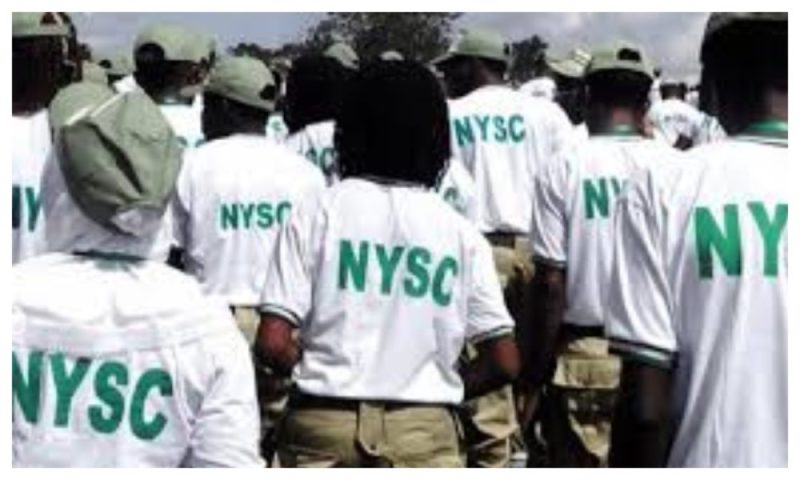
NYSC investigates corps members’ complaint over hospital treatment in Osun The National Youth Service Corps, NYSC, in Osun State has investigated a complaint by a corps member over alleged failure to provide medical attention at the General Hospital, Iwo.
The investigation followed a viral video posted on social media by Olaode Testimony, serving in Ayedire Local Government Area, and his friend, Olusegun Victor, who also serves in the same local government.

In the video, the corps members alleged that they were unable to access medical attention after visiting the General Hospital, Iwo, over suspected food poisoning. They expressed concerns about their experience during the late-night visit.

Olaode explained that they arrived at the hospital at about 10:05 pm after experiencing symptoms they suspected were caused by food poisoning.

He said they visited the facility because they needed medical attention but were unsuccessful in getting treatment.

However, during the investigation conducted by the NYSC Osun State Secretariat, Olaode provided further details about what happened at the hospital, clarifying that they were not completely ignored upon arrival.

He explained that “we were received by a security personnel who directed us to a nurse. The nurse was unable to attend to us when we sought medical assistance.”

The corps member also clarified that his friend, Victor, had earlier received treatment at the same hospital that afternoon.

He disclosed that their unsuccessful attempt to obtain medical attention happened during their subsequent visit at night.

“After leaving the hospital, we proceeded to a pharmacy in Iwo, where we eventually received assistance,” he stated.

The investigation established that they obtained help at the pharmacy after failing to secure the required attention at the general hospital.

The NYSC investigation revealed that the corps member did not use the established communication channels provided by the scheme for reporting emergencies.

He did not contact his Local Government Inspector, LGI, Zonal Inspector, Corps Liaison Officer or State Coordinator.

The NYSC said it provided corps members with the telephone contacts of those officials during their orientation course to facilitate prompt intervention in emergency situations.

The investigation noted that the available communication channels were not utilised before the corps members sought assistance elsewhere.

Speaking during the investigation, the LGI, Abatan Bolanle, explained that the corps member could have contacted him immediately for guidance and assistance.

Abatan explained that he would have directed the two corps members to Bowen University Teaching Hospital, Iwo, if he had received information about their condition.

He indicated that such a referral would have enabled them to obtain the necessary medical attention.

Following the investigation, the Corps Inspection and Monitoring Branch issued queries to the corps members involved, while the matter was referred to the Corps Disciplinary Committee for necessary action.

FCMB advocates stronger data infrastructure for digital banking

FCMB Group PlcFirst City Monument Bank has called for increased investment in local data infrastructure and the careful implementation of data localisation measures to protect customer information and ensure uninterrupted digital banking services.
The bank’s Chief Technology Officer, Blessing Ehize, made the call during a panel session at the CIO & C-Suite Conference and Awards Africa, held at the Federal Palace Hotel in Lagos.

Ehize, according to a statement from the bank on Thursday, stressed the importance of adopting a risk-based approach to data localisation, considering data sensitivity, cybersecurity threats, infrastructure capacity, and service continuity.

He explained that financial institutions must assess the risks associated with storing, processing and migrating data while implementing appropriate safeguards to protect customers and minimise service disruptions.

According to him, the growing demand for digital financial services underscores the need for adequate investment in local infrastructure capable of supporting secure and reliable banking operations.

He noted that beyond physical infrastructure, financial institutions must strengthen their cybersecurity capabilities, technical expertise and operational resilience to sustain digital banking services.

Ehize emphasised that protecting customers’ personal information and ensuring consistent access to financial services remain critical considerations in the development of digital banking infrastructure.

Speaking on the financial implications of technology adoption, he urged financial institutions to balance innovation with cost efficiency through deliberate technology investments, improved utilisation of existing infrastructure and appropriate automation.

He maintained that technology investments should be evaluated based on their contributions to customer experience, operational efficiency and overall business performance, alongside security requirements and long-term sustainability.

The FCMB technology chief also called for stronger collaboration among regulators, banks, financial technology companies, data centre operators and technology providers to address challenges associated with data localisation.

He explained that investment in local capacity, supported by coordinated implementation, would enable financial institutions to meet data localisation objectives without compromising the reliability of digital financial services.

The CIO & C-Suite Conference and Awards Africa brought together technology executives and business leaders to examine issues relating to data sovereignty, cybersecurity, digital infrastructure and the role of technology in driving business growth.

CBN withdraws N3.46tn through OMO, T-bills

CBNNigeria’s Central Bank absorbed N3.46tn from the financial system through its latest Open Market Operations and Treasury bills auctions, as investors submitted more than twice the amount offered despite unchanged T-bill stop rates.
The auctions, conducted on 3 and 4 November, attracted combined subscriptions of N5.57tn against offers of N2.3tn, according to results released by the apex bank.

The CBN allotted N2.95tn through OMO and N509.41bn through T-bills, bringing total allotments to approximately N3.46tn.

The OMO auction accounted for about 85 per cent of the combined allotment, reflecting the central bank’s stronger absorption of liquidity through the instrumen

At the 3 November OMO auction, the CBN offered N1.5tn across 119-day, 126-day and 133-day instruments but received subscriptions of N3.52tn, representing 2.35 times the offer.

The apex bank allotted N2.95tn, with demand concentrated in the 133-day instrument, which attracted N2.36tn, accounting for about 67 per cent of total subscriptions.

Stop rates for the 119-day, 126-day and 133-day OMO bills stood at 17.77 per cent, 17.71 per cent and 17.67 per cent, respectively.

The sizeable allotment represented a sharp increase from the 29 October auction, when the CBN sold only N244.93bn despite receiving N2.28tn in bids.

The 4 November T-bill auction also recorded strong investor demand, with subscriptions reaching N2.045tn against an offer of N800bn.

However, the CBN allotted only N509.41bn, leaving approximately N1.54tn in bids unaccepted.

The 364-day instrument dominated demand, attracting N1.994tn in subscriptions and receiving N461.84bn in allotments.

The 91-day bill attracted N25.01bn in bids, of which N22.40bn was allotted, while the 182-day instrument received N25.83bn in subscriptions and N25.17bn in allotments.

The latest allotment was significantly higher than the N71.16bn recorded at the 28 October auction, when the central bank rejected most investor bids.

Despite the increase in subscriptions, the CBN maintained T-bill stop rates at their previous levels.

The 91-day instrument cleared at 15.40 per cent, while the 182-day and 364-day bills settled at 15.79 per cent and 15.80 per cent, respectively.

Investors, however, demanded higher yields on longer-dated securities, with bids for the 364-day bill reaching 18.18 per cent, substantially above the accepted rate.

Average yields increased by 43 basis points to 17.70 per cent on 3 November from 17.28 per cent on October 28.

The three-month benchmark yield climbed by 130 basis points to 17.40 per cent, while the six-month benchmark increased by 122 basis points to 17.85 per cent.

The difference between primary and secondary market yields, alongside higher OMO rates, highlights varying investor expectations across short-term government securities.

The 126-day OMO stop rate of 17.71 per cent was 192 basis points above the 182-day T-bill rate of 15.79 per cent

The latest OMO allotment comes against the backdrop of substantial liquidity in the banking system and expectations of sizeable inflows in November.

Financial data showed that banks had more than N7.72tn in the Standing Deposit Facility on 3 November, indicating elevated excess liquidity.

The liquidity position followed approximately N2.016tn in OMO maturities, partly offset by the central bank’s subsequent N2.95tn allotment.

In September, the CBN sold N17.51tn in OMO securities against N10.89tn in maturities, resulting in a net liquidity withdrawal of N6.62tn.

The apex bank also allotted N4.69tn at its September 29 OMO auction against an advertised offer of N2.5tn.

At the 22 October auction, OMO allotments reached N2.63tn against an offer of N2tn, before falling sharply at the final auction of the month.

The Financial Markets Dealers Association reported that banking-system liquidity increased by 56.75 per cent to N7.373tn in October as OMO absorption moderated.

The association also projected N13.79tn in liquidity inflows during November, largely from OMO maturities, government allocations and Treasury bills repayments.

Nigeria lost 3.3m barrels to oil thieves in 2025 – NUPRC

Nigeria lost 3.33 million barrels of crude oil to theft in 2025, with nearly two-thirds of the reported losses occurring in the final three months, as the Nigerian Upstream Petroleum Regulatory Commission’s revenue collection declined by N2.14tn,

The commission’s 2025 annual report, released on Thursday, showed that crude oil and gas revenue collections fell from N12.56tn in 2024 to N10.42tn in 2025, representing a 17.03 per cent decline, despite increases in receipts from gas flare penalties, signature bonuses and concession rentals.

Data from the commission’s 2025 report showed that crude theft rose sharply in the fourth quarter, when 2.19 million barrels were recorded. This represented 65.8 per cent of the total volume reported for the year and was almost five times the 440,434 barrels recorded in the third quarter.

The commission recorded 896,471 barrels of crude theft in the first quarter, while its second-quarter report showed a negative figure of 200,400 barrels, which it attributed to excess volumes identified during reconciliation.

The combined quarterly figures brought reported losses for the year to approximately 3.33 million barrels.

The report read, “Nigeria recorded 896,471 barrels of crude oil theft in the first quarter.

The second quarter recorded a negative 200,400 barrels, which the commission described as an excess volume in its reconciliation. Reported theft stood at 440,434 barrels in the third quarter. The fourth quarter recorded 2.19 million barrels, the highest quarterly volume of the year.”

The losses came despite the huge financial burden of securing the country’s petroleum assets. The Nigerian National Petroleum Company Limited reported energy security costs of N8.67tn in 2025, compared with about N3.1tn in 2024.

The expenditure reflects the cost of interventions to protect oil and gas infrastructure and support national energy security, although the entire amount cannot be attributed solely to combating crude theft.

The persistence of theft alongside the rising security costs raises questions about the effectiveness of measures to protect production facilities and crude evacuation infrastructure.

The losses also represent crude that could otherwise have contributed to government revenue, export earnings and the supply of feedstock to domestic refineries.

Despite the reported theft, Nigeria produced 541.08 million barrels of crude oil and blended condensate in 2025. Quarterly production stood at 132.70 million barrels in the first quarter, 137.69 million in the second, 137.45 million in the third and 133.23 million in the fourth quarter. The country also produced 48.52 million barrels of unblended condensate during the year.

On revenue, oil and gas royalties, including Project Gazelle and NNPC receivables, remained the largest contributor, generating N8.97tn in 2025, compared with N11.08tn in 2024. The decline of N2.11tn represented a 19.03 per cent reduction.

“The total approved budget for 2025 was N645,462,335,500.80, with total income of  N342,814,462,174.97 and total expenditure was N304,533,385,103. Total revenue generated was N10,424,478,448,682.40, which is 63 per cent of projected revenue of N16,538,206,608,738.00.

“357 oil spill incidents were reported. 49.5 per cent of the spills were a result of sabotage. There was an increase of 64.74 per cent in revenue in 2024 over 2023 and a decrease of 20.53 per cent in 2025 over 2024 revenues,” the report added.

However, receipts from gas flare penalties increased from N391.26bn to N611.42bn, representing a 56.27 per cent rise.

Signature bonuses also increased by 44.2 per cent, from N369.58bn in 2024 to N532.94bn in 2025, while concession rentals rose by 61.1 per cent, from N23.71bn to N38.19bn.

Miscellaneous revenue increased from N35.20bn to N46.44bn. Conversely, royalty by price declined from N313.72bn to N213.41bn, while lease renewal receipts fell sharply from N230.73bn to N8.23bn.

The commission’s total income from cost of revenue collection and internally generated revenue, however, increased by 21.85 per cent to N342.81bn in 2025, compared with N281.34bn in 2024.

The report showed that cost of revenue collection contributed N335.45bn, while internally generated revenue accounted for N7.36bn.

The commission generated N10.42tn against a projected revenue target of N16.54tn, representing 63 per cent performance.