Nigeria targets 7% growth in 2027, rules out return to fuel subsidy
 

Nigeria is targeting economic growth of seven per cent in 2027 and has ruled out a return to fuel subsidies and multiple exchange rates, Finance Minister and Coordinating Minister of the Economy, Taiwo Oyedele, has said.

Oyedele, in company of the Governor of the Central Bank of Nigeria (CBN), Olayemi Cardoso, said the government’s priority was to sustain the economic reforms already introduced, reduce inflation and borrowing costs, and create conditions for stronger investment and jobs.

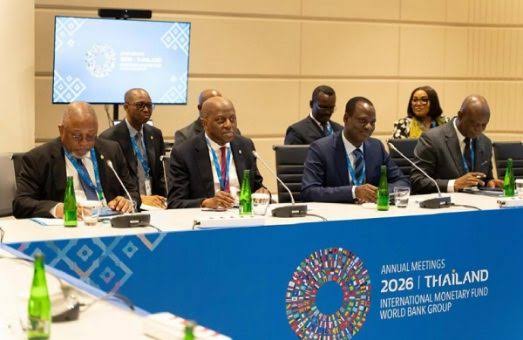
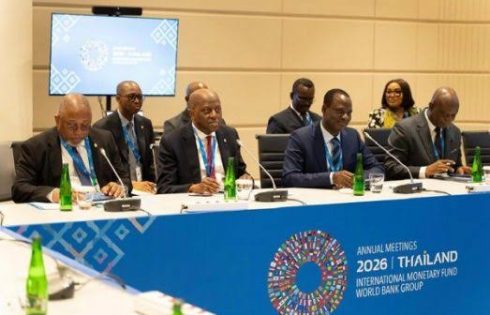
He spoke at the closing press briefing of the ongoing International Monetary Fund (IMF) and World Bank Group Annual Meetings in Bangkok, Thailand, where Nigerian economic officials discussed the country’s reform programme, growth prospects and efforts to attract private capital.

The seven per cent growth target is higher than the growth projections for Nigeria cited during the meetings. Oyedele, expressed confidence that the economy could expand faster, if the government sustained its reforms and addressed the major factors driving the cost of living and in doing business.

He identified food prices, energy costs and logistics as important areas requiring attention, alongside effective fiscal and monetary policies and greater stability in the foreign exchange market.

According to him, bringing inflation down to single digits would also create room for interest rates to fall to single-digit levels, reducing the cost of borrowing for businesses and individuals.

Oyedele’s comments are coming on the heels of the Federal Government’s efforts to move the economy from stabilisation towards faster growth, with greater emphasis hinged on investment, production and employment.

He said Nigeria would not return to fuel subsidies, or multiple exchange rates, describing the continuation of reforms as necessary to maintain confidence in the economy.

“There will be no return to fresh subsidies, or multiple exchange rates,” he said, warning that reversing the reforms could weaken investor confidence, trigger capital flight, put pressure on the foreign exchange market and undermine the value of the naira.

The government’s position reflects its argument that maintaining a more predictable economic environment is necessary to attract long-term investment, even as households and businesses continue to face high living and operating costs.

Oyedele said the country needed to build on the progress made so far rather than reverse policies that the government considers important to economic stability.

The briefing also addressed the recent reduction in fuel retail margins by the Nigerian National Petroleum Company Limited (NNPC), which Oyedele said, has been misinterpreted by some consumers as a possible return to subsidy arrangements.

Oyedele explained that the reduction was a commercial decision by the company, rather than a publicly funded fuel subsidy.

He said under the arrangement, NNPC reduced its retail margins in a bid to attract customers. The company could make up for lower margins per litre through higher sales volumes, according to the explanation presented at the briefing.

He said the distinction was important because a commercial price reduction funded by a company is different from a government subsidy financed with public funds.

The government has maintained that the NNPC’s decision does not represent a reversal of the fuel subsidy removal policy.

Oyedele’s position was that the country must preserve the gains expected from the reforms, while pursuing measures that can ease economic pressures and improve living conditions.

The government’s growth ambition, he said , is also tied to its efforts to attract private investment into major sectors of the economy.

At the briefing, Oyedele presented Nigeria’s investment drive, known as Project Nigeria, which comprises 65 projects valued at about $78.5 billion across several sectors.

The projects cover energy, transport, industry and mining, agriculture, healthcare and urban services. The minister said feasibility studies had been carried out and that potential investors from Asia and Europe have expressed interest.

The proposed investments are intended to help address infrastructure gaps, expand productive capacity and support economic activity across the country.

However, the $78.5 billion represents the estimated value of the project pipeline, not money already invested in Nigeria, or financing that has been secured. The projects would still require investment commitments and implementation.

The initiative formed part of Nigeria’s engagement with international investors and development partners during the meetings, as the government sought to present specific opportunities for investment, rather than focus solely on requests for financial assistance.

Oyedele and Cardoso, also stressed the importance of policy consistency in attracting investors.

Their position was that investors needed confidence that major economic policies would remain predictable and that the country would not abandon its reform programme whenever difficult decisions became politically challenging.

For Nigeria, the challenge is to convert improved economic stability and expressions of investor interest into actual investments, additional production and jobs.

Cardoso said the recent performance of key economic indicators suggested that the country had made progress in stabilising the economy.

He said headline inflation fell to 14.63 per cent in September 2026, from about 34.8 per cent at the end of 2024. He also reported that the country’s external reserves had risen above $55 billion, the highest level in about 18 years.

Cardoso said the Monetary Policy Rate had been reduced from 26.5 per cent to 23 per cent as inflation moderated, describing the reduction in inflation and the improvement in external reserves, as important developments in the country’s economic adjustment.

Cardoso, however, said the medium-term objective remained, to bring inflation down to single digits, saying achieving that goal would be important for lowering borrowing costs, improving planning by businesses and strengthening household purchasing power.

He also said that the gap between the official and parallel foreign exchange markets had narrowed substantially from a peak of about 60 per cent, to between three and four per cent.

According to him, the reduced gap had improved confidence in the foreign exchange market and created better conditions for long-term naira financing.

The improvement could support institutions such as the Africa Finance Corporation and the Development Bank of Nigeria in financing projects in local currency, reducing some of the risks associated with borrowing in foreign currencies.

Cardoso also disclosed that private capital inflows had increased from about $300 million in 2023 to nearly $6 billion in 2026, representing a substantial rise in funds entering the country.

The increase was presented as evidence of growing investor interest following changes in economic policy. However, the government’s ability to sustain the inflows will depend partly on whether investors continue to see Nigeria as a predictable destination for long-term capital.

The CBN governor said the banking sector had also attracted fresh capital through the recapitalisation exercise, which raised about N4.65 trillion. More than 70 per cent of the funds, he said, came from domestic investors.

The exercise was designed to strengthen banks’ capital bases and improve their capacity to support businesses, households and larger investment projects.

Cardoso said the strong participation of domestic investors reflected greater confidence in the Nigerian financial system.

He said the government is seeking to use the stronger financial position of banks and the improved foreign exchange environment to support investment in productive sectors, pointing out that the impact will depend on whether businesses can obtain financing at affordable rates.

Oyedele also raised concerns about the cost of borrowing faced by developing economies, arguing that high financing costs continue to limit their ability to invest in infrastructure, social services and job creation.

He cited estimates that developing countries pay about $500 billion more annually to borrow, than advanced economies, describing the additional cost as a “prejudice premium”.

Oyedele called for changes to the international financial system to make financing more affordable and responsive to the needs of developing countries.
His proposals included greater representation for developing economies in the IMF, more transparent credit-rating processes, stronger local-currency capital markets and improved access to climate finance.

He also supported the development of an African credit-rating agency, arguing that the continent needed financing assessments that accurately reflected its economic conditions and investment opportunities.

Oyedele’s argument was that expensive borrowing limits the resources available to governments and businesses, making it harder to finance projects that could raise productivity and create employment.

Beyond attracting investment and reducing borrowing costs, the Nigerian delegation drew attention to the potential impact of artificial intelligence on employment.

Oyedele warned that the growth of artificial intelligence and other new technologies could create serious challenges for countries that failed to prepare their workers for changes in the labour market.

Estimates cited during the briefing suggested that about 1.2 billion people could enter the global labour market over the next 10 to 15 years, while only about 400 million new jobs might be created, leaving a potential shortfall of 800 million jobs.

The estimates were presented as a warning about the scale of the employment challenge facing governments, particularly in developing countries with large and growing populations of young people.

Oyedele argued that economic success should not be measured only by the amount of capital attracted, or the rate at which gross domestic product expands. The ability of an economy to create decent jobs and improve living standards, he said, must also be central to assessing progress.

He called for greater investment in skills, technology and businesses capable of employing more people, while urging policymakers to consider how the benefits of artificial intelligence could be shared more widely.

Cardoso also warned that the growing use of artificial intelligence presented risks for financial stability and cybersecurity.

He said Nigeria needed a clear strategy to benefit from the productivity gains associated with the technology, while protecting the financial system against new threats. The CBN had engaged artificial intelligence specialists to brief its board on the opportunities and risks, he said.

The discussions reflected a wider concern that technology could improve productivity, but also disrupt employment and expose financial institutions to new forms of cyber risk if governments and regulators failed to prepare.

Oyedele said Nigeria needed to ensure that economic reforms translate into tangible improvements for citizens. He encouraged people who understood the reforms to explain them to others in their communities and through social media.

He argued that public understanding of the reforms was important as the government sought to maintain support for policies that could produce benefits over time.

International partners also expressed willingness to continue working with Nigeria on economic and development priorities. Discussions covered power, infrastructure guarantees, fiscal management, transparency, statistics, healthcare, energy and financial integrity.

The World Bank referred to instruments that could help support power and infrastructure projects, while the IMF indicated that it would continue providing technical assistance in areas including fiscal implementation, transparency and statistics.

Other partners, including the Japan International Cooperation Agency, the Islamic Development Bank, the United States Treasury and the European Union, also discussed areas of cooperation.

Oyedele’s account presented these engagements as commitments to continued cooperation, rather than announcements of new funding for Nigeria.

He said the country was seeking to use its engagement with international institutions and private investors to support the next phase of its economic programme.

For Nigeria, the central test will be whether lower inflation, stronger external reserves, improved foreign exchange conditions and increased investor interest, can translate into affordable financing, productive investment and more jobs.

While the government remains confident that its reforms can support the seven per cent economic growth in 2027, achieving the target will require sustained investment, improved productivity and measures that address the costs facing businesses and ordinary Nigerians.

AI may cut 800m jobs globally .. First Bank MD urges more Fintech investment

.. First Bank MD urges more Fintech investment

Artificial intelligence (AI) could widen the global jobs gap, with about 800 million people potentially left without employment opportunities over the next 10 to 15 years, Finance Minister and Coordinating Minister of the Economy, Taiwo Oyedele, has warned.

Oyedele said estimates presented at the ongoing International Monetary Fund (IMF) and World Bank Group Annual Meetings in Bangkok, Thailand, suggested that about 1.2 billion people could enter the global labour market within the period, while only 400 million new jobs might be created.

He warned that the projected gap posed a serious challenge to governments, particularly developing countries such as Nigeria, where a growing population of young people needs employment and economic opportunities.

The minister said the challenge was not only to attract investment and achieve economic growth, but also to ensure that the expansion of economic activity translated into decent jobs and improved living standards.

His warning comes amid growing debate over the impact of AI on employment, productivity and the future of work, as businesses and governments increasingly adopt new technologies.

Oyedele called for greater investment in skills, technology and businesses capable of creating jobs, while urging policymakers to consider how the benefits of AI could be shared more widely.

He said economic performance should not be measured only by the volume of investment attracted, or the rate of growth in gross domestic product, but also by the number of decent jobs created and the improvement in people’s living conditions.

The warning formed part of discussions at the closing press briefing of the IMF and World Bank meetings, where Nigerian officials addressed the country’s economic reform programme, investment prospects and the challenges facing developing economies.

The Central Bank of Nigeria (CBN) Governor, Olayemi Cardoso, also warned that the growing use of AI presented risks to financial stability and cybersecurity.

Cardoso said Nigeria needed a clear strategy to benefit from the productivity gains associated with the technology, while protecting its financial system against emerging threats.

He disclosed that the CBN had engaged AI specialists to brief its board on the opportunities and risks associated with the technology, reflecting the importance of preparing financial institutions and regulators for changes in the banking industry.

The concerns raised by the Nigerian delegation mirror the growing challenge facing financial institutions, which must take advantage of technology to improve services and efficiency while strengthening protection against increasingly sophisticated cyberattacks.
Also, the Chief Executive of First Bank of Nigeria, Olusegun Alebiosu, has said the bank has invested more than N6 billion annually in cybersecurity to protect its systems against cybercriminals. He said the growing use of AI has increased the need for stronger safeguards, even as it creates opportunities to improve banking operations.

The First Bank chief, who spoke in Abuja on the sidelines of the 19th Chartered Institute of Bankers of Nigeria Annual Banking and Finance Conference, said the bank maintained round-the-clock surveillance of its systems, enabling it to detect and take down millions of cyber threats every month.
He said the bank planned to increase its cybersecurity spending, as its business continued to expand and digital operations became more extensive.

“The bank has already established a command centre to monitor its franchise across the globe and counter emerging threats,” he said.

The command centre, according to the bank chief, enables the institution to monitor its operations across different locations and respond to threats targeting its systems.

Alebiosu said the increasing sophistication of cyber threats required banks to remain vigilant and continuously strengthen their defences, adding that AI has heightened cybersecurity risks, making it necessary for financial institutions to invest in the technology and the expertise required to protect customers and their operations.

However, he cautioned against viewing AI only as a source of danger, saying the technology could deliver substantial benefits to banks if the associated risks were properly managed.

On the role of AI in banking, Alebiosu said it could create major opportunities to improve efficiency, speed up processes and support the collection and analysis of data.

He said AI could provide more opportunities than threats for the banking industry if financial institutions put appropriate safeguards in place.

According to him, the technology could help banks carry out tasks more efficiently and gather large amounts of data within a short period, potentially improving the speed of decision-making and the delivery of services.

His comments point to the dual challenge confronting the banking industry: adopting technologies that can reduce operating costs and improve customer service, while preventing criminals from using the same tools to develop more effective cyberattacks.

The growing role of AI therefore places pressure on banks to balance technology investment with cybersecurity spending, staff training and effective risk management, Alebiosu stated.

Campaigns: Tinubu cannot compete with Peter Obi – Sam Amadi

 Campaigns: Tinubu cannot compete with Peter Obi – Sam AmadiDirector of the Abuja School of Social and Political Thought, Dr Sam Amadi, has noted that second-term presidents usually hit the campaign trail to make their case to voters, questioning why the situation is different with the incumbent.
Speaking on Arise News, Amadi also noted that President Tinubu had not been travelling to states, including those affected by tragedies, and did not move around freely.

He said he believed Tinubu could not match the campaign activities of the Nigeria Democratic Congress, NDC, candidate, Peter Obi, or even those of the African Democratic Congress, ADC, candidate, Atiku Abubakar, whom he described as less active.

Amadi concluded that the President could still remedy the situation by participating in debates and speaking directly to the people, adding that this might compensate for his limited presence on the campaign trail.

He said: “There is no doubt about this president’s age and frailty; we’ve seen that happen before. Even in governance, he has not travelled across the country. He was on his way to Jos but cut the trip short because he couldn’t face the hostility of the road.

“So, clearly, this is a good strategy but bad governance. For example, just this week, the World Bank said we have the highest number of people living in extreme poverty. So, however you look at it, whether the APC, PDP or NDC, the fact is that this is a bad time in terms of economic outcomes.

“So, second-term presidents usually hit the road. They hit the road, make their case and give explanations. And this president, you know, has procured proxies. If you have those thirty-something governors, you’ve made good progress. So, practically, he withdraws.

“So, three things come out of it. In terms of strategy for the party, they cannot compete with what we expect to be the intensity of the NDC candidate and Atiku Abubakar. Again, Atiku Abubakar will probably be as less intense as Mr Peter Obi, judging by what they’ve done.

“So, each party will devise a strategy around the question, ‘How can we minimise our weakness?’ But an essential part of all this is the optics they present to the Nigerian people.

“That’s where the strategy might be a bad one because, if the opposition, as I suspect, drags this matter out, the question will be: ‘Can the President also turn up for television debates?’

“Because that doesn’t involve travelling around the country. So, if he can get involved in actively talking to voters and answering their concerns, that may compensate for his reduced presence on the campaign trail.”

2027: Don’t repeat your previous mistake – Lamido warns Nigerians against APC

2027: Don’t repeat your previous mistake – Lamido warns Nigerians against APC Former Jigawa State Governor and founding member of the Peoples Democratic Party (PDP), Sule Lamido, has warned Nigerians against repeating what he described as the mistake of voting for the All Progressives Congress (APC) in previous elections.
Lamido gave the warning while speaking at the inauguration of the PDP Campaign Council, held at the party’s state headquarters in Dutse, Jigawa State.

He urged Nigerians to critically assess the performance of previous PDP administrations and compare it with that of the current administration before making their choices in the 2027 general elections.

“I believe Nigerians have learnt from their mistakes. Therefore, they must critically examine the achievements of previous administrations under the PDP and compare them with those of the current administration before deciding who should lead them,” he said.

Lamido accused the APC-led administration of failing to meet the expectations of Nigerians, saying the country and Jigawa State needed experienced and competent leaders to address their challenges.

He also criticised the APC administration, alleging that citizens in the state and across the country had suffered setbacks in healthcare, education and other critical sectors.

“Today, Jigawa is facing serious challenges in accessing quality healthcare. Hospitals lack adequate medical services and essential drugs, while the education sector continues to deteriorate,” he said.

Lamido described the PDP as a major force in Nigeria’s political history, noting that many political leaders began their careers under the party.

“Since 1999, almost all political parties have collapsed, leaving the PDP as the only surviving party to date,” he said.

“It has seen yesterday, Today and, by the grace of God, it will see tomorrow,” Lamido added.

He further assured party supporters that the PDP was prepared to campaign for its candidates at all levels, including the presidency, Senate, House of Representatives and State House of Assembly.

He pledged that the party would conduct peaceful campaigns without insults, intimidation or personal attacks, stressing that its major objective was to restore good governance and public confidence in leadership.

Nigerian Army assures FGC Ohafia students, staff of security

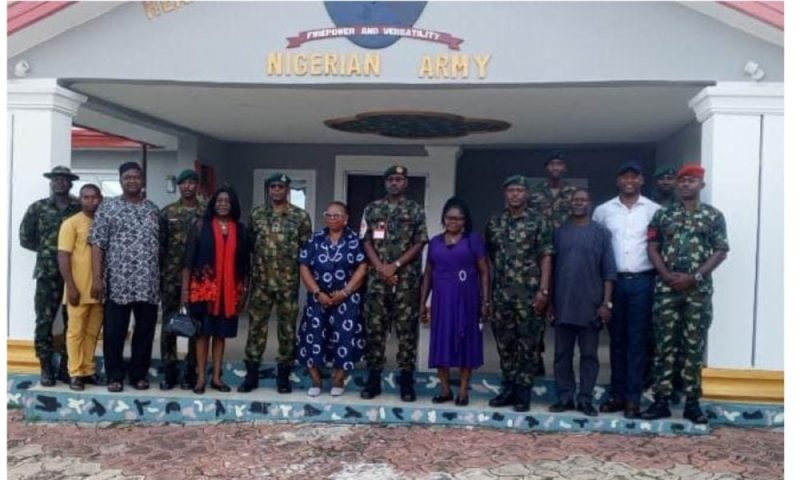
 Nigerian Army assures FGC Ohafia students, staff of security The Commander of the 14 Brigade, Nigerian Army, Ohafia, Brigadier General Ahmad Mansur Dikko, has assured the staff and the students of Federal Government College, FGC, Ohafia, of the brigade’s commitment to strengthening security around the school and its surrounding communities.
Brigadier General Dikko gave the assurance on Friday when the newly appointed Principal of FGC Ohafia, Mrs Akala Modupe Ayodele, and the school’s management visited the brigade headquarters in Ohafia, Abia State.

Dikko, who assured the principal that security would be provided within the school and neighbouring communities, advised Mrs Ayodele to maintain contact with the Commander of the 14 Brigade Garrison, Lt. Col. J.S. Wudah, who oversees security within the local government area.

He further encouraged the principal to formally communicate any accommodation challenges confronting the teachers of the college.

Speaking on the purpose of the visit, Mrs Akala Modupe Ayodele explained that, as a newly appointed principal, she needed to familiarise herself with the brigade and establish a cordial working relationship.

Ayodele also expressed concern about the collapsed perimeter wall of the college.

EPL: Gary Neville predicts scoreline of Leeds vs Man Utd game

EPL: Gary Neville predicts scoreline of Leeds vs Man Utd gameFormer Manchester United defender, Gary Neville has predicted the scoreline of the Red Devils’ Premier League clash with Leeds United.
Man United will face Leeds in an away Premier League tie on Sunday afternoon.

Michael Carrick’s side head to the game after losing 2-0 against Atletico Madrid in the Champions League in mid-week.

Providing his prediction on The Overlap, Neville said, “I am going 2-1 Man United.”

“To be honest, if you have Cunha, Mbuemo, Amad and Rashford, [you have a chance],” he added.

Man United currently sit in 13th position on the Premier League table after six matches.

‘Why we arrested Amnesty International reporter’ – Nigerian Army

‘Why we arrested Amnesty International reporter’ – Nigerian Army The Nigerian Army has clarified its position on the recent arrest and detention of Plateau State-based human rights and conflict journalist Lawrence Zongo.

The journalist was reportedly arrested on Monday, October 5, 2026, after allegedly visiting a military medical facility in Jos to see relatives who were receiving treatment for injuries sustained in an attack in Bassa Local Government Area of the state.

Global non-governmental human rights organisation, Amnesty International raised the alarm in a statement on Wednesday, demanding the immediate and unconditional release of Zongo, who is also a volunteer reporter with the organisation.

According to Amnesty International, Zongo was arrested at a military hospital within the Maxwell Khobe Cantonment, Rukuba Barracks, the headquarters of the Nigerian Army’s 3 Division in Jos, while visiting his relatives, who were receiving treatment following the attack. The organisation said he had been held incommunicado since then.

The organisation noted that since Zongo’s arrest and alleged unlawful detention, all efforts to gain access to him had been denied by the Army authorities, in utter disregard for due process.

“Amnesty International is deeply concerned by the arbitrary detention of our member in Plateau State, Mr Lawrence Zongo, who has been unlawfully detained incommunicado in military detention in Jos since Monday. Mr Zongo must either be handed over to civil authorities or immediately released,” the organisation said.

However, reacting to the controversy surrounding the journalist’s arrest, the Army, in a statement on Friday, said Zongo was arrested after gaining unauthorised access to the military facility without proper clearance from the relevant authorities.

The Army also dismissed insinuations that Zongo was released following pressure from various quarters, insisting that it was not under any pressure to release the journalist.

In the statement, which was shared on social media by conflict journalist Masara Kim Usman, the Army acknowledged that Zongo was arrested after gaining access to a restricted military facility without proper clearance while wearing Meta glasses, which the military considered a security breach.

Writing about Zongo’s release, Kim said: “The pressure from within was for Lawrence to be charged and prosecuted for espionage.

“His eventual release was secured following rigorous, behind-the-scenes interventions, including those by youth leaders such as Dalyop Solomon Mwantiri Mandiks and Ezekiel Bini, who testified and appealed on his behalf, with a commitment to produce him whenever required for further investigation.

“Lawrence was arrested on Monday, October 5, after he visited the military hospital at Maxwell Khobe Cantonment. According to him, he had gone to see relatives who were admitted after sustaining injuries in an attack the previous day.

“However, without clearance from the Army authorities, he walked into the restricted Army headquarters area wearing his Meta glasses and proceeded towards the hospital. When questioned, he identified himself as a volunteer with Amnesty International who had come to see his relatives.

“But when military police at the facility checked with the patients in the hospital, no one claimed to know him. That marked the beginning of his ordeal.

“It is important to note that the Nigerian military has had a series of difficult experiences with AI in the past. And here was its representative inside a restricted facility — reportedly facing terror threats — wearing what appeared to be a spy camera and, according to preliminary reports, claiming relatives who could not be verified. He will clarify these points himself in due course.

“What is worth noting for now is that, regardless of whether Lawrence had legitimate reasons to be at the facility, the circumstances of his arrest were different from those of any other human rights case we have seen.

“​Instead of pursuing dialogue and negotiation, Amnesty International issued threats, which caused the Army authorities to tighten their hold on the case and move towards prosecution.

“Lawrence was scheduled to be transferred to Abuja on October 9. However, following interventions by various groups and individuals working behind the scenes, he was released on the condition that the investigation into his claims would continue and that he might be required for further investigation at any time.

“This clarification has become necessary to correct the impression that he was released after days of pressure. This is particularly important so that his already precarious situation is not worsened.”

Govt mulls strategies for enhanced online security

NCCThe Federal Government has taken steps to secure businesses, prevent harmful content, fraud, privacy, accountability and the protection of children and other vulnerable users online.

The government, through the Nigerian Communications Commission (NCC), has therefore, convened the Internet Governance Symposium that brought together government, industry, the technical community, academia and civil society to discuss how Nigeria’s communications sector can play a stronger role in shaping the internet’s future.

Executive Vice Chairman/CEO, NCC, Dr Aminu Maida who declared the hybrid forum opened in Lagos yesterday, said internet governance fora at national, regional and global levels have shown the value of bringing different voices to one table.

Represented on the occasion by Executive Commissioner, Technical Services at the NCC, Abraham Oshadami, the EVC said: “Decisions about the Internet affect far more than networks: they affect opportunity, trust, security and the rights of the people who use it. Nigeria’s communications sector must therefore contribute its practical experience to these conversations and help turn their outcomes into action at home.

“That responsibility is becoming more urgent. Artificial Intelligence (AI) is changing how people learn, work, communicate and access services. It also creates new questions about harmful content, fraud, privacy, accountability and the protection of children and other vulnerable users. These questions cannot be answered by one institution alone. They require informed dialogue and cooperation across the communications sector and beyond. This afternoon’s session on AI governance will take this discussion further.

“For the Commission, the Internet Code of Practice (ICOP) 2026 provides a framework for promoting a safer and more responsible online environment. Its success will depend on clear expectations, meaningful engagement with affected stakeholders and consistent implementation. At the same time, the Cyber Resilience Framework for the Nigeria Communication Sector (CRF-NCS) calls on us to strengthen the security and resilience of the infrastructure on which digital services depend. Together, these efforts speak to a simple obligation: Nigerians should be able to use the Internet with greater confidence.

According to Maida, the symposium is an opportunity to hear from one another, identify practical priorities and strengthen the communications sector’s contribution to Internet governance.

“It also marks the formal launch of the Internet Governance Working Group (IGWG), which we expect to provide a continuing platform for engagement beyond this event.

“I encourage every participant to speak candidly and constructively. Let us leave here with a clearer understanding of our respective responsibilities and a shared commitment to follow through,” he added

The IGWG is meant to keep the engagement going after the symposium and give stakeholders a standing channel to contribute and to follow through on agreed priorities

Decisions about how the internet is managed affect businesses, consumers and the services people rely on every day. These decisions cover domain name security, online safety, and the growing use of AI.

They need informed participation and cooperation across stakeholder groups. The symposium links global Internet governance discussions to Nigeria’s priorities and turns them into commitments stakeholders can act on.

A central focus is strengthening private sector participation in Internet governance. The discussions will examine what holds organisations back, what other regulated sectors can learn, and how participation can become more consistent and meaningful.

Firm warns customers against suspicious links, unauthorised transactions

Firm warns customers against suspicious links, unauthorised transactionsDigital bank, PalmPay, has warned customers against clicking suspicious links and authorising unauthorised transactions, as it urged users to verify customer support channels to protect their accounts from fraud.

The financial technology company gave the advice in a customer security advisory following the recent Customer Service Week, highlighting the risks of fraudsters impersonating customer service representatives to obtain sensitive information and deceive users.

In an advisory issued on Thursday, PalmPay said impersonation scams could occur through phone calls and messaging platforms, with fraudsters posing as representatives of financial institutions to offer fake rewards, promise refunds, or request account details under the guise of resolving complaints.

The warning comes against the backdrop of billions of naira lost to fraud across Nigeria’s banking and payments industry. Data from the Nigeria Inter-Bank Settlement System showed that financial institutions lost N25.85bn to fraud in 2025, down from N52.26bn in 2024.

Social engineering accounted for 47 per cent of fraud volume and was associated with N17.84bn in losses in 2025, according to figures presented by NIBSS at the Nigeria Electronic Fraud Forum in January 2026. Such schemes often involve manipulating victims into disclosing confidential information or authorising payments under false pretences.

“Customers should not to disclose their one-time passwords, personal identification numbers, passwords, or verification codes to anyone,” it stated, warning them to independently verify requests for sensitive information or actions on their accounts before responding.

The company also urged users to confirm the authenticity of social media accounts and other communications claiming to represent it before sharing personal or financial information.

For merchants, PalmPay recommended checking payments through official transaction records before releasing goods or services, rather than relying solely on screenshots or messages presented as proof of payment.

The company further advised customers who notice unfamiliar transactions, suspect fraudulent activity or experience account access problems to seek assistance through its official customer support channels.

It encouraged users to familiarise themselves with the security features available in the PalmPay app’s Security Center, keep their account credentials confidential, and report suspicious activity promptly.

The company said the guidance formed part of its ongoing PalmPay Dey For You campaign, which includes customer education on fraud prevention and safer digital financial transactions.

NSIB probes mid-air door separation on jet headed to Lagos

The Nigerian Safety Investigation Bureau (NSIB) has commenced investigation into an occurrence involving a Challenger 604 aircraft, registration T7-SEI, operated by Triton.

According to a statement signed by its Director General, Captain Alex Badeh jnr, the NSIB said the aircraft departed Abuja on Thursday October 15, 2026 for Lagos at 1612 UTC.

He said the aircraft after departure inching three   nautical miles into its journey having climbed 3,500 feet above sea level, the crew declared emergency, known in aviation parlance as: “mayday” after the aircraft’s door separated.

The aircraft, the NSIB said, returned to Abuja and landed safely on Runway 22 about 1634 UTC, with nine persons on board, comprising three crew members and six passengers.

The NSIB said the door had been recovered and secured at its wreckage hangar.

The Bureau, Badeh said, had commenced its investigation to establish the circumstances surrounding the occurrence.

The NSIB said it will provide further updates as the investigation progresses.

Experts have, however, expressed concerns over the increasing incidents related to safety, urging relevant agencies to ramp up surveillance.

The incident of aircraft door separation is new to the Nigerian airspace.

In the United States, there are reported incidents.

In-flight door separations have occasionally been documented on earlier Challenger models, including:  Challenger 601 and 600 series jets, where latching mechanisms or warning/indication light sequences prior to takeoff were focal points for aviation safety investigators.

The main entry door on Bombardier Challenger aircraft such as the Challenger 601 and Challenger 604) has experienced rare in-flight door separation incidents shortly after takeoff.

In -flight door separations have historically occurred on older Bombardier Challenger variants (such as the Challenger 601) under similar low-altitude climb conditions.

Past investigations often focused on: Latch or locking mechanism engagement verification – “Door Safe” warning lights or reset switches.

On May 23, 2012, a similar incident occurred  in Opa- Locka , Florida, when  a Challenger 601-3R business jet (registration N207JB) owned by Medcp Aviation was climbing through 3,000 feet after departing Opa-locka Airport for a short repositioning flight.

The main entry door separated under unknown circumstances.

The crew declared an emergency and safely diverted to Fort Lauderdale-Hollywood International Airport.

The door and its attached air stair landed on a nearby golf course, narrowly missing residential high-rises.

There were no injuries. Investigators noted the co-pilot believed the door-safe lights were functioning but could not explicitly recall seeing them illuminated.