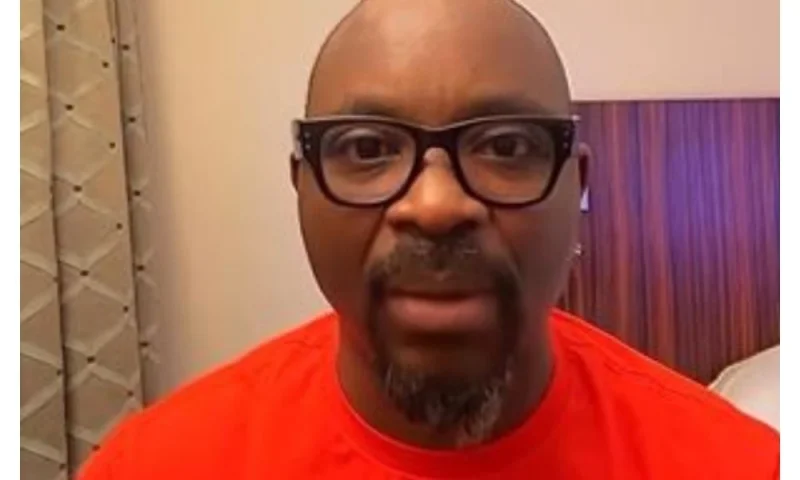
2027: This is first time PDP won’t be on ballot, Tinubu worst-ever President – Isaac Fayose

2027: This is first time PDP won't be on ballot, Tinubu worst-ever President - Isaac Fayose Nigerian businessman and political commentator, Isaac Fayose has described the President Bola Tinubu-led administration as the worst-ever, claiming that about 67 percent of the citizens are crying.

Fayose spoke when he featured on News Central TV where spoke on the alleged intimidation of the opposition members by the ruling All Progressives Congress, APC.

According to him, “this is the worst government in the history of our country. You don’t even need to ask me, go to the street and ask.

“Over 67 percent of Nigerians have been crying since this government came”.

The businessman also compared the Tinubu-led administration with that of the late former President Muhammadu Buhari, saying Nigerians were experiencing what he described as “shege pro-max.”

He further claimed that the 2027 general election could be the first since Nigeria’s return to democracy in 1999 in which the Peoples Democratic Party, PDP, would not feature on the ballot.

“Before, we thought that Buhari was shege but this one is shege pro-max. This is the first time since 1999 that PDP will not be on the ballot”, Fayose said.

On the alleged intimidation of opposition parties, he said, “we have been shouting for the past three years that the APC government wants to kill the opposition. You can see what is happening now. Our president cannot even campaign because he is avoiding facing Nigerians.

“The reason he is not campaigning is because he doesn’t have the strength yet he doesn’t want any of the opposition to be on the street.

“They don’t have anything to show Nigerians and so they don’t want the opposition to come out. They don’t want to see the opposition campaigning in the street.

“Peter Obi was in Benue, they refused to let him enter the city, the other day, we were in Akwa Ibom and we were not allowed to campaign. They don’t have anything to offer.

“This is the first time a president seeking re-election will say he can’t go round to a campaign that he has boys”.

2027: Zamfara ADC candidate accuses party members of plotting to replace him

2027: Zamfara ADC candidate accuses party members of plotting to replace himThe African Democratic Congress, ADC, governorship candidate in Zamfara State, Mahdi Aliyu Mohammed has accused some party members of allegedly doctoring documents to replace his name with that of another aspirant ahead of the 2027 general elections.

Mohammed alleged in a statement on Monday that the party submitted the name of Bilyamu Shinkafi to the Independent National Electoral Commission, INEC, instead of his, despite his claim that he won the party’s governorship primary held on May 22, 2026.

He said he participated in the primary, won the election and completed INEC Form EC9, which he returned to the party for submission to the commission.

According to him, the submission of Shinkafi’s name prompted him to approach the court for redress.

Mohammed further alleged that some individuals within the party were preparing backdated documents to support Shinkafi’s candidacy, including letters claiming that he participated in the primary.

He said the primary election report obtained from INEC and filed in court contradicted the alleged documents.

Mohammed warned that anyone found to have forged or submitted false documents would be reported to the relevant security agencies, INEC and the Legal Practitioners Disciplinary Committee for investigation and possible disciplinary action.

NiMet forecasts dust haze, thunderstorms nationwide

NiMet forecasts dust haze, thunderstorms nationwideThe Nigerian Meteorological Agency, NiMet, has forecast dust haze and thunderstorms across the country from Monday to Wednesday.

In its weather outlook released in Abuja on Sunday, the agency predicted slight dust haze over most parts of the northern region, with moderate haze expected in parts of Kano, Jigawa, Bauchi and Kaduna states.

NiMet also forecast isolated thunderstorms accompanied by light rainfall over parts of Taraba State on Monday afternoon or evening.

For the North-Central region, the agency envisaged sunny skies with patches of clouds during the morning hours on Monday.

It predicted isolated thunderstorms accompanied by light rainfall over parts of Kogi, Kwara, Benue and the Federal Capital Territory later in the afternoon or evening.

In the southern region, NiMet forecast cloudy skies, with light rainfall expected over parts of Delta and Bayelsa states on Monday morning.

The agency further predicted thunderstorms accompanied by moderate rainfall over parts of Ondo, Ogun, Osun and Ekiti states, as well as the South-East and South-South regions, later in the day.

For Tuesday, NiMet envisaged sunny and hazy conditions across the northern region throughout the day.

The agency forecast sunny skies with patches of clouds over the North-Central region in the morning, followed by isolated thunderstorms accompanied by light rainfall over parts of Kogi, Kwara and Benue states in the afternoon or evening.

Across the southern region, cloudy skies are expected in the morning, with thunderstorms accompanied by moderate rainfall forecast over most areas later in the day.

On Wednesday, NiMet predicted slight dust haze over most parts of the northern region throughout the forecast period.

The agency also envisaged sunny skies with patches of clouds across the North-Central region.

For the southern region, NiMet forecast cloudy skies in the morning, followed by thunderstorms accompanied by light rainfall over parts of Imo, Abia and Anambra states.

It added that light rainfall was expected over parts of the South-West and South-South regions later on Wednesday.

The agency advised members of the public to take precautions against suspended dust particles, particularly people with asthma and other respiratory conditions.

It warned that strong winds could precede thunderstorms and urged residents to secure loose objects to prevent them from being blown away.

NiMet also advised the public to avoid taking shelter under tall trees during thunderstorms to reduce the risk of injuries from falling branches and broken trees.

Okpebholo appoints three CEOs for Edo Line in 16 months, sacks two

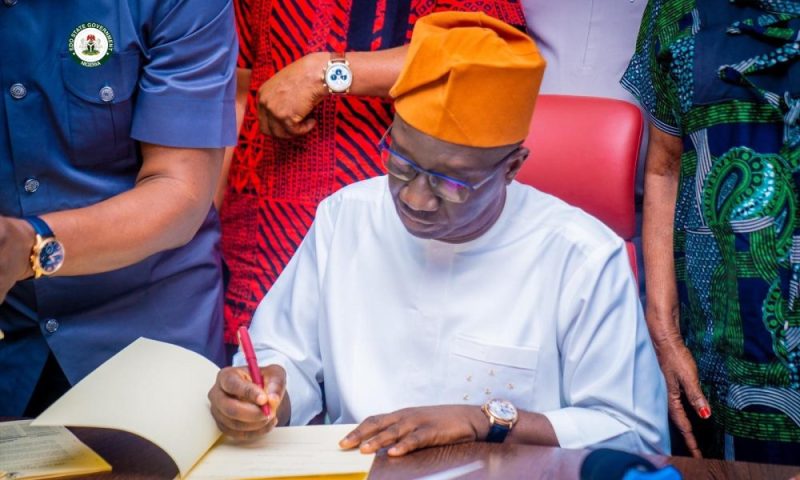
Okpebholo appoints three CEOs for Edo Line in 16 months, sacks twoBarely 16 months after the establishment of the New Edo Line Company, the state-owned transport company, Edo State Governor Monday Okpebholo has relieved two managing directors/chief executive officers of their appointments.

DAILY POST reports that the governor has appointed three managing directors to run the affairs of the company within the period.

DAILY POST recalls that Okpebholo appointed Ms Tinyan Otuomagie as the pioneer Managing Director/CEO of New Edo Line Transport Services Limited on June 10, 2025.

However, barely seven months after her appointment, precisely on January 15, 2026, the governor relieved her of her position and redeployed her to the Ministry of Information.

Otuomagie was replaced by Mr Smart Aigbodion, the company’s General Manager, Maintenance, who was appointed Acting Managing Director/CEO pending the appointment of a substantive managing director.

Aigbodion, who had been in an acting capacity since January, had his appointment terminated by the governor on Sunday, October 18, 2026.

A statement by the Secretary to the Edo State Government, Barrister Umar Musa Ikhilor, said Aigbodion was sacked on grounds of managerial inefficiency.

Ikhilor, who said the termination of Aigbodion’s appointment takes immediate effect, announced the appointment of Engr. Paul F. Ogedegbe as the new Managing Director of the company.

Cristiano Ronaldo leading race for greatest Ballon d’Or win of all time

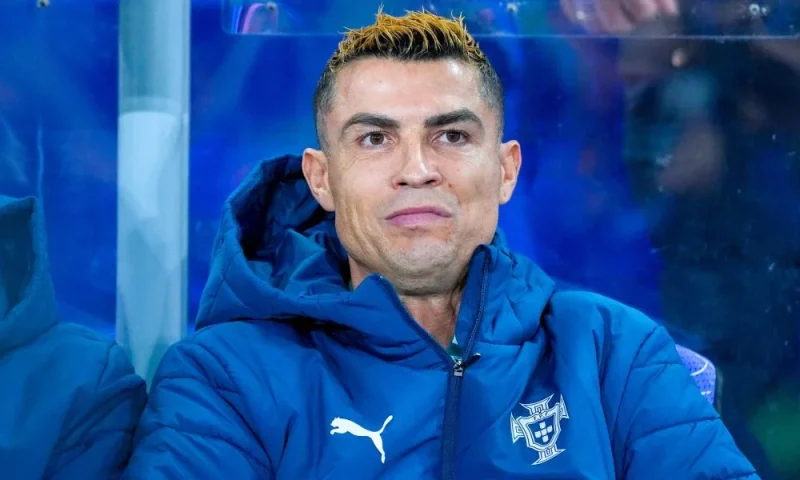
Cristiano Ronaldo leading race for greatest Ballon d'Or win of all timeAl Nassr captain, Cristiano Ronaldo, is currently leading an official Ballon d’Or fan vote to decide the greatest winner of all time.

The official Ballon d’Or platform launched a special competition at the beginning of October.

It allows football fans to vote for the greatest winning season in the history of the award.

The competition features 10 football legends who have won the Ballon d’Or at least twice:

• Lionel Messi

• Cristiano Ronaldo

• Ronaldo Nazário

• Marco van Basten

• Michel Platini

• Karl-Heinz Rummenigge

• Kevin Keegan

• Franz Beckenbauer

• Johan Cruyff

• Alfredo Di Stéfano

Fans are being asked to vote for a specific season rather than simply choosing their favourite player.

As it stands, Cristiano Ronaldo’s 2008 Ballon d’Or-winning season is leading with 62% of the votes.

It was the year that Ronaldo took home his first Ballon d’Or while playing for Manchester United.

Every vote costs €1, and fans are allowed to vote as many times as they want, including multiple times for the same player.

Voting officially closes on October 27 at midnight.

Katsina health workers suspend seven-day warning strike

Katsina health workers suspend seven-day warning strikeThe Assembly of Health Care Professionals of Katsina State has suspended its seven-day warning strike following commitments by Governor Dikko Radda to address the workers’ demands.

The assembly’s chairman, Ibrahim-Balange, announced the suspension in a statement issued in Katsina on Sunday.

The suspension took effect at midnight on October 18 following a meeting between the association and Radda on October 16.

Balange said the decision followed the state government’s commitment to reopen negotiations and review the Consolidated Health Salary Structure (CONHESS) and professional allowances.

He said the government had also agreed to establish a Joint Technical Committee to resolve outstanding issues affecting health professionals.

The review will cover hazard, call duty and shift duty allowances, as well as other entitlements under CONHESS, according to the chairman.

Balange added that the government had committed to resolving the CONHESS 10 skipping issue for qualified officers in line with the Scheme of Service.

He said the committee would operate with defined terms of reference and a timeline for addressing the outstanding demands.

Following the suspension, the chairman directed members to resume full clinical and administrative services across health facilities in the state from October 18.

The association had announced the warning strike on October 14 over unresolved issues concerning salary structure implementation and professional allowances.

Anchor Insurance takes digital route to expand insurance coverage

Anchor Insurance takes digital route to expand insurance coverageMillions of Nigerians face barriers to motor insurance because of affordability concerns, limited awareness and distrust over claims settlement. Anchor Insurance Company Limited is seeking to address some of these challenges with a new motor policy and a digital platform designed to make insurance easier to access and manage.

The insurer unveiled an enhanced third-party motor insurance policy and the Anchor Insurance App in Lagos recently, offering motorists an additional coverage option between conventional third-party insurance and comprehensive insurance.

The initiative is aimed at individuals, families, fleet owners, transport operators and businesses seeking additional financial protection without necessarily paying for comprehensive cover.

Managing Director and Chief Executive Officer of Anchor Insurance, Augustine Osegha, said the enhanced policy was designed to address the gap between basic third-party protection and comprehensive insurance.

“The Anchor Enhanced Third-Party Motor Insurance Policy bridges the gap between traditional Third-Party Motor Insurance and Comprehensive Insurance by delivering practical protection at a price that remains within the reach of individuals, families, institutions and small businesses,” he said.

The product could provide motorists with a more affordable route to broader protection.

For motorists operating on tight budgets, the cost of insurance can influence whether they purchase cover and the type of policy they choose. Anchor Insurance is positioning its new offering as an alternative for customers seeking protection beyond basic third-party insurance without the full cost of comprehensive cover.

The company is also turning to digital technology to simplify how customers purchase and manage insurance through its newly introduced mobile application.

The Anchor Insurance App allows users to buy eligible insurance products, make payments through supported digital channels and receive policy documents electronically. Customers can also access their policy records, update personal information and receive renewal reminders.

Its claims feature enables policyholders to submit claims, upload supporting documents and track the progress of their requests through different processing stages.

The digital platform could reduce the time customers spend visiting offices or contacting the insurer for routine policy information and claims updates. It may also improve transparency by allowing policyholders to monitor the status of their submissions.

Osegha said the platform reflected the company’s response to changing consumer expectations and the growing use of smartphones for financial transactions.

“Insurance must evolve with these expectations,” he said.

He urged existing policyholders and Nigerians who do not yet have insurance to download the application from the Google Play Store and Apple App Store.

The chief executive said Anchor Insurance would continue to invest in technology, personnel and operational processes while maintaining responsible underwriting, regulatory compliance and customer protection.

Govt’s petrol discount may cost 0.4% of GDP

PetrolThe Federal Government’s petrol price relief package could cost Nigeria up to 0.4 per cent of its Gross Domestic Product, equivalent to about N1.77tn, as concerns mount over the intervention’s fiscal implications ahead of the 2027 general elections.

BMI, a Fitch Solutions company, disclosed this in its latest report, titled ‘Fuel Discount Mechanism Raises Macro Risks in Nigeria’, which was obtained by The PUNCH on Sunday.

The research firm warned that the intervention could worsen Nigeria’s fiscal position, weaken government revenue and trigger renewed pressure on the naira if sustained beyond its intended period.

It stated, “Although the government has not disclosed the package’s cost, our initial estimates suggest it will amount to around 0.2-0.4 per cent of GDP assuming the measures are removed in early Q2 2027, broadly in line with the pre-election spending increases already embedded in our forecasts.”

So This Happened (EP 435) reviews: Dele Momodu predicts Peter Obi could defeat Tinubu in 2027

An analysis by The PUNCH, based on the National Bureau of Statistics’ 2025 nominal GDP figure of approximately N441.5tn, showed that the estimated cost of the petrol relief package could range from N883bn to N1.77tn.

The calculation provides an indicative naira value of BMI’s projection using the 2025 GDP figure, rather than a cost estimate directly published by the research firm.

The report followed the 8 October announcement by the Minister of Finance, Taiwo Oyedele, of a 30-day intervention requiring NNPC retail outlets to sell petrol at cost without earning profit margins.

The government also proposed a wholesale petrol price benchmark of N1,350 per litre, under which refiners and importers would absorb costs above the threshold and recover their losses when crude oil prices decline.

Other measures include forward crude sales to domestic refineries, the establishment of a national strategic fuel reserve, expanded cash transfers and additional support for vulnerable households.

Despite the government’s initial 30-day timeline, BMI projected that the petrol discount mechanism could remain in place for approximately six months, extending into the first quarter of 2027.

It stated, “We expect the discount mechanism to remain in place for roughly six months before being phased out in late Q1 or early Q2 2027.”

The projection partly reflects expectations that global crude oil prices could decline following a possible agreement between the United States and Iran in the first quarter of 2027.

BMI also maintained its forecast that Nigeria’s budget deficit would widen from 1.7 per cent of GDP in 2025 to 3.3 per cent in 2026, citing anticipated fiscal pressures ahead of the January 2027 elections.

Although the firm acknowledged that the intervention differed significantly from Nigeria’s previous petrol subsidy regime, it warned that extending the arrangement could create fresh economic imbalances.

Under the former subsidy system, the government effectively absorbed the difference between regulated pump prices and market costs, exposing public finances to rising crude prices and exchange rate depreciation.

The current arrangement instead requires NNPC to forgo its retail profit margin while allowing pump prices to reflect underlying market costs.

BMI stated, “We see significant macroeconomic risks if the NNPC fuel discount mechanism is not removed and instead becomes entrenched.”

It warned that prolonged implementation could reduce NNPC’s remittances to government accounts, limiting resources available for infrastructure development, public services and security.

The firm also cautioned that weaker fiscal credibility could increase borrowing costs and worsen Nigeria’s debt-service burden, while reduced retail margins could constrain investment in the downstream petroleum sector.

Beyond the fiscal implications, BMI identified potential foreign exchange risks, warning that discounted petrol prices could encourage cross-border smuggling if Nigerian fuel becomes significantly cheaper than supplies in neighbouring countries.

According to the report, increased smuggling could raise fuel import requirements and demand for foreign exchange, potentially triggering dollar shortages and renewed pressure on the naira.

It added that concerns over a possible reversal of economic reforms could discourage foreign portfolio investment, reducing an important source of dollar inflows.

The report further identified potential risks to the Dangote Refinery and its planned initial public offering, noting that increased government intervention in petroleum pricing could weaken investor confidence.

BMI warned that requiring suppliers to sell fuel at cost without a clear mechanism for recovering forgone profits could undermine profitability, while tighter price controls could encourage refiners to prioritise exports over domestic sales.

However, the firm described the proposed forward sale of crude oil to domestic refineries as a more promising measure for improving local fuel supply, despite previous implementation challenges.

It cautioned that failure to withdraw the temporary intervention could turn the relief package into a prolonged fiscal burden, with consequences for government revenue, foreign exchange stability and investor confidence.

The Federal Government earlier said the petrol discount introduced by the Nigerian National Petroleum Company Limited’s retail arm is not a return of fuel subsidy, insisting that no public funds are being used to reduce prices at its filling stations.

In a statement, the government said the discount was funded by NNPC Retail Limited’s decision to reduce its retail profit margin, rather than through payments from the federal budget or the Federation Account.

Nigeria attracts $23bn capital amid rising reserves

Jumoke OduwoleNigeria attracted $23bn in capital importation in 2025, while its foreign exchange reserves exceeded $50bn, but the Federal Government says sustaining investor confidence will require faster commercial dispute resolution, enforceable contracts and stronger institutions.

The Minister of Industry, Trade and Investment, Dr Jumoke Oduwole, said this on Monday, warning that positive economic indicators alone would not guarantee sustained investment without a business environment where commercial disputes could be resolved fairly, efficiently and predictably.

She spoke at the third annual Multi-Door Courthouses and Alternative Dispute Resolution Stakeholders’ Summit in Lagos, where government officials and judicial leaders called for stronger alternative dispute resolution mechanisms to protect investments and improve Nigeria’s commercial environment.

The summit’s theme was ‘Investor Confidence and ADR: Strengthening Nigeria’s Investment Climate.’

Oduwole said capital importation grew by 83 per cent year-on-year, from $5.5bn in the first quarter of 2025 to more than $10bn in the first quarter of 2026.

She added that the economy grew by more than four per cent in 2025 and maintained growth above that level in H1 of 2026, while inflation declined from 33.2 per cent in 2024 to 14.63 per cent in September 2026.

Oduwole also said non-oil exports had exceeded $6bn, while the creative and digital sector accounted for about 18 per cent of the country’s Gross Domestic Product.

Despite the improving indicators, the minister stressed that investors considered the strength of institutions, regulatory clarity and the reliability of commercial justice before committing funds.

“Investor confidence is not built by opportunity alone. Investors also consider the reliability and responsiveness of our institutions, the clarity of our regulations, the enforceability of contracts, and their ability to resolve commercial and investment disputes fairly and efficiently,” she said.

Oduwole said the government wanted to attract capital into factories, infrastructure, processing and other productive enterprises rather than focus solely on portfolio investments.

The Attorney-General of the Federation and Minister of Justice, Mr Lateef Fagbemi, SAN, said arbitration and mediation were essential to building trust, reducing investment risks and promoting sustainable economic growth.

He said the Federal Government was pursuing reforms to strengthen Nigeria’s arbitration and alternative dispute resolution framework, including a review of the arbitration framework, the inauguration of a National Committee on the Review of the Arbitration and Mediation Act 2023, and the development of a National Policy on Arbitration.

The initiatives, he said, were intended to position Nigeria as a leading arbitration hub in Africa.

Fagbemi commended the Lagos Multi-Door Courthouse, describing it as Africa’s first court-connected alternative dispute resolution centre.

Citing former United Nations Secretary-General Kofi Annan, the AGF said, “Litigation may win cases, but mediation wins peace”.

He urged stakeholders to strengthen dispute resolution mechanisms to promote economic growth and improve Nigeria’s standing in international commercial dispute resolution.

The Chief Judge of Lagos State, Justice Kazeem Alogba, disclosed that the Lagos Multi-Door Courthouse had facilitated the settlement or recovery of N86.85bn over five years.

He said the funds demonstrated the economic value of resolving disputes through ADR, particularly when settlements allowed businesses and individuals to regain access to money that might otherwise remain tied up in prolonged litigation.

Shettima Unveils Capital Market Master Plan As SEC Targets N750tn By 2036

… Senate Panel Urges NNPC, Telecom Firms To List On Stock Exchange

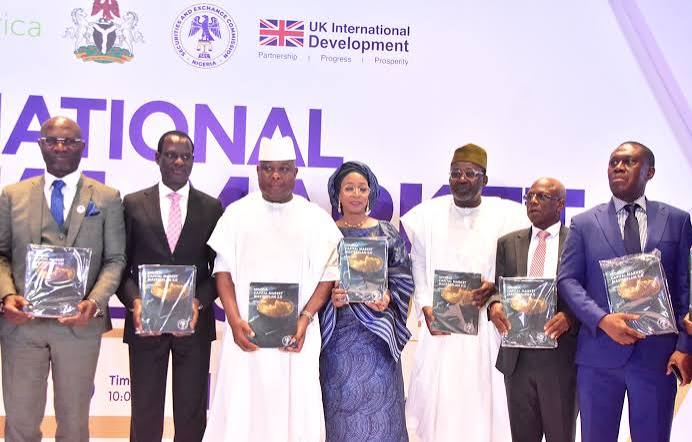
Vice President Kashim Shettima has unveiled the Nigerian Capital Market Master Plan 2.0, a 10-year roadmap designed to expand the country’s capital market to N750tn by 2036 and mobilise long-term financing for infrastructure and economic development.

Shettima, while speaking at the National Capital Market Conference 2026 in Abuja on Monday, said the capital market had become a critical instrument of national economic policy and a major channel for financing Nigeria’s future.

The plan, developed by the Securities and Exchange Commission (SEC), targets growth from a baseline of about N250tn to N750tn over the next decade.

This is just as the SEC Director-General, Dr Emomotimi Agama, said the Nigerian Capital Market Master Plan 2026–2036 was designed to deepen market participation, expand investment products and strengthen the integrity and infrastructure of the capital market.

He said the initiative would position the market as a major source of financing for the Federal Government’s ambition of building a $1tn economy.

Shettima said Nigeria’s capital market had recorded significant growth since the Tinubu administration assumed office in May 2023.

According to him, the Nigerian Exchange All-Share Index rose from about 55,000 points in May 2023 to more than 260,000 points, while the value of listed equities increased from approximately N30tn to nearly N160tn in January 2026.

He added that the combined value of the equities and bond markets had exceeded N217tn, reflecting increased investor participation and the impact of economic reforms.

The Vice President attributed the growth to reforms undertaken by the Federal Government, including the removal of petrol subsidy, unification of the foreign exchange market, tax reforms, bank recapitalisation and the enactment of the Investments and Securities Act 2025.

He said the reforms, despite their short-term costs, had helped strengthen investor confidence by improving the policy framework and regulatory environment.

Shettima said the master plan would place the capital market at the centre of infrastructure financing, enabling governments to fund long-term projects through domestic savings rather than relying excessively on short-term or foreign borrowing.

He said the plan would also strengthen the bond market for state and subnational governments, broaden retail participation through technology and investor education, and provide opportunities for businesses in agriculture, solid minerals and other sectors to raise capital locally.

The Vice President, who chairs the National Economic Council, said he would work with state governors to encourage responsible use of the capital market through properly structured bonds, credible project pipelines and greater transparency.

According to him, access to capital market financing could promote fiscal discipline and strengthen accountability in public spending.

Shettima urged market operators and regulators to sustain the momentum, warning that policy reversals could undermine investor confidence and erode the gains recorded in recent years.

He said the success of the 10-year plan would depend on consistent policies, effective regulation and the ability of market participants to protect investors while expanding investment opportunities across the country.

As part of efforts to expand participation in the capital market, the SEC also announced plans to launch the National Savings Scheme to provide Nigerians with a formal avenue to save and invest.

Agama said the scheme was designed to encourage savings among different segments of the population, including traders, farmers and young graduates, while connecting domestic savings to productive investments.

He said the scheme had legal backing under the Investments and Securities Act 2025, with funds to be managed by professional fund managers registered with the Commission.

According to him, a memorandum of understanding involving the SEC, the Nigeria Revenue Service and FSD Africa would support the initiative through tax incentives aimed at encouraging savings.

Agama said the Commission would establish implementation structures to ensure that the master plan delivered measurable results.

He disclosed that the Project Steering Committee and the Capital Market Master Plan Implementation Committee would be inaugurated at the conference to oversee implementation.

“Every commitment in NCMMP 2.0 will have an owner, a timeline and a scorecard, and we will report progress openly to this nation,” he said.

The SEC boss said Nigeria’s capital market had recorded significant growth, with equities market capitalisation crossing N100tn for the first time in January and rising above N160tn in September.

He added that the All-Share Index gained about 60 per cent in 2026, following a 51 per cent return in 2025.

Agama also cited Nigeria’s reinstatement into the FTSE Russell Frontier Market Index on September 21 as evidence of growing international confidence in the country’s market reforms.

However, he warned that the market’s growth in value had not been matched by sufficient participation among Nigerians.

According to him, too few Nigerians own shares, bonds or units in collective investment schemes, while many businesses, infrastructure projects and state governments continue to rely heavily on bank financing or foreign sources of capital.

“The strength of any capital market rests on the savings of its people. Ours must rest on the savings of all of us,” he said.

He added that the UK Government, through the Foreign, Commonwealth and Development Office, and FSD Africa had provided technical and financial support for the master plan and the savings initiative.

Agama stressed that the success of the capital market should ultimately be measured not only by market indices and capitalisation, but also by the number of Nigerians who participate in it, the businesses it finances and the economic opportunities it creates.

Meanwhile, the Chairman of the Senate Committee on Capital Market, Osita Izunaso, has urged the Federal Government to encourage more companies, particularly the Nigerian National Petroleum Company Limited (NNPC) and telecommunications firms, to list on the Nigerian Exchange.

Izunaso said Nigeria had more than five million registered companies but only about 151 listed companies, highlighting the need to deepen the capital market and attract more businesses.

He argued that major companies operating in Nigeria should be encouraged to offer shares to the public, allowing citizens to participate in their growth while expanding the pool of funds available for investment.

The senator specifically questioned why NNPC and major telecommunications companies had not listed on the stock exchange, noting that such listings could increase market participation and strengthen domestic capital formation.

He also called on the SEC to accelerate the development of regulations for digital assets and tokenisation, saying delays in establishing a clear framework could limit the country’s ability to benefit from emerging investment opportunities.

Izunaso commended the enactment of the Investments and Securities Act 2025, describing it as an important foundation for investor protection, regulatory effectiveness and capital market development.

He urged stakeholders to ensure that implementation of the new master plan produced measurable results rather than remaining a policy document.


The Minister of Finance and Coordinating Minister for the Economy, Taiwo Oyedele, has said Nigeria should target a $1tn capital market within the next 10 years, urging the government to accelerate the listing of selected state-owned enterprises, including the Nigerian National Petroleum Company Limited (NNPC) and Nigeria LNG Limited (NLNG).

Oyedele said the country should not limit its ambition to the Securities and Exchange Commission’s (SEC) target of growing the capital market from about N250tn to N750tn by 2036.

He said a $1tn capital market would be necessary to support Nigeria’s ambition of building a $1tn economy by 2030 and expanding the economy further in subsequent years.

He argued that Nigeria needed to mobilise more domestic savings, attract foreign investment and create more opportunities for businesses to raise long-term capital locally.

According to him, the proposed Nigerian Capital Market Master Plan 2026–2036 would focus on coordinated regulation, modern market infrastructure, new investment products, broader investor participation and stronger institutions.

Oyedele said the plan should target increasing equity market capitalisation from 33 per cent of gross domestic product to at least 60 per cent, raising the number of listed companies from 146 to 250 and expanding retail investors from six million to 20 million.

He also proposed more than tripling corporate bond issuance as a share of GDP, increasing sukuk market penetration from 0.3 per cent to at least five per cent of GDP, and raising pension assets from six per cent to 16 per cent of GDP.

The minister said the government would introduce incentives to encourage more private companies to list on the Nigerian Exchange, rather than compel them to do so.

“We cannot force them. We would encourage Nigerian private businesses to list. We will use incentives to attract them,” he said.

On state-owned enterprises, Oyedele said listing selected government assets would improve transparency, broaden public ownership and deepen the capital market.

He specifically cited NNPC and NLNG as companies that could help expand the market if their shares were made available to investors.

According to him, NNPC’s potential market value could significantly increase the size of Nigeria’s capital market, drawing a comparison with Saudi Aramco, the Saudi Arabian oil company.

He said listing government-owned companies would enable Nigerians to participate in the wealth generated by national assets while creating more investment opportunities for domestic and international investors.

Oyedele’s position also aligns with calls by the Senate Committee on Capital Market for the government to encourage NNPC and major telecommunications companies to list on the Nigerian Exchange.

Nigeria Targets Global Investment Upgrade

The minister said Nigeria’s economic reforms had helped revive investor interest, citing growth in equity market capitalisation, rising pension assets and renewed attention from international index providers.

He said equity market capitalisation had increased from less than N30tn in mid-2023 to about N160tn, while pension assets had reached N27.5tn.

Oyedele also cited the inclusion of Nigerian government bonds in a new J.P. Morgan government bond index, with a weight of 7.4 per cent, and Nigeria’s reinstatement in the FTSE Russell Frontier Market Index on September 21, 2026.

He said the government was working towards returning Nigeria to J.P. Morgan’s flagship government bond index and securing an upgrade into the emerging-market category.

The minister added that he had engaged global index provider MSCI and international credit rating agencies as part of efforts to improve Nigeria’s standing among investment destinations.

He said the government was targeting an investment-grade credit rating within the next three years, acknowledging that the ambition would require sustained reforms, improved market liquidity and reliable repatriation of foreign investors’ funds.

Oyedele said the new master plan would introduce measures to simplify investor onboarding, strengthen custody arrangements, improve settlement systems and reduce barriers to cross-border investment.

He also proposed a single investor identification number and investment channels through mobile networks and fintech platforms to make participation easier for Nigerians.

As part of efforts to increase domestic investment, Oyedele formally launched the National Savings Scheme, designed to provide Nigerians with regulated avenues to save and invest for education, housing, business development and retirement.

He said the initiative would offer accessible investment channels, transparent information, reasonable costs and a functional complaints process, with tax incentives provided within the law.

The minister expressed concern that many young Nigerians were putting their money into betting platforms, unregulated cryptocurrency schemes and Ponzi schemes instead of regulated investment products.

He said the country had only about six million retail investors in a population exceeding 200 million, representing a relatively small proportion of the population.

Oyedele said the savings scheme and other proposed reforms would enable more Nigerians to invest in regulated funds and local businesses, including through small contributions made using mobile phones.

He also announced plans to strengthen enforcement against Ponzi schemes through improved surveillance, social media monitoring, collaboration with law enforcement agencies and a proposed fraud restitution mechanism to support victims.

According to him, the government would also strengthen the Investment and Securities Tribunal to resolve investment disputes more quickly and expand its mandate to cover commercial dispute resolution.

Oyedele said the master plan was intended to ensure that capital market growth translated into productive investment, job creation and improved economic opportunities.

He argued that long-term infrastructure projects, including power plants, refineries and other major developments, should increasingly be financed through equity and long-term bonds rather than short-term bank loans.

He also urged pension fund administrators to diversify their investments beyond government securities and channel more funds into productive sectors, subject to applicable investment rules.

The minister said the government would coordinate implementation across relevant institutions while respecting the independence of the SEC and other regulators.

He added that progress would be assessed through the amount of capital raised for productive investment, growth in the number of investors, transaction costs and the effectiveness of investor protection, rather than market capitalisation alone.

Oyedele said the ultimate objective was to enable Nigerian businesses to finance their expansion at home, bring millions more citizens into regulated investments and position Nigeria as a preferred capital-raising destination for African and international companies.