I can’t be suspended by ward – Jigawa ADC chieftain Gantsa

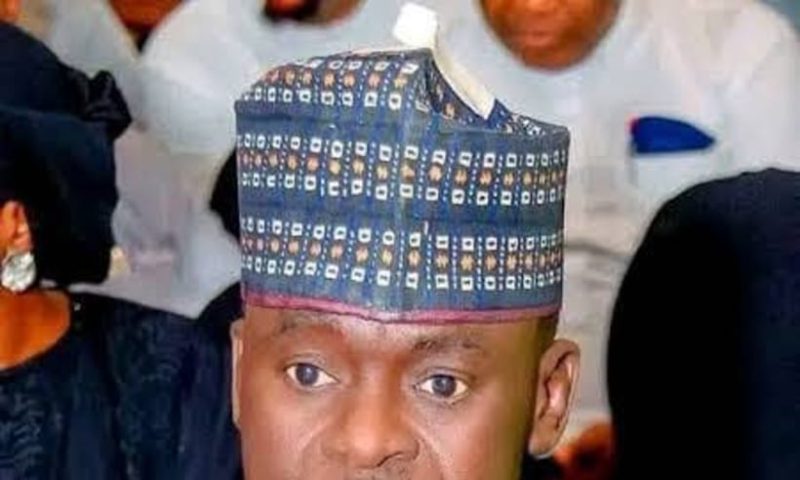
‎GantsaA member of the African Democratic Congress, ADC, National Executive Committee, Aliyu Gantsa, has rejected his 12-month suspension by the party’s leadership in Buji Local Government Area of Jigawa State, describing the decision as unconstitutional and invalid.

‎

‎Speaking in reaction to the development, Gantsa insisted that the ward executives lacked the constitutional authority to suspend him from the party.

‎

‎”I am a member of the National Executive Committee of the ADC. Ward executives have no constitutional grounds or authority to suspend me. Their decision violates the party’s constitution and is therefore invalid,” he said.

‎

‎He maintained that he remained a legitimate and active member of the ADC despite the suspension announced by the party’s executives at ward level.

‎

‎Gantsa also vowed to challenge the decision through the appropriate channels provided by the party’s constitution.

‎

‎DAILY POST reports that the ADC leadership in Buji Local Government Area had announced Gantsa’s suspension for 12 months over alleged anti-party activities.

‎According to the statement, the suspension took effect on October 19, 2026, and would last until October 19, 2027.

‎

‎The party accused Gantsa of violating its rules, creating divisions among members and openly supporting a candidate who lost the party’s primary election.

2027: ‘Rejected ballot papers more popular’ – APC reacts as Sowore requests to launch campaign in presidential villa

2027: 'Rejected ballot papers more popular' - APC reacts as Sowore requests to launch campaign in presidential villaNational Secretary of the All Progressives Congress, APC, Sen. Ajibola Basiru has reacted to the request of the presidential candidate of the African Action Congress, AAC, Omoyele Sowore, to launch his campaign in the presidential villa.

Sowore had written to the authorities seeking permission to launch his campaign in the presidential villa.

During an interview on Channels Television, Ajibola was asked if he would advise his party to allow Sowore have his way. The APC Secretary simply dismissed the activist as a skit maker.

“Sowore is a skit maker. Let him struggle to even get a seat in the House of Assembly as a politician, and then people will begin to take him seriously,” he said.

Speaking further, Ajibola said that even rejected ballot papers had more votes than Sowore’s AAC in the 2023 election.

He added, “Sowore is my friend. We were in the trenches together. He’s a skit maker. He knows that that will not happen. Let him struggle to even get a seat in the House of Assembly as a political party. Then people will begin to take him seriously.

“Even rejected ballot paper had more votes than his party in 2023 election. So that means that rejected ballot paper is more popular than his political party. So he’s just making skits.

“He knows that he’s not contending anything. If I see him, I will tell him, ‘you are just a comedian’. He’s a comedian.”

You can fix electricity without FG – Shettima tells 36 governors

You can fix electricity without FG - Shettima tells 36 governorsVice President Kashim Shettima has told 36 state governors to stop waiting for the Federal Government to fix their electricity problems.

Shettima said states can now generate and distribute their own electricity under the Electricity Act 2023.

He spoke on Wednesday at the National Stakeholders Workshop on the Electricity Act 2023 at the State House Banquet Hall, Presidential Villa, Abuja.

Shettima was represented by the Deputy Chief of Staff to the President, Senator Ibrahim Hassan Hadejia.

He said Nigeria cannot build a competitive industrial economy without reliable power for businesses, households and public institutions.

According to him, the Electricity Act empowers states to develop and regulate their own electricity markets.

“The Act empowers States to develop and regulate intrastate electricity markets within the applicable constitutional and statutory framework.

“State governors can fix electricity without the Federal Government. The size, diversity and endowments of this nation demand this decentralisation.

“Electricity supply must become a shared responsibility, pursued with innovation and accountability across the federation. Our States must shed the habit of waiting for the Federal Government to provide every answer,” he added.

The Vice President cited solar potential in Sokoto, Borno and Katsina, gas resources in Delta, Rivers and Bayelsa, and hydro opportunities in Niger and Kebbi.

He urged states to turn the resources into investments that can power agriculture, manufacturing, healthcare and education.

Shettima warned that the law alone will not give light and urged states that have not set up their own electricity regulators to do so immediately.

NAFDAC uncovers illegal herbal product factory in Lagos

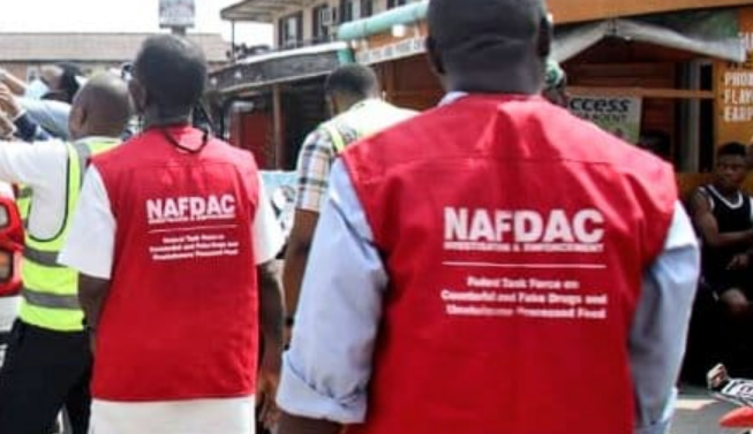
NAFDAC uncovers illegal herbal product factory in LagosThe National Agency for Food and Drug Administration and Control, NAFDAC, has uncovered an illegal herbal medicine production facility in Agege, Lagos State, where products were found carrying a falsified registration number.

The agency announced the discovery in a statement posted on its official X account on Wednesday, explaining that the operation followed a report on herbal products allegedly bearing fake NAFDAC registration numbers.

According to NAFDAC, its investigative team conducted surveillance before identifying three variants of Asheitu Adams Bitters carrying registration number A7-1827L.

“Verification through NAFDAC’s NAPAMS portal revealed that the registration number belongs to Greentol Cough Syrup, confirming its fraudulent use on the herbal products,” the agency stated.

NAFDAC disclosed that the facility’s managing director and chief executive officer was not present when officials carried out the operation. However, the company manager was arrested for further questioning.

The agency called on members of the public to provide credible information about suspected illegal manufacturing activities through its call centres on 0800-1-623322 or 0700-1-623322. Reports can also be sent

The latest discovery comes less than a week after NAFDAC uncovered a suspected counterfeit drinks factory at the Trade Fair Complex in Lagos State, where two people were arrested over the alleged production and repackaging of fake alcoholic and energy drinks.

The agency said the operation exposed unhygienic production conditions in which suspects allegedly used counterfeit labels to rebrand empty bottles of expensive wines before refilling them with adulterated alcoholic beverages.

Amnesty condemns four-year jail sentence for Kaduna journalist Farida Isiak

Amnesty condemns four-year jail sentence for Kaduna journalist Farida IsiakAmnesty International has condemned the arrest, detention and four-year prison sentence handed to 23-year-old journalist Farida Isiak in Kaduna State, describing the case as vindictive and an attempt to silence press freedom.

The organisation said the journalist’s arrest and subsequent sentencing were linked to her attempt to expose alleged police misconduct involving her parents.

Isiak, a reporter with Nagarta Radio in Kaduna, was reportedly arrested at about 10pm on Monday, October 20, by police officers under the command of the Divisional Police Officer of Mararaban Jos, Usman Adamu.

According to Amnesty International, the incident began with a disagreement between Isiak’s mother and a neighbour over a ₦100 change during a charcoal sale.

The organisation alleged that police officers initially arrested her mother and later detained her father when he went to seek her release, using their detention to compel the journalist to report to the police station.

When Isiak arrived, officers allegedly accused her of defamation over a Facebook post criticising their treatment of her parents.

Amnesty International said she deleted the post and apologised in an attempt to secure her parents’ release, but the police allegedly continued to detain her before taking her to a Sharia Court in Kawo.

The court subsequently sentenced her to four years in prison or a fine of ₦1.75 million on a defamation charge.

Describing the proceedings as a sham trial, Amnesty International said the court failed to address the alleged police misconduct that triggered the incident.

“The arrest, detention, and hasty sentencing of Farida Isiak are a flagrant abuse of power by the police and weaponisation of the judicial system to silence free speech and intimidate journalists,” the organisation said.

It added that detaining the journalist’s parents to compel her to surrender to the police was an unlawful tactic that violated the rule of law.

“Demanding accountability for police actions is a constitutional right,” Amnesty International said.

The human rights organisation called on the Kaduna State Police Command and Nigerian judicial authorities to secure Isiak’s immediate release, drop the charges against her and cancel the fine imposed by the court.

It also urged the Nigeria Police Force to launch a full and independent investigation into the conduct of the officers involved in the alleged unlawful detention of the journalist’s family.

Amnesty International further called on Nigerian authorities to stop using defamation charges and the judicial system to harass journalists and restrict press freedom.

The organisation warned that the case raises concerns about the protection of freedom of expression and the ability of journalists to hold public institutions accountable without fear of intimidation or retaliation.

Osun tax row: NANS, OIRS disagree over alleged extortion, double taxation claims

NANS, OIRSThe National Association of Nigerian Students, NANS, Southwest Zone D, has accused the Osun State Internal Revenue Service, OIRS, of allegedly imposing duplicate tax-clearance charges on students in state-owned tertiary institutions.

However, the revenue agency has denied the allegations, insisting that its verification exercise is intended to confirm tax compliance and prevent fraudulent documentation.

In a statement issued on Tuesday by its Zonal Coordinator, Comrade Adeyemo Kayode, and Assistant General Secretary, Comrade Abubakar Musefiu, NANS alleged that some students were being asked to pay between N8,000 and N10,000 for tax clearance despite presenting evidence of their parents’ tax compliance.

The association said its fact-finding exercise supported concerns raised in a petition submitted to OIRS by the NANS Joint Campus Council, JCC, Osun Chapter, on October 8, 2026.

It alleged that some students had experienced delays in verifying existing payment records, leaving their admission or registration processes unresolved.

According to NANS, “some affected students claimed they were able to proceed with registration immediately after making fresh payments, despite having previously submitted evidence of parental tax compliance.”

The student body argued that such circumstances required an explanation from the revenue service.

NANS directed affected students to suspend payment of the disputed tax-clearance charges pending clarification, while continuing to pay tuition fees and other undisputed charges.

It also called on institutions and OIRS to ensure that unresolved verification issues do not prevent students from completing registration or taking examinations.

The association gave OIRS until October 27, 2026, to respond in writing to its October 8 petition and begin a documented resolution process.

Its demands include “disclosure of the applicable tax laws and approved rates, clarification of the categories of persons liable to pay, reconciliation of payment records and refunds for any duplicate or unauthorised collections established.”

NANS also called on Governor Ademola Adeleke, the Osun State House of Assembly and relevant oversight authorities to intervene.

It warned that failure to address its demands within the seven-day ultimatum could lead to peaceful picketing, while urging students to preserve receipts, payment demands and portal screenshots as evidence of their complaints.

However, OIRS Chairman, Hamzat Solanke dismissed allegations that the agency was attempting to defraud students, describing the controversy as a possible misunderstanding or misinformation surrounding the tax-clearance verification process.

“Every working adult is entitled or eligible to pay taxes, and that is what we have said. Students returning to school or newly admitted were expected to provide evidence of the required tax payment or visit the appropriate tax office to verify their status,” he explained.

Solanke said the agency had responded to a letter from the JCC and was addressing the matter through official communication.

The revenue service chairman maintained that the exercise was designed to verify compliance and ensure the authenticity of tax-clearance documents rather than impose unlawful charges.

He also explained that the verification process involved a digital system designed to match payment records with relevant school records.

“The integration required the participation of the institutions and their technology providers.

“The school authority participated, and the technology provider of the school participated because we cannot plug into the school portal if there is no such engagement. The system used an application programming interface (API) to enable the exchange of information between digital platforms,” he added.

The OIRS chairman disclosed that the agency had made arrests in connection with suspected fraudulent tax-clearance documentation among students.

He urged students and parents who believed they had been asked to make unlawful payments to report their complaints directly to the revenue service or visit the nearest tax office.

The revenue service, for its part, urged students to seek clarification before making allegations of extortion and assured the public that genuine complaints would be investigated.

NCDMB clears 18 firms for oil equipment manufacturing

NCDMB clears 18 firms for oil equipment manufacturingThe Nigerian Content Development and Monitoring Board has identified 18 indigenous companies that meet the required criteria for local manufacturing of critical oil and gas equipment out of approximately 60 firms assessed.

The board disclosed this during a stakeholders’ meeting held in Port Harcourt, Rivers State, on Monday to discuss the implementation of recommendations from an industry-wide study on domestic production of key oil and gas components.

According to a statement by the General Manager, Corporate Communications Division, Nigerian Content Development and Monitoring Board, Obinna Ezeobi, on Tuesday, the assessment identified challenges affecting the development and expansion of local manufacturing capacity, highlighting the need for targeted interventions to address existing gaps.

The study was commissioned by the NCDMB on 7 July 2022, with a team drawn from across the oil industry submitting its report on 12 July 2023.

It focused on developing a strategy for the local production of pumps, valves, flanges, gaskets, bolts and nuts, metering solutions and instrument fittings.

The NCDMB disclosed that domestic manufacturing of the components was essential to advancing Nigerian content because of their importance in sustaining oil and gas production and their significant share of operating and capital expenditure.

Representing the Executive Secretary of the NCDMB, Felix Ogbe, at the meeting, the General Manager, Institutional Development, Capacity Building Directorate, Olugbenga Sheba, said the initiative was aimed at deepening local capacity, promoting industrialisation and retaining more value within Nigeria’s oil and gas industry.

He said developing domestic capacity to manufacture critical industry components would strengthen indigenous enterprises, improve technical competence and enable Nigerian companies to participate more effectively in the supply chains of major oil and gas projects.

Sheba referenced the Nigerian Oil and Gas Industry Content Development Act, 2010, which mandates that Nigerian goods and services receive first consideration, as the legal framework for encouraging local manufacturing and indigenous participation in the sector.

He said the implementation of the study’s recommendations would be guided by the provisions of the act and create greater opportunities for qualified Nigerian companies.

“Today’s rollout is not an isolated initiative; it is an integral pillar of our NCDMB 10-Year Strategic Roadmap, which targets achieving 70 per cent Nigerian content by 2027,” he stated.

He explained that the implementation would advance the technical capability development pillar of the board’s strategic roadmap by addressing skills gaps, technological deficiencies and limitations in local manufacturing capacity.

The NCDMB identified infrastructure expansion, structured capacity-building initiatives, improved access to capital, strategic partnerships, and effective monitoring, compliance and enforcement as key areas of focus.

Sheba urged stakeholders, including indigenous manufacturers, oil and gas operators, service companies and financial institutions, to collaborate in implementing the recommendations.

NGX sheds N516bn as market reverses gains

NGX sheds N516bn as market reverses gainsThe Nigerian equities market closed on a bearish note on Wednesday, reversing previous gains as heavy selling pressure in major banking and financial stocks dragged the key performance indicators lower.

The All-Share Index dropped by 0.32 per cent or 794.64 points to settle at 245,116.49 points, down from 245,911.13 points recorded on Tuesday. Correspondingly, market capitalisation shed N515.95bn to close at N159.15tn compared to N159.67tn in the previous session, representing a similar 0.32 per cent decline.

Sectoral performance reflected broad-based weakness across major indices. The NGX Banking Index spearheaded the downturn with a 1.49 per cent contraction to close at 2,456.31 points, pressured by notable drawdowns in tier-one and tier-two lenders. Access Holdings recorded a significant loss of 6.12 per cent to close at N26.10, while First HoldCo dropped 4.59 per cent to N131.00.

Zenith Bank dipped 1.21 per cent to N122.00, and Ecobank Transnational Incorporated slid 1.47 per cent to N67.00. Guaranty Trust Holding Company, United Bank for Africa, and Wema Bank also closed lower, falling 0.08 per cent, 0.24 per cent, and 0.33 per cent to settle at N122.40, N41.90, and N30.00, respectively. Conversely, Fidelity Bank provided a key buffer within the sector, advancing 6.02 per cent to close at N22.00.

The NGX Insurance Index also suffered a decline, dropping 1.41 per cent to 1,053.31 points as insurance stocks faced heightened profit-taking. Custodian Investment was among the top decliners in the sector, losing 7.57 per cent to close at N64.70, while Royal Exchange fell 7.41 per cent to N1.00. Consolidated Hallmark Holdings lost 7.14 per cent to settle at N6.50, and Regency Alliance Insurance dropped 6.41 per cent to N0.73. Sovereign Trust Insurance, Fortis Global Insurance, and International Energy Insurance fell by 5.58 per cent, 4.74 per cent, and 3.33 per cent to N2.03, N1.81, and N2.03, respectively.

AIICO Insurance appreciated 5.00 per cent to N3.80, Veritas Kapital Assurance gained 5.56 per cent to N1.14, and Guinea Insurance rose 2.41 per cent to N0.85.

In the Consumer Goods space, the NGX Consumer Goods Index lost 0.43 per cent to close at 4,024.83 points. Declines in International Breweries, which dropped 5.00 per cent to N9.50, and Honeywell Flour Mill, down 1.41 per cent to N17.50, weighed on the sector. However, Dangote Sugar Refinery managed a modest gain of 0.37 per cent to close at N67.00.

The NGX Industrial Index remained virtually flat, sliding marginally by 0.001 per cent to 10,258.94 points. Although Austin Laz and Cutix fell 9.92 per cent and 2.58 per cent to N3.18 and N2.27, respectively, Meyer Plc provided support by advancing 9.72 per cent to N17.50.

On the flip side, the NGX Oil/Gas Index emerged as the sole gaining sectoral benchmark, advancing 0.12 per cent to close at 6,197.74 points. Market sentiment in the sector was boosted by Oando, which rose 4.50 per cent to N36.00, and Japaul Gold & Ventures, which gained 0.80 per cent to settle at N2.53. Other key oil and gas stocks, including Seplat Energy, Aradel Holdings, Conoil, Eterna, and TotalEnergies Marketing Nigeria, maintained their previous closing prices.

LivingTrust Mortgage Bank led the advancers’ chart with a gain of 9.90 per cent to close at N3.22, followed closely by ABC Transport, which surged 9.77 per cent to N7.30. Meyer gained 9.72 per cent to N17.50, Livestock Feeds rose 9.65 per cent to N18.75, and Caverton Offshore Support Group added 6.67 per cent to finish at N4.80. Other notable gainers included NPF Microfinance Bank, AVA Capital, Abbey Bank, Daar Communications, eTranzact International, and Tantalizers.

Conversely, Chams Switch / CWG led the losers’ chart, declining 9.98 per cent to close at N18.05. UPDC Real Estate Investment Trust sank 9.93 per cent to N19.05, while Austin Laz dropped 9.92 per cent to N3.18. Neimeth International Pharmaceuticals slid 9.52 per cent to N7.60, Critical Minerals Financing Corp lost 7.51 per cent to N3.57, and Africa Prudential decreased 5.00 per cent to N10.45. Other stocks that recorded price declines included Thomas Wyatt Nigeria, VFD Group, The Initiates Plc, and Secure Electronic Technology.

Across all listed boards, total equity trading activity saw investors exchange 354.03 million shares valued across 32,514 deals. Financial services dominated trading volume, with Zenith Bank recording 48.21 million shares traded in 2,626 deals, while Access Holdings recorded 40.98 million shares across 1,718 deals.

Outside equities, Exchange Traded Funds posted 243,433 units traded across 548 deals, led by gains in Vetiva Consumer Goods ETF, Meristem Growth ETF, and Meristem Value ETF, while Stanbic IBTC ETF 30 and Vetiva Sovereign Bond ETF ended in negative territory. In the debt market, 108,720 bond units were traded across 22 deals, highlighted by activity in Dangote Cement’s 2034 Series bond, Chapel Hill Denham’s DIF 2032 bond, and various FGN Sukuk papers.

Dangote acquires 25% stake in Kenya oil pipeline

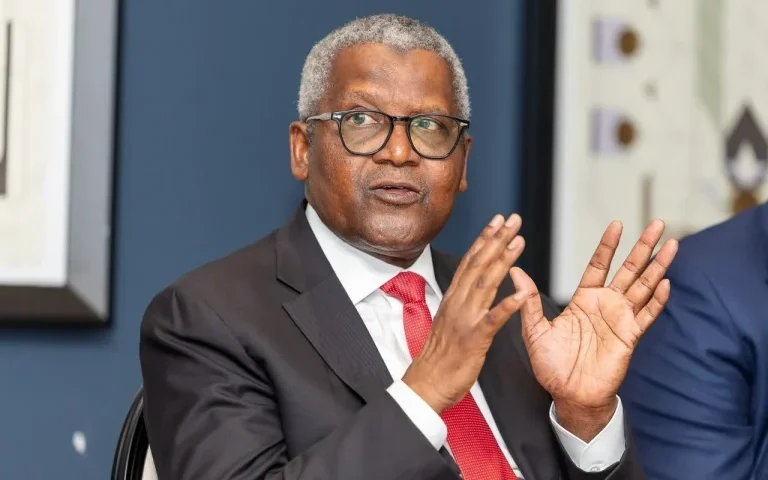
Aliko DangoteThe President of Dangote Industries Limited, Aliko Dangote, has disclosed that the Group has purchased a 25 per cent interest in a petroleum products pipeline network in Kenya as part of efforts to strengthen its distribution infrastructure across Africa.
Dangote disclosed this during a conversation with the Africa Editor of the Financial Times, David Pilling, at the Financial Times Africa Summit 2026 in London, United Kingdom.

“Just let me tell you, yesterday, with the support from the President of Kenya, we bought 25 per cent of the pipeline network for the distribution of petroleum products,” he said.

He said the Group was also pursuing petroleum distribution infrastructure projects in Djibouti, Ethiopia, Cameroon and Namibia as part of efforts to improve the movement of refined petroleum products across the continent.

“We are very aggressive with that,” Dangote said in response to a question aout the Group’s plans to develop depots, pipelines and other petroleum distribution infrastructure.

He explained that the Group was developing a distribution corridor linking Djibouti with Addis Ababa, the Ethiopian capital, including tank farms to support the storage and movement of petroleum products.

Dangote added that another project in Cameroon was approaching finalisation, while Namibia had been identified as a strategic location for expansion into Southern Africa.

He said the country’s proximity to the Dangote Petroleum Refinery in Lagos would make it possible to establish an efficient supply route into the southern part of the continent: “From our refinery to Namibia is just about four days of steaming.”

According to him, the plan is to transport refined petroleum products from Lagos to Namibia and subsequently distribute them through interconnected markets, including Botswana and South Africa.

He also outlined a proposed distribution corridor extending through Zimbabwe and Zambia, explaining that the objective was to develop a network capable of serving several countries through strategically located storage and transportation infrastructure.

The expansion comes alongside plans by the Group to establish another refinery in Lamu, Kenya, with a proposed capacity of approximately 700,000 barrels per day.

Dangote said the decision to invest in East Africa was informed by the region’s substantial industrial and mining activities, growing energy requirements and persistent difficulties in accessing diesel and other petroleum products.

He explained that the proposed Kenyan refinery would source crude oil from different markets rather than depend exclusively on production from Uganda or Kenya.

According to him, the selection of Lamu followed technical assessments of several potential locations, with access to deep water, marine facilities and sufficient water resources emerging as critical considerations.

The industrialist said the investment decision was reached within four months, although he alleged that vested commercial interests had attempted to frustrate the project through legal proceedings shortly before its public unveiling.

Beyond energy infrastructure, Dangote called on African governments to protect domestic industries against unfair foreign competition, arguing that dependence on imported products was undermining local manufacturing and employment.

DMO allots N2.02tn as bond yields rebound

DMOThe Debt Management Office allotted N2.02 trillion in Federal Government bonds at its 19 October auction as yields on two long-term securities rose by up to 50 basis points.

The DMO allotted N1.22tn through competitive bidding, up 63.5 per cent from N748.64bn in September, while non-competitive sales accounted for another N800bn.

The stop rate on the September 2036 bond rose to 17.29 per cent from 16.79 per cent, while the June 2038 bond increased to 17.19 per cent from 16.85 per cent. The February 2034 bond cleared at 16.99 per cent.

The agency offered N1.75tn across three bonds and received bids worth approximately the same amount. It rejected N523.58bn in subscriptions through competitive bidding.

The September 2036 bond attracted the highest bids at N925.35bn against N800bn offered, while the June 2038 bond received N518.32bn against N450bn.

Demand was weaker for the February 2034 bond, which attracted N304.08bn against N500bn offered.

Total subscriptions rose 17 per cent to N1.75tn from N1.49tn in September. Successful bids increased to 274 from 204, while total bids rose to 443 from 441.

The increase in yields reversed part of the recent decline in borrowing rates. The June 2038 bond’s stop rate fell from 18.40 per cent in July to 16.85 per cent in September before rising to 17.19 per cent in October.

The trend also follows developments in the Treasury bills market, where the DMO raised the one-year stop rate to 15.90 per cent from 15.85 per cent at its 14 October auction.

The increase came weeks after the Central Bank of Nigeria cut its benchmark interest rate by 350 basis points to 23 per cent on 22 September.

Higher yields could raise the government’s borrowing and debt-servicing costs, while offering investors better returns on newly purchased securities.