2027: Tinubu’ll work for North if re-elected – VP Shettima

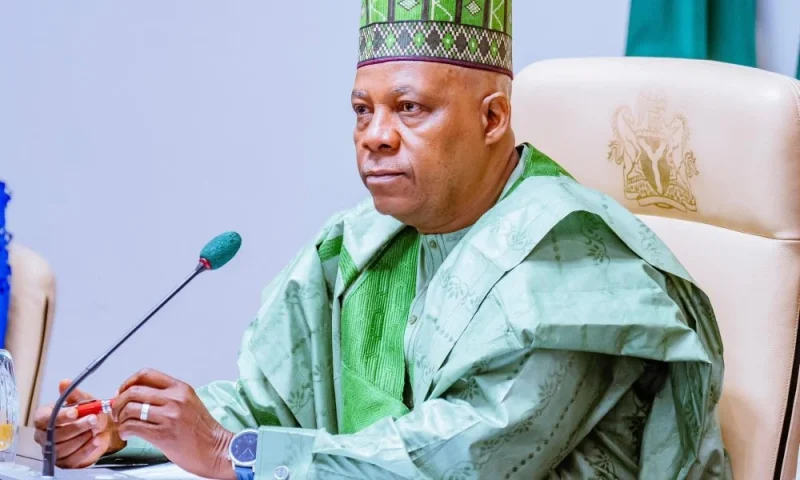
2027: Tinubu’ll work for North if re-elected – VP ShettimaWith less than three months to the 2027 presidential election, Vice President Kashim Shettima has rallied support in the North for President Bola Tinubu’s re-election.

Shettima assured the North that Tinubu would work for the region if re-elected in 2027.

The vice president urged Northerners not to be afraid of Tinubu’s re-election, saying the president loves the region.

Speaking on Monday in Abuja, Shettima said the president was committed to helping the North develop.

He said, “Let’s come together as a people and work for the development of our region and the progress of our people through the re-election of this administration.

“We are already seeing benefits, and we can expect even more from this government in many ways.

“I can assure you that the president loves the North and will continue to work for the North.”

During the election, Tinubu will slug it out with Atiku Abubakar, the presidential candidate of the African Democratic Congress, ADC, who is from the North.

Atiku is one of Tinubu’s main challengers in the 2027 presidential election.

A presidential running mate, Rabiu Kwankwaso of the Nigeria Democratic Congress, NDC, is also from the North.

Poor Nigerians can’t be left without subsidy – ADC

Poor Nigerians can’t be left without subsidy – ADCThe African Democratic Congress, ADC, has again reiterated the need to subsidise production to alleviate the suffering of the poor.

The party’s National Publicity Secretary, Bolaji Abdullahi, made this assertion on Monday during an interview on Channels Television’s Politics Today.

Speaking on the issue of fuel subsidy in the country, Abdullahi said poor Nigerians could not be left without subsidies.

“We cannot have people so poor and leave them without subsidy. So, we (ADC) are going to subsidise production.

“I’m glad that the NNPC audit report is showing this now, and Nigerians are going to see in the coming days. We are going to look more into this.

“You can also ask: Where will the crude come from? We are an oil-producing country. Whatever we need to do to subsidise the production of crude and deliver cheaper fuel to Nigerians, we are going to do it.

“When your country is at war, you don’t begin to talk about the price of guns or the price of bullets or whether you defend your country by all means necessary. So, ADC and Atiku say we will defend the people by all means necessary,” he said.

IGP Disu calls for African collaboration to tackle arms proliferation

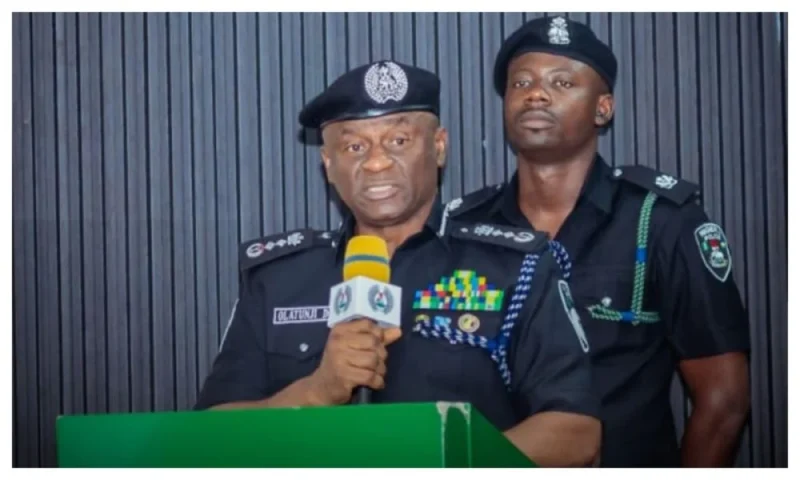
IGP Disu calls for African collaboration to tackle arms proliferationThe Inspector-General of Police, IGP Olatunji Disu, has identified the proliferation of small arms and light weapons as one of the gravest threats to peace and security across Africa, noting that the weapons do not respect borders.

Disu stated this in his opening speech at the opening ceremony of the Small Arms and Light Weapons Identification and Tracing (SALW-IT) simulation programme in Abuja on Monday.

He stressed the need for collaboration among African countries to strengthen their collective capacity in the identification, marking, registration and tracing of small arms, light weapons and ammunition.

“That threat is clear. The proliferation of small arms and light weapons remains one of the gravest dangers to peace and security across Africa. These weapons do not respect borders. They fuel terrorism, armed banditry, kidnapping, communal conflict and organised crime — from the Sahel and the Lake Chad Basin to every corner of our continent.

“Nigeria, like many of our sister nations, has borne the human and economic cost of this scourge. We understand — painfully — that no country can win this fight alone,” he said.

He added, “That is why the central objective of this programme is so critical: to strengthen our collective capacity in the identification, marking, registration and tracing of small arms, light weapons and ammunition.

“A weapon that cannot be traced is a dead end for any investigation. Identification and tracing are not mere technical procedures. They are the foundation of accountability. They are the gateway to intelligence. They are the key that links a recovered weapon to the network, the financier, and the route behind it.

“I am particularly pleased that this programme places a premium on practical, hands-on learning through simulation. Theory must be matched by practice. The simulation exercises — including the indoor shooting scenarios to be conducted at the Nigeria Police Simulation Centre — will place each participant under realistic conditions that closely mirror the operational realities our officers face daily in the field.”

The participants were drawn from Chad, the Central African Republic, Mali, Algeria, Côte d’Ivoire, Burkina Faso, Cameroon, Niger, Libya, the Democratic Republic of the Congo, the Republic of the Congo and Nigeria.

The IGP said the Nigeria Police Force was fully committed not only to the objectives of the programme but also to the broader regional and continental effort to control the proliferation of small arms and light weapons.

“We will continue to provide the enabling environment, institutional support and operational cooperation required to sustain the gains of this training,” he said.

FRSC confirms death of female corps nember in Oyo road crash

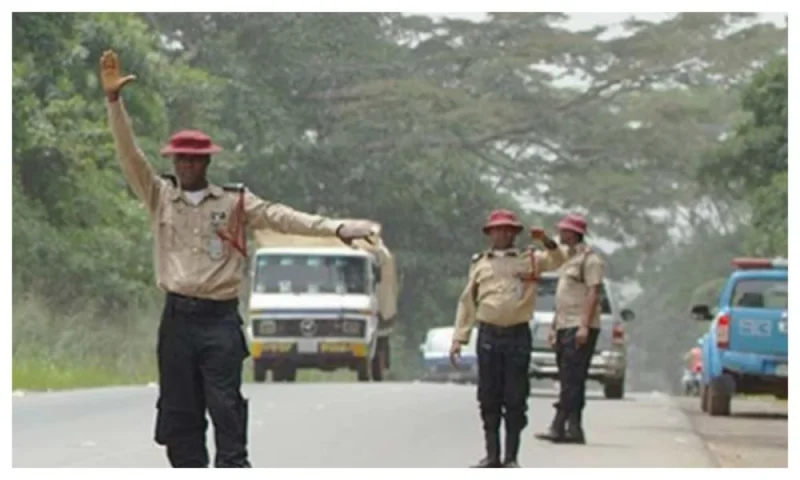
FRSC confirms death of female corps nember in Oyo road crashThe Federal Road Safety Corps, FRSC, Oyo State Sector Command, has confirmed the death of a female National Youth Service Corps, NYSC, member in a road accident involving a motorcycle and an articulated truck in Ibadan on Monday.

The Sector Commander, Corps Commander Kehinde Dahunsi, confirmed the incident in an interview with newsmen, stating that the crash also left the motorcycle rider with a fractured leg.

Dahunsi said the deceased corps member’s body had been taken to the State Hospital morgue, while the injured motorcyclist was transported to the University College Hospital, UCH, Ibadan, for treatment.

He added that the identity and other details of the deceased could not be established during the rescue operation.

“We recorded a traffic crash today around Agodi Gardens within the Ibadan metropolis. It involved a truck and a motorcycle carrying a corps member.

“Unfortunately, we lost the corps member, and the rider also sustained a fracture in his leg.

“We carried out emergency rescue operations; we conveyed the body of the late corps member to the State Hospital morgue, while the injured rider was rushed to the University College Hospital, UCH, Ibadan,” he said.

Meanwhile, the NYSC Public Relations Officer in Oyo State, Mrs Abimbola Faniyi, said efforts were ongoing to establish the deceased’s identity and obtain other relevant information, including her Place of Primary Assignment, PPA.

Rev Dachomo replies VDM over allegations of supporting Tinubu

Rev Dachomo replies VDM over allegations of supporting TinubuThe Regional Chairman of the Church of Christ in Nations, COCIN, for Barkin Ladi Local Government Area of Plateau State, Rev. Ezekiel Dachomo, has denied allegations that he campaigned for President Bola Tinubu ahead of the 2027 election.

This is following claims by popular social media activist, Martins Vincent Otse, popularly known as VeryDarkMan (VDM).

VDM, in a viral video posted on social media platforms on Monday, criticised the cleric for allegedly shifting from his harsh criticism of Tinubu to urging prayers for his administration.

According to VDM, Rev Dachomo, who recently took his campaign against alleged Christian genocide in the state to Israel, was expected to address Prime Minister Benjamin Netanyahu and other world leaders on the contentious killings of Christians in Plateau State and the Middle Belt in general.

However, his visit to Israel ended with allegations that he had instead turned the trip into a prayer session for Tinubu and the All Progressives Congress, APC, government to succeed in the 2027 election.

Although Rev Dachomo had earlier denied ever praying for Tinubu and the APC’s Muslim-Muslim presidential ticket, VDM alleged that the cleric had moved from accusing President Tinubu and Vice President Kashim Shettima of attempting to Islamise Nigeria and failing to curb insecurity to calling for prayers and support for the same administration.

The activist also claimed that Dachomo had been compromised, adding that he was 101 per cent certain that the presidency had reached out to the clergyman and taken him to Israel.

However, while responding to the accusations, Rev Dachomo insisted that he had never prayed or campaigned for Tinubu, Shettima and the APC to win the 2027 election.

In a statement shared on his social media handles, the cleric described attempts to use his name for political branding as wicked, clarifying that his prayers while in Israel were directed at achieving national peace, seeking divine intervention against evil plans and protecting persecuted communities.

He maintained that he had prayed against electoral rigging and had never supported a Muslim-Muslim presidential ticket.

However, he said those aspects of his prayers were ignored, while misleading narratives were promoted.

“My dear brethren, I greet you all in the name of Jesus Christ, our Saviour.

“I heard that VDM shared a video saying I prayed for President Bola Tinubu, Vice President Kashim Shettima and the APC Muslim-Muslim ticket to succeed in the 2027 election.

“You are just saying, ‘Rev. Dachomo has prayed for success.’ Which success? The success of rigging elections?

“While Muslim-Muslim ticket supporters are thinking of rigging elections, the only thing I am praying for is that they should fail in their evil deeds. Let them fail in their evil thinking. Let the evil ones in Nigeria fail woefully in whatever they are doing.

“To the campaign organisation of Tinubu, anybody who is using my name wrongly for campaigns is doing a great injustice to Tinubu. You evil men are saying I use my name to say I pray for Tinubu.

“I pray that any evil spirit that will lure this government into rigging elections will catch fire. Any satanic power that will raise thugs to rig elections, let it catch fire so that justice will prevail.

“Any spirit or person that is going to rig these elections, let the wrath of God destroy their evil plans.

“​We need justice. We need the fear of God in both Muslims and Christians so that we can live lives of love and protect one another. That is what my heart desires,” the cleric wrote.

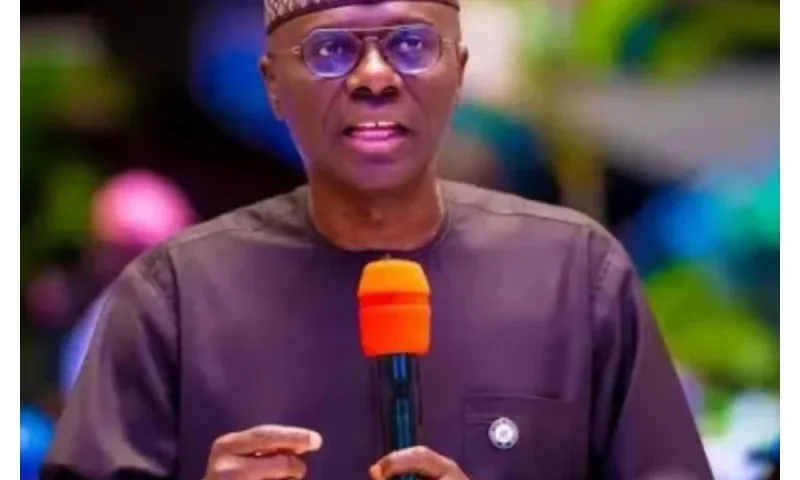
Sanwo-Olu warns Lagos residents against cybercrime, urges stronger online security

Sanwo-Olu warns Lagos residents against cybercrime, urges stronger online securityLagos State governor, Babajide Sanwo-Olu, has urged residents to adopt stronger digital-security habits to protect themselves from cybercrime, warning that criminals frequently take advantage of people’s limited knowledge of online safety.

Sanwo-Olu made the call on Monday as the state joined other parts of the world to mark the 2026 Cybersecurity Awareness Month, an initiative aimed at encouraging safer internet use, promoting good cyber hygiene and improving protection against digital threats.

The governor stressed that the fight against cybercrime required collective action, noting that the responsibility for online safety should not rest solely on government agencies, technology companies and security experts. According to him, individuals, families, businesses and public institutions all have important roles in reducing cyber risks.

“Cybersecurity is a shared responsibility. Citizens must remain vigilant, understand common cyber risks, and take proactive steps to protect themselves from cybercriminals,” he said.

He noted that many people who fall victim to cybercrime lack knowledge of basic digital-safety measures, emphasizing the need for sustained public awareness campaigns.

“Most victims of cybercrime are those who are unaware of basic digital safety practices, making public education essential,” Sanwo-Olu added.

The governor’s appeal comes as the Lagos State Government, through the Ministry of Innovation, Science and Technology, MIST, and the Cybersecurity Advisory Board, steps up efforts to improve cybersecurity awareness and preparedness across the state.

MTN Fellows explore Huawei’s 5G network infrastructure

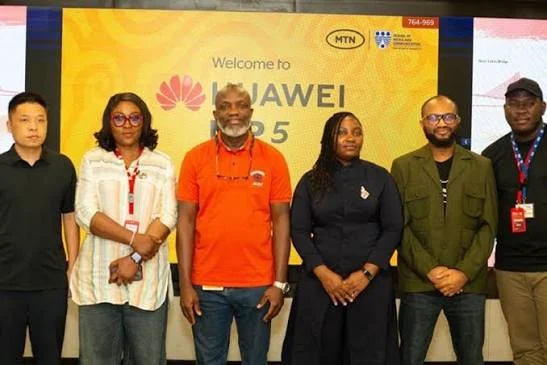
Fellows of the MTN Media Innovation Programme Cohort 5 examined 5G, smart city and network management technologies during a tour of Huawei facilities in Lagos, gaining insight into the infrastructure supporting Nigeria’s growing digital economy.

The visit, organised recently by MTN Nigeria in collaboration with Huawei, formed part of the fellows’ immersive learning programme at the School of Media and Communication, Pan-Atlantic University.

At Huawei’s 5G Innovation Hub, the journalists were introduced to technologies spanning smart cities, power systems, cloud services, routers and antenna designs, offering a look at how telecommunications infrastructure is evolving beyond traditional voice and data services.

The demonstrations come as Nigerian telecom operators expand their 5G networks and technology providers develop new applications around high-speed connectivity, including enterprise services, cloud computing, automation and smart-city solutions.

MTN-MIP Cohort 5 fellow, Tolulope Ajibade, said the visit offered a closer understanding of the technologies supporting digital services used by consumers and businesses.

“It was really a mind-blowing experience. It’s like next-level technology, from the security infrastructure to security profiling and smart city solutions,” Ajibade noted.

She said the demonstrations also provided insight into the applications of 5G and the range of technologies being developed around next-generation connectivity.

Director of MTN Account Solutions, Huawei, Ma Tianyu, said the company was focused on adapting global technologies to local requirements.

“Huawei’s goal is to bridge the gap between global innovation and local demand by tailoring technology to meet Nigeria’s specific challenges,” Tianyu stated.

He said the company’s partnership with MTN was helping to bring technology solutions to Nigerians and support the development of digital experiences.

The fellows also visited Huawei’s Service Centre, where they received a briefing on network management and the systems required to maintain telecommunications infrastructure.

The centre houses about 850 Network Operations Centre engineers supporting organisations across telecommunications, finance, power, transport and public services.

Its teams operate around the clock across four shifts, monitoring networks, identifying faults, assigning resources and coordinating resolutions to minimise service disruptions.

The facility also has a dedicated DevOps team that customises monitoring systems to meet individual client requirements. The centre is ISO 27001 certified, while its employees hold security-related certifications.

The operations provide a behind-the-scenes view of the infrastructure required to keep telecommunications services running as businesses and consumers increasingly depend on digital connectivity.

Another MTN-MIP Cohort 5 fellow, Ijeoma Odia, said the tour broadened her understanding of Huawei’s role in telecommunications infrastructure and digital inclusion.

“It was quite enlightening and educational. I wouldn’t have known that Huawei is doing so much, especially with what the future holds for telecoms and its infrastructure, not just in Nigeria but in Africa as a whole and beyond,” Odia said.

She also highlighted Huawei’s work on lower-cost devices for consumers who may not be able to afford smartphones capable of supporting newer network technologies, saying such efforts could help expand participation in the digital economy.

One of the technologies showcased during the tour was Huawei Metavision 3D Video, which converts 2D footage into 3D visuals to deliver more immersive viewing experiences while lowering some of the costs of creating 3D content.

The facility tour was part of MTN-MIP’s broader experiential learning programme, which gives media professionals exposure to developments across telecommunications, technology, business and the wider digital economy.

Justice Okamgba, said 5G adoption remains relatively low across Africa, likely below 10 per cent, with the high cost of deploying the infrastructure and limited returns on investment among the factors slowing expansion.

“The finances required to deploy 5G infrastructure are monumental, while the return on investment is not yet strong enough to encourage telcos to prioritise widespread deployment. This tends to push operators towards high-value urban areas rather than the hinterlands, where the connectivity gap remains significant.

“It is also important to consider the number of people with 5G-enabled devices. That figure remains relatively small, and without affordable devices capable of accessing 5G networks, expanding coverage alone will not necessarily translate into widespread adoption,” he said.

NNPC pays N687bn interest on crude-backed deals

NNPCThe Nigerian National Petroleum Company Limited paid N686.94bn in interest on its forward sale agreements in 2025, representing a 171.4 per cent increase from the N253.14bn paid under the arrangements in 2024.

The sharp rise in interest payments came as the company significantly increased its use of forward sale agreements, with additional drawdowns almost doubling during the year, according to an analysis of the company’s 2025 audited financial statements on Monday.

The forward sale arrangements, which allow the company to receive funds or value against future crude oil supplies, had outstanding contract liabilities of N7.10tn as of December 31, 2025, up from N4.98tn a year earlier.

This means the liabilities increased by N2.13tn, or 42.7 per cent, in one year. The figures also showed that NNPC’s interest payments increased by N433.80bn in 2025, despite the company making substantially higher principal repayments during the year.

In 2025, NNPC made principal repayments of N2.76tn, compared with N942.08bn in 2024. This represents an increase of N1.82tn, or 192.7 per cent. In simple terms, the figures show that “NNPC borrowed more through forward-sale arrangements than it repaid during the year.” The company recorded N5.57tn in additional drawdowns, compared with N2.76tn in principal repayments.

However, the additional drawdowns made during the year were significantly higher than the repayments. NNPC recorded N5.57tn in additional drawdowns in 2025, compared with N2.81tn in 2024. The amount therefore rose by N2.76tn, or 98.4 per cent, year-on-year.

The combination of new drawdowns and other movements pushed the outstanding forward-sale obligations higher despite the increase in principal repayments.

The financial statements also showed that the premium attached to the contract liabilities increased sharply to N666.66bn in 2025, from N249.38bn in 2024. That represents an increase of N417.28bn, or 167.3 per cent.

The premium represents an additional amount recognised on the contract liabilities, while the interest payments represent the financing cost settled during the year. That means “the cost attached to the forward-sale liabilities rose far faster than the outstanding obligation themselves.”

A major change in the portfolio was the emergence of Project Leopard, which had no outstanding balance at the beginning of 2024 but ended 2024 with N1.26tn. In 2025, an additional N4.83tn was drawn under the project.

After a principal repayment of N420.81bn, a premium of N340.21bn, an interest payment of N305.49bn and a translation difference of N325.27bn, Project Leopard closed 2025 with a liability of N5.38tn.

The N5.38tn balance represented about 75.7 per cent of NNPC’s entire N7.10tn forward-sale contract liabilities at the end of 2025. Project Panther, another major arrangement, closed 2025 with N929.88bn, compared with N912.91bn in 2024, an increase of N16.97bn, or 1.9 per cent.

The NLNG SPDC arrangement fell from N637.88bn to N609.24bn, a decline of N28.64bn, or 4.5 per cent, while the NLNG TEPNG liability dropped from N435.43bn to N184.82bn, representing a reduction of N250.61bn, or 57.6 per cent.

Project Yield recorded one of the biggest changes. Its liability stood at N1.46tn at the end of 2024 but was fully extinguished by December 2025 after principal repayments of N1.52tn during the year.

The company also transferred N265.73bn from DSDP and other customer-related contract liabilities to trade customers in 2025. This was higher than the N211.46bn transfer recorded in 2024 by N54.28bn, or 25.7 per cent.

Another notable movement was the translation difference, which swung from a positive N1.18tn in 2024 to a negative N394.08bn in 2025. This represents a deterioration of about N1.57tn between the two years.

Overall, the closing contract liabilities increased from N4.98tn in 2024 to N7.10tn in 2025, despite the company making nearly three times as much in principal repayments and substantially increasing its interest payments.

The figures underline the growing financial weight of NNPC’s forward sale arrangements as the national oil company continues to use crude-backed transactions to raise funding and meet its financial obligations.

Unlike conventional short-term trade transactions, forward sale agreements can create significant future delivery obligations because funds or other consideration are received before the underlying crude oil is supplied. The resulting contract liabilities are therefore carried on the company’s books until the obligations are settled through crude deliveries, repayments, transfers or other recognised adjustments.

Recently, the Group Chief Executive Officer of Nigerian National Petroleum Company Limited, Bashir Ojulari, said that the company had adopted a new payment model for refinery rehabilitation, decrying the previous model of paying with crude oil, which he said was causing financial leakages for the company.

Ojulari disclosed this during a media parley, explaining that paying for the refineries’ repair with crude oil did not yield any net positive outcome. According to Ojulari, the company funded every contractor and financial structure itself, yet none of the partners held any stake in the refinery’s actual performance.

He said, “What we have learned from the past rehabilitations of the refineries was multiple, but I’ll remind you again of the two of them that I’ve always talked about. One was that the model we have used before meant that we would incentivise people who work on the refinery, and there was no skin in the game.

“We paid for contractors, we paid for financing, we structured and paid for everything we pay for, right? And then none of those parties that were working with us had a stake in the performance of the refinery after their work. It’s very simple. How do we pay? We pay with our crude.

“Last year we stopped that. Part of the revenue you’ve seen in 2025 was part of the leakages that we stopped. It was money going in that was not bringing net positive outcomes. So by stopping that leakage last year, that revenue, both the crude and the extra money we’re spending has come into what that was pulling together to report.”

World Bank plans $5.79bn private financing for Nigeria

The World Bank Group has disclosed plans to mobilize up to $5.79bn in private financing for Nigeria in the 2026 fiscal year to support investments in telecommunications, agriculture, small businesses and other critical sectors of the economy.
The initiative is expected to expand broadband access, improve agricultural productivity, increase credit availability for businesses and support the creation of about 850,000 jobs.

The bank disclosed this in a report published on its website on Sunday, titled Unlocking $5.79bn in Private Financing: The World Bank Group Is Leading the Charge for Private Capital Mobilisation in Nigeria.

“In fiscal year 2026, the World Bank Group is helping mobilise up to $5.79bn in private financing to address these barriers,” the report stated.

It explained that the financing initiative would combine policy reforms, commercial investments and risk-sharing arrangements involving the World Bank, International Finance Corporation and Multilateral Investment Guarantee Agency.

The institution linked the investment drive to economic reforms introduced in Nigeria since mid-2023, particularly changes in foreign exchange management, fuel subsidies and public finances.

It noted that the reforms, supported partly through its RESET and NAIJA development policy financing programmes, were improving conditions for private investment.

“Further reforms aim to deepen capital markets, expand digital trade, enable greater private participation in electricity, and improve competitiveness,” the report added.

A major component is the Building Resilient Digital Infrastructure for Growth project, which is expected to attract at least $156m in private equity during its first investor selection round.


Subsequent financing rounds could unlock up to $1.1bn by 2030 to develop a nationwide fibre-optic network. The project is expected to extend broadband access to an additional 58 million Nigerians, increasing coverage from 92 million people in 2025 to 150 million by 2030.

It will also target connectivity for 38,800 public schools, 16,900 health facilities and 3,400 local government offices. In agriculture, the bank plans to mobilise $242m through the Agricultural Value Chains for Growth project, targeting one million smallholder farmers.

The amount comprises $220m expected from agribusiness firms and $22m from certified seed producers. For small businesses, the Fostering Inclusive Finance for MSMEs in Nigeria programme is expected to attract nearly $1.89bn in private financing and support more than 250,000 enterprises.

Backed by a $500m financing package from the World Bank’s lending institutions, the programme could generate approximately 850,000 direct and indirect jobs, with 30 per cent of financing targeted at women-led businesses.

The report also disclosed that the IFC helped mobilise $1.02bn for Dangote Industries Limited and $282.5m for Indorama Fertiliser to expand domestic fertiliser production.

Together, the two projects have an annual production capacity of 6.8 million metric tonnes and are expected to improve access to agricultural inputs for over 10 million farmers.

Similarly, the IFC supported a $1.2bn bond issuance by IHS Towers, helping attract more than $1.1bn from private investors for telecommunications infrastructure.

The bank stressed that the financing arrangements were intended to attract greater private participation in Nigeria’s development. “Together, these reforms, platforms, guarantees, and investments are helping mobilise up to $5.79bn in private financing in fiscal year 2026,” it stated.

The institution added that the impact would ultimately depend on improvements in infrastructure, business financing, agricultural productivity and employment opportunities.

Equities dip as market value falls to N160tn on NGX

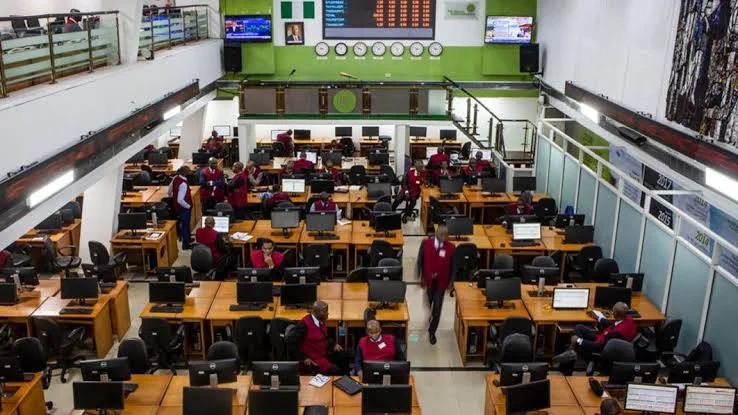
NGXEquities trading on the Nigerian Exchange Limited closed on a lower note on Monday, as the benchmark Monetary Policy Rate remained fixed at 23.00 per cent by the Central Bank of Nigeria. Market data from the trading session showed that total market capitalisation settled at 160,852,829,571,649.00 Naira, while the benchmark All Shares Index retreated to close at 247,736.24 points.

Throughout the preceding weekly trading period, market indicators fluctuated between a peak index point of 250,273.50 and a low of 247,736.24, bringing the period’s average index point to 248,902.51. Market-wide activity counters recorded a total of 52,891 deals, with investors exchanging a cumulative volume of 405,359,288 securities across all active boards.

Sector performance metrics mirrored the broader market downturn. The NGX Main-Board Index slipped to 10,751.25, the NGX 30 Index contracted to 9,114.65, and the NGX Banking Index dipped to 2,567.52.

Additional performance data indicated that the NGX Pension Index closed lower at 12,892.22, the NGX Insurance Index adjusted to 1,082.56, and the NGX Consumer Goods Index managed a marginal close at 4,035.46 points.

Meanwhile, industrial goods maintained relative resilience as the NGX Industrial Index closed at 10,442.78, while the NGX Oil and Gas Index closed the session at 5,993.51.

Individual equities recorded diverse transactional volumes and price movements across various high-cap segments. Premium board heavyweights saw MTN Nigeria Communications Plc trade at 844.00 Naira with a total volume of 1,769,623 shares, while Dangote Cement Plc exchanged hands at a price of 1,066.70 Naira.

Seplat Energy Plc maintained active trading at N16,000.10 with 52,474 shares traded. Financial services counters continued to attract high market liquidity, highlighted by Zenith Bank Plc trading at N129.00 with a heavy volume of 27,980,069 shares, and Access Holdings Plc recording a share price of N28.25 alongside 33,283,797 units changing hands.

Broader asset categories, encompassing fixed-income debt securities, exchange-traded products, and collective investment mutual funds, sustained their regular scheduled listings and pricing evaluations in line with official market summaries.