Electricity: Nigeria’s power generation hits 5,403.3MW peak

Electricity: Nigeria’s power generation hits 5,403.3MW peakNigeria’s power sector recorded a total available generation of 5,403.3 megawatts on Tuesday, September 22, 2026, according to the Daily Load Allocation Table released by the National Control Centre, NCC.

According to the report, out of the total generation, 4,379.07MW was successfully delivered to various electricity distribution companies (DisCos) across the country.

The figures revealed that Abuja DisCo received the highest load share at 700MW (15.20% NERC percentage), followed closely by Ikeja DisCo with 581MW (15.01%), Ibadan DisCo with 550MW (11.93%), and Benin DisCo with 531MW (8.04%).

Other distribution companies also received their respective allocations under NERC guidelines, including Eko with 519MW, Enugu with 512MW, Port Harcourt with 466MW, Kano with 161MW, Kaduna with 155MW, Jos with 134MW, and Yola with 70MW.

Meanwhile, a subtotal of 1,024.18MW was categorised under exempted loads, covering power stations and auxiliary consumption (108.07MW), transmission losses and substation services (367.87MW), as well as various bilateral and international supplies, including allocations to Niger and local industrial consumers.

Recall that the Minister of Power, Joseph Tegbe, attributed improved electricity supply in the country to the restoration of the 375MW Alaoji power plant after three years offline, as well as other efforts by President Bola Ahmed Tinubu’s administration.

Ogun police begins documentation of SPY personnel

Ogun police begins documentation of SPY personnelOgun State Police Command has commenced a documentation and verification exercise for all Supernumerary Police, SPY, personnel operating in the state.

The exercise, according to the Command, will run from September 23 to October 7, 2026.

This was contained in a statement issued on Wednesday by the Police Public Relations Officer, DSP Oluseyi Babaseyi.

He said the exercise was aimed at strengthening the proper documentation, verification and oversight of SPY personnel in the state.

He said all organisations with SPY personnel are directed to ensure that their personnel report for the exercise.

“Accordingly, all organisations with SPY personnel are directed to ensure that their personnel report to the Police Public Relations Department, Ogun State Police Command Headquarters, Eleweran, Abeokuta.

“They are required to come with their training certificates and photocopies, warrant cards or certificates of ‘To Whom It May Concern’, recent passport photographs in approved uniform, and other relevant documents,” he stated.

The Command described the exercise as proactive, adding that it would ensure effective monitoring and accountability of SPY operations in Ogun State.

Petrol price beyond Tinubu’s control – Lokpobiri

Petrol price beyond Tinubu’s control – LokpobiriThe Minister of State for Petroleum Resources (Oil), Heineken Lokpobiri, has said President Bola Tinubu’s administration does not have the power to reduce the price of petrol because the downstream oil sector has been fully deregulated.

Speaking on Channels Television’s Politics Today on Tuesday, Lokpobiri said petrol pricing is determined by global market forces, not by the federal government.

According to him, “The Bola Tinubu government doesn’t have any power to reduce or increase the price of petrol. It is completely deregulated in line with global best standards.”

He explained that crude oil and refined petroleum products are traded globally, meaning Nigeria cannot fix prices without returning to the fuel subsidy regime.

“Crude oil and refined products are a global business. Nigeria doesn’t exist in isolation. You cannot arbitrarily reduce prices unless you want to roll back to subsidy,” he said.

Lokpobiri made the comments while responding to former Vice President Atiku Abubakar’s call for a production subsidy that would make locally refined petrol cheaper for Nigerians.

He dismissed the proposal.

According to him, Atiku had no legal basis, no fiscal basis, no financial basis.

The minister also rejected the argument that petrol should be significantly cheaper because it is refined locally at the Dangote Refinery.

He said locally produced crude is still sold to refineries at international market prices, making global pricing unavoidable.

“They sell crude to the refinery at the same global price,” he said.

However, he argued that Nigerians are still benefiting from local refining through improved fuel availability and lower prices compared to some other countries.

“We already benefit. That’s why our price is lower than that of the U.S.,” Lokpobiri said.

He noted that even the United States, one of the world’s largest oil producers with extensive refining capacity, sells fuel at prices higher than Nigeria’s average pump price.

FG working to announce new minimum wage – Shoretire

FG working to announce new minimum wage – ShoretireThe Federal Government is working to announce a new national minimum wage to alleviate the economic hardship faced by Nigerian workers.

Permanent Secretary, Federal Ministry of Labour and Employment, Dr Kamil Shoretire, made this disclosure on Tuesday in Abuja at a capacity-building workshop organised for labour correspondents.

Shoretire confirmed that consultations were underway to set an official date for negotiations.

“We are yet to announce the timetable for that, but background discussions are already ongoing.

“When it’s time to get the press involved in what has been proposed and what is being negotiated, it will be revealed to you,” he said.

According to him, the government was also engaging workers in sectors where disputes over salaries and allowances remained unresolved.

This followed intense pressure from organised labour groups to review the current N70,000 national minimum wage approved by the Federal Government in 2024.

The workers are also requesting an increase to N500,000 and an immediate wage award.

They equally demanded a reduction in the petrol price to N500 per litre.

NCAA orders 30-minute updates during flight disruptions

NCAA orders 30-minute updates during flight disruptionsThe Nigeria Civil Aviation Authority has said airlines operating in Nigeria are required to provide passengers with updates every 30 minutes whenever a flight disruption occurs.

The Director, Consumer Protection and Public Affairs, NCAA, Michael Achimugu, recently disclosed this while explaining passengers’ rights and airlines’ obligations during flight delays, cancellations and baggage disruptions.

Achimugu said flight disruptions were inevitable globally, stressing that airlines still had a duty of care to passengers regardless of the cause of the disruption.

He said, “Flight disruptions must continue to occur everywhere in the world. Now, where they have occurred, the airline, by the regulations, has duties of care to passengers. It doesn’t matter whose fault that disruption is.”

According to him, airlines are not always responsible for disruptions occurring at airports, although passengers often hold them accountable because they are the visible face of the disruption.

He said, “One message that has been most consistent from my department has been that airlines, both Nigerian airlines and international airlines operating in Nigeria, are not always the direct causes of the disruptions that occur at the airport. They may be the faces of it; they may take the blame a lot of the time, but they are not always the apostles of those disruptions.”

Achimugu explained that the first responsibility of an airline during a disruption was to provide passengers with timely and honest information. He said, “Now, what does the regulation say? Information is most critical and number one.”

He added, “Now, where a disruption has occurred, the airline holds the passenger’s information every 30 minutes on the status of that flight

“Every 30 minutes, are airlines complying with this? When your flight has been delayed at the airport, have the airlines been giving you information every 30 minutes? Take note: timely and honest information.”

The NCAA official said airlines were also required to provide refreshments and meals to passengers during prolonged delays. He said, “Two hours into a delay, the airline is expected to provide passengers life refreshment.

“Six hours into a lengthy delay, the airline has to provide its passengers with proper meals, proper meals. The airline may also owe its passengers hotel accommodation between the hours of 10 pm and 4 am. Depending on the circumstances, there are other scenarios in which passengers are also entitled to accommodation.”

On baggage mishandling, Achimugu said passengers whose bags were short-landed should understand that the filing of a complaint did not mean the luggage must be returned the following day.

He said, “Now, for baggage issues, this is very important. I realise in our experience here that most passengers, when their bag is short-landed today, expect that because they filed a complaint with the CAA, by tomorrow their bags compulsorily must also have arrived. That’s not the way it works.”

Achimugu said international airlines had up to 21 days to search for and reconcile passengers with their baggage, while the period for domestic flights was seven days.

He said, “By international regulations, especially the Montreal 1999 Convention, for international flights, the airline has up to 21 days, 21 days to search for and reconcile you with your bag. For domestic flights, it is seven days.”

He explained that where baggage was not found within the stipulated period, the airline could declare it lost and begin the compensation process.

He said, “So after 21 days for international and seven days for domestic, if your bag has not been found, the airline may then declare it lost and then initiate compensation to pay to the passenger owner of the bag.”

The NCAA official further explained that the authority followed due process before sanctioning airlines over consumer protection violations. He said passengers affected by an airline’s actions were expected to first file complaints with the NCAA.

“Another reason why we don’t just move straight to sanctions is that, look, there are processes. As far as the regulations are concerned, a passenger who has been affected must have filed a complaint with the CAA.

“The CAA does not shop for cases. But if someone who has been affected has filed a complaint, we may not even necessarily be able to look into some of those cases. When this has happened, and the passenger has filed a complaint, then we can write an LOI to the airline.”

Explaining the process, Achimugu said an LOI, meaning letter of investigation, was usually the precursor to enforcement action. He said, “An LOI means a letter of investigation.

“This is usually a precursor to enforcement. When we are asking the airline, this has been noticed with your airline, or this complaint has been filed, what do you have to say about it? Tell us what happened. Tell us what remedies you have put in place. How did you comply with the regulations when the disruption happened?”

According to him, an airline that provides satisfactory explanations and fulfils its obligations to passengers cannot be sanctioned simply because a delay or cancellation occurred.

He said, “And then if we get a satisfactory answer and the airline has fulfilled its duties of care, it is not possible to sanction that airline. This is very important.

“It is not possible or correct to sanction an airline because of a delay or cancellation if they have fulfilled the requirements of the regulations and provided you the duty of care.”

Achimugu recalled that the NCAA sanctioned airlines for the first time in 2024 over consumer protection-related infractions. He said the sanctions were based on clear violations, adding that the chairman of one of the affected airlines had publicly acknowledged the breach.

“This is why you may recall that in 2024, for the first time in the history of the CAA, airlines were sanctioned for consumer protection-related infractions. It was so undeniable that even the chairman of one of the affected airlines publicly acknowledged that he had researched himself and realised that his and that he was accepting the sanctions on the CAA because what his airline had done was unacceptable.”

MAN demands regulation of foreigners in retail trade

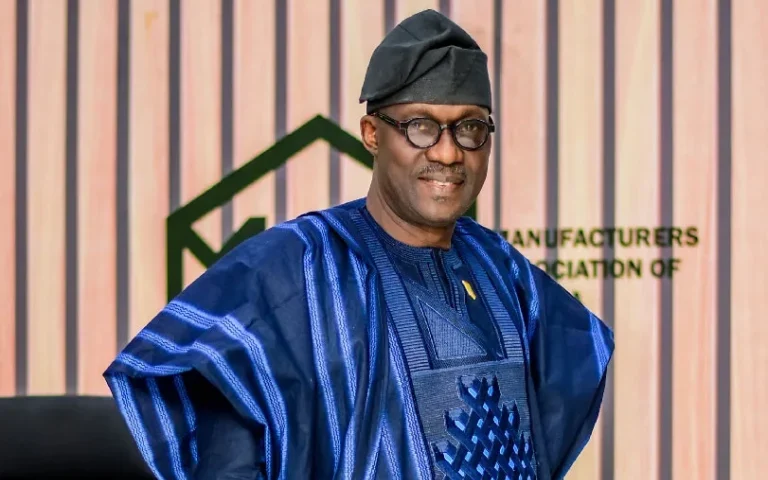
The Manufacturers Association of Nigeria has called on the Federal Government to regulate foreign nationals’ participation in Nigeria’s retail trade, amid concerns over the activities of Chinese traders in last-mile retail.

Director-General of MAN, Segun Ajayi-Kadir, made the call on Tuesday on the sidelines of a press briefing for the association’s 54th Annual General Meeting, weeks after traders protested against the alleged involvement of Chinese manufacturers in retail operations at the Lagos Trade Fair Complex.

Ajayi-Kadir said several countries have already operated frameworks that limit the extent of foreign companies’ engagement in certain sectors, and urged the press to scrutinise the matter.

“I think some countries actually have a measure of the level of engagement for foreign companies. I think there was a decision on that, and I believe that the press can continue to interrogate because the issue of trade is very important. The issue of immigration is very important.

“The issue of why you have come into a foreign country, what you have come to do, is important. So, if you get into that space and you start to engage in other levels of activities, then it calls into question what the relevant regulatory agencies are doing,” the MAN DG said.

He said MAN supported the patronage of made-in-Nigeria products, but faulted the encroachment of foreigners into spaces reserved for local businesses without adequate regulatory oversight.

“Of course, we support that our made-in-Nigeria products are treated and patronised, but the situation where foreigners are venturing into areas where they intrude as if the regulatory agencies are minding them. And if there are no extant laws to deal with that kind of thing, I think this is the time that should be considered,” Ajayi-Kadir said.

Meanwhile, the Centre for the Promotion of Private Enterprise has, in a policy document, also raised concerns about the increasing participation of foreign nationals, particularly Chinese traders, in Nigeria’s retail and distributive trade sector.

Chief Executive Officer of CPPE, Dr Muda Yusuf, said the trend threatened employment protection, fair competition and the integrity of the country’s immigration and business-permit regime.

“Retail trading is generally not a specialised activity requiring scarce foreign expertise. The increasing presence of non-nationals in such activities therefore raises legitimate questions about the effectiveness of the regulatory and immigration architecture,” Yusuf said.

The CPPE noted that the distributive trade sector employs an estimated 27.5 per cent of Nigeria’s workforce, and urged the government to review business permits and expatriate quotas granted to foreign nationals in the retail segment.

However, the think tank clarified that its position was not directed against Chinese investment generally, as China remains one of Nigeria’s leading trading partners.

It called on the government to strengthen enforcement of immigration and investment regulations, investigate complaints from Nigerian traders over direct foreign competition at the retail level, and encourage foreign businesses to invest upstream in manufacturing and other productive sectors instead.

Dangote, marketers cut petrol prices as crude falls

Dangote, marketers cut petrol prices as crude fallsThe Dangote Petroleum Refinery and other petroleum marketers have reduced the prices of Premium Motor Spirit (petrol) across major depots in Lagos, Port Harcourt, Calabar and Warri, following a decline in international crude oil prices.

The reductions were recorded in the latest depot price report published by Petroleumprice.ng, with the biggest adjustments seen in Lagos, where several operators cut their petrol prices by between N20 and N24 per litre.

The reductions came as Brent crude traded below $100 per barrel, while the United States benchmark, West Texas Intermediate, also declined to $91.17 per barrel.

In Lagos, the Dangote Refinery reduced its PMS price from N1,350 to N1,325 per litre, representing a N25 reduction. Ascon, Integrated, Pinnacle and Sahara also cut their prices by N24, with their products now selling between N1,326 and N1,327 per litre.

MRS reduced its petrol price by N20 to N1,332 per litre, while Wosbab recorded a current price of N1,330.

The latest reductions followed a mixed movement in the international crude market.

According to Oilprice.com, Brent crude fell to $99.77 per barrel, while WTI dropped by $1.20, or 1.30 per cent, to $91.17 per barrel. Recall that Brent hit $109 last week.

However, Murban crude moved in the opposite direction, gaining $4.18, or 3.80 per cent, to $114.20 per barrel.

The movement in crude prices is significant for Nigeria’s downstream petroleum market because international oil prices influence the cost of imported refined products and the pricing of locally refined petroleum products.

The softer Brent and WTI prices provided room for downward adjustments in depot prices.

The decline in petrol prices was also recorded outside Lagos. In Port Harcourt, Masters reduced its PMS price by N2 to N1,328 per litre, while Stockgap recorded a N7 reduction to N1,323. Bulk Strategic and Sigmund listed petrol at N1,328, while Matrix retained its price at N1,330.

In Calabar, Mainland recorded the lowest petrol price among the locations covered, reducing its rate by N7 to N1,320 per litre.

Alkanes cut its price by N2 to N1,325, while Matrix maintained N1,330. Sobaz, however, increased its price marginally by N1 to N1,328. In Warri, mixed movements were also recorded, although most of the changes were downward.

Keonamex reduced its PMS price by N3 to N1,327, while Nepal and Prudent cut their prices by N1 and N2, respectively, to N1,329 and N1,328. Matrix and Optima, however, increased their petrol prices by N3 and N1, respectively, taking them to N1,330 and N1,328.

On the automotive gas oil market, commonly known as diesel, prices also declined in some locations. In Lagos, Chipet reduced its AGO price by N15 to N1,815 per litre, while Ascon, Duport and Integrated each cut their prices by N5 to the same level.

Ibachem, Ibeto, Dangote, Obat and Pinnacle offered diesel prices at between N1,815 and N1,860 per litre. Port Harcourt recorded a sharper movement in diesel prices, with Masters reducing its AGO price by N35 to N1,900 per litre.

In Warri, Matrix cut its AGO price by N0 to N2,000 per litre, while Prudent and Rain Oil reduced theirs by N10 to N1,940.

The latest depot price movements come amid continued volatility in the international oil market, with crude benchmarks responding differently to developments affecting global supply and demand.

Natural gas prices also moved higher, gaining 2.96 per cent to $2.92, according to the market data.

The latest PMS adjustments suggest that the recent decline in crude prices is beginning to filter into the domestic wholesale market, although the extent of further reductions will depend on movements in crude prices, foreign exchange and the cost of refined petroleum products.

The lower depot prices could also influence retail petrol prices as marketers replenish their stocks at the reduced rates, although pump prices vary according to location, transportation costs and individual marketers’ margins. Petrol now trades between N1,370 and N1,450, depending on the location.

CBN reduces interest rate to 23 percent

The Monetary Policy Committee (MPC) of the Central Bank of Nigeria (CBN) has cut the benchmark interest rate from 26.5% to 23%. The  Central Bank of Nigeria (CBN), Governor, Olayemi Cardoso, announced the decision on Tuesday following the conclusion of the committee’s 307th meeting in Abuja.
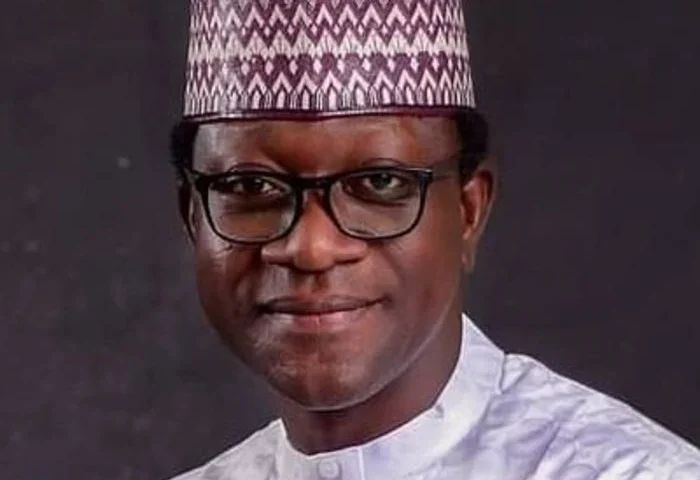
“The Committee decided as follows: reset the monetary policy rate to 23 per cent,” Cardoso said.
The latest cut came
 after the MPC maintained the rate at its previous two meetings and followed a 50-basis-point reduction announced in February 2026.
The decision came amid a sustained moderation in Nigeria’s inflation rate. According to the latest Consumer Price Index released by the National Bureau of Statistics (NBS), headline inflation eased marginally to 15.39% in August 2026, from 15.43% in July.
August’s figure marks the third consecutive monthly decline in headline inflation following three months of increases.
Rainbow Coalition: APC needs Wike more, he has qualities like Tinubu – Jibrin

House of Representatives member representing Kiru/Bebeji Federal Constituency, Hon. Abdulmumin Jibrin, has told the Progressive Governors Forum, PGF, that the All Progressives Congress, APC, needs the Minister of the Federal Capital Territory, Nyesom Wike, more than the former Rivers State governor needs the ruling party.
He also pointed out that other political parties, such as the African Democratic Congress, ADC, and the Nigeria Democratic Congress, NDC, are waiting for the opportunity to take Wike into their folds should he decide not to work with the APC again.

He said the APC governors should negotiate with the Minister, just as President Bola Tinubu did.

The Progressive Governors’ Forum, led by the Governor of Imo State, Hope Uzodimma, is strongly opposed to the Rainbow Coalition, which now stands as a clear threat to the governors and their candidates across the states ahead of the upcoming general elections.

The list recently published by the Independent National Electoral Commission, INEC, indicates that Wike’s Rainbow Coalition has over 100 senatorial candidates and many more other positions, such as the House of Representatives and State Assemblies.

Speaking on Arise News on Monday evening, Jibrin, a chieftain of the APC, pointed out that Wike has worked much more than expected for the ruling party and must not be allowed to leave at this point when the President still needs him for the upcoming election.

“Somebody like Wike will continue to be Wike in and out of office. He has qualities like the President. The President today— you take him out as the President, he would still continue to maintain his relevance.

“After all, he was out of office for 16, 17 years, and his relevance was intact. Wike is that sort of a person, so Wike will be in demand all the time.

“For the fact that we had Wike in 2023, there is no need for any renewal. Automatically, for goodness’ sake, APC needs Wike, and I just want to be a bit subtle; I would have said much more than he needs us.

“Because today, if he pulls out of the APC, he’ll be in high demand all over the country, and that’s why I’ve been saying, let our governors— I love our governors; some of them weren’t happy about my intervention, but I took time to explain to them that, look, what you need to do with Wike is to negotiate with Wike.

“If the President of the country hadn’t negotiated with Wike and brought Wike on board today, there would have been a Rainbow Coalition in this country against APC. So, if the President will understand that, let me negotiate with this man because he has value, he has something to bring to the table, governors should follow suit.

“You just have to approach it in a pragmatic manner, and you see, the cases of the states are different. They are not the same. They are not uniform. That was why I was shocked. I’m choosing my words carefully. I don’t want the governors to say I’m hard on them.

“My relationship with them is intact. But I believe that the models they adopted by going to do the press conference just to hit hard on Wike—I believe that it’s wrong because all the states, their cases are peculiar; they’re different cases, and there’s nothing wrong with going into discussion with Wike.

“Anything that I see can pose a danger to the re-election of the President, I will always intervene.”

2027: We don’t trust INEC to protect our votes – ADC

2027: We don’t trust INEC to protect our votes – ADCThe African Democratic Congress, ADC, says it does not trust the Independent National Electoral Commission, INEC, to protect its votes in the forthcoming 2027 general elections.

The National Publicity Secretary of the party, Bolaji Abdullahi, made this statement on Monday during an interview on Channels Television’s Politics Today.

According to him, the party is making arrangements to collate its votes, warning that INEC’s technical failures undermine trust.

“Don’t forget that I ran for Senate in the 2023 election. What many of us did, and not only myself, was that we trusted INEC when they told us there would be automatic transmission of results to the IReV.

“Then what happened afterwards? They said that, due to some technical glitch, the results could not be transmitted automatically to the IReV. So we have been beaten by that, and we are now twice shy. We say we will not allow it to happen again. We are no longer naive.

“We can no longer trust INEC to protect our votes for us. We are saying that we will vigilantly guard our own votes. We will protect our own votes.

“If the results at the end of the day reflect the true votes that came from the polling units, we will accept them. But if they do not, we are not going to accept them. We are making provisions to collate our own votes,” he said.