Bauchi LG polls: APM wins all 20 chairmanship seats, 319 councillorship positions

The Allied Peoples Movement (APM) has won all 20 chairmanship seats and 319 of the 323 councillorship positions in Monday’s Bauchi State local government elections.

The results were announced by the Bauchi State Independent Electoral Commission (BASIEC) on Monday night.

According to the commission, APM won the chairmanship election in all 20 Local Government Areas of the state, while four other political parties shared the remaining four councillorship seats.

Declaring the results, BASIEC Chairman, Hajiya Jummai Abubakar, said the successful candidates emerged after the completion of voting, counting, collation and verification.

Umar Mohammed Aliyu recorded the highest number of votes among the APM candidates, polling 125,170 votes to win Bauchi Local Government Area.

He was followed by Abubakar Ibrahim Dembo, who secured 109,999 votes in Toro, and Bappah Aliyu Mohammed, who won Alkaleri with 107,482 votes.

Ya’u Samaila Sade won Darazo with 67,276 votes, while Yusuf Babayo Zaki secured Katagum with 65,626 votes.

Other winners included Ali Babayo in Gamawa with 54,423 votes; Sama’ila Wakili Lere in Tafawa Balewa with 46,625 votes; and Habibu Idris Usman in Warji with 43,066 votes.

In Shira, former Majority Leader of the Bauchi State House of Assembly, Saleh Hodi Jibir, won the chairmanship election with 37,135 votes.

The other APM winners were Zakka Luka Magaji in Bogoro with 25,282 votes; Iliya Isah in Dambam with 19,730 votes; Mohammed Abubakar Jibo in Dass with 35,264 votes; Mohammed Idris M. in Ganjuwa with 24,150 votes; Mustapha Alhaji Musa in Giade with 33,864 votes; Dankawuwa Ya’u in Itas/Gadau with 24,989 votes; and Inuwa Abdullahi in Jama’are with 36,766 votes.

Garba Musa won Kirfi with 24,787 votes, Salisu Hussaini secured Misau with 34,378 votes, Yahuza Adamu Haruna won Ningi with 29,387 votes, while Mas’ud Aliyu emerged victorious in Zaki with 19,984 votes.

Although APM dominated the councillorship elections, four political parties secured one ward each.

The Social Democratic Party won Dandango Ward in Bauchi LGA, while the National Rescue Movement emerged victorious in Darazo South Ward.

The Zenith Labour Party won Wandi Ward in Dass LGA, while the Young Progressive Party secured Zirami Ward in Giade LGA.

BASIEC Chairman said the commission had confirmed the successful candidates as duly elected after they satisfied the relevant legal requirements and secured the highest number of valid votes in their respective constituencies.

Abubakar said the election was conducted independently and in accordance with the law.

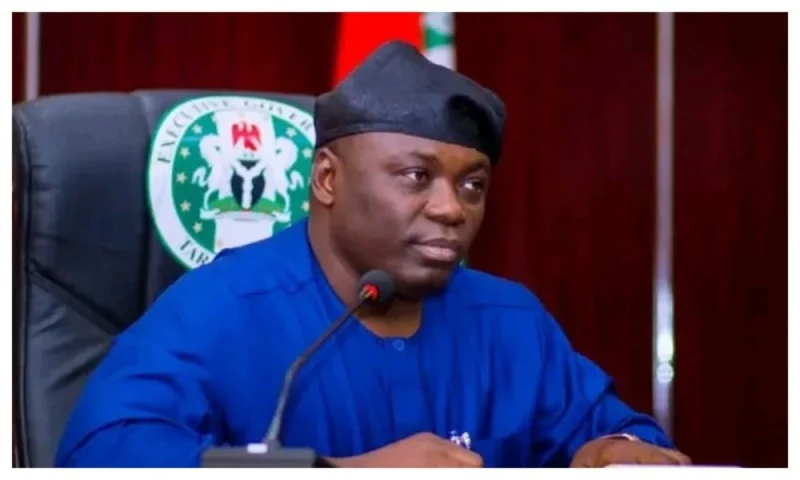
She also commended Governor Bala Mohammed for his support for the commission and congratulated the people of the state and the successful candidates on the conclusion of the polls.

Osun: APC spent N60bn on vote-buying, my prayers helped Gov Adeleke win – Davido’s father

Deji Adeleke, a businessman and the father of afrobeats singer, Davido, has alleged that the All Progressives Congress, APC, spent around N60 billion on vote-buying during the Osun State governorship election.

Adeleke also claimed that the APC used N50,000 to buy votes in some areas during the governorship election.

Speaking in Osogbo, the state capital, the businessman revealed that his prayers helped Governor Ademola Adeleke to win the election.

He disclosed that he prayed that voters would take APC’s money but vote for his brother.

Last Saturday, Governor Adeleke won the governorship election after polling 511,067 votes to defeat APC’s Bola Oyebamiji who had 444, 815 votes.

However, Deji Adeleke said: “On the day of the election, when I heard about the kind of money they were spending, I went back to my little corner in my room and I knelt down and I prayed to God Almighty.

“I said, ‘God Almighty, let people collect their money but still vote for Ademola Adeleke.

“They spent N60 billion as we heard. Some places they bought votes for as high as 50,000, for one single vote.”

Xenophobia: Nigerian govt to evacuate 83 more Nigerians from South Africa Wednesday

The Federal Government has announced that another batch of 83 Nigerians evacuated from South Africa will return to the country on Wednesday, August 19, 2026, amid concerns over Afrophobic attacks and growing anti-foreigner sentiments.

The Ministry of Foreign Affairs disclosed this in a statement issued on Monday by its spokesperson, Kimiebi Ebienfa.

According to the ministry, the returnees will leave Oliver Tambo International Airport, Johannesburg, at about 3:35 p.m. local time aboard a South African Airways flight and are expected to arrive at the Murtala Muhammed International Airport, Lagos, around 8:45 p.m. the same day.

The ministry said the latest evacuation was made possible through the intervention of private individuals who sponsored the returnees’ air tickets.

“The Ministry wishes to note that this latest cohort of returnees is facilitated through the kind intervention and sponsorship of tickets by public-spirited private individuals, whose generosity the Federal Government acknowledges with profound gratitude,” the statement said.

The latest repatriation comes after the completion of the Federal Government’s voluntary evacuation programme, which saw nearly 1,490 Nigerians return from South Africa amid concerns over attacks, discrimination and hostility towards foreign nationals.

The ministry said the administration of President Bola Tinubu remained committed to safeguarding the welfare, dignity and interests of Nigerians both within the country and overseas.

It said the government’s Citizen Diplomacy policy recognises Nigerians living abroad as “not as a burden, but as critical assets for national development,” stressing that their safety and well-being remained a priority.

The ministry also praised the individuals and philanthropists who provided financial support for the latest evacuation, describing their intervention as an example of the “whole-of-society approach” being encouraged by the government.

“The Ministry commends their patriotism and selflessness, which have significantly alleviated the plight of our compatriots in South Africa,” it added.

The Federal Government called on the organised private sector, corporate bodies, state governments, philanthropists and other Nigerians at home and abroad to support efforts aimed at assisting citizens facing emergencies outside the country.

The ministry said broader collaboration would strengthen the country’s ability to respond swiftly to consular crises and protect Nigerians in distress.

It also disclosed that Nigeria would continue diplomatic engagements with South Africa in an effort to address the underlying factors responsible for Afrophobia and prevent further attacks against Nigerians and other Africans.

“The government remains committed to deepening strategic partnerships with host nations, including South Africa, to address the root causes of Afrophobia and ensure that such acts of violence and discrimination against Nigerians are prevented and are strongly condemned when they occur, including holding perpetrators of such violence to account,” the ministry stated.

The ministry expressed appreciation to the private sponsors who funded the latest evacuation and urged other stakeholders to support initiatives aimed at protecting Nigerians living and working abroad.

Cooking gas update in Nigeria after Dangote, depot owners reduce LPG prices

Liquefied petroleum gas, LPG, popularly known as cooking gas, is expected to become cheaper across Nigeria after Dangote Refinery, marketers and depot owners reviewed their prices downward.

A market survey by DAILY POST showed that Dangote Refinery reduced its LPG gantry price by N30 to N950 per kilogram.

In a swift market reaction to Dangote Refinery’s LPG price cut, depot owners and marketers also reduced their prices.

11PLC, formerly Mobil, NAVGAS, Ranoil and PPMC reduced their ex-depot cooking gas prices to between N955 and N960 per kg. The price reduction by the depot owners ranged from N15 to N30 per kg.

DAILY POST reports that the retail price of cooking gas at filling stations operated by Ranoil, the Nigerian National Petroleum Company, NNPC and Shafa stood between N1,300 and N1,450 per kg. Meanwhile, other LPG retailers in Abuja and its environs sell cooking gas at N1,500 per kg, the same rate recorded in July 2026.

Recall that cooking gas imports surged by 1,400 percent in June, according to data from the Nigerian Midstream and Downstream Petroleum Regulatory Authority (NMDPRA).

NDC raises alarm over suspected IED planting on Zamfara road

The Nigeria Democratic Congress (NDC) in Zamfara State, has raised the alarm over the reported planting of an Improvised Explosive Device (IED) by suspected bandits along the Gurusu-Gwashi Road in Bukkuyum Local Government Area.

The party described the development as a worrying escalation of insecurity, warning that the alleged deployment of explosive devices on public roads could expose thousands of innocent residents and road users to serious danger.

In a statement issued by its Publicity Secretary, Alkasimu Mustapha Kayatawa, the NDC called on the Federal Government and security agencies to take immediate action to secure the affected corridor and other vulnerable communities in the state.

Kayatawa said the reported incident had created additional risks for motorists, farmers, traders, commuters and security personnel who regularly use the road.

“The reported use of IEDs on public roads represents a dangerous escalation that must not be allowed to become a new pattern of criminality in Zamfara,” the party said.

The NDC called for an urgent review of security operations in Bukkuyum and other areas considered vulnerable to attacks, urging security agencies to increase patrols and strengthen intelligence gathering.

It also demanded improved explosive-ordnance capabilities and increased security presence along major highways, rural roads and communities.

According to the party, intelligence-led operations would be critical to identifying criminal networks and preventing attacks before they occur.

“We need stronger intelligence gathering, sustained patrols and increased security presence along the roads and communities where residents remain exposed,” Kayatawa said.

The party also questioned the level of security deployment in Zamfara compared with the extensive security presence witnessed during the recent Osun governorship election.

It argued that similar urgency should be demonstrated in areas where citizens face persistent threats from banditry and other violent crimes.

“The people of Zamfara should not be made to feel that securing ballot boxes attracts greater national urgency than securing their lives, homes, farms and highways,” the NDC said.

The party specifically urged security agencies to reinforce operations along the Gurusu-Gwashi corridor and prevent criminal groups from establishing the use of explosive devices as a regular tactic against civilians.

It further appealed to the Zamfara State Government to deepen cooperation with federal security agencies and strengthen community-based intelligence networks.

The NDC said local residents, traditional institutions and community leaders could play an important role in providing timely information to security agencies.

“Community intelligence must become a critical component of the security architecture. Residents are often the first to notice unusual movements and suspicious activities,” the party said.

Expressing concern over the broader impact of banditry in Zamfara, the NDC said prolonged insecurity had already resulted in deaths, ransom payments and displacement of communities.

“Zamfara has buried too many innocent citizens. Too many families have paid ransoms. Too many communities have been displaced,” the party stated.

It added: “Our roads must not now become minefields.”

The party urged the Federal Government, security agencies and the Zamfara State Government to treat the reported IED incident as an urgent warning and take decisive measures to protect residents, commuters and other road users.

It also called for sustained security operations rather than temporary deployments, stressing that lasting peace would require continuous intelligence-led action and stronger collaboration between security agencies and local communities.

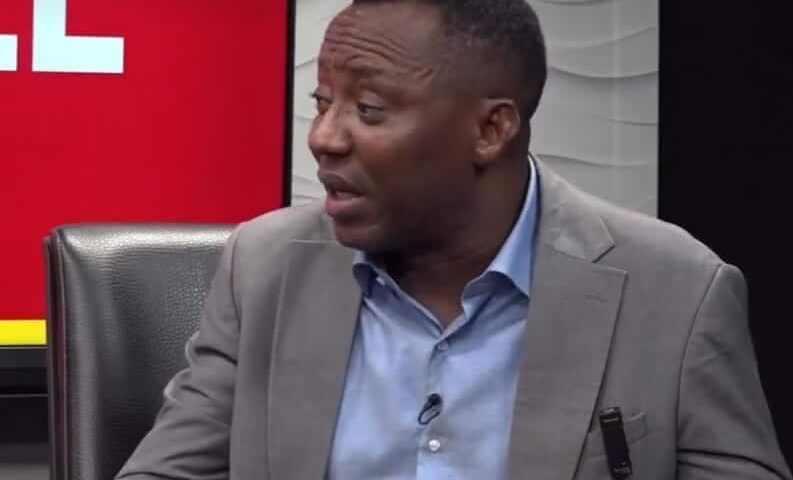
Sowore blasts Nigerians celebrating IBB at 85 years

The presidential candidate of the African Action Congress, AAC, has taken a swipe at some Nigerians for celebrating former Military Head of State, Gen. Ibrahim Badamasi Babangida (retd.), on his 85th birthday.

Writing on his verified X handle late Monday, Sowore said Babangida had lived long but was no longer living well.

He alleged that Nigeria would not have deteriorated to where it was today without IBB’s “wickedness and selfishness” in the exercise of power.

The human rights activist added that the legacy of the former military leader was not one of nation-building, but of decisions that deepened corruption, undermined democracy and left generations of Nigerians paying the price.

“Ibrahim Badamasi Babangida, the man who did Nigeria dirty, is being celebrated by his cronies on his 85th birthday.

“He lived long but is no longer living well; but had he not been so wicked and selfish in the exercise of power, Nigeria would not be where it is today.

“History should remember not just the birthday celebrations, but the consequences of the choices he made while holding power that ruined Nigeria,” Sowore tweeted.

DAILY POST reports that IBB was Head of State from 1985 to 1993, when he stepped aside after annulling the popular June 12, 1993, presidential election, which was widely believed to have been won by MKO Abiola.

NGX sheds N106bn as bearish sentiment persists

NGXThe Nigerian Exchange Limited experienced an aggregate market value decline on Monday as trading closed on a bearish note.

The All-Share Index decreased 0.07 per cent to close at 242,454.65 points, dropping from 242,619.20 points recorded on Friday. Correspondingly, market capitalisation for equities contracted by N106.24bn, ending the session at N156.52tn compared to N156.62tn reported at the previous close.

Throughout the five-day trading window, the ASI reached a high point of 246,723.57 points and recorded a low of 242,454.65 points, bringing the average index point to 243,756.38 points.

Across sectoral and thematic performance metrics, board indices displayed widespread modest pullbacks. The NGX Main-Board Index slipped to 10,910.62 points, while the NGX 30 Index registered at 8,890.47 points. The NGX Premium Index slid slightly to 28,662.38 points.

Sector-specific performance showed the NGX Banking Index settling at 2,536.29 points, the NGX Insurance Index at 1,112.05 points, and the NGX Industrial Index closing virtually flat at 10,378.76 points.

Conversely, the NGX Consumer Goods Index gained ground, rising from 4,037.91 points to 4,055.29 points, and the NGX Sovereign Bond Index ticked up to 670.82 points.

Trading activity across the equities market culminated in a total volume of 1.33 billion shares exchanged in 45,439 trades. The Main Board generated the vast majority of turnover, recording 1.24 billion shares valued across 25,549 trades. The Premium Board followed with 72.48 million shares traded in 16,705 transactions.

Within the individual equities space, significant volume activity was observed in LASACO Assurance Plc with 730.69 million shares, Consolidated Hallmark Holdings Plc with 154.26 million shares, and Cornerstone Insurance Plc with 106.11 million shares.

Price movements reflected targeted interest across select gainers and loss-taking among notable names. On the gainers’ side, AVA Capital Plc surged 9.72 per cent to close at N7.90 per share, Trans-Nationwide Express Plc rose 9.86 per cent to N3.12 per share, and Thomas Wyatt Nigeria Plc advanced 9.09 per cent to N3.00 per share. Dangote Sugar Refinery Plc also posted a strong gain of 8.60 per cent to finish at N70.10 per share.

Conversely, RT Briscoe Plc and Fortis Global Insurance Plc faced selling pressure, each declining nearly 10 per cent to close at N10.45 and N2.37 per share, respectively. NEM Insurance Plc lost 8.83 per cent to settle at N30.45 per share, while Cutix Plc dropped 6.53 per cent to finish at N2.29 per share.

Chevron To Sustain Sub-Saharan Africa Investment Growth After Angola Discovery

Chevron has confirmed an oil and gas condensate discovery at the 105-4X exploration well in Block 0, offshore Angola.

The well is operated by wholly owned subsidiary Cabinda Gulf Oil Company Limited.

The discovery marks the beginning of a new phase of work, says Kevin McLachlan, Chevron’s vice president of exploration.

The company said its lead teams will now determine whether it can be developed using nearby facilities as new discoveries often become more competitive when they can be tied to existing infrastructure.

“The early results are encouraging, and additional work will help determine the resource’s full potential and possible development opportunities.” Said McLachlan.

Reliable energy begins with decisions made years before homes and businesses ever use it. Offshore Angola, Chevron believes the latest discovery could become one of those opportunities.

The well encountered more than 2,000 feet of oil and gas condensate column. It included more than 300 feet of net pay. “I would describe it as excellent reservoir quality,” said McLachlan.

Since its first geological survey in Angola, in 1954, Chevron has discovered and developed major oil fields—and played a crucial role in the nation’s economic growth.

Chevron targeted the Lower Congo Basin because of its proven geology and decades of experience in Angola.

Through its subsidiaries, Chevron has operated in the country since the 1930s. It began exploration and production activities in 1954 and made its first offshore discovery in 1966.

The discovery follows another recent milestone in the region. The South N’dola Platform, also located in Block 0, delivered first oil in December 2025.

Chevron’s South N’dola Platform in Angola delivered first oil in December 2025. The milestone was reached just over two years after construction on the platform began.

The Angola discovery is part of a broader exploration campaign across Sub-Saharan Africa.

Chevron currently produces around 300,000 barrels of oil equivalent per day net in the region. The company has expanded its position through new acreage and recent exploration successes in Nigeria.

McLachlan said, “Every successful well adds information, confidence and potential pathways for future growth.” Additional exploration activity is planned across the region, including Namibia, Nigeria, Guinea-Bissau and Equatorial Guinea.

“Discoveries create value when they combine resource potential with a practical path to development. The opportunity we’re evaluating in Angola reflects both, and it reinforces our confidence in the broader exploration portfolio we’re building.” McLachlan said.

As used in this news release, the term “Chevron” and such terms as “the company,” “the corporation,” “our,” “we,” “us” and “its” may refer to Chevron Corporation, one or more of its consolidated subsidiaries, or to all of them taken as a whole. All of these terms are used for convenience only and are not intended as a precise description of any of the separate companies, each of which manages its own affairs.

Heirs Insurance Group Records ₦115 Billion In Gross Written Premium

Heirs Insurance Group (HIG), has published the audited financial results of its companies for the year ended December 31, 2025, delivering a landmark performance marked by strong year-on-year record, increased claims payout, and international recognition for growth.

The Group reported a combined Gross Written Premium (GWP) of ₦115 billion in 2025, an 88.5% increase from ₦61 billion recorded in 2024.

Combined earned Insurance Revenue also rose by 70% from N29.43billion in 2024 to ₦53.4 billion in 2025, while combined total assets grew by 83% from N89bn in 2024 to ₦169.7in 2025, underscoring its sustained momentum.

Also, combined Profit Before Tax (PBT) dipped slightly in response to macroeconomic headwinds, particularly foreign exchange volatility, recording ₦9.53 billion in 2025, compared to ₦11.2 billion in 2024.

Demonstrating its commitment to customers, Heirs Insurance Group paid a combined ₦19.4 billion in claims in 2025, an 87% increase from ₦10.4 billion paid in 2024.

The results come on the heels of a landmark international recognition: Heirs Life Assurance and Heirs General Insurance were both named among the Financial Times’ Africa’s Fastest-Growing Companies 2026, one of the most respected rankings of corporate growth and performance. Of the 130 companies recognised across all sectors, Heirs Life Assurance ranked 7th, while Heirs General Insurance ranked 41st, reinforcing the Group’s position as one of Africa’s most dynamic insurance businesses.

Breaking the results down by company, Heirs Life Assurance (HLA), the specialist life insurance company of Heirs Insurance Group, delivered exceptional results across all key indicators.

GWP doubled from ₦44.22 billion in 2024 to ₦88.59 billion in 2025, representing 100% growth.

Insurance Revenue grew by 80% from N15.1 billion in 2024 to ₦27.2 billion[WF1] [IO2] in 2025.

Profit Before Tax rose by 38% from N5.5 billion in 2024 to ₦7.6 billion in 2025.

Investment income surged by 430%, growing from ₦4.6 billion in 2024 to ₦24.8 billion in 2025.

Claims paid rose by 121% to ₦14.4 billion, compared to ₦6.5 billion paid the prior year.

Total assets more than doubled to ₦136.2 billion, compared ₦66.2 billion in 2024.

Heirs General Insurance (HGI), the general insurance company of Heirs Insurance Group, maintained a strong growth trajectory.

Gross Written Premium rose by 57% from ₦16.9 billion in 2024 to ₦26.6 billion in 2025.

Insurance Revenue rose by 67% from N14.32billion in 2024 to ₦23.9 billion in 2025.

Claims paid increased by 22% from N4billion in 2024 to ₦5 billion in 2025.

Total assets rose by 25% from N26.8billion in 2024 to ₦33.5 billion.

Profit Before Tax dipped from N4.9billion in 2024 to ₦1.07 billion, reflecting the impact of foreign exchange rate volatility.

Subsequently, investment income dipped from ₦5.7 billion in 2024 to ₦2.5 billion in 2025.

Heirs Insurance Brokers (HIB), the Group’s insurance broking arm, also recorded consistent growth.

Revenue grew by 19% from ₦1.97 billion in 2024 to ₦2.34 billion in 2025, driven by increased client acquisition and retention.

Profit Before Tax rose from ₦1.21 billion to ₦1.35 billion, reflecting strong cost discipline and operational efficiency.

All results were audited by PricewaterhouseCoopers (PwC) and approved by the National Insurance Commission (NAICOM).

The insurance group has continued to roll out innovative[WF3] [IO4] initiatives, empowering customers across Nigeria easily access insurance. Its latest roll out of a WhatsApp-powered Gen AI chatbot, Prince AI, ensures that customers can transact insurance in seconds in eleven local and international languages right from their phones.

Heirs Insurance Group is the insurance arm of Heirs Holdings, the leading pan-African investment company, with investments across 24 countries and four continents.

With a rapidly expanding retail footprint and an omnichannel digital presence, Heirs Insurance Group, comprising Heirs General Insurance Limited, Heirs Life Assurance Limited, and Heirs Insurance Brokers, serves both corporate and individual customers across Nigeria.

Heirs Insurance Group is championing financial inclusion and leading the digital insurance play in Nigeria, demonstrating its mission to democratise access to insurance.

PETROAN Demands Commitment From NNPCL To Return Public Refineries To Work

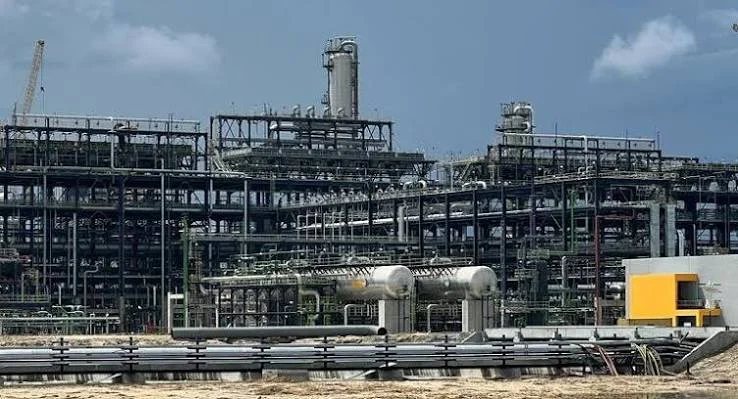
Downstream marketing Association has challenged the Nigerian National Petroleum Company Limited (NNPCL), to move beyond ceremonial restarts of state run refineries to measurable indicators including commercial viability, throughput, plant availability, operating margins and returns on investment.

The Petroleum Products Retail Outlets Owners Association of Nigeria (PETROAN), advised the Company to take advantage of President Bola Ahmed Tinubu’s renewed commitment to the revival of Nigeria’s refineries, by translating the commitment into a binding, milestone-driven execution plan.

In a statement, PETROAN said the President’s recent assertion that a refinery showing “ordinary flame and smoke” does not necessarily mean it is working represents an important shift in how Nigeria should assess refinery rehabilitation.

PETROAN’s National President, Dr. Billy Gillis-Harry, also welcomed President Tinubu’s position that the administration would accept the assets and liabilities inherited from previous governments without resorting to blame.

The association said such institutional continuity was essential to restoring investor confidence, arguing that technical and financial partners require contractual certainty and confidence that government will honour inherited obligations.

This latest commitment punctures former President Olusegun Obasanjo’s long-standing argument that the Nigerian National Petroleum Company Limited cannot successfully operate the government-owned refineries.

Obasanjo recently reiterated his position in an interview aired on television by Sony Irabor Live, arguing that public-private partnerships offered a better model for running major government assets.

PETROAN said the need for a fundamental reset in the management of Nigeria’s refineries was justified by the country’s long history of spending on rehabilitation without achieving sustained operations.

It noted that about $4.15 billion was allocated between 1993 and 2019 for interventions in the Port Harcourt, Warri and Kaduna refineries.

It further recalled that the Federal Executive Council approved another rehabilitation package of approximately $3.14 billion in March 2021, comprising $1.5 billion for the Port Harcourt Refining Company, $897.6 million for the Warri Refining and Petrochemical Company and $740.67 million for the Kaduna refinery.

According to PETROAN, parliamentary and union sources have also put operating and rehabilitation expenditure between 2020 and 2025 at about N11.35 trillion, alongside substantial foreign-currency components.

The association observed that the Port Harcourt refinery briefly resumed operations in late 2024 before shutting down on May 24, 2025, for maintenance initially scheduled to last 30 days. It said the facility had yet to return to operation at the time of the statement.

PETROAN added that an internal NNPC Ltd assessment in February 2026 found the refineries to be operating at material losses.

The association expressed support for the National Assembly’s ongoing inquiry into the deployment of funds for refinery rehabilitation, saying the exercise should help establish accountability and provide the basis for future capital discipline.

“Capital discipline is retrospective before it is prospective,” PETROAN stated, maintaining that the fundamental problem had not been a lack of money but weaknesses in governance, technical ownership and accountability for outcomes.

While acknowledging the dramatic decline in Nigeria’s petrol import bill and the increasing contribution of domestic refineries, PETROAN cautioned against assuming that the country’s refining challenge had been completely resolved by private-sector investments.

The association noted that petrol imports fell from N2.271 trillion in the first quarter of 2025 to N87.4 billion in the first quarter of 2026, representing a decline of about 96 per cent.

It also said domestic refineries supplied approximately 76.7 per cent of national petrol volumes during the first quarter of 2026, compared with 45.2 per cent a year earlier.

PETROAN argued, however, that a market that has moved from import dependence to dependence on a single major domestic source has merely changed the nature of its vulnerability.

According to the marketing body, refinery maintenance, unplanned outages, marine logistics disruptions and other operational challenges make plurality of supply essential for national energy security.

PETROAN said restoring the Port Harcourt refinery’s 210,000 barrels-per-day capacity and Warri’s 125,000 barrels-per-day capacity would add 335,000 barrels per day of geographically distributed refining capacity to the national system.

It said the strategic value of the two facilities now goes beyond import substitution to include supply resilience, price discipline, regional balance and stronger negotiating leverage in the downstream market.

PETROAN also welcomed the Memorandum of Understanding executed in Jiaxing City, China, on April 30, 2026, between NNPC Ltd, Sanjiang Chemical Company Limited and Xingcheng (Fuzhou) Industrial Park Operation and Management Co. Ltd.

The proposed Technical Equity Partnership covers completion, operation and maintenance of the refineries, petrochemical expansion and co-located gas-based industrial development.

The association said the equity structure could better align the interests of the technical partner with the long-term performance of the refineries because a partner with a stake in the margins would have a greater incentive to ensure sustained operations.

However, PETROAN stressed that the MoU remains non-binding and subject to regulatory approval and further negotiations.

It therefore urged NNPC Ltd and other stakeholders to make several conditions precedent to what it described as “public celebration” of the partnership.

These include converting the MoU into a binding agreement with clear completion dates, throughput guarantees, availability thresholds and enforceable penalties for non-performance.

The association also called for disclosure, to the extent permitted by law, of the equity structure, capital commitments, offtake arrangements, crude supply pricing and treatment of accumulated liabilities.

It further demanded independent technical due diligence, including verification of the residual value and remaining useful life of existing refinery units.

PETROAN identified reliable feedstock supply as another critical condition for the success of the refinery revival programme.

It called for firm implementation of the Domestic Crude Supply Obligation under the Petroleum Industry Act, with transparent pricing and dependable evacuation infrastructure.

The association warned that without guaranteed access to crude, a refinery could remain a stranded asset regardless of the amount invested in rehabilitation.

It also called for meaningful Nigerian content through the transfer of technical and operational knowledge to Nigerian engineers and managers, rather than relying primarily on employment headcount targets.

According to PETROAN, a successful partnership must ultimately build sufficient Nigerian institutional and technical capacity to operate the refineries independently.

The association equally stressed the need to strengthen product evacuation and distribution infrastructure, including pipeline security and depot rehabilitation, while ensuring equitable access to domestically produced products for independent retailers.

PETROAN said its interest in refinery revival stems directly from the realities faced by petroleum product retailers, who bear working-capital risks arising from price fluctuations and supply disruptions.

The association said its members employ, directly and indirectly, hundreds of thousands of Nigerians across filling stations, haulage, maintenance, security and related activities.

It argued that functioning refineries in Port Harcourt and Warri would shorten supply routes to the South-South and South-East, reduce exposure to freight and foreign-exchange volatility, improve margin predictability and foster a more competitive downstream market.

PETROAN further described the two refinery corridors as important economic anchors whose revival could restore jobs and business opportunities for contractors, technicians, artisans and small enterprises that have been affected by the decline of refining activity.

The association said bringing the Port Harcourt and Warri refineries into sustainable operation before the next general election would constitute one of the administration’s most significant economic achievements.

However, PETROAN cautioned that an electoral timetable should not override engineering requirements, safety standards or commissioning integrity.

Rather, it said the political calendar could provide a public benchmark against which delivery would be assessed.

“Delivery, not announcement, is the currency,” the association stated, adding that “a refinery that runs is its own argument.”

PETROAN also commended NUPENG National Executive President, Comrade (Dr.) Salimon Akanni Oladiti, and the union’s leadership for keeping refinery revival on the national agenda.

The association expressed support for NUPENG’s call for an end to the casualisation of workers in the upstream sector, stressing that decent and secure employment was part of, rather than separate from, energy security.

PETROAN, under the leadership of Dr. Billy Gillis-Harry, reaffirmed its readiness to work with the Federal Ministry of Petroleum Resources, NNPC Ltd, the Nigerian Midstream and Downstream Petroleum Regulatory Authority and the National Assembly to establish a framework capable of translating the presidential commitment into functioning refineries, verifiable production and greater value retention within Nigeria.

The association noted that Nigeria possesses the crude resources, technical personnel and domestic market required to sustain refining, adding that the critical missing ingredient is now “execution discipline.”