David Mark warns against use of state institutions to manipulate 2027 elections

The National Chairman of the African Democratic Congress (ADC), Senator David Mark, has warned against the use of state institutions to manipulate the 2027 general elections, insisting that the credibility of the polls must be “non-negotiable”.

Mark also cautioned against intimidation, violence and other forms of electoral malpractice, saying the ADC expected the next general elections to be transparent, inclusive, peaceful and free from interference.

The former Senate President spoke on Wednesday in Abuja when he received a delegation from the International Republican Institute (IRI), which is in Nigeria as part of its assessment of preparations for the 2027 elections.

According to Mark, the integrity of the electoral process would be critical to determining whether Nigerians would have confidence in the outcome of the 2027 polls.

“For us in the ADC, the credibility of the 2027 elections must be non-negotiable. We expect the electoral process to be transparent, inclusive, peaceful and free from manipulation, intimidation and the abuse of state institutions,” Mark said.

He expressed concern over what he described as the recurring abuse of the electoral process by governments in power as well as non-state actors, warning that such practices could undermine democratic governance and erode public confidence in elections.

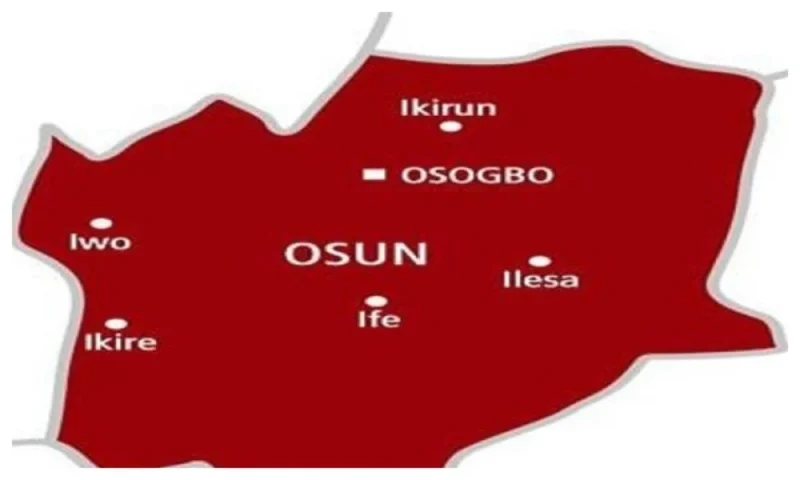
Mark made particular reference to the violence and intimidation reported during the recently concluded Osun State governorship election, which he said should serve as a warning ahead of the 2027 general elections.

He said reports indicated that no fewer than 30 people were killed during the election, describing the development as reprehensible and condemnable.

“Elections should not be treated as war or a do-or-die affair. There should be a democratic process through which citizens freely choose their leaders and advance their aspirations for development and a better quality of life,” he said.

The ADC chairman said his party was committed to an electoral process conducted in a secure environment where voters could freely cast their ballots without fear or intimidation.

He added that every vote must count and that mandates freely given by the electorate must be respected.

His comments come as political parties and other stakeholders intensify preparations for the 2027 general elections, with concerns over electoral violence, the neutrality of state institutions and the credibility of the electoral process already featuring prominently in discussions ahead of the polls.

Earlier, the IRI delegation said its visit was aimed at assessing the country’s level of preparedness and engaging key stakeholders on issues that could affect the conduct of the elections.

The African Regional Director of IRI, Jenai Cox, said the organisation was conducting a pre-election assessment mission to evaluate preparations for the 2027 polls.

Osun election: ‘Empty boast’ – Dele Momodu replies Wike

A chieftain of the African Democratic Congress, ADC, Dele Momodu, has replied to a statement made by the Minister of the Federal Capital Territory, FCT, Nyesom Wike, on the recently concluded Osun State governorship election.

Speaking during an interview on News Central Television on Wednesday, Momodu described the statement as “an empty boast.”

The minister had said he would have been in Osun State to help secure victory for the All Progressives Congress, APC, if President Bola Tinubu had wanted the party to win the election.

Replying, Momodu said Wike’s influence could not be greater than that of the Senate President and several governors who were unable to secure the desired result in Osun State.

The publisher of Ovation Magazine slammed the statement, describing it as unfortunate, and warned that the minister’s rhetoric suggested a strategy of enforcement to ensure APC victories in the 2027 general elections.

“I think it was a very unusual, uncommon and unfortunate statement for a minister of the Federal Republic of Nigeria to make, but nothing is beyond our friend, Wike, the FCT Minister.

“When I listened to him, I had to respond instantly because I knew that was an empty boast. If he had been in Osun, he would not have achieved anything.

“He is not bigger than the Senate President and all the governors who carried themselves to Osun to try to deliver Osun to the APC. But the danger in his statement must be noted, especially as we approach January 2027.

“The only way the APC can win the next presidential election and all the governorship elections is very simple. They will need to repeat what they attempted in Osun and failed woefully.

“I need to also remind Wike, in case he has already forgotten, that five of them abandoned the PDP in the last election, and three of them were from Abia, Enugu and Benue states.

“The then governors, three of the G-5 governors, attempted to win senatorial seats in their respective states and also failed spectacularly. So, that is to tell you that governors don’t have the power of life and death.

“Wike would have to divide himself into 36 states plus Abuja for him to perform the kind of magic he thinks he can perform,” Momodu said.

IGP Disu calls for coordinated regional response to insecurity in North-West

The Inspector-General of Police, Olatunji Rilwan Disu, has called for stronger intelligence sharing and coordinated security operations among North-West states to tackle insecurity in the region.

Disu made the call on Wednesday in Gusau, Zamfara State, while delivering the opening address at the North-West Security Summit.

The summit brought together governors, traditional rulers, security chiefs, experts, development partners, civil society representatives and other stakeholders to discuss banditry, kidnapping, arms proliferation, communal conflicts and farmer-herder tensions in the region.

The IGP said no single security agency, government or institution could effectively address the security challenges in the North-West alone.

He called for stronger inter-state cooperation, intelligence sharing, coordinated operations, improved border security, community engagement and effective early-warning mechanisms.

Disu also highlighted the role of traditional institutions and local communities in providing credible intelligence and supporting efforts to prevent crime.

The police chief cautioned against ethnic and religious profiling, saying criminality should not be associated with any particular ethnic or religious group.

He urged security stakeholders to focus on identifying and prosecuting criminal networks, their sponsors, arms suppliers, informants and other facilitators.

Disu reaffirmed the commitment of the Nigeria Police Force to intelligence-led policing, technology-driven operations, rapid response and inter-agency collaboration.

He urged participants to ensure that the three-day summit produced practical and measurable resolutions capable of improving security and protecting vulnerable communities across the North-West.

Osun shooting: ‘Davido was targeted’ – Police confirm one dead

Osun State Police Command has revealed that Nigerian music star, David Adeleke, popularly known as Davido, was the target of the attack on the convoy of Governor Ademola Adeleke in Osogbo.

DAILY POST recalls that security personnel attached to Governor Adeleke engaged some unidentified armed men in a gun duel on Wednesday during the governor’s visit to the palace of the Ataoja of Osogbo.

Davido, who is the governor’s nephew, had accompanied Adeleke and his children to the Independent National Electoral Commission, INEC, office, where the governor received his Certificate of Return, before they proceeded to the palace.

Confirming the attack, the Osun State Police Public Relations Officer, Abiodun Ojelabi, said preliminary investigations showed that members of the Eye Confraternity allegedly targeted Davido during the visit.

Ojelabi explained that one Adebayo Taoreed, popularly known as “Small Rugged”, an ex-convict and alleged member of the cult group, attempted to approach Davido but was stopped by members of his security team.

He said, “the ensuing confrontation reportedly attracted other suspected gang members in the vicinity, who temporarily blocked the entrance to the palace and obstructed the movement of the convoy of the governor.”

The police also confirmed that a 60-year-old man, identified as Tajudeen Yusuf, was shot during the incident and later died at a hospital.

The attack adds to growing concerns over political violence in Osun State.

The Accord Party had alleged that over 28 citizens were killed by suspected political thugs during the election period.

However, the All Progressives Congress, APC, accused the Accord Party of sponsoring violence that led to the death of some of its members.

Kebbi Assembly resumes plenary after one month recess

Kebbi State House of Assembly resumed plenary on Wednesday after a one-month recess.

The Assembly had suspended legislative activities in July and scheduled its resumption for August 11.

However, plenary resumed on Wednesday, August 19, under the leadership of Speaker Salihu Maikasuwa Dangoje.

The recess followed a motion moved by the Majority Leader, Faruku Aliyu Nassarawa Jega, and seconded by Faruku Abubakar Maisudan, which was unanimously adopted by the lawmakers.

At the resumed sitting, Dangoje congratulated members on the completion of their Lesser Hajj and urged them to remain committed to their legislative responsibilities.

The Speaker also called on lawmakers to prioritise the welfare of their constituents and maintain unity and cooperation in the discharge of their duties.

He expressed appreciation to Governor Nasir Idris for his support for the Assembly, saying cooperation between the executive and the legislative arms had contributed to the development of the state.

The resumption of plenary is expected to pave the way for the consideration of pending legislative matters and other issues affecting residents across the state.

During the recess, lawmakers were expected to engage with their constituents and identify issues requiring legislative attention upon their return.

Ebonyi: Police deploy personnel ahead of August 22 LG elections

The Ebonyi State Police Command has deployed personnel to polling stations and strategic locations across the 13 Local Government Areas ahead of the August 22, 2026, LG polls.

The Police Public Relations Officer, SP Joshua Ukandu, said the command, under Commissioner of Police CP Hope Urunwa-Okafor, is collaborating with sister security agencies to ensure adequate security and a peaceful electoral process.

The command also announced a restriction on movement across the state from 7 a.m. to 4 p.m. on election day, exempting accredited election officials, journalists and observers, emergency service providers, health workers and other authorised personnel.

The Commissioner of Police warned political actors and their supporters against inflammatory statements, violence and other actions capable of disrupting the elections, stressing that violators will face the full weight of the law.

She urged voters to remain peaceful, obey lawful instructions from security personnel and report suspicious activities or emergencies promptly.

The command assured residents that it is fully prepared to provide security before, during and after the elections for a peaceful and hitch-free exercise.

Universal Insurance’s N7.1bn rescue deal collides with licence revocation

Universal Insurance’s N7.1bn rescue deal collides with licence revocationUniversal Insurance Plc’s N7.128bn recapitalisation has been thrown into uncertainty after the National Insurance Commission revoked the insurer’s operating licence and appointed a receiver/provisional liquidator over its failure to meet the regulatory minimum capital requirement.

The development creates a sharp contradiction in the insurer’s recapitalisation process. On 14 August, Universal Insurance disclosed to the Nigerian Exchange Limited that it had secured a N7.128bn equity investment from FPNG Co-Nvest Limited through a private placement, a transaction that would give FPNG a 50.1 per cent controlling stake in the company.

However, NAICOM’s action, which took effect on 19 August, followed the insurer’s failure to meet the prescribed Minimum Capital Requirement within the stipulated compliance period.

In its market disclosure, Universal Insurance said the investment was designed to strengthen its capital base, enable it to exceed the applicable regulatory threshold and maintain a strong solvency margin.

The company said its board and management were engaging NAICOM and other regulators to obtain the necessary approvals for the transaction. It also disclosed that the required board and shareholder approvals had already been secured.

The planned investment was to be completed through a private placement under a binding investment agreement between Universal Insurance and FPNG Co-Nvest.

However, NAICOM’s subsequent regulatory action has now placed the future of the transaction and the insurer itself under a receiver-led process.

In a notice addressed to the Chairman of Universal Insurance’s board, NAICOM said it revoked the company’s licence pursuant to powers granted under the Nigerian Insurance Industry Reform Act 2025.

The commission appointed Ogbonna Chukwumerije, a Partner at Pinheiro LP, as receiver/provisional liquidator to commence the process of winding up the company’s affairs.

Under the terms of his appointment, Chukwumerije is required to trace, recover, secure and take possession of Universal Insurance’s assets, while also collating and settling its liabilities in accordance with NIIRA 2025.

He is further expected to liaise with NAICOM, obtain and review relevant information and submit periodic reports on the progress of the liquidation process.

In a separate public notice dated 18 August, Chukwumerije formally notified banks, financial institutions, policyholders, creditors, debtors, customers and other stakeholders of the insurer’s receivership.

He said the appointment followed NAICOM’s cancellation of Universal Insurance’s licence over its failure to meet the applicable minimum capital requirement.

The receiver also stated that he had powers under NIIRA 2025 and the terms of his appointment to assume management and control of the company and take steps necessary to preserve, protect and realise its assets.

He directed individuals and institutions dealing with Universal Insurance’s funds, assets, records, policies, claims, liabilities or other affairs to verify the authority of anyone claiming to act on behalf of the company.

The regulatory action comes amid a wider industry-wide recapitalisation exercise in which Nigerian insurers are under pressure to strengthen their capital positions.

The insurer’s stock suffered on Wednesday owing to the news of the revocation. Its stock was down by 9.4 per cent to 0.77k in early trading. It had reached a 52-week high of N1.74.

NGX extends decline on energy, insurance sell-off

NGXThe Nigerian equities market extended its downward trajectory on Wednesday as profit-taking in high-priced energy and insurance equities dragged key market indicators lower.

Negative sentiment dominated trading sessions across major sectors on the Nigerian Exchange Limited, driving the benchmark All-Share Index below the 241,000 thresholds.

At the close of trading, the ASI declined 0.36 per cent, or 860.76 points, to settle at 240,750.47 points, compared with Tuesday’s close of 241,611.23 points. In tandem with the benchmark index, the overall equity market capitalisation contracted by N555.68bn, slipping from N155.97tn recorded in the previous session to close at N155.42tn.

Investor interest was dampened by significant sell-offs in market heavyweights, particularly within the energy space. Aradel Holdings Plc suffered a maximum daily price correction, tumbling 9.99 per cent to close at N1,374.20 per share, from its previous valuation of N1,526.70.

Other energy equities recorded mixed performances, as Japaul Gold & Ventures Plc and Oando Plc recorded modest gains of 0.35 per cent and 0.57 per cent, to close at N2.90 and N35.30 per share respectively, while Seplat Energy Plc and TotalEnergies Marketing Nigeria Plc held firm without price adjustments.

The insurance sector witnessed intense selling pressure, emerging as the biggest underperformer among sub-sectors. International Energy Insurance Plc anchored the losers’ chart, shedding 10.00 per cent to close at N4.77 per share.

Universal Insurance Plc plummeted 9.41 per cent to settle at N0.77 per share, while Royal Exchange Plc dipped 8.62 per cent to N1.06 per share. Sovereign Trust Insurance Plc and Regency Assurance Plc also sustained losses of 7.41 per cent and 5.88 per cent, to close at N1.75 and N0.80 per share, respectively.

Conversely, Haldane McCall Plc spearheaded the gainers’ chart for the session, rising 10.00 per cent to close at N3.52 per share. Coronation Insurance Plc delivered strong capital appreciation with an 8.44 per cent rise to finish at N2.44 per share, while UACN Plc recorded an advance of 6.56 per cent to hit N177.85 per share.

AVA Capital Plc and Caverton Offshore Support Group Plc also recorded strong performances, expanding 6.29 per cent and 5.32 per cent to close at N7.60 and N4.95 per share, respectively.

Banking and financial services equities presented a mixed trading pattern across the board. United Bank for Africa Plc rising 2.22 per cent to close at N46.00 per share, while Zenith Bank Plc appreciated 1.64 per cent to N124.00 per share.

FCMB Group Plc added 1.69 per cent to hit N12.00 per share, and Access Holdings Plc rose marginally by 0.93 per cent to N27.15 per share. However, losses in Sterling Financial Holdings Company Plc, Ecobank Transnational Incorporated, and Guaranty Trust Holding Company Plc, which shed 0.65 per cent, 0.36 per cent, and 0.08 per cent respectively, capped the banking sector’s broader upward movement.

Overall trading activity stayed active across the market floor, with a total of 1.19 billion shares valued across 34,491 deals exchanged on the floor of the bourse. Market participation was heavily driven by transactions in insurance and tier-one banking stocks, as investors rebalanced portfolios ahead of mid-quarter corporate developments.

Zenith Bank secures extension for H1 results filing

Zenith Bank Plc has obtained approval from the Nigerian Exchange Limited to delay the submission of its audited half-year financial statements for the period ended 30 June 2026.

The lender disclosed the development in a notice to the investing public dated 18 August 2026, signed by its Company Secretary, Michael Osilama Otu.

Zenith Bank was initially expected to file the audited results by 29 August. However, following its application, the NGX granted the bank an additional six weeks to complete the process.

The new deadline means the bank could publish its H1 2026 audited financial statements on or before 9 October 2026.

Zenith Bank explained that its Board of Directors had approved the financial statements on 29 July. The results, however, are still awaiting final clearance from the bank’s primary regulator before they can be released to the market.

The lender said the regulatory approval process was responsible for the delay and expressed confidence that the audited accounts would be published before the extended deadline.

The extension comes amid a series of delayed half-year filings by major financial institutions as banks work through regulatory and audit requirements following the completion of their June 2026 accounts.

Access Holdings Plc similarly secured an extension from the NGX for its H1 2026 audited results, with its new filing deadline set for 30 September 2026, subject to the required regulatory approval.

Deep offshore incentive may add 1m barrels crude daily – NUPRC

Deep offshore incentive may add 1m barrels crude daily – NUPRCPresident Bola Tinubu’s new tax incentive for deep offshore oil and gas projects could unlock about $50bn in investments and add nearly one million barrels per day of crude oil and condensate to Nigeria’s production within the next four to five years, the Nigerian Upstream Petroleum Regulatory Commission has said.

The Executive Commissioner for Development and Production at the NUPRC, Enorense Amadasu, disclosed this during an interview on NTA where he represented the Commission Chief Executive, Oritsemeyiwa Eyesan.

According to a statement issued on Wednesday by the NUPRC’s Head of Media and Corporate Communications, Eniola Akinkuotu, Amadasu said the Deep Offshore Oil and Gas Projects Incentives (Tax Remission) Executive Order, 2026, recently signed by Tinubu, could accelerate investment decisions on major projects that have already received regulatory approvals.

The statement read, “The Deep Offshore Oil and Gas Project Incentives (Tax Remission) Executive Order 2026 recently signed by President Bola Tinubu has the potential not only to unlock $50bn in investments but can also create an additional one million barrels per day of crude oil and condensate from deep offshore fields.”

The executive order, also known as Executive Order 9, is designed to improve the economics of deep offshore oil and gas projects by providing tax incentives and a more predictable framework for investors.

Amadasu said the reform could open a new phase of investment in Nigeria’s offshore petroleum industry, where projects typically require billions of dollars and take several years to move from discovery to production.

“We are on the right path all thanks to Mr President. It will be a huge leap. As of today, we have mined over 4.6 billion barrels from deep offshore assets. In cargo terms, that is about 5,000 tankers,” he said.

Nigeria currently produces about 1.7 million barrels per day of crude oil and condensate, according to Amadasu, with deep offshore fields accounting for about 24 per cent of the country’s oil production and 19 per cent of gas output.

He said the new framework would create greater opportunities for investment and support the next generation of deep offshore projects. The NUPRC executive commissioner explained that nine projects had already received approved Field Development Plans, leaving the companies to take Final Investment Decisions before development could commence.

“So, where will these volumes be coming from? Nine of these projects have approved FDPs, so the next step expected is the FID in the near to midterm. The $10bn Bonga South will come in 2027, and within the next four to five years, we are expecting almost an additional one million barrels per day,” Amadasu stated.

The potential one million barrels per day addition would represent a major increase to Nigeria’s current production and could significantly alter the country’s oil revenue outlook if the projects proceed as planned.

Amadasu said the executive order would encourage international oil companies and other investors to move faster in taking Final Investment Decisions on the approved projects.

He explained that the reform established a transparent and rules-based investment framework capable of supporting the next generation of deep offshore developments.

The order is particularly significant because deep offshore projects are among the most capital-intensive ventures in the petroleum industry. They require huge investments in drilling, floating production facilities, subsea infrastructure and specialised logistics, making fiscal terms and regulatory certainty critical to investment decisions.

Amadasu added that the anticipated projects could create opportunities across other sectors of the economy, particularly Nigeria’s marine and logistics industries. According to him, the country would need to expand its marine and logistics capacity to support the volume of offshore projects expected under the new investment framework.

“It aims to make Nigeria the regional hub for deep offshore projects,” Amadasu said.

He added that other expected benefits included an increase in Nigeria’s oil and gas reserves, technology and skills transfer, and the creation of new jobs.

The PUNCH reports that Nigeria has been seeking to revive investment in its deep offshore petroleum sector as it targets higher crude oil production and seeks to reverse years of underinvestment in major upstream projects.

The signing of Deep Offshore Oil and Gas Project Incentives forms part of the Tinubu administration’s broader effort to improve the competitiveness of Nigeria’s oil and gas fiscal regime following the Petroleum Industry Act.

With nine projects already holding approved Field Development Plans, the success of the new incentive will largely depend on whether it can translate regulatory approvals into Final Investment Decisions and eventually into new barrels.

For Nigeria, the stakes are substantial: if the projected projects move ahead, the country could secure billions of dollars in fresh investment and add almost one million barrels of crude oil and condensate daily to its production over the next five years.