After four months in darkness, Taraba community cries out over prolonged power outage

Residents of Mika Sabon-Gida community in Pupule ‘B’ Ward, Yorro Local Government Area of Taraba State, have raised the alarm over a prolonged power outage that has left the community without electricity for more than four months.

The residents, who spoke with DAILY POST, appealed to the Taraba State Government, Yola Electricity Distribution Company (YEDC), elected representatives, philanthropists and other relevant stakeholders to urgently intervene and restore power to the area.

The prolonged blackout, reportedly caused by a faulty transformer, has severely disrupted economic activities and negatively affected the livelihoods and general well-being of residents.

A community leader, Jauro Baki, while appealing to the authorities and well-meaning individuals for support, called for urgent action to address the electricity crisis.

“We are calling on the state government, YEDC and other well-to-do individuals and our elected politicians to come to our aid by ensuring that power is restored to our community.”

For many residents, the impact of the blackout extends beyond the inconvenience of living without electricity, as businesses that depend on regular power supply have been forced to shut down or operate at significantly reduced capacity.

Andrew Helikiah, another resident, said the prolonged outage had contributed to the relocation of some young people from the community after their businesses became increasingly difficult to sustain.

“Because of this, most of our young men and women have relocated from this community to somewhere else because their small businesses are no longer functioning due to the prolonged power outage,” he said.

Also speaking on behalf of the residents, Alhaji Babangida Aliyu Mika Mika, a community representative and former Special Adviser to the Executive Chairman of Yorro Local Government Area, described the situation as increasingly unbearable.

Mika said the faulty transformer was particularly important because it serves not only Mika Sabon-Gida but also provides a critical electricity link to communities around Yorro and Zing Local Government Areas.

He therefore urged the authorities to consider the electricity crisis a matter of wider public interest and urgently provide a replacement transformer.

“Our businesses are dying, and the economic growth of our people has been completely undermined. We have endured over four months without a functional power supply.

“We are calling on the relevant authorities to facilitate the immediate provision of a new transformer to bring life back into our community’s economy,” he said.

Residents said families and business owners had been placed under considerable economic pressure as a result of the blackout, with many forced to depend on alternative sources of electricity, which they described as expensive and unsustainable.

For small-scale businesses, artisans and other economic operators, the absence of reliable electricity has made it increasingly difficult to maintain productivity, operate efficiently and sustain livelihoods.

The community is consequently calling on the Taraba State Government, electricity authorities, elected representatives and other stakeholders to treat the situation as an urgent public-interest matter.

They urged the authorities to facilitate the immediate replacement of the faulty transformer and restore electricity to Mika Sabon-Gida and surrounding communities.

According to the residents, restoring power would not only ease the hardship currently being experienced in Pupule ‘B’ Ward but would also help revive economic activities in neighbouring communities along the Yorro-Zing axis.

Alhaji Babangida Mika also expressed appreciation to government representatives and other stakeholders for their previous interventions in providing essential services aimed at improving the welfare of communities across Yorro LGA.

He, however, appealed for renewed and urgent action to address the electricity crisis, stressing that residents could no longer afford to remain in darkness after more than four months without a functional power supply.

Meanwhile, a senior YEDC officer in Taraba State, who spoke on condition of anonymity, said the company had concluded plans to provide the community with a new transformer.

The officer, who directed our reporter to the company’s headquarters in Yola, the capital of Adamawa State, said YEDC was aware of the situation and was working to restore electricity to the community.

“YEDC is aware that the transformer in Mika Sabon-Gida community in Yorro Local Government Council has been down, and the company has been working round the clock to replace it.

“Though I am not in a position to speak to the press on the issue because our spokesperson is based in Yola, I can assure you that plans are already in the pipeline to restore power to the community,” he said.


Lagos Assembly seeks stronger community security, prosecution of infrastructure vandals

Lagos State House of Assembly has called for stronger community-based security measures and tougher prosecution of individuals involved in the vandalism of public infrastructure across the state.

The lawmakers made the call during Monday’s plenary, urging the state government to strengthen and adequately equip the Lagos State Neighbourhood Safety Corps and other community security structures to improve surveillance and prevent the destruction of roads, bridges and other public facilities.

The Assembly also stressed that the prosecution of infrastructure vandals should extend beyond those who physically remove public property to individuals and businesses that purchase, sell or profit from stolen government assets.

The lawmakers’ position followed a motion moved by the member representing Ikorodu II, Moshood Aro, who raised concerns over the increasing vandalism of public infrastructure, particularly in FESTAC.

Aro said the destruction of infrastructure funded with taxpayers’ money effectively imposed additional financial pressure on residents because government would have to spend more money repairing or replacing damaged facilities.

“It baffles me that some residents of Lagos ought to be experiencing this kind of situation, knowing that we are paying for these facilities with our money,” he said.

He argued that the government should not be forced to repeatedly commit public funds to infrastructure because facilities already provided for residents were being vandalised.

“Public funds are being used to provide these facilities, and when they are damaged or vandalised, public funds are again required to repair them. This places an additional burden on taxpayers,” Aro added.

The lawmaker called for increased scrutiny of individuals and businesses involved in the scrap trade, particularly those who purchase materials suspected to have been removed from public infrastructure.

According to him, disrupting the market for stolen government property was essential to addressing the root of infrastructure vandalism.

Aro urged security agencies and relevant authorities to ensure that suspects arrested over the destruction of public facilities were properly prosecuted.

“Persons arrested for vandalising public infrastructure should not be released without proper prosecution and, where found guilty, should be sentenced accordingly,” he said.

He further called for closer cooperation among government agencies, security organisations and communities to develop a more effective response to the problem.

“We, as citizens and representatives of the people, need to take this matter seriously. All the relevant agencies need to sit down, collaborate and respond appropriately to these challenges,” Aro said.

Supporting the motion, the Speaker of the House, Mudashiru Obasa, called for stronger enforcement against both vandals and those facilitating the illegal trade in stolen public materials.

Obasa also urged ministries, departments and agencies responsible for environmental and infrastructure enforcement to ensure that relevant laws were properly communicated and effectively implemented.

He advocated increased government support for local security structures, including the Neighbourhood Watch and Lagos State Neighbourhood Safety Corps, arguing that better funding and resources would enable them to identify suspicious activities and prevent criminal acts within communities.

The lawmakers emphasised that the state’s response should combine prevention, surveillance and prosecution, rather than relying solely on arrests after infrastructure has already been damaged.

They said adequately trained and equipped community security personnel could provide valuable intelligence and early warnings, while the police and other relevant agencies would handle criminal investigations and prosecution.

Contributing to the debate, Lawal Olumegbon urged the Lagos State Government to strengthen cooperation with the 20 local government areas and 37 local council development areas in tackling infrastructure vandalism at the grassroots.

Similarly, Stephen Ogundipe said the problem extended beyond a particular constituency, noting that communities across Lagos were experiencing the damaging effects of the destruction of public infrastructure.

NANS secures release of detained Polytechnic Ibadan students after EFCC operation

The National Association of Nigerian Students (NANS) has secured the release of all detained students of The Polytechnic, Ibadan, following an EFCC operation in which the students were arrested.

NANS said it intervened to ensure that the affected students could participate in their ongoing examinations.

The intervention, according to a statement issued on behalf of the association on Tuesday by the Chief Press Secretary, Office of the National Financial Secretary, NANS, Kamaldeen Ilias A, was led by the National Financial Secretary of NANS, Alao John Oluwadamilola, alongside the Student Union President, Fagbemi Nurudeen Ojo, and other members of the student union cabinet.

“NANS delegation engaged relevant authorities after receiving concerns over the detention of students of the institution, with particular emphasis on protecting the students’ academic interests during the ongoing examination period,” the statement read.

According to NANS, the intervention was necessitated by concerns that the detention could disrupt the students’ ability to sit for examinations for which they had prepared.

Following the engagement, the detained students were released, allowing them to return to their academic responsibilities and participate in their examinations.

NANS commended the Ibadan Zonal Directorate of the Economic and Financial Crimes Commission (EFCC), particularly the Zonal Director, ACE I Haauwa Garba Ringim, for what the association described as an understanding of the concerns raised by the student body.

“The development underscored the importance of constructive engagement between student leaders and law enforcement agencies, particularly in situations where investigations could affect students’ academic progression,” the student body said.

NANS maintained that while legitimate investigations and the fight against financial crimes remain important, such processes should, where possible, be handled in ways that minimise unnecessary disruption to students’ education.

The association also appreciated the management of The Polytechnic, Ibadan, and other individuals who contributed to facilitating the students’ return to their examinations.

ASUU gives 20 universities 14-day ultimatum, threatens strike

The Academic Staff Union of Universities, ASUU, has authorised branches in 20 universities to issue 14-day ultimatums to their respective authorities before embarking on strike over the non-implementation of the 2025 Federal Government-ASUU agreement.

The decision was reached at the union’s National Executive Council, NEC, meeting held at the University of Abuja on Saturday and Sunday, August 8 and 9, 2026.

According to the resolutions signed by the ASUU President, Christopher Piwuna, NEC expressed concern over what it described as the haphazard implementation of the 2025 FGN-ASUU agreement and the federal government’s failure to release subvention needed to fully implement the agreement.

The union also faulted visitors to several state-owned universities that had yet to implement the agreement.

Consequently, NEC authorised branches that had approached it for approval to begin procedures for industrial action, subject to the issuance of a 14-day ultimatum.

The affected institutions are Nasarawa State University, Keffi; Ibrahim Badamasi Babangida University, Lapai; University of Medical Sciences, Ondo; Gombe State University; Plateau State University, Bokkos; Adekunle Ajasin University, Akungba; Ambrose Alli University, Ekpoma; Olusegun Agagu University of Science and Technology, Okitipupa; Abia State University, Uturu; and University of Education and Entrepreneurship, Akamkpa.

Others are Emmanuel Alayande University of Education, Oyo; Kaduna State University; Aliko Dangote University of Science and Technology, Wudil; Northwest University Kano; Enugu State University of Science and Technology; Imo State University, Owerri; Niger Delta University; University of Africa, Toru-Orua; Bayelsa Medical University; and Taraba State University, Jalingo.

ASUU directed that upon the expiration of the ultimatums, the affected branches should embark on strike to press home their demands.

OPay bets on digital savings to build financial resilience

OPay is seeking to deepen Nigeria’s savings culture with the launch of its 49-day 7 Savings Festival, a nationwide campaign designed to encourage customers to save consistently while earning competitive returns.

The initiative, powered by OWealth, runs from 10 August to 27 September 2026, and offers eligible participants an interest rate of 27 percent per annum, daily interest and access to a N77m additional interest pool.

The campaign comes as households and small businesses continue to navigate changing spending patterns and rising living costs, making financial planning and disciplined saving increasingly important.

Under the initiative, customers can create Target Savings plans ranging from N77,000 to N777,000 and save towards specific financial goals throughout the campaign period.

Customers who maintain their savings until their target is completed without making an early withdrawal will qualify for the 27 per cent annual interest, daily interest and a potential share of the N77m additional interest pool.

OPay said the initiative is designed not merely to attract deposits but to encourage customers to develop consistent savings habits.

The fintech is positioning the campaign as part of a broader shift in digital financial services, where platforms are increasingly moving beyond payments and transfers to provide products that help consumers manage, preserve and grow their money.

The OWealth platform allows participants to monitor their savings targets, track progress and view applicable rewards during the campaign, with the aim of improving transparency and encouraging accountability.

Chief Commercial Officer at OPay, Elizabeth Wang, said the initiative was aimed at helping Nigerians develop stronger financial habits.

“The OPay 7 Savings Festival reflects our commitment to helping Nigerians build stronger financial habits. By saving consistently towards their goals, customers can enjoy rewarding benefits, including an interest rate of 27 per cent per annum, while building financial confidence on a platform they can trust,” she said.

How the savings campaign works

Customers can participate by logging into the OPay app and accessing the 7 Savings Festival page.

They are required to create a Target Savings plan between N77,000 and N777,000 and save towards their selected target.

The campaign opens on 10th August, while new Target Savings plans can be created until 20 September 2026.

Final interest earnings and distributions from the N77m additional interest pool are scheduled for 27 September 2026.

OPay said the campaign forms part of its wider efforts to promote financial well-being by making savings more accessible and rewarding.

The company added that stronger savings habits among individuals and small businesses could contribute to greater household financial resilience and, more broadly, support economic stability.

Established in Nigeria in 2018, OPay is a fintech company offering digital financial services including money transfers, bill payments, card services, airtime and data purchases, and merchant payments.

The company is licensed by the Central Bank of Nigeria and its deposits are insured by the Nigeria Deposit Insurance Corporation under the applicable deposit insurance framework.

MTN Nigeria spent N1.63tn on CAPEX – CFO

MTNThe Chief Financial Officer of MTN Nigeria Plc, Modupe Kadri, has disclosed that the telecom firm spent N1,63tn on capital investment in the last 18 months.

He announced this at the firm’s 25th anniversary celebration, which was commemorated with an exhibition at its headquarters in Lagos on Monday.

“So, over the last 18 months, we spent N1.63m on CAPEX or capital investments. Basically, prior to January 2025, when the regulator gave us a tariff increase. Before that time, there was no increase in prices. So, what we’ve done since then is that we’ve committed over a trillion to CAPEX.

“We’ve also paid over N620bn in terms of taxes and levies. And one thing you need to understand is that at the top line, 2.5 per cent of everything you see is actually operating licence. So, that’s how it works. And we continue to meet our obligations in terms of our licence and insurance,” Kadri explained.

According to the CFO, investing Nigerians have enjoyed appreciable capital gain since MTN listed at the Nigerian Exchange in 2021.

MTN Nigeria shares were first listed on the Premium Board of the Nigerian capital market on May 16, 2019, through a listing by introduction, when 20.35 billion of its existing ordinary shares were listed at N90 per share.

MTN Nigeria shares traded at N845 per share at the close of trading on the Nigerian Exchange on Monday.

“And while today gives us every reason to be proud of the past, anniversaries should never become excesses in nostalgia. The most important question is not what we accomplished in the last 25 years.

The most important question is what will the next 25 years make possible? Is it artificial intelligence? Internet? 5G? And technology that is emerging? If the transformation between 2001 and 2026 has been extraordinary, I believe what lies ahead can be even more profound,” Kadri asserted.

The General Manager, Access Planning and Optimisation, MTN, Nasiru Hayatu, disclosed that the telco currently had over 92 million subscribers, making it the largest telcom firm in the country.

He explained that the firm had been able to manage the significant rise in its subscriber base with the adoption of step-by-step optimisation.

“Step-by-step optimisation is something that we do every year. We have tools that allow us to forecast. We have tools that allow us to look for new areas of opportunity for our architectures,” he added.

MTN Nigeria’s Chief Marketing Officer, Onyinye Ikenna-Emeka, emphasised that the firm had no plan to delve into device sales, noting that it would continue to expand its relationship with original equipment manufacturers of mobile devices to enable Nigerians to enjoy the latest technologies.

“So, what we are doing is further tasking our partners and expanding the possible scope of partnerships to ensure that they don’t just come in and want to concentrate on the other areas that they want to focus on in the region but recognise that the opportunity lies across the entire space of the country,” she said.

Also, the firm’s Chief Digital Officer, Aisha Umar- Mumuni, promised that MTN Nigeria would continue to give Nigerians interesting family content like the Next Afrobest Star, whose second edition was underway.

Meanwhile, during the exhibition tour, the firm’s Chief Customer Relations and Experience Officer, Ugonwa Nwoye, took journalists through the evolution that the telco had undergone, like Project Fame, Extra Cool, etc.

MTN started commercial operations in Nigeria in August 2001, after its historic first test call made on May 16, 2001, at Maritime House in Apapa, Lagos.

UBA, Mikano offer 70% vehicle financing to Nigerian buyers

UBAUnited Bank for Africa Plc has partnered Mikano Motors to offer financing covering up to 70 per cent of the cost of new vehicles, as lenders and auto dealers seek to make vehicle ownership more accessible amid rising vehicle prices.

Under the “Drive Your Dream Today” scheme unveiled in Lagos, eligible customers are required to provide a 30 per cent down payment, while UBA finances the remaining 70 per cent.

The financed amount is repayable over 36 months at an interest rate of 23 per cent, according to the partners.

The scheme is open to both salaried and self-employed Nigerians, including entrepreneurs and other eligible customers who may not have conventional monthly salaries.

The partnership was unveiled at the Mikano Motors showroom in Victoria Island, Lagos, with UBA saying the initiative is aimed at expanding access to consumer credit and encouraging a stronger credit culture.

UBA’s Group Executive Director-designate, Personal and Business Banking, Chidi Okpala, said the arrangement was designed to reduce the upfront financial burden associated with vehicle purchases.

“A customer puts down 30 per cent, we finance the rest, and they pay us back comfortably over a three-year period,” Okpala said.

He said the partnership reflected the bank’s broader effort to provide credit products that respond to customers’ everyday financial needs.

UBA’s Group Head, Consumer Lending, Frank Okoh, said the financing structure was designed to accommodate both salaried workers and business owners.

According to him, prospective customers can begin the process by undergoing an eligibility check at a UBA branch or through the bank’s consumer lending email channel.

Once approved, customers can approach Mikano Motors for a proforma invoice for their preferred vehicle and proceed with the financing process.

For Mikano Motors, the partnership is expected to expand the pool of Nigerians able to purchase its vehicles through structured financing.

General Manager of Mikano Motors, Tarek Mostafa, said the company would complement the financing arrangement with sales and after-sales support.

He said the company provides genuine spare parts, maintenance and other after-sales services to customers across the country.

The partnership comes as vehicle affordability remains a major constraint for many Nigerians, particularly as the cost of new vehicles has risen sharply in recent years.

By allowing buyers to spread the financed portion of the purchase price over three years, the initiative shifts part of the vehicle acquisition burden from an upfront payment to scheduled repayments.

The arrangement also deepens UBA’s consumer lending activities by linking bank credit directly to the purchase of a tangible asset.

Dangote, NUPRC differ over Q2 crude supply

Crude oilThe commission said the refinery had required 63 million barrels during the quarter, but producers offered a higher volume.

“At the level of refinery participation, the statistics show that the Dangote Refinery required 63 million barrels in Q2, but the producers offered higher volumes of 68.1 million barrels. The 68.1 million barrels offered to the Dangote Refinery by producers represents 98 per cent of all offered volumes.

“Eventually, 52.6 million barrels were accepted by the Dangote refinery. This implies that the refinery only accepted 78 per cent of what it was offered,” the NUPRC stated.

The development formed part of the commission’s assessment of compliance with the DCSO, which requires oil producers to make crude available to domestic refineries in line with the provisions of the Petroleum Industry Act.

According to a statement by the NUPRC spokesman, Eniola Akinkuotu, a total of 53.7 million barrels of crude oil and condensate were supplied to local refiners between April and June, representing an overall performance rate of 97.4 per cent.

It said the DCSO was being actively administered and enforced through monthly consultations with crude oil producers and local licensed refineries.

“However, in line with the PIA, the framework operates on a ‘willing buyer, willing seller’ basis, which shapes eventual outcomes,” the commission stated.

The NUPRC said 18.13 million barrels were allocated to producers in April, while 19.31 million barrels were offered to refiners. Actual supply stood at 20.88 million barrels, representing 114.9 per cent performance against the allocation.

In May, it was stated that producers were allocated 18.78 million barrels and offered 23.19 million barrels to local refiners, but actual supply fell to 14.23 million barrels, representing 75.8 per cent compliance.

In June, 18.17 million barrels were allocated to producers, who offered 26.84 million barrels to refiners. The refiners eventually took 18.61 million barrels, representing 102.4 per cent performance.

The commission attributed the improvement in DCSO performance to increased local oil production and the signing of long-term crude supply agreements backed by bankable sales and purchase agreements between producers and domestic refiners.

“The commission observed that the improvement in DCSO coincided with an increase in local oil production and the signing of the long-term crude supply agreement supported by bankable sales and purchase agreements between the producers and domestic refiners,” it said.

The regulator reaffirmed its commitment to the Federal Government’s objective of achieving energy sufficiency, saying it would continue to enforce the DCSO framework while sustaining recent gains in crude oil production.

“The commission reaffirms its commitment to achieving the government’s objective of energy sufficiency. Leveraging the framework of the PIA, 2021, the commission aims to sustain recent gains in crude oil production while continuously enforcing the DCSO,” it stated.

However, Dangote spokesman, Anthony Chiejina, asked the NUPRC to show proof of the crude offered and rejected.

“Let them show us the statistics, we’ll now compare and check, and then we’ll come back to you. That’s all. Because they can’t just by word of mouth tell you, ‘Oh, we give this to Dangote’. It’s crude, it’s not pepper.

“If they have the statistics, let them send it to us and the period it was done, then I will now come back to you to match it. That’s all,” he reacted.

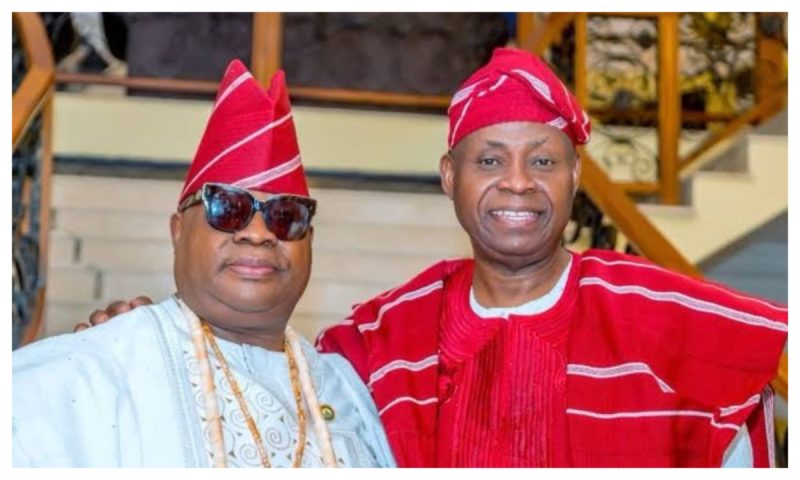
Osun 2026: Gov Adeleke, Oyetola trade accusations over poll

Osun State Governor, Ademola Adeleke and the Minister of Marine and Blue Economy, Adegboyega Oyetola, have exchanged accusations over the credibility of the August 15 governorship election in the state.

The disagreement followed comments by Oyetola, a former Osun governor and All Progressives Congress, APC, chieftain, who said Adeleke should prepare to lose the forthcoming election.

Oyetola made the statement on Saturday while addressing APC stakeholders and supporters in Osun State as the party intensified its campaign ahead of the poll.

He maintained that Adeleke’s endorsement of President Bola Tinubu for the 2027 presidential election would not prevent the APC from reclaiming the Osun governorship seat.

Speaking in Yoruba, Oyetola said, “They realised that they are already losing out. Then they claimed to have endorsed us. He almost cried. Endorsement cannot retain this seat for you. We are taking it over.”

The former governor added, “If you like, make 10 endorsements, we will collect this one from you.”

Adeleke, however, interpreted the statement as a threat to the conduct of the governorship election, accusing the APC of preparing to manipulate the process.

The governor’s position was contained in a statement issued on Sunday by his spokesperson, Olawale Rasheed, in which Adeleke urged democracy advocates and relevant authorities to take note of Oyetola’s remarks.

Adeleke said the people of Osun would resist any attempt to interfere with their constitutional right to freely elect their preferred candidate during Saturday’s election.

He also defended his endorsement of Tinubu, arguing that it demonstrated his political strength and ability to mobilise support for the President ahead of the 2027 presidential election.

According to Adeleke, Oyetola’s actions were hurting the APC’s standing in Osun and affecting the image of the President.

He said, “A serving minister of the Republic had made an open threat against a free and fair election.

“The minister has personally confirmed all previous reports that Osun APC has lost the electoral confidence of the people and is therefore focused only on rigging next Saturday.”

Adeleke declared, “As for us, we are winning this election by the grace of God and mass support of the people. We are not going to snatch the democratic rights of the people as Mr Oyetola had threatened. We will be re-elected by the choice of the voters.”

2027: APC Forum urges North-Central first term governors to sit up

Ahead of the 2027 general elections, the North-Central All Progressives Congress, APC, Forum has urged first term governors elected on the platform of the party in the zone to sit up in order to ensure their return for a second term.

The North-Central APC Forum asserted that improved performance by the governors will translate to victory for the party in the forthcoming election.

The APC Forum made the call on Sunday in a statement released by its Chairman, Alhaji Saleh Zazzaga, after a second quarter stakeholders consultative meeting in Abuja.

First term governors in the North-Central, who are seeking re-election in the 2027 election, include Ahmed Ododo, Kogi, Hyacinth Alia, Benue, Mohammad Bago, Niger and Caleb Muftwang, Plateau.

AbdulRahman AbdulRazaq and Abdullahi Sule, the governors of Kwara and Nasarawa, respectively, the two other states in the North-Central, are rounding off their second terms in office.

The North-Central APC Forum, while expressing a desire for the APC to retain the control of all the states in the zone after the 2027 elections, said the performance of the first term governors will go a long way in determining their chances of re-election.

It urged the governors to step up in the provision of dividends of democracy as the elections approach.

“We urge the first term governors in the North-Central to sit up in the discharge of their duties as the elections draw closer. Our target as the North-Central APC Forum is that the party will continue to retain control of all the states in the zone.

“As leaders of the party in their respective states, we urge the governors to take the lead towards ensuring that the North-Central remains totally under the control of the APC after the elections. The North-Central was the first geopolitical zone to come under the control of one party, APC, and we as stakeholders are proud of the feat.

“As stakeholders and dedicated party men, we declare our resolve to ensure that the North-Central retains its enviable position as the number one APC zone in the country. To this end, we are calling on the first governors to redouble their efforts in the provision of dividends of democracy to the people. We particularly urge them to pay special attention to security, the economy, agriculture, education, youth and women empowerment, and the general welfare of citizens,” the Forum said.

However, the North-Central APC Forum in the same vein commended the governors of Niger and Plateau states for their achievements in office.

The Forum noted that Bago and Muftwang have recorded notable achievements in various sectors, which it said have improved the living conditions of citizens in the two states. It highlighted improved security, economic advancement especially through investment in modernized agriculture, and empowerment programmes initiated by the governors in their states.

The Forum said Bago and Muftwang have prioritized the welfare of workers and implemented policies which have improved business activities, thereby attracting much needed private investment.

“Following the second quarter 2026 assessment of governance in the North-Central, we believe that the governors of Plateau and Niger states, Mohammed Umaru Bago and Caleb Muftwang, respectively, have recorded commendable achievements in various sectors.

“The Bago administration in Niger State has recorded major infrastructure and industrial projects including the 1,000km statewide road network and flyovers, 500-hectare solar farm and industrial park in Diko/Sabon Wuse, the Minna urban renewal and overhead bridge expansion, and the 500-unit housing estate in Kontagora.

“In Plateau State, the Muftwang administration has executed several landmark infrastructure, as well as agricultural and tourism projects, including the 19.7 km Mangu Bypass, the Plateau Potato Value Chain Project, and the remodeling of hospitality and sports centers like the Hill Station Hotel and Rwang Pam Township Stadium.

“Added to these, the administrations have recorded improvements in security and economic empowerment and several other sectors, which we believe would ensure victory for the APC in the 2027 election. Other first term governors in the zone have also made progress, but we urge all of them to do even more as the elections approach. It is our fervent desire that the North-Central retains its pride of place an the number one APC zone in the country at the end of the 2027 elections,” the Forum added.

The APC Forum expressed confidence that, with the strides recorded by Bago and Muftwang, and the performance of other governors, the pledge to deliver six million votes from the North-Central to President Bola Tinubu in the 2027 election is on course.

It would be recalled that, in December 2024, the Forum became the first political organization to endorse Tinubu for a second term, pledging six million votes for the President from the North-Central zone.