REA appointment: Fayose a grassroot politician – Shehu Sani

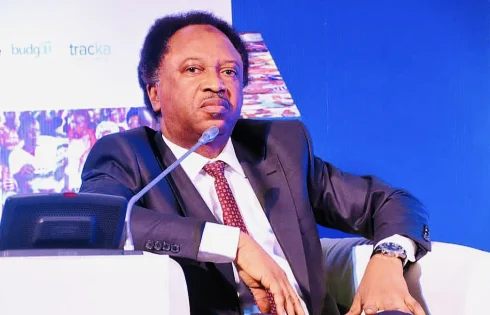
Former Kaduna Central Senator, Shehu Sani, has described ex-Ekiti State governor, Ayodele Fayose as a grassroot politician and a man of the masses.

Sani said Fayose’s appointment as the Chairman of the Rural Electrification Agency, REA, would help those in the rural areas have access to electricity.

On Monday, the Presidency had announced President Bola Tinubu’s appointment of Fayose as the Chairman of REA.

Tinubu’s spokesman, Bayo Onanuga, disclosed this while announcing new appointments Tinubu made in various government agencies.

Reacting, Sani posted on X: “My Friend Fayose is a grassroots politician and a man of the masses. He is appointed to an Agency where the Rural masses can have access to electricity.

“Why do you want to judge him by what he said years ago? Let he who has never assured his EX that they will be together forever cast the first stone.”

ICPC hands over forfeited Goodluck Jonathan estate land Abuja to Nigerian govt

The Independent Corrupt Practices and Other Related Offences Commission, ICPC, has officially transferred forfeited landed properties located in Kaba District, Abuja, to the Federal Mortgage Bank of Nigeria, FMBN, in accordance with a final forfeiture order issued by the Federal High Court.

The handover happened on Tuesday at the Goodluck Jonathan Estate site in Kaba District, Abuja, and was overseen by the Chairman of ICPC, Dr. Musa Adamu Aliyu, SAN, alongside the Managing Director/Chief Executive of FMBN, Mr. Shehu Usman Osidi, and senior officials from both organizations.

Dr. Aliyu characterized the event as a crucial achievement in Nigeria’s asset recovery and restitution initiatives, highlighting the importance of returning recovered public assets to productive public use.

He elaborated that the forfeited land was part of a housing project initiated by FMBN in 2012, which was financed through a $65 million loan facility obtained by Good Earth Power Nigeria Limited in collaboration with an American company. The project aimed to provide 962 housing units on approximately 27.92 hectares of land in Kaba District.

The ICPC Chairman noted that investigations indicated the complete diversion of the loan, with no housing units constructed, and that some of the funds were allegedly funneled through Bureaux de Change and taken overseas.

As a result, the ICPC initiated both civil and criminal proceedings regarding the case, with the civil proceedings having been concluded while the criminal case is still ongoing.

Aliyu revealed that on December 11, 2025, the Federal High Court, Abuja Judicial Division, under the authority of Hon. Justice M. G. Umar, issued a final forfeiture order in Suit No. FHC/ABJ/CS/1124/2025.

The Court mandated the final forfeiture of Plot No. 5 in Cadastral Zone D12, Kaba District, which measures approximately 122,015.80 square meters, and Plot No. 4 in the same Cadastral Zone, measuring approximately 157,198.30 square meters, as properties believed to be proceeds of illegal activities.

The Court has further instructed the Federal Republic of Nigeria, via the ICPC, to facilitate the transfer of the forfeited properties to the FMBN, which is recognized as the victim of the alleged unlawful activities.

Moreover, the Court has mandated the ICPC, in partnership with the FMBN, to oversee and supervise the construction of the planned 962 housing units until their completion, ensuring that they are allocated to the designated end users.

Aliyu highlighted that the court also ordered the formation of a joint committee consisting of representatives from both the ICPC and the FMBN to manage the supervision process effectively.

He mentioned that the Commission would swiftly appoint its representatives, with the Constituency and Executive Project Tracking Division representing the ICPC on this committee.

The ICPC Chairman emphasized that asset recovery must be accompanied by proper management, asserting that the true measure of success for the Kaba District project will be the completion of the housing units and their equitable distribution to Nigerian families.

He assured the public of the ICPC’s unwavering commitment to transparency, accountability, and the efficient management of recovered assets in accordance with the National Anti-Corruption Strategy.

In his comments, the Managing Director and Chief Executive Officer of the Federal Mortgage Bank, Shehu Usman Osidi, expressed gratitude to the ICPC for its diligence and professionalism in securing the recovery of the property and its transfer for the intended purpose.

“This land, designated for the development of this estate, has been neglected and left unused for an extended period. We sincerely appreciate the ICPC for ensuring that all necessary due diligence and legal considerations were carefully undertaken.

“This action is particularly commendable because it demonstrates a strong commitment to protecting public assets and ensuring that properties recovered or forfeited in the public interest are put to productive use for the benefit of Nigerians,“ he said.

Senate expands Safe Schools probe to TETFund, NELFUND

The Senate on Tuesday extended by three weeks the lifespan of its ad hoc committee investigating the Safe Schools Initiative and broadened the scope of the probe to include the Tertiary Education Trust Fund and Nigerian Education Loan Fund.

Others for probe are the Universal Basic Education Commission, Federal Ministry of Humanitarian Affairs and Poverty Alleviation, and the National Social Investment Programme Agency.

The red chamber said the expansion was aimed at conducting a comprehensive investigation into the funding, implementation and accountability of education and social intervention programmes linked to the safety and welfare of students across the country.

The resolution followed a motion moved by the Chairman of the Senate Ad hoc Committee on the Safe Schools Initiative, Orji Uzor Kalu (APC, Abia North), pursuant to Orders 41 and 51 of the Senate Standing Orders, 2026 (as amended), seeking an expansion of the committee’s terms of reference and additional time to conclude its assignment.

Presenting the motion, Kalu told lawmakers that preliminary investigations had revealed strong links between the implementation and funding of the Safe Schools Initiative and several government agencies responsible for educational funding, student welfare, humanitarian interventions and social investment programmes.

According to him, limiting the investigation to the Safe Schools Initiative alone would prevent the Senate from carrying out a comprehensive assessment of issues affecting school security and educational interventions.

“The issues surrounding student security, educational infrastructure funding and social intervention schemes for vulnerable learners across the country are deeply interwoven.

“Investigating the Safe Schools Initiative without reviewing these complementary bodies will result in fragmented legislative oversight,” Kalu stated.

He added that broadening the committee’s mandate had become necessary to enable the Senate to produce a comprehensive report that could strengthen accountability, safeguard students, and improve transparency in the management of intervention funds.

Under the expanded mandate, the committee will evaluate financial flows, operational challenges and accountability mechanisms across the Safe Schools Initiative and the affected agencies.

It will also review social safety net allocations linked to school feeding programmes, emergency relief for displaced students and educational rehabilitation initiatives implemented through the Federal Ministry of Humanitarian Affairs and Poverty Alleviation and NSIPA.

The panel is further expected to audit infrastructure and security-related intervention projects funded by TETFund in tertiary institutions, assess NELFUND’s disbursement processes, operational readiness, administrative efficiency, and students’ access to education loans, and examine UBEC’s interventions in basic education.

Seeking the Senate’s approval, Kalu said the committee required additional time because some critical aspects of the investigation had yet to be completed due to its extensive workload and other legislative engagements.

“We’re supposed to submit our report, and there are four key areas that were not done. I needed the permission of the Senate so that we can conclude it in the next two or three weeks and come back with a report,” he said.

Following a voice vote called by Senate President Godswill Akpabio, lawmakers unanimously approved the request granting the committee an additional three weeks to conclude its assignment.

The Senate inaugurated the ad hoc committee in December 2025 amid growing concerns over persistent attacks on schools despite years of government funding and policy interventions aimed at protecting educational institutions.

The probe gained further urgency following the abduction of 25 female students of Government Girls Comprehensive Secondary School, Maga, Kebbi State, during which bandits reportedly killed the school’s vice principal, reigniting concerns over the safety of students and teachers in vulnerable communities.

The Safe Schools Initiative was launched in May 2014 after the abduction of 276 schoolgirls from Chibok, Borno State.

Established as a partnership involving the Federal Government, the United Nations and private sector stakeholders, the programme was designed to strengthen security infrastructure around schools, particularly in conflict-affected areas.

The Senate’s ongoing investigation has already raised questions over the utilisation of funds released for the programme.

During previous hearings, the committee scrutinised the disbursement of N15bn released in 2023, with the Nigerian Police Force receiving the highest allocation of N6.225bn.

Other allocations examined by the panel include N3.362bn to the Nigeria Security and Civil Defence Corps, N2.250bn to Defence Headquarters and N519m to the Federal Ministry of Education, while the amount released to the Department of State Services was not publicly disclosed.

The committee also queried alleged financial irregularities and consultancy payments under the programme and directed the Safe Schools Financing Office to submit a reconciled breakdown of all funds released, expenditures, contractors and supporting documents relating to the Central Bank of Nigeria Trust Fund account.

During one of the investigative hearings, the National Coordinator of Financing Safe Schools in Nigeria, Hajia Halima Iliya, disclosed that the initiative received funding from both domestic and international partners, including $10m each from the Federal Government and Nigerian business leaders, $1m from the African Development Bank, €2m from the German Government, $4m from the Norwegian Government managed through UNICEF, as well as additional support from USAID, the Qatar Foundation and United Nations agencies.

With the expanded mandate, the Senate committee is expected to present a broader assessment of how education, security and humanitarian intervention funds are being utilised and whether the various programmes are effectively addressing the safety, welfare and educational needs of Nigerian students.

GCR upgrades FCMB Group rating, affirms stable outlook

FCMB Group PlcGCR Ratings has upgraded FCMB Group Plc’s national scale long‑term issuer rating to A‑(NG) from BBB+(NG), while affirming the national scale short‑term issuer rating at A2(NG).

Concurrently, GCR upgraded the national scale issue ratings on the Series 1 N20.7bn and Series 2 N26bn Additional Tier 1 Subordinated Bonds to BBB(NG) from BBB‑(NG), maintaining a stable outlook across the board.

“The positive rating action on FCMB Group Plc is hinged on the improved fundamentals of the group’s core operating entity, First City Monument Bank Limited,” GCR stated in a rating announcement on Monday.

“The ratings upgrade reflects the improvement in FCMB’s capital adequacy, supported by the additional capital injection and good internal earnings generation,” the rating agency added, noting that the score also “balances the strong competitive position, adequate funding and liquidity position against the bank’s evolving risk profile”.

FCMB Group operates as a financial services holding company in Nigeria with core operations in banking and a growing footprint across non‑bank financial services, including consumer finance, investment management, and investment banking.

The group encompassed seven direct subsidiaries and three indirect subsidiaries as of 31 December 2025, with a long‑term strategy to expand its footprint across other African markets.

Addressing the structural hierarchy of the institution, GCR noted, “FCMB Group’s rating is one‑notch lower than the consolidated group, due to the subsisting structural subordination.

“This reflects the Non‑Operating Holding Company’s reliance on cash flows and dividends from the bank and other subsidiaries, which could be diverted by regulatory intervention at a time of stress,” the agency explained.

The Series 1 and Series 2 perpetual, non‑cumulative, fixed‑rate, resettable Additional Tier 1 Subordinated Bonds represent the initial tranches issued under the group’s N300bn Debt Issuance Programme. Originally raised in 2023 at a resettable fixed coupon rate of 16 per cent with no scheduled maturity date, these instruments qualify as AT1 capital under Central Bank of Nigeria approvals.

GCR noted that it applied a three‑notch differential from the bank’s senior unsecured ratings due to back‑to‑back loan agreements, contractual note subordination, deferrable interest payments, and write‑down triggers tied to a core equity tier 1 ratio dropping to 10.75 per cent or a point of non‑viability determination by the regulator.

Following recent capital infusions, the bank’s CET1 ratio strengthened from 14.3 per cent as of 31 December 2025 to 22.3 per cent by 31 March 2026. Periodic reports submitted by bond trustees indicate that coupons on both series have been serviced timely without financial covenant breaches.

Outlook metrics for the institution remain positive over the medium term. “The stable outlook reflects our expectations that the GCR core capital ratio will range between 19 per cent and 22 per cent over the next 12–18 months, on account of the bank’s conservative loan book growth,” GCR stated.

“The sustained loan book clean‑up and recovery efforts could support the asset quality metrics, although it remains vulnerable to challenges in the macroeconomic environment,” the agency added. “The funding and liquidity position is expected to remain stable, predicated on the good deposit mobilisation capacity and other funding options”.

Petrol loading resumes as depot prices climb

Petrol

Fuel marketers have resumed loading petrol and diesel from private depots after an almost one-week disruption triggered by recent price adjustments in the downstream petroleum sector.

The National Publicity Secretary of the Independent Petroleum Marketers Association of Nigeria, Chinedu Ukadike, told The PUNCH on Tuesday that private depots had resumed selling petroleum products to marketers, dismissing fears of an imminent fuel scarcity.

Although some filling stations did not dispense petrol on Monday and Tuesday, Ukadike said marketers were only being cautious because of the prevailing volatility in fuel prices, particularly amid the ongoing Middle East crisis.

He explained that depot owners temporarily suspended loading operations to adjust prices and request top-up payments from marketers who had already paid for products before the latest price increase. Ukadike, however, noted that depot owners do not refund marketers when prices fall below the amount previously paid for products.

Speaking on the Dangote Petroleum Refinery’s newly introduced dollar-for-fuel policy, Ukadike said he could not confirm whether marketers had started paying in dollars for products loaded through the refinery’s gantry in Lekki, Lagos.

“Marketers have started loading in other depots. You know, once there is a price change, they will stop and take their stock, then reset their prices around the rest of them. Then also look at the tickets they have sold before and see how they will do top-up. What we call top-up is the differential of the former price, so they can buy at the current price. These are the exercises that are ongoing. And once they are ongoing, you cannot load,” he said.

He added, “I know that Dangote has fixed its price in dollars, but no marketer has ever informed me that they have paid in dollars, especially those loading from the gantry. But for offshore loading or coastal loading, I can assure you that it will be paid in dollars. But for gantry loading, I don’t know. By tomorrow, I will confirm.”

Meanwhile, petrol loading prices rose further across major private depots in Lagos on Tuesday, with marketers paying up to N1,275 per litre amid continued uncertainty in the downstream petroleum market following the Dangote Petroleum Refinery’s transition to dollar-denominated transactions.

Depot price data obtained by The PUNCH from Petroleumprice.ng showed that loading prices in Lagos increased by N25 per litre at most depots. African Terminal, ASCON, Gulf Treasure, Integrated, Matrix, NIPCO, Pinnacle, Sahara and T.Time all raised their ex-depot prices from N1,250 to N1,275 per litre.

However, prices were mixed in other parts of the country, as some depots retained their previous rates while others recorded marginal reductions.

In Port Harcourt, Bulk Strategic and Masters retained their petrol prices at N1,265 per litre. Liquid Bulk reduced its price by N3 from N1,268 to N1,265 per litre, while Matrix cut its loading price by N15 from N1,280 to N1,265 per litre. Sigmund also sold petrol at N1,265 per litre.

In Calabar, Hong Petroleum reduced its price by N15 from N1,270 to N1,255 per litre, while Sobaz increased its loading price by N10 to N1,265 per litre.

In Warri, Matrix increased its depot price by N5 to N1,265 per litre, while Optima raised its price by N10 to N1,270 per litre. Rain Oil retained its price at N1,270 per litre, while Prudent sold the product at N1,270 per litre.

Diesel prices also edged higher at some depots. In Lagos, African Terminal, Duport, Gulf Treasure, Ibachem and Wosbab increased their diesel prices by N10 to N1,600 per litre, while Ibeto retained its price at N1,590 per litre. Integrated quoted N1,600 per litre.

In Port Harcourt, Sigmund increased its diesel price by N5 from N1,615 to N1,620 per litre, while Sahara sold the product at N1,600 per litre. In Warri, Prudent raised its diesel price by N10 to N1,610 per litre, NIPCO retained its price at N1,680 per litre, while Rain Oil sold diesel at N1,600 per litre.

The latest price adjustments highlight the persistent volatility in the downstream petroleum market following the Dangote Petroleum Refinery’s decision to sell petrol to marketers in dollars, a development that continues to influence depot prices across the country.

While loading activities at the Dangote refinery were said to be low-key, fuel importers appeared to be taking advantage of the situation, even as consumers continued to bear the burden of higher pump prices nationwide.

Industrial sector drags NGX down 0.14%

The Nigerian Exchange Limited experienced a wave of mixed sentiments during the trading week ended 17 July 2026. A sharp decline in the industrial sector effectively offset strong gains in banking equities, reflecting a broader tug-of-war between institutional portfolio rebalancing and macroeconomic headwinds.

The benchmark NGX All-Share Index depreciated marginally by 0.14 per cent to close the week at 243,462.13 points. Conversely, total market capitalisation managed to buck the downward index trend, appreciating by 0.39 per cent to settle at N157.057tn by Friday’s close.

This divergence between the ASI and market capitalisation was primarily attributed to large-scale primary market listings and capital restructuring during the week, which added weight to the total market value despite price depreciation among major equities.

A closer look at the sectoral performance revealed that a steep 6.26 per cent decline in the NGX Industrial Goods Index acted as the primary anchor dragging down the broader market index. The industrial sector continues to face severe pressure from elevated energy costs, persistent foreign exchange illiquidity affecting raw material imports, and the high-interest-rate environment, which has slowed down major real estate and infrastructure projects nationwide.

This downward pressure was further compounded by losses in the NGX Main Board Index, which fell 1.54 per cent, alongside minor pullbacks in the Consumer Goods and Oil & Gas indices. Consumer goods companies, in particular, remain squeezed by weakened disposable income among Nigerian households, forcing investors to adopt a cautious stance.

On the flip side, the banking sector put up a resilient fight against the bears. The NGX Banking Index climbed 9.30 per cent, preventing a more severe market downturn. This rally was largely driven by sustained investor appetite following strong half-year corporate earnings releases and speculative positioning around the Central Bank of Nigeria’s ongoing banking recapitalisation exercise, which has favoured tier-one institutions.

Trading volumes decline

Activity on the trading floor slowed down significantly compared with the previous week’s performance, indicating a temporary shift towards a ‘wait-and-see’ approach by institutional investors ahead of macroeconomic data releases.

Investors traded a total turnover of 2.819bn shares worth N182.499bn in 226,729 deals, representing a noticeable drop from the 3.648bn shares valued at N220.568bn that exchanged hands in the preceding week.

As has become the norm on the local bourse, the Financial Services Industry single-handedly drove the market’s liquidity, accounting for over 71 per cent of the total equity turnover volume. The sector’s dominance underscores its status as the most liquid and actively traded segment of the NGX, especially during periods of broader economic uncertainty.

Divergent price action

Market sentiment measured by price changes leaned slightly towards the bears, as the number of advancing equities dropped from 60 in the previous week to 44, signalling a tightening of market breadth.

First HoldCo Plc emerged as the standout performer of the week, leading the gainers with an impressive 38.66 per cent price surge to close at N95.95 per share. Analysts attributed this rally to robust institutional buying and positive market sentiment surrounding its strategic expansion plans.

BUA Cement Plc suffered the worst hit on the decliners’ table, shedding 18.99 per cent of its value to close at N275.60 per share. The heavy sell-off in BUA Cement heavily influenced the slump in the Industrial Goods index, as investors reacted to profit-taking and broader concerns regarding input cost inflation within the manufacturing sector.

Capital base expansion

The week also featured a significant corporate action as Sterling Financial Holdings Company Plc successfully expanded its presence on the local bourse, highlighting the ongoing capital raising trend in the financial sector.

The Exchange listed an additional 13.812bn ordinary shares arising from the company’s recent public subscription offer at N7.00 per share.

This supplementary listing officially boosted the total issued and fully paid-up shares of the financial holding company from 52.117bn to 65.929bn units.

This capital injection not only strengthens Sterling HoldCo’s balance sheet to absorb potential macroeconomic shocks but also directly contributed to the appreciation of the total NGX market capitalisation, despite the marginal drop in the All-Share Index.

Inflation moderates further

The cautious stance by investors came as Nigeria’s headline inflation slowed marginally for the first time in four months, as easing core inflation offset persistent food price pressures.

In tandem with the cooling inflation data, domestic crude oil production rose to a 74-month high, exceeding Nigeria’s OPEC quota for the second consecutive month.

Simultaneously, the CBN introduced the FX BDC Purchase Tracker to improve transparency and efficiency in the retail foreign exchange market. The centralised digital platform requires licensed Bureau De Change operators to submit foreign exchange transactions in real time.

The initiative builds on the February 2026 policy that restored BDCs’ access to the official FX market through weekly allocations of up to USD150,000 from Authorised Dealer Banks. It replaces the previously manual, delay-prone reporting framework that fostered pricing distortions, speculative hoarding, and ultimately prompted the suspension of official Dollar sales to BDCs.

The platform reinforces the apex bank’s commitment to improving transparency and accountability in the retail FX market. By enabling transaction-level monitoring, the CBN aims to eliminate practices such as round-tripping and currency diversion, while ensuring official FX allocations are deployed solely to meet legitimate retail demand. The system also provides regulators with better visibility into demand dynamics, utilisation rates, and compliance across the BDC segment.

Reacting to the development, analysts at Meristem Securities Limited stated, “We expect the FX BDC Purchase Tracker to strengthen price discovery and improve transparency within the retail foreign exchange market, thereby reducing opportunities for speculative buying and arbitrage opportunities, and gradually compressing the spread between the official and parallel market exchange rates.

“The effectiveness, however, will depend on the CBN’s consistency in enforcing compliance and penalising reporting violations. In the near term, the success of the framework will hinge on its ability to facilitate seamless adoption across dealer banks and BDCs while improving retail FX liquidity, strengthening price discovery, and fostering a more efficient and orderly foreign exchange market.”

NUPRC awards 37 oil blocks, warns against delays

NUPRCThe Nigerian Upstream Petroleum Regulatory Commission on Tuesday declared 31 companies as winners of 37 oil and gas blocks under the 2025 Licensing Round, despite what the commission described as sustained threats and pressure mounted against members of its evaluation team before the conclusion of the exercise.

The successful conclusion of the commercial bid conference marked the end of an eight-month licensing process, with the winning firms now required to pay their signature bonuses and satisfy other post-award conditions within 90 days or risk forfeiting the assets to reserve bidders.

Speaking after the commercial bid conference in Abuja, the Commission Chief Executive of the NUPRC, Oritsemeyiwa Eyesan, disclosed that officials involved in evaluating the bids faced repeated intimidation throughout the process but refused to compromise the integrity of the exercise.

She said the threats persisted until the eve of the commercial bid opening. Eyesan said, “It has been a journey… If you have been told anything contrary to the fact that this process was going to be credible and transparent, do not believe it.”

Commending members of the evaluation committee, she added, “The evaluators have worked tirelessly since June 12. They have been inundated with calls and with threats, serious threats, but they stood their ground. Up until yesterday, we were still threatened, but we stood our ground to say that the times have changed. Nigeria is really open for business.”

She said President Bola Tinubu had mandated the commission to ensure a credible process and thanked the evaluators and observers from the Nigeria Extractive Industries Transparency Initiative for supporting the exercise.

The commission announced that 31 companies emerged successful after 143 companies submitted about 200 bids for 37 oil and gas blocks out of the 50 assets offered during the licensing round.

The successful companies include SSonic Petroleum Limited, CFP Pipeline and Flowlines, Dutchford E&P Limited, Attabanson Global Company Limited, Rosem Energy Limited, Pivot-GIS Limited, Network E&P, Asharami, LexOil, BVOF, Gupsco Energy Limited, Saratoga, Volante, Concept-Reel Petroleum Services Limited, Clinton Oil Field, Nuway Oaklane Limited, Ramec Italia.

Others are Blueridge E&P, Up Energies Limited, AYM Shafa, Blackrock Holdings Limited, Funtay Integrated Business Limited, Riparian Development and Production Limited, Nikstallis, Stardeep Petroleum, Dakoda & U Limited, Southborne Oil and Gas Limited, Lanaka Petroleum, Highban Resources Limited and Eyre Energy Limited.

The commission explained that the successful companies had emerged only as preferred bidders and would receive Petroleum Prospecting Licences after meeting all statutory conditions under the Petroleum Industry Act.

Eyesan urged the winners to immediately commence the post-award process. She said, “These firms will only be presented final awards after the payment of the appropriate signature bonus and the approval of the Minister of Petroleum Resources in line with the Petroleum Industry Act, 2021.”

She warned that failure to fulfil the post-award conditions within 90 days would invalidate the awards, allowing the commission to invite reserve bidders.

The commission explained that the commercial bid process was designed to eliminate human interference through an automated weighted scoring system. Officials said technical evaluations had been completed before the commercial bids were opened publicly, while no one, including members of the evaluation team, had prior access to the commercial bids.

“The weighted score is 40 per cent. All these things are automated. The computer calculates everything. Nobody is using a pen to write any figures. This demonstrates the transparent, efficient and robust process built into this licensing round,” the commission stated.

Meanwhile, the Minister of State for Petroleum Resources (Oil), Senator Heineken Lokpobiri, said the Petroleum Industry Act had ended the discretionary allocation of oil blocks in Nigeria. “The PIA, unfortunately for some people, has prevented discretionary allocation of oil blocks,” he said jokingly.

He stressed that the law guarantees fairness and credibility, assuring investors that no one knows the content of commercial bids before they are officially opened. Lokpobiri also warned successful bidders against treating licences as speculative assets.

“In the past, I have seen people go round conferences across the world carrying licences and looking for partners who never came. Those days must be over. The licences issued today must translate into actual field development and production,” he said.

Also speaking, the Minister of State for Petroleum Resources (Gas), Ekperikpe Ekpo, said the licensing round reflected the Federal Government’s commitment to transparency, competitiveness and credibility.

“The Federal Government remains firmly committed to creating an enabling environment that attracts investment, accelerates exploration and production, and unlocks the full value of Nigeria’s hydrocarbon resources,” Ekpo said.

2027: I won’t persecute opposition as Nigeria’s president – Peter Obi [VIDEO]

The Nigeria Democratic Congress, NDC, presidential candidate, Peter Obi, has vowed never to persecute opposition if he emerges as Nigeria’s president in 2027.
Obi said he would ensure a viable opposition in Nigeria where he would sit with them to discuss issues that affect the country if elected as Nigeria’s president.

In an interview with DW, the former Anambra State governor said his intending administration would ensure that the system works in Nigeria.

He said: “The system must work the way it should function, I would never prosecute anybody politically, I would never do anything wrong while in office.

“I would not go after opponent, I would make sure that we have strong opposition parties that can stand and say no. In times of problems I would invite them.

“If I was president with what is happening in the North, I would invite all opposition parties and I would sit with stakeholders in the North to discuss and come up with a solutions.”

Osun 2026: Adeleke’s Campaign Council urges INEC to address election concerns

The Imole Campaign Council, the platform coordinating the re-election bid of Osun State Governor, Ademola Adeleke, has called on the Independent National Electoral Commission, INEC, to address alleged shortcomings recorded during recent off-cycle and by-elections ahead of the state’s governorship election.
The Director-General of the campaign council, Lere Oyewumi, made the call while speaking with journalists in Osogbo on Monday, where he raised concerns over the credibility of previous elections and urged the electoral umpire to strengthen its processes.

Oyewumi alleged that during some recent off-cycle and by-elections held in Ogun, Oyo, Jigawa and Ekiti states, persons suspected to be “mercenary voters” were issued Permanent Voter Cards, PVCs, shortly before election day.

He also expressed concerns over the alleged shortage of ballot papers and other sensitive election materials, claiming that some irregularities were recorded during the 2026 Ekiti State governorship election, including the circulation of pre-thumbprinted ballot papers.

According to him, technical difficulties linked to the Bimodal Voter Accreditation System, BVAS, affected the conduct of elections in Ekiti State and the Federal Capital Territory, FCT, Area Council polls.

The lawmaker further alleged that during recent elections in Anambra, Ekiti and the FCT, some political parties that did not participate in the contests were listed on ballot papers and result sheets.

Speaking on specific concerns ahead of the Osun governorship election, Oyewumi claimed that the campaign council had received reports of alleged statements by some All Progressives Congress, APC, leaders regarding the possible preloading of BVAS machines ahead of the poll.

“We have been inundated with boastful statements reportedly made by some Osun APC leaders about preloading BVAS machines ahead of the governorship election in the state,” he said.

Oyewumi described the allegation, if proven true, as a serious threat to the integrity of electronic accreditation and a possible indication of an attempt to influence the outcome of the election.

He also raised concerns over INEC’s ongoing distribution of new PVCs, urging the commission to ensure the process remains open, transparent and free from any form of manipulation.

“We have been notified about the commencement of the distribution of new PVCs by INEC. However, we have serious concerns about the transparency of the process, and we hereby warn that any move to disenfranchise Osun voters by withholding their PVCs will not be tolerated,” he stated.

The campaign council insisted that PVC collection must be conducted transparently, warning against any form of proxy collection.

Oyewumi stressed that the concerns raised were not intended to discredit INEC but were aimed at encouraging improvements and ensuring a more credible electoral process through constructive engagement.

He said the Osun governorship election would provide another opportunity for Nigeria’s democratic institutions to demonstrate their commitment to free, fair and transparent elections.

“The people of Osun are peaceful, politically conscious and deeply committed to democracy. They expect nothing short of a free, fair, transparent and credible election that faithfully reflects the wishes of the electorate,” he added.

The campaign council consequently urged INEC to carefully consider the issues raised and take necessary corrective measures before the August 15 governorship election.

Federal High Court stops FCCPC from issuing licences

The Federal High Court in Lagos on Monday held that Federal Competition and Consumer Protection Commission, FCCPC, has no authority to issues licences but can only oversee airtime and data credit services.

The court clarified that the Commission’s powers function alongside those of the Nigerian Communications Commission, NCC, rather than replacing them.

Justice Ambrose Lewis-Allagoa, who delivered the judgment in Suit No. FHC/L/CS/760/2026, determined that the DEON Consumer Lending Regulations 2025 fall within the statutory and constitutional powers of the FCCPC.

Furthermore, the judge emphasized that the relationship between the FCCPC and sector-specific regulators is one of complementarity, stating that “concurrency means coexistence, not displacement.”

The court confirmed the precedence of the FCCPC in matters of competition and consumer protection as outlined in Sections 104 and 105 of the FCCPA 2018, while also safeguarding the NCC’s technical, licensing, and prudential duties as defined by the Nigerian Communications Act 2003.

The court ruled that the FCCPC does not possess the authority to issue licenses, and that the DEON Regulations do not establish a telecommunications licensing framework. The NCC continues to be the exclusive authority responsible for licensing entities within the telecommunications sector.

In April 2026, the FCCPC authorized five companies to function as airtime and data credit providers under the DEON framework.

The court’s decision raises pertinent questions regarding the regulatory foundation upon which those approvals were granted.

This ruling marks the first judicial clarification on the oversight of airtime and data credit services between the two regulatory bodies, in a market valued at between N300 billion and N400 billion annually, utilized by approximately 40 million Nigerians on a daily basis.

Gbenga Adebayo, the Chairman of the Association of Licensed Telecommunications Operators of Nigeria, expressed his approval of the clarity provided by the judgment.

Adebayo said, “The court has done something important. It has confirmed the FCCPC’s authority and, in the same breath, affirmed that the NCC’s role is preserved.

Concurrency means coexistence. The industry now expects both regulators to establish the coordination framework that the court’s reasoning requires.”

Adebayo called on the FCCPC and the NCC to engage the industry in formal consultation before enforcement action is taken, noting that airtime credit services were suspended for three months earlier this year following an enforcement directive and were restored only recently.

“Forty million Nigerians depend on these services.

“The court has made clear that both regulators have a role. The industry is asking them to define how that works before any action that could disrupt access again,” he said.

Adebayo also noted that the Presidential Enabling Business Environment Council directive of 6 April 2026, which requires all federal agencies to conduct a Regulatory Impact Assessment before significant regulatory changes, remains in effect.

The judgment is expected to set a precedent for how sector-specific regulators and the FCCPC share oversight as digital products increasingly cross traditional regulatory boundaries.