Osun 2026: INEC extends PVC collection deadline

The Independent National Electoral Commission, INEC, has extended the collection of Permanent Voter Cards, PVCs, at Registration Area centres across Osun State until Friday, July 31, 2026.

The move is coming after complaints from voters and large crowds at distribution centres.

In a statement issued by the Head of Department, Voter Education, Publicity, Gender and Inclusivity, INEC Osun State, Ariyo Rufus, for the Resident Electoral Commissioner, Oluwatoyin Babalola, the Commission said the extension followed the conclusion of the initial exercise, which commenced on Wednesday, July 22, and was originally scheduled to end on Tuesday, July 28, 2026.

According to the Commission, “322,822 Permanent Voter Cards, representing 62 per cent of the available PVCs, were collected during the exercise. The extension would enable more registered voters to obtain their cards before the governorship election.”

The statement said, “Having regard to complaints and large crowds at collection centres as well as other difficulties, the Commission has approved the extension of PVC collection at Registration Areas to Friday 31st July, 2026, to enable more eligible voters to exercise their civic right.”

INEC also announced that PVC collection at the Local Government Area offices would now begin from August 1 and continue until August 7, 2026, replacing the earlier commencement date to accommodate the extension at the Registration Area level.

The Commission urged all registered voters who are yet to collect their Permanent Voter Cards to take advantage of the additional period.

“Concerned Registered Voters are urged to take advantage of this window and collect their Permanent Voter Cards,” it stated.

NNL: Edward Green set to take charge at Godswill Akpabio United FC

Edward Green is set to be appointed as the new head coach of Nigeria National League, NNL, side Godswill Akpabio United FC,

Green has been identified as the ideal replacement for Lawrence Kingsley who stepped from the role last week.

The young tactician is expected to sign a two-year contract with the Uyo-based club.

Green served as assistant coach with Nigeria Premier Football League, NPFL, side Rivers United last season.

The young tactician also served in the same capacity with Akwa United and Sporting Lagos.

He was among the technical crew that guided Sporting Lagos to the NPFL in 2024.

Troops escape unhurt as MRAP hits terrorists’ IED in Borno

Troops of Operation Hadin Kai escaped unhurt after a Mine-Resistant Ambush Protected (MRAP) vehicle struck a concealed Improvised Explosive Device (IED) during a patrol and civilian escort mission in Borno State.

The incident was disclosed in a post shared on X on Tuesday night by security analyst Zagazola Makama, who said the explosion occurred at about 8:50 a.m. on Monday in the Bulabulin general area of the state.

According to the post, troops of the 19 Battalion (Motorised)/25 Task Force Brigade Garrison were carrying out a major supply route (MSR) dominance patrol while escorting civilians when the lead MRAP hit an IED allegedly planted by terrorists.

The explosion damaged the vehicle’s front tyres, but none of the soldiers sustained injuries.

Reinforcement troops were immediately deployed to the scene to secure the area and provide support for the patrol team.

“The damaged tyres were later replaced, allowing the troops to continue their patrol and escort mission without further incident,” Makama wrote.

According to the report, the incident highlights the continued threat posed by improvised explosive devices used by Boko Haram and Islamic State West Africa Province (ISWAP) fighters to target security personnel and disrupt movement along major routes in the North-East.

Benue South killings: Amnesty International demands probe into death of 15 residents

Amnesty International Nigeria has called on the Nigerian authorities to launch a thorough, transparent and impartial investigation into the killing of at least 15 people in Ugboju District, Otukpo Local Government Area of Benue State, warning that the attacks represent an escalating threat to the right to life.

In a statement issued on its verified Facebook page on Tuesday,, Amnesty said the latest attack occurred on 28 July 2026 in Efeyi-Ugboju, where armed groups allegedly killed at least 14 residents. The attack came a day after another resident was reportedly killed in nearby Ipom-Ugboju, bringing the total number of deaths from the two incidents to at least 15.

Amnesty International said the attacks underscore what it described as an unrelenting campaign of violence against communities in the southern part of Benue State.

“These killings in the southern part of Benue State clearly show an unrelenting campaign of violence that continues to make life a hell for villagers,” the organisation said.

The organisation expressed concern that communities in Otukpo and across Benue State continue to face repeated attacks by armed groups with little protection.

“Communities in Otukpo and across the state cannot continue to be left entirely at the mercy of armed attackers who operate with complete impunity and total disregard for the right to life,” Amnesty International stated.

According to the organisation, the persistent failure of the Nigerian government to proactively prevent the attacks or hold perpetrators accountable has created a dangerous cycle of violence, leaving residents under constant threat of death, displacement and the destruction of their livelihoods.

Amnesty International called on the authorities to carry out a transparent, independent and impartial investigation to identify, arrest and prosecute all those suspected of responsibility for the killings in accordance with the rule of law.

“The government is obligated to protect lives and property. Those responsible for these attacks must be identified, arrested and held accountable through a credible judicial process,” the organisation added.

Cash fare payments to attract sanctions as Lagos govt begins enforcement

Lagos Metropolitan Area Transport Authority, LAMATA, has warned that commuters who pay cash for rides on regulated public transport services will face penalties beginning August 1 as the state moves to fully enforce its cashless fare payment policy.

According to the authority, the enforcement is aimed at strengthening accountability, promoting transparency and ensuring full compliance with the use of electronic payment systems across regulated transport operations.

LAMATA made this known during an X Space discussion with transport stakeholders and industry leaders on Tuesday, themed “Lagos Cashless Transit: What Aug. 1 Enforcement Means to You.”

The agency also urged passengers to report any driver or conductor demanding cash payments through its official email channels or customer service lines.

Speaking during the session, LAMATA’s Head of Legal, Idris Akinola, said the laws and regulations governing the authority require commuters to pay fares on regulated public transport services through the approved electronic platform, the Cowry Card.

He added that existing Lagos State laws classify both the giving and receiving of unauthorised payments as offences, noting that in this context, offering or accepting cash could amount to bribery.

“This means both the person offering cash and the person accepting it may be held liable under the applicable laws,” Akinola said.

He advised transport operators to engage trustworthy drivers and conductors, while also encouraging them to conduct random internal checks to ensure staff comply with the cashless policy and cooperate with LAMATA’s enforcement inspections.

Akinola warned that offenders could face severe penalties, stating that both parties, if convicted under the relevant laws, could be sentenced to up to seven years imprisonment.

Managing Director of Teejay Motors, Adekunle Tajudeen, said the company had already organised meetings and training programmes for its drivers, referred to as captains, as well as boarding officers to prepare them for the full implementation of the policy.

According to him, staff members had been directed not to accept cash under any circumstance and passengers had been reminded that fares must be paid with the Cowry Card.

Tajudeen disclosed that some Teejay Motors drivers had previously been arrested and jailed for collecting cash fares, arguing that commuters also contributed to the problem by offering cash payments.

He said extending enforcement to passengers was intended to discourage the practice and improve compliance.

To minimise service disruptions, he noted that the company had recruited additional drivers and expanded its fleet to ensure commuters would not be stranded if non-compliant staff were removed from operations.

Also speaking, public transport and urban mobility expert Adepoju Fawokon said focusing enforcement solely on drivers had not yielded the desired results.

“Since every cash transaction involves both the person offering cash and the person accepting it, LAMATA believes both parties should be held accountable.

“The goal is to reduce revenue leakage and protect the sustainability of the regulated bus system rather than simply punish commuters,” Fawokon said.

Responding to complaints about incorrect card top-ups, Managing Director of Touch and Pay Technologies, Olamide Afolabi, acknowledged that some passengers had reported cases of agents loading inaccurate amounts onto Cowry Cards.

He said the company had introduced new technology, including the Carry Hub and a mobile application, to help users monitor their balances and review recent transactions.

Afolabi explained that self-service top-up kiosks had also been installed at bus and rail terminals, allowing commuters to load funds onto their cards without relying on agents.

He added that the mobile application enables users to top up their cards and transfer the balance directly from their phones.

According to Afolabi, a postpaid and single-card payment system is expected to be rolled out more extensively before the end of the year.

He said the new system would allow online top-ups to be used instantly without the need to first transfer funds onto the physical card.

NLNG exports 6,000 LNG cargoes, earns $150bn revenue

Nigeria LNG Limited has generated more than $150bn in revenue and exported over 6,000 liquefied natural gas cargoes across the globe since it commenced operations, highlighting its growing contribution to Nigeria’s economy as the country intensifies efforts to leverage its vast gas reserves.

The company also disclosed that it has paid over $47.2bn in dividends to shareholders, remitted more than $10bn in taxes to the Federal Government, and built an asset base valued at about $23bn, making it one of Nigeria’s biggest corporate contributors to government revenue.

The Managing Director and Chief Executive Officer of NLNG, Mr Adeleye Falade, unveiled the figures on Tuesday during his maiden media engagement since assuming office on April 1, 2026.

The briefing, held in Lagos, also provided insight into the company’s growth plans, including the completion of Train 7 and early discussions around the development of Trains 8, 9 and 10, as NLNG seeks to expand Nigeria’s footprint in the global LNG market.

Taking journalists through NLNG’s performance over the past 37 years, Falade said the company had evolved into one of the world’s leading LNG exporters, delivering more than 6,000 cargoes safely to customers across Europe, Asia, the Middle East and other markets.

He explained that while many Nigerians assume NLNG produces natural gas, the company actually purchases gas from upstream producers, processes it by removing impurities, liquefies it, transports it through specialised vessels and markets it to buyers around the world.

“We don’t produce the gas. We buy gas, just like power companies buy gas. We process it, liquefy it, transport it and sell it across the world,” he said.

Falade disclosed that NLNG currently operates six liquefaction trains with a production capacity of 22 million tonnes per annum, describing the Bonny Island facility as the largest industrial complex in Sub-Saharan Africa.

He said the company also operates a fleet of 22 dedicated vessels, comprising 20 LNG carriers, one liquefied petroleum gas (cooking gas) vessel serving the domestic market and another dedicated vessel supporting operations.

Giving a breakdown of the company’s financial performance, Falade said NLNG has generated approximately $150bn in cumulative revenue since operations began 37 years ago.

He added that the company had distributed almost $50bn to shareholders as dividends, with actual payments standing at $47.2bn. “Our assets are currently valued at about $23bn. Right from where we started, we generated about $150bn in revenue. We managed to pay almost $50bn as dividends to our shareholders,” he said.

According to him, the Federal Government, through its equity holding in the company, remains the largest shareholder with a 49 per cent stake, while Shell, TotalEnergies and Eni own the remaining interests.

Falade stated that after the expiration of its pioneer tax status, NLNG became one of Nigeria’s largest taxpayers. “Right from when we became tax compliant, we’ve paid tax in excess of $10bn to the Federal Government,” he stated.

He explained that the company’s fiscal contributions extend beyond company income tax. According to him, about 60 per cent of payments made by NLNG for gas purchases eventually flow back to the Federal Government because of its equity participation in upstream producing companies.

He added that the company also pays petroleum-related taxes, value-added tax and other statutory levies. The NLNG boss said the company has emerged as Nigeria’s most tax-compliant corporate organisation for five consecutive years, while also making significant contributions through Pay-As-You-Earn taxes deducted from employees.

On domestic gas utilisation, Falade disclosed that NLNG supplied a record 500,000 tonnes of liquefied petroleum gas, commonly known as cooking gas, to the Nigerian market last year.

He said the figure represents the highest annual domestic LPG supply since the company began local distribution in 2005 with only about 70,000 tonnes. At the time, he explained that the company now supplies about one-third of Nigeria’s cooking gas demand despite increasing its volumes more than sevenfold.

“Last year was the highest volume we’ve ever supplied in a single year when we supplied 500,000 tonnes of LPG. Today, that’s about 33 per cent of what the country demands,” he said.

Falade revealed that since 2022, NLNG has dedicated 100 per cent of its cooking gas production to the Nigerian market, abandoning exports in a bid to improve access to cleaner cooking fuel.

He said the decision was taken after the company reviewed a report by The PUNCH, indicating that thousands of Nigerians, particularly women, suffer health complications from cooking with firewood and other biomass.

According to him, increasing LPG availability contributes to reducing deforestation, indoor air pollution and carbon emissions while supporting Nigeria’s energy transition agenda.

The NLNG chief also highlighted the company’s contribution to reducing gas flaring. He said when NLNG was established, Nigeria flared about 65 per cent of the gas produced alongside crude oil.

Today, he said, that figure has fallen to below 20 per cent, with NLNG playing a major role by creating a commercial market for associated gas that would otherwise have been burnt into the atmosphere.

“Half of the gas that we get into our plant is associated gas. This is gas that people used to flare. Because we created a viable business case for that gas, we’ve helped reduce gas flaring significantly,” he stated.

Falade stressed that although Nigeria is widely regarded as an oil-producing nation, its greatest resource is natural gas. He said the country has about 209 trillion cubic feet of proven gas reserves, with an estimated additional 600 trillion cubic feet yet to be fully proven.

Despite this, he argued that the country remains significantly behind competing LNG-producing nations. Drawing comparisons, he noted that Australia has developed LNG export capacity of about 88 million tonnes annually from proven reserves of around 120 trillion cubic feet, while Malaysia, with less than half of Nigeria’s proven reserves, also operates significantly larger LNG capacity.

“We are a gas country with some oil, but we’re just scratching the surface of our potential,” he said. To address this gap, Falade said the ongoing Train 7 project remains the company’s immediate growth priority.

He disclosed that the project would increase NLNG’s production capacity by 35 per cent from 22 million tonnes to 30 million tonnes annually when completed.

Reps applaud SEC’s fiscal reforms, revenue growth

Reps applaud SEC’s fiscal reforms, revenue growthThe House of Representatives has commended the Securities and Exchange Commission for enhancing its fiscal sustainability through cost‑cutting measures and improved revenue generation.
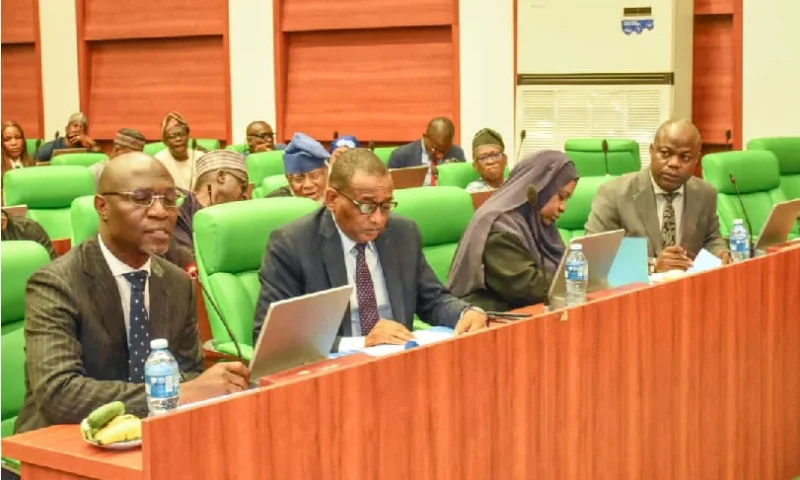
Deputy Chairman of the House of Representatives Committee on Finance, Saeed Abdullahi, gave the commendation on Tuesday during the 2026 Revenue Monitoring Exercise with the commission in Abuja.

Praising the SEC’s financial trajectory, Abdullahi urged its management to sustain the momentum and challenged the agency to surpass its 2026 revenue projection by at least 20 per cent.

He said, “DG, you have done significantly well. We have followed the progress of the SEC over the years and urge you to keep the flag flying. We will continue to celebrate you when you do well.

“This exercise is not to witch‑hunt any agency; it is aimed at ensuring better performance, especially at a time when the country is facing serious fiscal challenges.”

Earlier, the Director‑General of the SEC, Dr Emomotimi Agama, told the committee that securities regulators are expected to operate independently with government support where necessary, in line with International Organisation of Securities Commissions principles.

Agama revealed that the SEC receives zero budgetary allocation from the Federal Government, relying entirely on income generated from the capital market while continuing to remit funds to the government.

“Going by IOSCO principles, the SEC is expected to be financially independent.

The government is supposed to provide support for the running of the commission.

“However, due to the paucity of funds, all the money used to fund the commission comes from the market. The SEC does not receive any funding from the government; rather, it pays money to the government,” Agama explained.

He noted that statutory deductions are automatically effected by the government once revenues enter the commission’s account with the Central Bank of Nigeria, leaving the SEC with no prior access to the funds.

To ease operational pressure without overburdening market operators with extra fees, Agama disclosed that the SEC secured approval from the Minister of Finance for a waiver allowing it to retain 20 per cent of its income.

He added that the commission has secured a grant from the African Development Bank to acquire a modern market surveillance system, set for deployment this year to strengthen oversight of Nigeria’s capital market and align it with global standards.

AVA Capital set for NGX Main Board listing

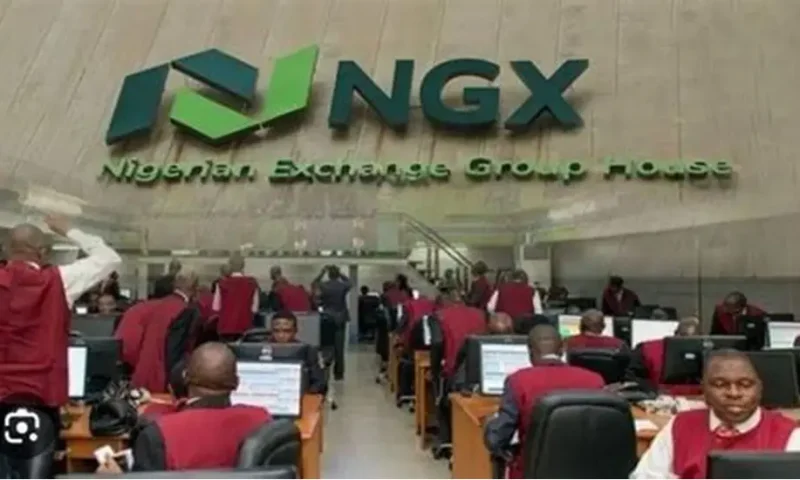
NGXAVA Capital Plc, an integrated financial services group, will be admitted to the main board of the Nigerian Exchange Limited on 31 July 2026, by way of listing by introduction.
The company, in a statement on Tuesday, said that the move represents a strategic transition into public markets that reinforces its long‑term institutional ambitions.

Speaking on the development, the Managing Director of AVA Capital Plc, Olukayode Fadahunsi, described the listing as a pivotal step for the firm.

He said, “Our admission to the Nigerian Exchange is a natural progression in AVA Capital’s evolution as a long‑term institution. We’re stepping into the public market with a solid foundation, an established platform, and a commitment to transparency. This is about cementing our place in Nigeria’s financial landscape and building a foundation for sustained growth.

“The public markets expect us to be open, disciplined, and responsible. We see these as strengths that help our institutions grow stronger over time.”

The admission marks a major milestone in the group’s evolution rather than a fundraising exercise. Unlike an Initial Public Offering, AVA Capital will not issue new shares or raise fresh capital. Instead, the listing is designed to enhance market visibility, strengthen corporate governance transparency, and deepen engagement with shareholders and the broader investment community.

AVA Capital Plc, through its subsidiaries, including AVA Global Asset Managers, AVA Securities, and AVA Trustees, has built an integrated financial services platform with a growing institutional footprint, structuring transactions exceeding N500bn in the 2025/2026 financial year.

The listing comes at a time when Nigeria’s financial services industry is placing increased emphasis on governance standards, transparency, and broader public market participation. AVA Capital already satisfies the Exchange’s free‑float requirement, with roughly 20 per cent of its issued shares held outside the controlling shareholder structure.

For the group, admission represents an institutional progression, aligning it more closely with the governance and disclosure standards of publicly traded companies while broadening market access. AVA Capital Plc enters the market with an established operating platform and a track record within Nigeria’s capital markets ecosystem.

The group previously marked the launch of the AVA Infrastructure Fund with a ceremonial closing gong at the NGX and operates across multiple regulated business lines under the supervision of the Securities and Exchange Commission.

“Because no new shares are being issued, the listing’s significance will likely be measured less by fundraising metrics and more by the quality of market participation, investor engagement, and the group’s ability to sustain long‑term value as a listed institution”, the statement added.

As Nigeria’s capital markets continue to deepen, the listing of indigenous financial institutions such as AVA Capital reflects a broader shift towards market formalisation, stronger corporate governance, and greater institutional participation in the domestic economy.

Nigeria’s net foreign liabilities climb to $90.2bn

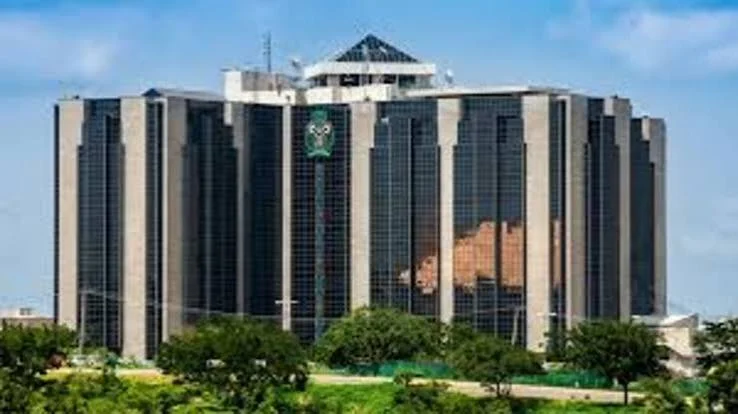
Nigeria’s net foreign liability position rose by $7.5bn to $90.2bn in 2025, as foreign investors’ claims on Nigerian assets increased faster than the country’s investments abroad, according to data from the Central Bank of Nigeria.
The rise in foreign liability position is an indication of stronger foreign portfolio and direct investment liabilities, partly offset by growth in Nigeria’s reserve assets and higher holdings of foreign investments by Nigerian residents.

The CBN’s International Investment Position report showed that Nigeria’s net financial liabilities rose from $82.7bn in 2024 to $90.2bn in 2025. The position was based on external assets of $125.6bn, representing investments held abroad by Nigerian residents, and foreign liabilities of $215.8bn, representing foreign investments in Nigerian assets.

Unlike the Balance of Payments, which measures the flow of trade and capital transactions during a period, the IIP captures the stock of external financial assets and liabilities at a particular point in time.

The increase in Nigeria’s external liabilities was largely driven by a $10.1bn increase in portfolio investment liabilities, mainly from foreign investments in government debt instruments such as OMO bills. Investors were attracted by high yields arising from Nigeria’s elevated interest‑rate environment.

Direct investment liabilities also increased by $6.7bn year‑on‑year, reflecting stronger foreign ownership positions in Nigerian companies and subsidiaries, a development that signals continued investor interest in selected sectors of the economy.

On the asset side, Nigeria’s reserve assets jumped by $5.6bn, strengthening external buffers and improving the country’s capacity to respond to external shocks. Additional growth in Nigerians’ direct, portfolio and other foreign assets contributed another $3.3bn.

However, the widening liability position highlights Nigeria’s growing dependence on foreign capital inflows and the need to improve the quality of external financing. While foreign investment has supported foreign exchange liquidity and helped ease pressure on the naira, a large concentration of inflows in short‑term portfolio investments could expose the economy to sudden capital outflows if global interest rates rise or investor confidence weakens.

The higher foreign debt securities holdings also mean that Nigeria may face increased pressure on foreign exchange resources when investors repatriate interest payments or exit their positions.

Economists argue that the country’s external sustainability will depend on attracting more long‑term foreign direct investment, expanding non‑oil export earnings and maintaining stronger reserve accumulation.

A sustained improvement in crude oil prices could provide additional support through higher export revenues and foreign exchange inflows. However, reducing vulnerability will require Nigeria to shift from reliance on short‑term yield‑driven capital flows towards productive investments that boost economic capacity and generate foreign exchange earnings, analysts say.

United Capital H1 profit rises 80% to N24.78bn

United Capital Plc.Pan-African investment bank, United Capital Plc, has reported an 80 per cent year-on-year growth in its profit before tax to N24.78bn for the half-year ended 30 June 2026, compared to N13.79bn recorded in the corresponding period of 2025.

According to its unaudited financial statements filed with the Nigerian Exchange Limited on Monday, the firm’s gross earnings expanded 58 per cent year-on-year to N37.49bn from N23.76bn in H1 2025.

Profit after tax surged 77 per cent to N21.10bn from N11.89bn recorded in the prior-year period, while annualised earnings per share rose 77 per cent to 234 kobo.

Following the half-year performance, the board of directors approved an interim dividend of 30 kobo per share, amounting to a total payout of N5.4bn to shareholders

Commenting on the financial results, the Group Chief Executive Officer, United Capital Plc, Peter Ashade, said the performance reflected operational resilience and disciplined execution.

“This impressive performance is a result of the disciplined execution of our strategic priorities, resilience of our robust and diversified business model, prudent risk management, and our unwavering commitment to consistently create sustainable value despite the dynamic operating environment,” Ashade stated.

He added, “Shareholders’ funds also increased by 25 per cent year-to-date to N187.09bn, underscoring the strength of our balance sheet and our ability to consistently deliver superior returns. As we prepare for the second half of the year, we remain focused on sustaining this momentum by solidifying our market leadership position, strengthening our retail play, expanding our presence across Africa, and delivering superior long-term value.”

A breakdown of top-line revenue growth showed significant expansion across primary business lines. Net trading income posted the largest jump, soaring  1,083 per cent to N4.96bn from H1 2025 levels.

Fee and commission income grew 26 per cent to N14.28bn, net investment income climbed 45 per cent to N13.81bn, and net gains on financial assets at fair value through profit or loss rose 132 per cent to N4.67bn.

Total operating expenses for the six months stood at N14.53bn, representing a 37 per cent increase from N10.61bn reported in the corresponding period of the previous year.

On the balance sheet position, total assets stood at N1.64tn as of 30 June 2026, down seven per cent year-to-date from N1.76tn recorded in December 2025. The company noted that the dip was driven by a 20 per cent drop in investment securities, despite a 40 per cent surge in cash and cash equivalents.

Total managed funds under the group expanded four per cent year-to-date to reach N1.04tn.