Oba-elect raises alarm over land dispute, appeals to Lagos CP for urgent action


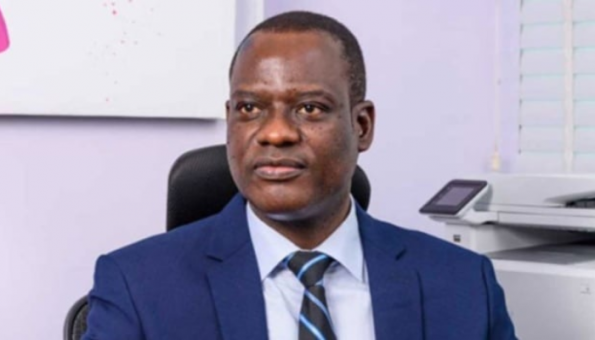
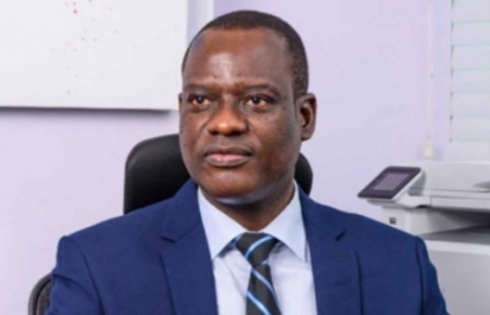
The Oba-elect of Oguntedo Town in the Ori-Ade Local Council Development Area, LCDA, Satellite Town, Lagos, Modiu Oladele Olarinde, has appealed to the Lagos State Commissioner of Police, Fatai Tijani, to urgently intervene in the lingering communal crisis threatening peace and security in the community.

Speaking at the weekend, Olarinde alleged that the unrest has been fuelled by two sons of the late Yekeni Olarinde, whom he accused of unlawfully leasing and selling community land without his knowledge or approval.

He further claimed that the duo had continued to lease parcels of land that had already been sold and allegedly used armed intimidation to compel some shop owners to validate the disputed transactions.

According to the Oba-elect, the land dispute has persisted for several years and has resulted in the loss of lives.

He alleged that a 20-year-old man, who was the only son of a widow, was killed by stray bullets reportedly fired by thugs linked to the suspects. He added that those allegedly involved in the incident are currently facing trial on murder charges.

Olarinde urged security agencies to take swift action to prevent the situation from escalating further and restore lasting peace in the community.

“This crisis is gradually getting out of hand. It is the same conflict that claimed the life of our late monarch, Oba Babatunde Yekini Olarinde,” he said.

The traditional ruler further alleged that following the late monarch’s burial, his younger brother, who he claimed had aspirations of ascending the throne, returned to the community in the company of armed thugs and the two sons of the late Yekeni Olarinde. According to him, they exhumed the late king’s remains and set the corpse ablaze in 2020.

Olarinde appealed to the police and other relevant authorities to intervene urgently to avert a breakdown of law and order in the community.

Benue, Plateau tragedies: Peter Obi sends urgent message to Tinubu


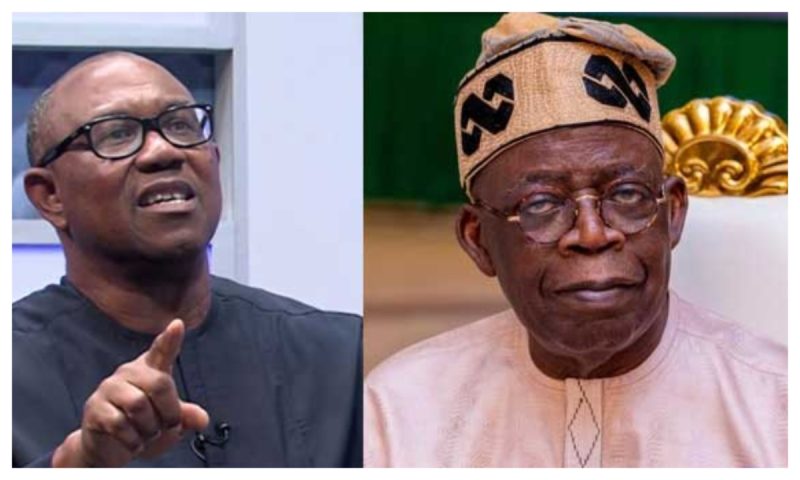
Presidential candidate of the Nigeria Democratic Congress, NDC, Peter Obi, has called on the Federal Government to strengthen security measures following recent attacks in Benue and Plateau States.

The position was contained in a statement posted on Obi’s official page on July 13, 2026.

According to Obi, the latest attacks, which reportedly claimed at least 16 lives in the Otukpo-Nobi community of Benue State and nine members of the same family, including a two-month-old baby, in Riyom Local Government Area of Plateau State, reflect the continued security challenges facing affected communities.

Obi said families in Benue, Plateau and other parts of the country had continued to experience violence, displacement and loss of livelihoods, stressing that the situation should not be treated as normal.

“The tragic news of yet another round of killings in Benue and Plateau States is both painful and deeply disturbing,” Obi stated.

“The primary responsibility of any government is the protection of lives and property. Every Nigerian life is sacred, and every life lost is one too many.

“These are not mere statistics; they are fathers, mothers, children, breadwinners and future leaders whose dreams have been violently cut short,” he added.

He called for a security strategy that prioritises intelligence gathering, rapid response and accountability, adding that those responsible for the attacks should be identified, arrested and prosecuted.

“The time has come to move beyond routine condemnations after every attack. Nigerians deserve a security architecture that is proactive rather than reactive, driven by intelligence, rapid response and accountability.

“Those responsible for these atrocities must be identified, arrested and prosecuted. The culture of impunity must end,” he demanded.

Obi also extended condolences to the families of those who lost their lives, as well as the governments and residents of Benue and Plateau states, expressing hope that affected communities would recover from the attacks.

Lagos Task Force impounds 309 motorcycles, dismantles illegal structures on Lagos-Badagry Highway

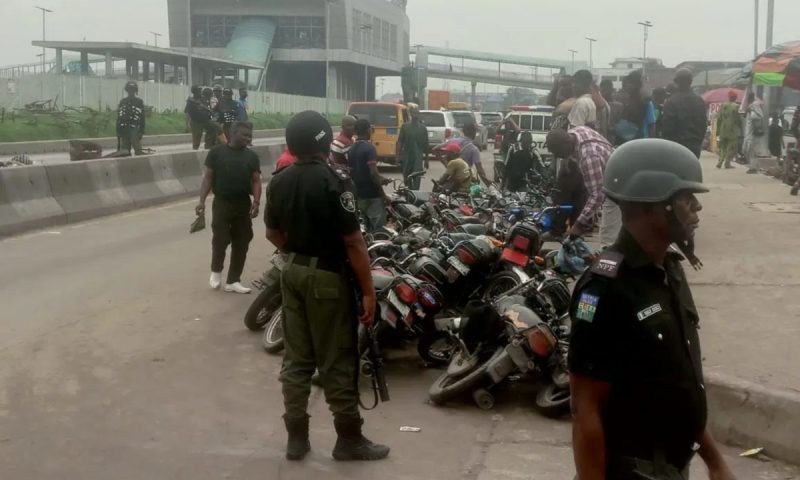
Lagos State Task Force has impounded 309 commercial motorcycles during a coordinated enforcement operation along the Lagos-Badagry Expressway as part of efforts to improve traffic flow, restore order and enhance security along the busy transport corridor.

The exercise forms part of the Lagos State Government’s ongoing crackdown on commercial motorcycle operators plying restricted routes, as authorities intensify the enforcement of traffic, environmental and public safety regulations across the state.

Carried out in collaboration with the Lagos State Ministry of the Environment and Water Resources and with support from the Lagos State Police Command, the operation also targeted illegal structures, street trading and other environmental violations around the Alaba Rago International Market and adjoining communities.

According to the agency’s spokesperson, Abdulraheem Gbadeyan, the exercise was designed to strengthen public safety and deny criminal elements the opportunity to operate under the guise of commercial activities.

He said the operation aligns with the state government’s THEMES Plus Agenda and complements ongoing security initiatives by the Lagos State Police Command aimed at combating kidnapping, banditry and other criminal activities.

Gbadeyan disclosed that enforcement teams covered several locations along the ECOWAS Road and Lagos-Badagry Expressway, including Orile-Iganmu Bus Stop, Suuru-Alaba Bus Stop, Mile 2 Underbridge, Mazamaza Bus Stop, Festac First Gate, Iyana-Ira, Abule-Ado, Alakija Bus Stop, Iyana-Iba, Alaba Rago, Old Ojo Road and Okoko Bus Stop.

He confirmed that a total of 309 commercial motorcycles were seized during the operation for violating the state’s transport regulations.

The enforcement drive also reinforces the government’s implementation of restrictions on commercial motorcycles operating on designated highways and other prohibited routes under the Lagos State Transport Sector Reform Law, 2018. State authorities have consistently maintained that the policy is intended to improve road safety, reduce traffic congestion and curb crimes linked to motorcycle operations on restricted roads.

Beyond the motorcycle crackdown, officials dismantled illegal kiosks, makeshift stalls, shanties and unauthorised wooden structures, while clearing abandoned household items, stray domestic animals, indiscriminately displayed building materials and other obstructions encroaching on public spaces.

The agency said the operation significantly improved traffic movement, reclaimed public spaces and enhanced environmental sanitation along the affected corridor.

Gbadeyan added that all impounded motorcycles would undergo the legal forfeiture process in line with the provisions of the Lagos State Transport Sector Reform Law, 2018, stressing that similar enforcement exercises would continue across the state until full compliance with existing regulations is achieved.

Speaking after the operation, Chairman of the Lagos State Task Force, Adetayo Akerele, described the level of disorder and indiscriminate development along the corridor as deeply concerning.

He noted that illegal ticketing, street trading and the activities of commercial motorcycle operators on restricted routes had contributed to traffic congestion, environmental degradation and an atmosphere that encouraged criminal activities.

“No stone will be left unturned in our determination to restore sanity. It is high time criminal elements operating in Lagos State desist from these unlawful activities or relocate.

“We will continue to enforce the law without fear or favour in order to guarantee a safer, cleaner and more orderly Lagos for everyone,” Akerele said.

High bond yields to persist until Q4 amid inflation

InflationNigeria’s debt market is under pressure from widening fiscal deficits, tight monetary policy and persistent inflation. As high yields endure, investors are abandoning traditional buy-and-hold strategies in favour of flexible, short-duration bond positions, writes JIDE AJIA

Fixed-income investors in Nigeria have been advised to brace themselves for a prolonged period of high interest rates, as financial experts project that any meaningful reversal in Federal Government bond yields is highly unlikely before the final quarter of 2026.

According to the latest macroeconomic insights, the domestic debt market will remain heavily skewed towards elevated yields due to a combination of rigid macroeconomic pressures, strict regulatory adjustments, and ongoing volatility in both the domestic and global inflation landscapes.

For institutional fund managers and retail investors alike, this high-yield environment presents a double-edged sword: highly attractive nominal returns on short-term instruments, juxtaposed against severe inflationary erosion that continues to challenge positive real yields.

As the macroeconomic landscape shifts, navigating the fixed-income curve has become a test of tactical patience.

Policy fuels yields

According to a comprehensive macroeconomic report released by Coronation Asset Management, the domestic debt market is expected to maintain its elevated posture for the foreseeable future.

The asset management firm noted that market analysts predict any significant reversal in Federal Government bond yields is highly unlikely to occur before the final quarter of 2026, meaning fixed-income investors should brace for an extended cycle of high borrowing costs.

This environment is deeply tied to the Central Bank of Nigeria’s sustained hawkish monetary stance. Over the past several quarters, the apex bank has aggressively utilised orthodox monetary policy tools to combat money supply growth, deploying frequent Open Market Operations and expanding treasury bill auction volumes to mop up excess banking system liquidity.

Concurrently, the Debt Management Office faces intense pressure to plug fiscal deficits by meeting the Federal Government’s substantial domestic funding requirements. This relentless supply of government paper continues to push sovereign borrowing costs upward.

Coronation analysts concluded that until headline inflation establishes a clear downward trajectory and fiscal borrowing appetites normalise, the fixed-income yield curve will firmly favour the buyer well into the latter half of the year.

The broader global backdrop provides a volatile, mixed canvas for domestic policy trackers trying to gauge imported inflation.

A June 2026 macroeconomic update from Meristem Research highlighted temporary international relief earlier in the season as global energy costs briefly eased following a critical United States-Iran ceasefire. This diplomatic breakthrough pushed Brent crude prices down by 17.94 per cent month-on-month to $84.34 per barrel in June

The ripple effect was immediately visible in the Euro Area, where inflation slowed to 2.80 per cent year-on-year in June, aided by a drop in energy inflation to 8.70 per cent.

However, Meristem analysts warned that this relief might be short-lived for developing economies like Nigeria. The sudden re-escalation of the US-Iran conflict has already reignited upward pressure on global oil prices, threatening a sharp reversal of June’s global disinflationary progress.

With geopolitical flashpoints flaring up again, global energy-driven inflation risks are compounding, making it increasingly difficult for central banks worldwide to pivot towards looser monetary policy.

Domestic inflation pressures

Locally, Nigeria’s internal battle against rising prices remains fierce, deeply complicating the interest rate outlook.

Historical data released by the National Bureau of Statistics showed that Nigeria’s headline inflation rose 15.93 per cent year-on-year in May 2026, marking its third consecutive monthly increase.

This uptick was propelled by food inflation accelerating  16.96 per cent year-on-year and core inflation climbing 16.82 per cent year-on-year, driven by high domestic transportation costs and structural supply chain disruptions affecting major market staples like tomatoes, yam tubers, and onions.

For the June 2026 numbers, Meristem projected headline inflation to edge slightly higher to 15.95 per cent year-on-year, underscoring the sticky nature of domestic food supply constraints. However, a major domestic cushion emerged from the local energy sector.

Following the temporary drop in global crude prices and the reopening of the Strait of Hormuz, the Dangote Refinery slashed its ex-depot Premium Motor Spirit price three times, delivering a cumulative reduction of N150 to land at N1,125 per litre.

While this petrol price drop, coupled with a marginally stronger official naira average of N1,366.99/$, is expected to temper core inflationary distribution costs, a sharp surge in Liquefied Petroleum Gas (cooking gas) prices remains an upside risk.

Income portfolio positioning

While the fixed-income market remains locked in a high-interest phase, Nigeria’s broader financial space has opened the year on starkly contrasting notes.

The Nigerian Exchange Limited has experienced historic bull runs, with the All-Share Index crossing unprecedented milestones, driven by aggressive domestic institutional investors rotating capital into high-value equities to hedge against inflation. Yet, for conservative, income-focused portfolios, fixed income remains the dominant portfolio anchor.

To navigate this high-yield, high-inflation environment, Coronation’s investment analysts recommended a tactical approach geared strictly towards capital preservation.

Nigeria’s oil output hits 74-month high, beats OPEC quota

Crude oilNigeria’s crude oil production has climbed to its highest level in more than six years, with the country exceeding its Organisation of the Petroleum Exporting Countries production quota for the fourth consecutive month, buoyed by improved operational stability and fewer disruptions to oil infrastructure.

Latest figures released on Sunday in Abuja by the Nigerian Upstream Petroleum Regulatory Commission showed that the country’s average crude oil production rose to 1.56 million barrels per day in June 2026, while condensate output stood at 0.18 million barrels per day, bringing total crude oil and condensate production to 1,735,398 barrels per day.

The production level represents 104 per cent of Nigeria’s 1.5 million barrels per day crude oil production quota approved by OPEC and marks the country’s highest crude oil output since April 2020, making it a 74-month high.

The figures, contained in the commission’s latest production report and conveyed in a statement issued by its Head of Media and Corporate Communications, Eniola Akinkuotu, showed that June also marked the fourth consecutive month of production growth, reinforcing the recovery of Nigeria’s upstream oil sector after years of production losses caused by crude theft, pipeline vandalism and operational disruptions.

The statement read, “Nigeria’s crude oil and condensate production soared to an average of 1,735,398 barrels per day in the month of June 2026, representing positive growth for a 4th consecutive month. In the month under review, crude oil production hit 1.56mbpd while 0.18mbpd of condensates was produced. This means Nigeria met 104 per cent of the 1.5mbpd crude oil production quota set by the Organisation of Petroleum Exporting Countries.”

According to the commission, total crude oil and condensate production increased from 1.700 million barrels per day recorded in May to 1.735 million barrels per day in June, representing a 2.2 per cent month-on-month increase.

The report showed that combined production had earlier stood at 1.483 million barrels per day in February before rising steadily to 1.564 million barrels per day in March, 1.663 million barrels per day in April, 1.701 million barrels per day in May, and 1.735 million barrels per day in June.

The NUPRC attributed the improved performance to stable production activities across major oil-producing assets and the absence of significant pipeline outages during the review period.

“The improved performance was primarily driven by stable production operations across most producing assets and the absence of any major pipeline outages during the period under review.

“This enhanced operational stability supported improved production uptime and crude evacuation efficiency. Although a limited number of assets experienced short-duration operational shutdowns, the overall impact on national production was minimal.

“In addition, scheduled turnaround maintenance activities were effectively managed and completed without significant disruption to production operations.

“The sustained growth recorded in June reflects the continued commitment of operators and industry stakeholders towards improving operational efficiency, maintaining asset integrity, and enhancing production reliability across the Nigerian upstream petroleum sector,” the statement added.

The commission also disclosed that Nigeria’s highest daily combined crude oil and condensate production during the month reached 1.89 million barrels per day, while the lowest daily production stood at 1.57 million barrels per day.

The peak production level underscores Nigeria’s growing potential to achieve the Federal Government’s medium-term ambition of producing two million barrels of oil per day, a target that has remained elusive for years due to insecurity in oil-producing communities, crude theft and ageing infrastructure.

An analysis of production by export terminals showed that Bonny Terminal retained its position as Nigeria’s highest-producing terminal, recording an average daily production of 318,280 barrels, compared with 293,880 barrels in May.

Forcados Terminal ranked second with 306,360 barrels per day, up from 289,900 barrels recorded in the previous month.

However, production at Qua Iboe Terminal declined to 164,730 barrels per day from 173,360 barrels per day in May.

Similarly, Escravos Terminal recorded a slight increase to 138,030 barrels per day, compared with 135,470 barrels per day in the previous month, while Bonga Terminal maintained steady output, producing 103,660 barrels per day, slightly above the 102,540 barrels per day recorded in May.

The sustained production growth is expected to strengthen Nigeria’s oil export earnings, improve foreign exchange inflows and provide additional fiscal revenues for the Federal Government at a time authorities are seeking to increase crude output and attract fresh investment into the upstream sector.

Nigeria has struggled in recent years to meet its OPEC production allocation because of widespread crude oil theft, pipeline vandalism, underinvestment, and prolonged operational challenges. However, reforms introduced under the Petroleum Industry Act, enhanced security around critical oil infrastructure, and closer collaboration between government agencies and oil producers have contributed to the gradual recovery in production.

Maintaining production above the OPEC quota and sustaining operational stability will be critical if Nigeria is to realise its target of producing two million barrels per day and maximise the benefits of favourable global oil market conditions.

Naira weakens 0.85% to close at N1,381.70/$

Naira weakens 0.85% to close at N1,381.70/$The Nigerian naira experienced a demanding week at the official foreign exchange window, extending its losses to close at its weakest weekly level against the United States dollar despite recent regulatory interventions by the Central Bank of Nigeria.

According to official data released by the CBN, the local currency closed the trading week on Friday, 10 July, at N1,381.70/$1. This marks a 0.85 per cent week-on-week depreciation, representing an N11.70 drop compared to the N1,370.00/$1 closing rate recorded the previous Friday, 3 July.

The local currency faced persistent pressure from market forces, closing lower on four of the five available trading days. The week started with a marginal slip on Monday, 6 July, as the naira fell by N1 to close at N1,371.00/$1.

Selling pressure accelerated on Tuesday, 7 July, dragging the currency down by another N8 to end the day at N1,379.00/$1.

The slide temporarily paused on Wednesday, 8 July, when the naira held steady at N1,379.00/$1 despite highly volatile intraday trading that saw rates swing between N1,376/$1 and N1,387/$1.

However, a slight fractional drop of N0.25 on Thursday brought the closing rate to N1,379.25/$1, and the downward trend culminated in a final N2.45 loss on Friday, 10 July, leaving the naira at its lowest point of the week.

Data from the Nigerian Foreign Exchange Market highlighted highly fluid trading volumes throughout the week. Market activity initially surged, with total market turnover rising from $220.18m on Monday to a mid-week peak of $504.67m on Wednesday. Liquidity began to cool off by Thursday, dropping to $298.92m, while Friday’s final turnover figures were not reflected in the central bank’s data.

A similar trend played out in the interbank market, where interbank turnover expanded drastically from $54.18m on Monday to $208.09m on Wednesday, before steadily easing back down to close at $71.04m by Friday afternoon.

This latest volatility comes amid ongoing efforts by the Yemi Cardoso-led CBN to stabilise the foreign exchange market through interest rate hikes and the clearance of verified FX backlogs. While the apex bank’s unification of the foreign exchange windows aimed to eliminate arbitrage and attract foreign portfolio investments, seasonal demand for import clearances and foreign tuition payments continues to exert immense pressure on the local currency.

Financial analysts note that while mid-week liquidity injections provided a brief cushion, the consistent daily slide indicates that aggregate demand for international payments continues to outpace available dollar supplies in the official window, requiring bigger structural changes to boost non-oil export revenues.

FG borrows N5tn from bond market in six months

The Federal Government raised N5.08tn from the domestic bond market in the first six months of 2026, marking a 77.8 per cent increase from the N2.86tn raised during the corresponding period of 2025, an analysis of Debt Management Office auction results by The PUNCH has shown.

The increase came despite a decline in borrowing costs, with average marginal rates easing compared with last year, even as investor appetite remained strong, with subscriptions exceeding N9tn over the six-month period.

The DMO auction results showed that the Federal Government allotted N5.08tn worth of bonds between January and June 2026, compared with N2.86tn allotted during the same period in 2025, representing an increase of N2.22tn. The figures include both competitive and non-competitive allotments disclosed in the auction results.

The government also significantly increased the amount of bonds offered to investors during the review period. Between January and June 2026, it offered N4.95tn worth of bonds, compared with N1.85tn in the corresponding period of 2025. This represents an increase of N3.10tn, or 167.6 per cent, reflecting a more aggressive domestic borrowing programme.

Investor demand also strengthened in nominal terms. Total subscriptions rose to N9.04tn in the first half of 2026 from N4.37tn a year earlier, an increase of N4.67tn or about 107 per cent.

However, demand moderated when measured against the size of the government’s offer. While subscriptions were equivalent to 236.1 per cent of the amount offered in the first half of 2025, the ratio declined to 182.6 per cent in the corresponding period of 2026. This suggests that although investors committed substantially more money, the increase did not keep pace with the sharp expansion in borrowing requirements.

A further analysis of the auction data showed that investors submitted 2,823 bids across all bond auctions in the first six months of 2026, up from 1,621 bids in the corresponding period of 2025.

Successful bids also increased from 926 to 1,449 over the period. However, the proportion of successful bids declined to 51.3 per cent in 2026 from 57.1 per cent in 2025, indicating that the DMO became more selective in accepting bids despite stronger participation.

The government’s monthly borrowing profile showed significant differences across the six months. January recorded the highest borrowing during the review period, with N1.54tn allotted to competitive investors and total allotments of about N1.68tn after including non-competitive allocations, compared with N601.04bn in January 2025.

June followed with total allotments of N1.22tn, compared with just N100bn during the corresponding month of 2025, making it one of the strongest months for domestic debt issuance.

May also witnessed a sharp increase, with N614.51bn allotted through competitive bids and total allotments rising to N894.51bn after the inclusion of a N280bn non-competitive allocation for the 16.2499 per cent FGN April 2037 bond. This compares with N300.69bn raised in May 2025.

Borrowing was relatively lower in February and April. The DMO allotted N524.28bn in February 2026, down from N910.39bn in February 2025, while April allotments fell to N276.79bn from N520.90bn recorded during the corresponding period last year.

March was the only other month to record an increase, with allotments rising to N485.50bn from N423.68bn.

The data also point to a decline in the government’s domestic borrowing costs. Marginal rates across the various bond instruments ranged between 15.50 per cent and 18.35 per cent during the first half of 2026. In comparison, marginal rates ranged from 17.75 per cent to 22.60 per cent during the corresponding period of 2025.

The simple average marginal rate across all instruments declined to about 16.78 per cent in the first six months of 2026 from about 19.84 per cent in the same period of 2025. Similarly, the allotment-weighted average marginal rate fell to about 17.29 per cent from about 20.14 per cent.

The 22.60 per cent FGN January 2035 bond remained the government’s largest funding instrument during the review period. Across four reopening auctions held between January and June 2026, the bond attracted subscriptions of about N2.30tn and accounted for approximately N1.52tn in allotments.

The 16.2499 per cent FGN April 2037 bond also recorded strong investor interest. Offered only in May and June, the 20-year instrument attracted subscriptions exceeding N1.24tn and total allotments of about N1.38tn, boosted by the N280bn non-competitive allocation recorded in May.

Among shorter-tenor instruments, the 19.89 per cent FGN May 2033 bond attracted N1.34tn in subscriptions and N541.34bn in allotments during its three reopening auctions in February and March 2026.

In contrast, the 2025 auction data showed that the 19.89 per cent FGN May 2033 bond accounted for the largest share of government borrowing during the first half of the year, raising N1.07tn, while the 18.50 per cent FGN February 2031 bond followed with N758.90bn.

The figures indicate that while the Federal Government significantly expanded domestic borrowing during the first half of 2026, investor demand remained robust despite the larger supply of securities.

The PUNCH earlier reported that foreign investors channelled $3.23bn into Nigerian bonds in the first quarter of 2026, highlighting a strong appetite for the country’s fixed-income securities amid elevated interest rates and improving confidence in the foreign exchange market

Data from the capital importation report released by the National Bureau of Statistics showed that bond investments accounted for 32.71 per cent of the $9.86bn portfolio investments recorded during the quarter and 31.10 per cent of the total $10.37bn capital imported into the country.

The bond inflow represented a 267.67 per cent increase from the $877.41m recorded in the corresponding period of 2025 and a 63.76 per cent rise from the $1.97bn attracted in the preceding quarter.

The sharp increase reflects the attractiveness of Nigerian sovereign debt instruments, which have offered among the highest yields in emerging and frontier markets following the Central Bank of Nigeria’s aggressive monetary-tightening cycle over the past two years.

Since assuming office in September 2023, CBN Governor Olayemi Cardoso has led the Monetary Policy Committee through one of the most aggressive tightening cycles in Nigeria’s history, raising the Monetary Policy Rate from 18.75 per cent to a peak of 27.50 per cent through a series of hikes in 2024 aimed at curbing inflation, stabilising the naira and restoring investor confidence.

After holding the benchmark rate at 27.50 per cent throughout most of 2025, the MPC began a cautious easing cycle in September 2025, cutting the MPR by 50 basis points to 27.00 per cent as inflation moderated for several consecutive months, before lowering it further to 26.50 per cent in early 2026.

At its most recent 305th meeting in May 2026, the MPC opted to retain the MPR at 26.50 per cent and leave all other key policy parameters unchanged, citing renewed inflationary pressures linked to global energy market disruptions while seeking to preserve the macroeconomic gains achieved through earlier tightening measures.

A renowned economist and Chief Executive Officer of the Centre for the Promotion of Private Enterprise, Dr Muda Yusuf, recently warned that rising Federal Government borrowing from the domestic financial system is increasingly crowding out the private sector, as banks favour low-risk, high-yield government securities over lending to businesses.

“The increase in credit to the government can be attributed to a number of factors. The government has been raising money to finance the deficit. So this financing of the deficit has led to the issuance of bonds, treasury bills, and so on, which banks also buy. The rate is also very attractive, and it’s more attractive to them than lending to the real sector,” Yusuf said. He further urged the government to moderate its borrowing.

In a separate conversation, he also noted that while high yields on government securities had helped draw portfolio investors, they were also increasing the burden of public debt.

Yusuf told The PUNCH that the interest rates offered on government bonds and treasury instruments were excessively high and required coordination between fiscal and monetary authorities to moderate.

“It’s helping us to attract portfolio investment, but it’s creating a huge burden of debt service. We have to balance those two objectives. We have to improve portfolio flows, but it’s costing us a lot in terms of our domestic borrowing and debt-servicing costs,” he said.

The economist argued that Nigeria should reduce its reliance on debt-funded public projects by expanding public-private partnerships. According to him, governments should identify commercially viable infrastructure projects and offer them to private investors rather than financing them through additional borrowing.

Market analysts predict that any significant reversal in Federal Government bond yields is highly unlikely to occur before the final quarter of 2026, which means Nigerian fixed-income investors should brace for a prolonged period of high interest rates.

According to the latest macroeconomic analysis from Coronation Asset Management, a combination of sticky inflation, aggressive monetary policy, and heightened fiscal pressures will keep yields firmly elevated throughout the upcoming quarter.

NDC urges Nigerians to register for PVC ahead of 2027 elections

The Nigeria Democratic Congress (NDC) has urged Nigerians to take advantage of the ongoing Permanent Voter Card (PVC) registration exercise by the Independent National Electoral Commission (INEC) ahead of the 2027 general elections.
The party also called on eligible voters to support its preferred presidential ticket of Peter Obi and Rabiu Musa Kwankwaso in the next election.

This was contained in a statement issued by the NDC National Publicity Secretary, Barrister Osa Director, following the party’s PVC registration mobilisation exercise.

According to the statement, Osa Director described the PVC as the most important tool for citizens to determine the country’s future through the ballot box.

He urged Nigerians, particularly young people and first-time voters, not to miss the opportunity to register and collect their voter cards.

“The PVC remains the most powerful instrument for every citizen to determine the future of Nigeria through the ballot box,” he said.

The NDC spokesman said the country needs citizens who are ready to participate actively in the democratic process, stressing that meaningful change begins with voting.

He added that the time had come for Nigerians to unite in building a New Nigeria, where hope is restored to the hopeless, justice prevails, opportunities are created for all, and good governance becomes the standard.

Osa Director also encouraged Nigerians who desire positive change to vote for the party’s preferred candidates in the 2027 presidential election.

According to him, “Peter Obi and Dr. Musa Kwankwaso are leaders with the vision, integrity and capacity to transform Nigeria.”

He reaffirmed the NDC’s commitment to promoting credible leadership, national unity, economic growth, security and good governance.

We have reconciled over 400 aggrieved party members after disputed primaries – Jigawa APC

The Jigawa State chapter of the All Progressives Congress (APC) says it has successfully reconciled more than 400 aggrieved aspirants who participated in the party’s primary elections across the state.

The Chairman of the APC Reconciliation Committee, Alhaji Isah Muhammad Gerawa, disclosed this in a report presented to Governor Umar Namadi on Friday at the Government House, Dutse.

The report was presented on his behalf by the committee’s Co-Chairman, Senator Muhammad Dudu.

Dudu said the committee engaged both successful and unsuccessful aspirants in all 27 local government areas of the state, providing a platform for party members to air their grievances, resolve disputes and promote unity ahead of the forthcoming general elections.

He described the exercise as a historic achievement, noting that it was the first reconciliation initiative of its kind undertaken by a ruling party in Jigawa State since the return to democratic governance in 1999.

According to him, the committee met with more than 400 party members during the assignment and was able to resolve key issues affecting internal cohesion within the party.

Receiving the report, Governor Umar Namadi commended the 15-member committee for its dedication and commitment to fostering peace within the APC.

The governor said the reconciliation process had already strengthened trust, unity and cooperation among party members across the state, stressing that the success of any political party depends on collective commitment and the active participation of all its members.

He directed the committee to continue its reconciliation efforts until the general elections and announced that it would remain a standing committee to sustain dialogue, peaceful coexistence and party cohesion.

The APC Reconciliation Committee was inaugurated on June 22, 2026, with the mandate to engage aggrieved aspirants, address their concerns, and promote unity following the party’s primary elections.

Sowore’s media aide, Zainab released from DSS custody

Zainab Sadiq, the arrested journalist working for the presidential candidate of the African Action Congress, AAC, Omoyele Sowore, has been released from the Department of State Services, DSS, custody.

Sowore broke the news of Zainab’s release in a post on his verified X handle late Friday.

According to him, the release came after the conscientious intervention and determined pressure of Nigerians at home and abroad.

DAILY POST recalls that the DSS confirmed the detention of Zainab, who was reportedly working with Omoyele Sowore.

“Ms. Zainab Sadiq is finally free from the grip of repression!

“To everyone who raised their voice, made calls, demanded justice, and stood firmly against repression: THANK YOU!

“When people of conscience unite and stand against injustice, repression can be defeated. Welcome back, Zainab,” Sowore wrote.