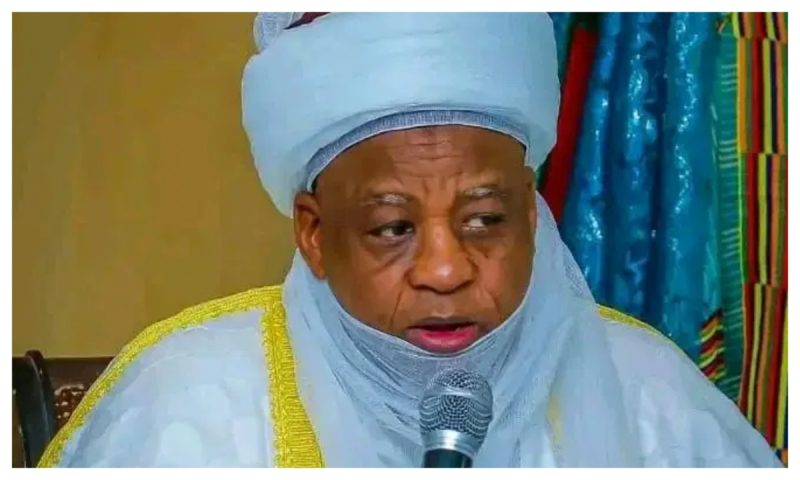
Sultan declares Thursday first day of Safar 1448AH

The Sultan of Sokoto, Alhaji Muhammad Sa’ad Abubakar III, has declared Thursday, July 16, 2026, as the first day of Safar 1448AH after the non-sighting of the new crescent moon across Nigeria.

Chairman of the Sultanate Council Advisory Committee on Religious Affairs, Professor Sambnoon Wali Junaidu, made the announcement in a statement on Wednesday.

He said the National Moonsighting Committee, in collaboration with various moonsighting committees across the country, did not receive any authenticated report confirming the sighting of the Safar crescent on Tuesday, July 14, corresponding to the 29th of Muharram 1448AH.

“The Sultanate Council Advisory Committee on Religious Affairs, in conjunction with the National Moonsighting Committee, did not receive any report from various moonsighting committees across the country confirming the sighting of the crescent of Safar 1448AH on Tuesday, 14th July, 2026, equivalent to 29th Muharram 1448AH.

“Therefore, Wednesday, 15th July, 2026, will be the 30th of Muharram 1448AH,” the statement said.

According to the statement, the Sultan approved the completion of the current Islamic month and declared the commencement of the new month on Thursday.

The declaration marks the beginning of the second month of the Islamic calendar and serves as the official guide for Muslims across Nigeria in observing religious activities tied to the Hijri calendar.

NAF releases list of successful Air Force recruits, announces training date

The Nigerian Air Force (NAF), on Wednesday, announced successful candidates for enlistment into Air Force BMTC 46/2025.

Announcing the successful candidates in a statement on Wednesday, the Director of Public Relations and Information, Air Commodore Ehimen Ejodame, said the names of successful candidates have been published on the official Nigerian Air Force recruitment portal.

“The candidates whose names appear on the published list were successful at the selection interview and are to report to the NAF Military Training Centre (MTC), NAF Base, Kaduna, on Sunday, 19 July 2026, to commence training,” the statement said.

It said all successful candidates are required to report with the originals and photocopies of their credentials, as well as other items specified in the instructions.

Candidates are advised to carefully review all instructions provided on the recruitment portal before reporting.

The statement further added that the Nigerian Air Force recruitment exercise is entirely free of charge.

Successful candidates and members of the public were advised to beware of fraudsters and refrain from making any payment to individuals or groups claiming to facilitate recruitment or enlistment into the force.

NANS decries condition of hostels, alleges illegal detention of student leaders

The National Association of Nigerian Students, NANS, has declared a state of emergency over hostel conditions in tertiary institutions across the country, citing what it described as the deteriorating state of student accommodation.

The obsersation was made by NANS President, Babatunde Akinteye, popularly known as Babtee, during the inauguration of the association’s national leadership.

According to Akinteye, the association will begin pushing for improved hostel facilities, arguing that many students are living in unsafe and unsuitable accommodation.

“We declare a State of Emergency on students’ hostel conditions across Nigeria. The worsening state of accommodation in many tertiary institutions has become unacceptable, and NANS is committed to ensuring that students are provided with safe, conducive, and habitable living environments,” he said.

Akinteye also announced that the association had resolved to relocate its national headquarters to Anambra State, saying the move was intended to press for the release of student leaders whom NANS alleged were being unlawfully detained.

The NANS president condemned what the association described as the illegal detention of its members and called on Magistrate Nnamdi Aduma, who he identified as the Financial Secretary of the Magistrates’ Association of Nigeria, to ensure that due process is followed in the matter.

“We strongly condemn what we consider the illegal detention of our comrades and call on Magistrate Nnamdi Aduma to ensure that justice prevails and that due process is respected.

“NANS will continue to stand firmly in defense of the rights, welfare and freedom of Nigerian students. We will not be intimidated or silenced in our pursuit of justice,” Akinteye said.

FAAN’s ride-booking app triggers airport taxi row

A viral video of distressed airport cab drivers appealing to President Bola Tinubu over what they believed was a directive requiring them to acquire 2020 model vehicles has sparked broader debate over FAAN’s latest push to modernise airport ground transportation.

While the appeal centred on the cost of acquiring newer vehicles in an economy weighed down by inflation and dwindling purchasing power, findings by The PUNCH showed that the controversy extends beyond vehicle specifications. At the heart of the disagreement is the implementation of the Airport Car Hire Rank Management System, a digital platform introduced by FAAN to regulate airport taxi operations, improve security and streamline passenger movement.

For FAAN, ACHRAMS represents a major step towards modernising airport ground transportation and closing longstanding security and operational gaps. For the drivers, however, the unanswered questions are less about digitisation and more about participation and practicality, among other concerns.

For many of the drivers, however, the issue is not resistance to technology but the feeling that they are being excluded from a reform that will directly affect their daily operations and livelihoods.

In the video, one of the drivers, speaking in Yoruba, appealed to Nigerians to intervene, saying, “This is what we are facing. Nigerians should help us intervene. They said we should go and buy a vehicle from 2020 above. Vehicles that cost between N18 and N30m, with the way Nigeria is now.

“There are no jobs in the country, with what we are going through. Please pity us Nigerians. Let this go viral. Nigerians pity us, help us intervene.”

The video gained traction on social media, drawing mixed reactions. While many Nigerians sympathised with the operators, arguing that surviving businesses should not be burdened with additional costs during economic hardship, others insisted that airport transport services should reflect the standards expected of international gateways.

Behind the public debate lies ACHRAMS, a technology-driven initiative FAAN says is designed to improve passenger safety, eliminate touting, regulate airport taxi services and ensure transparent fare administration.

The authority insists the initiative has been widely misunderstood.

Responding to the controversy, FAAN’s Director of Commercial and Business Development, Ms Adebola Agunbiade, dismissed claims that the protest was triggered by any directive compelling drivers to procure 2020 model vehicles.

She said, “Regarding the video circulating online, the claim that the main cause of the drivers’ actions is not accurate. The footage shows planned resistance by car hire operators who refused to register on the ACHRAMS. Those drivers were working to prevent the soft and pilot launches of the system at the Murtala Muhammed International Airport. This incident is not related to any policy regarding vehicle model year.”

Agunbiade explained that the authority’s minimum vehicle requirement remains 2012 models and above, not 2020 as widely alleged.

She further said, “It is incorrect to say that FAAN asked drivers to change their vehicles to a minimum of the 2020 model because of the introduction of ACHRAMS. In fact, one of the conditions laid down by the Authority for registration on the app is that drivers must operate vehicles manufactured in 2012 or above.”

She also stated that the requirement was introduced as far back as 2024 and that FAAN had repeatedly extended compliance deadlines from January to June and now to 1 October 2026, to accommodate operators facing financial constraints.

The airport managers also rejected allegations that the new system was intended to reduce the number of airport cab operators.

Agunbiade stated, “It is important to note that FAAN is not planning to clear only 60 per cent of existing drivers to pave the way for ACHRAMS. The intention is to clear all drivers, provided they comply with the laid-down standards.”

She disclosed that nearly all existing airport taxi operators at the Murtala Muhammed International Airport had already been admitted into the pilot phase of the platform, except two companies whose union allegedly advised members against participating while pursuing separate digital solutions.

FAAN further revealed that discussions were ongoing with ride-hailing companies such as Bolt and Uber to integrate their operations into ACHRAMS, explaining that any temporary restriction on airport pickups was purely regulatory pending the conclusion of agreements.

FAAN says the application goes beyond regulating drivers, describing it as a platform that will reshape airport transport through digital tracking, stricter vehicle and driver screening, transparent fare systems, designated pick-up points and stronger passenger security.

The platform, which is being implemented under a ten-year concession managed by two companies, the agency said, will reduce congestion around airport terminals while introducing electronic booking and payment options for passengers.

FAAN maintains that consultations did not begin overnight, insisting stakeholder engagements commenced in 2024 before the project entered its pilot phase.

Despite those assurances, many airport cab operators maintain that the consultation process has not been as inclusive as it ought to have been.

The National President of the National Association of Airport Cab Drivers, Mr Adepegba Samuel, said the association’s demand is simple and not the suspension of the initiative, but genuine dialogue with them.

“You see, when you want to introduce something that you want people to align with, there should be serious briefing and enlightenment about the issue. The people introducing something are in the office, but we are the ones operating on the road. They should speak with us so that we can also tell them our views,” he said.

Samuel argued that airport drivers interact with passengers more than any other stakeholders after travellers leave the terminal buildings, making their practical experience invaluable in shaping the success of any operational reform.

He said, “We try to take the message to the public, but we need to sit together. We are the ones who will mostly speak to the public about this, but when we are not properly briefed or when you refuse to sit with us, how do we go forward from there?

“There are things they don’t know in the office that are happening, that we know because we deal with the public. We deal with the masses. We are at the finishing end of the job.

“They will bring the passenger from the plane down. We will take them to their respective areas. So we are dealing with them. If they want to ask questions about our operation, the public will not ask the government first; they will ask us. That is why we are saying let us have a round-table discussion.”

His concerns also extend to the practical application of the technology.

According to him, the operational realities of Nigeria’s airports require a more flexible system than what has currently been proposed.

He reasoned, “The app they are talking about varies. The one that we work with in MM1 will not work at the international terminal. This one cannot even work for the public. The app should be made for the airport alone and be generalised.

“That is why we are seeking an audience with them, and they have refused to grant it. We are not fighting them. They are our bosses and principals, but they should please listen to us too.”

Samuel illustrated his concerns with a personal example, explaining that many airport drivers have built trusted relationships with customers over decades.

He explained, “For instance, I have a customer, an old customer of more than 25 years. Some of them have children in Babcock and other boarding schools. They don’t even come to pick their children themselves because they have confidence in me. They trust me.

“Imagine they are trying to reach me through the app from the international terminal while I am at the local airport; that will not be possible.

“They are our principals, but what we are saying is that let us come to a round table and debate the issue. That is all we seek.”

Attempts to obtain FAAN’s response on why the authority had yet to meet with the union were unsuccessful, as calls and text messages sent to its spokesperson, Henry Agbebire, went unanswered as of the time of filing this report.

Meanwhile, FAAN sources, who requested anonymity because they were not authorised to speak publicly, told our correspondent that the authority had no basis to meet directly with the drivers since it has no contractual relationship with them. They explained that FAAN had instead engaged with the concessionaires responsible for overseeing the airport cab operators.

Stock market rebounds as capitalisation jumps N719bn

Stock market rebounds as capitalisation jumps N719bnThe Nigerian equities market rebounded on Tuesday to close higher, snapping its two-day losing streak as the overall market capitalisation advanced by N719bn.


The All-Share Index gained 1,121.33 points, representing a 0.46 per cent growth, to close at 242,870.44 points. Accordingly, market capitalisation rose to close at N155.85tn.

The upturn was driven by gains recorded in medium and large-capitalised stocks, including Transcorp Hotels, MTN Nigeria Communications, First HoldCo, Stanbic IBTC Holdings, and Zenith Bank.

Investor sentiment remained positive, as 24 gainers outpaced 22 losers. Learn Africa recorded the highest price gain of 10 per cent to close at N9.90 per share. First HoldCo followed with a 9.98 per cent gain to close at N72.15, while Thomas Wyatt Nigeria appreciated 9.80 per cent to close at N2.69 per share.

Similarly, R.T. Briscoe rose 8.68 per cent to close at N13.15, while Transcorp Hotels went up 8.37 per cent to close at N242.00 per share.

On the other hand, International Energy Insurance led the losers’ chart, shedding 9.86 per cent to close at N4.66 per share. Legend Internet followed with a decline of 9.18 per cent to close at N4.45, while Fortis Global Insurance declined 7.67 per cent to close at N2.77 per share.

FTN Cocoa Processors depreciated 7.55 per cent to close at N8.21, while International Breweries declined 4.79 per cent to close at N13.90 per share.

The total volume traded advanced 21.25 per cent to 634.78 million units, valued at N53.34bn, exchanged in 42,494 deals.

Transactions in the shares of First HoldCo topped the activity chart with 326.92 million shares valued at N22.33bn. Guaranty Trust Holding Company followed with 22.47 million shares worth N2.82bn, while Access Holdings traded 18.53 million shares valued at N461.61m.

FCMB Group traded 16.12 million shares valued at N166.84m, while Zenith Bank sold 15.92 million shares worth N1.73bn.

NCC consults stakeholders on free educational internet access

NCCThe Nigerian Communications Commission has commenced consultations with stakeholders on a proposed framework to enable Nigerian students and learners to access approved educational platforms and digital learning resources without paying for internet data.


The initiative, known as the Framework for Zero-Rated Access to Educational Platforms and Content, aims to reduce the high cost of internet connectivity, which stakeholders say has become a major barrier to digital learning across the country.

The consultation, held on Tuesday at the NCC Annex Office in Mbora, Abuja, brought together representatives of government agencies, mobile network operators, education regulators, educational institutions, development partners, civil society organisations and other industry stakeholders to review the proposed framework before its adoption.

Under the proposal, learners would be able to access approved educational websites, applications and digital learning platforms either free of charge or through dedicated educational data bundles, subject to eligibility requirements, fair usage policies and regulatory safeguards.

The framework is also expected to establish governance mechanisms, implementation models and consumer protection measures to ensure transparency and sustainability.

Speaking at the consultation, the Director of Policy, Competition and Economic Analysis at the NCC, Ayuba Shuaibu, said the initiative was designed to remove affordability barriers preventing millions of Nigerian students from participating in digital education.

“The objective of this initiative is straightforward but deeply significant, and that is to reduce the affordability barrier that locks millions of Nigerian students out of the digital classroom,” he said.

He added that although digital education presents enormous opportunities, many Nigerian learners remain excluded because of the rising cost of internet access.

“While brilliant minds and immense potential can be found in every corner of our country, we all know that digital opportunities are not. Our task is to fix that gap, but as we do, we must ensure that our solutions remain transparent, sustainable, technologically sound and entirely consistent with fair competition and sound regulatory practice.”

Shuaibu said the Commission had deliberately adopted a consultative approach to ensure the framework reflects industry realities and serves the public interest. “There are no predetermined outcomes. The Commission and the Industry Committee remain open to constructive, practical and evidence-based recommendations,” he said.

According to him, stakeholders are expected to make recommendations on implementation models, eligibility criteria for educational platforms, funding mechanisms, governance arrangements, and safeguards to preserve net neutrality and fair competition.

He noted that all submissions from the consultation and written memoranda would be considered before the Industry Committee finalises its recommendations.

Also speaking, the Director of ICT at the Federal Ministry of Education, Zainab Abubakar-Suleiman, said the proposal aligns with the Federal Government’s efforts to expand inclusive digital education under the Nigeria Education Sector Renewal Initiative.

She said high internet costs, poor connectivity and unequal access to digital learning resources continue to undermine education delivery across the country.

“Across the country, learners, teachers and institutions continue to face the challenge of high costs, limited connectivity and unequal access to digital learning resources. These barriers affect learning continuity, skill development, access to research materials, and broader goals for inclusive educational delivery,” she said.

Abubakar-Suleiman stressed that the framework should not focus solely on connectivity but must also prioritise educational quality, learner protection and sustainability.

“It is important that access is not treated as a connectivity issue. It should also be guided by educational relevance, quality assurance, learner protection, child online safety, data privacy, sustainability and alignment with the national educational platform.”

She added that only credible and properly validated educational platforms capable of delivering measurable learning outcomes should qualify for the initiative.

The ministry also recommended a phased rollout beginning with a pilot programme that would allow stakeholders to assess the cost, technical requirements, usage patterns and long-term sustainability before nationwide implementation.

The Executive Secretary of the Association of Licensed Telecommunications Operators of Nigeria, Cletus Katung, pledged the support of telecom operators for the initiative, describing it as a strategic investment in Nigeria’s future.

“We view this initiative not merely as a corporate social responsibility project, but as a shared national responsibility aimed at strengthening Nigeria’s human capital and advancing the country’s digital and socio-economic development,” he said.

According to him, improving access to digital education would help produce the skilled workforce that would drive innovation and economic growth while strengthening the long-term sustainability of the telecommunications industry.

Representing the Director-General of the Nigeria Governors’ Forum, Dr Abdulateef Shittu, the Head of the Education Department at the NGF, Dr Ebenezer Leo, said the cost of internet connectivity remained a major obstacle to accessing digital education.

“The cost of internet connectivity remains a significant barrier to accessing educational resources for many learners,” he said.

Leo said the initiative would complement ongoing investments by state governments in school infrastructure, teacher development and digital education while improving learning opportunities for students irrespective of their socio-economic background.

The Digital Transformation Specialist at the UNESCO Office in Abuja, Dr Yinka Oyerinde, said reducing data costs alone would not be sufficient unless learners also had access to quality educational content.

“While we focus on access and how to make it easily accessible and inclusive, at UNESCO, we also aim to ensure that access is matched with quality,” he said.

He said platforms benefiting from the initiative should meet national curriculum standards and be selected through a transparent process involving regulators, education authorities, telecom operators and other stakeholders.

FG grants Shell $11.5/barrel tax credit to unlock $20bn investment

FG grants Shell $11.5/barrel tax credit to unlock $20bn investmentThe Federal Government has approved a special production-linked tax credit for Shell Plc’s Bonga Southwest Aparo deepwater oil project in a fresh move aimed at unlocking billions of dollars in investment and accelerating Nigeria’s crude oil production.


According to a Bloomberg report on Tuesday, President Bola Tinubu approved fiscal terms granting Shell and its partners a tax rebate of $11.50 for every barrel of crude oil produced from the project, more than double the standard incentive currently available under Nigeria’s fiscal framework.

The report, citing people familiar with the matter who spoke on condition of anonymity because the information is not yet public, said the incentive is expected to help move the long-delayed Bonga Southwest Aparo project towards a Final Investment Decision.

The sources also disclosed that the same production-linked tax credit would be extended to other international oil companies developing new deepwater projects in Nigeria and would remain in force until at least 2029.

The report read, “Nigeria granted Shell Plc a production-linked tax credit for a deepwater project, an incentive that will be offered to other oil majors as Africa’s biggest producer seeks to boost production, according to people familiar with the matter.

“Terms approved by President Bola Tinubu to push the Bonga Southwest Aparo project toward a final investment decision give Shell and its partners a rebate of $11.50 per barrel of crude produced, said the people who asked not to be identified because the information is not public. That’s more than double the standard amount.”

The development marks another step in the Federal Government’s efforts to restore investor confidence in Nigeria’s oil and gas industry after years of declining investment caused by oil theft, pipeline vandalism, insecurity, ageing infrastructure and regulatory uncertainty.

The Bonga Southwest Aparo project is one of Nigeria’s largest undeveloped deepwater oil fields and is projected to attract about $20bn in foreign direct investment.

According to the Nigerian National Petroleum Company Limited, the project is expected to produce about 150,000 barrels of crude oil per day when it comes on stream, significantly boosting Nigeria’s oil production capacity.

Responding to enquiries, a spokesperson for Shell said the company was continuing work towards developing the project. The spokesperson said, “Shell continues to progress the Bonga Southwest Aparo project toward development and will communicate material updates through official channels.”

Officials of the Nigerian National Petroleum Company Limited and the Office of the President’s Special Adviser on Energy did not respond to requests for comment on the development, according to the report.

The latest incentive forms part of a broader package of reforms introduced by the Tinubu administration since assuming office in May 2023 to revive Nigeria’s struggling petroleum sector.

Over the past three years, the Federal Government has issued several executive orders designed to improve the country’s competitiveness, attract fresh investment, and unlock stalled oil and gas projects.

One of the earlier executive orders limited production tax credits to 20 per cent of a licence holder’s annual tax liability to offset operating costs, a level the government said compared favourably with global industry standards.

Stakeholders anticipate that the enhanced tax credit could improve the commercial viability of expensive deepwater developments, where production costs are significantly higher than those of onshore assets.

The report also noted that the government’s efforts to increase crude oil production are beginning to yield results.

Figures released on Sunday by the Nigerian Upstream Petroleum Regulatory Commission showed that Nigeria’s crude oil production rose to an average of 1.56 million barrels per day in June, representing the country’s highest monthly output since April 2020.

The increase reflects improved security around critical oil infrastructure, renewed investment in upstream operations and government reforms aimed at restoring production levels.

However, the report said concerns remain among investors over the durability of the fiscal incentives because executive orders can be challenged in court or amended by future administrations.

To address those concerns, Shell reportedly requested that the Federal Government publish the tax-credit order in the Official Gazette, a move that would strengthen its legal standing and provide greater certainty for investors.

Internal government documents seen by Bloomberg indicated that officials have already begun the process of gazetting the order.

Nigeria has struggled for years to attract fresh investment into its upstream petroleum sector as multinational oil companies delayed or suspended major projects due to fiscal uncertainty, insecurity, and rising operating costs. Several deepwater developments have remained stalled despite the enactment of the Petroleum Industry Act in 2021.

The Tinubu administration has since prioritised reforms aimed at reversing the investment decline through executive orders, tax incentives and regulatory reforms.

The government hopes that unlocking projects such as Bonga Southwest Aparo will not only raise crude oil production but also generate billions of dollars in foreign investment, create jobs, and strengthen government revenues.

2027: Votes won’t come from social media – Seyi Tinubu, Shoga charge APC supporters

Seyi Tinubu, the son of President Bola Tinubu, along with Hon. Francis Shoga, has urged supporters of President Bola Tinubu’s re-election campaign to adopt a more proactive approach.
They made this appeal in Abuja on Monday while addressing their followers, emphasizing the need for members to enhance grassroots mobilization in support of Tinubu.

They asserted that politics is not a pursuit for those who remain passive, stressing that now is the time to organize, mobilize, and convey their message to every street, community, and household.

Seyi Tinubu encouraged supporters to become “communicators, educators, mobilizers, and ambassadors of hope” by engaging with Nigerians through facts, empathy, and responsible leadership.

In his remarks, Shoga stated, “We must inform, engage, and empower Nigerians with clarity, facts, and conviction.

“Our mission is clear. Our target is 10 million votes. Our strength lies in our people. And our time is now. These 10 million votes will not be secured through slogans or social media; they will come from genuine individuals, established structures, meaningful engagement, and diligent work at the grassroots level.

“If you believe in this movement, bring someone into it. Get involved. Get organized. Get to work.

“History will one day inquire what we did when we had the opportunity to serve. Let our response be straightforward: we stood up, we organized, we worked, we mobilized, and we delivered,” he added.

APC executives dump party in Bauchi

Some former executives of the All Progressives Congress (APC) in Misau Local Government Area of Bauchi State have defected to the Peoples Redemption Party (PRP), citing dissatisfaction with the leadership and internal affairs of the ruling party.
The defectors announced their decision at a gathering coordinated by Hon. Maiwada Bakoji Misau and Hon. Shehu Dubagari Misau, describing the move as a “political awakening” aimed at promoting justice, fairness and inclusive leadership in Bauchi State.

Speaking on behalf of the group, the former APC officials said their decision to leave the party was driven by what they described as a lack of internal democracy, poor leadership and the neglect of grassroots members.

“We are joining the PRP because politics should be about service to humanity, empowerment and meaningful development,” the group said.

The new members pledged to mobilise support for the PRP ahead of the 2027 general election, expressing confidence in the party’s vision and leadership.

Welcoming the defectors, PRP leaders assured them of equal opportunities and active participation in the party’s activities.

They also reaffirmed the party’s commitment to justice, unity, transparency and people-oriented leadership, urging members to remain united as preparations for the 2027 general elections gather momentum.

NEMA Collaborates With ABU On Disaster Risk Management

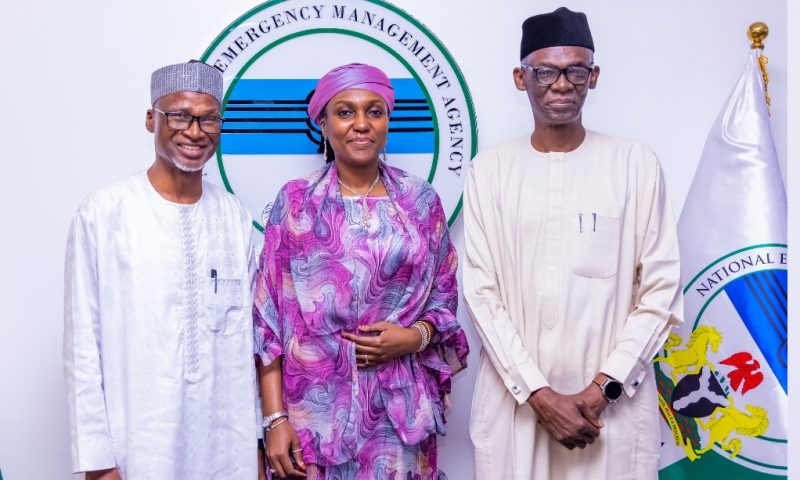
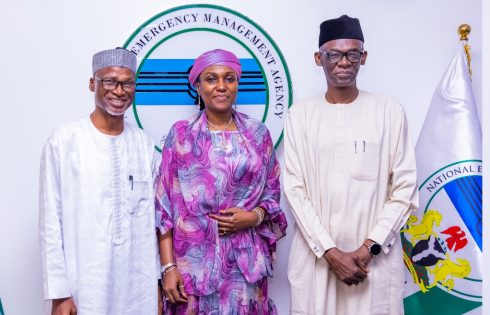
The Director General (DG) of the National Emergency Management Agency (NEMA), Mrs. Zubaida Umar, has reaffirmed the Agency’s commitment to strengthening collaboration with Ahmadu Bello University (ABU), Zaria, in disaster risk management, research, capacity building and institutional resilience.


Mrs. Zubaida Umar gave the assurance on Monday, 13th July, 2026, while receiving the Vice-Chancellor of Ahmadu Bello University, Prof. Adamu Ahmed, who led the university’s management team on a courtesy visit to the NEMA Headquarters in Abuja.


Welcoming the delegation, the Director General assured the university of NEMA’s commitment to scaling up the existing partnership between the two organizations. She said that partnerships with academic institutions are critical to strengthening evidence-based disaster management, advancing research and innovation, and building national resilience.


Mrs. Zubaida Umar said that NEMA has continued to reposition disaster management in Nigeria by placing greater emphasis on disaster risk reduction, early warning dissemination, public awareness, preparedness and resilience-building, rather than relying solely on emergency response.


She explained that the Agency has also sustained nationwide sensitisation campaigns, strengthened collaboration with State Emergency Management Agencies (SEMAs), and promoted the establishment and effective functioning of Local Emergency Management Committees (LEMCs) to enhance community-based disaster risk management.


She emphasized that disaster management begins at the community level and underscored the importance of collaboration with tertiary institutions in promoting disaster risk education, climate resilience, environmental sustainability, emergency preparedness, research and institutional capacity development.


Earlier, the Vice-Chancellor of Ahmadu Bello University, Prof. Adamu Ahmed, commended the Director General, NEMA, Mrs Zubaida Umar for her exemplary leadership and the remarkable progress recorded by NEMA in disaster management and humanitarian coordination.


He described Mrs. Zubaida Umar as one of the university’s distinguished alumni whose professionalism, integrity and dedication to public service continue to bring pride to the institution.


Prof. Ahmed explained that the visit was also to appreciate NEMA’s longstanding support for the ABU Centre for Disaster Risk Management and Development Studies, which has trained professionals serving in disaster management institutions across Nigeria.


He said the university was seeking to deepen its collaboration with NEMA in research, capacity building and disaster risk reduction to address the growing complexity of disasters associated with climate change, rapid urbanisation and other emerging risks.


He also appealed for the Agency’s support in strengthening emergency preparedness within the university, particularly in addressing risks associated with ageing infrastructure, erosion, fire incidents and other hazards.