Fresh crisis looms in Benue APC as Gov Alia rejects Akume’s automatic ticket proposal

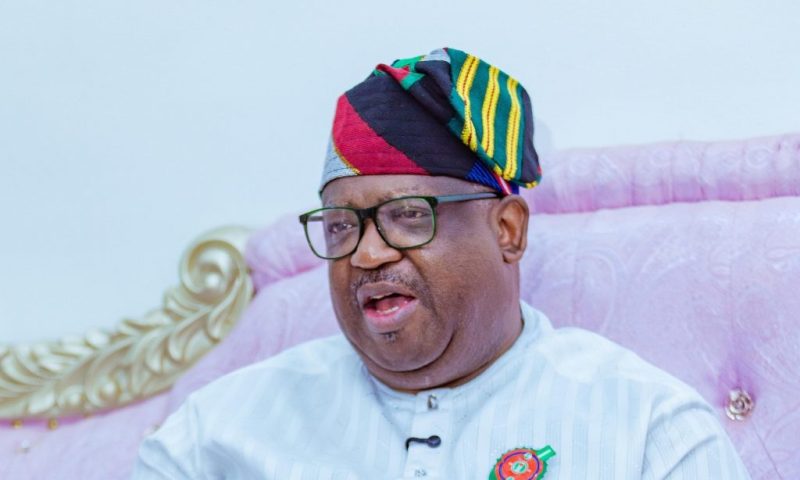
A renewed crisis appears to be brewing within the All Progressives Congress (APC) in Benue State, as the fragile reconciliation between Governor Hyacinth Alia and Secretary to the Government of the Federation (SGF), George Akume, shows signs of breaking down.

Despite a high-level peace meeting held on Sunday, deep-seated disagreements persist, particularly over the contentious issue of automatic tickets for elected officials ahead of the next election cycle.

The crisis between Alia and Akume dates back to the aftermath of the 2023 general elections, when both leaders fell out over control of the party structure and political appointments in the state.

What began as a quiet disagreement soon escalated into a full-blown intra-party conflict, polarising the APC in Benue into two rival factions.

One faction, led by Austin Agada, remained loyal to Akume, while another group, under the leadership of then-state chairman Ben Omakolo, aligned with Governor Alia.

Tensions reached a boiling point in March 2026, when both factions conducted parallel congresses, each producing separate sets of party executives.

The Alia-backed faction insisted its congress followed due process and reflected the will of party members. However, the Akume-aligned group rejected the exercise and organised a separate congress, further deepening the leadership crisis.

In a decisive move, the national leadership of the APC eventually recognised the congress conducted by the Alia faction, which produced Ben Omale as chairman, effectively sidelining Agada and weakening Akume’s grip on the party structure in the state.

Concerned about the implications of the lingering crisis on the party’s electoral prospects, President Bola Tinubu intervened, urging both leaders to reconcile and work together ahead of future elections.

Sunday’s meeting was seen as a step in that direction. However, rather than cement unity, it exposed fresh fault lines. https://dailypost.ng/2026/05/03/gov-alia-akume-hold-peace-talks-in-benue/

At the centre of the renewed tension is a proposal put forward by Akume for the adoption of automatic tickets for Governor Alia and other elected APC officials in the state, including members of the National and State Assemblies.

Sources familiar with the meeting told DAILY POST that while Akume argued that automatic tickets would ensure continuity and reward for loyalty, the proposal was firmly rejected by the governor.

Alia reportedly insisted that all aspirants must go through a transparent primary process, warning that any attempt to impose candidates could trigger another internal crisis.

According to an insider: “While he agreed on other terms, the issue of automatic tickets was outrightly turned down. He is not ready to gamble with the structure of the party. He also does not want a situation where members of the National Assembly loyal to Akume return unchallenged.”

Speaking to journalists after the meeting, Governor Alia made his position unequivocally clear, dismissing the idea of automatic tickets.

He said: “Because the APC has made it very clear, Mr. President has stated this several times and the National Chairman of the APC also emphasized at the time that there is no automatic ticket.

“I believe this is merely a request, not a resolution. It is a prayer directed to the people of the state, urging them to reflect deeply and consider how they can support those currently serving.
“This is not an official position of either the national party or the federal government. As I understand it, this was a reconciliatory meeting. He has the right to make such appeals and offer prayers. It is essentially an appeal to the entire citizenry to see whether they can bring these individuals back. However, I think that approach is misguided.”

With competing interests, unresolved grievances and the battle for control still lingering beneath the surface, the party may be heading toward another round of internal conflict, just as preparations for the 2027 election cycle begin to gather momentum.

Divided opposition will favour Tinubu in 2027 — Yakasai

A former Kano governorship candidate of the Peoples Redemption Party (PRP) in the 2023 elections, Salisu Tanko Yakasai, has cautioned that the emerging division within Nigeria’s opposition could recreate the dynamics that led to President Bola Ahmed Tinubu’s victory in 2023.

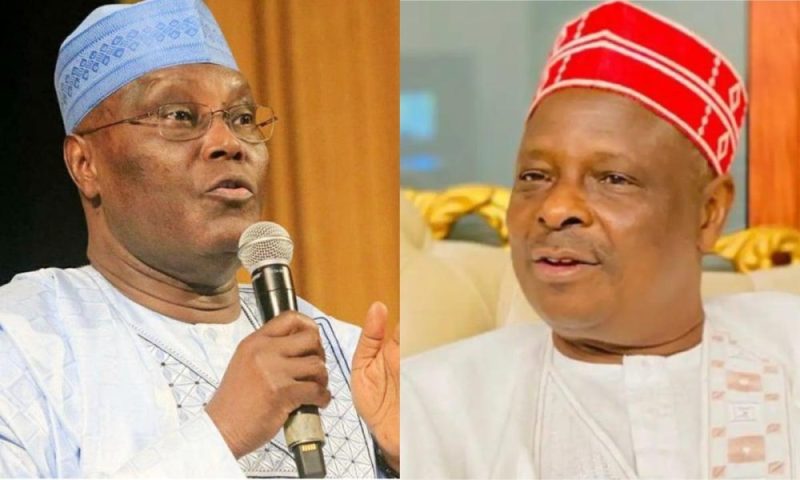
Reacting to the alignment of Peter Obi and Musa Kwankwaso with the Nigerian Democratic Congress (NDC), Yakasai said the formation of two opposition blocs, the African Democratic Congress (ADC) and the NDC , may split votes and ultimately benefit the ruling party in the 2027 general election.

In a post shared on X, Yakasai described the development as a “blessing in disguise,” arguing that while many Nigerians had hoped for a united opposition front, a single coalition might have faced legal and political challenges that could have kept it off the ballot.

He suggested that the existence of two opposition platforms could complicate any attempt to sideline them, forcing the government to either allow both parties to participate or risk backlash over Nigeria’s democratic credentials.

According to him, the more likely outcome is that both the ADC and NDC will contest the election, resulting in a divided opposition at the presidential level , a scenario he believes would favour Tinubu.

“In that context, the more likely scenario I foresee happening is that Tinubu allows both parties (ADC and NDC) to contest, resulting in a divided opposition heading into 2027. If that happens, we may see a repeat of the 2023 pattern at the presidential level (because this will definitely favour Tinubu), while the ADC and NDC make significant gains in National Assembly races, particularly across the North and East,” he wrote.

Despite the split, Yakasai reaffirmed his loyalty to the ADC and urged both camps to reduce tensions and remain open to future cooperation.

“Politics has a way of bringing unlikely partners back to the table,” he said, noting that collaboration may still become necessary ahead of the 2027 polls.

LASEPA seals over 40 facilities for noise pollution violations in Lagos

Lagos State Environmental Protection Agency, LASEPA, has shut down more than 40 facilities across Lagos State for breaching established noise pollution regulations.

The General Manager of the agency, Babatunde Ajayi, made this known over the weekend during an inter-district essay competition organised for selected secondary schools in Lagos.

Ajayi said the enforcement exercise is part of ongoing efforts to reduce excessive noise levels across the state, adding that the crackdown has covered religious centres, entertainment spots, event venues, and other major contributors to noise pollution.

He explained that noise control enforcement has been sustained over time as part of the agency’s routine regulatory operations.

“The noise pollution problem we have in Lagos is something we have keenly addressed over the past few years. We have continued and sustained enforcement across board,” he said.

According to him, over 40 facilities were sealed within the space of a week, stressing that such monitoring and enforcement activities have become continuous.

He, however, expressed concern that some operators still flout environmental rules even after being penalised, warning that persistent offenders risk permanent closure.

Ajayi also outlined the approved permissible noise levels across different categories of land use in the state.

He stated that educational environments have the lowest threshold at about 35 decibels, while residential areas are permitted up to 65 decibels during the day and 55 at night.

He added that mixed-use zones allow slightly higher levels, while commercial areas are permitted up to 70 decibels during daytime operations.

Industrial zones, he noted, have the highest limit, reaching up to 90 decibels during the day.

Residents were urged to familiarise themselves with these standards and comply fully with environmental guidelines to help reduce noise pollution in the state.

Speaking at the event, the Head of the Noise Control Unit at LASEPA, Abosede Natufe, encouraged participating students to serve as advocates for noise awareness within their communities.

She said the essay competition was designed to improve understanding of noise regulation and promote responsible environmental behaviour among young people.

The winner of the 2026 International Noise Awareness Day competition, Ayodele Oluwanifemi of Alimosho Senior Grammar School, also called for stronger enforcement of noise control laws nationwide.

LASEPA reaffirmed its commitment to sustained enforcement and compliance monitoring, noting that the initiative is aimed at promoting a healthier and more livable environment across Lagos State.

NRC raises alarm over incessant attacks on train along Abuja-Kaduna highway

Following a recent incident in which suspected villagers pelted a moving train with stones along the Abuja-Kaduna highway, the Nigerian Railway Corporation (NRC) has raised fresh concerns over escalating attacks on its train operations rail corridor.

Around kilometre 177 on the Abuja-Kaduna highway, the Corporation explained that the attack on the train took place where a group of unidentified persons gathered along the rail track and hurled stones at a passing train, damaging the windscreen of the lead locomotive.

Callistus Unyimadu, the NRC spokesman, in a statement, stated that the development is alarming, saying that similar incidents have been recorded in the past two weeks, including Gidan Busa/Sarki Gora Village in Kakau District, Chikun Local Government Area of Kaduna State.

According to the statement, “About six attacks have been documented along the corridor within this period, posing significant threats to passenger safety, railway personnel, and critical infrastructure.”

The statement also explained that the repeated acts are not only dangerous but amount to economic sabotage capable of disrupting national transportation and undermining government investments in the railway sector.

The NRC observed that train services have continued under heightened safety measures, with railway staff maintaining strict vigilance to ensure passengers reach their destinations safely despite the attacks.

The NRC said that efforts are ongoing in collaboration with security operatives, community leaders, and other stakeholders to strengthen surveillance, identify those responsible, and bring perpetrators to justice with a view to bringing an end to the attacks.

It enjoined communities residing along railway lines to support the protection of railway infrastructure by reporting suspicious activities to authorities and discouraging criminal actions.

It warned that continued attacks could disrupt service delivery if urgent and collective action is not taken.

12 hotels, malls shut in Lagos over elevator safety violations

No fewer than 12 facilities, including hotels, shopping complexes, and residential buildings, have been shut down by the Lagos State Government over repeated violations of lift and elevator safety regulations.

The affected properties are located in key areas such as Admiralty Way in Lekki Phase 1 and parts of Ikeja.

Among the sealed facilities are The Heritage/AXA on Awolowo Road, Ikeja; Mosesola House, Debour House, and Bosch House on Soji Adepegba Close; Bridge View, Elizabeth Court, 10Bou Towers, Brion Court, Footprints Apartments, Lekki Luxury Flats, and Brasas Mall on Admiralty Way, Lekki.

The enforcement exercise, carried out last Thursday, was led by the Lagos State Safety Commission.

In a statement released on Sunday, the commission said the action followed persistent non-compliance by several property owners and operators with mandatory lift and elevator safety requirements.

It explained that the affected buildings failed to register their lift systems with the state government for proper inspection, maintenance, and safety oversight.

Leading the enforcement team, the Commission’s Chief Scientific Officer, Sovi Tijani, who represented the Director-General, Lanre Mojola, said the crackdown became necessary due to continued disregard for regulatory directives.

He noted that proper registration of elevators is critical for routine inspections and ensuring the safety of users in both commercial and residential buildings.

According to him, the affected facilities had received multiple notices and reminders but did not comply within the stipulated timeframe.

“We duly served them notices, informing them of the need to comply before the expiration of the deadline, but they failed to do so.

“Some refused to acknowledge or collect the letters from our officials, while others attempted to obstruct our personnel during enforcement,” Tijani said.

Tijani emphasised that the commission would sustain its enforcement efforts to safeguard lives and property, warning that poorly maintained elevators pose serious risks.

The commission urged building owners and facility managers to comply with safety regulations by registering their lift systems and ensuring regular maintenance in line with government standards.

It reiterated its commitment to enforcing compliance and maintaining a safe environment, adding that defaulters would continue to face sanctions until all requirements are met.

JAMB to decide UTME cut-off marks May 11

The Joint Admissions and Matriculation Board will convene its 2026 Policy Meeting on Admissions on Monday, May 11, where critical decisions, including the minimum Unified Tertiary Matriculation Examination cut-off marks for the 2026/2027 academic session, are expected to be determined.

This was disclosed in a statement issued on Sunday by the board’s spokesperson, Fabian Benjamin.

According to Benjamin, the meeting will take place at the Body of Benchers Auditorium, Plot 688, Institute and Research District, FCC Phase III, Jabi, Abuja.

It will bring together key stakeholders in Nigeria’s tertiary education sector.

He noted that major policy directions would be unveiled by the Minister of Education, Dr Tunji Alausa.

The statement read, “The board’s annual policy meeting on admissions is a crucial annual gathering where stakeholders decide minimum tolerable UTME marks, admission guidelines, and policies for tertiary institutions.

“Furthermore, the meeting is expected to, in particular, formally set the tone for the 2026/2027 admission exercise while impressing on attendees the need to adhere strictly to stipulated guidelines.

“Attendees at the 2026 meeting would include critical stakeholders such as vice-chancellors, rectors, provosts, registrars and their admission officers.

“Others are regulatory bodies ranging from the National Universities Commission, National Commission for Colleges of Education, to the National Board for Technical Education, among others.”

The board added that goodwill messages are expected from agencies, including the Nigerian Education Loan Fund, the National Youth Service Corps, and other stakeholders.

Benjamin further disclosed that the event will feature the 6th edition of the National Tertiary Admissions Performance-Merit Awards, aimed at promoting compliance with admission guidelines and improving standards in tertiary education across the country.

Market cap hits N155.9tn, investors gain N2.68tn

Nigerian Exchange LimitedThe Nigerian Exchange closed the curtain on April 2026 with a performance that can only be described as a “bullish masterclass”, despite a stark divergence in sectoral fortunes. Propelled by massive gains in industrial heavyweights and a surge in investor confidence, the market capitalisation hit a staggering N155.994tn, marking a month where investors walked away with N2.68tn in total gains.

The final week of the month saw the All-Share Index leap 7.33 per cent to close at 242,277.81 points. This rally pushed the Month-to-Date return to a robust 20.36 per cent, the strongest monthly showing of the year so far, while Year-to-Date returns accelerated to 55.69 per cent.

Sectoral divergence

The headline figures, however, mask a tale of two markets. While the broader index soared, the banking sector, traditionally the market’s bellwether, faced a brutal reckoning. The NGX Banking Index tumbled 5.52 per cent during the week, largely dragged down by a sell-off in Tier-1 lenders.

The most dramatic casualty was United Bank for Africa, which saw its share price plummet by 22.27 per cent. This sharp decline followed the bank’s unexpected decision not to announce a full-year dividend, catching income-hungry investors off guard in a high-inflation environment where yields are paramount. Similarly, Access Holdings and FBN Holdings dipped 13.17 per cent and 13.80 per cent, respectively, as investors rotated capital out of financials to chase growth elsewhere.

Conversely, the Industrial Goods sector became the market’s primary engine, gaining 16.89 per cent. This was fuelled by a “buying frenzy” in cement stocks, with BUA Cement (+24.78%) and Dangote Cement (+8.99%) leading the charge. This rotation suggests that investors are increasingly betting on infrastructure-led growth as the Nigerian economy shows signs of structural recovery.

April surge

Market analysts point to a potent mix of robust corporate earnings, a stabilising naira, and improved macroeconomic liquidity as the catalysts for this record-breaking month. With foreign exchange reserves rising above $45bn, foreign portfolio investors are showing renewed interest in large-cap Nigerian equities.

“Performance was driven by strong buying in large-cap names… The gains were supported by positive earnings releases across some of these names, reflecting resilience in the face of previous economic headwinds,” noted a market analyst at Meristem Securities.

However, the report also highlighted the sensitivity of the current market to corporate actions. “Gains were partially offset by profit-taking, with pressure concentrated in the banking sector, where sell-offs were seen in UBA following no full-year dividend announcement. This triggered a ripple effect across the sector as investors re-evaluated their positions,” according to the NGX Weekly Market Summary.

Despite the banking volatility, sentiment remains overwhelmingly positive. Market breadth, a key indicator of investor participation, improved to 0.98x, supported by a 28.29 per cent jump in trading volume and a 34.22 per cent increase in total value traded.

Capital raising, resilience

As the market enters May, liquidity remains high. Even with a four-day trading week (shortened by the Workers’ Day public holiday), turnover hit 4.842 billion shares worth N287.756bn.

Nigeria eyes FX gains as crude tops $105/barrel

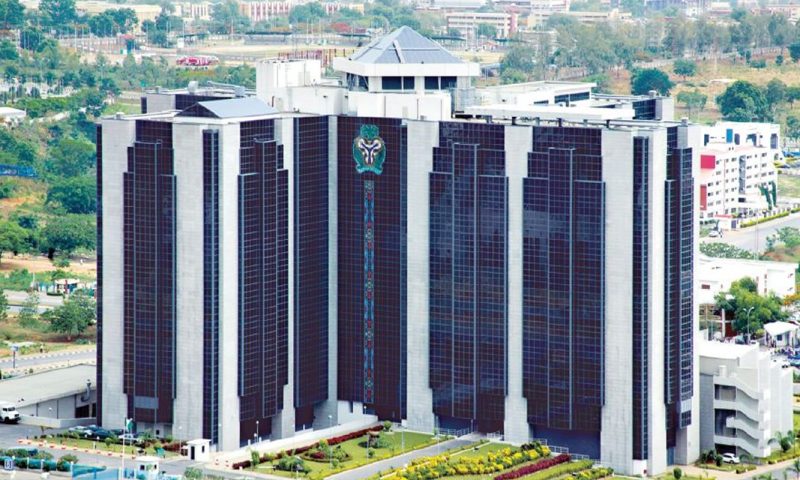
Governor of the Central Bank of Nigeria, Olayemi CardosoNigeria is set to further benefit from rising foreign exchange inflows as global crude oil prices surge above $105 per barrel, driven by escalating Middle East tensions that have tightened supply expectations, boosting revenues and supporting naira stability,

With Brent crude trading above $105 per barrel, well above Nigeria’s 2026 federal budget benchmark of $64.85, the ongoing global oil rally is expected to significantly strengthen Nigeria’s fiscal position, improve foreign exchange inflows, and support naira stability.

Analysts say that if geopolitical tensions escalate into a full-scale conflict disrupting the Strait of Hormuz – a critical passage for roughly 20 per cent of global crude shipments – oil prices could spike further to as high as $150 per barrel. Such a scenario would deliver a major windfall for oil-exporting countries like Nigeria, potentially improving external reserves and boosting government revenue.

The recent price surge reflects growing geopolitical risk premiums, particularly linked to heightened tensions between the United States and Iran, a key Middle Eastern oil producer. Market concerns have also been amplified by disruptions in other supply regions, including unplanned outages in Kazakhstan and weather-related production constraints in the United States caused by Winter Storm Fern.

Oil prices have remained on an upward trajectory for months, rising above $105 per barrel as fears intensified over possible U.S. military escalation in the Middle East. While markets had initially anticipated oversupply conditions in 2026, persistent geopolitical tensions, sanctions on Russian oil flows, and sustained demand from China have altered the outlook, keeping prices elevated.

For Nigeria, where over 80 per cent of government revenue is linked to oil earnings, the development presents a significant macroeconomic opportunity. Higher crude prices typically translate into improved fiscal revenues, stronger external buffers, and enhanced capacity for economic stabilisation.

CBN reforms

The Central Bank of Nigeria, under Governor Olayemi Cardoso, has implemented reforms that are expected to further amplify the benefits of higher oil receipts. These include foreign exchange market unification, improved liquidity management, and measures to attract foreign capital inflows. The reforms have also helped narrow the gap between official and parallel market exchange rates.

Recent data from the CBN indicates that the Nigerian Foreign Exchange Market rate strengthened to N1,396.99/$1 on Thursday from N1,400.48/$1 the previous day, marking the naira’s return below the psychologically significant N1,400/$1 threshold for the first time in over a year.

Market operators say the development reflects improved confidence in Nigeria’s macroeconomic direction, supported by stronger external inflows, rising reserves, and policy stability. President of the Association of Bureaux De Change Operators of Nigeria, Aminu Gwadabe, said the naira has maintained relative stability across markets in recent months, reducing volatility that had previously characterised the foreign exchange space.

Foreign reserves have also continued to strengthen. Data shows that reserves stood at $48.44bn as of April 23, 2026, covering more than 12 months of import needs. Analysts project that the figure could rise to $51bn by year-end, in line with the CBN’s target of $51.04bn.

The apex bank also reports that reserves are being rebuilt organically through improved market operations, stronger non-oil exports, and increased capital inflows, rather than external borrowing.

Cardoso explained that Nigeria’s external position has improved significantly, noting that the current account balance rose over 85 per cent to $5.28bn in Q2 from $2.85bn in Q1. He added that oil production averaged 1.45 to 1.52 million barrels per day in 2025, while non-oil exports recorded growth of more than 18 per cent year-on-year.

“While oil production improved modestly to an average of 1.45–1.52 million barrels per day in 2025, the truly encouraging development is the strong performance of non-oil exports. Supported by ongoing reforms and greater exchange-rate flexibility, non-oil exports have grown by more than 18 per cent year-on-year,” he said.

Cardoso also noted that diaspora remittances increased by about 12 per cent, supported by improved transparency and settlement systems, with further gains expected as the Non-Resident BVN framework expands in 2026.

Experts speak

Financial experts say the combination of oil windfalls and structural reforms is reinforcing Nigeria’s macroeconomic resilience. Managing Director of Financial Derivatives Company, Bismarck Rewane, estimates the fair value of the naira at N1,257 per dollar, suggesting that the currency remains undervalued by about 11 per cent under purchasing power parity analysis.

He noted that exchange rates typically converge toward PPP levels over time, reinforcing expectations of medium-term currency stability if reforms are sustained.

Global economist Charlie Robertson also observed that a weaker dollar environment is beneficial for emerging markets like Nigeria, noting that it supports currency stability and capital inflows. “The weak dollar is dislocating many markets, but it is good for Africa, as we are seeing with the naira,” he said.

Beyond oil, Nigeria’s macroeconomic outlook is being shaped by structural reforms across fiscal and monetary policy. Economist Prof. Abiodun Adedipe highlighted key reforms, including fuel subsidy removal, forex market reforms, tax restructuring, and banking recapitalisation, all of which he said are improving efficiency and fiscal discipline.

He noted that subsidy removal alone has eliminated over $10.7bn in annual fiscal waste, while banking sector reforms are positioning financial institutions to support a projected $1tn economy.

Nigeria’s demographic and structural advantages, including a youthful population estimated at over 237 million and rising internet penetration of about 48 per cent, also support long-term growth potential. Improved urbanisation, telecom expansion, and digital adoption are expected to deepen productivity and expand economic activity.

The Central Bank has also strengthened coordination with fiscal authorities to enhance macroeconomic stability. Cardoso said the discontinuation of central bank deficit financing, alongside revenue reforms and Treasury Single Account improvements, has strengthened fiscal discipline.

“This stance is unequivocal as there will be no return to the practice of financing fiscal deficits by the Central Bank,” he said.

He added that sustained collaboration between fiscal and monetary authorities will be essential to maintaining price stability and restoring purchasing power.

As global oil markets remain volatile, Nigeria stands to benefit from sustained price elevation, provided reforms continue to anchor investor confidence, strengthen institutions, and improve economic efficiency.

Jet fuel: Dangote ready for direct sale, LCCI seeks action

DANGOTE REFINERYThe Dangote Petroleum Refinery is set to supply aviation fuel directly to airlines in Nigeria at N1,820 per litre, as the Lagos Chamber of Commerce and Industry has urged the Federal Government to help facilitate measures to lower airlines’ operating costs and prevent a sectoral collapse.

A senior official of the Dangote Group confirmed the move by the $20bn Lekki-based refinery exclusively to our correspondent on Sunday, stating that Dangote supplies over 90 per cent of the country’s aviation fuel needs.

The refinery has already commenced direct Jet A-1 supply to Ethiopian Airlines, according to its Managing Director, David Bird.

The official, who spoke to one of our correspondents in confidence due to the lack of authorisation to speak on the matter, said airlines and other interested buyers could approach the refinery to lift jet fuel at the new price.

“Anyone, including local airlines, can buy their requirements from our petroleum refinery,” the official said when asked if the Dangote refinery would supply jet fuel directly to local airlines.

The official confirmed that “N1,820 is the price at which we are selling at our loading bay,” adding that the refinery cannot be subsidising airlines in the face of high oil prices. The source confirmed that Dangote had been subsidising the prices of petrol and diesel, but aviation fuel would be sold at the competitive market price.

Dangote’s direct sale to airlines is coming at a time when the Airline Operators of Nigeria are accusing the Major Energies Marketers Association of Nigeria of overpricing.

Another reliable source in the organisation told The PUNCH that the refinery would now publish prices for the sake of transparency. “Yes, as of today, Sunday, our jet fuel is N1,820 a litre. Note that this price is not stable.

It changes because of the volatility in the global market.

“The US-Iran war has dealt a heavy blow to everybody, and we are not insulated from the global shock. Henceforth, we will be publishing the prices so that both the airlines and the marketers will know what is happening in the market. I think transparency is now important,” the source said.

The PUNCH reports that the war in the Middle East triggered an oil price surge when the Strait of Hormuz was blocked by Iran. From less than $70 per barrel on February 28, Brent, the global benchmark for crude, jumped above $120 on Thursday before it dropped to $108 over the weekend.

Consequently, Dangote raised its petrol gantry price from N774 in February to N1,275 as of the time of filing this report. The oil price hike also affected diesel and aviation fuel.

In the aviation sector, airlines threatened to shut down due to an over 350 per cent rise in Jet A-1 prices until the government intervened last week. The Vice President of the Airline Operators of Nigeria, Allen Onyema, had recently disclosed that aviation fuel prices skyrocketed from about N900 per litre before the Iran crisis to between N2,700 and N2,900, with some marketers selling as high as N3,500.

Earlier, in a letter dated April 14, 2026, and addressed to the Executive Secretary of the Major Energies Marketers Association of Nigeria, Clement Isong, the President of AON, Abdulmunaf Sarina, said the surge in the price of Jet A1 had become unbearable for operators.

The PUNCH reports that AON had in its letter said, “The price of Jet-A1 as sold by marketers had risen significantly from the initial N900/litre as of February 28, 2026, to N3,300/litre as of today. This represents an increase of over 300 per cent.

“This astronomical and artificial increase is not commensurate with the rise in crude oil prices and is well above international market benchmarks, which reflect approximately a 30 per cent increase in crude oil cost. For the past weeks, airlines have endured this burden and continued operations out of patriotism and in the spirit of service to the nation. However, the situation has now become unbearable and clearly unsustainable,” the letter stated.

It urged MEMAN to prevail on its members to proportionately adjust jet fuel prices in line with international market realities, “as airlines can no longer sustain purchases at the current exorbitant rates.”

Responding, MEMAN attributed the rising cost of aviation turbine kerosene to global factors, particularly disruptions linked to geopolitical tensions in the Middle East.

The marketers expressed surprise at the N3,300 per litre price referenced by airline operators, stating that their internal survey showed significantly lower prices. The marketers said they would not be able to disclose a particular price, but N3,300 is over N1,000 above the normal price.

“In light of the above, we must express our surprise at the price of N3,300 per litre stated in your letter as the price being charged to some airline operators. MEMAN members do not discuss pricing, as this will be against competition law; however, the price of N3,300 is over N1,000 higher than our average market survey price of Jet A1 carried out for this exercise, after receipt of your letter,” MEMAN explained.

Last Monday, the Nigerian Midstream and Downstream Petroleum Regulatory Authority recommended that the price of aviation fuel should range between N1,760 and N1,988 per litre in Lagos and N1,809 and N2,037 per litre in Abuja.

Access Holdings posts N1tn PBT, equity hits N4.33tn

Access-Holdings-Plc

Access Holdings Plc’s audited financial results for the year ended 31 December 2025 revealed a fortress-like balance sheet, with shareholders’ funds climbing 15 per cent to N4.33tn, signalling a definitive shift in its corporate evolution, moving away from a decade of aggressive expansion towards a model centred on “value over scale”.

The Group’s Profit Before Tax crossed the N1tn threshold for the first time, settling at N1.01tn. This 16.2 per cent increase from the previous year highlights a resilient performance despite a transitional and often volatile global operating environment.

While the banking subsidiary remains the primary engine, contributing 97 per cent of total revenue, the 2025 results highlight a significant deepening of the Group’s ecosystem. Net fees and commission income surged 40.9 per cent to N585.1bn, a testament to the success of its non-banking verticals.

The Group also demonstrated sharper operational teeth, successfully driving down its cost-to-income ratio from 56.7 per cent in 2024 to 51.7 per cent in 2025.

The leadership team and the report itself offer a clear narrative of an institution transitioning from “growth at all costs” to “disciplined value creation”.

Commenting on the results, Group Managing Director/CEO of Access Holdings, Innocent Ike, said, “We have now entered a more deliberate optimisation phase, with a stronger emphasis on returns on capital, earnings quality, and long-term value creation. Our 2025 performance reflects both the resilience of the Access franchise and the strength of the institution we have built over time.”

“This growth highlights not only the scale of the Group’s operations but also the deepening trust of customers, counterparties, and investors. Total assets increased 24.3 per cent to N51.57tn, while customer deposits grew 53.4 per cent to N34.56tn,” an official statement, Access Holdings 2025 Audited Report, stated.

It further read, “Africa remains one of the most compelling long-term growth frontiers globally. Our role is not only to participate in that growth but also to help shape and finance it. At Access Holdings, we have built an institution designed to endure, anchored on strong governance, disciplined execution, and a clear strategic direction. Our focus remains on delivering consistent, high-quality, risk-adjusted returns while building a financial institution that will stand the test of time.”

The Group’s performance was bolstered by an improving Nigerian economy. With national GDP growth strengthening to 3.9 per cent and foreign exchange reserves rising above $45bn, the environment provided a fertile ground for credit expansion and capital market activity. This was mirrored in the NGX All Share Index, which gained over 51 per cent during the period.

As Access Holdings looks towards the 2026 fiscal year, the mandate is clear: maintain the N1tn momentum while ensuring that every naira of capital deployed returns maximum value to the shareholders who have now built a N4.33tn equity base.